



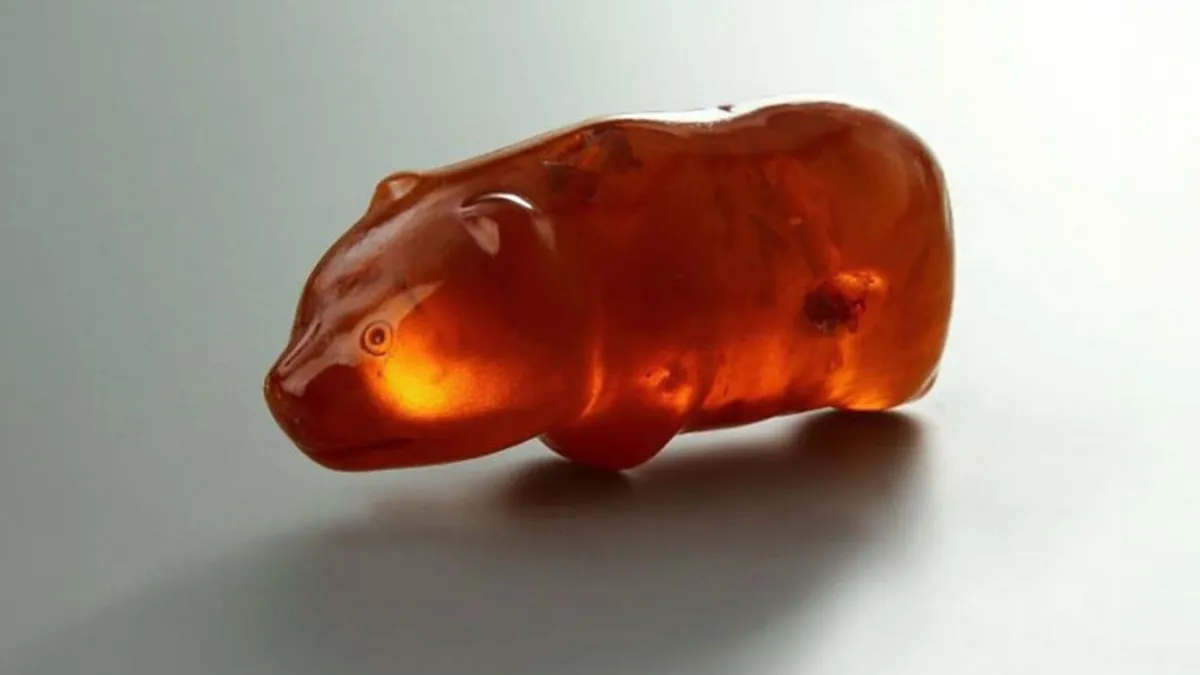


Against all odds, certain objects have survived thousands of years to reach our modern world. For instance, a 3,000-year-old Egyptian ring carved with playful kittens, or the Orkney Hood — the only complete piece of woven clothing to survive from medieval Scotland.
These incredible relics prove that our ancestors loved art, beauty, and comfort just as much as we do. Since we don’t have a real time machine, looking at these items is easily the next best thing — offering a rare, personal glimpse into everyday life centuries ago.
We’ve collected photos of some of the most remarkable historical objects shared by an online community that acts as a “virtual museum.” The best part is that you can admire these ancient treasures right from the comfort of your couch, and even dig deeper if something catches your eye.
#21
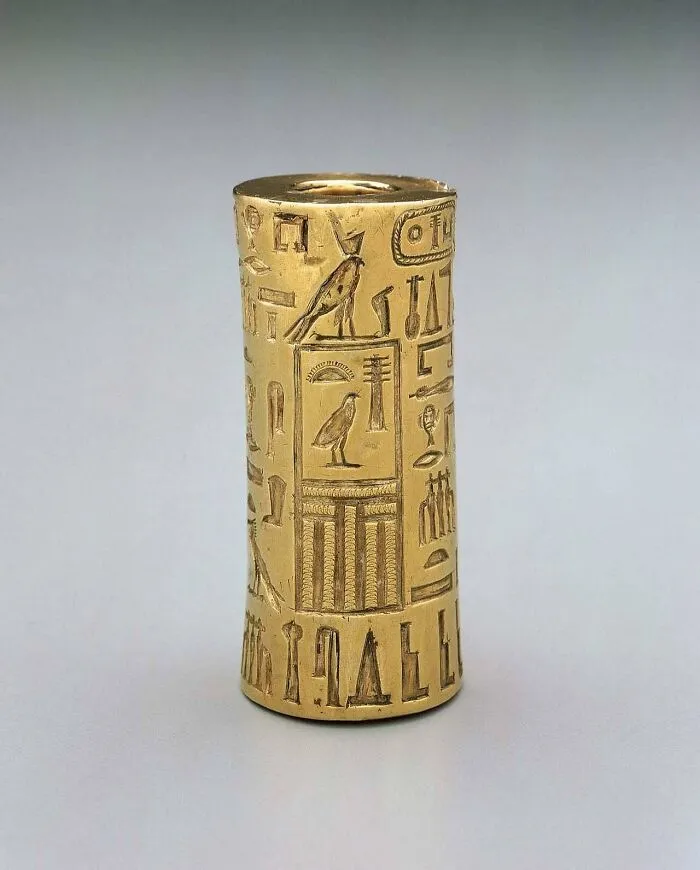
Gold cylinder seal from the Old Kingdom of Egypt, 2381 - 2353 BC
The ancient Egyptians used hieroglyphs not only to create individual cartouches to represent the names of their Pharaohs, Royals and Gods, but are known to have marked their ownership by branding their livestock using these pictorial devices too.
At the same time, around 3500BC, cylinder seals were used as a form of signature or administrative tool by the Mesopotamians. These highly stylised and individual devices were typically about one inch in length, engraved with written characters or figurative scenes – or both – and rolled into a two-dimensional surface such as wet clay to leave a distinctive and identifiable mark.
In this, they can be likened to other forms of impression seal, such as the stamp or finger ring seal that we see wielded many centuries later by Kings and Lords, to authenticate and seal important documents.
The cylinder seal dates back from the reigns of Menkawhor 2497-2489 and Djedkare Isesy 2489-2450
Now on display at Museum of Fine Arts in Boston
Report
8points
#22
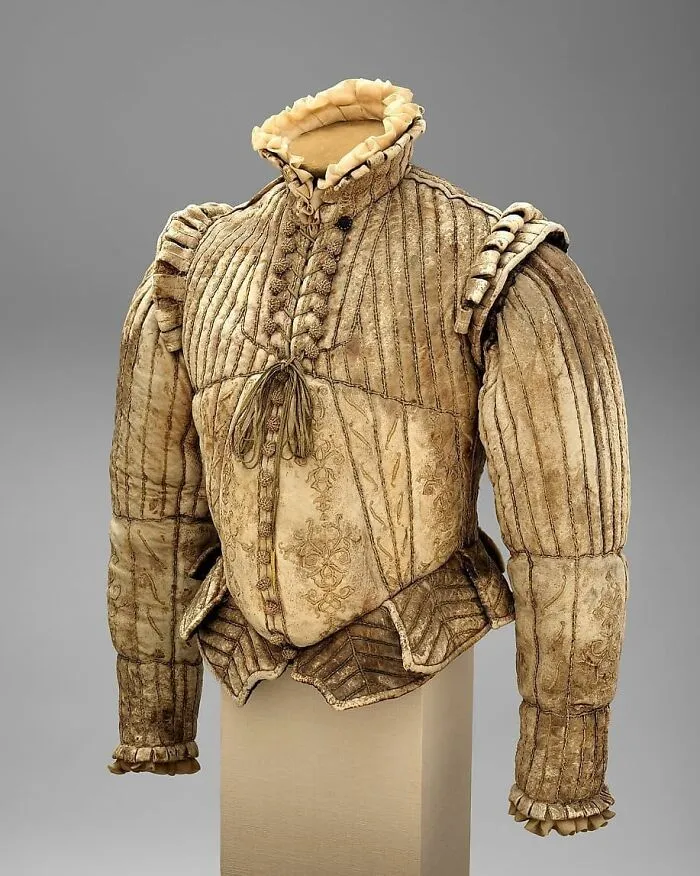
Fencing Doublet (leather, linnen, silk, cotton) - Western European, 1580
This doublet is a rare example of sixteenth-century male clothing, very little of which has survived. The cut of the doublet, particularly the protruding "peascod" waist, is typical of fashionable costume of the 1570s and 1580s.
The delicate silk embroidery and the use of gold and silver metallic yarns are additional indicators of its high quality. The padded ribs on the chest, back, and sleeves suggest that the doublet was also intended as a protective garment.
It was probably made for wear during fencing practice, which was at the time an essential part of every gentleman's education.
Now on display at the Metropolitan Museum of Art in New York
Report
7points
#23
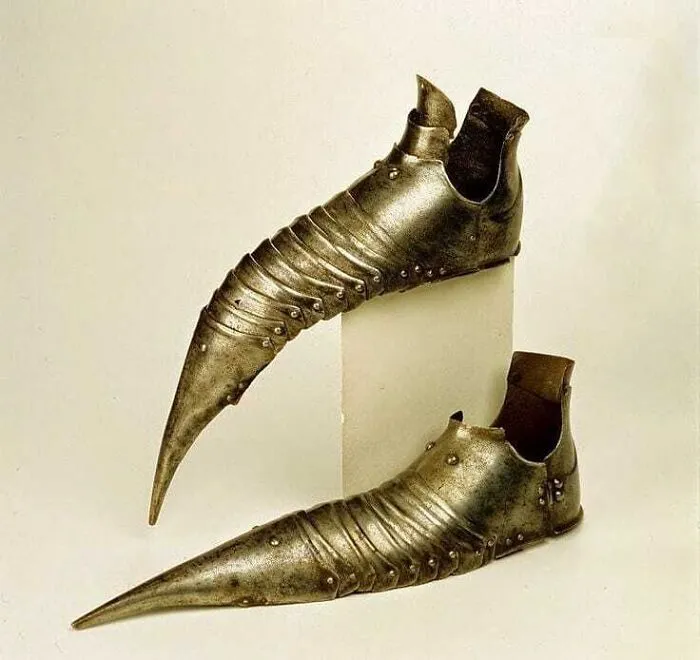
Gothic equestrian sabatons - Germany, 1490
Sabatons are armoured footwear worn as part of a complete suit of amour. In the Gothic period, the fashion for pointy-toed shoes influenced the shape of the military sabaton.
This late 15th century example would have been worn by an equestrian soldier often during parades rather than in the battlefield. It features an articulated upper made of lames, or narrow strips of metal, which would have allowed the toe to hang over the stirrup enabling the rider to secure his foot while riding.
Report
7points
#24
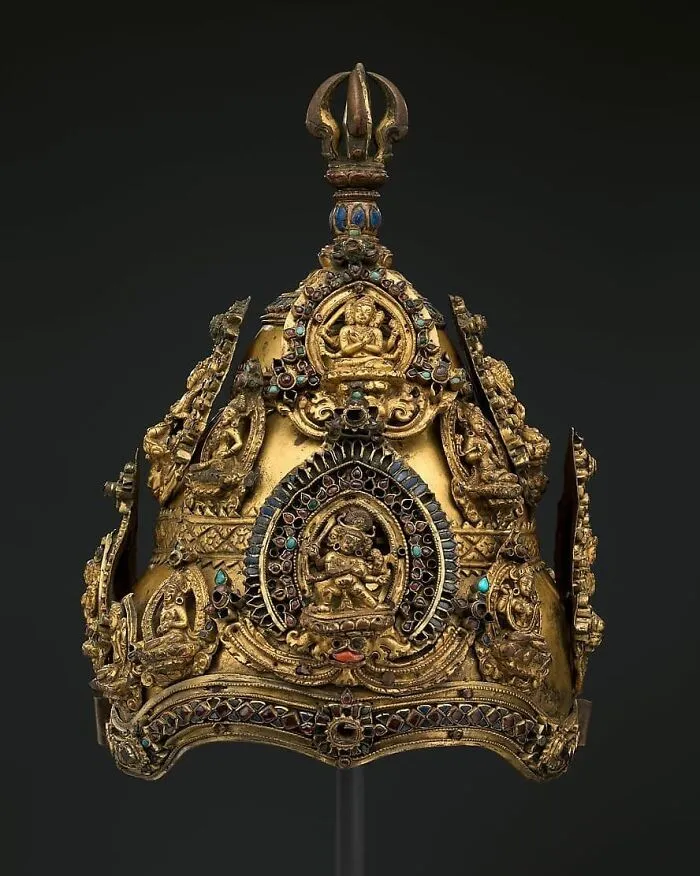
Vajracharya Priest’s Crown - Nepal, 13th–early 14th
Medium: Gilt-copper alloy inlaid with semiprecious stones, lapis lazuli, and turquoise
Elaborate crowns such as this were worn by Vajracarya priests, the highest rank in the Nepalese Buddhist community.The conical crown is unique to Newari Buddhism and embodies a memory of older and now lost Indian Buddhist practices.
The term Vajracarya denotes both a caste and a family name, and the designation entitles its holders to perform reserved priestly functions, analogous to the privileges held by Brahmans in Hinduism.
This crown is exceptional in its complexity: It is dominated by a series of diadem plaques depicting emanations of the wisdom bodhisattva Manjushri, benign and wrathful.
All is surmounted by a five-pronged thunderbolt scepter, or vajra. This unique iconography points to the crown being designed for enacting rites dedicated to invoking Manjushri.
Housed now at the Metropolitan Museum of Art in New York
Report
7points
#25
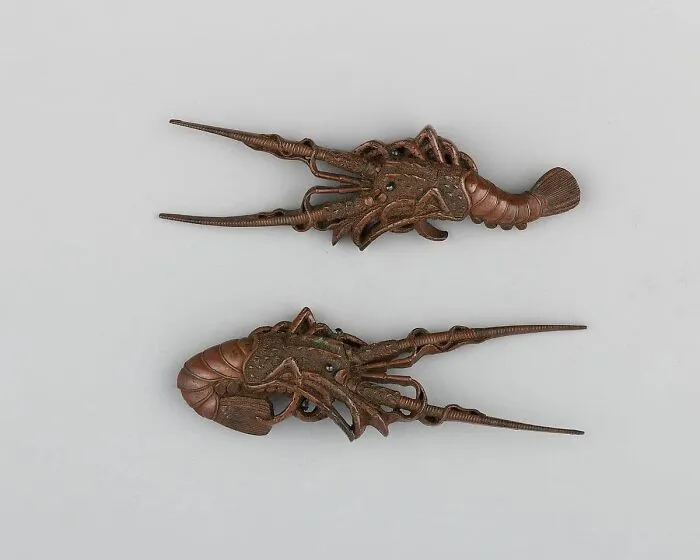
The Menuki - Parts of a japanese katana - 18th century
The menuki are the decorative metal ornaments the are woven under the tsuka-ito (handle wrapping).
These ornaments were originally made to hide the mekugi pins that secure the tsuka to the tang of the blade. They are normally positioned forward on one side and back on the other.
On unique tsuka wrappings such as katate-maki or battle wrap the menuki may be woven into the centre as a decorative ornament.
Some are very elaborate pieces made by talented jewellers and artisans that will compliment or become the centre piece of the katana's
Medium: Copper, copper-gold alloy
Report
7points
#26
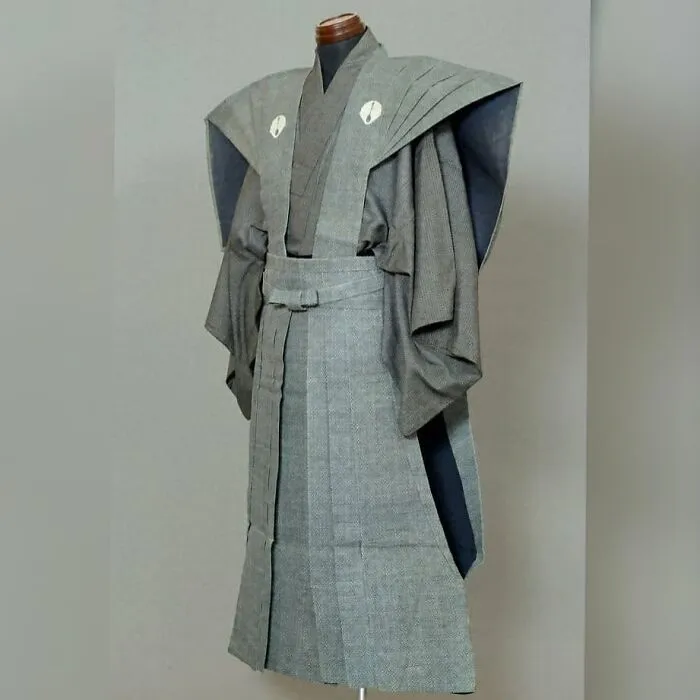
Formal outfit worn by one of the last daimyō - Japan, Edo Period, 1830
Kamishimo is a combination of hakama pants and kataginu, a sleevless jacket, both made in the same fabric(hemp), worn over the kimono.
Kamishimo was worn daily by samurai men during the Muromachi, Sengoku, Momoyama and Edo periods. It could have various colors and patterns, and sometimes had the owner's kamon (family crest) on both sides of the chest/shoulders, and in the middle back of the kataginu.
In Edo period (1603-1868), the subdued colors like grayish blue, gray and brown became "the rule" for male outfits, as well as more discrete patterns. Kamishimo became no longer daily, but formal outfit for samurai. The kataginu front pannels became more narrow, and the shoulders of the garment turned into wide, firm "wings".
This particular kamishimo was worn by Nabeshima Naomasa which was the 10th and final daimyō of Saga Domain in Hizen Province, Kyushu Japan. His honorary title was Hizen-no-Kami, and he was occasionally referred to as “Prince Hizen” in western accounts during the Bakumatsu period.
Fun fact: The Star Wars saga was inspired by Japanese culture.
The kamishimo resides now at The Kyoto Costume Museum in Japan
Report
7points
#27
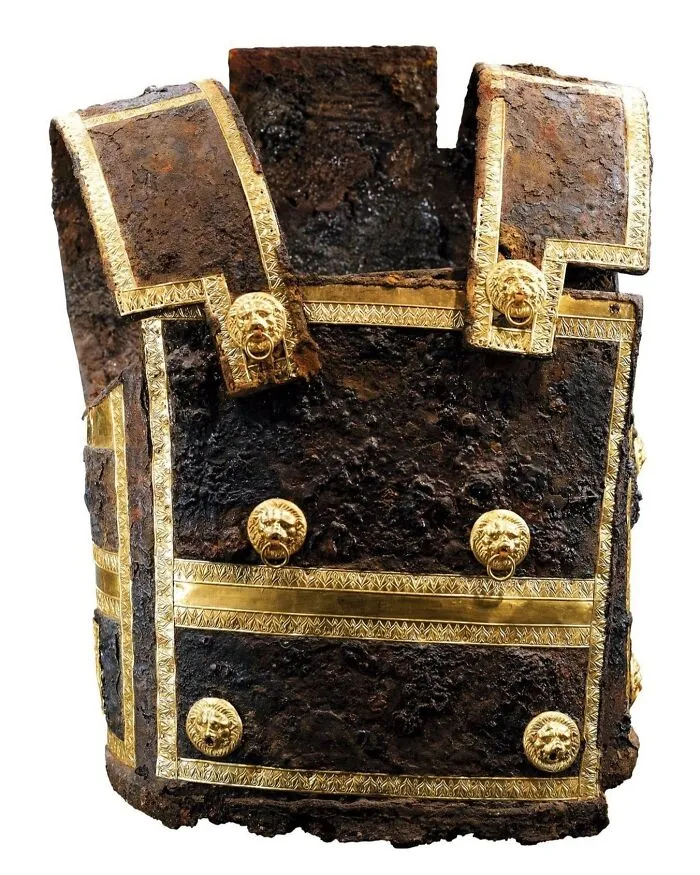
The iron and gold cuirass of king Philip II of Macedon, father of Alexander the Great - 4th century BC
Before the reign of Alexander the Great, his father, Phillip II of Macedonia, ruled the Macedonian state and became one of the ancient world’s most accomplished generals.
Philip II of Macedon was born in 382 B.C.E. in Aegae. He was the son of King Amyntas III. He was the 18th king of Macedonia and ruled from 359 to 336 B.C.E.
Macedon was unstable during Philip II’s youth. During an invasion by the Greek city-state of Thebes, Philip himself was even taken hostage. He remained in Thebes for three years and learned military strategies from Epaminondas, the great Theban general. Upon returning to Macedon, Philip was able to help his brother, Perdiccas III, rule and succeeded him as king after Perdicass died.
King Philip II is credited with restoring internal peace to his country. Philip used his military knowledge to strengthen the Macedonian army. His soldiers were trained to fight as a phalanx. A phalanx was a large group of foot soldiers armed with shields and spears. Soldiers moved closely together in a rectangular formation as if they were one giant soldier. One phalanx could contain 265 soldiers.
King Philip’s military battles and diplomatic tactics resulted in the expansion of his empire and domination over all of Greece. After he conquered Greece, he planned to conquer the Persian Empire, but he would never achieve this goal.
Philip II was assassinated in 336 B.C.E., and was succeeded by his son, Alexander III, later known as Alexander the Great. While Philip II did not fulfill his plans to expand his empire through Persian territory, he is often credited with paving the way for his son to be one of the greatest military leaders in history.
Now on display at the Museum of Royal Tombs of Aigai in Vergina, Greece
Report
7points
#28
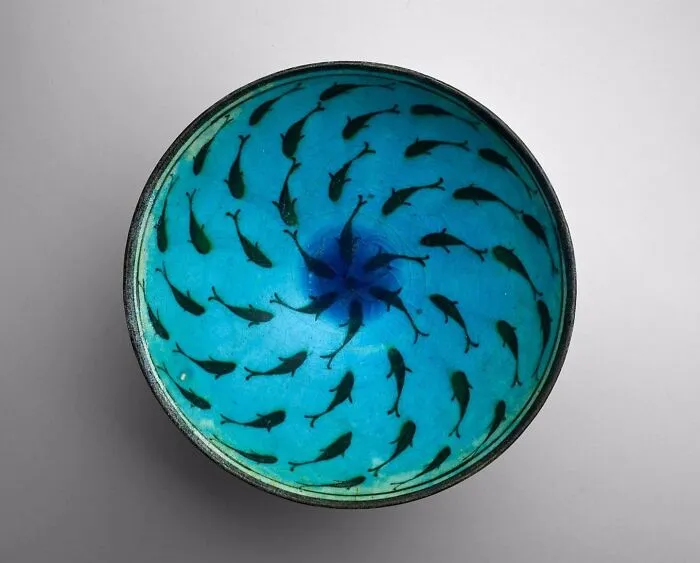
Bowl with fish, Iran, Kashan region, late 13th - 14th century
Kashan is famous for producing these kinds of bowls. A great number of blue and black painted bowls employing radiating panels filled with willow tendril designs like this one have been archaeologically dated to between 1204 and 1215.
This type of ware has been shown to originate from Kashan, an important ceramic center in western Iran that, between 1175 and 1225, produced a remarkable variety of luster, underglaze, and overglaze painted wares.
Similar Kashan bowls occasionally show inscriptions drawn from Persian literature in the bands radiating from the center like the black and white example shown to the left.
Kept now at the Hossein Afshar Collection
Report
7points
#29
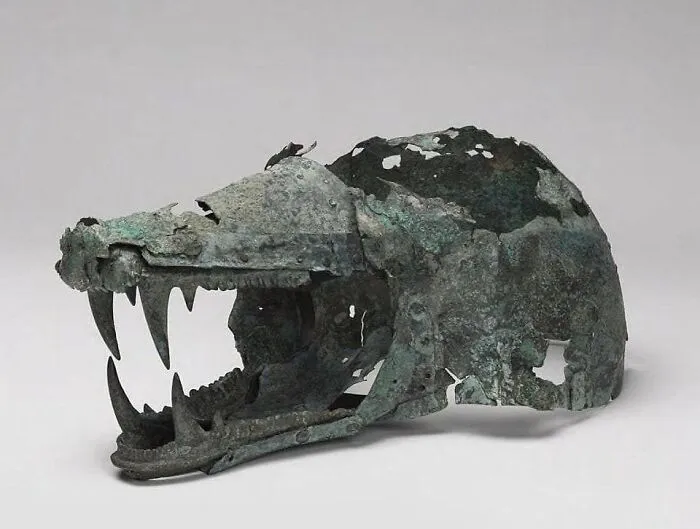
Ceremonial helmet in the shape of a wolf’s head, Etruscan - dating back to the 6th-5th centuries BCE
The top components of the nose and the hemispherical dome have areas of rough, raised green corrosion products and brown burial accretions. Numerous large losses are the result of corrosion and breaks in the brittle, mineralized metal.
There are numerous ancient repairs, including the flaps of metal folded and riveted around cracks on the lower edge of the hemispherical dome and the irregular shapes of metal riveted to the dome where it meets the lower jaw on both sides.
The cast teeth are modern additions. They are not life casts and were irregularly modeled directly in wax to fit the shapes of the sheet metal assembly that form the jaw and top portions of the mouth.
A modern sheet-copper framework in the top and bottom sections of the mouth and a patinated but modern ridged palette-shape on the top of the mouth both help to support weight of these teeth.
Many of the rivets are ancient, but some have been replaced with modern copper pins or brass screws.
Kept now at the Harvard Museum in U.S.A.
Report
7points
#30
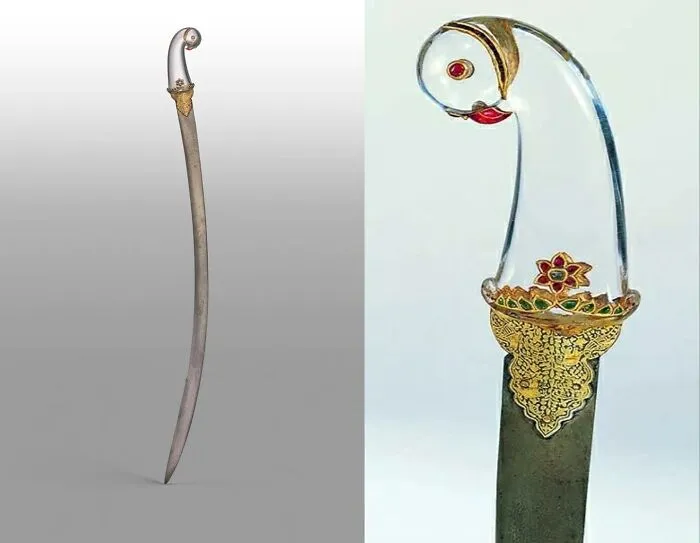
Sword with rock crystal parrot-headed hilt and gold damascene - India, Late Mughal, 1720 - 1750
The Mughal Empire at its zenith commanded resources unprecedented in Indian history and covered almost the entire subcontinent.
From 1556 to 1707, during the heyday of its fabulous wealth and glory, the Mughal Empire was a fairly efficient and centralized organization, with a vast complex of personnel, money, and information dedicated to the service of the emperor and his nobility.
This steel blade sword with rock crystal parrot-headed hilt and gold damascene is form the Late Mughal period and belongs to the Northern part of India.
The long curving ‘shamsher’ sword is a typical Mughal-style blade. Although the elaborate decoration and parrot-headed hilt is more like an eighteenth-century piece when many Mughal objects were received and reset in Rajput courts.
Dimension: 86.6 cm L
Report
7points
#31
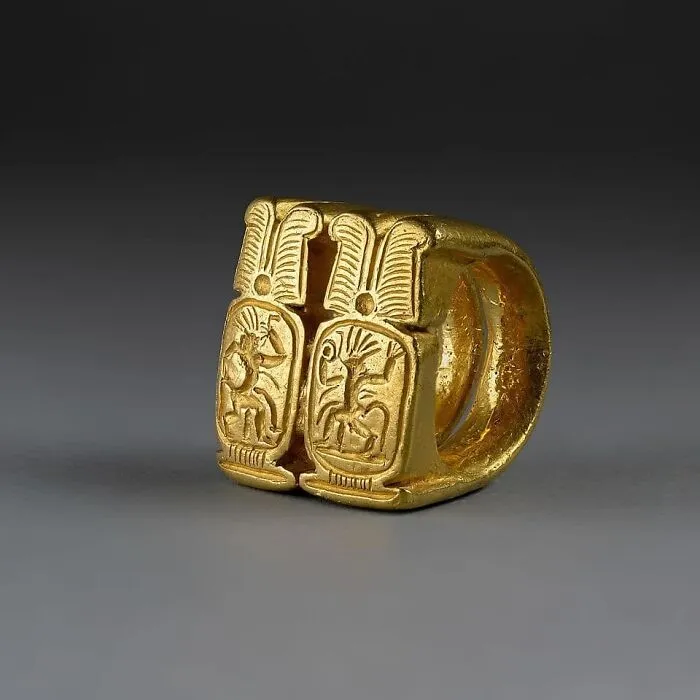
Gold signet ring with Bes figure - New Kingdom, Amarna Period
ca. 1353–1323 B.C.
The ring bezel is decorated with the royal device of two cartouches topped by ostrich plumes. The cartouches frame dancing figures of Bes, a minor god who frightened away demons and slayed snakes and other harmful animals.
Bes was closely associated with women in labor and with small children, and use of his image on this ring suggests that it belonged to a queen.
On display at the Metropolitan Museum of Art in New York
Report
7points
#32
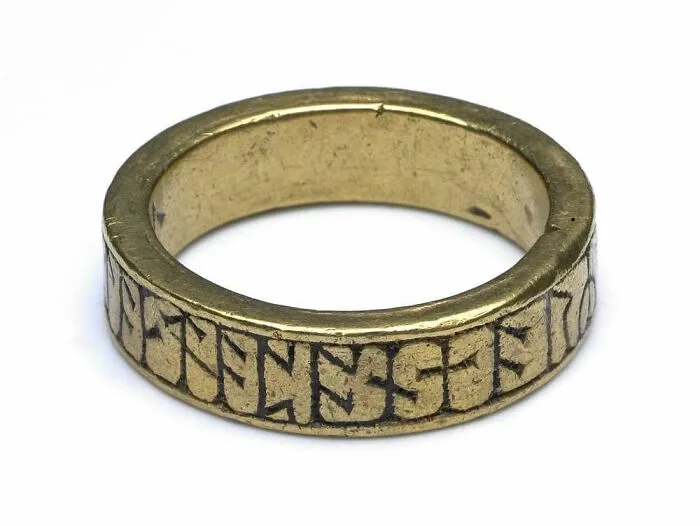
Anglo-Saxon ring engraved with a runic inscription - 8th century
The Anglo-Saxon period in Britain spans approximately the six centuries from 410-1066AD.
The period used to be known as the Dark Ages, mainly because written sources for the early years of Saxon invasion are scarce. However, most historians now prefer the terms 'early middle ages' or 'early medieval period'.
It was a time of war, of the breaking up of Roman Britannia into several separate kingdoms, of religious conversion and, after the 790s, of continual battles against a new set of invaders: the Vikings.
Jewellery was worn by both Anglo-Saxon women and men. Gemstones such as amethyst and amber and glass beads were used to make simple bracelets and necklaces. Women fastened their dresses at the shoulder with a pair of brooches. Men fastened cloaks with brooches and had elaborate belt buckles.
This gold ring was found by a young man near Greymoor Hill, in the hamlet of Kingmoor. It was given to the museum in 1823
Transliteration is: ÆRKRIUFLTKRIURIÞONGLÆSTÆPONTOL. As it cannot be interpreted it must be assumed that the inscription is meaningless and of magical import.
Photos courtesy: British Museum
Report
7points
#33
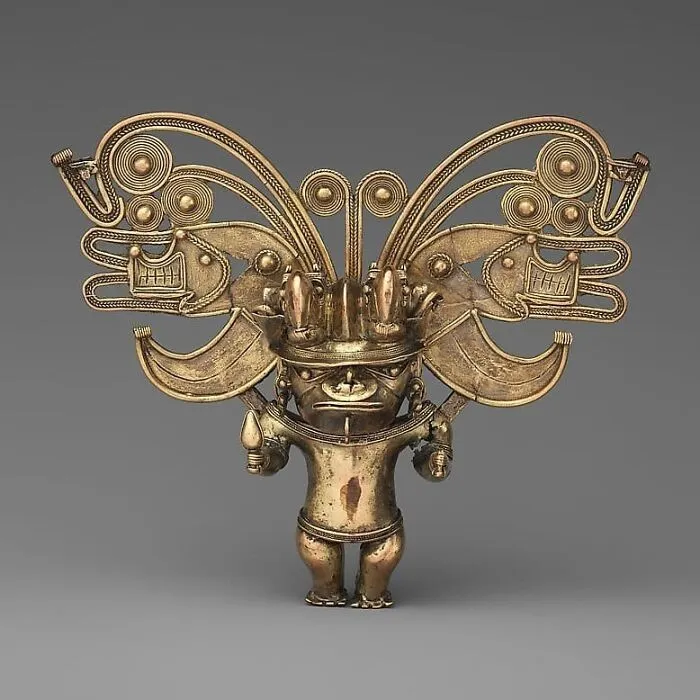
Gold Pendant - Tairona civilization, Northern Colombia, 10th–16th century
Works in gold made by the Tairona people of the Sierra Nevada de Santa Marta in north Colombia emphasize volume and three-dimensional form.
The figure shown here is part of a small group called caciques ("chieftains") because of their flamboyant, awe-inspiring appearance. Caciques range from about one to six inches in height and are among the most spectacular and detailed Precolumbian gold castings. They are hollow, having been cast by the lost-wax method in tumbaga to achieve remarkable detail. Loops in back indicate that they were worn as pendants.
There are two types of cacique: one is fully human (shown here); the other is similar but has the head of a bat or crocodile. Both wear enormous headdresses, sometimes as tall as the figures, with two large birds on the front and elaborate sidepieces.
The human-headed pendant also has a visor or diadem, a kidney-shaped nose ornament, a labret in the lower lip, disk-headed rods and crescent-shaped dangles through the earlobes, a necklace, a belt, and armbands.The tiny ornaments display minute details and are comparable to full-size examples found in Tairona tombs.
Whether a portrait of a ruler, a rendering of a supernatural ancestor, or a depiction of a shaman in the state of symbolic and spiritual transformation (assuming the features of a helping animal spirit), such a powerful image could only have been worn by individuals who were themselves powerful in Tairona society.
Now on display at the Metropolitan Museum of Art in New York
Report
7points
#34
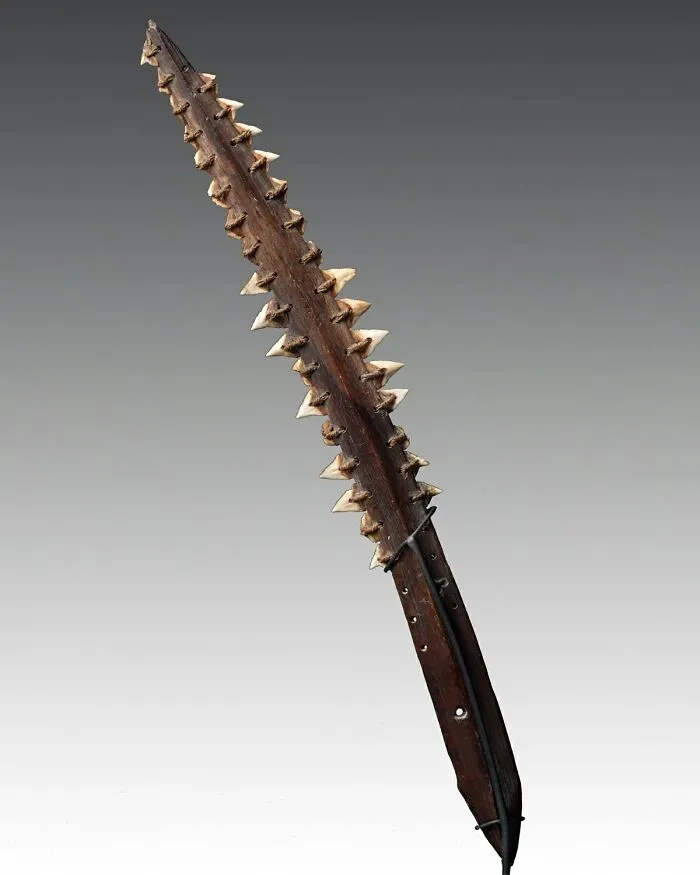
Shark tooth dagger - Kiribati, late 19th century
The islands of Kiribati were once divided by feuding local clans. Fighters used formidable weapons edged with shark teeth, drilled and bound to the edges of palmwood staves.
This weapon was one of a range of pikes, swords and daggers in the Kiribati armoury. It involved a special technique. The teeth were removed from the sharks and then the dagger was made in a socketing technique.
Small grooves were carved into the wood and the teeth were further stabilized with fiber cord. The technique involved drilling small holes through the teeth themselves. Two thicker sections of palm fiber are then used to stabilize the teeth, and a more complex binding is used to ensure that the entire array of teeth is locked in place.
For protection, fighters wore strong but cumbersome armour of coconut fibre, including a helmet, a cuirass with a high backplate, and sleeves and leggings, which it would be hard even for these sharp sawlike weapons to cut through.
Report
6points
#35
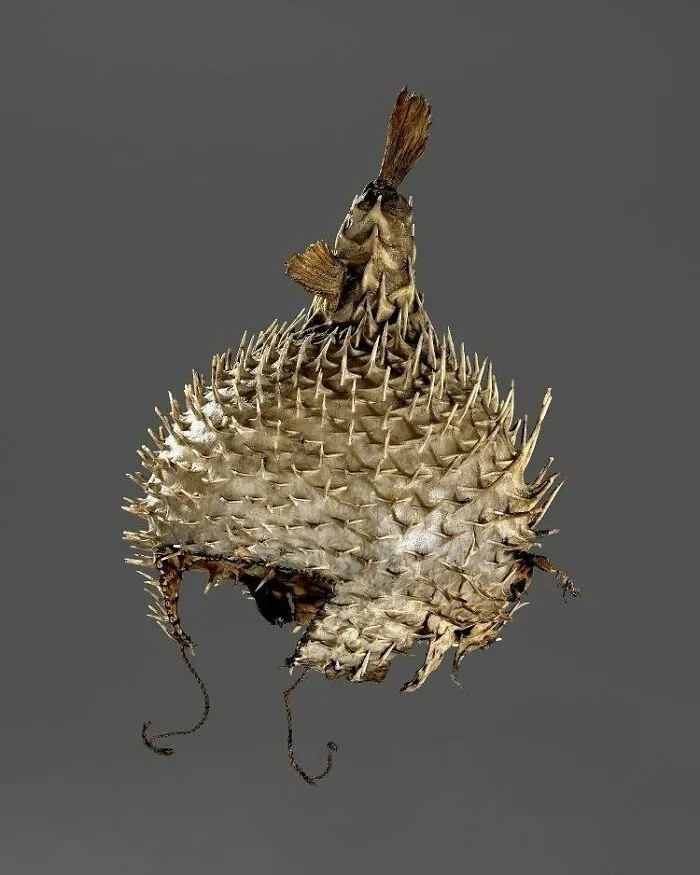
Porcupine fish helmet - Kiribati, late 19th century
For millennia, a Kiribati family’s wealth was measured by both that land and their ability to wring clothing, food, and shelter from it.
But given the scarcity of terra firma in Kiribati—and the power it conveyed—families and individuals frequently sparred over territory.
Kiribati men were famed for their fierceness, and when it came time for battle, they dressed the part, in head-to-toe armor made from coconut fiber and stingray skin. The crown jewel of Kiribati armor, though, was a spiky helmet made from the porcupinefish.
Porcupinefish helmets, known as te barantauti, were made by capturing one of these agitated, puffed-up porcupinefish, peeling the skin away from the body, and drying it.
The spiny skin that remained was reinforced with coconut-fiber padding and fashioned into a brittle helmet.
Though the helmets offered little in the way of actual protection, they instantly made their wearers appear bigger, taller, and more formidable.
For Kiribati warriors, this intimidation was more important than protection from 'losing their lives. That’s because in traditional Kiribati culture, a person who took someone’s life—even in a fair fight—paid with their most prized resource: their land.
So instead of going for the lethal battle, warriors sought to wound and humiliate their enemy. Fish-skin and coconut-fiber offered just the right amount of protection.
Fish helmets don't save lives. They were more about drama than defense
Museum courtesy: Harvard College, Peabody Museum of Archaeology and Ethnology
Report
6points
#36
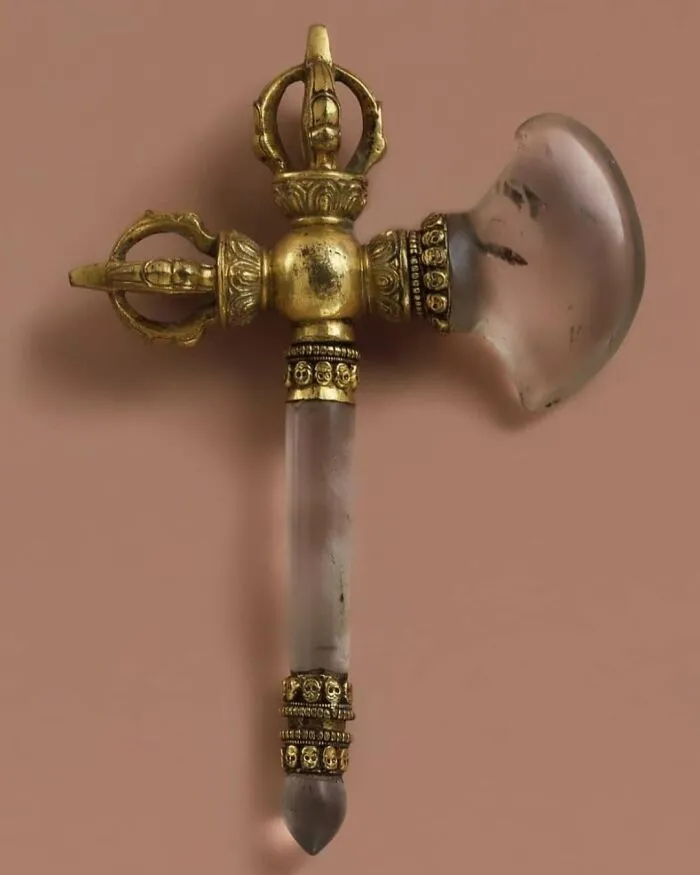
Utensils for use in Buddhist rituals(axe, flaying knife and dagger) - Eastern Tibet, Kham region - 1635
Ritual utensils are the essential tools of Tibetan Vajrayana Buddhism practice, used to drive away the delusions that act as impediments to enlightenment.
Tibetan Buddhism was practiced at the Chinese court throughout the 17th century. The gilded coppered utensils would have been used in Buddhist rituals to quell demons, which are symbolic of obstacles that must be overcome to reach enlightenment
Buddhism was more successful than any of the other missionary religions in making peace with the indigenous spirits it confronted in its progress through Asia. Monastics either turned a blind eye to existent demon-deity cults (as in Southeast Asia), allowing them to flourish in tandem with Buddhism, or (as in Tibet) Buddhist miracle workers like Padmasambhava forcefully tamed the demons and turned them into dharma protectors and fierce guardians of the new faith of Buddhism.
Those who are found lacking in these attributes have far more to fear from demons than those who, like the Buddha in his triumph over the ultimate demon Māra, have pacified their own inner demons of greed, aversion, and ignorance.
Since there is no notion of absolute evil in Buddhism (or indeed in any Asian religion), and all classes of beings, including beings of the lower realms such as demons, animals, and ghosts, may improve their karmic lot by attaining a higher birth in the human or divine realms, demons are not always and forever demons. They are troublesome but not catastrophic. They are obstacles to be overcome through ritual action, offerings of appeasement, and meditative detachment.
As representations of natural bounty, mystery, and fertility, demons threaten to exceed and overturn the human order. They must be controlled, and yet they must be respected, since they are an inevitable feature of that oscillating order
Held now at the Los Angeles County Museum of Art in U.S.A (not on public view).
Report
6points
#37
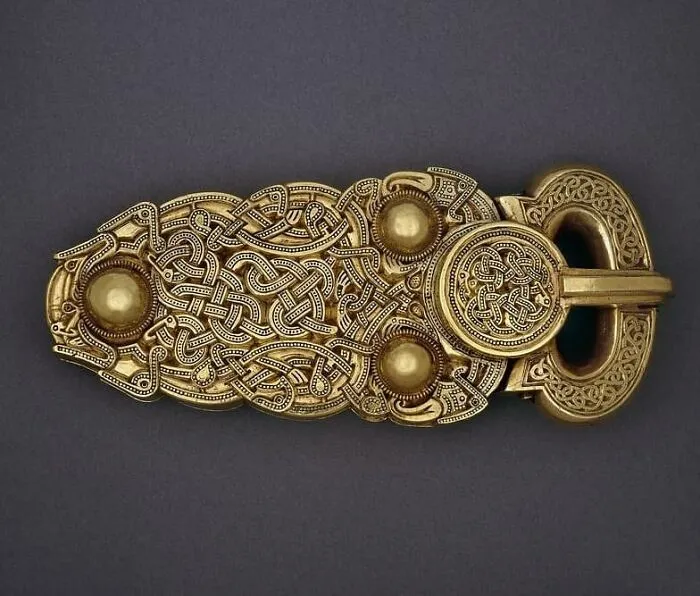
Gold belt buckle from the ship burial at Sutton Hoo - AD 650
In early Anglo-Saxon England, buckles used to fasten waist belts were a means of expressing a man's wealth and status. The type of metal used and the finesess of decoration were key factors. This spectacular gold buckle from the Sutton Hoo ship burial shows that the person commemorated there was of great importance.
Weighing more than 400 grams, the buckle is actually a hollow box that opens at the back on a hinge beneath the loop. A locking system, involving a complex system of sliders and internal rods which fit into slotted fixings, enables it to close securely.
Similarly-made buckles from Frankish and Burgundian parts of the Continent appear to have contained Christian relics, but we do not know for certain whether the Sutton Hoo buckle was used for this purpose.
No fewer than thirteen creatures decorate the buckle's surfaces. The plate and round tongue shield feature writhing snakes and intertwining four-legged beasts. Their bodies are highlighted with punched ornament filled with black niello.
Stylised snakes biting their own bodies slither on the loop, while at the tip of the buckle, two animals grip a small, dog-loke creature in their jaws. These together with the two fierce birds' heads on the buckle's shoulders, make this extraordinary object one of the most powerful images from early Anglo-Saxon England.
Photos courtesy: British Museum
Report
6points
#38
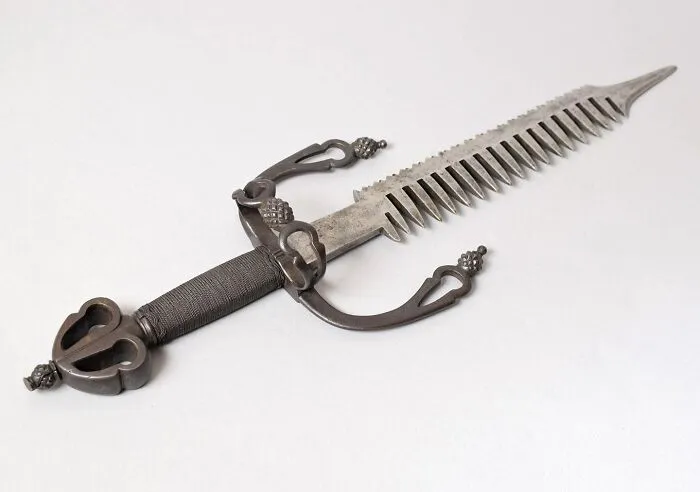
Parrying dagger with serrated toothed blade - Spain, Habsburg period, 1590
A system of fencing which used a dagger defensively held in the left hand was introduced in the first half of the 16th century. It remained popular in Spain and Italy throughout the 17th century.
The blade of a 'main gauche' or 'left hand' dagger was usually straight and double edged, frequently with prongs or serrations designed to catch an opponent's blade.
The counterguard of Spanish daggers was often triangular and the guard was usually decorated en suite with the rapier.
It is now kept at the Victoria & Albert Museum in London
Medium: blackened iron
Length: 45.7cm
Report
6points
#39
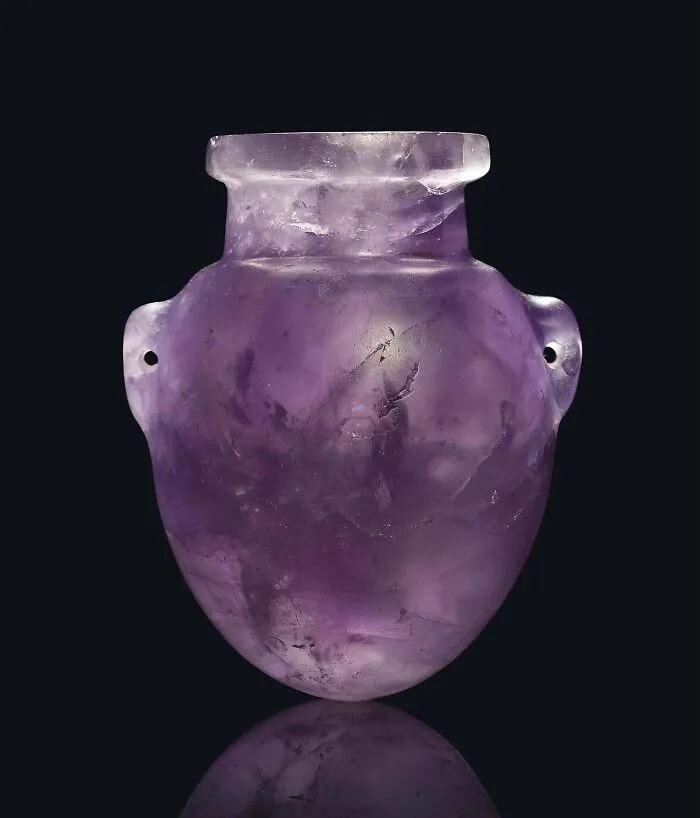
A Neo-Assyrian amethyst vase
- 8th century B.C.
Of ovoid form, with short cylindrical neck and overhanging disc rim, the mouth flat with a descending step framing the central opening, the interior hollowed out, with two trapezoidal lugs on the shoulders, drilled horizontally for suspension. Vases of this type were used to store perfume oils.
Sold at Christies in 2012
Dimensions: 2 1/8 in. (7.9 cm.) high
Report
6points
#40
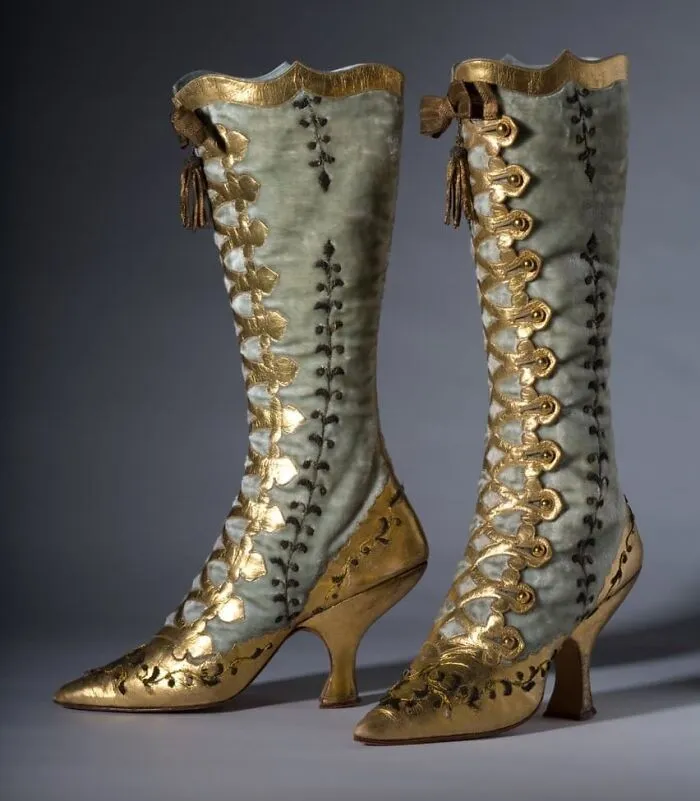
Victorian leather and velvet boots - Swedish or German, 1890s
This pair of handmade, bespoke button boots reflects the infusion of erotically charged references in women’s dress that emerged at the end of the 19th century.
The level of artisanry, the luxury of the materials and the whimsy found in the overall design, is exceptional. The gold kid leather appliqué and velvet are 'erotically charged' and they resemble a stockinged leg. Even a glimpse beneath a skirt would have been tantalizing.
These boots may have been commissioned by a specific client or perhaps more likely, as a ‘show off’ piece meant for display at an exposition.
The pair is kept now at the Bata Shoe Museum in Toronto
Report
6points