





#1
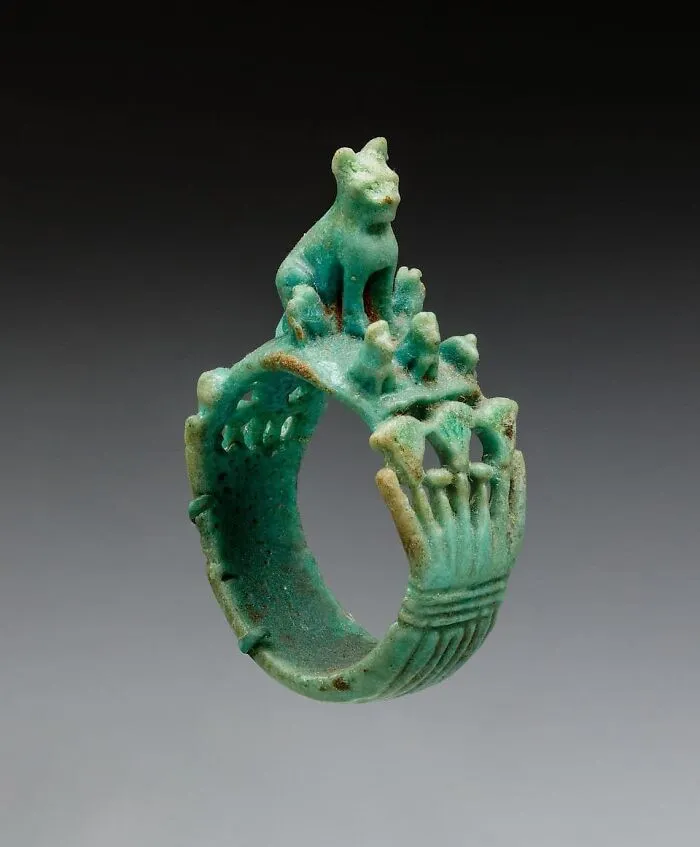
Ramesside/Third Intermediate Period - 1295–664 B.C.
This ring depicts a cat and its kittens perched above a bound bundle of flowering papyrus designed to represent a marsh. In all likelihood, these elements symbolize the myth of the "Faraway Goddess," a story in which a feline plays a prominent role as a deity that must be coaxed back to the Nile Valley after she flees into the Nubian desert.
Her desertion disrupts the ancient Egyptian world of "maat" and she must be brought back by a variety of personages so that Egypt returns to stability and order and prosperity.
Elaborately carved faience rings typically date to this period when craftsmen had total mastery of the medium faience; this one is a superb example. Such rings were most likely created to celebrate various festivals held in honor of the deities depicted on the rings.
Medium: faience
On display at the Metropolitan Museum of Art in New York
#2
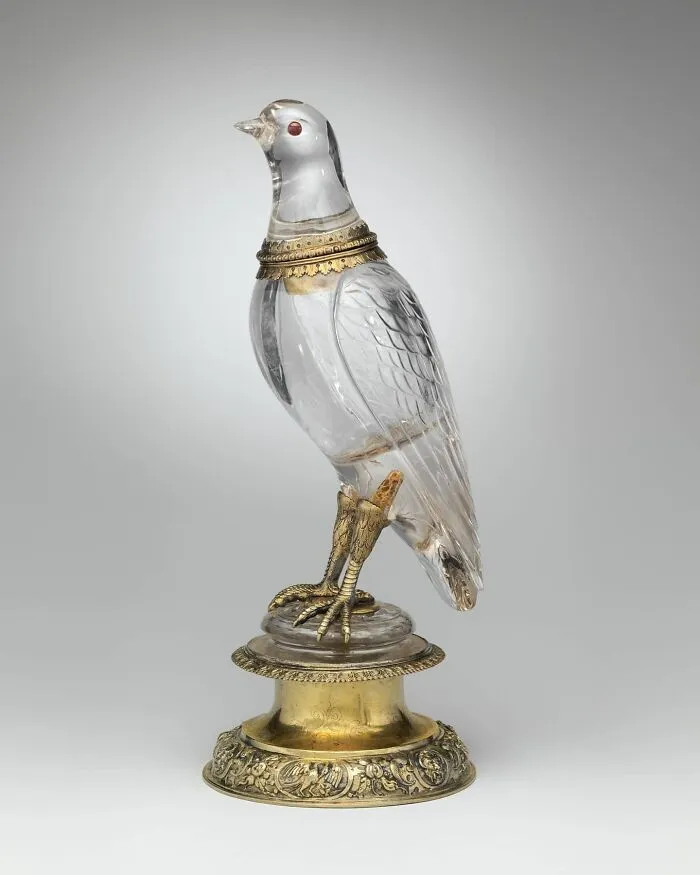
The coveted qualities of both natural wonder (naturalia) and fine craftsmanship (artificialia) are embodied in this hollow vessel.
In the 1500s, rock crystal was priced at its weight in gold. The material’s extreme hardness allows it to be worked—cut, carved, or drilled—without shattering, while at its finest, as here, it is luminous and transparent.
Through artistry, a pricey mass of heavy pure quartz has here been transformed into a seemingly weightless bird, complete with beady eyes of ruby and a collar and legs of gilded silver.
Now on display at the Metropolitan Museum of Art in New York
#3
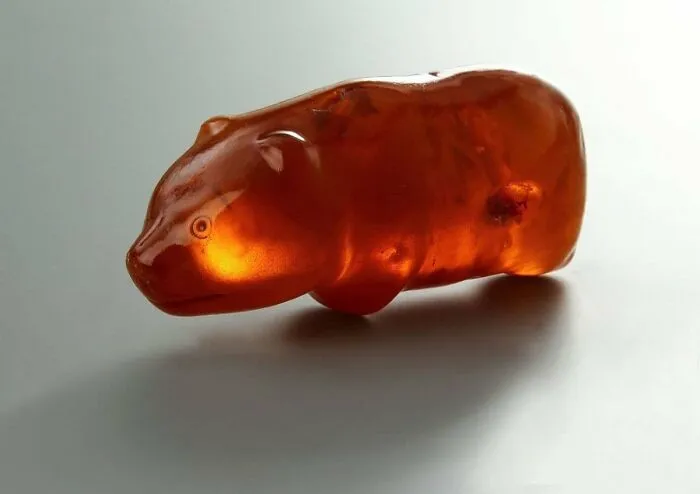
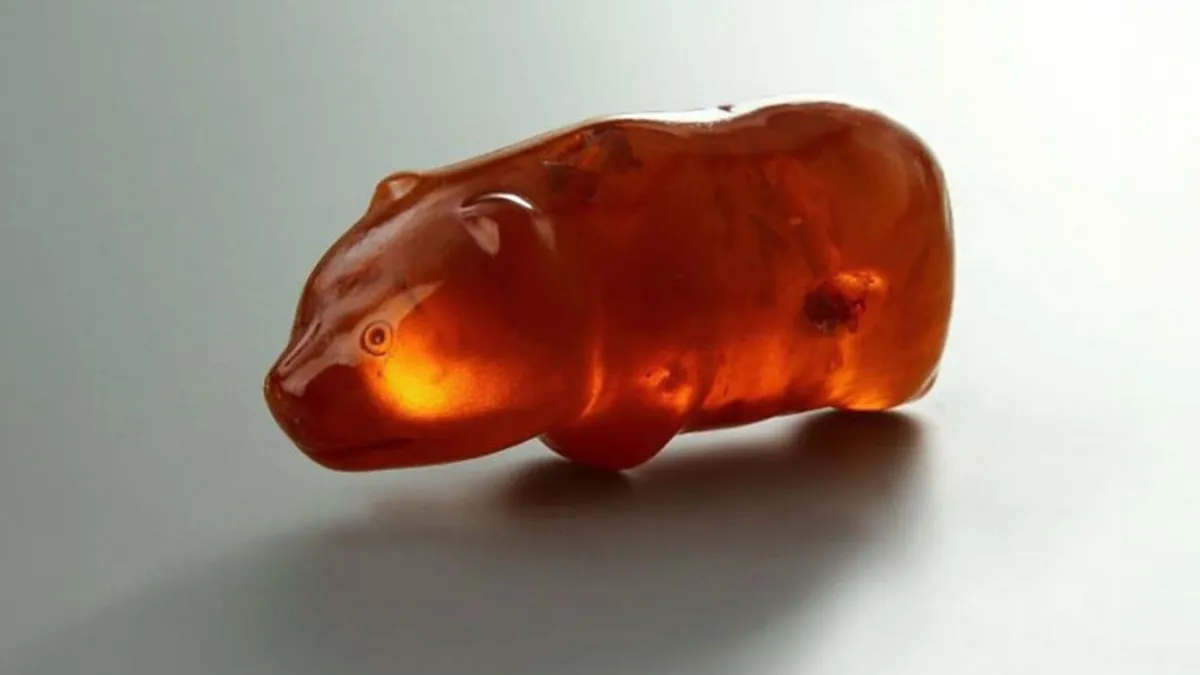
The amber bear amulet was found in 1887 in a peat bog near Slupsk, Poland. When the figure was examined it turned out to be the amulet of a bear hunter, originating from the Neolithic period. It was dated at between 1700 B.C. and 650 B.C.
Since the researchers were not precise regarding the age of the find, we can assume this figure is over three thousand years old.
The original did not stay long in Slupsk since special protection was sought for the oldest item ever discovered in the Pomerania.
The museum in Szczecin guaranteed safety, and the amber bear was placed there - probably until 1945.
Long before anyone wrote history down on paper, people left tiny clues in the things they touched, used, and carried every day. Physical objects act like a bridge across time, showing us what life was really like back then.
Books and old papers can get lost, altered, or rewritten over time. But a simple stone tool, a worn sweater, or an old clay pot can’t lie. When you look at a chipped blade or a painted dish, you can instantly picture someone sitting down to make dinner or working out in the sun hundreds of years ago.
#4
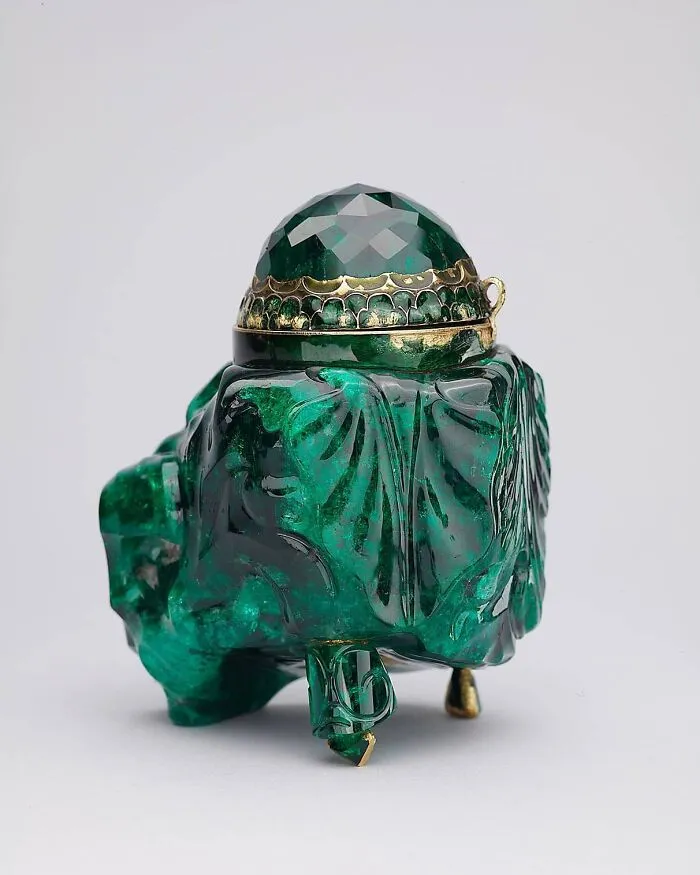
The "Emerald Unguentarium" in the Imperial treasury (Schatzkammer), in Vienna, was commissioned by the Habsburg king, Emperor Ferdinand III in 1641, and was carved out of a single large emerald crystal of Colombian origin, probably over 3,000 carats in weight, perhaps the largest emerald crystal discovered in the world at that time.
The Emerald Unguentarium is shaped more like a bottle, and appears somewhat irregular in shape, as the cutter of the enormous emerald crystal was perhaps instructed by the king to reduce losses in cutting, to a minimum. The unguentarium had a lid and feet also made of emerald, probably worked from the material scooped out of the vessel.
The exact weight of the original massive crystal is not known but after the crystal was hollowed out and transformed into an ointment vessel (unguentarium) it weighed 2,860 carats. The cutter who apparently seemed to have followed the shape of the natural crystal - which was in fact a twin crystal intergrown into one another - in order to minimize losses, eventually ended up with a vessel having a rather irregular shape.
The surface of the vessel is engraved with four leaf patterns. The dome-shaped lid of the bottle has enameled gold decoration at its base where it fits on to the mouth of the vessel.
The master carver who fashioned the vessel had also created facets of different shapes on the surface of the vessel as well as the lid, which were subsequently polished to bring out the intrinsic beauty of the emerald.
The dimensions of the vessel are length-8.5 cm, breadth-7.2 cm, and height-10.9 cm
#5
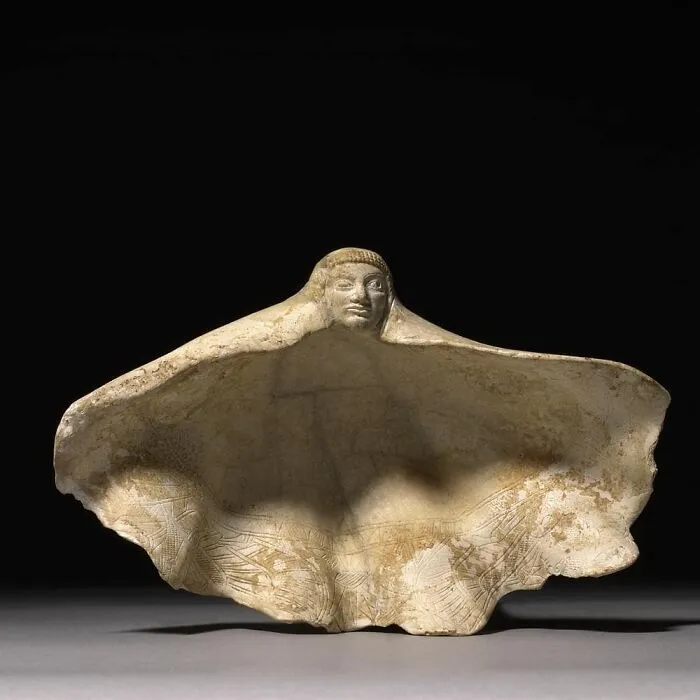
This shell, from a clam (Tridacna squamosa) was used as a container for cosmetics. The umbo has been carved in the form of a woman's head, while the natural form of the shell gives the impression of a windblown cloak draped over her head.
The border is carved with sphinxes and lotus flowers in a design which can be seen on textiles depicted in Assyrian carved reliefs. Other decoration on the outside of the shell is very worn and now hard to make out.
There are around ninety examples of this type of shell container, but this one has particularly fine decoration. They all seem to have been produced within a short period, possibly in the Syro-Palestinian area, where they are found in concentration, though they also occur in Mesopotamia, Egypt, Cyrene, the coast of Asia Minor, the Aegean islands and Greece.
The head is extremely like those carved on the handles of albaster and stone cosmetic palettes found in Jordan. Exotic imports like this frequently occur in the Orientalizing period in Etruria(seventh century BC), when flourishing trade with cultures around the eastern Mediterranean supplied the keen demand for foreign luxury goods.
Tridacna squamosa shell has its origins in the Red Sea and the Indian Ocean.
Dimensions: width - 21cm, height - 13cm
On display at the British Museum in London
#6
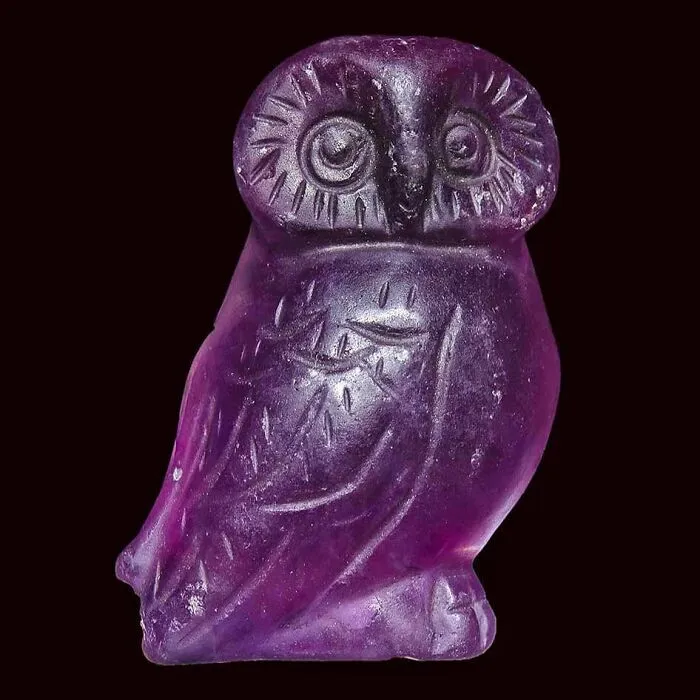
The tridimensional sculpture is depicting the famous owl of Athens or Athens Noctua. The mythological animal is characterized by an horizontal elongated head with big rounded open-eyes.
The head feathers and the pupils are deeply carved. The face is frontal meanwhile the body is turned to the left. The wings, and some other feathers are represented by the same carved-lines.
The posture of the bird and the general appearance are referring to the mythological owl of the goddess Athena, symbol of the city of Athens.
This sculpture can be seen as a votive idol or a very precious protective amulet empowered by the image linked to the goddess of wisdom and strategy. This ancient micro-sculpture is carved in an extraordinary deep purple bicolor fluorite.
During the Antiquity, the amulets, sculpted figures and vessels productions in fluorite are attested in ancient Greece and Rome as a precious stone. Wellknown for the crystals wonderful colors and the perfect cleavage.
Courtesy of ArsValue. com
By studying these everyday things, experts can see how simple ideas became major technological breakthroughs over time. We can see how whole communities grew, traded, and changed their way of life across generations.
Even old scraps of parchment, kept safe for centuries, have given historians the exact words they need to decipher ancient languages and ideas that still shape how we think today.
“Objects give us a special kind of access to the past. They allow us to touch (within careful parameters usually) something that was used by people, and thus get a physical feel for their lives. We can learn about past societies' values from what they kept, and what materials they made things from - or about daily life from such simple things as cooking utensils and furniture,” says Katy Barrett, curator of Art pre-1800 at Royal Museums Greenwich.
#7
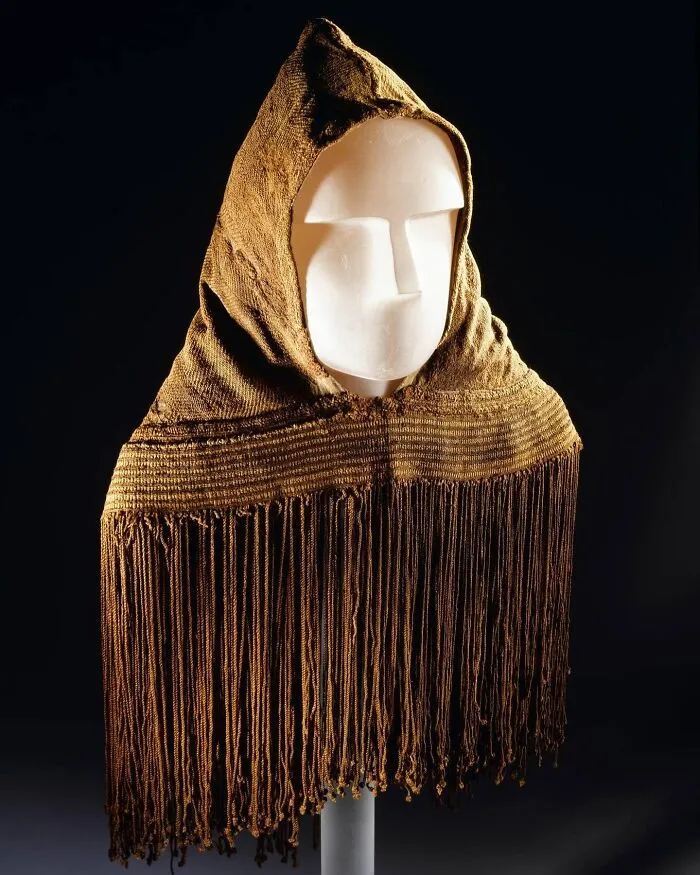
It is rare for organic materials, such as leather, wood or cloth, to survive through the ages. In normal circumstances, they decay rapidly, over a relatively short period of time.
But thanks to the preservative qualities of peat, one of Orkney's most unique discoveries looks almost as good today as when it was created, over 1,700 years ago.
The head-covering part of the hood is shaped like an old-fashioned pixie hood, but it is joined on to a yoke that covers the wearer’s shoulders, and it has a long twisted fringe.
Further research by experimental archaeologist Jacqui Wood has revealed fascinating details. The hood is small and was probably made for a child of about eight or nine.
The main part of the fabric is a twill weave, but the diagonal line of the twill changes direction irregularly. Careful measurements showed that at each direction change, the number of threads per inch also changed.
It seems that the cloth was being woven with hand-spun yarn which varied in thickness, and the changes in direction were being used to mask these variations.
The fringe is part of a tablet-woven braid, and both the cloth and the braid must have come from other, better-made garments which must have been cut up to make this child’s hood.
One imagines that the child then left the hood in the hill – maybe they were working peats? Or would the child have been herding animals? Or maybe it blew off the washing line – maybe at Minehowe? The possibilities are endless.
Jacqui’s discoveries about the hood were published in the proceedings of the Orkney Heritage Society’s Iron Age conference ‘Sea Change’, which took place in 2001.
The original hood is in the Museum of Scotland
#8
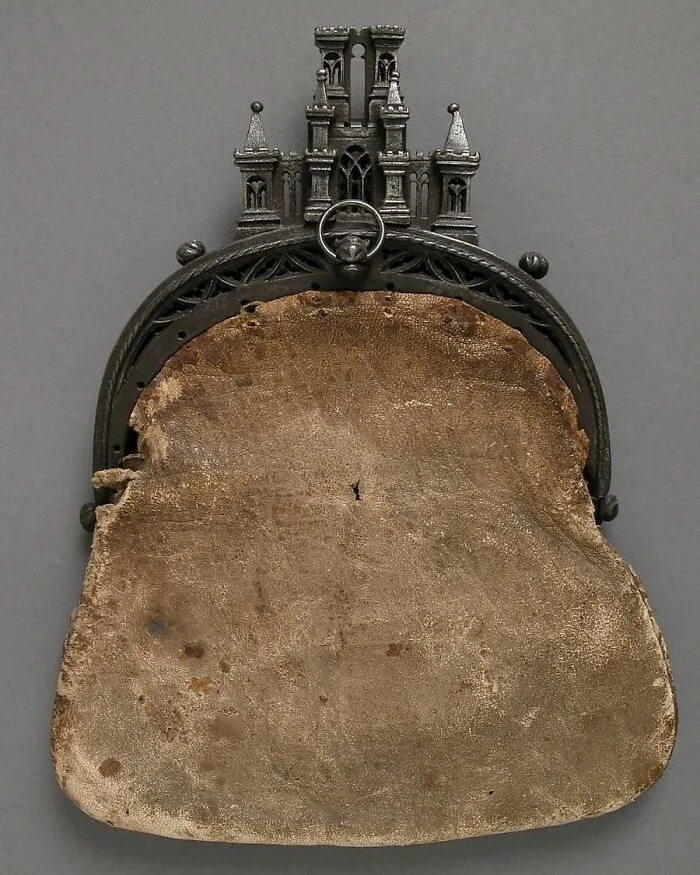
Purses of various shapes and sizes, carried by both men and women, were given descriptive terms in medieval inventories, such as bourse or poche à compartement.
In the fifteenth century, purses with clasps of metal and loops on the rear which could be attached directly to the belt superseded the pouches which closed with drawstrings and hung from the belt.
The clasp no doubt came into use to provide greater security for money or other valuables when the owner walked on crowed city streets.
This purse has two inside pockets and a concealed smaller section with two small openings hidden beneath the front flat.
Housed now at the Metropolitan Museum of Art in New York
Medium: Iron, leather
Dimensions:
Overall: 22.9 x 17.9 x 4.1 cm
purse clasp only: 12.7 x 15.2 x 4.1 cm
#9
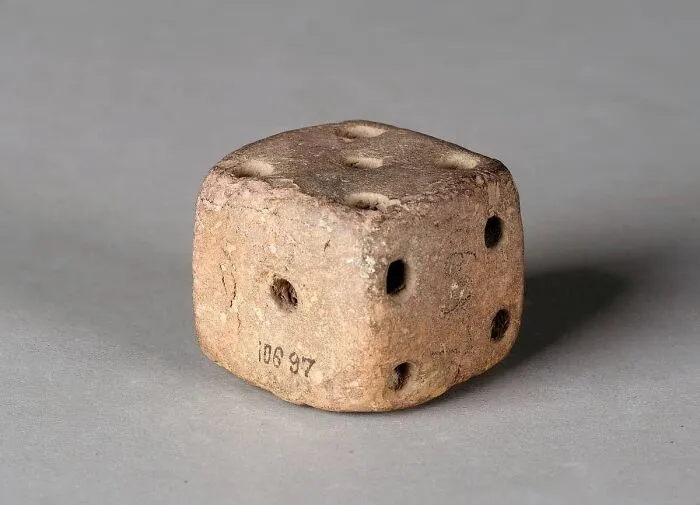
The earliest references to board games on the subcontinent come from the Indus Valley Civilization.
Dice and counters have been found at sites like Harappa, Lothal and Mohenjo-Daro, dated to 2500 BCE. Primitive board games have also been found etched into the floors of caves and temples, going back to the early centuries of the Common Era, in places like Bhaja, Ajanta and Ellora in Maharashtra.
Elsewhere in the world, hieroglyphics in the tomb of Merknera (3300–2700 BC) in Egypt depict ancient games, and traces of board games have even been found at archaeological sites in Mesopotamia and Greece. Clearly, board games have a long history, cutting across time and geography.
These games continued to be popular in medieval times. Games that involved gambling were popular in the Mughal court.
Now on display at Lahore Museum in Pakistan
Artifacts are a goldmine for anyone trying to understand the past. Archaeologists carefully dig up ancient living sites, searching for lost objects that can tell us who these people really were. Since many early societies never wrote anything down, these physical finds are often our only clues.
Ancient Egypt is a great example. The Egyptians strongly believed in life after passing away, so they buried their loved ones with everything they might need in the next world. As a result, their tombs became incredible time capsules. The most famous, King Tut’s tomb, offers a massive window into their everyday world.
#10
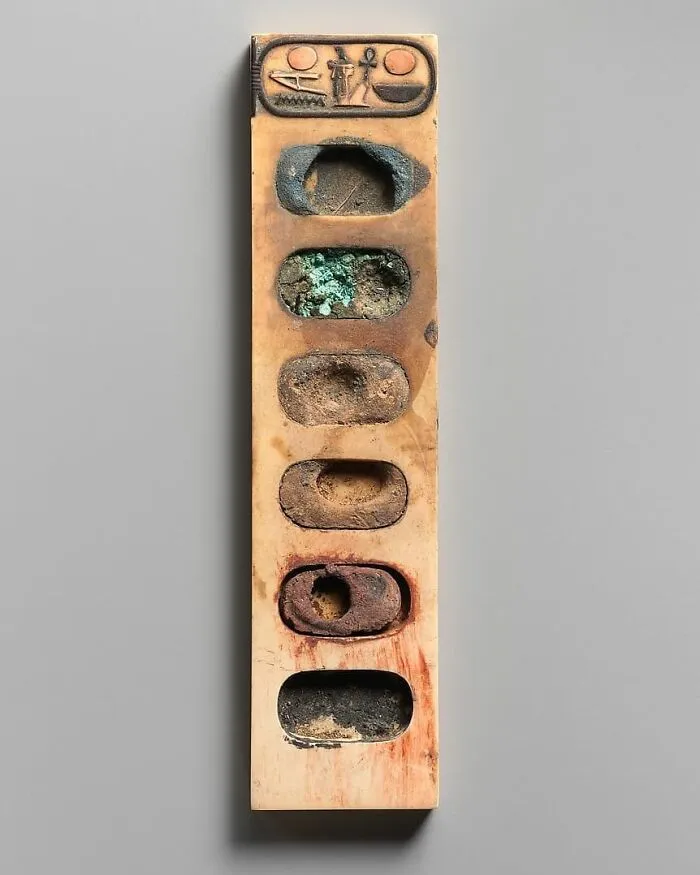
New Kingdom 1390–1352 B.C.
This painter's palette was carved from a single piece of ivory. Six oval wells contain cakes of pigments including blue, green, brown, yellow, red, and black.
The oval cartouche at one end encircles the throne name of Amenhotep III, Nebmaatre, and the epithet "beloved of Re."
Now on display at the Metropolitan Museum of Art in New York
#11
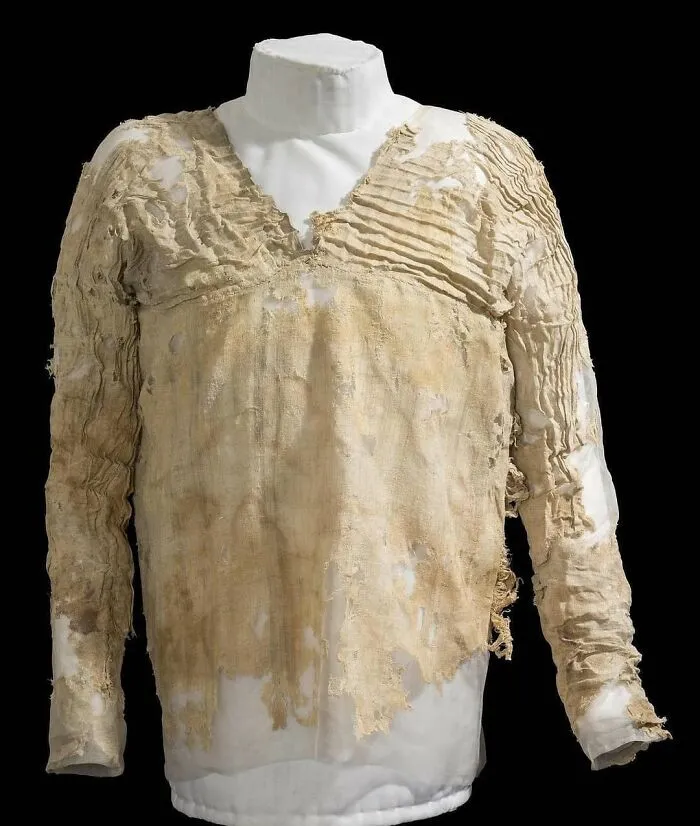
The dress was discovered in an ancient Egyptian cemetery, about 30 miles from Cairo. Dating from the First Dynasty or Old Kingdom period, the dress is made of linen (therefore featuring the earliest known textile fabric used for clothing), and features tightly pleated sleeves and a yoke stitched to a skirt.
Initially found in 1913, the significance of the find wasn’t understood until 1977 – the tunic was part of a linen pile that had been excavated, but wasn’t cleaned or properly examined for more than 60 years. Conservators at the Victoria and Albert Museum in London mounted the garment on a backing of fine silk to allow it to be displayed as it would have been worn in life.
Researchers say the garment was clearly worn in life, as it showed distinct creasing at the elbows and armpits. It was also discovered inside out, although some believe it was deliberately placed in the tomb that way as a form of funerary significance.
The garment is a find of surpassing rarity. Few pieces of early clothing, which was made from plant fibers or animal skins, escaped disintegration. Textiles recovered from archaeological sites are generally no older than 2,000 years.
A handful of garments of similar age have survived to the present day, but those were simply wrapped or draped around the body.
Such fine detail could only have been turned out by a specialized craftsperson. And such people arise only in a prosperous and hierarchical society, such as the ancient Egypt of 5,000 years ago, a time when the kingdom was first united under a single ruler.
It now resides at the Museum of Egyptian Archaeology, at University College of London.
#12
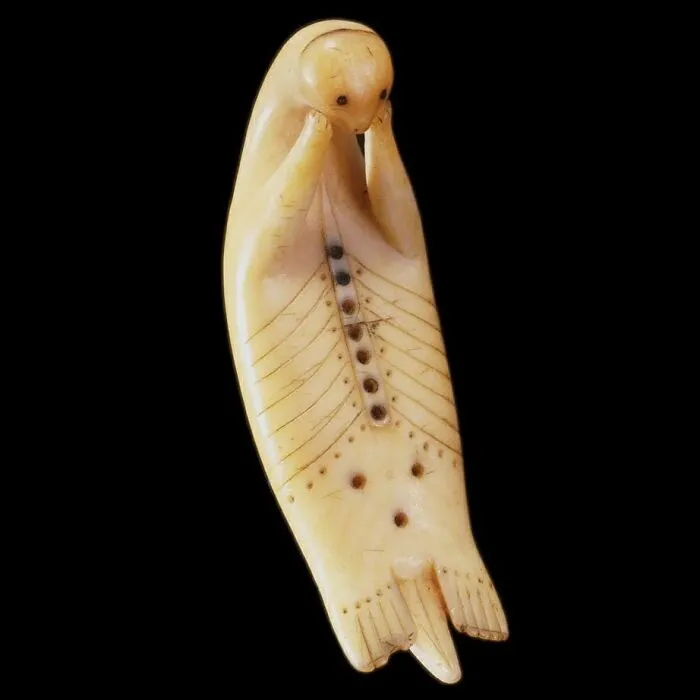
There are rare occasions when a carved object has no other function but to represent a hunted animal, as a sculpture.
This is one such example, of a charm figure, which would have been placed in a Kayak when seeking otters. It should be noted, however, that even though this charm does not appear to double as a practical tool, its significance is powerful.
This is a communicating figure, shown swimming on its back, with front paws delicately touching its face, as if eating or calling out.
Arctic native hunters have described using amulets like this precisely to assist them in guiding animals to them, which this otter seems to be doing. Like the circular joint markings depicted in many other animal representations, these express the mortal and spiritual transformation of the animal.
The circular marks and dots represent passages through transformational states, and in the shamanic universe of native Alaskans, animals, people, fish and birds may be seen traveling through concentric circles much like the stacked planes that the Buddhist universe is conceived to be.
As one passes through one circle, he becomes another creature, in order to navigate the particularities of the next sphere.
The fact that there are seven drilled dots along the spinal decoration of this otter, and three triangulating dots encumbering his belly, is additionally significant, perhaps in the expression of the hunter, that his success depends upon the continual support of his charm, repeatedly, throughout his life.
Courtesy of: The Steven Michigan Collection of North American Tribal Art
The most exciting thing about historical objects is that the search is far from over. Archaeologists — and often everyday folks — are constantly stumbling upon new finds that completely change how we see the past.
Recently, a 13-year-old schoolboy picked up a tiny coin in a field near Berlin. When experts examined it, they were stunned. The bronze coin was minted in the 3rd century B.C.E. in Troy, located in modern-day Turkey. It turned out to be the first ancient Greek artifact ever unearthed in Germany's capital. How it made the long journey from Troy to Berlin remains a fascinating mystery.
#13
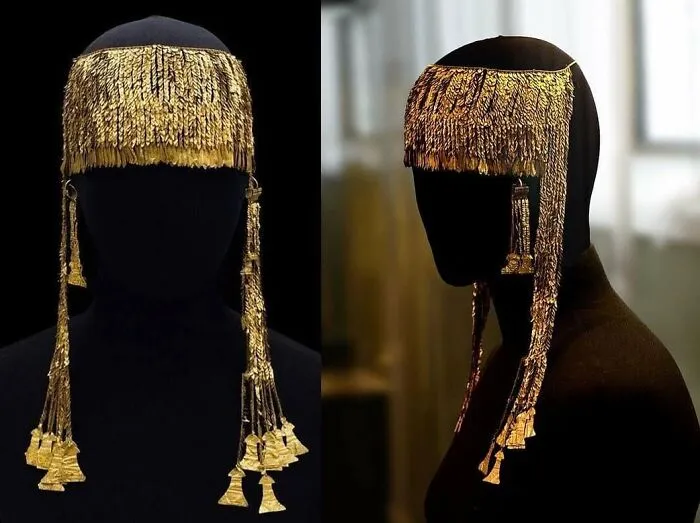
During Heinrich Schliemann's excavations at Hisarlik, he discovered 270 artifacts buried where Priam's palace supposedly stood. He called these artifacts 'Priam's Treasure'. If Priam's belongings are at Hisarlik then this is evidence for Troy being at this location.
Schliemann thought that Priam must have hidden his valuable treasure somewhere in the city. The King wouldn't have wanted Trojan treasures to fall into Greek hands if the city was captured.
Finding this hidden treasure was of great importance to Schliemann, not only for its value but also as evidence that Hisarlik was, indeed, the site of Troy.
On 31st May 1873, at Troy II, Schliemann found what he was looking for. The artifacts were all closely packed together, probably having been initially buried in a chest.
These 270 items included gold jewellery, headdresses, silver ingots, bronze weapons, a copper cauldron and many other treasures.
Schliemann actually published a photo of his wife Sophia wearing the gold jewellery and diadem found in this treasure cache, to show off his findings to the public.
The treasure was certainly extensive enough and valuable enough to have belonged to royalty.
Schliemann got into trouble with the Ottoman authorities by smuggling the treasure out of Ottoman territory. Some say that his wife, Sophia, hid some of the treasure in her underwear.
Eventually, Schliemann was sued by the Ottoman authorities, but the artifacts were later displayed in various museums including Pushkin State Museum of Fine Arts
Neues Museum, Troy Museum.
#14
Roman glass is the result of a stunning piece of historic craftsmanship dating back 2,000 years to the time of the Roman Empire. In 63 BC, the Romans conquered the Syro-Palestinian area and returned to Rome with skilled glass makers. Before then, glass was available only to the wealthy and was manufactured by core forming, casting, cutting and grinding.
With the invention of the glass blowing around 50 BC, glass instantly became available to the less wealthy public. The Roman glass industry rapidly developed over a couple of generations during the first half of the first century A.D.
Glass vessels became commonplace throughout the empire and were exported to places as far away as Scandinavia and the Far East. The people of the Roman Empire used more glass than any other ancient civilization.
Perfumes were very popular in Ancient Rome. In fact, they were so heavily used that Cicero claimed that, "The right scent for a woman is none at all." They came in liquid, solid and sticky forms and were often created in a maceration process with flowers or herbs and oil.
Today, most commercial perfumes are alcohol-based, but Roman perfumes for the skin took the form of unguents, or greasy ointments. An unguent consisted of a liquid base and a scented essence, and could also contain preservatives such as salt, and fixatives such as gums or resins – to stabilise the volatile components of the perfume.
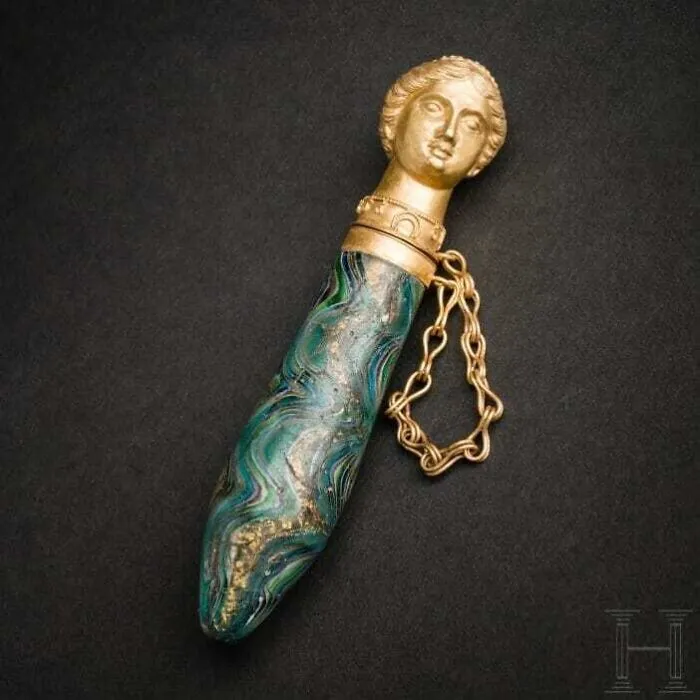
Physical description: oblong gold ribbon glass perfume bottle, the rim of which has a gold border. The lid is designed as a delicate, graceful woman's head (with a long neck and necklace) and has a long spike on the underside with which drop by drop the precious perfume could be removed from the container. The lid and the bezel are connected by a chain. The thick glass is polychrome (turquoise, blue, white etc.) with gold threads worked into it.
Length 11.8 cm. Weight 49 g.
Provenance: Hermann Historica - the item is put up for auction. DM for more details.
#15
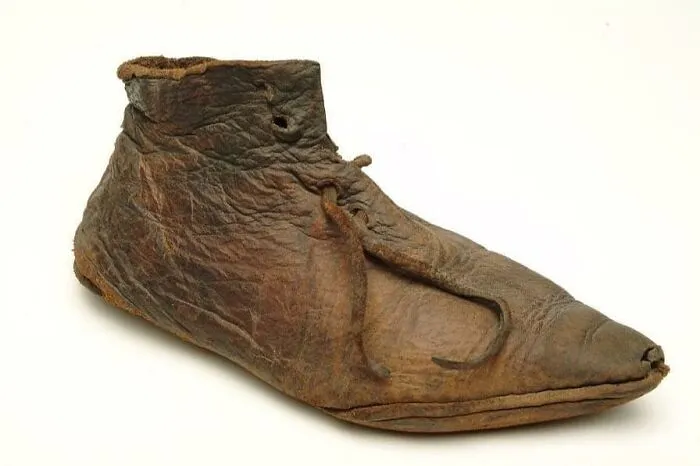
During the medieval period children's shoes were similar to those worn by adolescents and adults.
The only exceptions were the exaggerated, long, pointed 'poulaines', which were worn only by adults.This right foot child's ankle-shoe dates to the late 1300s and has a slightly pointed toe.
The tip of the toe is worn.It is fastened at the front with a leather thong. It is complete, including the rand, the strip of leather inserted between the upper and the sole.
It was found at Baynard's Castle Dock, near Blackfriars, London.
Now on display at the Museum of London
Technology has made museums easier to visit than ever. If you cannot go in person, you can now explore collections online. Virtual reality, digital guides, apps, and virtual trails bring history straight to your screen.
Even so, stepping inside a real museum changes how your brain works. A study found that people find artwork far more stimulating, positive, and memorable when they view it in a physical gallery rather than on a computer screen.
Standing in an actual museum space deeply engages our minds — partly because the physical layout helps us remember surrounding pieces.
#16
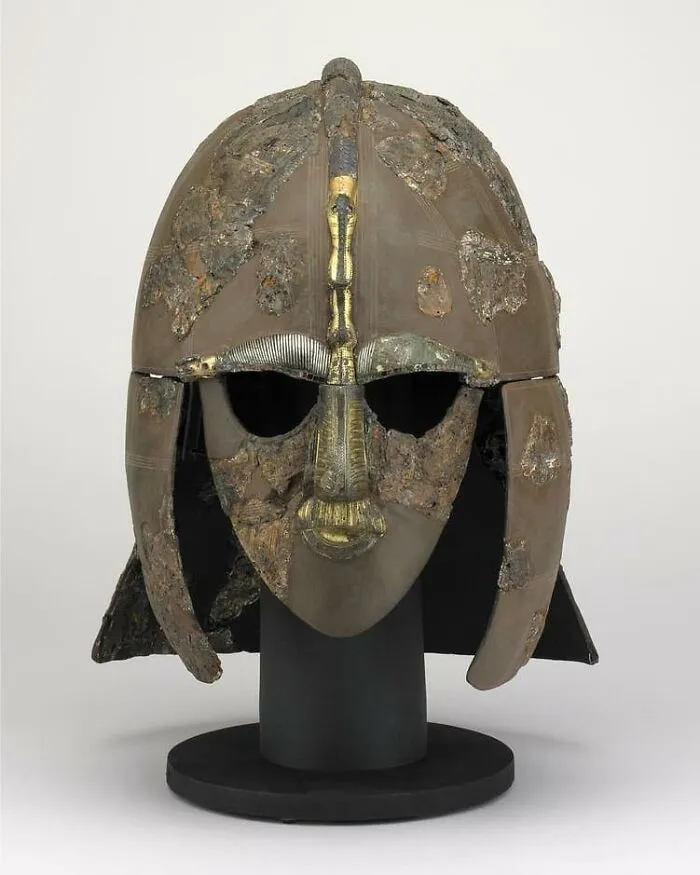
The Sutton Hoo helmet is an ornately decorated Anglo-Saxon helmet found during a 1939 excavation of the Sutton Hoo ship-burial.
It was buried around 625 and is widely believed to have belonged to King Rædwald of East Anglia; its elaborate decoration may have given it a secondary function akin to a crown.
The helmet was both a functional piece of armour that would have offered considerable protection if ever used in warfare, and a decorative, prestigious piece of extravagant metalwork.
The visage contains eyebrows, a nose, and moustache, creating the image of a man joined by a dragon's head to become a soaring dragon with outstretched wings.
It is described as "the most iconic object" from "one of the most spectacular archaeological discoveries ever made", and perhaps the most important known Anglo-Saxon artifact.
It has become a symbol of the Early Middle Ages and "of Archaeology in general". It was excavated as hundreds of rusted fragments, and was first displayed following an initial reconstruction in 1945–46, and then in its present form after a second reconstruction in 1970–71.
The Sutton Hoo helmet, weighing an estimated 2.5 kg (5.5 lb), was made of iron and covered with decorated sheets of tinned copper alloy. The copper alloy sheets are stamped with various patterns including animal interlace, and warrior motifs depicted in two panels.
Now on display at the British Museum, in London
#17
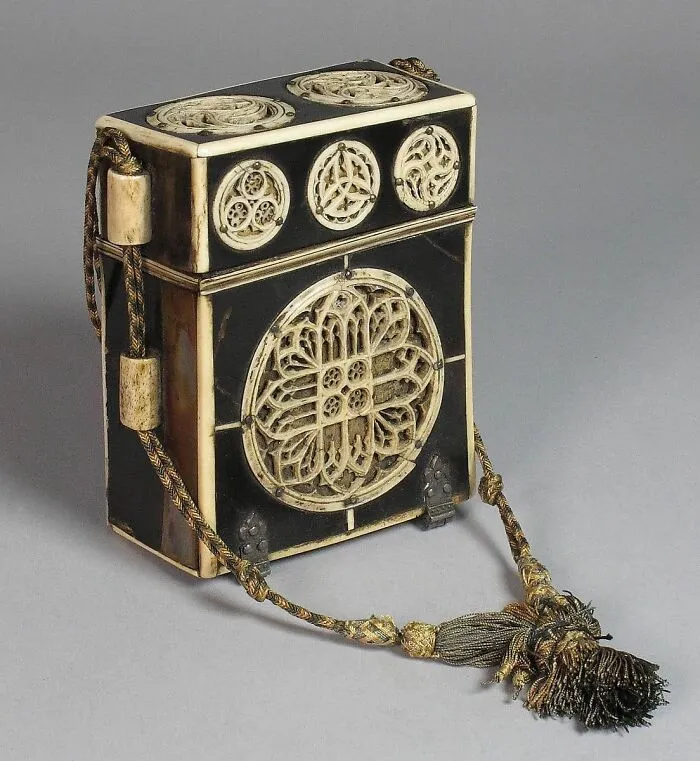
Medieval literature is a broad subject, encompassing essentially all written works available in Europe and beyond during the Middle Ages (that is, the one thousand years from the fall of the Western Roman Empire ca. AD 500 to the beginning of the Renaissance in the 14th, 15th or 16th century, depending on country).
The literature of this time was composed of religious writings as well as secular works. Just as in modern literature, it is a complex and rich field of study, from the utterly sacred to the exuberantly profane, touching all points in-between. Works of literature are often grouped by place of origin, language, and genre.
The medieval manuscripts were often designed to be visually appealing, and wealthy patrons commissioned leading artists to work on them.
#18
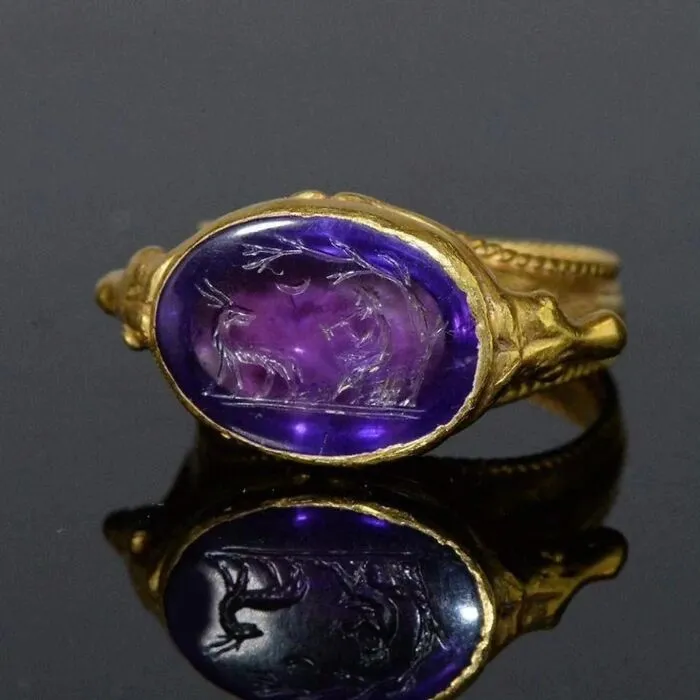
Kept now at a private collection
So, why take the time to scroll through a list of old relics?
Because exploring these rare treasures does more than fill a quick break — it can spark deeper curiosity and lead you down unexpected rabbit holes into ancient history and forgotten cultures.
Who knows, it might even inspire your next big weekend adventure and compel you to book a ticket to a world-class museum and see these wonders with your own eyes.
#19
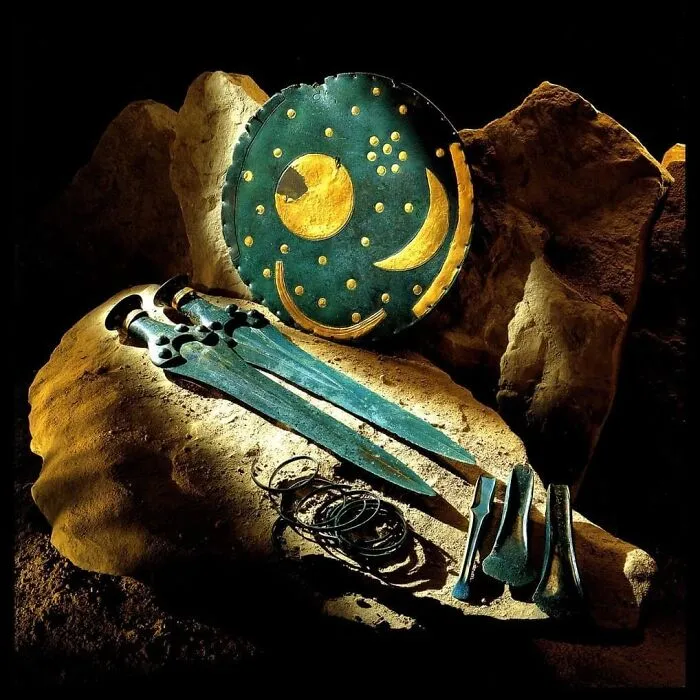
Dated to 1600 BCE, this bronze disk has a diameter of 32cm (about the size of a vinyl LP) and weighs around 2 kg. It is patinated blue-green and embossed with gold leaf symbols which appear to represent a crescent moon, the sun (or perhaps a full moon), stars, a curved gold band, interpreted as a sun boat, and a further gold band on the edge of the disk which probably represent one of the horizons.
Many researchers believe it is the oldest known realistic representation of the cosmos yet found, perhaps a kind of astronomical calculational tool to determine planting and harvest times. used as an advanced astronomical clock.
For thousands of years all across northern Europe, monuments were aligned to mark the summer and winter solstices; Stonehenge in Wiltshire, England and Newgrange in Irelandare the most famous examples.
As Bronze Age people were an agricultural society, a method for finding out the time of year, and thus the correct times for planting and harvesting crops, was obviously vital. One way of doing this was to identify the position of the sun at sunrise and sunset.
Researchers have pointed to the presence of the Pleiades star cluster on the disk as further evidence of Bronze Age astronomical knowledge.
The Pleiades was an important constellation for many ancient civilisations, including those of Mesopotamia and Greece. The constellation would have appeared in their skies in the autumn, showing that it was time to start bringing in the harvest, and disappeared in the spring, indicating the time for planting crops.
#20
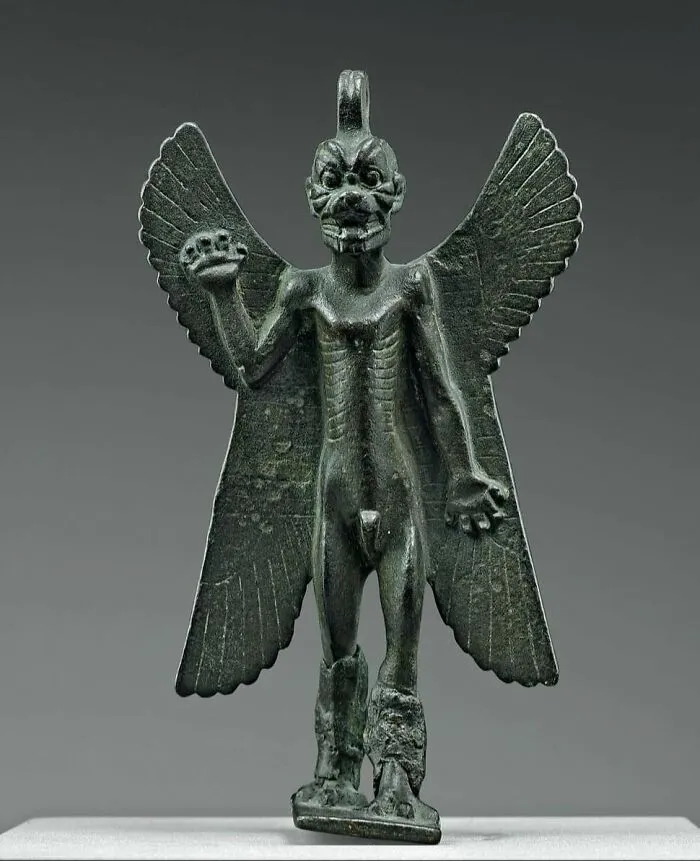
Pazuzu first appeared in the 1st millennium BC in hybrid form, with the body of a man and the head of a scowling dragon-snake which also has both canine and feline features.
He is represented as a spirit with two pairs of wings and talons like those of birds of prey. He also has a scorpion’s tail and his body is usually depicted covered in scales.
The demon Pazuzu was associated with ill winds, particularly the west wind which brought the plague.
His terrifying, scowling face and his scaly body repel the forces of evil, which meant that in certain circumstances the figure was considered a protective spirit.
This bronze statuette is one of the finest representations of the figure.
It is now on display at the Louvre Museum in Paris