



The wait is over. Everyone who was enjoying 2017, 2016 and 51 earlier 'Wildlife Photographer of the Year' (WPY) competitions has just received this year's biggest treat. London's Natural History Museum announced the winners of the 2018 photo contest, and the beautiful pictures reveal the abundance, beauty, resilience, and vulnerability of life on Earth.
The winning wildlife photography stills were chosen from more than 45,000 entries from 95 countries for their artistic composition, technical innovation and accurate interpretation of the natural world. The international jury awarded the grand title to Dutch photographer Marsel van Oosten for his shot, titled "The Golden Couple." The breathtaking picture features a pair of endangered golden snub-nosed monkeys in central China’s Qin Ling Mountains. "It is a symbolic reminder of the beauty of nature and how impoverished we are becoming as nature is diminished," Roz Kidman Coz, the chair of the judging panel, said in a press release. "It is an artwork worthy of hanging in any gallery in the world." Golden snub-nosed monkeys only live in this particular part of China, and their numbers are steadily decreasing, mainly because of habitat loss from commercial logging and firewood collection.
"As we were going through the pictures of animals and nature, we just kept coming back to this one," Roz Kidman Coz added. "It's almost like a stage set. I think what makes it are the colors and the lighting. These monkeys normally feed in the trees, but somehow Marsel managed to catch them on the ground, and he's carefully thrown a very gentle flash on to the scene to illuminate that amazing fur."
"This image was shot on my first trip to the Qinling mountains," Marsel van Oosten told Bored Panda. "I spent five days on this location. Since then I have been there two more times."
"I was planning to visit China for landscape photography but decided to check out what kind of wildlife China has apart from pandas. After doing some research, I stumbled across the snub-nosed monkeys. There are two main species; the golden snub-nosed monkeys and the black snub-nosed monkeys, and they both look amazing. Not only that, [but] they're also endangered species, so all the more reason to photograph them."
"My main objective for the golden snub-nosed monkeys was to show the beautiful long guard hairs on the back of one of the males," the photographer added. "To show those hairs I needed to be slightly behind the monkey, which made it difficult to show the face. Luckily, both monkeys in this image looked up at an altercation in the larger group of 50 monkeys - the perfect moment for me to get the animal photography shot I wanted."
"What makes this image better than most of the other ones I've shot is the fact that the background is near perfect: there is some light shining through the canopy in the upper right corner, the rock on which the male is sitting has some beautiful texture, and the trees to the left really complement the scene. Very often when the subjects adopt the perfect pose, the background is not great, or vice versa. What takes this image to the next level for me, is the light. I used an off-camera flash to bring out the color and the texture in the fur. My wife Daniella was standing on the right, just outside the frame, holding the flash which I controlled remotely. The almost painterly light was exactly what I wanted."
Van Oosten wanted to direct everyone's attention to the current mass extinction of plants and animals, too. "Unlike past mass extinctions, caused by events like asteroid strikes, volcanic eruptions, and natural climate shifts, the current crisis is almost entirely caused by humans. Ninety-nine percent of currently threatened species are at risk because of human activities."
"If current rates of human destruction of the biosphere continue, half of all plant and animal species of life on earth will be extinct within 100 years."
"If current rates of human destruction of the biosphere continue, half of all plant and animal species of life on earth will be extinct within 100 years."
"Perhaps one of the most striking elements of the present extinction crisis is the fact that the majority of our closest relatives - the primates - are severely endangered. About 90 percent of them lives in tropical forests, which are disappearing quickly. The IUCN estimates that almost 50 percent of the world's primate species are at risk of extinction. Overall, the IUCN estimates that half the globe's 5,491 known mammals are declining in population and a fifth are clearly at risk of disappearing forever with no less than 1,131 mammals across the globe classified as endangered, threatened, or vulnerable."
"The golden snub-nosed monkey is endangered due to habitat loss. For instance, lichens are the main staple of the monkey's diet and dead trees contain the most lichen. Unfortunately, dead trees are harvested, thus reducing the quality of the habitat and availability of food. The monkey is a highly selective feeder, so damage to its habitat seriously impacts the species. There are less than 4,000 of these animals left."
"Successful wildlife conservation starts with awareness, and most people don’t even know this species exists. I hope that my photograph will help to spread awareness about this species and that people will realize that not only the rhinos, tigers and polar bears are worth worrying about."
More info: nhm.ac.uk
#61 "The Curious Calf" By Christopher Swann, Uk, Highly Commended 2018 Black And White
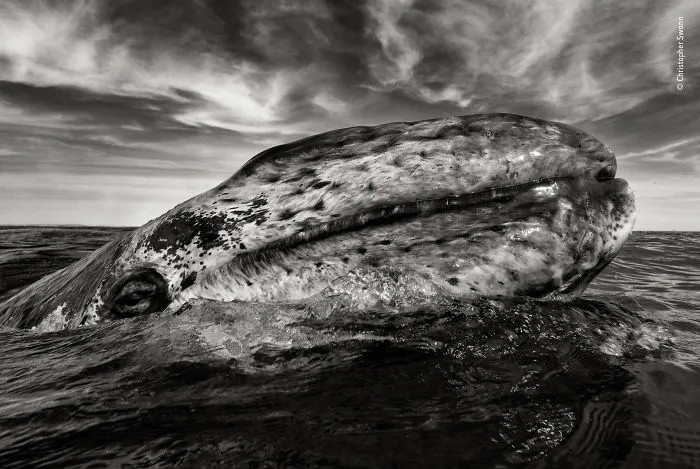
Less than a metre from Christopher’s boat, a grey whale calf surfaced against a backdrop of wispy clouds. Holding his camera at water level, he was able to capture the head of this inquisitive juvenile as it investigated the visitors. Converting the image to black-and-white accentuated the smooth texture of this youngster’s head.
Although out of sight, this grey whale calf’s mother will be close by keeping a watchful eye on events. Once the calf is strong enough, the mother will lead it on a journey up to 10,000 kilometres north to feeding grounds in the Arctic – the longest annual migration of any mammal on Earth.
Report
43points
#62 "The Victor" By Adam Hakim Hogg, Malaysia, Highly Commended 2018 11–14 Years Old
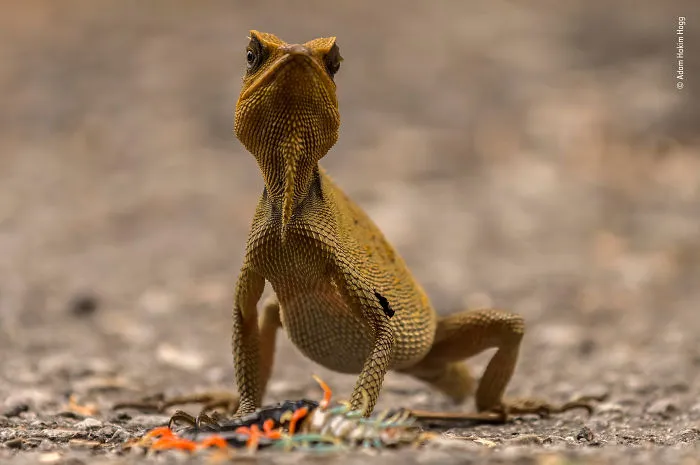
Fascinated, Adam watched a furious life and death battle between this tree lizard and an aggressive Malaysian jewel centipede. It was only after the fight was over that Adam remembered he had his camera. Working quickly, he jumped into the ditch and crawled towards the lizard for this eye-level portrait of it standing victorious over its conquest.
The horn-like spines that protrude from this lizard’s eye sockets are the inspiration for its common name – the Titiwangsa horned tree lizard. These reptiles are highly sought after by poachers looking to sell them illegally to the pet trade. This practice causes huge distress to the lizards and leaves a gap in the local ecosystem.
Report
42points
#63 Michel D’oultremont, Belgium, Winner 2018 Rising Star Portfolio Award
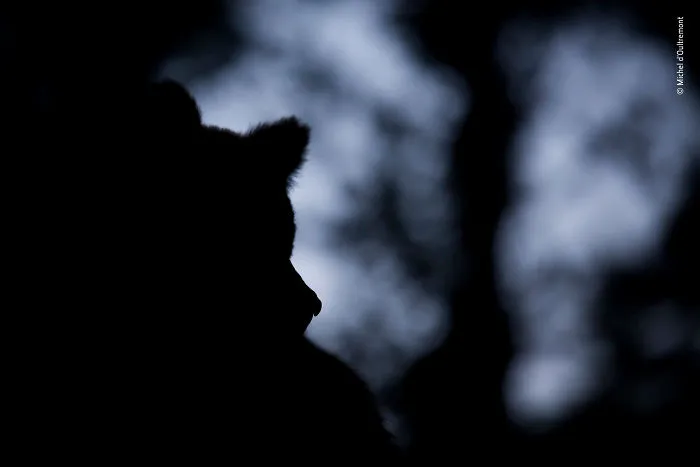
Night of the Bear
‘I love Chinese shadow puppets,’ says Michel, an idea that inspired this intimate portrait of a bear in its forest environment backlit with natural light. Crouching under a camouflage net he watched silently as a bear grazed on berries and grass in the dark. His patience was rewarded when the majestic animal lifted its head for a moment.
‘I love Chinese shadow puppets,’ says Michel, an idea that inspired this intimate portrait of a bear in its forest environment backlit with natural light. Crouching under a camouflage net he watched silently as a bear grazed on berries and grass in the dark. His patience was rewarded when the majestic animal lifted its head for a moment.
Bears have a mixed diet. Although they are opportunistic predators, they also enjoy staple foods such as berries and grasses. Though largely solitary, bears will sometimes congregate around areas where food is more readily available, such as salmon streams or even rubbish dumps if they are near human habitation.
Report
41points
#64 Bed Of Seals By Cristobal Serrano, Spain, Winner 2018 Animals In Their Environment
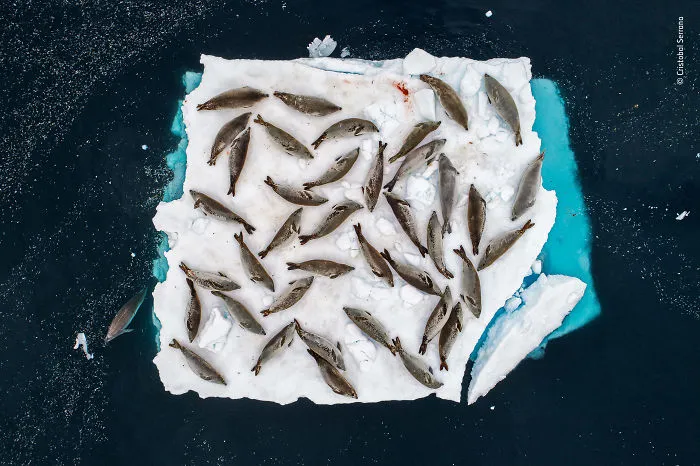
The sea was relatively calm when Cristobal launched his drone from a small rubber dinghy in the Errera Channel of the Antarctic Peninsula. Rising above the sea, the drone revealed a small ice floe spilling over with crabeater seals. Part of the ice was splattered red with their excrement – the digested remains of their favourite food, krill.
Crabeater seals are gregarious, and if space allows they will cluster on ice floes in their hundreds. The seals are dependent on the ice – they rest and breed on top of it, but also feed on the krill that shelter underneath. As a result, a decline in sea ice not only strips these seals of places to haul themselves out of the water but also threatens the availability of their food supply.
Report
40points
#65 Minuscule Spicules By David Maitland, Uk, Highly Commended 2018 Creative Visions
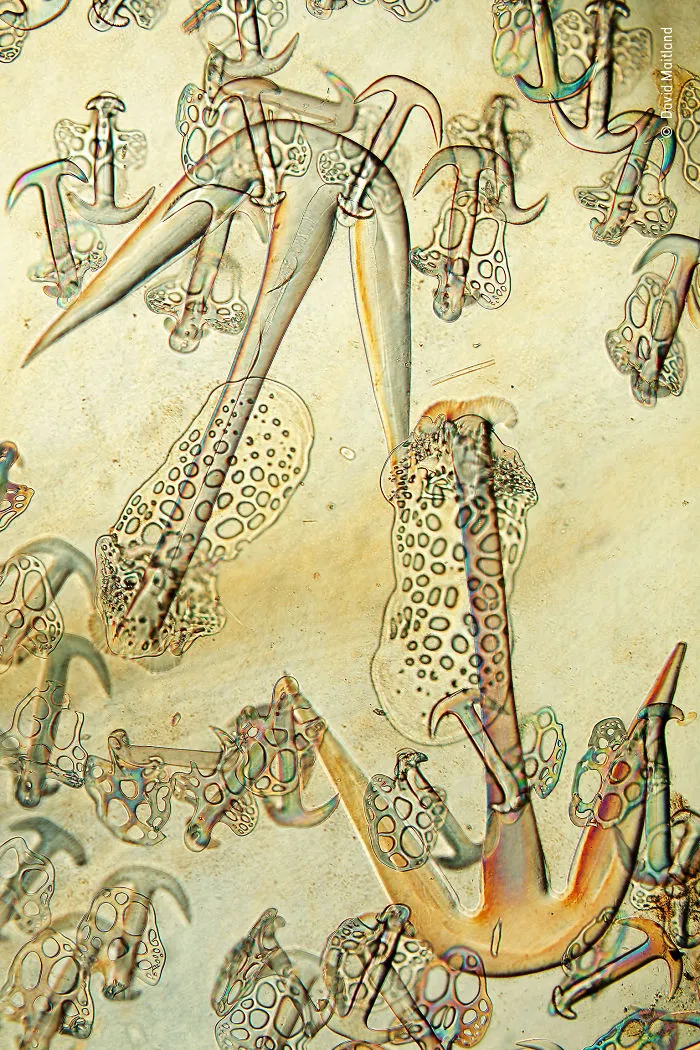
David captured this high-magnification image from an old museum slide, using differential interference contrast. The lighting technique is used to reveal the 3D structure of microscopic specimens. With an interest in science, nature and art, David created it to capture the viewer’s attention. He says, ‘I hope they ask the question: “what is that?”’.
Resembling a boat’s anchor, these are the minuscule projections from the skin of a sea cucumber, known as spicules. These needle-sharp structures are composed of a transparent, brittle mineral formed from calcium carbonate. They protect the soft bodies of these marine invertebrates, and are key to distinguishing between the numerous species of sea cucumber.
Report
40points
#66 Forest On A Tree By Antonio Fernandez, Spain, Highly Commended 2018 Plants And Fungi
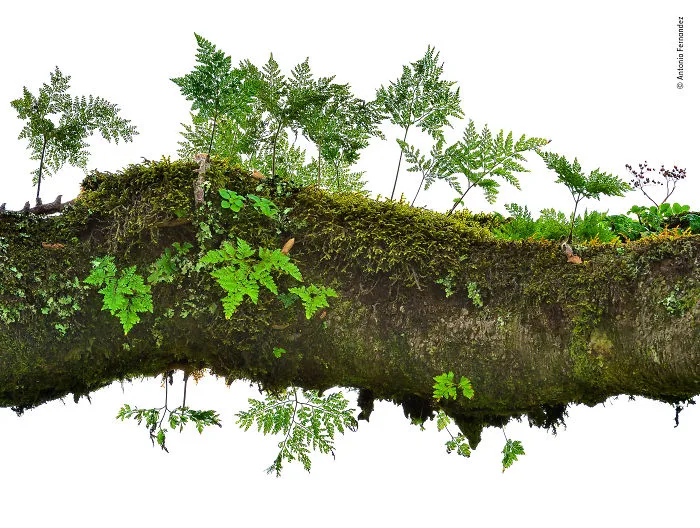
Huge branches hung eerily in the mist of the forest, and among them was this one hanging from a tilo tree. ‘With ferns growing all along it,’ says Antonio, ‘it was like a forest within a forest’. The breeze stirred up the fog, frustrating Antonio’s desire for a uniformly intense background. But then it dropped, and his simple composition stood out against pure white.
The mighty tilo tree can reach more than 40 metres tall, and only grows in Madeira and the Canary Islands. Most of the miniature forest on this branch is the hare’s foot fern, with broad, finely divided fronds. Like other epiphytic plants it takes water and nutrients from the air, rain or plant debris and relies on the branch for support.
Report
38points
#67 Meadow Song By Fred Začek, Estonia, Highly Commended 2018 10 Years And Under
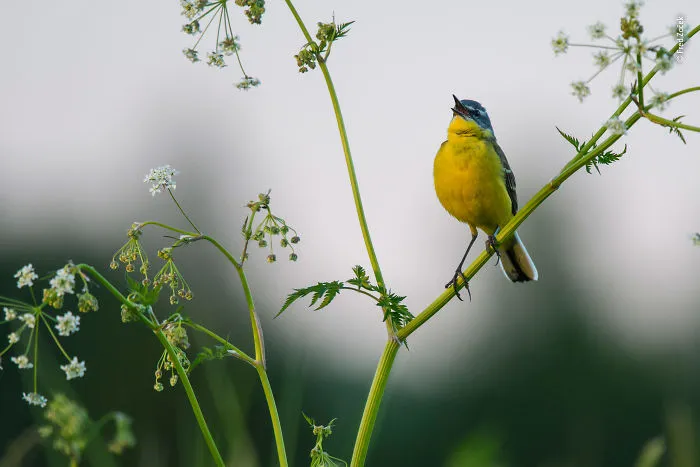
Eight-year-old Fred visited this secluded meadow close to his home over three days, to photograph the migratory birds that had arrived to breed. On the third evening, he spotted this yellow wagtail, singing in the soft evening light. Surrounded by stinging nettles and clouds of flying gnats, it took Fred several attempts to capture the beak ‘in a nice open position’.
Perched on a delicate stem of cow parsley, this male yellow wagtail is singing to attract females, but also to deter other males in the area. There are numerous subspecies of yellow wagtail, best distinguished by the colour of the male’s head but also by differences in song. All wagtails earn their name from their tendency to wag their tails up and down.
Report
37points
#68 Javier Aznar González De Rueda, Spain, Winner 2018 Wildlife Photographer Portfolio Award
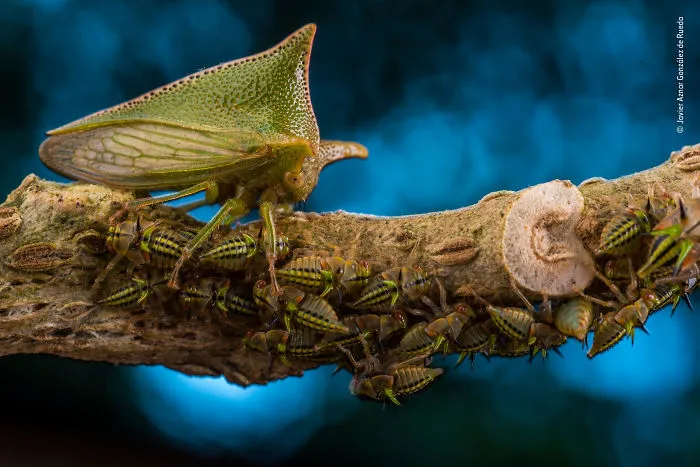
Mother Defender
Javier found this treehopper by the kitchen of the forest lodge he was staying in. He tried for several days to capture the scene, but the constant rain was a challenge. Eventually he succeeded in creating this touching portrait of a mother guarding her young on the underside of a stem, enhanced by the blue glow of the sky behind.
Javier found this treehopper by the kitchen of the forest lodge he was staying in. He tried for several days to capture the scene, but the constant rain was a challenge. Eventually he succeeded in creating this touching portrait of a mother guarding her young on the underside of a stem, enhanced by the blue glow of the sky behind.
The spiny projection on the treehopper’s back is called a helmet, and is used to deter predators. This tiny female, around one centimetre long, will twist her body to wield her spine at any attackers. Once her eggs hatch, they develop through five nymphal stages, before becoming adults, and the devoted mother watches over them throughout.
Report
37points
#69 Michel D’oultremont, Belgium, Winner 2018 Rising Star Portfolio Award
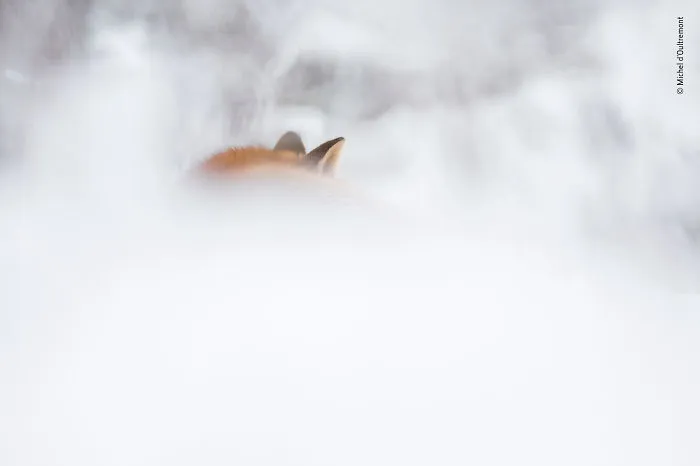
Snow Snooze
Passionate about not disturbing his subjects, Michel silently approached this slumbering red fox, first walking and then crawling. Finally close enough, he isolated the fox against the snow with a long lens and blurred the background. ‘I stayed with it for a sublime 10 minutes,’ he says. ‘Its ears twitched from time to time, but it never once woke up.’
Passionate about not disturbing his subjects, Michel silently approached this slumbering red fox, first walking and then crawling. Finally close enough, he isolated the fox against the snow with a long lens and blurred the background. ‘I stayed with it for a sublime 10 minutes,’ he says. ‘Its ears twitched from time to time, but it never once woke up.’
When hunting, foxes are able to detect their prey through the layers of snow by using their keen sense of smell and excellent hearing. They begin their hunt by standing motionless, listening for any sound of a mouse or vole. When they are sure of their prey’s location, they will leap into the snow, using their strong forelegs to pin their meal to the ground.
Report
36points
#70 Displaced Displayer By Fred Začek, Estonia, Highly Commended 2018 10 Years And Under
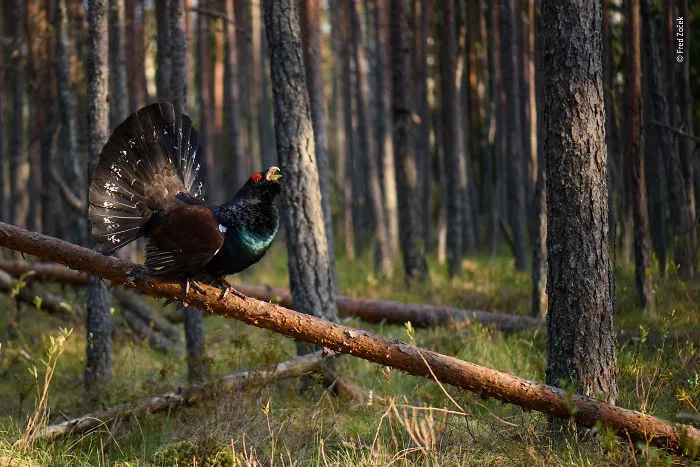
Fred had never seen a wild capercaillie, so when his father discovered a male bird in a reserve close to their home he begged to see it. As they approached, it leapt onto a fallen tree, fanned out its tail, thrust its head into the air, then let out an extraordinary noise that, as Fred recalls, ‘sounded like a gun being loaded and then fired’.
Capercaillies perform an aggressive mating display to attract females but also to defend territories from other males. Usually groups of males gather to display against each other, known as lekking, but this one may have wandered away in search of females elsewhere. It had evidently redirected its competitive display towards Fred and his father.
Report
35points
#71 "Cloak Of Silk" By Andrés Miguel Domínguez, Spain, Highly Commended 2018 Behaviours Invertebrates
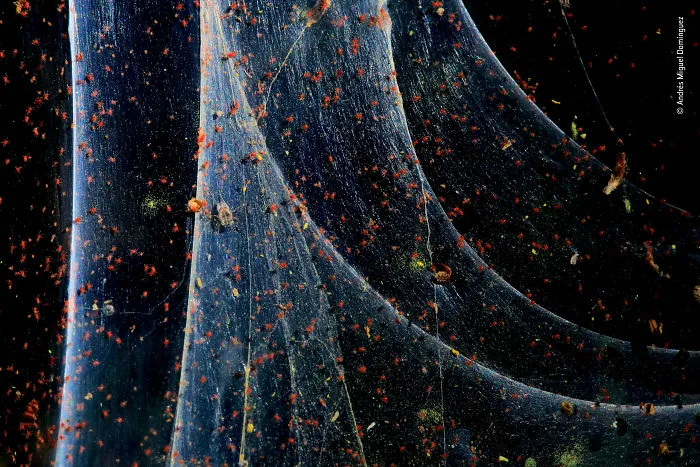
Draped like a curtain in a haunted house, the expansive silken web covered a large broom bush. Dusted with yellow pollen from overhanging cork oaks, it was crawling with the tiny forms that created it – red spider mites. ‘I had never seen so many in one place – possibly millions,’ says Andrés.
Only just visible to the naked eye, red spider mites are plantsucking arachnids, related to spiders. They earn their ‘spider’ name from their ability to spin webs, which help to protect them against predators and poor environmental conditions.
Report
35points
#72 Beneath The Blue By Shane Gross, Canada, Highly Commended 2018 Under Water
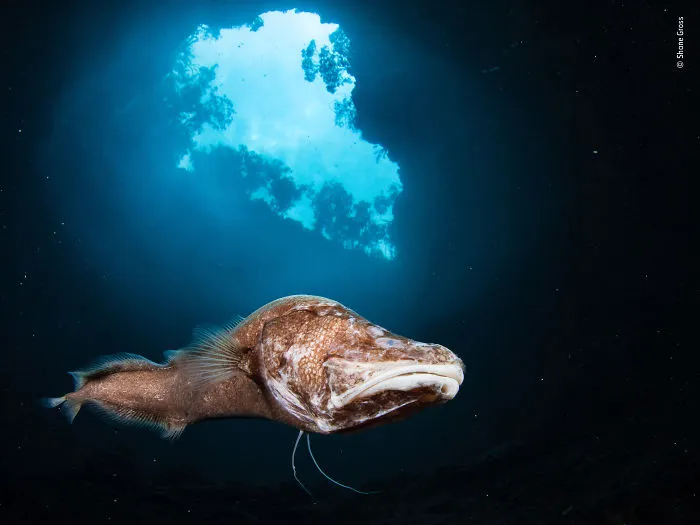
Shane had looked for the Bahama cavefish many times since his first encounter, and found this one in the cold, clear depths of the marine cavern known as the Sapphire Blue Hole. The pool was tricky to reach, especially with heavy kit – it was encircled by a six-metre cliff. ‘I tied a rope to a tree and lowered my camera and diving gear,’ he says. ‘Then, I jumped!’
The Bahama cavefish, as its name suggests, lives only in the Bahamas in a dozen or so inland blue holes and caves, connected below ground to the sea. It moves between upper fresh water and salt water deeper down, feeding on small invertebrates such as shrimp. Almost blind, it’s rarely seen near the surface, living in the dark depths where it uses its sensory pores to navigate.
Report
35points
#73 "Windsweep" By Orlando Fernandez Miranda, Spain, Winner 2018 Earth’s Environments

At the top of the dune, Orlando faced a trio of weather elements: a fierce northeasterly wind, warm afternoon sunshine and a dense ocean fog. Using the sharp ridge of sand in front of him as a focal point, he kept the sweep of dunes to his right in focus, leaving the distant coastal landscape, hidden behind a curtain of fog, a mystery.
A mix of fog and sunshine is not unusual on the Skeleton Coast. Cool winds from the Benguela Current – an ocean current that flows northwards – mix with the arid climate of the Namib Desert to create thick fog. The moisture from this fog spills inland and is vital to the survival of many plants and insects.
Report
35points
#74 Chimpanzee By Frans Lanting, The Netherlands, Winner 2018 Wildlife Photographer Of The Year Lifetime Achievement Award
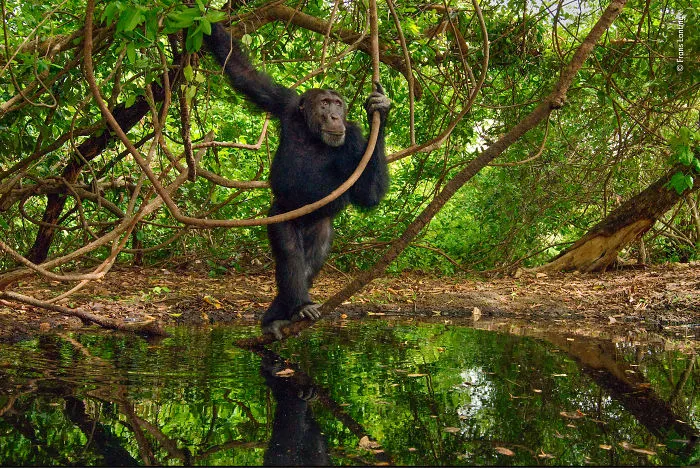
Seeking relief from the intense summer heat, a male chimpanzee prepares to enter a seasonal pool in a remote corner of West Africa. I joined researchers there conducting a first study of chimps who live in open savanna woodlands—rather than deep forest—and was able to document behavior never photographed before.
Report
35points
#75 Golden Island In A Lotus Sea By Zorica Kovacevic, Serbia / Usa, Highly Commended 2018 Plants And Fungi
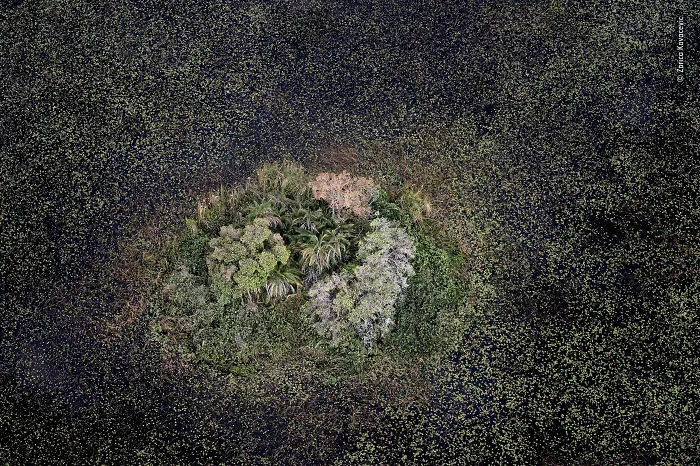
Looking for the perfect shot among the floating lotus leaves and forested islands ‘was like a treasure hunt,’ says Zorica. Suddenly, through the helicopter doorway, she spotted one perfectly formed oasis. With only moments to capture the scene, Zorica took this image of a beautifully complex ecosystem.
Unlike most large inland deltas, the Okavango does not flow directly into the ocean, but drains into the sands of the Kalahari Basin. It floods every year after water from the summer rains arrives from the highlands. The local plants and animals have synchronised their biological cycles with this event, an exceptional example of life’s interactions.
Report
34points
#76 Ghost Colony By Jayesh Joshi, India, Highly Commended 2018 Black And White
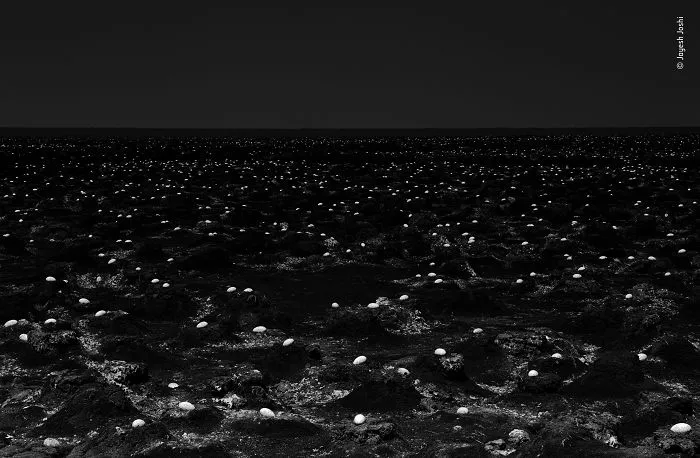
Abandoned eggs extended as far as the eye could see, their chalky whiteness contrasted against the backdrop of the salt desert. The flamingos that left them had been forced to abandon their nests, after low rainfall brought the early arrival of salt pan workers. Jayesh remarks how he converted his image to black-and-white to ‘convey a melancholic mood’.
Lesser flamingos have always nested on salt pans, as they provide a safe environment away from predators where the birds can feed on the shells and plankton found in the water. This lifeless landscape is a stark reminder of the impact human disturbance and habitat loss can have on flamingos, whose populations continue to decline.
Report
34points
#77 Asiatic Cheetah By Frans Lanting, The Netherlands, Winner 2018 Wildlife Photographer Of The Year Lifetime Achievement Award
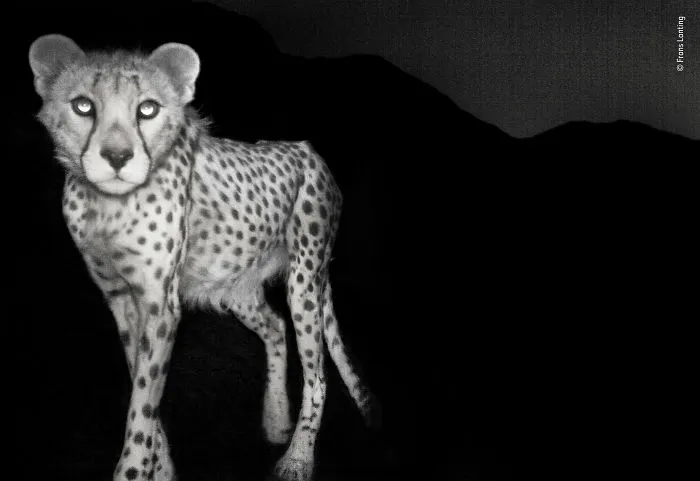
The Asiatic cheetah is one of the rarest mammals on earth. Fewer than 100 survive in the wild, and all of them are confined to Iran’s central desert, where I deployed camera traps. One of them captured this haunting image of a wary cat after dark that is struggling to eke out a living in bone-dry habitat where prey species have been decimated by hunters.
Report
34points
#78 Dolomites By Moonlight By Georg Kantioler, Italy, Highly Commended 2018 Earth’s Environments
Report
33points
#79 Michel D’oultremont, Belgium, Winner 2018 Rising Star Portfolio Award
Winter Lattice
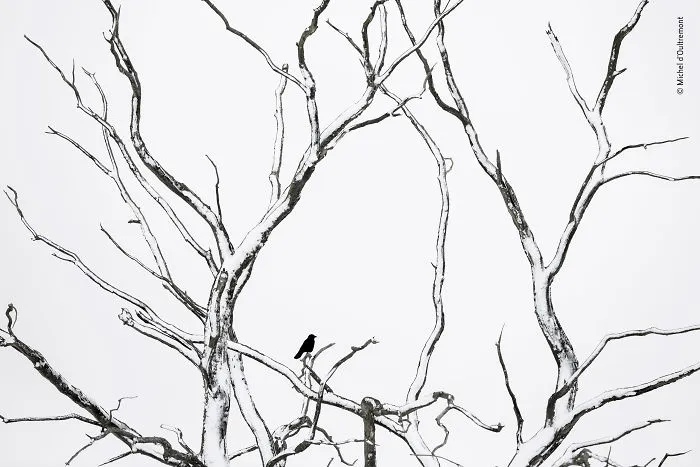
Michel was looking for foxes when he came across this tree. Initially drawn by its high-contrast, graphic look, he stopped to admire its dark branches, dusted white by a recent blizzard. Looking closer he spotted a solitary carrion crow. Realising the bird’s potential in his picture, Michel framed it centrally, creating an image of simplicity in black and white.
Michel was looking for foxes when he came across this tree. Initially drawn by its high-contrast, graphic look, he stopped to admire its dark branches, dusted white by a recent blizzard. Looking closer he spotted a solitary carrion crow. Realising the bird’s potential in his picture, Michel framed it centrally, creating an image of simplicity in black and white.
Carrion crows are among the most intelligent and adaptable birds. Although they are often quite fearless, they can be wary of humans. They are usually found alone or in pairs, but do occasionally form flocks. They have the ability to learn useful behaviours, such as dropping hard-shelled prey such as snails from a height to break them to get at the tasty food within.
Report
33points
#80 Javier Aznar González De Rueda, Spain, Winner 2018 Wildlife Photographer Portfolio Award
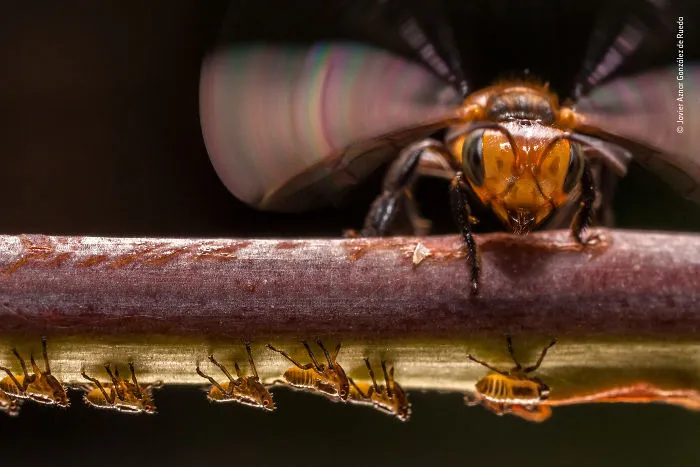
Rainforest Relations
Javier was fascinated by the insect behaviours he saw here. The female treehoppers were watching over their eggs, while in turn being guarded by ants. It was a challenge to capture the action of tiny animals amid a dense forest, so Javier chose a wide angle to reveal the miniature players, absorbed in the duties of their small world.
Javier was fascinated by the insect behaviours he saw here. The female treehoppers were watching over their eggs, while in turn being guarded by ants. It was a challenge to capture the action of tiny animals amid a dense forest, so Javier chose a wide angle to reveal the miniature players, absorbed in the duties of their small world.
The female treehoppers physically shield their eggs, while ants guard from a distance. The ants protect the young in exchange for being able to drink the sweet sap they excrete. Finding egg-guarding females close to each other is not unusual, perhaps because more young produce more sap, which attracts more ant guards.
Report
33points