






#1 This Statue Of His Dog Is Truly A Thing Of Beauty. The Fact He Held Onto The Sticks His Dog Picked Up Daily Is Too Sweet

#2 This Woman's Late Father Hid Small Soldier Toys In Various Corners Of Her House To "Protect" Her...and She Just Found The Most Clever Little Sniper Aiming At The Front Door

#3 His Has To Be The Best Law That Exists In The Whole World. If I Had A Horse In Montana, I Would Definitely Bring It To School Just Like These Seniors Did

There’s a high chance you’re getting a massive dose of dopamine and serotonin right about now. You might even shed a few tears as you scroll through these stories.
Science shows that our brains are hardwired to react to joyful or wholesome moments. Positive thinking triggers dopamine, the reward chemical behind motivation and happiness. It’s the same feeling that keeps us scrolling on social media, but we can train our minds to get that dopamine hit from kindness instead of outrage.



Reading uplifting stories also boosts serotonin, which lifts your mood and lowers stress. Simply noticing the good in people — and the world around us — gives your brain an instant, healthy reset.
A 2022 study found that exposure to inspirational media can make people more compassionate and prosocial. It can even foster feelings of connectedness with others.
#7 I Never Knew Friendship Bracelets Would Look So Good On A Dog, But It Looked Amazing Indeed. His Smile Just Made This Entire Story All The Sweeter

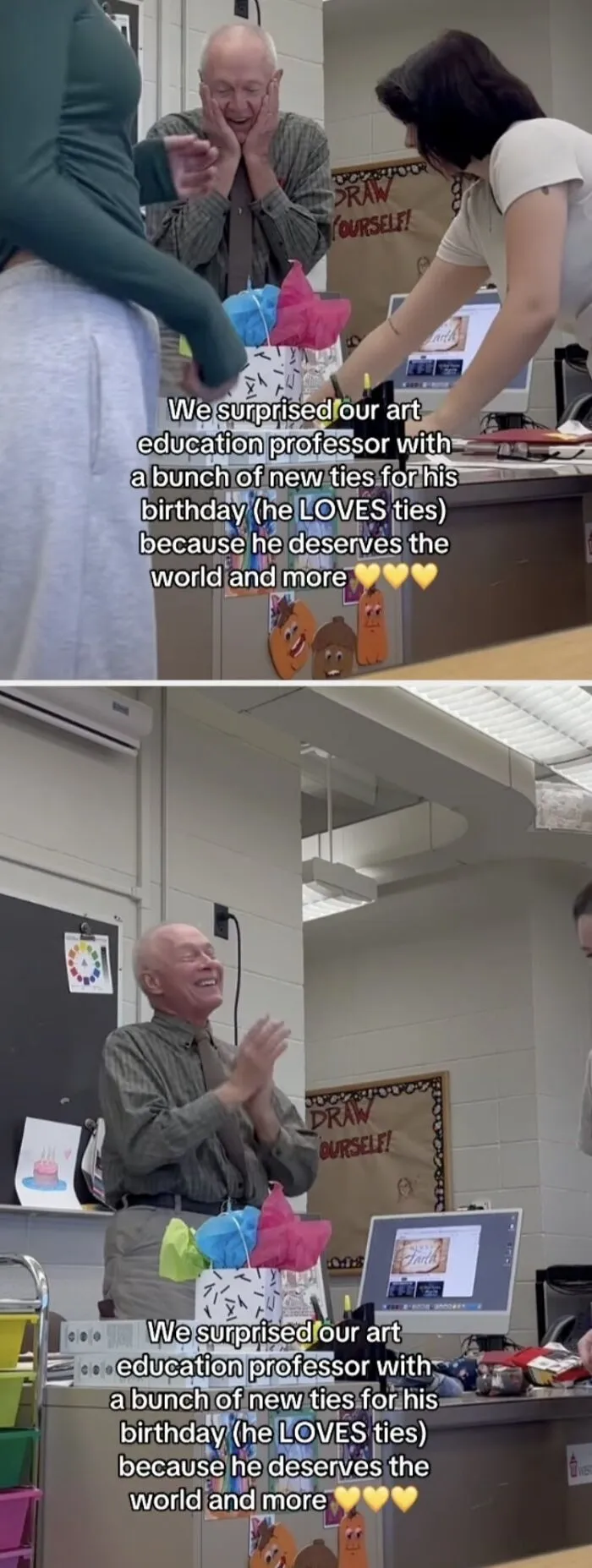
#8 These Students Knew Their Art Professor Loved Ties, So They Got Him A Bunch For His Birthday, And I Just Know This Made His Day

The media we consume daily profoundly influences how we treat the world around us. Just as hostile or aggressive news can fuel negativity, stories rooted in empathy and compassion can inspire us to step up for those around us. Psychologists call this tendency toward helpfulness “prosocial” behavior.
In 2011, researcher Karl Aquino at the University of British Columbia explored this exact reaction. His team found that exposure to acts of moral courage and selflessness triggers an intense emotional response. This uplifting sensation reshapes how people view humanity, helping them see the world as a place driven by generosity and goodwill.
The researchers also found that holding onto a cynical mindset and constantly anticipating bad intentions takes a heavy toll on our physical health. In contrast, simply taking a moment to observe the goodness in others releases positive emotions that support long-term mental resilience and physical health.
#10 This Stray Dog Wandered Into A Hyundai Dealership And Got Hired As A Car Salesman. I Guess You Could Say He Really Found His Drive


#12
A study published in Psychology of Popular Media shows that just three to five minutes of inspiring media a day can transform your mindset. Researchers found that watching people overcome challenges created a powerful sense of hope in viewers. That hope predicted lower stress over the next ten days.
Surprisingly, funny content didn’t have the same lasting impact. Comedy gave people a quick laugh, but it failed to lower long-term stress levels. Inspiring videos, by contrast, performed just as well as mindfulness practices.
#13 This Couple Took Their Baby To Italy, And The Locals Kept Taking Turns Looking After Him So His Parents Could Enjoy Their Vacation. How Sweet Is That Omg



We naturally gravitate toward bad news because our brains are simply wired that way. That’s why we have to be intentional about seeking out positive stories like these to restore balance.
“If we all started clicking on the positive news, and getting our friends and relatives to develop the same habit, there would be more positive stories in the news. Because people are (obsessed) with negative news, the news media gives us more of it,” says American psychologist and professor Douglas T. Kenrick.
“But the algorithms embedded in the news media are designed to give us more of what we want, so if enough of us boycott the bad news, and reinforce the good news with clicks, it will lead to one of those virtuous cycles, with the result being more positive news stories to choose from.”

#17 I've Never Seen A Cuter Couple In My Life! This Boy Is, Indeed, Head Over Heels For Her

#18

But let’s not just stop at reading these stories and then going about our day, shall we?
We can easily take a page from this list and put kindness into action ourselves — after all, small good deeds do far more than make us and the recipient feel good. Studies show that they actually boost our physical and mental health in surprising ways.
Being kind builds empathy and self-esteem and brightens your overall mood. A 2024 global trial published in Social Psychiatry and Psychiatric Epidemiology found that practicing kindness reduces loneliness and social isolation. Researchers are also studying how kindness benefits our physical health, and they’ve found it can lower blood pressure and reduce stress hormones like cortisol.

#20 Lindsie's Dad Is—as The Kids Say—the Ultimate Rizz Master! I Mean, Look At How He Effortlessly Flirts And Loves His Wife

Even short bursts of goodwill make a huge impact. A 2019 study showed that doing just one kind deed a day for a single week noticeably boosts your happiness.
Beyond our own health, kindness creates a ripple effect. “If you act kindly toward another, there’s also a propagation effect — that person goes on to act more kindly. There’s a profound contagiousness to kindness,” notes Tyler VanderWeele, co-director of the Initiative on Health, Spirituality, and Religion at the Harvard T.H. Chan School of Public Health.
Unfortunately, social media feeds and today’s news headlines don’t always reflect that spirit, he adds. “I think we’ve gotten worse in this regard. There’s evidence that when we witness those (negative) dynamics, we go on to treat others with more hostility, not kindness.”


