





Some facts are fun for a moment. You know the type. Those well-worn favorites that pop up in every quiz night or pop out of every Christmas cracker. Others come with a story attached—a name, a face, some texture. Those, in my mind at least, are the ones that really stick. Maybe it’s a remarkable moment that almost slipped through history’s cracks. A small win that deserves more attention than it ever got. A record that’s finally been set straight. Or maybe a strange, unexpected reminder that humanity isn’t completely horrible after all.
These are exactly the kinds of interesting facts shared by the “Weird Facts” accounts on Instagram and Threads. From lessons hidden in history to straight-up curiosities, we’ve rounded up some of the best. Keep reading for a few you might just find weirdly hard to forget.
#21
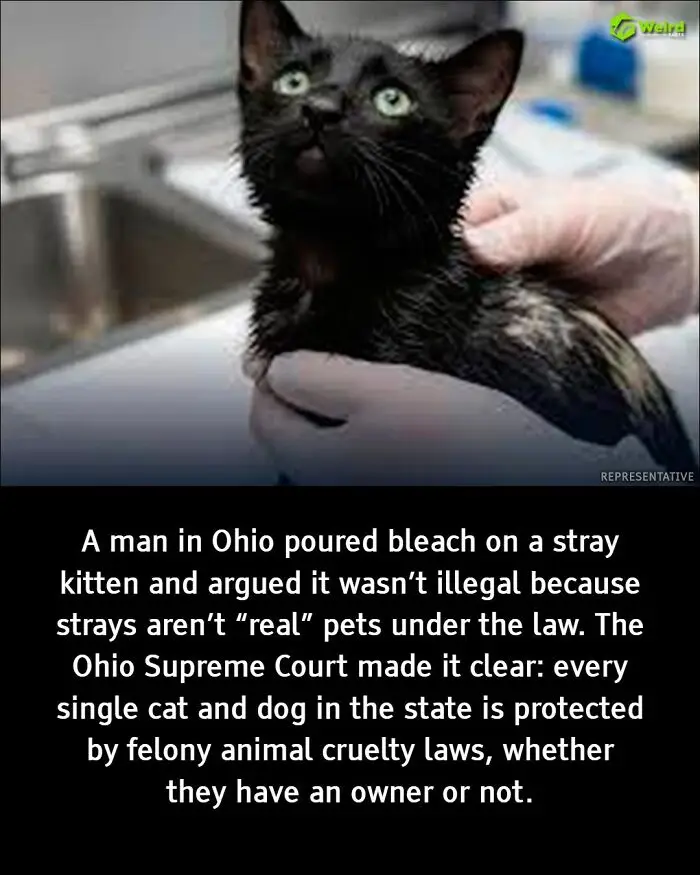
In 2021, a Cleveland man poured bleach down basement stairs to chase away a stray kitten, causing chemical burns to its paws.
He was convicted of felony cruelty under Ohio’s Goddard’s Law… but an appeals court overturned it, claiming strays didn’t count as “companion animals.”
On October 23, 2024, the Ohio Supreme Court unanimously said NO.. in a 7-0 decision they ruled the law protects any dog or cat, owned or stray.
A huge loophole is now closed, making Ohio one of the stronger states for protecting every animal from serious harm.
This is the kind of justice that actually makes a difference.
Report
3points
#22
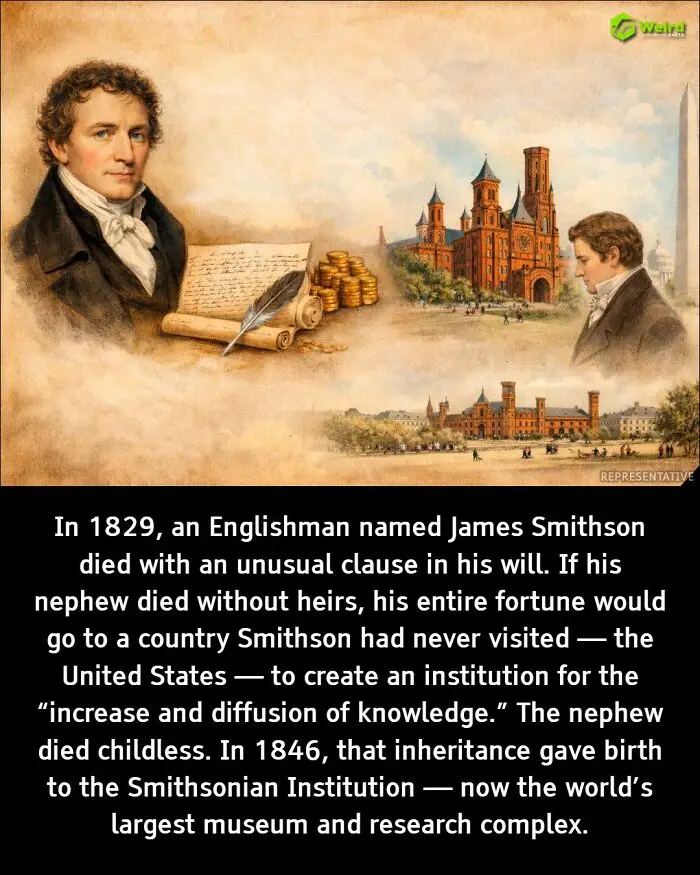
James Smithson was a British scientist, chemist, and mineralogist — and an unusual benefactor. Born out of wedlock and shaped by the limits and stigma of illegitimacy in Britain, Smithson never married, had no children, and his reasons for the bequest remain uncertain.
In his 1826 will, he included a remarkable clause: if his nephew, Henry James Hungerford, d**d without heirs, Smithson’s entire estate would go to the United States to create an institution dedicated to the “increase and diffusion of knowledge among men.” Smithson had never visited America, but some biographers argue he saw the young nation as a place that valued progress and merit.
When Smithson d**d in 1829, his nephew initially inherited the fortune. Six years later, Hungerford d**d childless, triggering the clause. After legal debates and an ocean-crossing transfer of gold coins, the U.S. Congress accepted the gift.
In 1846, the funds officially established the Smithsonian Institution in Washington, D.C.
Today, the Smithsonian includes more than 20 museums, libraries, and research centers, holds over 150 million objects, and serves as the world’s largest museum, education, and research complex — all because of a man who chose knowledge over bloodline, and a country he never saw over the one he came from.
An Englishman who never visited the U.S. ended up founding one of the world’s largest centers of learning.
Report
3points
#23

A quiet village in France, Le Chambon-sur-Lignon, received an unexpected legacy.
In late 2020, officials learned that a 90-year-old Austrian man named Erich Schwam had left the village about €2 million (about $2.4 million) in his will. At first, no one understood why. Then the story surfaced.
More than eight decades earlier, during World War II, the people of Chambon-sur-Lignon quietly risked their lives to shelter Jewish families fleeing N**i persecution. Erich Schwam was one of the children they saved. The village hid refugees in homes, farms, and schools, offering shelter along the way. Schwam never forgot.
His final wish was for the future. He asked that the money be used for education—funding schools, scholarships, and opportunities for the village’s young people. It was a thank-you written across generations. A debt repaid after 80 years. And proof that kindness, even in the darkest times, can echo forever.
Report
3points
#24

In 2024, 9-year-old Remi Bateman from Utah was denied health insurance coverage for a ~$24,000 Hero Arm bionic prosthetic.
Her family started a GoFundMe that quickly raised more than $30,000. Shortly afterward, Andy Schoonover, CEO of CrowdHealth, offered to pay the full cost of Remi’s arm.
With her prosthetic now covered, Remi and her family chose to redirect the GoFundMe donations to help another child facing the same problem: Tyraun “Taj” Johnson of Maryland, whose insurance had also refused to cover his Hero Arm.
The kind act helped get both children’s Hero Arms funded and spotlighted how often insurers deny coverage for high-tech limbs that families say greatly improve daily life and long-term health.
Report
3points
#25
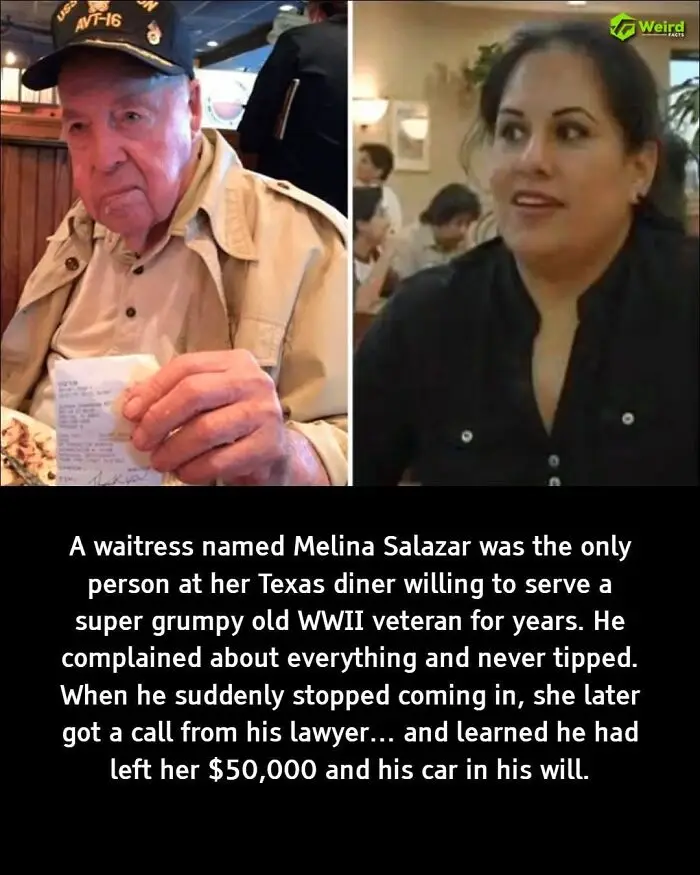
For nearly seven years, Melina Salazar was a waitress at Luby’s Cafeteria in Brownsville, Texas.
She regularly served Walter “Buck” Swords, an 89-year-old WWII veteran known for being grumpy and demanding about his food. Despite his difficult behavior, Salazar treated him with patience and kindness.
Swords d**d in July 2007. About five months later, just before Christmas, Salazar learned from his lawyer that he had left her $50,000 and his 2000 Buick in his will, apparently as thanks for the kindness she had shown him.
Report
3points
#26

U.S. Navy sailor Douglas Hegdahl fell overboard from the USS Canberra in 1967 and was captured by North Vietnamese forces.
Held at the infamous Hanoi Hilton, he pretended to be illiterate and slow-witted. His captors nicknamed him “The Incredibly Stupid One” and gave him more freedom around the camp.
Using that access, Hegdahl secretly memorized the names, capture dates, and personal details of 256 fellow American POWs by setting them to the tune of the children’s song “Old MacDonald Had a Farm.”
Released early in 1969 with the support of senior officers among the POWs, he returned to the United States and provided the list from memory.
His information helped confirm that dozens of men were alive and exposed prison conditions, making it one of the most remarkable acts of quiet resistance in the Vietnam War.
Report
3points
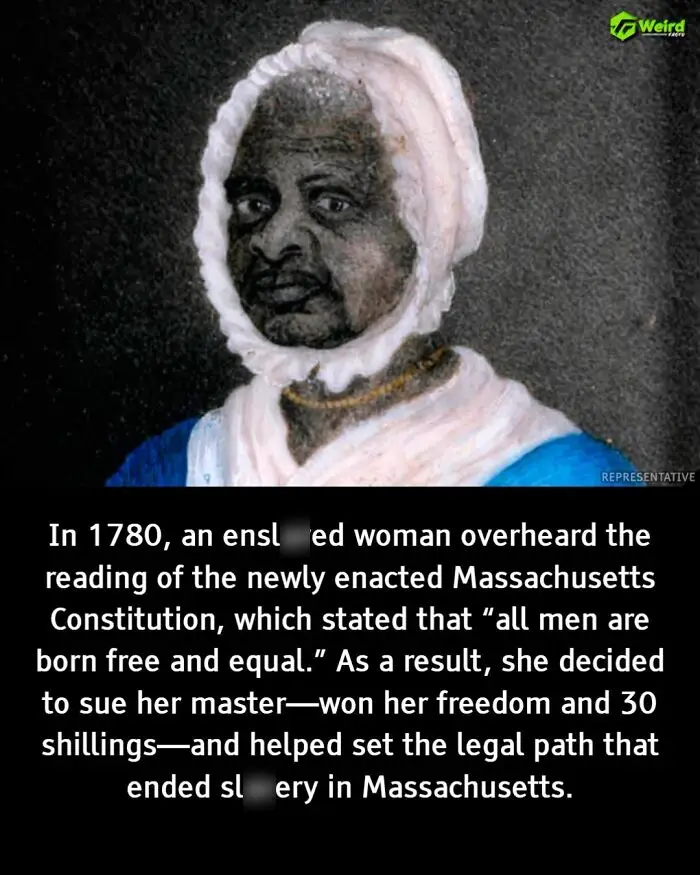
#28

Along the U.S.–Mexico border in the Imperial Valley, the California city of Calexico sits directly across from Mexicali, the capital of the Mexican state of Baja California.
Calexico’s name is a portmanteau of “California” and “Mexico,” while Mexicali reverses the order of the same two words, reflecting their twin-city relationship on either side of the border. A reinforced border fence separates the two urban areas, but economically and socially they function as a single transborder agglomeration, often referred to as Calexico–Mexicali, with intense cross-border commuting, trade, and cultural exchange.
Mexicali is far larger and serves as a regional industrial and commercial hub, while Calexico is a smaller U.S. port-of-entry city whose economy is closely tied to its Mexican neighbor.
Report
3points
#29
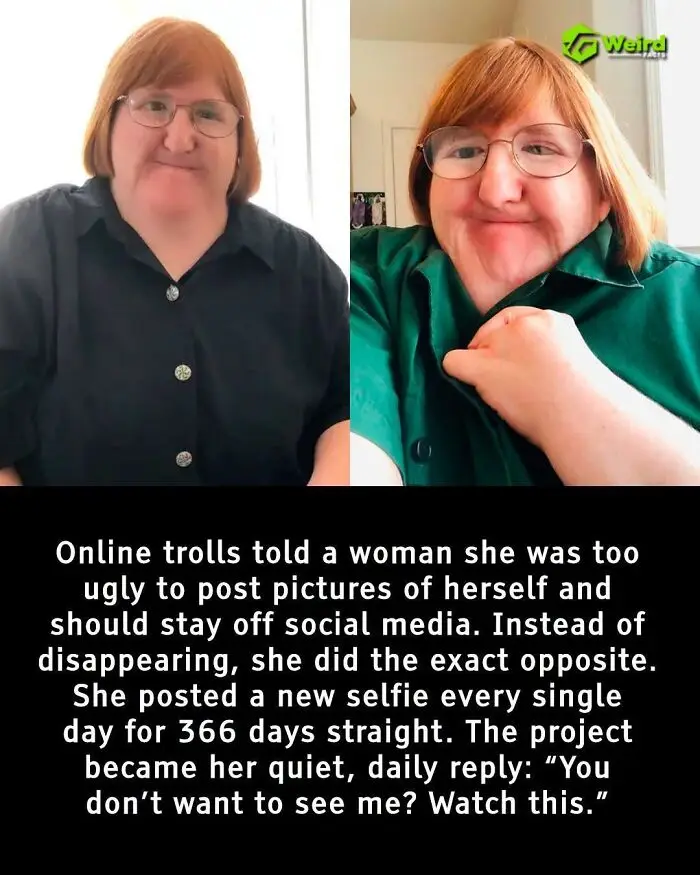
In 2019, writer and disability advocate @melissablake81 published an op-ed online. Instead of debating her ideas, some people attacked something far more personal: her appearance.
Trolls flooded social media with cruel comments. Some said Blake was “too ugly” to post photos of herself and suggested she should stop sharing selfies altogether.
She could have disappeared from view. Instead, she did the opposite.
Blake began posting a selfie every single day under the hashtag #MyBestSelfie. What started as a response to online cruelty soon became a year-long project.
Day after day, she showed up on social media exactly as she was. No hiding. No giving strangers the power to decide whether she deserved to be seen.
She kept going for 366 days, a full year that included February 29, 2020.
Later, Blake explained that taking and sharing those daily photos changed the way she felt about herself. The project helped her become more comfortable with her body and challenged the idea that people with disabilities should make themselves less visible simply because others may judge their appearance.
Her selfies also reached far beyond her own social media accounts. News outlets covered the project, and many people responded with messages of encouragement and support.
The people trying to make her hide ended up inspiring her to make herself more visible.
Report
3points
#30
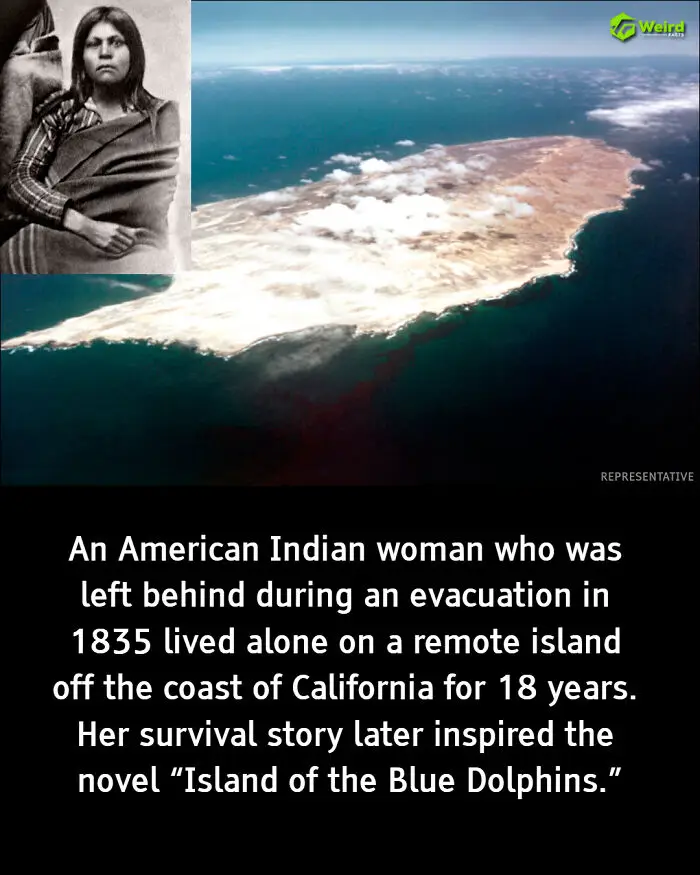
In 1835, missionaries evacuated the Native Nicoleño people from San Nicolas Island, one of California’s Channel Islands. In the confusion, a woman was accidentally left behind. Known later as the “Lone Woman of San Nicolas Island,” she survived entirely alone for about 18 years, living off seafood and crafting tools from what washed ashore.
In 1853, she was discovered and brought to the mainland, where she was baptized Juana Maria, but she d**d just seven weeks later. Her real name was never recorded, and much of her life remains a mystery. Her extraordinary survival inspired Scott O’Dell’s classic children’s novel Island of the Blue Dolphins (1960), which introduced her story to generations worldwide.
In 1853, she was discovered and brought to the mainland, where she was baptized Juana Maria, but she d**d just seven weeks later. Her real name was never recorded, and much of her life remains a mystery. Her extraordinary survival inspired Scott O’Dell’s classic children’s novel Island of the Blue Dolphins (1960), which introduced her story to generations worldwide.
Report
3points
#31
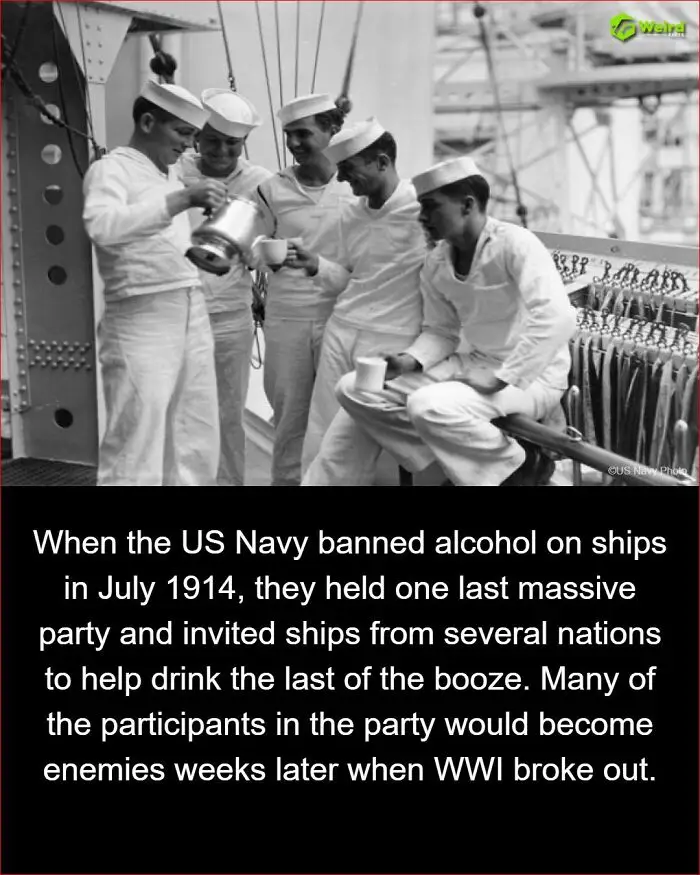
In 1914 the U.S. Navy ended alcohol at sea with General Order No. 99, effective July 1. With much of the fleet off Veracruz, Mexico, sailors staged a final send-off the night before the ban. U.S. ships hosted themed parties and even mock “burials” for liquor.
Crews from nearby British, French, German, Spanish, and Dutch vessels joined in, moving from ship to ship to help empty American stores before the deadline. It became a last moment of camaraderie among sailors who, within weeks, would face each other as enemies when World War I began on July 28, 1914.
The order’s text barred bringing or using alcohol aboard naval vessels or at navy yards, closing a long chapter of naval drinking traditions.
Report
3points
#32

On April 15, 2026, at Wonder Junior High School in West Memphis, Arkansas, 56-year-old teacher Tracy Matthews told a student who addressed him as “bruh,” “I’m not your bruh, I’m your sir.”
When the student replied, “My bad, lil bruh,” Matthews allegedly grabbed the student by the shirt, pushed him against a desk, followed him out of the classroom, pinned him against a wall, and choked him, making it difficult for the student to breathe.
The entire confrontation was captured on school surveillance video. West Memphis Police arrested Matthews the same day and charged him with aggravated a*****t, a felony.
Report
3points
#33
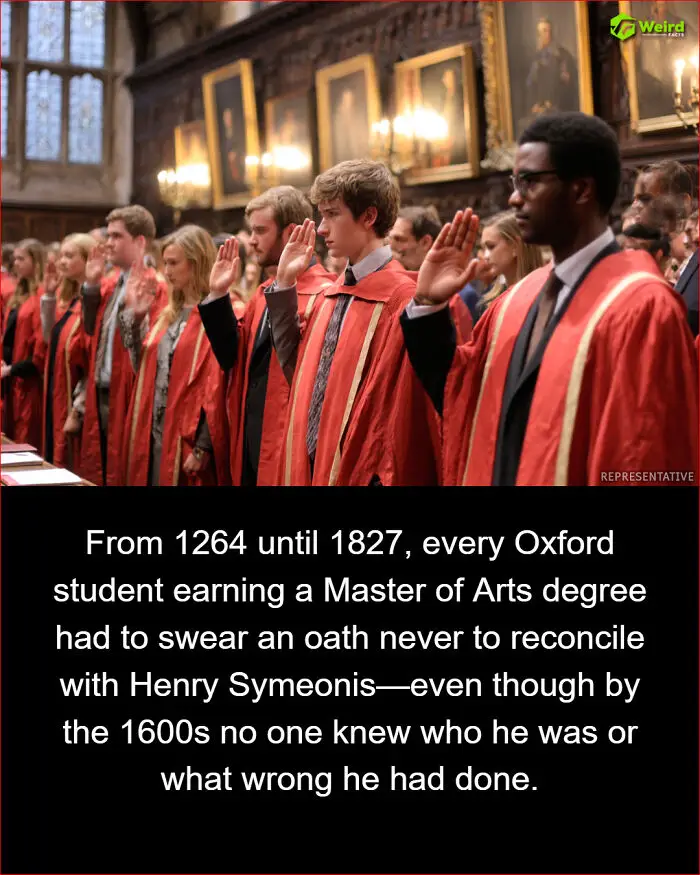
Henry Symeonis: The Mystery Villain of Oxford's Lost Tradition
In 1264 Oxford inserted an unusual clause into its statutes: any Bachelor proceeding to a Master of Arts had to swear never to be reconciled with Henry Symeonis. Symeonis, a wealthy Oxford townsman, had been involved in the 1242 m****r of a student, fined and banished.
In March 1264 King Henry III suspended the university (for security reasons amid war) and two weeks later pardoned Symeonis, ordering that the university not withdraw on account of his return—stoking town-gown resentment. Over time Oxford forgot who Symeonis was; a 1651/2 bid to delete the oath failed, and it survived until February 1827, when Convocation finally abolished it.
Archivist Reginald Lane Poole rediscovered Symeonis’s identity in 1912. The episode shows how a medieval quarrel can echo in rules long after its meaning is lost.
Report
3points
#34

In Texas, Alamo Drafthouse hosts “Jaws on the Water,” a screening where you don’t sit in theater seats—you float.
People watch Jaws at night while bobbing on inner tubes in Lake Travis, with the movie playing on a huge inflatable screen set up along the shore. Some events even add playful scares, like scuba divers lightly tugging at swimmers’ feet during key moments.
It’s a real, organized movie night designed to make the classic shark film feel a lot more immersive.
Report
3points
#35
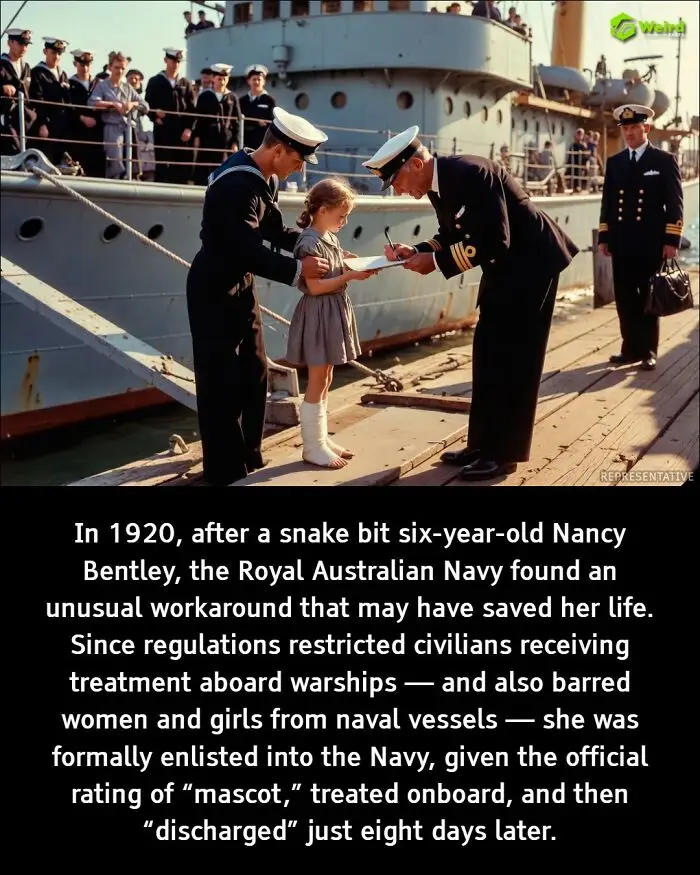
The incident involving Nancy Bentley took place in 1920, when she was just six years old. After being bitten by a snake near a coastal area, she urgently needed medical care. At the time, Australian naval regulations were strict: civilians were not permitted to receive treatment aboard naval vessels.
Faced with a child’s life at risk, the Royal Australian Navy improvised an unusual solution. Nancy was formally enlisted so she could legally remain onboard and receive treatment from the ship’s medical staff. She was given the official naval rating of “mascot,” making her, on paper, the youngest person known to have been enlisted in the Australian forces.
She stayed onboard for eight days, during which she received care from the ship’s medical staff. She was formally “discharged” from service after eight days, completing an eight-day “career” that remains a record for the youngest known enlistment.
The story is often cited as an example of how rigid rules were bent, turning a bureaucratic loophole into a potentially lifesaving act.
Report
3points
#36
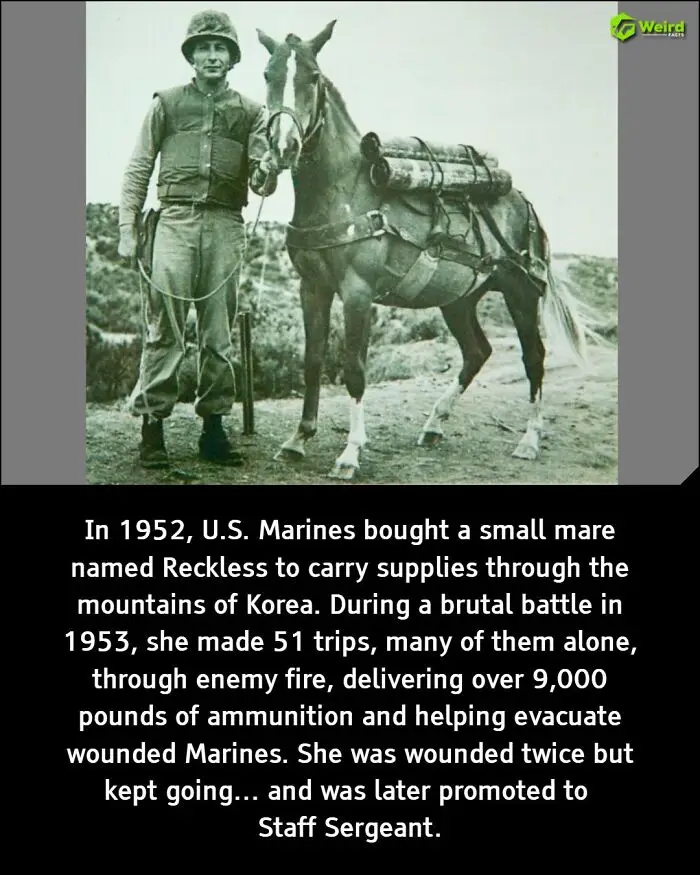
In 1952, U.S. Marines needed a way to move heavy ammunition through the steep mountains of Korea. They bought a small Mongolian mare named Reckless for $250.
During the brutal Battle of Outpost Vegas in 1953, Reckless made 51 trips, many of them alone, through intense enemy fire, carrying over 9,000 pounds of ammunition to the front lines. She even learned the route so well that she continued making runs without guidance, and on her way back, she helped carry wounded Marines to safety.
Reckless was wounded twice but kept going.
She later became an officially promoted horse in the U.S. Marine Corps.. eventually reaching the rank of Staff Sergeant.
A small horse…with a hero’s courage.
Report
3points
#37
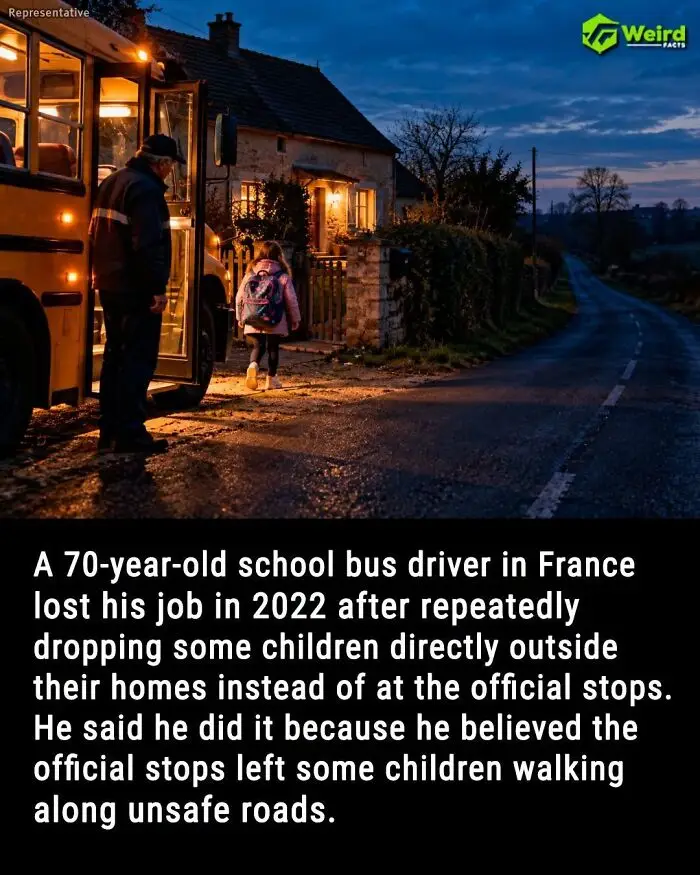
For 17 years, Damien Tabard drove children through the rural roads around Les Billanges in central France.
Then a new operator took over the school-bus contract in 2022. A new GPS system revealed something Tabard said had previously been tolerated: he was sometimes stopping outside children’s homes instead of using only the official stops.
One 12-year-old girl otherwise had to walk about 650 meters in darkness along a road with no pavement or street lighting. Her mother had twice asked authorities for a new stop and been refused. Tabard said his stops were on the existing route and that he made them for safety.
His employer disagreed, calling them unauthorized. After warnings to stop, the company dismissed him for serious misconduct. Parents rallied behind him. Tabard challenged the dismissal, but a court ruled against him, finding that he had disobeyed his employer’s instructions.
Report
3points
#38
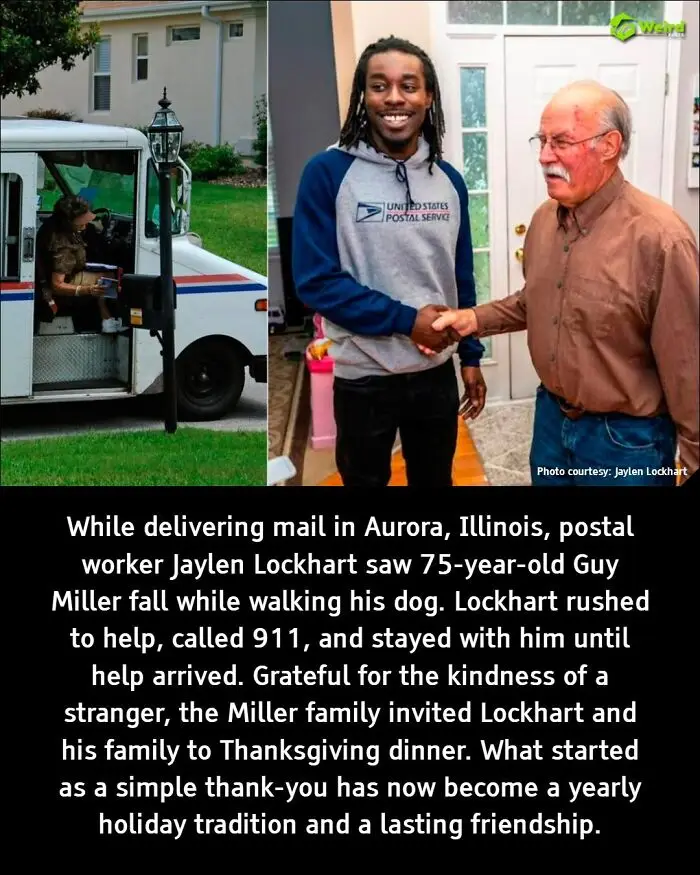
While delivering mail in Aurora, Illinois, 26-year-old postal worker Jaylen Lockhart noticed 75-year-old Guy Miller fall while walking his dog.
Lockhart saw the fall in the rear-view mirror of his mail truck and immediately turned around to help. Miller had hit his head and was bleeding, so Lockhart quickly called 911, applied pressure to the wound, alerted neighbors, and ran to Miller’s home to inform his wife, Marcia Miller.
Thanks to the quick response, Miller suffered only minor injuries. Grateful for the kindness of a stranger, the Miller family invited Lockhart and his family to join them for Thanksgiving dinner. What started as a simple thank-you quickly turned into a warm friendship.
The Millers now say Lockhart isn’t just a guest anymore — he’s part of the family. The story touched many people in the community. The city of Aurora honored Lockhart with the Mayor’s Award of Service and even proclaimed August 29, Lockhart’s birthday as “Jaylen Lockhart Day.”
What began with a stranger stopping to help someone in need has grown into a lasting bond and a holiday tradition built on kindness.
Report
3points
#39
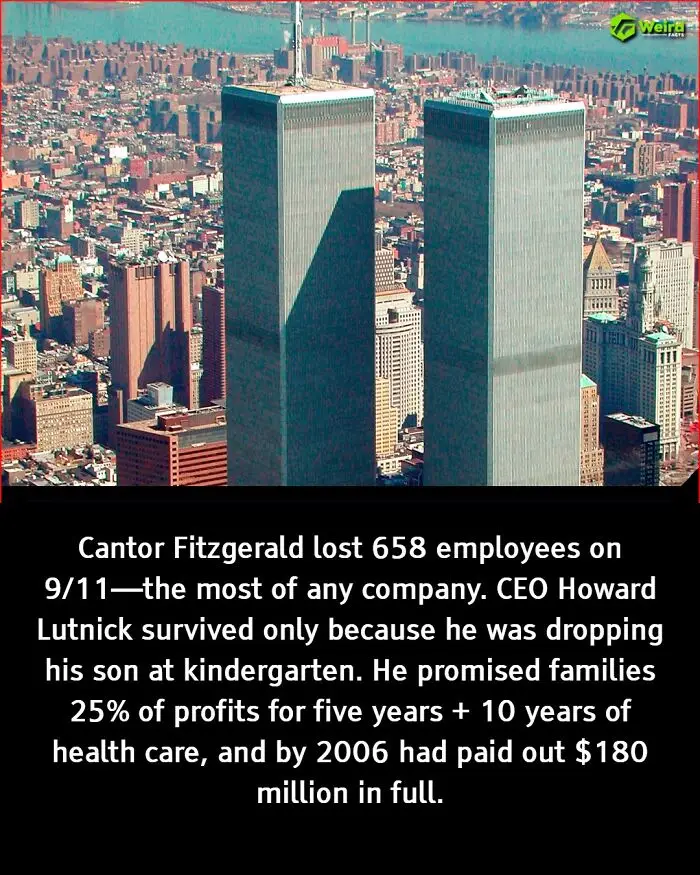
Cantor Fitzgerald, located on the top floors of the World Trade Center's North Tower, lost 658 employees—two-thirds of its workforce—on September 11, 2001.
CEO Howard Lutnick survived only because he was dropping his son off for his first day of kindergarten. In the aftermath, Lutnick pledged 25% of the firm's profits for five years to the families of the victims, plus ten years of health insurance coverage. The company also established the Cantor Fitzgerald Relief Fund.
By September 2006, on the fifth anniversary, Cantor had fulfilled the commitment, distributing a total of $180 million directly to the families.
Report
3points
#40
According to United Nations and U.S. Census Bureau estimates, the global population reached 1 billion around 1804, 2 billion in 1927, and 3 billion in 1960. That means the first 3 billion people took all prior human history plus about 150 years of modern demographic records.
After 1960, growth accelerated sharply: a UN report notes that the world climbed from 3 billion to 6 billion by 1999, a doubling in just 39 years. This rapid increase was driven by falling d***h rates thanks to better medicine, sanitation and food production, while birth rates stayed high for several decades in many countries.
Since then, fertility has dropped in much of the world, so each additional billion is now taking slightly longer, but the 1960–1999 period remains one of the fastest sustained population booms in history.
Report
3points


