

Some facts are fun for a moment. You know the type. Those well-worn favorites that pop up in every quiz night or pop out of every Christmas cracker. Others come with a story attached—a name, a face, some texture. Those, in my mind at least, are the ones that really stick. Maybe it’s a remarkable moment that almost slipped through history’s cracks. A small win that deserves more attention than it ever got. A record that’s finally been set straight. Or maybe a strange, unexpected reminder that humanity isn’t completely horrible after all.
These are exactly the kinds of interesting facts shared by the “Weird Facts” accounts on Instagram and Threads. From lessons hidden in history to straight-up curiosities, we’ve rounded up some of the best. Keep reading for a few you might just find weirdly hard to forget.
#41

In 1975, actress Tippi Hedren was visiting a refugee camp in California when the women kept admiring her fancy nails. Instead of just smiling, she flew in her personal manicurist every weekend to teach them the trade.
She helped those first 20 women get licensed and land jobs in salons.
That one act of kindness grew into something huge. Today around 80% of nail technicians in California are Vietnamese.. many are the children and grandchildren of those original women Hedren supported.
Sometimes the smallest gesture creates a whole new American dream.
Report
3points
#42
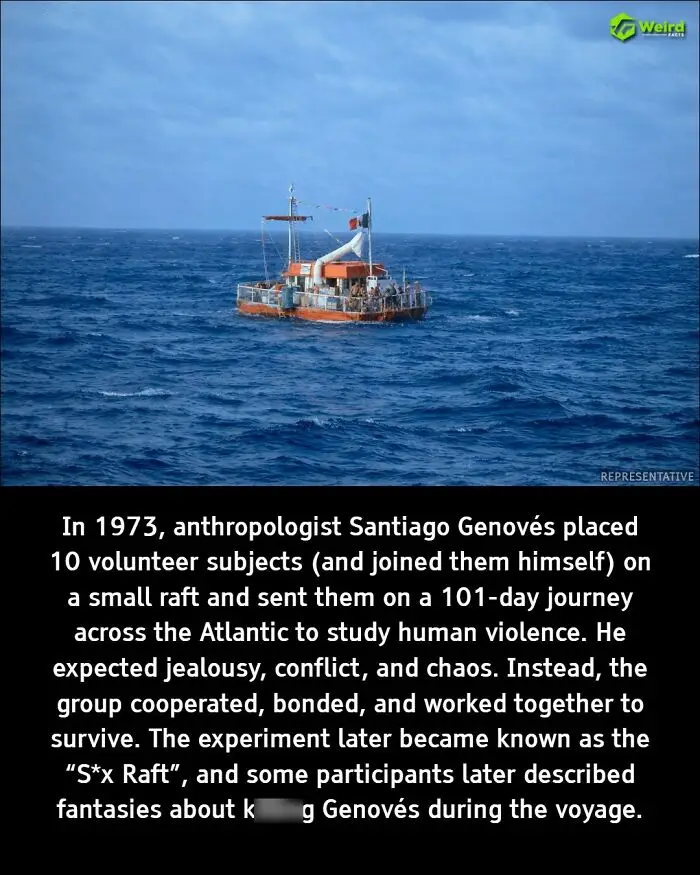
In 1973, anthropologist Santiago Genovés launched a radical social experiment. He placed 10 volunteer subjects (and joined them himself) on a small raft called Acali and sent them on a 101-day journey across the Atlantic Ocean, from the Canary Islands toward Mexico.
Genovés believed he could uncover the root causes of human violence. His theory was controversial: he suspected that se*xual attraction and social tension were major triggers of aggression.
To test it, he deliberately chose a group of young, attractive participants from different cultures and confined them together in a stressful environment. Genovés expected arguments, jealousy, and eventually violence. His plan was simple: observe and record the chaos.
But something unexpected happened. Instead of fighting, the crew cooperated. They shared responsibilities, solved problems together, and supported one another through storms, exhaustion, and fear on the open ocean. Frustrated that his theory wasn’t proving correct, Genovés reportedly began provoking tension himself.
He read private survey responses aloud and tried to stir conflict among the crew. The result was not what he expected. Rather than turning on each other, the participants united against him.
According to several crew members interviewed years later, they even recalled discussing throwing the scientist overboard. The experiment, known as the Acali Experiment, ended without the violence Genovés had predicted.
Instead, it left many observers with a different takeaway: In the Acali case, when people were forced to survive together, cooperation often emerged more naturally than conflict.
Report
3points
#43
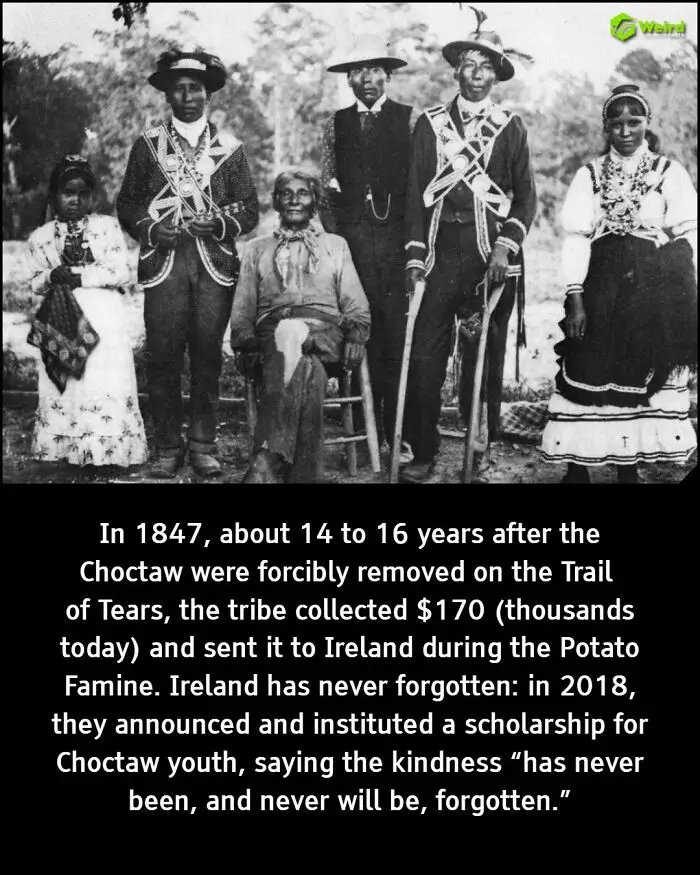
In 1831–1833, the Choctaw Nation was forcibly removed from Mississippi to Indian Territory (Oklahoma) under the Treaty of Dancing Rabbit Creek, an event that became part of the Trail of Tears.
In March 1847, only 14 years later, Choctaw people in Oklahoma collected $170 (equivalent to several thousand dollars today) and sent it to Ireland to aid victims of the Great Potato Famine. The donation was made at a meeting in Skullyville and forwarded through U.S. relief committees.
This act of generosity, coming so soon after their own suffering, created a lasting bond between the Choctaw and Irish peoples.
In 2018, Irish Prime Minister Leo Varadkar announced a scholarship programme for Choctaw students to study in Ireland, stating that the Choctaw act of kindness “has never been, and never will be, forgotten in Ireland.”
Report
3points
#44
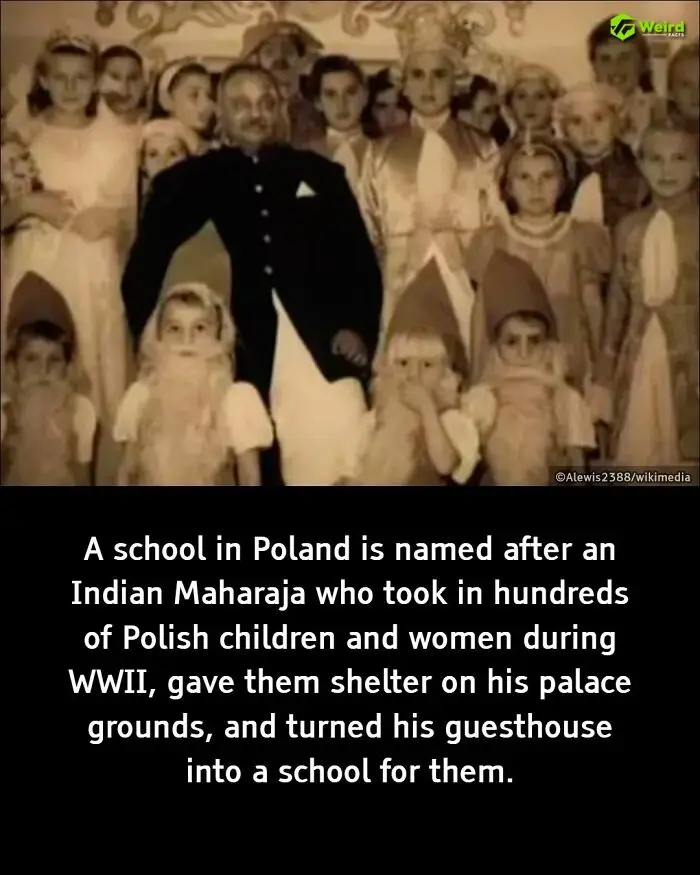
During World War II, one Indian Maharaja became a real-life father to over 600 Polish children, many of them orphans, in one of history’s most heartwarming rescues.
After the Soviet invasion of eastern Poland in 1939, thousands of Polish children were sent to brutal camps and orphanages deep inside the USSR. Starving, sick, and d***g, they had almost no hope.
Then in 1941, an amnesty let some leave. The Maharaja of Nawanagar, Jam Saheb Digvijaysinhji, offered them a home. India became the first place to offer them a safe home.
In early 1942, the exhausted children arrived in Balachadi near his palace. The Maharaja greeted them personally and said: “You are no longer orphans. From now on you are Nawangarians, and I am Bapu, father of all Nawangarians, so I’m your father as well.’ ”
He turned his palace guest house into a school, built dormitories, and gave them food, clothes, medical care, a Polish library, sports and plays. They lived safely there through the war years, and many remained until 1946.
When it was finally time to return to Europe, both the children and the Maharaja were heartbroken. He never asked for financial compensation – only that a street in Warsaw be named after him.
After Poland became a democracy, the country honoured him. A square in Warsaw was named after him, and in 2012, a park in Warsaw’s Ochota district was named the Square of the Good Maharaja. A monument was added in 2014, he received a high Polish honour after his d***h, and a school in Warsaw now carries his name.
What an extraordinary hero. His legacy of love still shines brightly today.
Report
3points
#45
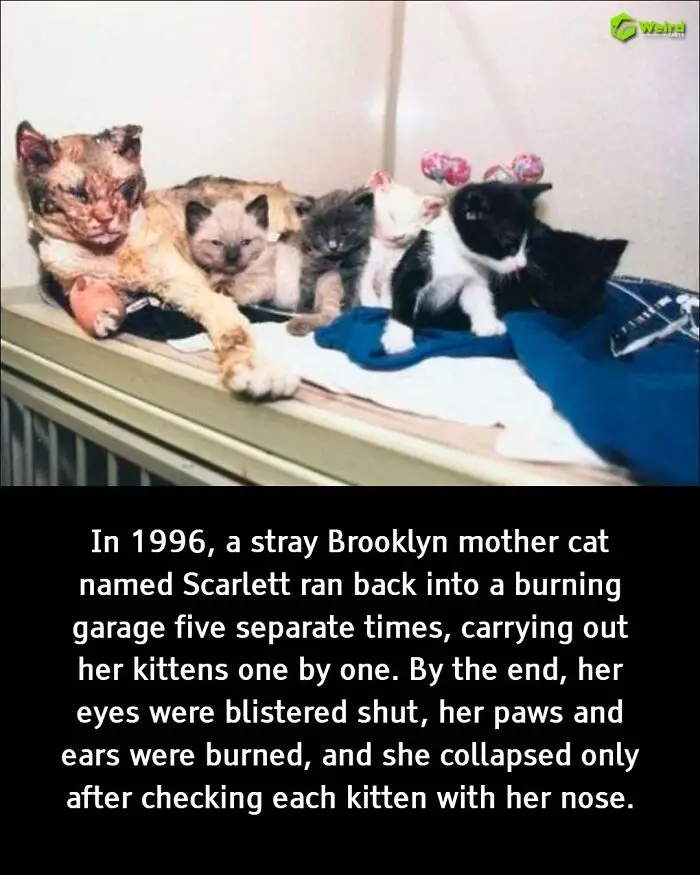
In 1996, a stray cat in Brooklyn did something incredible during a fire.
She had been hiding in an abandoned garage with her five kittens when the building caught fire. Instead of running away, the mother cat rushed back in again and again, carrying her babies out one by one.
By the time firefighters found her, she was badly burned. Her eyes were swollen shut, and her paws and ears were badly hurt. Even then, she used her nose to check each kitten before finally collapsing.
She was later named Scarlett, and her story touched people around the world. She and her kittens were taken in for treatment, and her bravery led to headlines, awards, books, and thousands of people wanting to adopt her.
Scarlett later found a safe home and lived there until 2008.
Report
3points
#46
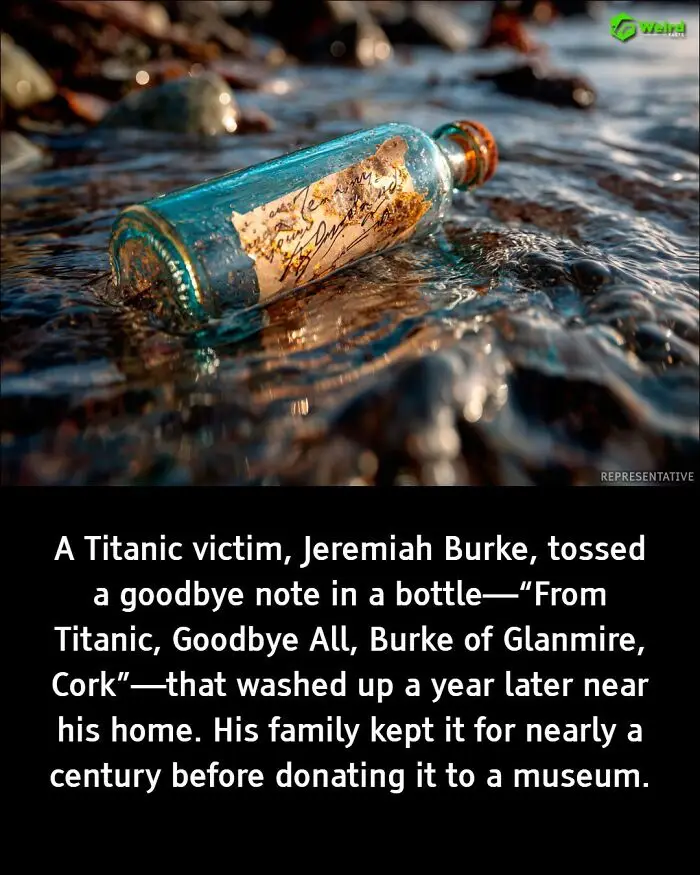
Nineteen-year-old Jeremiah Burke from Glanmire, County Cork, boarded the Titanic at Queenstown on 11 April 1912.
Before he left, his mother Kate gave him a small bottle of holy water to carry on the journey. Sometime before the ship went down, Burke wrote a brief farewell note on a scrap of paper, placed it inside the bottle, tied it shut with one of his shoelaces, and threw it into the sea.
In the summer of 1913, the bottle washed ashore at Dunkettle, only a few miles from his family home. Burke’s family recognised both his handwriting and the holy-water bottle his mother had given him. They kept the note as a treasured family relic for nearly a century.
In 2011, the family donated it to Cobh Heritage Centre, where it remains on public display.
Report
3points
#47
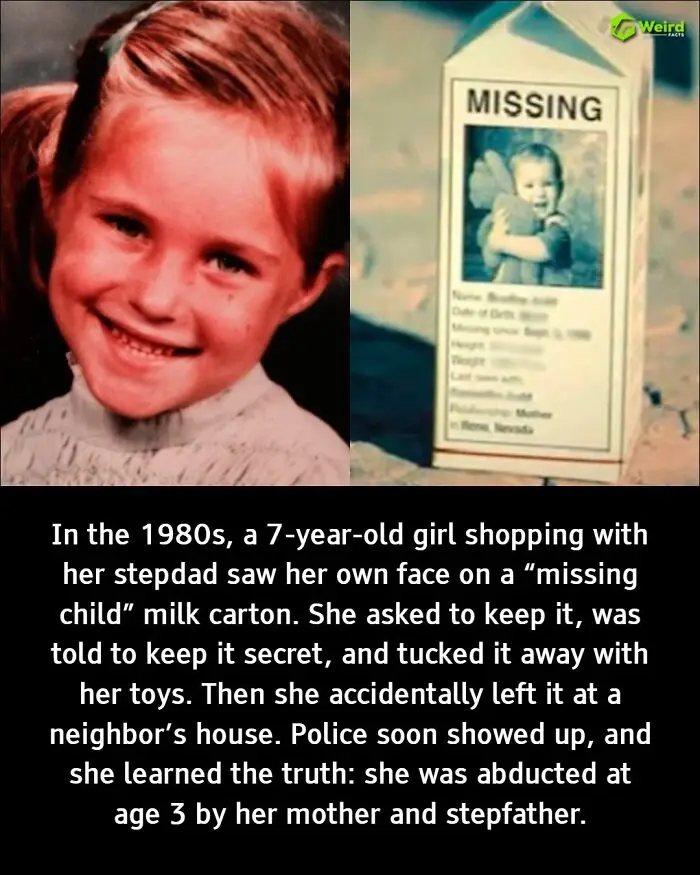
Bonnie Lohman was 3 years old when she was abducted by her mother and stepfather, taken from her father’s care. Her case wasn’t the typical fit for the milk carton program, but her father still managed to get her photo printed.
A few years later, when Bonnie was 7, she was in a grocery store with her stepfather and spotted her own face on the side of a milk carton. She recognized the picture, but didn’t understand what it meant. She asked to keep the cut-out image and was allowed to—on the condition that she kept it secret.
Her neighbors later learned who she was after the carton was accidentally left behind in a bag of toys at their house. They contacted authorities, and Bonnie was reunited with her father. Bonnie is one of the few success stories of the milk carton programme.
Report
3points
#48

In 1999, Namiko Takaba was fatally attacked inside her apartment in Nishi Ward, Nagoya, Japan. Her two-year-old son was found unharmed beside her.
Her husband, Satoru Takaba, refused to let the memory — or the clues — disappear. He moved out, but he never gave up the apartment.
For 26 years, he continued paying rent on the flat, spending more than 22 million yen (about US$145,000) and leaving key traces untouched. He believed that one day, the preserved DNA evidence would uncover the truth.
Police questioned thousands, but the case went cold. Then in 2025, DNA testing finally brought answers. A 69-year-old former classmate confessed to the crime after her DNA matched evidence preserved in the apartment.
Sometimes justice takes time. Sometimes it comes because someone refuses to let go.
Report
3points
#49
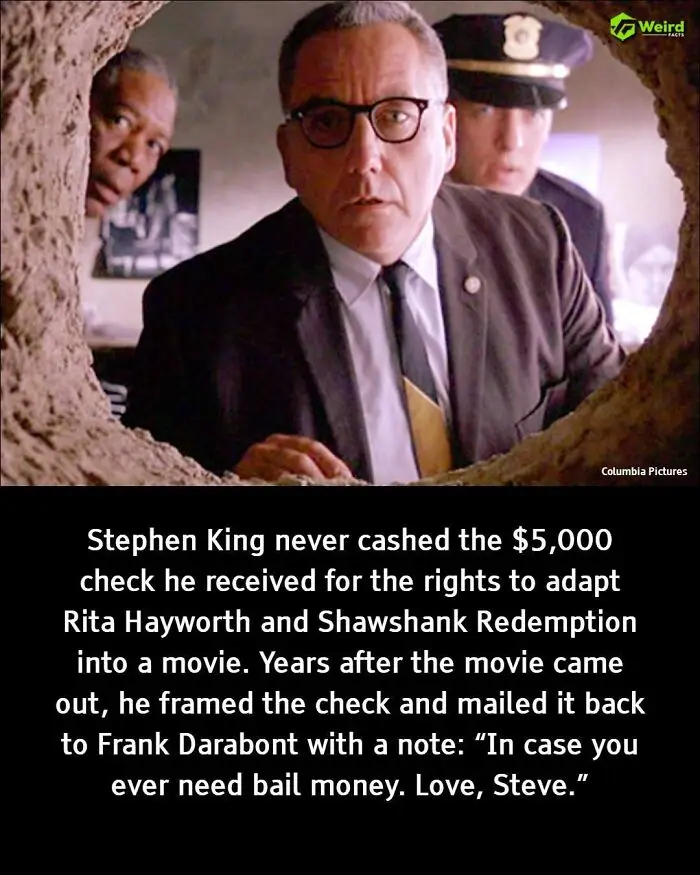
Stephen King sold the movie rights to Shawshank Redemption for just $5,000 back in 1987. He never cashed the check.
Years after the film became a beloved classic, he had it framed and mailed it back to director Frank Darabont with a note that said: “In case you ever need bail money. Love, Steve.”
It’s one of those rare, heartwarming Hollywood stories that shows real gratitude. Darabont has talked about how much it meant to him. King basically turned a small paycheck into a legendary keepsake and a funny thank-you note.
Sometimes the best gestures aren’t about the money, they’re about the thought behind them.
Report
3points
#50
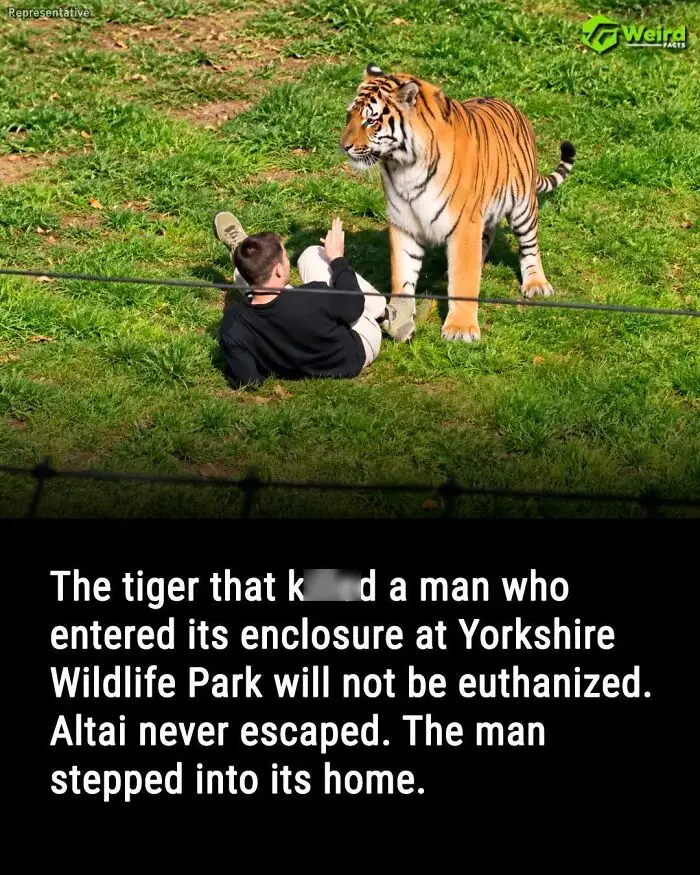
On October 10, a 23-year-old man climbed into a tiger enclosure at Yorkshire Wildlife Park in England. Inside was Altai, an endangered Amur tiger. The tiger attacked the man, and sadly, he d**d at the scene. The tiger never escaped. He stayed in his enclosure and was unharmed.
After the incident, many people were worried about what would happen to Altai. Some feared he might be put down. But the wildlife park announced the next day. Altai was safe and would not be put down because of the attack.
A young man lost his life. But the tiger will not lose his life for behaving like a wild animal.
Report
3points
#51
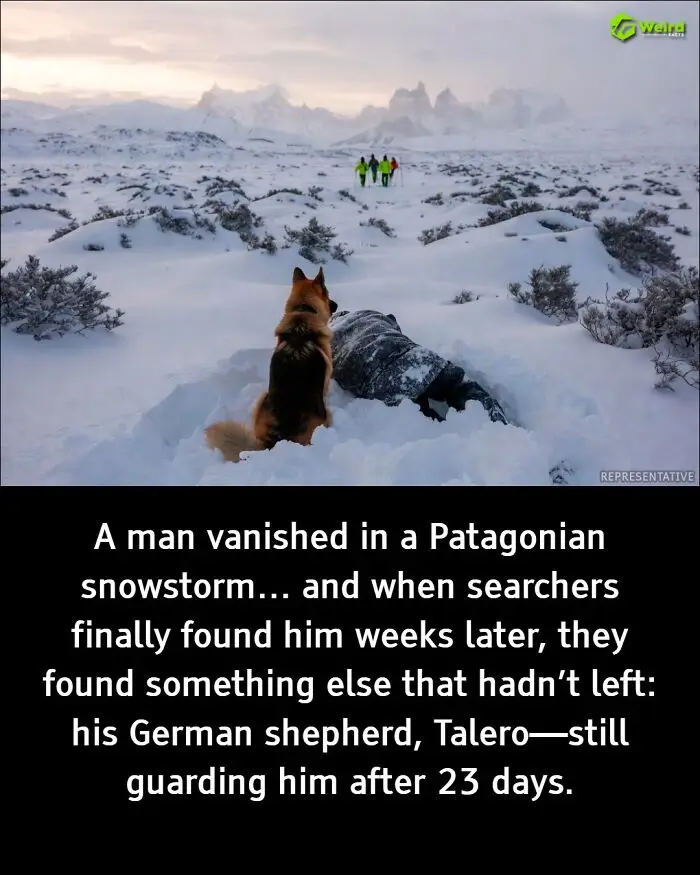
In 2013 in Patagonia, Argentina, a man named Bernardo Leónidas Quirós went missing after his car broke down in a remote area. Reports say he walked off with his German shepherd, Talero, to find help, but he got lost in a snowstorm and d**d from the cold.
When rescuers found his body 23 days later, Talero was still there, guarding him. Reports said the dog kept predators away and may have tried to keep him warm by staying close.
A heartbreaking reminder of a dog’s loyalty — even to the very end.
When rescuers found his body 23 days later, Talero was still there, guarding him. Reports said the dog kept predators away and may have tried to keep him warm by staying close.
A heartbreaking reminder of a dog’s loyalty — even to the very end.
Report
3points
#52
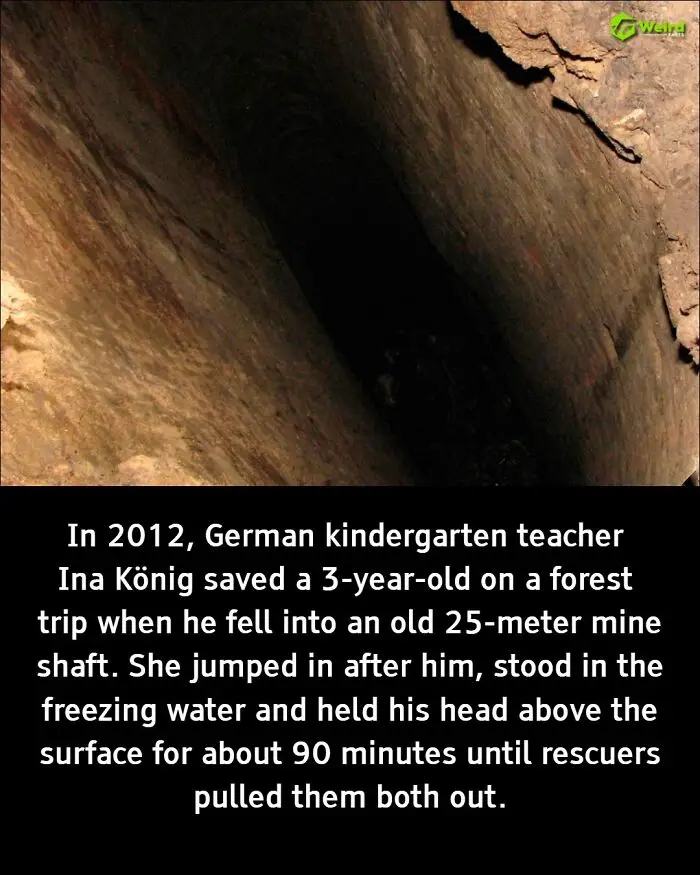
In July 2012, a group from the St. Nicolai kindergarten in Oldendorf, Germany, was walking in the Osterwald when a three-year-old boy fell through a poorly covered opening into an old coal-mine ventilation shaft.
Reports say the shaft was about 25 meters deep and contained very cold water. Kindergarten teacher Ina König immediately jumped in after him, not knowing how deep it was. Both landed in the water at the bottom, where König managed to hold the child in a small niche and keep his head above the surface while they waited in darkness.
Emergency services arrived and eventually raised the boy and then König from the shaft. She spent around one and a half hours in the icy water and both survived with only minor injuries, for which she later received a state rescue medal.
Report
3points

#54

In 1964, Bell Labs scientists Arno Penzias and Robert Wilson were using the Holmdel Horn Antenna, an extremely sensitive radio instrument in New Jersey, when they found a persistent background signal they could not eliminate.
The noise came from all parts of the sky at all times. They checked for possible sources of interference, including pigeons and debris in the antenna, but the signal remained.
The radiation they detected matched what Princeton researchers had predicted as leftover radiation from the universe’s hot early beginning. That signal became known as the cosmic microwave background, one of the strongest pieces of evidence supporting the Big Bang model.
In 1978, Penzias and Wilson received the Nobel Prize in Physics for the discovery.
Report
3points
#55

In 1977, two brothers signed up a made-up boy for Farrell’s Ice Cream Parlour Birthday Club so they could collect extra free birthday sundaes. For years, the fake child kept getting birthday offers in the mail like he was real.
Then came the weird part.
In 1984, the imaginary boy received a Selective Service registration notice. That was the moment the prank exposed something much bigger: Selective Service had been using a mailing list linked to Farrell’s birthday-club data to contact young men about draft registration.
It turned out the U.S. government had bought (or accessed) the chain’s mailing list without anyone knowing.
One of the greatest accidental privacy scandals started by two kids just trying to get more ice cream.
Report
3points
#56
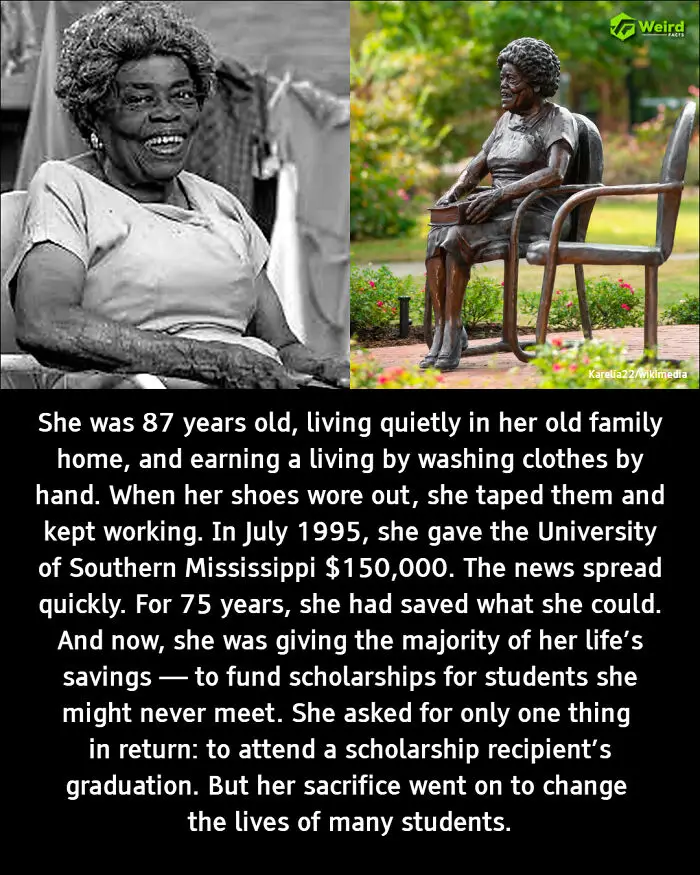
Her name was Oseola McCarty. She was born in 1908 in rural Mississippi and left school in the sixth grade to care for her sick aunt. That decision shaped her entire life. For decades, she worked as a washerwoman, cleaning other people’s clothes by hand, earning small sums at a time. She never married, never owned a car, and lived simply in her old family home with no luxuries.
What few people knew was that she quietly saved money for decades, depositing small amounts whenever she could. In 1995, at the age of 87, she gave the University of Southern Mississippi $150,000 — the majority of her life savings — to create scholarships for students who couldn’t afford college.
Her gift inspired many. It led to national recognition, including the Presidential Citizens Medal, and encouraged others to donate in her name, multiplying her impact far beyond her savings. Oseola McCarty proved that generosity has nothing to do with wealth—and everything to do with heart.
Report
3points
#57
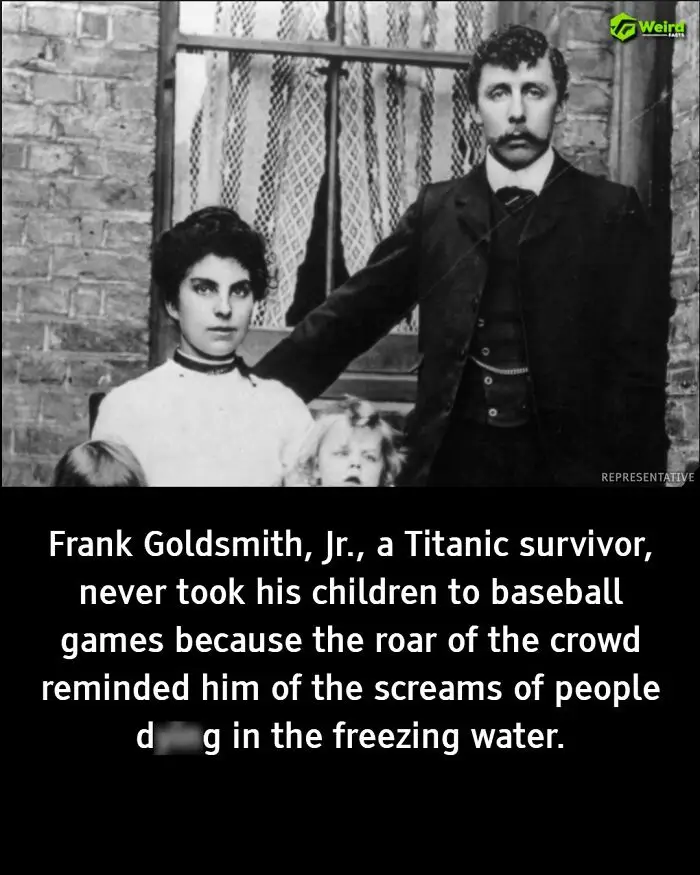
Frank Goldsmith (often called “Frankie”) was a nine-year-old third-class passenger on the Titanic, traveling from England to Detroit with his parents. When the ship sank, he and his mother escaped in a lifeboat, but his father perished.
Goldsmith later settled in Detroit near Tiger Stadium, home of the Detroit Tigers. The cheers of baseball crowds echoed the screams of drowning victims he heard that night, traumatizing him. As a result, he said the stadium crowds were hard for him to be around.
His experiences were detailed in his memoir, ‘Echoes in the Night’, published by the Titanic Historical Society in 1991.
Report
3points
#58
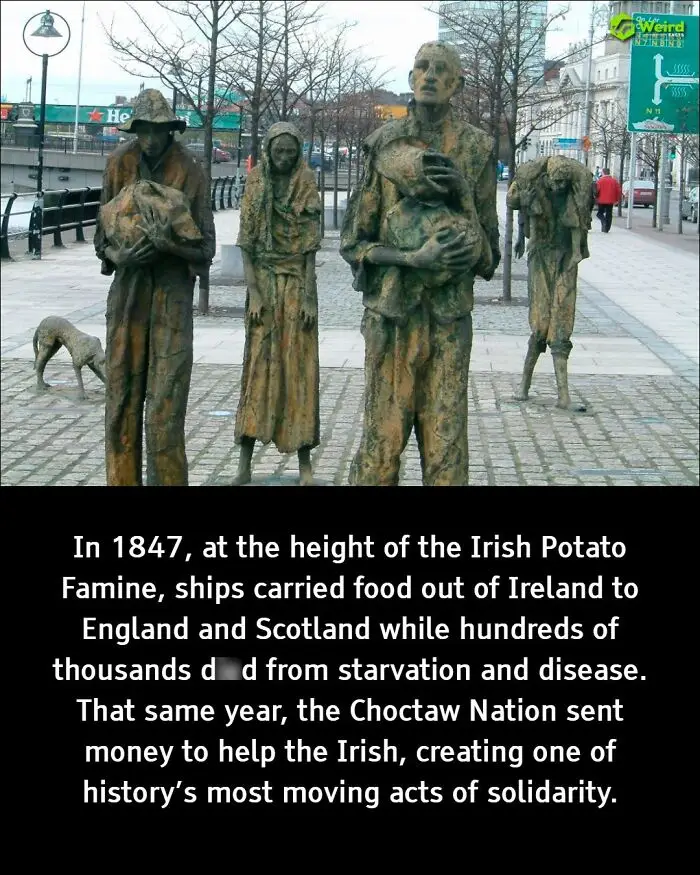
In 1847, the worst year of the Irish Potato Famine (known as “Black ’47”), ships carried food from Ireland to British ports while people in Ireland d**d of starvation and famine-related diseases.
At the same time, the Choctaw Nation in Oklahoma.. still recovering from their own forced removal on the Trail of Tears.. collected $170 from their members and sent it to Ireland to help feed the starving.
The donation was small but deeply meaningful, showing solidarity between two peoples who had both suffered great hardship.
Today the Choctaw–Irish connection is remembered as a powerful act of empathy; Ireland has since repaid the kindness with aid and visits during times of need.
Honestly, this is one of those stories that proves a gift does not have to be huge to be unforgettable.
Report
3points
#59

In 1963, a man in Turkey was renovating his home when he discovered a hidden opening behind a wall. He had noticed his chickens disappearing through a gap in the basement, and that odd clue helped lead him to Derinkuyu, a vast underground city hidden beneath Cappadocia.
What he had stumbled onto was enormous.
Derinkuyu reaches about 85 meters (280 feet) underground and has 18 levels. At its peak, it may have sheltered as many as 20,000 people, along with their livestock and food stores.
Archaeologists found that it included all kinds of spaces built for survival: storage rooms, stables, wells, ventilation shafts, a chapel, and even a religious school. The city was used for long periods and became part of the underground town landscape of Cappadocia, which is now protected as a UNESCO World Heritage site.
Losing a few chickens and ending up rediscovering one of the world’s most incredible underground cities is about as wild as history gets.
Report
3points