





Your insatiable curiosity is something you should never be ashamed of. That desire to learn more about the world that surrounds us is hardwired into you. But no matter how educated you are, there will always be something new to learn.
We are featuring the most interesting and thoroughly weird facts and stories from around the globe, as shared on one popular Instagram account. Scroll down if you’re in the mood to learn something new and expand your mind.
#41

Italian MEP brought her daughter to work when she was just 44 days old - and kept bringing her for three years straight
When Italian MEP Licia Ronzulli stepped into the European Parliament with her daughter Vittoria, just 44 days old, it was more than a mother returning to work. It was the beginning of a quiet revolution. For over three years, session after session, Ronzulli brought Vittoria with her into the heart of European politics, turning the parliamentary floor into a powerful symbol of motherhood, inclusion, and resilience.
By the time she turned three, Vittoria had become a veteran of the Parliament. From just six weeks old to a toddler with a front-row seat to democracy, she sat beside her mother through countless votes and debates—sometimes sleeping, sometimes watching, always present. And she didn’t come alone. Whenever Ronzulli raised her hand to vote, so did Vittoria, and so did her constant companion, Po the Teletubby, who often joined in with an enthusiastic wave.
The pictures are wonderful. Not just because they are charming, but because they show how surreal it can be to be a working mother. When Ronzulli first parcelled her daughter up in a sling and marched into parliament, she did it not to be political but to be maternal, she said. She was still breastfeeding and had to come into work to vote, to do her job and earn a crust. As her daughter has grown, she has become a powerful symbol. “I have been bringing her along because I want to show the difficulties faced by a woman who works and is also a mother,” said Ronzulli.
Report
34points
#42
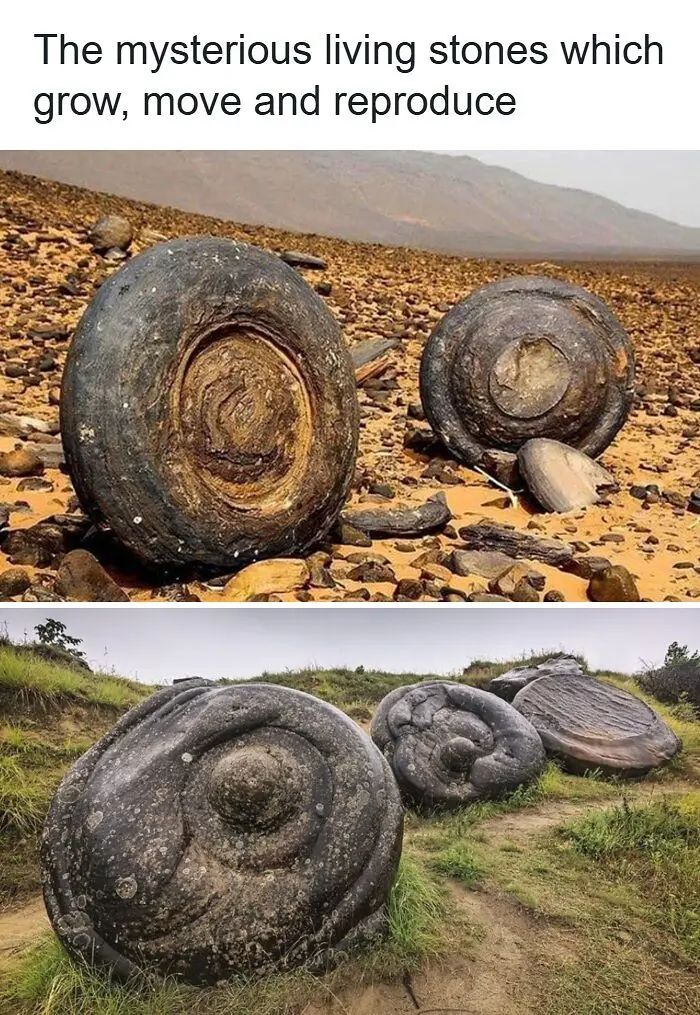
The mysterious ‘living’ stones: they grow, move and reproduce.
Starting out as pebbles and growing at about 2 inches (5 cm) per millennium, the ‘trovant’ stones are unique mineral structures that mimic plant and mammal life. The bizarre shaped stones almost appear to grow in the same way as plant tissue and they give ‘birth’ to new stones just like an animal.
Located primarily in the small Romanian village of Costesti, but also can be found in Lybia’s Kawakeb Valley, which is part of the Kafra region, the Trovants are not a typical rocks. Ranging from a few millimeters to as large as 10 meters (0,11 inches to 394 inches) these stones, after a heavy rain, appear to grow, expand, and sometimes even sprout new formations.
They are made of a hard stone in the heart, which as it goes outwards takes on the characteristics of a particular alloy similar to cement, or sand, which reacts with rainwater. This characteristic allows them to “multiply” and “move”. The minerals in rainwater form a reaction within that builds pressure inside, which makes the rock grow, move and multiply.
When they were sliced in half, they revealed concentric rings similar to those found in trees, each representing a period of growth.
Although they are not alive in the scientific sense, they are described as “alive” because of the way they appear to change over time, moving and giving rise to small rocks that resemble offspring.
Trovants were dubbed the “alive” and “moving” stones for these reasons.
Report
32points
#43

In 1533, a Portuguese trading ship named the Bom Jesus (“Good Jesus”) left Lisbon on a voyage bound for India. Laden with treasures of the Age of Exploration, copper ingots, ivory, and gold coins, it never reached its destination. The vessel vanished without a trace, swallowed by the dangers of the Atlantic, and remained hidden for almost five centuries.
The mystery resurfaced in 2008, when miners working in Namibia’s diamond-rich coast near Oranjemund stumbled upon a strange find: a bar of copper sticking out of the sand. Excavations revealed the remains of a wooden hull along with thousands of artifacts preserved by the desert climate. Archaeologists soon identified it as the long-lost Bom Jesus.
The discovery was remarkable not only for its age but also for the wealth it contained. More than 40 tons of copper ingots, hundreds of elephant tusks, and a cache of Portuguese, Spanish, and Venetian gold coins were unearthed. These treasures painted a vivid picture of the global trade networks of the 16th century, when Portugal dominated maritime routes stretching from Europe to Africa and Asia.
Experts believe the ship was driven off course by storms and wrecked on Namibia’s infamous Skeleton Coast, a region notorious for strong currents and shipwrecks. Over centuries, shifting sands buried the remains, shielding them from erosion and preserving the cargo.
Report
30points
#44

The Arlington Ladies are a group of volunteers, primarily military spouses, who attend the funeral services of service members and veterans at Arlington National Cemetery to ensure that no one is buried alone. They represent the respective branches of the military, offering condolences and support to the families of the deceased. This tradition began in 1948 with the Air Force and has since expanded to include the Army, Navy, and Coast Guard.
The Arlington Ladies initiative started in 1948 when General Hoyt Vandenberg and his wife Gladys, while walking through Arlington Cemetery, noticed that some service members were being buried with only a chaplain and honor guard present.
Report
30points
#45

Born without legs, Matthew DeMeritt, was tapped in 1981 to help bring E.T. to life in Steven Spielberg’s iconic film. While most of the alien’s movements were handled by puppets or stunt performers, it was Matthew—who could walk exceptionally well on his hands—who delivered the awkward, lifelike gait seen in the full-body shots.
Matthew only got the role because of a chance physical therapy casting call in California. Spielberg’s team measured him and filmed him walking on his hands, though even Matthew later recalled thinking, “I’d never demonstrated…walking on my hands…how they could think I could fit inside a costume… but it kind of worked out that way.”
On set, he wore a four-foot rubber suit, peeking out through chest slits with the alien head placed atop his own. He performed scenes involving falls—like the beer-drinking moment—and recalls Spielberg regularly checking in on his safety:
“Spielberg came up to me and asked if I was all right… ‘Is there any way you could just walk straight into that cabinet… fall smack on your face?’”
Today, Matthew DeMeritt is likely the only living actor to have donned the E.T. suit. His contribution remained largely uncelebrated until anniversary screenings and fan retrospectives brought him back into the spotlight. His story is a remarkable testament to creativity meeting opportunity — and the often unseen hands (and hearts) behind cinematic magic.
Report
29points
#46

In 1864, a group of Japanese samurai from the Ikeda Mission posed for a now-famous photograph in front of the Great Sphinx of Giza during their tour of Europe to study Western technology and institutions. The image captures a significant cross-cultural moment, with Japan’s feudal warriors standing before the ancient Egyptian monument just as Japan was ending centuries of isolation.
This tour was part of the Tokugawa shogunate’s effort to understand the changing world, which culminated in the Meiji Restoration just four years later, an event that would lead to the abolition of the samurai class.
The photo of the samurai posing in front of the Sphinx in 1864 was taken by the Italian-British photographer Antonio Beato.
The samurai were members of the Second Japanese Embassy to Europe (also known as the Ikeda Mission), a diplomatic tour sent by the Tokugawa Shogunate to negotiate with European powers. On their journey to France, they stopped in Egypt, where they visited the Pyramids and the Sphinx and had their pictures taken by Beato, who had a photographic studio in Luxor at the time.
Report
29points
#47

In 1980, Mark DeFriest, a brilliant yet misunderstood autistic savant, was sentenced to 4 years in prison, for taking a toolbox his father had left him in a will. The will hadn’t been probated, so his actions were technically illegal. What should’ve been a short sentence spiraled into 34 years, largely because he attempted to escape 13 times, succeeding in 7 of them.
DeFriest possessed extraordinary abilities, a photographic memory, mechanical genius, and an uncanny talent for replicating keys after just a glance, sometimes using only items like toothbrushes or scraps of metal. These gifts helped him repeatedly outwit prison security, which only led to more time and harsher punishment. After his multiple escapes by replicating keys using his memory, he earned the nickname of “Houdini of Prison.”
Most alarming, he was sent to prison despite four out of five doctors deeming him mentally unfit. The system ignored his autism and instead treated him as a dangerous escape artist. He spent much of his sentence in solitary confinement.
His story, brought to light by the 2014 documentary The Mind of Mark DeFriest, has become a powerful example of how the justice system can fail those with mental illness, punishing brilliance rather than understanding it. After more than three decades, DeFriest was finally granted parole in 2019, but only to a psychiatric facility.
Report
29points
#48

A family of Xolos, one of the most ancient dog breeds in the world.
Ancient legends says Xolos were a gift to humans to guard them in life and guide them in the afterlife. Today, these dogs are routinely called “xolos” (pronounced cholos). They are among the oldest domesticated dog breeds; remains of one dog found at an archaeological site reportedly were dated to about 5,500 years ago.
The Aztecs considered the Xolo sacred, and invested them with mystical healing abilities.
They also believed that the Xolo would guide them to the afterlife when they passed away.
The breed’s full name, Xoloitzcuintli, derives from the name of the Aztec god of fire and lightning, Xolotl, as well as “itzcuintli,” the Aztec word for dog. They are also referred to as “Mexican hairless dogs.”
According to beliefs, an Aztec god named Xolotl specifically created this dog from the same bone of life as their humans, to guide the latter’s souls through the perilous Mictlán. Among the Xolo’s key responsibilities: helping pet parents cross the impossible Apanohuacalhuia River. Here, Xolos would wait at the shore in anticipation of their arrival.
Report
28points
#49
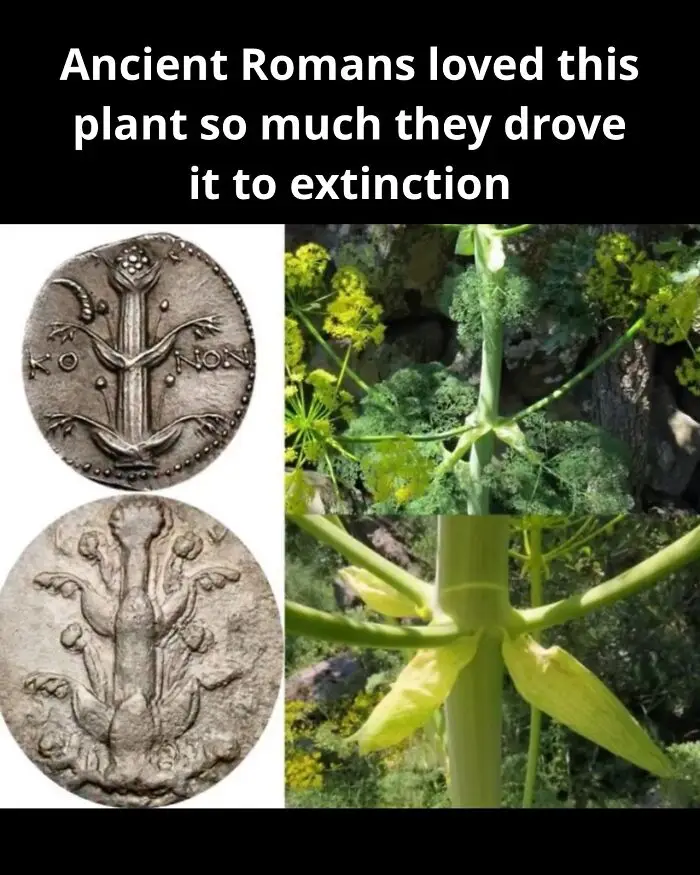
Julius Caesar reportedly kept a stockpile of it in the Roman treasury. Emperor Nero is said to have owned the very last stalk of it. And yet today, not a single living specimen exists anywhere on Earth. The plant is called silphium, and its story is one of ancient history’s most captivating mysteries.
Silphium grew wild only along the north coast of modern-day Libya and stubbornly refused to be cultivated by human hands.
The Greeks and Romans prized it above almost everything else, using it as a contraceptive, an abortifacient, a medicine, a food seasoning, a perfume ingredient, and even a livestock improver.
Its resin, extracted from the roots and stems and preserved in flour for long-distance trade, was so valuable that it appeared on coins and was treated as a state-controlled resource.
Ancient medical texts, including a four-volume gynecology treatise by the physician Soranus of Ephesus, describe how silphium mixed with wine could be taken orally to prevent conception. As a food, it was categorized as a warming, clearing herb believed to remove internal obstructions and prevent pregnancy depending on when it was consumed. The heart-shaped seed pods depicted in ancient art may even be the origin of the heart symbol we associate with love today.
Because it could not be farmed, supply was always finite and demand was relentless. Climate change, the desertification of North Africa, deliberate vandalism by local populations resentful of state control, and overgrazing by livestock are all believed to have contributed to its extinction by around the 1st century CE.
A giant fennel species discovered in Turkey in 2021, Ferula drudeana, bears a striking resemblance to ancient depictions of silphium, and may be a surviving relative, but the mystery remains officially unsolved.
Report
27points
#50
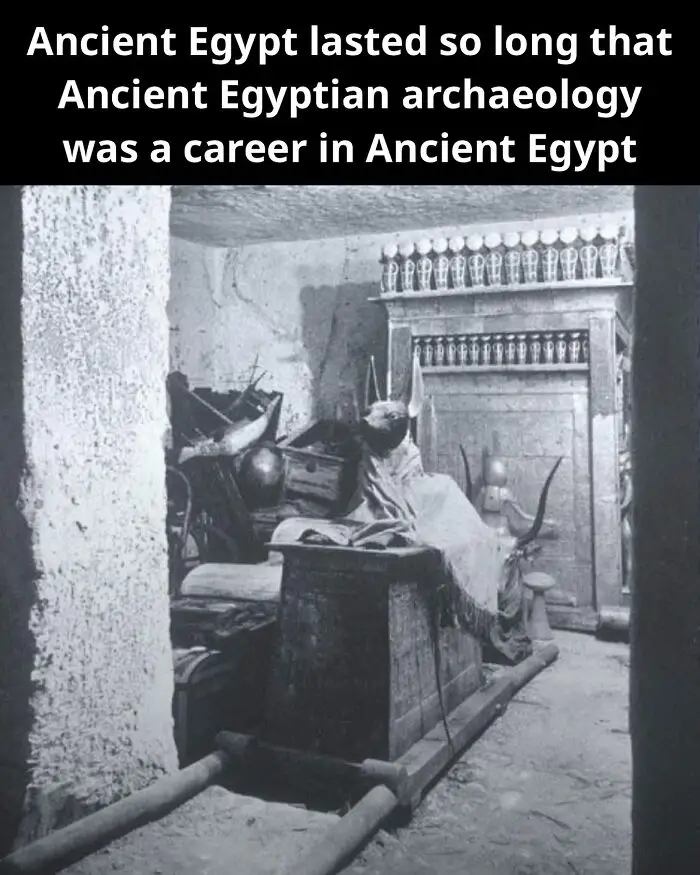
Some Ancient Egyptians, like Prince Khaemwaset under Ramesses II, engaged in activities akin to modern archaeology by excavating and restoring older structures from previous dynasties, a practice rooted in a conservative cultural appreciation for the past as a source of wisdom and authority. This ancient practice of studying and preserving their own civilization’s history demonstrates a form of “archaeology” within ancient Egypt itself, preceding the modern field of Egyptology.
Ancient Egypt lasted, as far as we know, for over 3,000 years, with its civilization starting around 3150 BC and ending with the Roman conquest in 30 BC, which marked the end of pharaonic rule and Cleopatra VII’s reign. This longevity made it one of the most enduring civilizations in human history, characterized by a remarkable continuity of culture and the iconic monuments like pyramids and temples left behind.
Report
25points
#51

In 1565, Cosimo de Medici had a problem. As the ruler of Florence, he needed to travel daily between his residence at Palazzo Pitti and his office at Palazzo Vecchio, but walking through the city streets meant being exposed to the public.
So he ordered a private elevated corridor above the city. 1km long (0.6 mi), passing through buildings, above the Ponte Vecchio, across the Arno river.
Architect Giorgio Vasari built the entire structure in just 5 months.
But one family stood in the way. The Mannellis refused to have their tower demolished to make room for the corridor. Not even Cosimo de Medici could force them out.
So Vasari had no choice but to build around it. The detour is still visible today, a small bump in an otherwise straight corridor, 500 years later.
Some things even the most powerful men in history couldn’t control.
Report
25points
#52

Narai-juku, a preserved post town in Japan’s Kiso Valley along the ancient Nakasendo route, is known for its traditional dark wooden architecture and its historical significance as a prosperous station town during the Edo period. The Edo period (1603-1868) was an era of peace and stability under the Tokugawa shogunate, characterized by national isolation, the flourishing of traditional Japanese arts like Kabuki and Ukiyo-e, and the development of major travel routes like the Nakasendo.
Report
24points
#53

A blind Chicago man whose service dog was stolen is walking up to seven miles (11 km) each day, handing out “missing” flyers in hope to find his dog.
Angel Santiago, who became legally blind due to glaucoma and also manages Type 2 diabetes, says his beloved 14-year-old dachshund, Bam Bam, was stolen from the yard at his home in Chicago’s Logan Square neighborhood.
Now, he walks up to seven miles or more each day, giving out flyers to people in hopes that someone has seen his beloved pooch.
“Bam Bam means the world to me, and I feel my body draining away. I can only do so much,” Santiago said.
Report
23points
#54
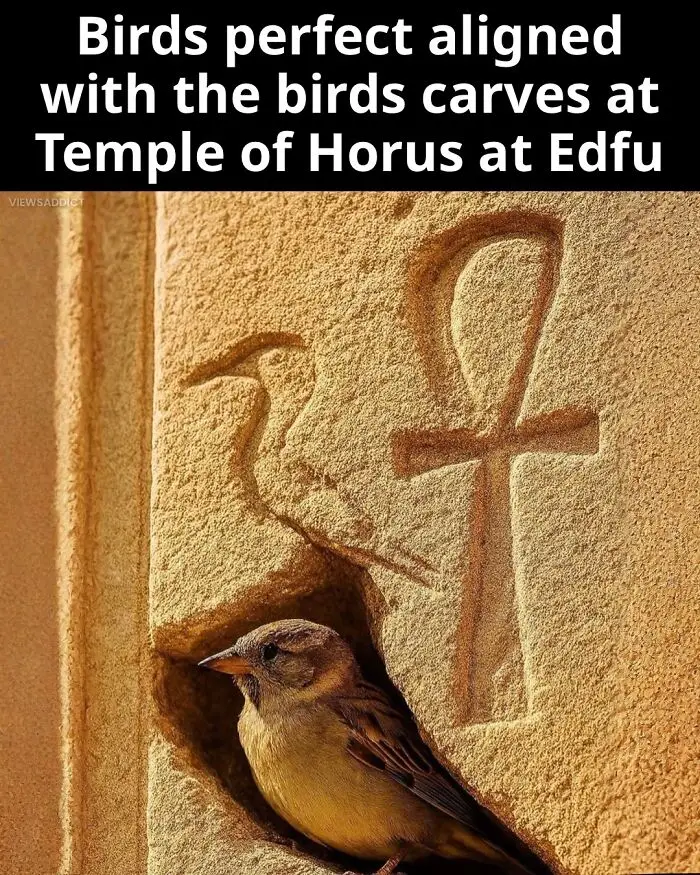
The Temple of Horus at Edfu is one of the best-preserved ancient Egyptian temples, dedicated to the falcon god Horus, symbol of kingship and protection. Built in the Ptolemaic period, its walls are covered with detailed carvings meant to act as sacred “stone texts.”
Common symbols include the ankh, representing life and divine power, and the falcon of Horus, representing the god himself watching over Egypt. Many reliefs also depict the mythic struggle between Horus and Seth, symbolizing the eternal balance between order and chaos.
Report
23points
#55

In 2007, Gene X. Hwang, a photographer from San Francisco and co-founder of Orange Photography, registered the username @x on Twitter. It was just a short, simple handle, but over the next 16 years it became part of his identity. His account grew to about 53,000 followers, and he reportedly received offers of up to $40,000 for the handle. He always refused to sell.
In 2014, hackers reportedly stole his @x account. Twitter helped him get it back, and Gene kept using it for years.
Then came July 2023. Elon Musk announced that Twitter would become X, and Gene was in Canada playing in a pinball tournament, with no idea what was about to happen. On July 25, Twitter officially became X, and the company wanted his username.
Gene received an email from Twitter support saying that @x was now “affiliated with X Corp.” His username was taken, and he was moved to a new one: @x12345678998765.
He was paid nothing. Instead, X offered him company merchandise, an exclusive tour of its headquarters and a meeting with the management team. Gene even asked if he could keep the old blue Twitter bird sign being removed from the building. They said no.
Two years later, in October 2025, X launched its Handle Marketplace. Rare usernames started costing from $2,500 to more than $1 million, and some handles were tied to a paid subscription.
So the same company that took @x without paying its owner was now charging people for access to rare usernames. Gene spent 16 years building an identity around one letter, rejected $40,000 offers, and in the end all he got was merchandise and an office tour.
Report
23points
#56

In southern China, 86-year-old Lao Huang practices a fading tradition. Cormorant fishing uses trained birds to dive underwater and catch fish for their handler.
Once common on rivers across Asia, the practice is now largely a tourist spectacle.
Lao Huang continues using bamboo rafts, lanterns, and ancient techniques. His birds, fitted with small neck rings, return with live fish to the boat.
Photos of him have become a window into a centuries-old way of life. He stands as one of the last living links to this cultural heritage.
Report
21points
#57
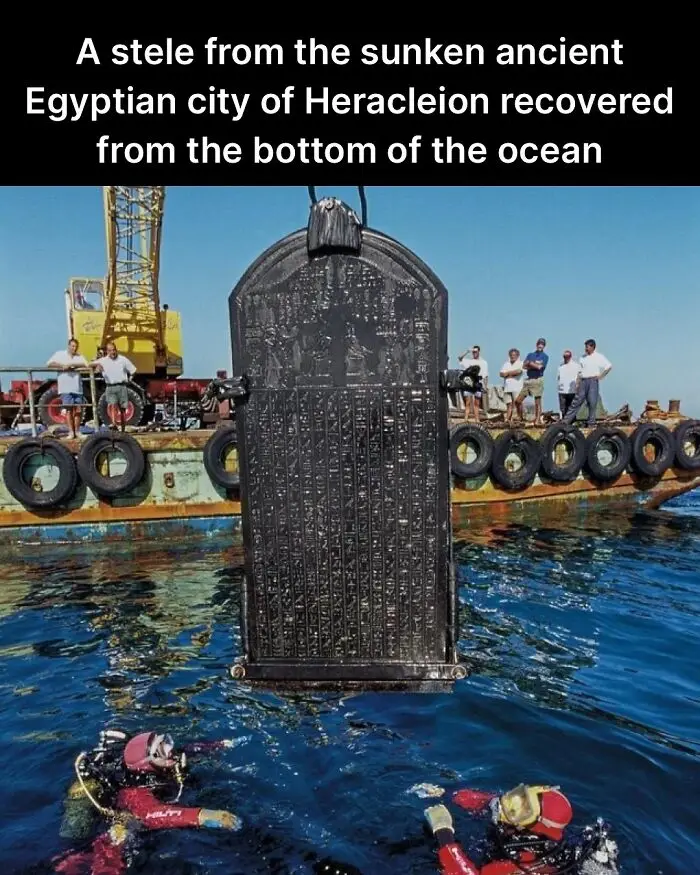
The Lost City Of Heracleion, which was once the largest port in Egypt, was discovered underwater after more than 2,000 years. Its legendary beginnings go back to as early as the 12th century BC, and it has many links to Ancient Greece.
Flourishing as long ago as the waning days of the Pharaohs, the city was destroyed over time, as it was weakened by a combination of earthquakes, tsunamis, and rising sea levels, according to archaeologists.
At the end of the 2nd century BC, most likely after a severe flood, the monumental buildings of Heracleion collapsed into the water. Some of its inhabitants stayed in what was left of the city during the Roman era and the beginning of Arab rule, but by the end of the eighth century AD, the rest of Heracleion had sunk beneath the Mediterranean.
The “Stele of Heracleion,” specifically referring to the one discovered in the sunken city of Thonis-Heracleion, is a black granodiorite stele inscribed with a royal decree by Pharaoh Nectanebo I. The stele depicts King Nectanebo I making offerings to the goddess Neith. It was found in 2000 by the IEASM and is dated to 380 BC.
A stele, or occasionally stela, when derived from Latin, is a stone or wooden slab, generally taller than it is wide, erected in the ancient world as a monument. The surface of the stele often has text, ornamentation, or both. These may be inscribed, carved in relief, or painted. Stelae were created for many reasons. Grave stelae were used for funerary or commemorative purposes. Stelae as slabs of stone would also be used as ancient Greek and Roman government notices or as boundary markers to mark borders or property lines. Stelae were occasionally erected as memorials to battles.
Report
20points
#58

On a 10 hour flight from Seoul Korea to San Francisco, a mother handed out more than 200 goodie bags filled with candy and ear plugs, in case her 4 month old child cried during the flight.
Report
20points
#59

The pristine pool never seen before by humans discovered in the depths of cave 700 ft (213 meters) below ground.
The cave pool, which appears to be completely “virgin,” was found in Lechuguilla Cave in New Mexico, one the world’s largest and most famous caves.
That said, the cave had not before been touched by humans at all, as scientists found this natural wonder at a depth of 213 meters (700 ft) below the entrance to the cave, which also happens to be one of the tallest (or deepest) in the world.
Scientists called the site “completely pristine” and noted that they believe the bacteria living in the water had “evolved entirely without human presence.”
The pool discovered in the cave network appears almost unearthly and is surrounded by white frosted rock. While the water may look murky with a creamy tint to it, the coloring is actually the product of an optical illusion.
The uncontaminated site is so important because almost everything is contaminated with human pollution these days.
It’s rare treat for science to be offered a completely clean sample of nature.
Credit: Max Wisshak photo/Carlsbad Caverns National Park.
Report
19points
#60

In 2019, someone placed laser eyes on the Gandhi statue at Ferry Plaza in San Francisco, turning him into a comic book supervillain.
Report
18points