





Your insatiable curiosity is something you should never be ashamed of. That desire to learn more about the world that surrounds us is hardwired into you. But no matter how educated you are, there will always be something new to learn.
We are featuring the most interesting and thoroughly weird facts and stories from around the globe, as shared on one popular Instagram account. Scroll down if you’re in the mood to learn something new and expand your mind.
#21

This geometrically shaped mountain with a flat top and triple rim is one of the oldest on Earth, dating back two billion years - when the land was lifted high above the ground by tectonic activity. The sides of the mountain are sheer vertical cliffs, with several waterfalls, making it nearly impossible to climb.
Mount Roraima is an anomaly from the typical idea of a mountain peak, as it is more a plateau than a mountain, with a summit that is approximately 31 km^2.
Mount Roraima is the highest of the Pakaraima chain of tepui plateaus in South America. First described by the English explorer Sir Walter Raleigh in 1596, its 31 km^2 summit area is bounded on all sides by cliffs rising 400 meters.
Report
2points
#22

The pristine pool never seen before by humans discovered in the depths of cave 700 ft (213 meters) below ground.
The cave pool, which appears to be completely “virgin,” was found in Lechuguilla Cave in New Mexico, one the world’s largest and most famous caves.
That said, the cave had not before been touched by humans at all, as scientists found this natural wonder at a depth of 213 meters (700 ft) below the entrance to the cave, which also happens to be one of the tallest (or deepest) in the world.
Scientists called the site “completely pristine” and noted that they believe the bacteria living in the water had “evolved entirely without human presence.”
The pool discovered in the cave network appears almost unearthly and is surrounded by white frosted rock. While the water may look murky with a creamy tint to it, the coloring is actually the product of an optical illusion.
The uncontaminated site is so important because almost everything is contaminated with human pollution these days.
It’s rare treat for science to be offered a completely clean sample of nature.
Credit: Max Wisshak photo/Carlsbad Caverns National Park.
Report
2points
#23

In 2012, while international navies were trying to stop Somali piracy, a Japanese sushi chain owner decided to try something completely different.
Kiyoshi Kimura, known in Tokyo as the Tuna King, flew to the region.
He met men who had been involved in piracy and asked them a simple question: why were they doing this?
Their answer was always the same.
They didn’t like being pirates.
They just needed a way to feed their families. The fishing had collapsed.
So Kimura offered another option.
He provided fishing boats.
He taught them how to catch yellowfin tuna.
He helped set up freezers.
And he promised to buy whatever they caught.
“They didn’t even like pirating,” he said.
“I suggested that they catch tuna instead, and make a proud living for their families.”
Piracy later collapsed for many reasons.
But Kimura gave them something the navies never could: a real alternative.
In 2013, the government of Djibouti gave him a medal for helping reduce piracy.
Sometimes the best solution isn’t more force.
It’s a better option.
Report
2points
#24
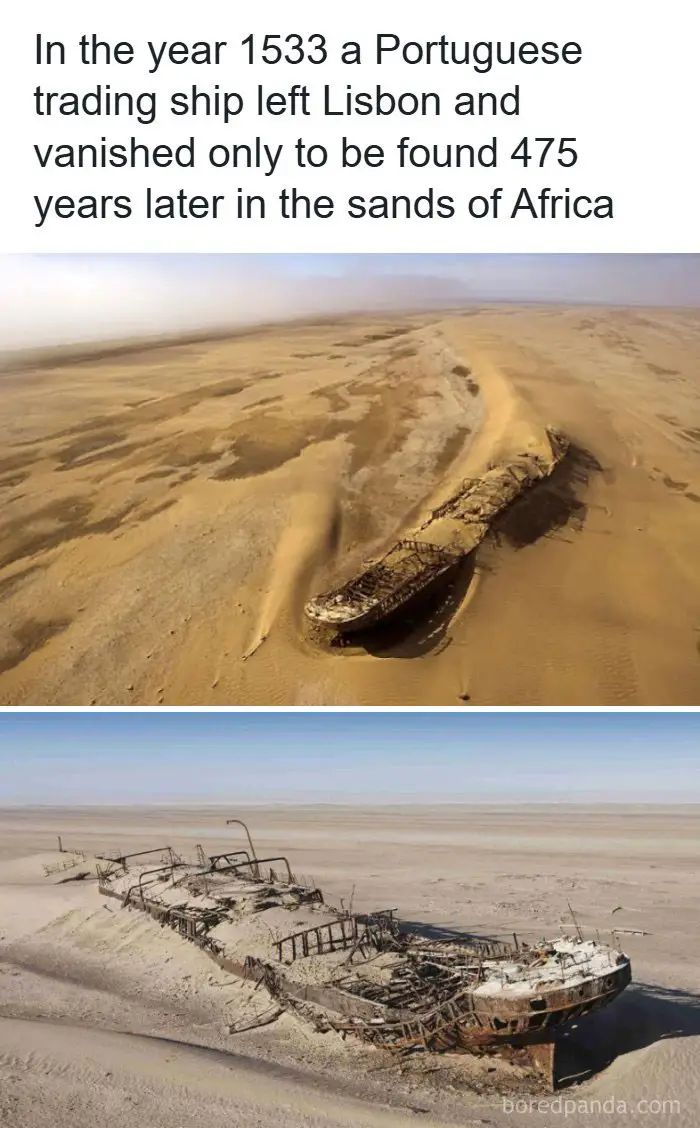
In 1533, a Portuguese trading ship named the Bom Jesus (“Good Jesus”) left Lisbon on a voyage bound for India. Laden with treasures of the Age of Exploration, copper ingots, ivory, and gold coins, it never reached its destination. The vessel vanished without a trace, swallowed by the dangers of the Atlantic, and remained hidden for almost five centuries.
The mystery resurfaced in 2008, when miners working in Namibia’s diamond-rich coast near Oranjemund stumbled upon a strange find: a bar of copper sticking out of the sand. Excavations revealed the remains of a wooden hull along with thousands of artifacts preserved by the desert climate. Archaeologists soon identified it as the long-lost Bom Jesus.
The discovery was remarkable not only for its age but also for the wealth it contained. More than 40 tons of copper ingots, hundreds of elephant tusks, and a cache of Portuguese, Spanish, and Venetian gold coins were unearthed. These treasures painted a vivid picture of the global trade networks of the 16th century, when Portugal dominated maritime routes stretching from Europe to Africa and Asia.
Experts believe the ship was driven off course by storms and wrecked on Namibia’s infamous Skeleton Coast, a region notorious for strong currents and shipwrecks. Over centuries, shifting sands buried the remains, shielding them from erosion and preserving the cargo.
Report
2points
#25

South Korea’s top universities rejected 45 applicants because of their past bullying records.
During the 2025 admissions cycle, six of the country’s ten flagship national universities turned away applicants with records of school violence.
Two were rejected by Seoul National University, the country’s most prestigious.
Twenty-two were rejected by Kyungpook National University, which introduced a strict point-based penalty system for disciplinary histories.
Starting in 2026, all universities in South Korea will be required to factor school violence records into admissions.
In a country where grades have long decided everything, character is now part of the score.
Sometimes the smartest students still don’t get in, because who they were matters as much as what they scored.
Report
2points
#26
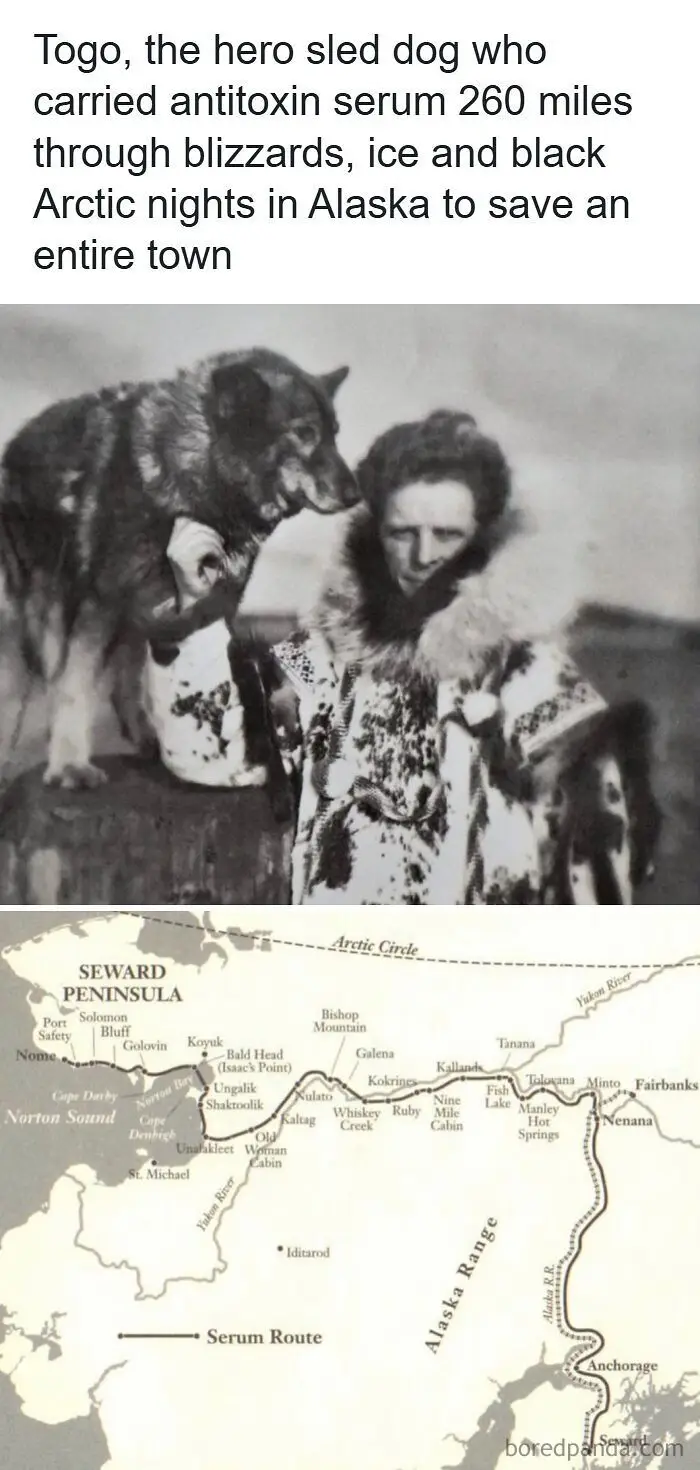
In 1925, a deadly outbreak threatened the children of Nome, Alaska. A relay of sled dogs carried the antitoxin across hundreds of frozen miles. Togo led the longest and most dangerous stretch - 264 miles (421km) through blizzards, cracking ice, and black Arctic night.
The diphtheria outbreak struck in 1925, threatening the lives of the more than 10,000 inhabitants of the area, especially children. The only viable medicine was in Anchorage, 1,000 miles away. Aircraft engines froze and the closest rail line was 674 miles away, so officials turned to sled dogs to move the serum.
Seppala’s team set out, 12-year-old Togo at the helm. They covered the most dangerous leg—a shortcut across Norton Sound-through the dark, in a blizzard. But in just 5½ days, the lifesaving serum was delivered to Nome. Togo and Seppala did an astounding 264 miles (421 km); other teams averaged 31.
Togo was very sick as a puppy and was given away to be a pet, deemed unsuitable to be a sled dog. He disagreed, jumping through a closed window to run back to his sled-dog siblings’ kennel. This greatly impressed venerated musher Leonhard Seppala.
Togo continued to be a troublemaker, though, and while he showed interest in being a sled dog, he still didn’t look the part at only 48 pounds.
But Togo changed Seppala’s mind. Before a big trip, Seppala put Togo in a kennel with instructions to not free him until the team was long gone. Togo broke out and trailed the team through nightfall, surprising Seppala the next day. On the way home, Seppala put him in a harness and Togo instantly settled down. Togo logged 75 miles (120km) on his first official day-unheard of for an inexperienced sled dog.
In 2011, Time named Togo the most heroic animal ever. In 2022, a Togo statue was unveiled in Maine, where he spent his last years. Disney released a film about Togo in 2019 with Willem Dafoe as Seppala and Togo played by Diesel, a direct descendant of Togo.
Seppala summarized the entire story perfectly: “I thought of the ice and the darkness and the terrible wind and the irony that men could build planes and ships. But when Nome needed life in little packages of serum, it took the dogs to bring it through.”
Report
2points
#27
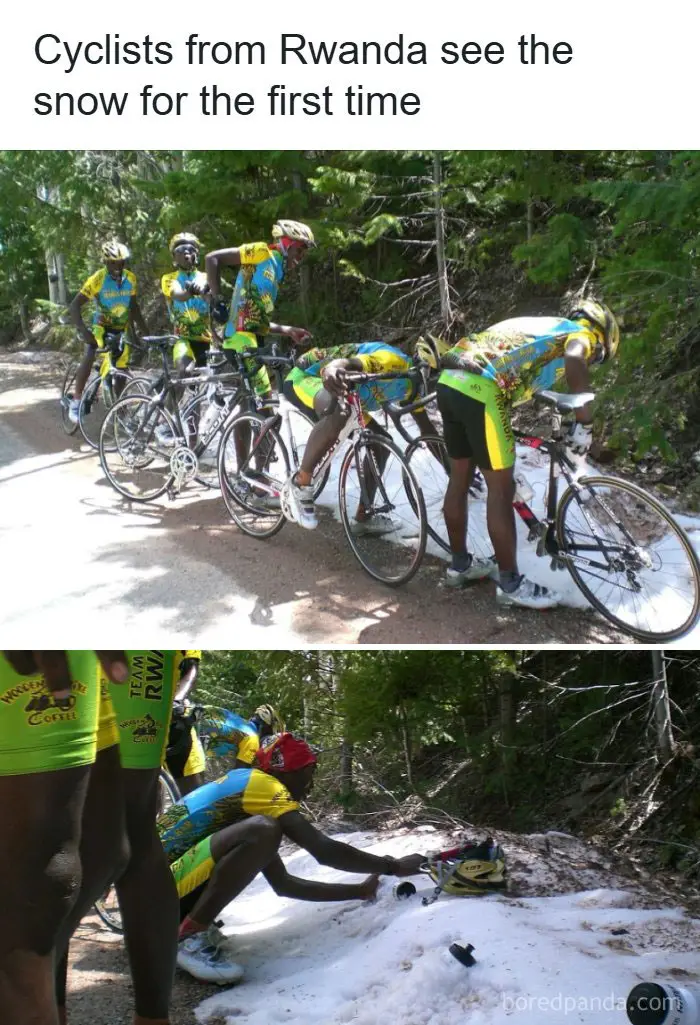
During a training race in Moab Utah in 2007, members of Team Rwanda Cycling come across some snow and stop to touch some as it was their first time ever seeing it.
Members of the team put the snow on their heads, made snowballs and even tried putting it in their pockets to save for later, the Daily Mail reported.
All images courtesy of Team Rwanda Cycling
All rights belongs to their respective owners.
Members of the team put the snow on their heads, made snowballs and even tried putting it in their pockets to save for later, the Daily Mail reported.
All images courtesy of Team Rwanda Cycling
All rights belongs to their respective owners.
Report
2points
#28

In eastern Turkey, Muhammet Halil and Esra Aydın chose to begin their marriage not with a lavish celebration, but with an act of kindness, inviting around 100 orphaned and underprivileged children instead of hosting a traditional wedding reception.
Partnering with the IHH Humanitarian Relief Foundation, the couple, dressed in their wedding attire, shared a meal with the children and gave each of them gift boxes filled with toys, clothes, and treats.
“We didn’t want our happiness to stay within four walls,” the groom said, adding that “the children’s smiles were the greatest gift we could receive.”
Report
2points
#29
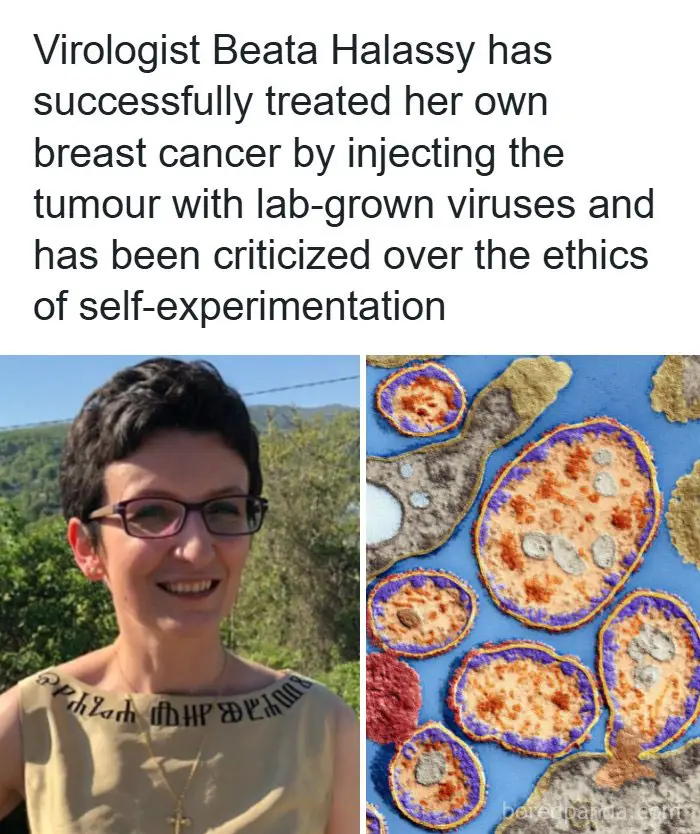
A scientist who successfully treated her own breast cancer by injecting the tumour with lab-grown viruses has sparked discussion about the ethics of self-experimentation.
Beata Halassy discovered in 2020, aged 49, that she had breast cancer at the site of a previous mastectomy. It was the second recurrence there since her left breast had been removed, and she couldn’t face another bout of chemotherapy.
Halassy, a virologist at the University of Zagreb, studied the literature and decided to take matters into her own hands with an unproven treatment.
A case report published in Vaccines in August1 outlines how Halassy self-administered a treatment called oncolytic virotherapy (OVT) to help treat her own stage 3 cancer. She has now been cancer-free for four years.
In choosing to self-experiment, Halassy joins a long line of scientists who have participated in this under-the-radar, stigmatized and ethically fraught practice. “It took a brave editor to publish the report,” says Halassy.
Report
2points
#30
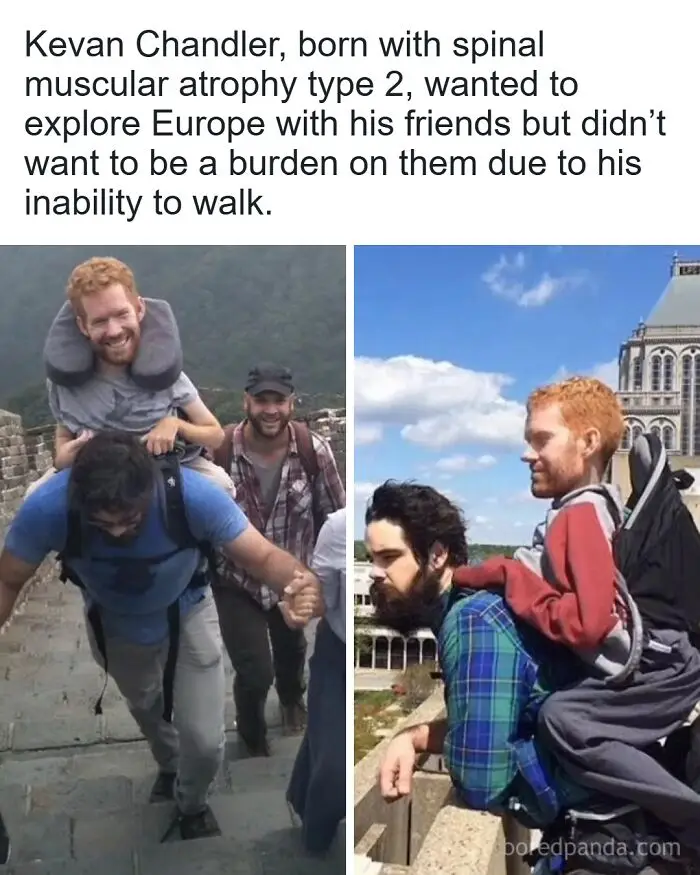
Kevan Chandler had always dreamed of seeing the winding streets of Paris, the rolling hills of Ireland, and the timeless charm of London. But being born with spinal muscular atrophy type 2 meant he couldn’t walk, and the thought of navigating Europe in a wheelchair felt impossible.
He almost let the dream slip away, until his friends stepped in.
“Kevan,” one of them said with a grin, “what if we just carried you?”
It sounded like a joke at first, but soon sketches turned into designs, and designs into a backpack sturdy enough to carry a man. Kevan’s friends took turns hoisting him onto their backs, not as a burden, but as a companion.
Together they roamed the cobblestone alleys of France, where Kevan marveled at cathedrals towering above him. In England, he laughed with strangers in cozy pubs, his friends’ footsteps echoing through history. And in Ireland, he felt the wind whip across the cliffs, his heart soaring higher than he thought possible.
For Kevan, it wasn’t just about travel. It was about trust, friendship, and discovering that adventure grows bigger when it’s carried together.
Report
2points
#31
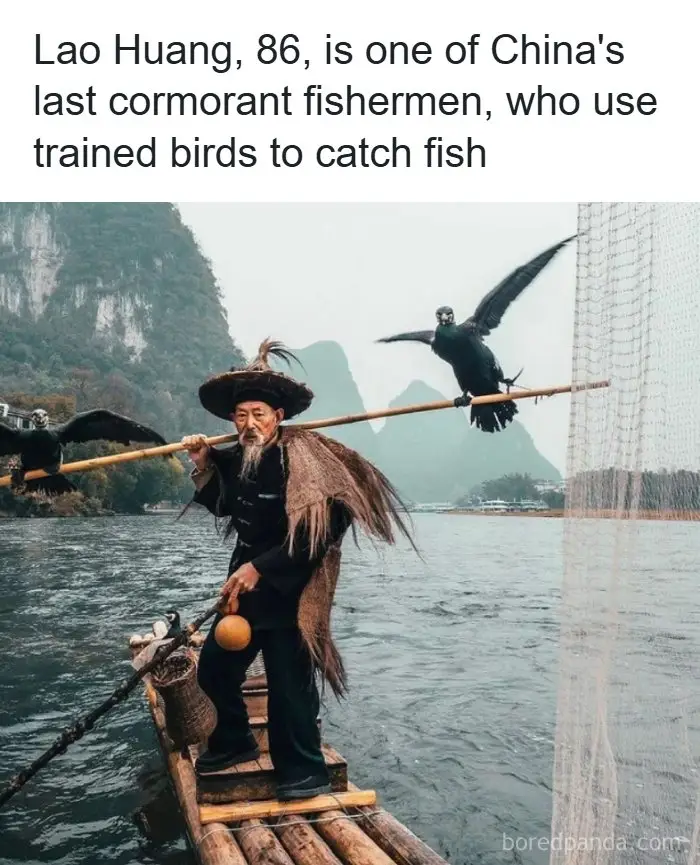
In southern China, 86-year-old Lao Huang practices a fading tradition. Cormorant fishing uses trained birds to dive underwater and catch fish for their handler.
Once common on rivers across Asia, the practice is now largely a tourist spectacle.
Lao Huang continues using bamboo rafts, lanterns, and ancient techniques. His birds, fitted with small neck rings, return with live fish to the boat.
Photos of him have become a window into a centuries-old way of life. He stands as one of the last living links to this cultural heritage.
Report
2points
#32

Florida Deputy Robert Pounds pulled over a speeding car, but instead of issuing a ticket, he helped deliver a baby girl in the passenger seat, who was born quickly at the roadside. The father was rushing his wife, who was in labor, to the hospital when Pounds made the stop. After the delivery, mother and baby were checked by paramedics and transported to the hospital, with the baby, named Leila Robert Jean Lewis, honoring the deputy.
Report
2points
#33
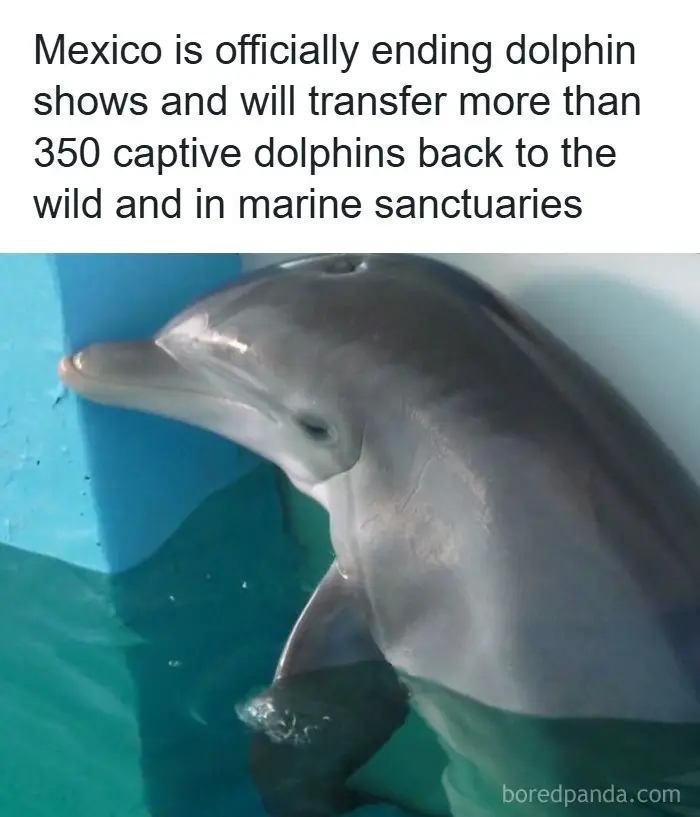
Mexico has officially banned the use of dolphins and other marine mammals for entertainment shows under a new amendment to its Wildlife Law. The law also prohibits captive breeding for tourism or entertainment purposes.
There are currently more than 350 dolphins in captivity across Mexico. The government and animal welfare organizations are now working on plans to relocate these animals.
Dolphins that experts determine are capable of surviving in the wild will go through a rehabilitation process and may be released into their natural habitats. However, most dolphins, especially those born or long held in captivity, cannot survive on their own and will instead be moved to sea sanctuaries or ocean pens, where they can live in more natural conditions under care.
This decision marks a major step for animal welfare in Mexico, ending dolphin shows and beginning a transition toward more ethical treatment of marine mammals.
Report
2points
#34

The Arlington Ladies are a group of volunteers, primarily military spouses, who attend the funeral services of service members and veterans at Arlington National Cemetery to ensure that no one is buried alone. They represent the respective branches of the military, offering condolences and support to the families of the deceased. This tradition began in 1948 with the Air Force and has since expanded to include the Army, Navy, and Coast Guard.
The Arlington Ladies initiative started in 1948 when General Hoyt Vandenberg and his wife Gladys, while walking through Arlington Cemetery, noticed that some service members were being buried with only a chaplain and honor guard present.
The Arlington Ladies initiative started in 1948 when General Hoyt Vandenberg and his wife Gladys, while walking through Arlington Cemetery, noticed that some service members were being buried with only a chaplain and honor guard present.
Report
2points
#35

Geoffrey Owens played Elvin on The Cosby Show, one of the most watched sitcoms in American history. Years later, he was working at a Trader Joe’s in New Jersey, bagging groceries between auditions.
A customer secretly photographed him and sent the pictures to news outlets, which suggested the former TV star had fallen on hard times.
But Owens explained something most people don’t realize: most actors, even well-known ones, are gig workers. For every A-lister, there are many others working gig to gig, and steady, well-paying work is hard to find in a field this unpredictable.
That’s why many working entertainers need a regular job between roles.
The reaction was the opposite of what the photos were meant to provoke. Thousands of people defended him, and Tyler Perry offered him a role written specifically for him.
The attempt to shame him ended up reviving his career at 57 years old.
No job is beneath anyone, and you never know what someone is carrying behind the scenes.
Report
2points
#36

A Japanese man escaped his car after it plunged into a river on November 8 by recalling a scene from the anime Detective Conan
On November 8, he described a collision near a cemetery that sent his car into the water. “For the first 20 seconds I really thought this was it,” he wrote. “But then this scene flashed through my mind.”
He was remembering a sequence involving FBI agent Andre Camel, who escapes a submerged car in the anime. The scene showed a character breathing from an air pocket near the roof and waiting for water pressure to equalize before opening the door.
The driver says the memory helped him react: he found the door handle, pushed the door open and swam out.
A nearby resident helped him reach the bank. After describing his escape, he had one person he especially wanted to thank: “I can’t thank the creator of Conan enough.”
Report
2points
#37
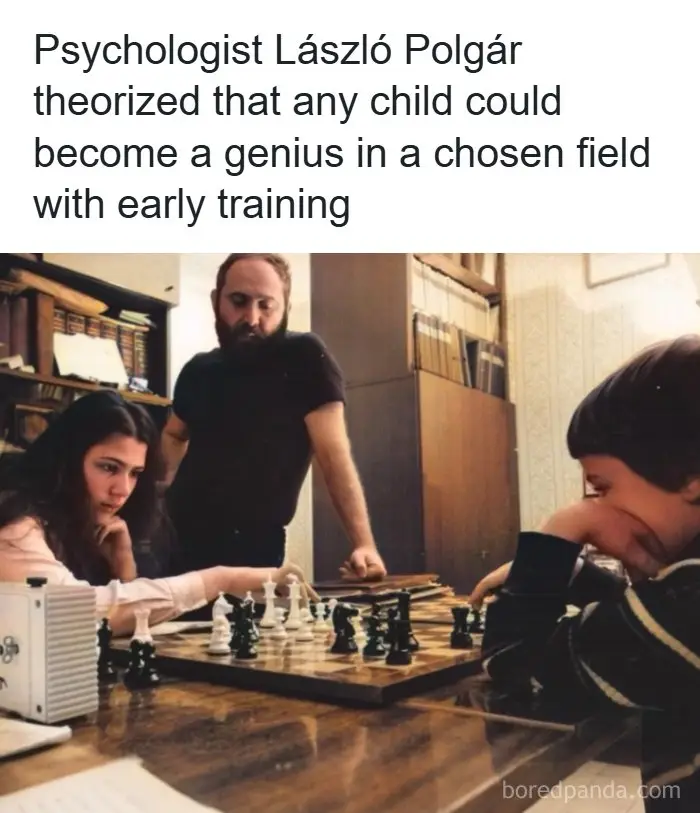
László Polgár, a Hungarian educational psychologist, is renowned for his theory that “geniuses are made, not born,” and for proving it by raising his daughters, Susan, Sofia, and Judit, to be world-class chess players. He believed that with focused training and a supportive environment, any healthy child could achieve exceptional results in a chosen field. To prove his theory he trained his daughters in chess from age 4. His daughters, particularly Judit, became some of the greatest chess players in history, demonstrating the success of his educational approach.
Report
2points
#38

Narai-juku, a preserved post town in Japan’s Kiso Valley along the ancient Nakasendo route, is known for its traditional dark wooden architecture and its historical significance as a prosperous station town during the Edo period. The Edo period (1603-1868) was an era of peace and stability under the Tokugawa shogunate, characterized by national isolation, the flourishing of traditional Japanese arts like Kabuki and Ukiyo-e, and the development of major travel routes like the Nakasendo.
Report
2points
#39

China and India clash at their border but their soldiers fight with rocks, sticks, and fists.
In 2020, the two armies clashed in the Galwan Valley, 4,000 meters (2,5 miles) up in the Himalayas.
Soldiers fought hand-to-hand for hours.
At least 20 Indian soldiers lost their lives.
A 1996 agreement, reinforced in 2005, bans firearms and explosives within two kilometers of the Line of Actual Control.
It was signed to prevent a small border incident from turning into a war.
That agreement is still valid today.
Patrol troops still carry their rifles, but keep them slung and pointed down.
But yet, the clashes are still fatal.
Soldiers fight with iron rods studded with nails, and many fall into the freezing Galwan river, causing casualties but without a single shot being fired.
Report
2points
#40

Kylie Arellano disappeared from Utah at 15 and was found alive 521 days later after a conversation that began on Among Us helped investigators locate her. According to a federal complaint, a man she met online picked her up in May 2025, threw her phone into a river and drove her to his home in Oregon, where he told her she could not leave.
Investigators say he kept her in his basement and eventually gave her another phone without mobile data, although it could still connect to Wi-Fi. In October 2026, she began talking to another young player on Among Us before they moved their conversation to another app. There, she revealed her identity and said she was being held against her will. She also said she believed police were no longer looking for her.
The other player’s mother contacted the FBI, which monitored a video call with Kylie on November 1. That same day, Oregon State Police and federal agents rescued her and took her for medical treatment.
Report
2points