





Your insatiable curiosity is something you should never be ashamed of. That desire to learn more about the world that surrounds us is hardwired into you. But no matter how educated you are, there will always be something new to learn.
We are featuring the most interesting and thoroughly weird facts and stories from around the globe, as shared on one popular Instagram account. Scroll down if you’re in the mood to learn something new and expand your mind.
#61
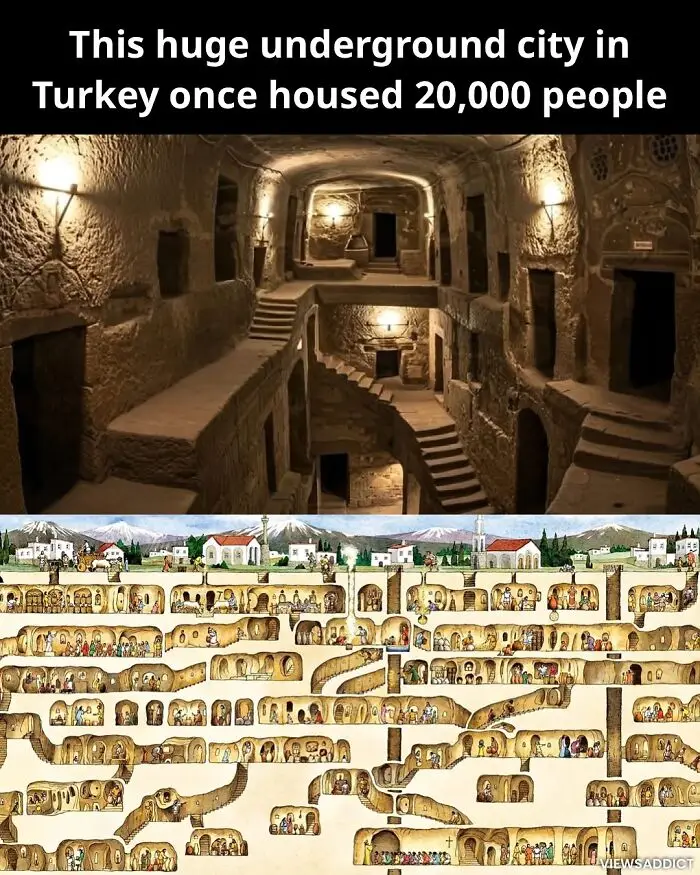
Beneath the volcanic rock formations of Cappadocia in central Turkey lies Derinkuyu, the largest underground city ever discovered. Descending about 85 meters (280 feet) into the earth and stretching across 18 levels, it is believed to have housed up to 20,000 people, along with their livestock, food stores, and even schools and chapels. Ventilation shafts, wells, kitchens, stables, wine presses, and massive rolling stone doors reveal a design focused on survival and security.
The official archaeological interpretation is that Derinkuyu was first dug by the Phrygians around the 8th–7th century BCE and later expanded during the Byzantine era. Scholars argue that its purpose was clear: a fortified refuge. Christian communities used it during times of persecution, and the city protected local populations during the Arab–Byzantine conflicts between the 7th and 12th centuries AD. Tool marks linked to iron implements support this dating. To archaeologists, Derinkuyu was a city built to withstand raids and invasions — a practical defense strategy for dangerous times.
But the journalist and scholar Graham Hancock challenges this explanation. He suggests that Derinkuyu was far older — perhaps as early as 9500 BC, during the climatic upheavals of the Younger Dryas. He argues that the city makes more sense as a survival bunker against cataclysmic events, such as sudden climate shifts or cosmic disasters, rather than as a military hideout.
Hancock highlights a key problem with the siege-defense theory: if Derinkuyu’s residents had simply been hiding from human enemies, “they would have been screwed.” An army could have easily blocked the exits, cutting off supplies, and then waited aboveground until those inside were forced to emerge. From this perspective, Hancock argues that the city’s enormous scale and sophisticated ventilation system suggest it was designed for long-term underground survival — not to outlast an enemy at the surface, but to endure a disaster that made the surface itself unlivable.
Derinkuyu remains a marvel of human ingenuity, a vast city hidden beneath the earth, still keeping its ultimate purpose shrouded in mystery.
Report
1point
#62
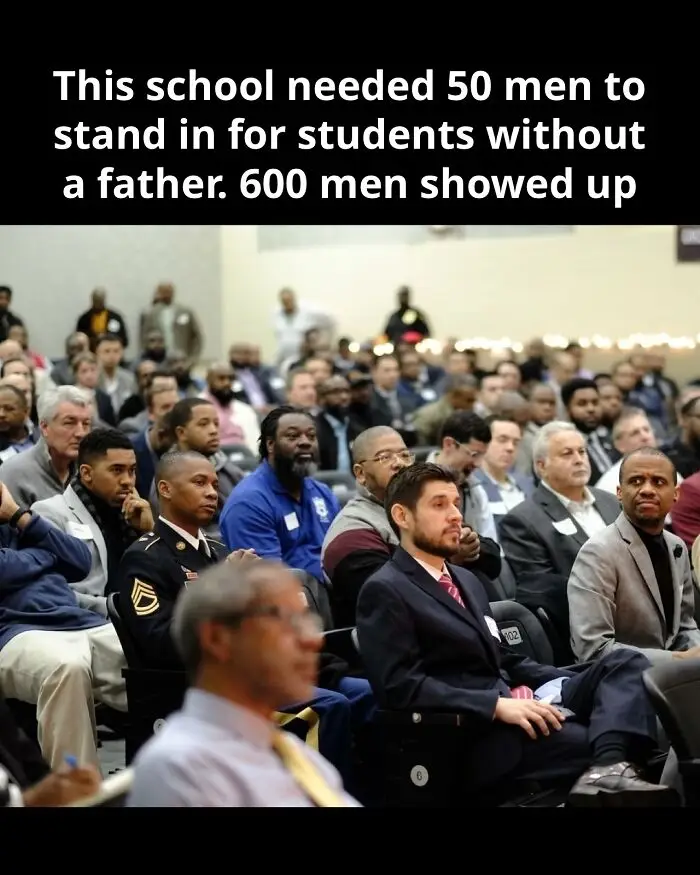
In December 2017, Billy Earl Dade Middle School in South Dallas organized its first “Breakfast with Dads”, an event where students could bring their fathers or father figures.
But organizers knew that many of the students might not have a dad to bring.
So pastor Donald Parish Jr. posted a request on Facebook, hoping to find 50 male volunteers to stand in as mentors.
The response was overwhelming: within days, hundreds of men had signed up, so many that the volunteer registration website crashed.
On the day of the breakfast, 600 men showed up to be fathers for a day to kids who didn’t have one.
One volunteer handed out ties and taught the students how to tie them, a moment that moved the event photographer to tears.
For one morning, no child in that room was fatherless.
Report
1point
#63

In a quiet corner of northeastern Nebraska lies Monowi, a town with a population of one. That single resident is Elsie Eiler, a resilient woman who holds a unique distinction: she is the town’s mayor, librarian, bartender, and sole inhabitant.
Monowi’s population peaked in the 1930s with around 150 residents, featuring a post office, general stores, a grocery store, and even a few churches. The town began a slow decline as families moved to larger cities in search of better opportunities. By 1980, the population had dwindled to just 18 people.
In 2000, Elsie and her husband, Rudy, were the only two people left. When Rudy passed away in 2004, Elsie became the sole remaining resident.
Today, Elsie manages the town’s operations entirely by herself. The village remains legally incorporated, which requires it to have a governing body. Consequently, Elsie holds town board meetings with herself, where she votes to approve her own liquor license and map out the town’s budget.
Her primary business is the Monowi Tavern, a cozy establishment filled with photos and memories of the town’s past. It is here that she carries out her official mayoral duties: collecting taxes from the bar (her own business), which are necessary to keep the village’s four streetlights operational and to pay state taxes.
Visitors from around the world frequently make the pilgrimage to Monowi to meet Elsie and grab a drink at her tavern, intrigued by the story of America’s smallest incorporated town. Though she keeps the town running out of necessity and a love for her home, Elsie has no intention of leaving. She sees her unique role not as a burden, but as a continuation of her life in the place she loves best.
Report
1point
#64
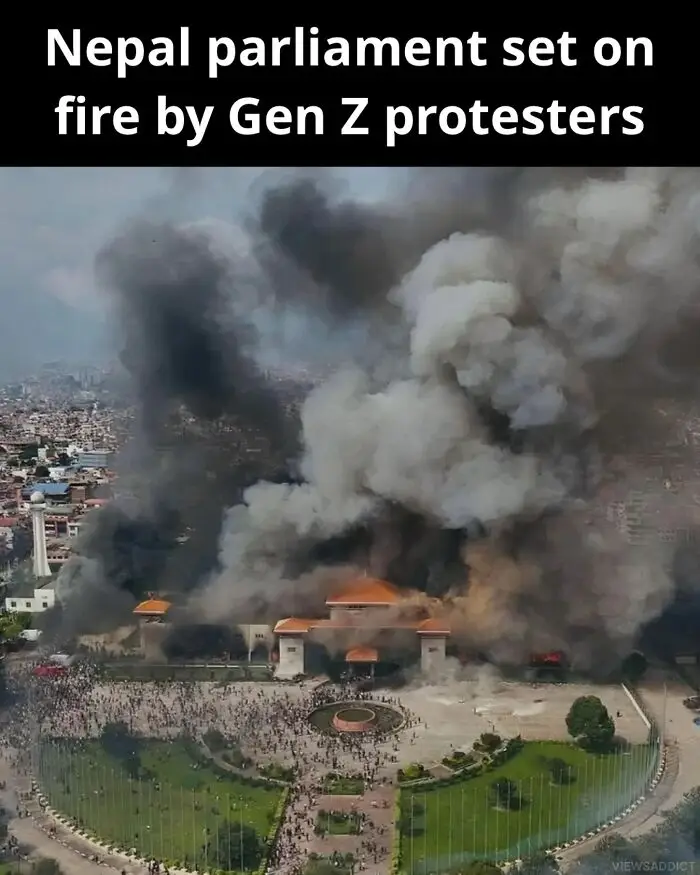
A sweeping ban on social media platforms has plunged Nepal into its most violent political crisis in decades.
On September 8, 2025, the government blocked Facebook, YouTube, X (Twitter), WhatsApp, and Instagram, requiring companies to register under new oversight laws. The move sparked mass protests led by Nepal’s “Gen Z” youth, who denounced it as a violation of free expression.
Security forces clashed with demonstrators nationwide, 19 lost their lives and hundreds were injured. Despite the government lifting the ban later that night, anger only deepened.
By September 9, protesters breached and set fire to the parliament building in Kathmandu, while the homes of Prime Minister K.P. Sharma Oli and other top leaders were torched. Offices of major political parties were also vandalized.
Facing mounting unrest, Prime Minister Oli resigned, following the earlier resignation of Home Minister Ramesh Lekhak. The government has since promised investigations, compensation for victims, and relief measures, but tensions remain high.
What began as outrage over a digital shutdown has morphed into a broader youth-led rebellion against corruption and authoritarianism—signaling a generational shift in Nepal’s politics.
Report
1point
#65
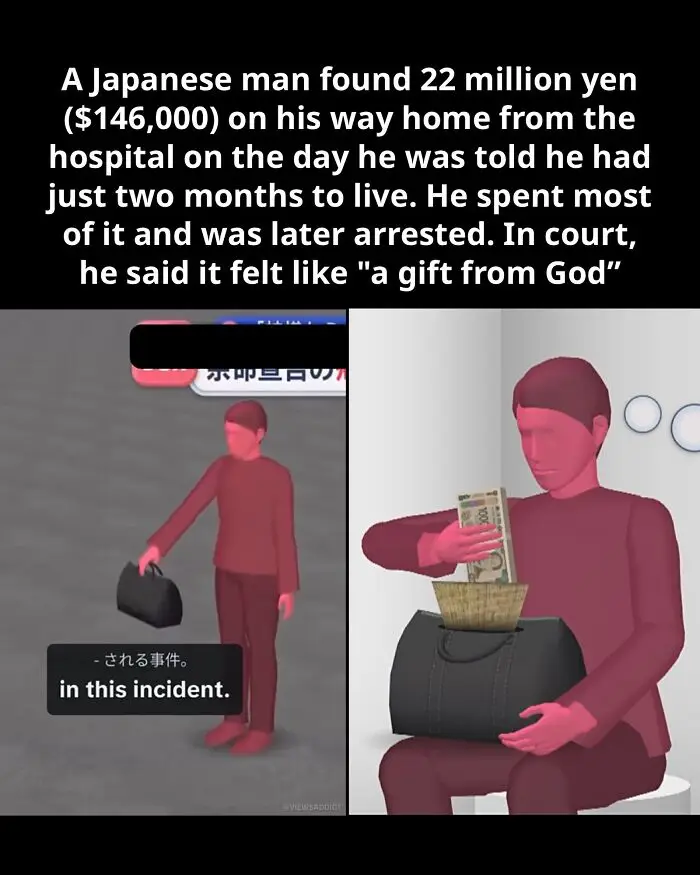
A Japanese man, Suenaga Takuya, 43, of Miyagi Prefecture, was indicted on charges of taking a bag containing 22 million yen ($139,000) that he found on a street in Aoba-ku, Sendai, in March, right after being
given a terminal diagnosis for cancer, and now faces a prison sentence.
According to TV Asahi and other Japanese media,
The money had been dropped by two security company employees during transport and was revenue collected from a game arcade.
At the first hearing at the Sendai District Court on Monday, Suenaga acknowledged the charges. He said he took the money because he “thought it was a gift from God.”
According to the indictment, Suenaga had just learned at a hospital that his cancer had returned shortly before he found the cash. He had believed he was cured, but the recurrence led his doctor to tell him he had two to three months to live.
“It was the day I was being discharged after receiving cancer treatment in hospital,” he said. “I had been suffering from carcinomatous meningitis and gastroesophageal junction cancer, and I received a terminal diagnosis after cancer was found to have recurred in my head.”
He was walking in a daze in front of Sendai Station on his way home when he spotted the bag on the ground. He initially passed it by but turned back out of curiosity about what was inside. He then reportedly bought a box cutter and opened the bag in a nearby public restroom, where he found the cash.
He took the money and spent about 18 million yen, roughly 150 million won, over approximately four and a half months on medical treatment and overseas travel.
Prosecutors sought a one-year custodial sentence, arguing that the defendant had used the large sum of cash to satisfy his own desires and compounded the harm to the victim. The defense asked the court for a suspended sentence, citing the defendant’s despair following the cancer recurrence and terminal diagnosis.
The ruling is scheduled to be handed down Nov. 6.
Report
1point
#66
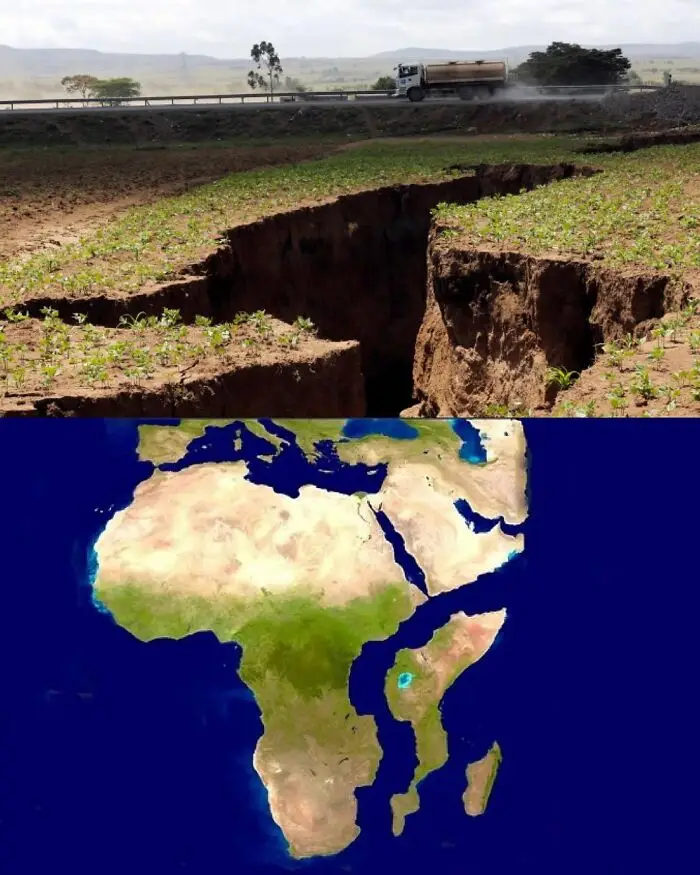
A new ocean is forming in Africa along a 35-mile crack that opened up in Ethiopia in 2005. The crack, which has been expanding ever since, is a result of three tectonic plates pulling away from each other.
Report
1point
#67

On a 10 hour flight from Seoul Korea to San Francisco, a mother handed out more than 200 goodie bags filled with candy and ear plugs, in case her 4 month old child cried during the flight.
Report
1point
#68
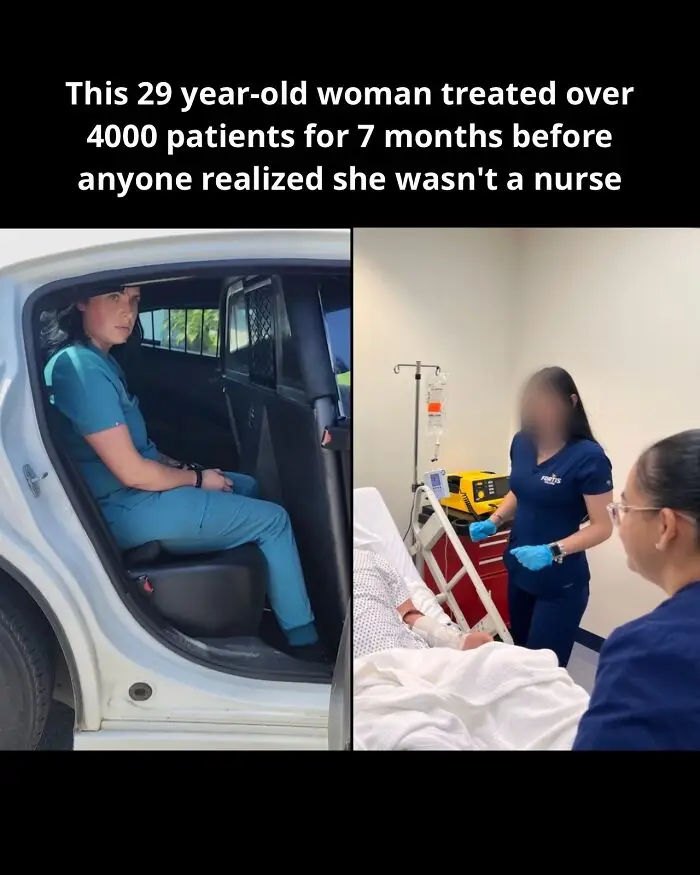
29-year-old woman successfully posed as a nurse for 7 months, treating more than 4,000 patients. The woman, Autumn Marie Bardisa, reportedly worked at a hospital where she carried out routine checkups, administered care, and interacted with patients without raising suspicion.
She was so good at her job that hospital administrators considered her for a major promotion.
During the verification process, officials discovered she had no medical qualifications or nursing license.
She was arrested for impersonating a registered nurse, treating an estimated 4,486 patients between June 2024 and January 2025, after working at Advent Health Palm Coast Parkway under false pretenses for 7 months.
Sometimes knowing how to act well is all you need. What’s your though on this?
Report
1point
#69

In 2007, Gene X. Hwang, a photographer from San Francisco and co-founder of Orange Photography, registered the username @x on Twitter. It was just a short, simple handle, but over the next 16 years it became part of his identity. His account grew to about 53,000 followers, and he reportedly received offers of up to $40,000 for the handle. He always refused to sell.
In 2014, hackers reportedly stole his @x account. Twitter helped him get it back, and Gene kept using it for years.
Then came July 2023. Elon Musk announced that Twitter would become X, and Gene was in Canada playing in a pinball tournament, with no idea what was about to happen. On July 25, Twitter officially became X, and the company wanted his username.
Gene received an email from Twitter support saying that @x was now “affiliated with X Corp.” His username was taken, and he was moved to a new one: @x12345678998765.
He was paid nothing. Instead, X offered him company merchandise, an exclusive tour of its headquarters and a meeting with the management team. Gene even asked if he could keep the old blue Twitter bird sign being removed from the building. They said no.
Two years later, in October 2025, X launched its Handle Marketplace. Rare usernames started costing from $2,500 to more than $1 million, and some handles were tied to a paid subscription.
So the same company that took @x without paying its owner was now charging people for access to rare usernames. Gene spent 16 years building an identity around one letter, rejected $40,000 offers, and in the end all he got was merchandise and an office tour.
Report
1point
#70
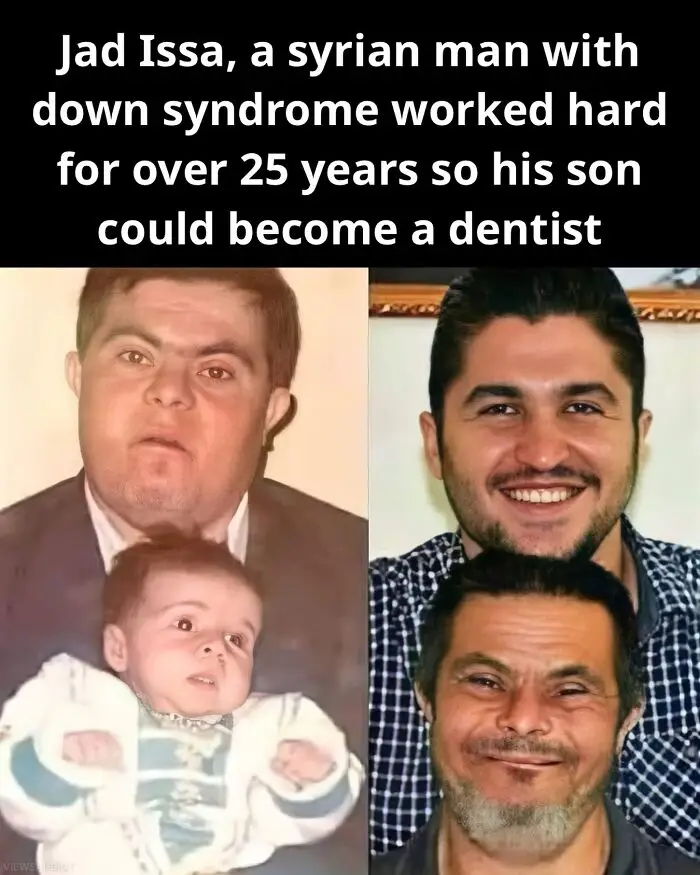
Jad Issa, a Syrian man with Down syndrome, worked tirelessly in a local wheat mill for over 25 years. He saved his earnings specifically to fund his son Sader’s education and give him the best possible life.
Motivated by his father’s love, sacrifice, and determination, Sader successfully pursued a university degree and became a dentist.
Jad Issa lived in the city of Sweida, Syria, with his wife and son, Sader. He was a respected and beloved figure in his community, known for his kindness, generosity, and strong work ethic.
To provide for his family and ensure his son had the best possible future, Jad worked for 25 years at a local grain mill. His hard-earned wages paid for Sader’s education and helped maintain a stable, loving household during challenging times.
Today, Sader is a successful dentist who openly credits his father as his greatest inspiration and support. Sader often speaks with immense pride about Jad, highlighting how his father’s determination and unwavering love taught him invaluable life lessons.
Report
1point
#71
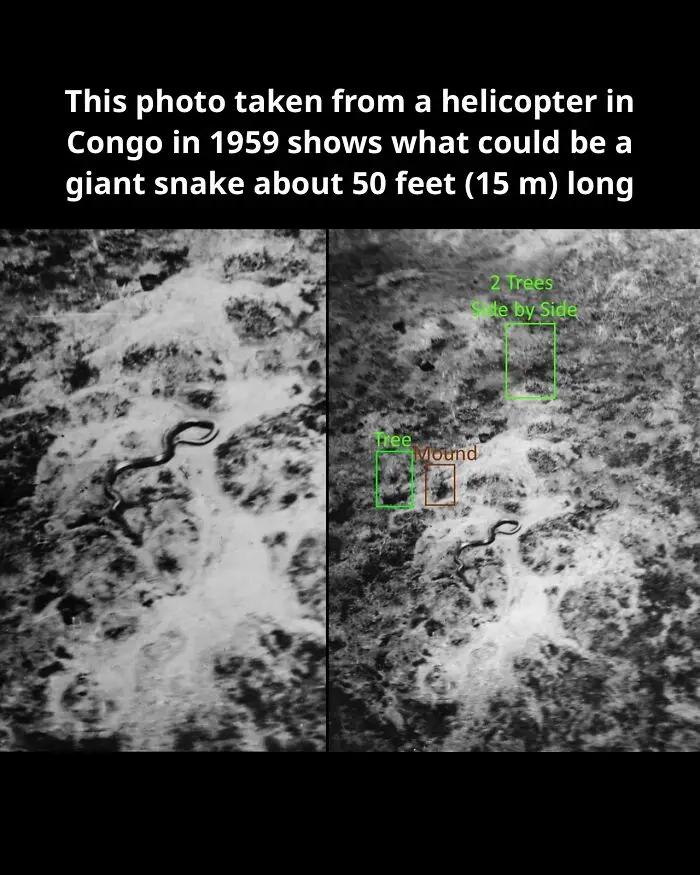
In 1959, Colonel Remy Van Lierde, a highly decorated Belgian fighter ace and WWII hero, was patrolling over the Congo jungle when he spotted something that defied modern biology.
Slithering through the dense canopy was a titanic snake. Van Lierde estimated it to be roughly 50 feet (15 meters) long, with a massive head and a triangle-shaped jaw.
To make sure he wasn’t hallucinating, the Colonel flew lower. Threatened by the rotor blades, the monster suddenly rose up 10 feet (3 meters) straight into the air, snapping its jaws. Van Lierde snapped a single, legendary photograph before pulling away in shock.
The photo was later analyzed by military experts, who confirmed the negative was 100% genuine, zero manipulation or doctoring.
To this day, this photograph remains one of history’s greatest unsolved mysteries, dividing researchers into two main camps:
Many believe that the deep, unexplored depths of the Congo basin are still hiding a surviving relative of the prehistoric Titanoboa, or a completely undiscovered giant species. They argue an experienced, highly trained military pilot wouldn’t be easily fooled by a simple glitch in perspective.
On the other side, skeptics argue that forced perspective trapped the pilot’s eyes. They suggest it was actually an exceptionally large African Rock Python (which can naturally grow up to 20 feet), made to look three times its size due to the angle of the helicopter and a lack of ground references.
What do you think? It was an ancient giant monster or just a big python caught in a perfect optical illusion?
Report
1point
#72
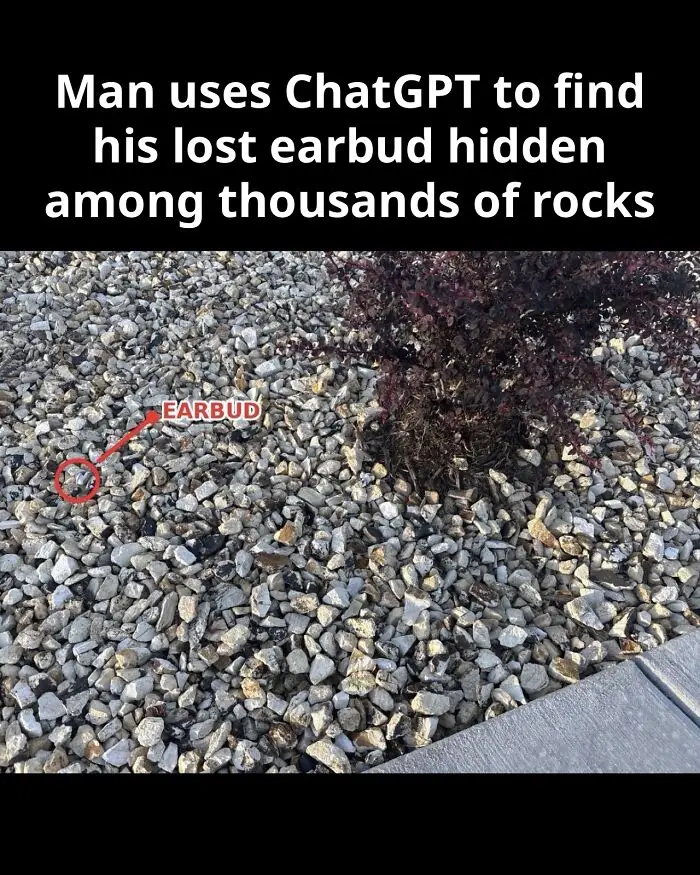
A dad lost his white Bose earbud in a patch of white gravel, and ChatGPT found it after he had already spent 10 minutes searching on his own.
He was running after his son near a park parking lot when his earbud case fell out of his hoodie pocket and broke open, sending the left earbud flying into the rocks while the sun was going down.
He sent ChatGPT a photo of the area, and it zoomed in and scanned the gravel section by section but said it couldn’t confidently spot the earbud, so it asked him for closer photos taken with the camera pointed straight down.
He sent three new photos, and ChatGPT found the earbud in the third one, describing its exact position in the frame and marking the spot with a red circle.
The whole process took less than five minutes and that he doesn’t think he would have ever found it without ChatGPT.
Report
1point