



Bored Panda
56 Medical Facts People Learned As Adults And Couldn’t Believe Nobody Told Them Sooner

56 Medical Facts People Learned As Adults And Couldn’t Believe Nobody Told Them Sooner

32
6
To be fair, there are some things about the human body that seem like they should come with instructions. But unfortunately, most of us spend years going about our lives blissfully unaware of certain medical facts, only to discover them randomly as adults and wonder how on earth nobody thought to mention them sooner.
And sometimes, the revelation is less of a fun fact and more of a reason to feel personally betrayed. Recently, people online were asked to share medical facts they learned later in life that genuinely annoyed them because they had gone so long without knowing.
From surprising discoveries about everyday bodily functions to health information they believe everyone should have been taught, their responses prove that when it comes to the human body, there is apparently a lot we somehow missed in biology class.

#1

A woman wearing a hat looks up in the woods while discovering surprising medical facts.
Perimenopause can start in your 30s. Feel like this should have been front page news so I could have prepared accordingly.
10points

#2

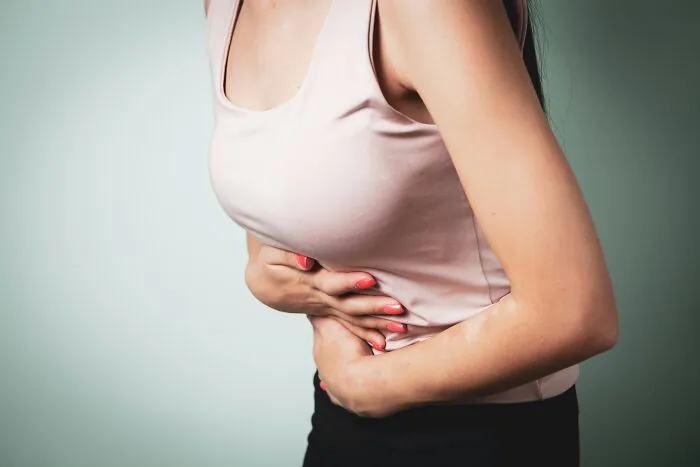
Woman sitting in bed suffering from stomach pain representing important medical facts for health awareness
Contrary to what some people still believe (including some doctors), the cervix has nerves and the cervix can feel!
8points

#3

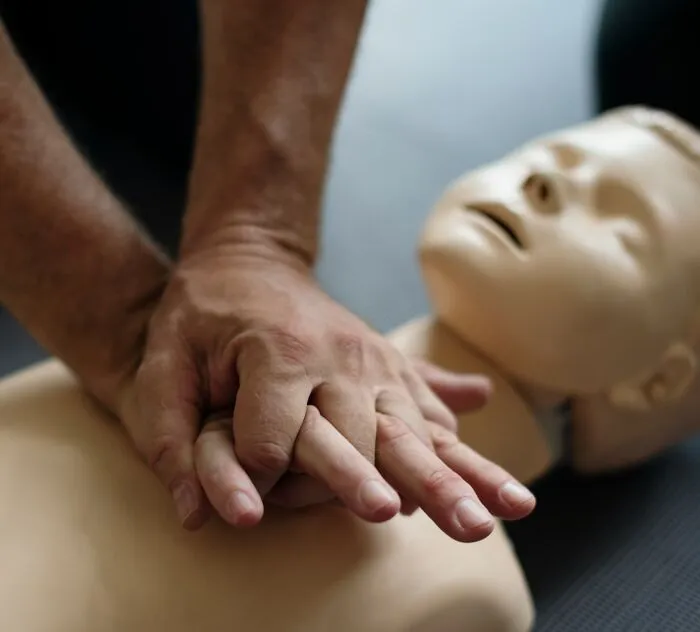
Hands performing CPR chest compressions on a training mannequin for medical facts
When you take a CPR class, the dummies are flat chested so no one teaches you about what to do if the person you’re helping is fat or has a large chest.
8points

Knowing how to look after your health involves more than simply recognizing when something feels wrong. According to the Centers for Disease Control and Prevention (CDC), health literacy is the ability to find, understand, evaluate, and use health information to make informed decisions.

However, many people reach adulthood without developing these skills because schools, families, healthcare providers, and the media don't always explain medical information consistently. Someone can have an advanced education and still struggle to understand a prescription label, interpret a medical recommendation, or distinguish reliable advice from misinformation.

Healthcare information can also be filled with unfamiliar terminology, making it difficult to process, especially when someone is already worried or stressed.

#4

Man covering his face with hands in an office, illustrating stressful medical facts people learn as adults.
Hormonal health & autoimmune diseases stemming from trauma and long term stress (being constantly in “fight or flight” mode).
7points

#5

A fresh harvest of red apples with green leaves, related to surprising medical facts
That soluable fiber is what our bodies use to get rid of used bile, and if we don’t get enough in our diets, that bile stays in our system and gets re-used over and over, contributing to gall bladder sludge, stones and other issues. I suffered with gall stones for decades and all I was told was to avoid eating fat. Not a word about fiber from a single. solitary. GI. specialist.
7points

#6

Empty hospital reception desk with signboards, representing surprising medical facts.
That most high-grade serous ovarian cancers actually begin in the fallopian tubes, not the ovaries.

You can have your fallopian tubes removed while keeping your ovaries, which may significantly reduce your ovarian cancer risk without triggering surgical menopause.

It’s called a bilateral salpingectomy, and I wish more women knew it was an option worth discussing with their doctor.
7points

One reason for these knowledge gaps is that traditional education often prioritizes scientific concepts over practical health skills. Students might learn about cells, organs, and the digestive system without necessarily being taught how to recognize concerning symptoms, understand medication instructions, or decide when to seek medical attention.

Families also pass down beliefs and habits that aren't always medically accurate, while access to reliable information can vary depending on someone's income, education, language, and circumstances. On top of that, medical guidance changes as new research becomes available, meaning something people learned years ago might no longer be relevant.

This makes understanding personal health an ongoing process rather than something people can simply finish learning in school.

#7

A man clutching his knee in pain, illustrating important medical facts.
having chronic widespread joint pain and joints that partially dislocate easily is a sign of a serious problem (like a connective tissue disorder) and it’s not just “growing pains”. it took ~16 years for someone to tell me I might have EDS and that someone was a colleague with EDS, not any of the doctors I had been seeing about my chronic widespread joint pain for 16+ years.
7points

#8

A tired woman covering her face while wrapped in a blanket, illustrating surprising medical facts
Migraines are not “just headaches”. They can affect your whole body.
6points

#9

56 Medical Facts People Learned As Adults And Couldn’t Believe Nobody Told Them Sooner
That the fall in oestrogen levels during menopause can be catastrophic for your private parts, vulva and urinary tract, causing genito urinary syndrome of menopause. It can be a debilitating, painful condition, and it can lead to urosepsis in older women - and

It's easily treatable for the vast majority of those with GSM - and yet it's still under diagnosed and woefully under treated.

We need to talk about it more. Make time to learn the symptoms and protect yourself.
6points

Even with modern medicine's remarkable progress, there is still plenty we don't fully understand about the human body. University of Washington Medicine explains that scientists have become highly knowledgeable about individual organs, cells, genes, and diseases, but understanding how all these systems interact remains considerably more complicated.

Medical advances have made it possible to develop vaccines, antibiotics, organ transplants, and targeted cancer treatments. Yet knowing how a particular body part works doesn't mean doctors can always predict how it will behave in every individual. For example, two people with similar injuries might have very different recovery experiences, and researchers are still investigating why certain conditions develop in some people but not others.

#10

Woman touching her face in distress, highlighting important medical facts about mental and physical health.
Smelling 70% isopropyl alcohol helps nausea faster and more effectively than oral nausea meds. Found this out when I was hospitalized for preeclampsia and couldn’t stop vomiting. They couldn’t give me any more medicine but a beautiful nurse told me about this and I did some research and it’s my go to!!
5points

#11

Pregnant woman in a red dress holding her belly, representing surprising medical facts about pregnancy.
A large number of health issues during pregnancy and miscarriages are likely caused by the health of the father. While mothers typically quit a lot of substances and start a strict health+diet regimen during pregnancy, fathers should be doing the same for the months leading up to conception for the health of mother and child.
5points

#12

Young woman eating snacks while working on a laptop learning interesting medical facts online
You burn more calories during the luteal phase (premenstrual), so you need more calories during that time.

I always wondered why I was so wildly hungry. Trying to restrict calories made it harder to sleep and cope emotionally.
5points

One particularly fascinating area of discovery is the relationship between the human body and the trillions of microorganisms living inside it. These microbes form an ecosystem that influences various bodily processes, including digestion and immune function.

Scientists are also continuing to investigate how the gut communicates with the brain and how these interactions might influence mental and neurological health. The brain itself remains another complicated subject, with questions surrounding consciousness, memory, and certain psychiatric conditions still being explored.

All this demonstrates that even though people live with their bodies every day, there are plenty of processes happening beneath the surface that they might never have considered. It also explains why medical knowledge continues to evolve, sometimes changing what people previously believed about their health.

#13
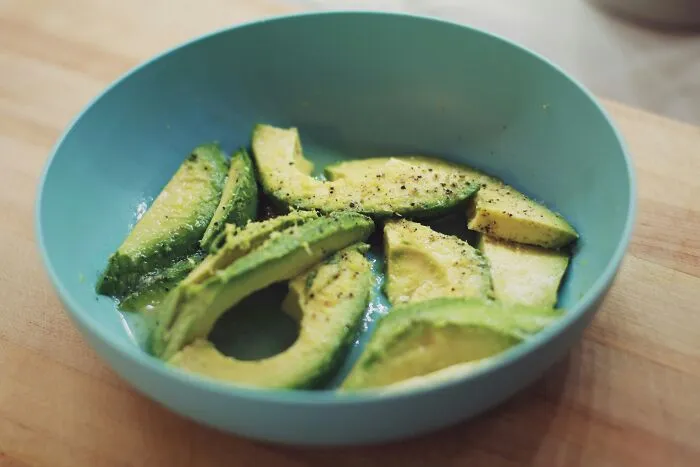
Freshly sliced avocado in a bowl illustrating surprising medical facts about health and nutrition
That our bodies NEED healthy fats in order to produce hormones.
5points

#14

56 Medical Facts People Learned As Adults And Couldn’t Believe Nobody Told Them Sooner
That endometriosis is not just period pain. It is a whole body issue.
5points

#15

An elderly woman dancing with a caregiver, illustrating interesting medical facts about aging.
Oh, when my mom was diagnosed with Alzheimer’s I learned that they only recently decided to study why women were so much more susceptible to early onset Alzheimer’s. They just thought it was a statistical anomaly because women live longer than men? And we’re only now studying the connection between menopause and brain health? What the hell!?
5points

Another area where people often discover gaps in their knowledge is reproductive healthcare. ABC News highlights that many adults wish they had received more practical education about their bodies, personal boundaries, contraception, fertility, menstrual health, and sexually transmitted infections.

It covers the physical, emotional, and social aspects of relationships and intimacy, rather than focusing exclusively on reproduction or pregnancy prevention. Unfortunately, school lessons can sometimes be limited to basic biology, abstinence, or disease prevention because these subjects are culturally sensitive. As a result, people may enter adulthood without understanding important aspects of their reproductive health or knowing where to turn when they have questions.

#16

People gathering at a dimly lit bar to discuss surprising medical facts.
More types of cancer can be attributed to alcohol consumption than can be attributed to smoking cigarettes. The anti smoking campaign was constant (rightly) when I was growing up but I was never told once that boozing could give me cancer. I may have made different choices.
5points

#17

A tired woman holding a warm cup while suffering a headache related to medical facts
That heart attack symptoms in women are often different: nausea, jaw or back pain, shortness of breath, extreme tiredness, not just the classic crushing chest pain. Women were left out of a lot of heart research for decades, and it still costs lives.
5points

#18

A worried woman sitting curled up on a sofa illustrating surprising medical facts
My “depression” that I was diagnosed with for 15 years (I’m 27), was actually just cripplingly low iron. I now get iron infusions quarterly.
5points

Comprehensive education can also help people understand consent, recognize healthy relationship boundaries, and make informed decisions about their wellbeing. Knowing how contraception works, understanding fertility, and recognizing changes in menstrual health can all be useful throughout adulthood.

Equally important is knowing that certain symptoms deserve medical attention rather than being dismissed out of embarrassment or uncertainty. People should feel comfortable discussing intimate health concerns with qualified professionals and asking questions when something isn't clear.

After all, being able to access healthcare is only part of the equation; understanding the information being provided and feeling confident enough to act on it are just as important.

#19

Fresh mixed berries packaged in plastic punnets related to health and medical facts
You need things like B12, iron, and vitamin D because they help your body make healthy red blood cells and if you don't have enough of those vital nutrients your organs don't get enough oxygen.
5points

#20

A human skeleton model torso illustrating interesting medical facts about anatomy
That your feet and rib cage grow larger when you have a baby.
All of those pretty, expensive shoes I can’t wear anymore.
5points
32
6