





Did you know that Spielberg wanted to make a James Bond movie and was rejected? Or that Canada and Denmark have a sort of joint-custody agreement over an island? Much like chicken nuggets, or grapes if you are being more healthy, people love bite-sized bits of info.
So we’ve gathered some of the coolest and most interesting facts from the IG page with the same name. Get comfortable as you scroll through, upvote your favorites and be sure to share your own thoughts in the comments section down below.
More info: Instagram
#41
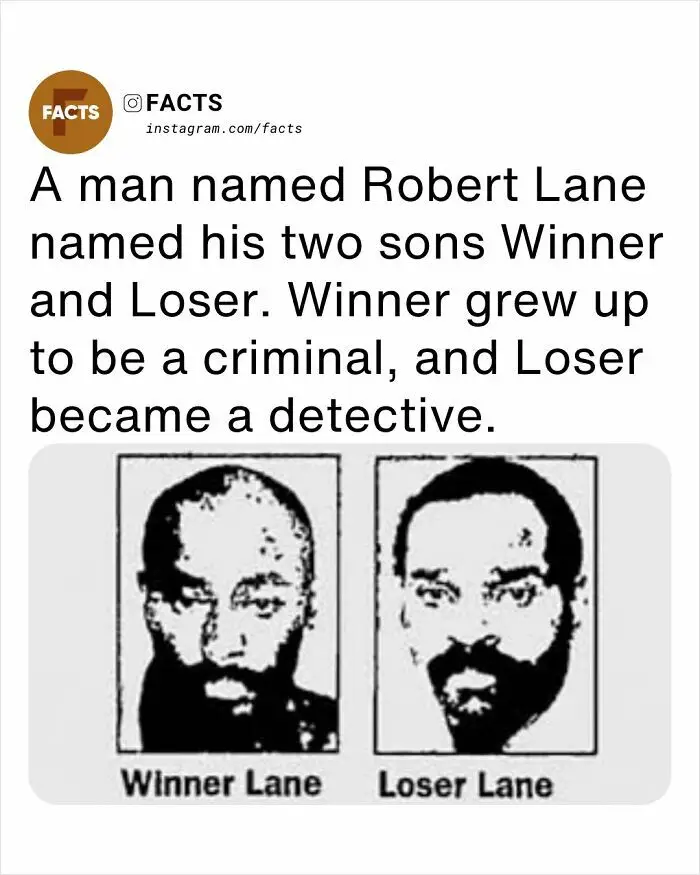
Robert Lane was already the father of five children with common first names, but apparently, he was plagued by the thought that the choice of name could influence a child’s future. What life might a person with a truly winning name lead... And so in 1958, he decided to name his sixth offspring Winner.
At the time, the family was living in a subsidized housing project in New York’s Harlem district. When Winner was three years old, another sibling announced itself. The father asked his eldest daughter what name to give the baby, and she replied that they already had a “winner,” so why not also have a “loser”? And that is what happened.
Both grew up on the grounds of the Wagner Projects. Their names never attracted much attention or ridicule among the neighborhood children. Loser later said: “As a child, you don’t know it’s a bad name. And later in school, everyone knows you, but it has become normal.”
With his distinctive name, Winner Lane should have achieved a lot. But exactly the opposite turned out to be true. The exact reasons for this can no longer be determined today. In any case, he went off the rails quite early, because his criminal career began at the age of 19 when he was arrested for the first time in September 1977.
Five years later, he was convicted for the first time after breaking into a house on Long Island. Over time, this was followed by more than 30 other crimes and offenses: fare evasion, domestic violence, trespassing, resisting arrest, and auto theft.
Around the time his brother immersed himself in the crime scene, Loser Lane received a scholarship to a prep school in Connecticut. After college, he joined the New York Police Department in January 1984.
Report
23points
#42

After Top Gear ended, host Richard Hammond was reportedly so devastated that he cried all the way home from the studio and ran out of fuel because he didn't want to fill his car up while covered in tears.
The end of Top Gear in 2015, following Jeremy Clarkson's controversial departure, marked the conclusion of what Hammond himself had called his "dream job." For 15 years, he had worked alongside his best friends, creating some of television's most memorable moments while building a career around automotive passion and comedy.
Hammond's emotional connection to Top Gear ran deeper than just professional success; it represented a brotherhood with Clarkson and James May that had survived life-threatening accidents, global fame, and countless adventures across every continent.
While Top Gear's conclusion was devastating, the trio's reunion for The Grand Tour on Amazon Prime provided some consolation, though it operated under different constraints and never quite recaptured the magic of their BBC days. When The Grand Tour also concluded in 2024 with "One for the Road," fans worldwide shared Hammond's emotional response, with many posting about being "in tears" over the final episode.
Report
22points
#43

A student who graduated with his bachelor's and master's degrees in only three semesters is being sued by the Essen, Germany-based School of Economics and Management for lost income. It would normally take a student 11 semesters and 60 exams to complete the two degrees, but the student, Marcel Pohl, finished in just 20 months - roughly a quarter of the time that would be expected to finish both degrees.
Pohl was able to do this with the help of two friends, who would share notes from courses he could not attend due to conflicts in his class schedule. During this time, he also completed an apprenticeship in a bank.
The school, which is claiming "income loss," was suing Pohl for $3,772—only a fraction of the tuition and fees he would have paid had he completed the degrees in the customary amount of time.
The school, which is claiming "income loss," was suing Pohl for $3,772—only a fraction of the tuition and fees he would have paid had he completed the degrees in the customary amount of time.
Report
22points
#44
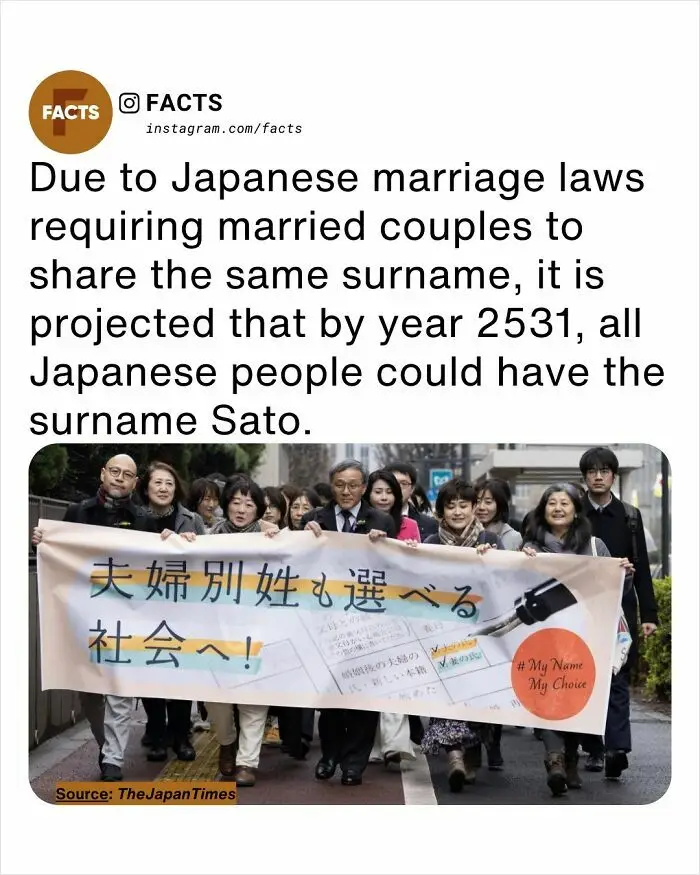
Japanese citizens will all have the same family name in 500 years unless married couples are permitted to use separate surnames, a new study has suggested as part of a campaign to update a civil code dating back to the late 1800s.
The study, led by Hiroshi Yoshida, a professor of economics at Tohoku University, projected that if Japan insists that couples select a single surname, every Japanese person will be known as “Sato-san” by 2531.
Yoshida conceded that his projections were based on several assumptions, but said the idea was to use numbers to explain the present system’s potential effects on Japanese society to draw attention to the issue.
“If everyone becomes Sato, we may have to be addressed by our first names or by numbers,” he said, according to the Mainichi. “I don’t think that would be a good world to live in.”
Sato already tops the list of Japanese surnames, accounting for 1.5% of the total population, according to a March 2023 survey, with Suzuki a close second
Report
22points
#45

Around 75% of the world’s adults can’t drink a lot of milk. And yet most could as a child. What’s going on here?
As you can guess from the numbers, being lactose intolerant is normal for an adult. People who can drink milk as adults have a DNA mutation. In fact, being able to drink milk as an adult is now referred to as a condition called lactase persistence. What most adults have trouble with is the sugar in milk, called lactose. When we’re children, almost all of us make an enzyme called lactase.
Lactase is an enzyme that breaks down lactose into sugars our body can use. And children make lactase because they have a working lactase gene. But then, over time, most of them lose that ability. Some lose it as early as 3, some at 20, some even older, and some never at all. If they have the gene when they’re young, where does it go when they get older?
_____
It doesn’t go anywhere; it just gets shut off. Remember, for a gene to work, it must be read by the cell and translated into a protein, like the lactase enzyme. A gene is sort of like a recipe in a cookbook. If no one reads a spaghetti recipe and follows the directions, then no spaghetti gets made -- you just have a piece of paper. Same thing with our genes. If the cell doesn’t read the lactase “recipe” and make the enzyme, then you can’t do anything with lactose. So when we’re kids, cells in our intestines can read the lactase gene and make lactase. When someone becomes lactose intolerant, their body isn’t using the gene anymore. Adults who can digest lactose don’t shut off the lactase gene. They can still make lactase and digest milk.
Report
22points
#46

This is because all three ingredients act on the stomach and help you to deal with the after-effects of a hangover.
Bananas are easy to digest and are also known to calm stomach upset and hydrate the body. Alcohol dehydrates the body, which is why you feel dizzy and have headaches. Bananas are also rich in electrolytes and minerals such as magnesium and potassium, which are severely depleted due to heavy drinking.
If honey is added to banana milkshakes, it helps build up the depleted blood sugar levels, providing some energy. And adding milk to it soothes and rehydrates the digestive system post-heavy drinking.
Report
22points
#47
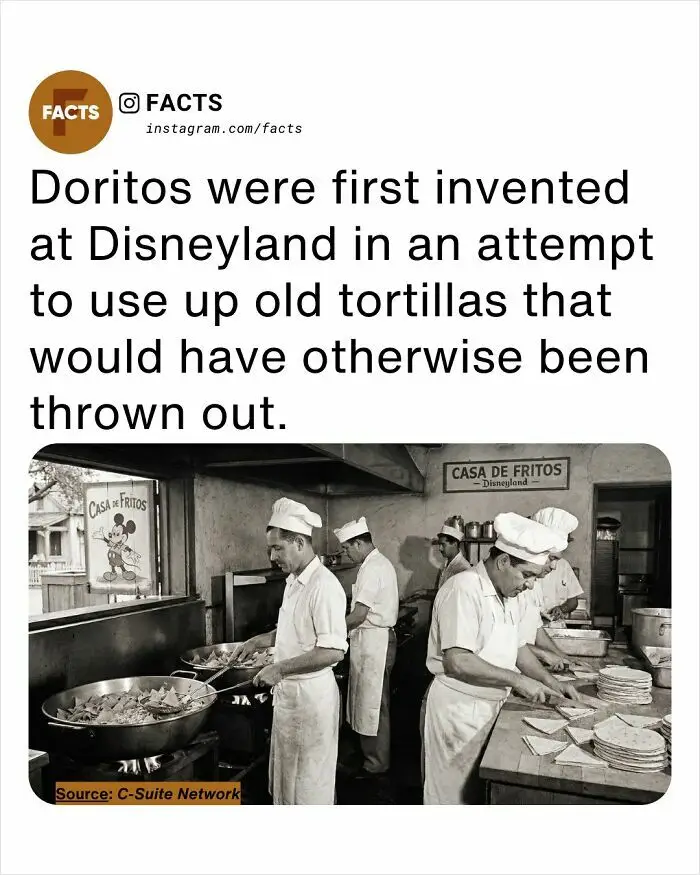
In the early 1960s, Doritos were born from an unlikely act of resourcefulness at Disneyland’s Casa de Fritos restaurant. At the time, the eatery’s ingredients were supplied by Alex Foods. During a routine delivery, a salesman noticed stale tortillas being tossed into the trash and suggested the kitchen staff fry and season them instead of wasting them. These repurposed chips became an immediate hit with park guests, who eagerly purchased the seasoned snack from the restaurant’s unique "Frito Kid" vending machine.
The snack's commercial potential was officially recognized when Frito-Lay Vice President Archibald Clark West observed its popularity during a surprise visit. Recognizing a major opportunity, West struck a deal with Alex Foods to produce the chips under a new brand name: Doritos, which translates to "little pieces of gold" in Spanish. Following a national rollout in 1966, the brand exploded into a global phenomenon. Today, Doritos remains the world's top-ranked tortilla chip brand, with approximately 100 million bags consumed daily.
The snack's commercial potential was officially recognized when Frito-Lay Vice President Archibald Clark West observed its popularity during a surprise visit. Recognizing a major opportunity, West struck a deal with Alex Foods to produce the chips under a new brand name: Doritos, which translates to "little pieces of gold" in Spanish. Following a national rollout in 1966, the brand exploded into a global phenomenon. Today, Doritos remains the world's top-ranked tortilla chip brand, with approximately 100 million bags consumed daily.
Report
21points
#48
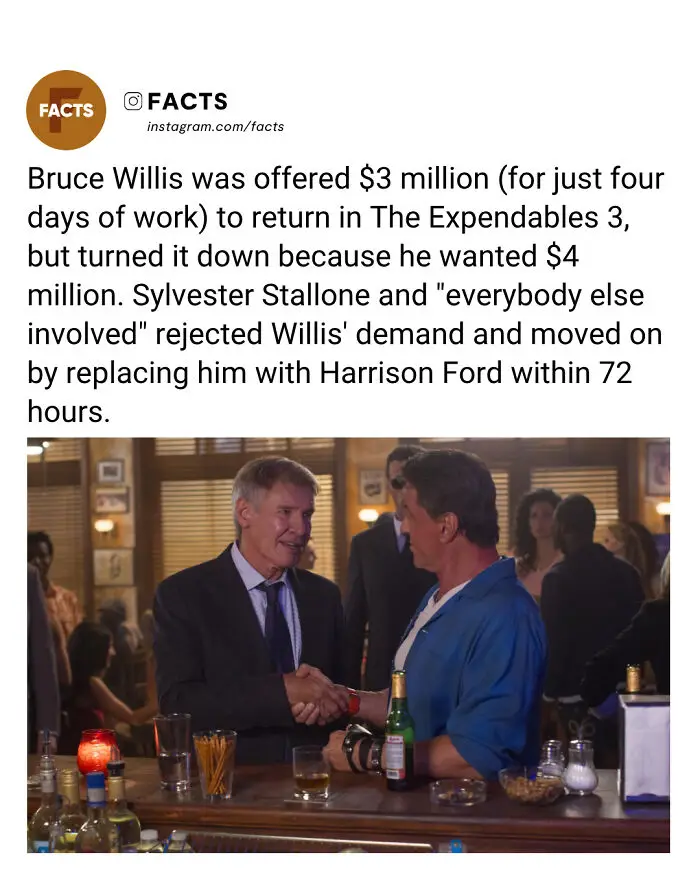
Bruce Willis was offered $3 million (for four days of work) to return in The Expendables 3 (2014), but turned it down because he wanted $4 million instead. Sylvester Stallone and "everybody else involved" rejected Willis' demand and moved on by replacing him with Harrison Ford within 72 hours.
Willis had played CIA agent Mr. Church in the first two Expendables films, which together earned $575 million at the global box office. For the third installment, producers offered him $3 million for just four days of shooting in Bulgaria—a hefty $750,000 per day. But Willis demanded $4 million, essentially asking for $1 million per day.
"He said he'd walk unless he got $4 million. A million dollars a day," a source told The Hollywood Reporter. "Stallone and everybody else involved said no."
On August 6, 2013, Stallone took to Twitter with an announcement that shocked Hollywood: "WILLIS OUT...HARRISON FORD IN!!!! GREAT NEWS!!!!! Been waiting years for this!!!!" Minutes later, he twisted the knife with another tweet: "GREEDY AND LAZY ..... A SURE FORMULA FOR CAREER FAILURE."
A Stallone spokesman confirmed the tweets were directed at Willis, who had apparently been only the third choice for the role originally—after Arnold Schwarzenegger and Kurt Russell both passed.
Ford, at 71, was eager to join the franchise and signed on immediately. "I think [Willis] was pretty surprised he was replaced in 72 hours by Harrison Ford—a better actor, a much nicer person and a more interesting direction for the film," the insider noted.
Report
21points
#49
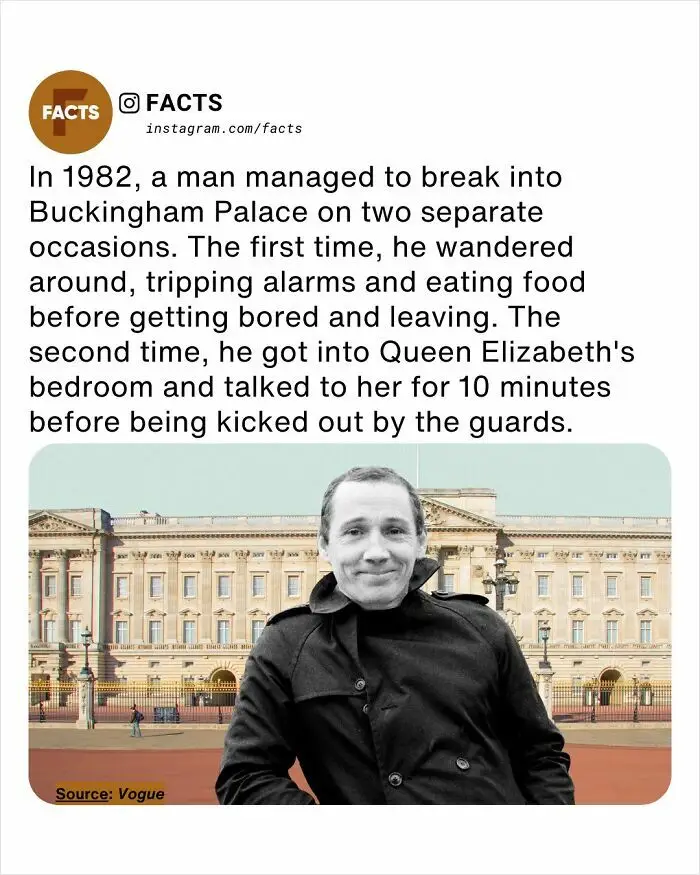
Michael Fagan, a 33-year-old London-born unemployed man, had somehow managed to stay undetected through all the palace security, becoming the best-known Buckingham Palace intruder. When he first broke into the Palace, he claims to have wandered through the palace, trying chairs “like Goldilocks and the Three Bears”, claiming he even tried out the throne, and exploring various rooms before walking out a door to the back gardens.
_____
👑 Claiming he had no prior plan, Fagan says he found his way to the private apartments by “following the pictures."
In the first anteroom, he saw an ashtray and suddenly came up with a new action plan. He broke the astray and “said that he intended to slash his wrists in the presence of Her Majesty.”
With a piece of the broken ashtray in his hand, Fagan entered Her Majesty’s bedroom and opened the curtains of her bed. Decades later, he revealed that it was a double bed but a single room, definitely – she was sleeping in there on her own.
Report
19points
#50
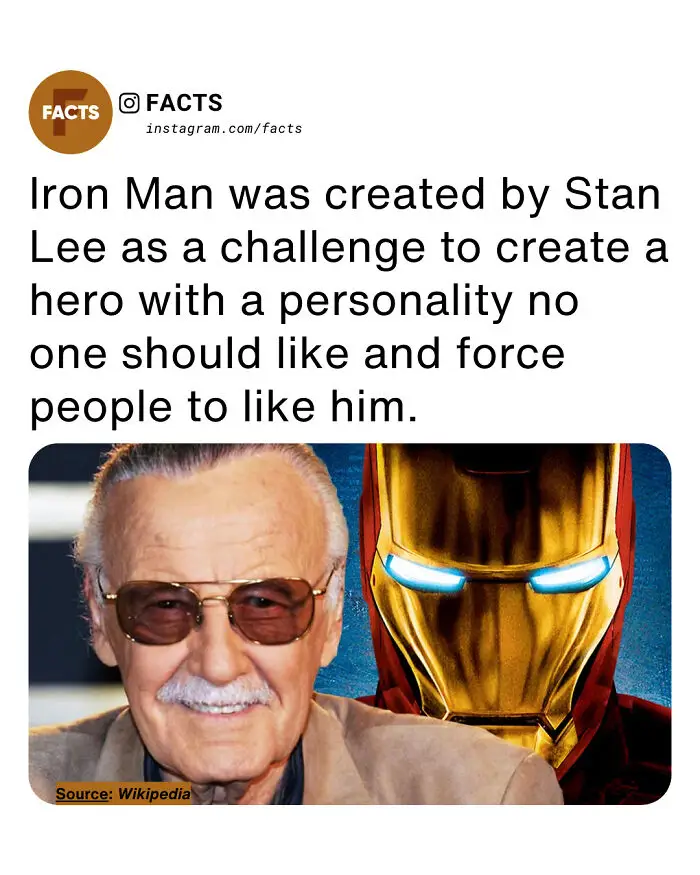
Following the success of the Fantastic Four in 1961 and the subsequent revival of American comic books featuring superheroes, Marvel Comics created new superhero characters. Stan Lee developed the initial concept for Iron Man. He wanted to design a character who should be unpalatable to his generally anti-war readers, but to make them like the character anyway. Iron Man was created in the years after the United States developed a permanent arms industry, and this was incorporated into the character's backstory.
The character was introduced as an active player in the Vietnam War. Lee described the national mood toward Vietnam during Iron Man's creation as "a time when most of us genuinely felt that the conflict in that tortured land really was a simple matter of good versus evil".
The character was introduced as an active player in the Vietnam War. Lee described the national mood toward Vietnam during Iron Man's creation as "a time when most of us genuinely felt that the conflict in that tortured land really was a simple matter of good versus evil".
Report
19points
#51
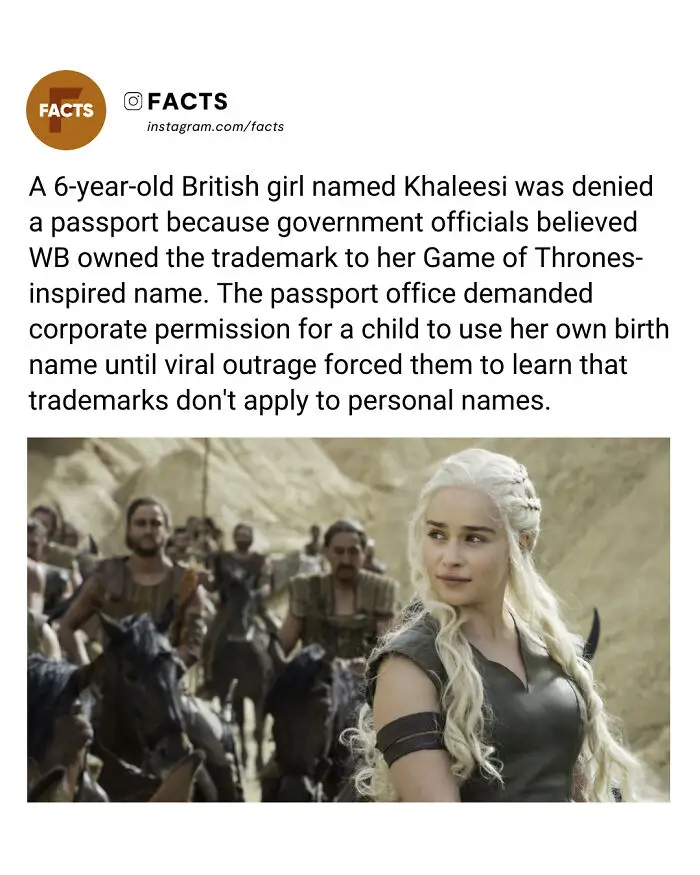
A 6-year-old British girl named Khaleesi was denied a passport because UK officials wrongly believed Warner Brothers owned the trademark to her Game of Thrones-inspired name. The Passport Office demanded corporate permission for a child to use her own birth name until viral outrage forced them to learn that trademarks don't apply to personal names.
Lucy Holloway from Swindon was "absolutely devastated" when the Passport Office rejected her daughter's application for their dream family trip to Disneyland. Officials sent a letter claiming "her name is trademarked by Warner Brothers" and demanding "a letter from Warner Brothers to confirm my daughter is able to use that name" before they could issue the passport.
The mother consulted solicitors who quickly established that while Warner Brothers does hold trademarks related to Game of Thrones, these cover goods and services—not personal names. "I was astonished," Lucy told the BBC. "If she could get a birth certificate, why wasn't this flagged then? I never thought a name could be trademarked."
The Passport Office had incorrectly applied internal guidance meant only for adults changing their names, not children born with trademarked character names. After Lucy shared her story on social media, the agency quickly reversed course and apologized for the "misunderstanding." A Home Office spokesperson confirmed: "We can verify that the application is being processed and apologize to the family for the delay."
Lucy suspects the situation was only resolved due to media attention: "If I hadn't posted about this on social media, nothing would have been done. I'd still be stuck, not knowing what to do next."
Khaleesi—named after Daenerys Targaryen's title in the HBO series—joins thousands of children worldwide given Game of Thrones-inspired names during the show's popularity peak. Her passport was eventually approved, though the family's vacation costs increased due to the delay.
Report
18points
#52
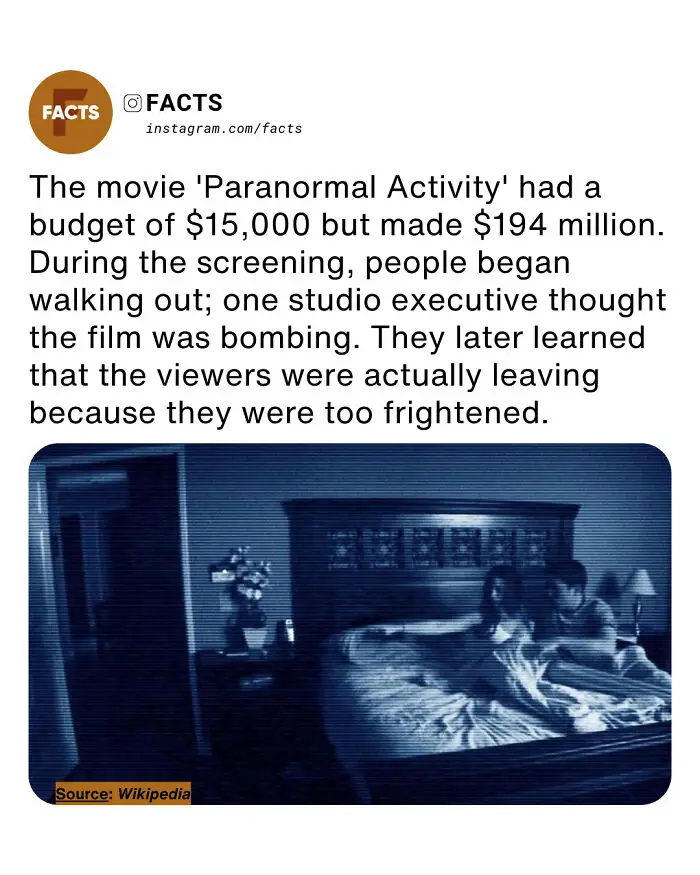
Attempting to focus on believability rather than action and gore, producer, writer, director, photographer, and editor Oren Peli chose to shoot the picture with a home video camera. In deciding on a more raw and stationary format (the camera was almost always sitting on a tripod or something else) and eliminating the need for a camera crew, a "higher degree of plausibility" was created for the audience as they were "more invested in the story and the characters". Peli says that the dialogue was "natural" because there was no real script. Instead, the actors were given outlines of the story and situations to improvise, a technique known as "retroscripting" also used in the making of The Blair Witch Project.
In casting the movie, Peli auditioned "a few hundred people" before finally meeting Katie Featherston and Micah Sloat, the stars of the movie. He originally auditioned them individually and later called them back to audition together. Peli was impressed with the chemistry between the actors, saying, "If you saw the [audition] footage, you would've thought they had known each other for years."
During a guest appearance on The Jay Leno Show on November 3, 2009, Sloat and Featherston explained they each saw the casting call on LACasting. Featherston noted they were originally paid $500 for their work.
Report
18points
#53

In 1956, it was not uncommon for children in France to be exposed to small sips of wine during family meals as part of their cultural upbringing.
Wine was traditionally regarded as an integral part of French culture, and parents often believed that introducing children to wine in moderation would teach them responsible drinking habits and an appreciation for their country’s wine heritage.
These early exposures were typically diluted with water and given in limited quantities, focusing on the sensory experience rather than intoxication.
_____
In 1956, the government took up the issue of alcohol in school canteens. For the first time, a significant measure is adopted. Now, no child under 14 is allowed to drink wine at the table. A real revolution is underway in the fight against drunkenness in schools. Nothing surprising for vine and wine historian Stéphane Le Bras, who recalls, “At that time, it was a common practice to see children consuming wine. Parents usually give their children flasks of wine mixed with water when they go to school.
Moreover, in the 1930s, a national propaganda committee in favor of wine was created, and one of their first demands was to encourage this practice by accustoming children to the taste of wine. Behind this ban, there is the desire for the former Minister of Health, Marisol Touraine, to protect children. For her, “particular attention is paid at this time to children, adolescents, young people as they enter life and start to drive”.
Report
17points
#54
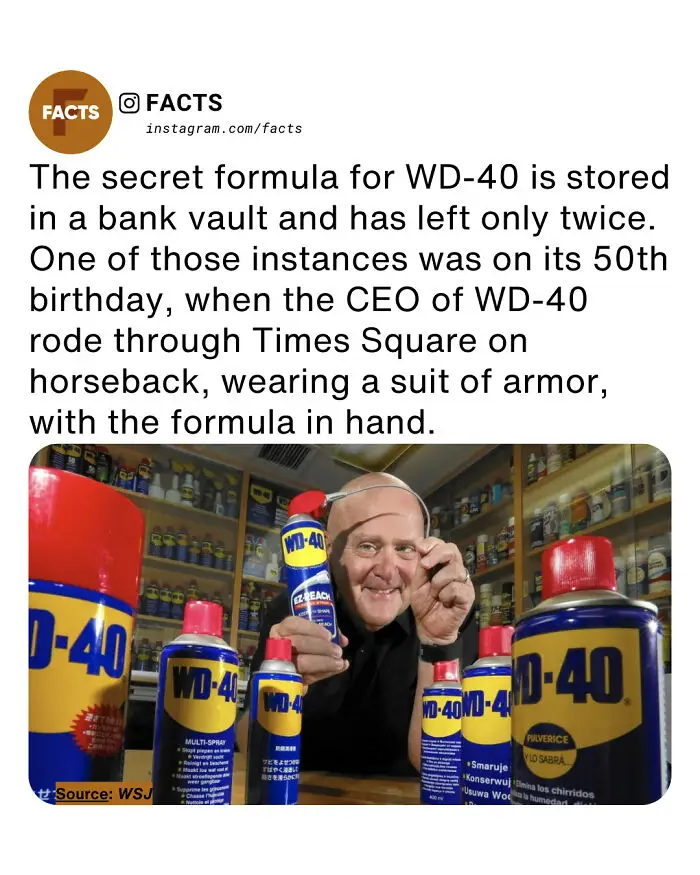
The world’s best-known household lubricant got its secret name in 1953 from its inventor, Norm Larsen, which stands for “Water Displacer—40th attempt.”
An article in The Wall Street Journal reported that the formula is in a bank vault and has only been taken out twice—when changing banks and on the product’s 50th birthday, when CEO Garry Ridge rode on a horse into Times Square while wearing a suit of armor and carrying the formula. He said the company mixes a concentrate in three locations, then distributes it to aerosol manufacturing partners worldwide.
The company reveals what’s not in the secret formula on its FAQ page: WD-40 Multi-Use Product does not contain silicone, kerosene, water, graphite, or chlorofluorocarbons (CFCs). As for what might be in that secret formula, in 2009, Wired.com sent a can to a lab and published a report.
Report
17points
#55
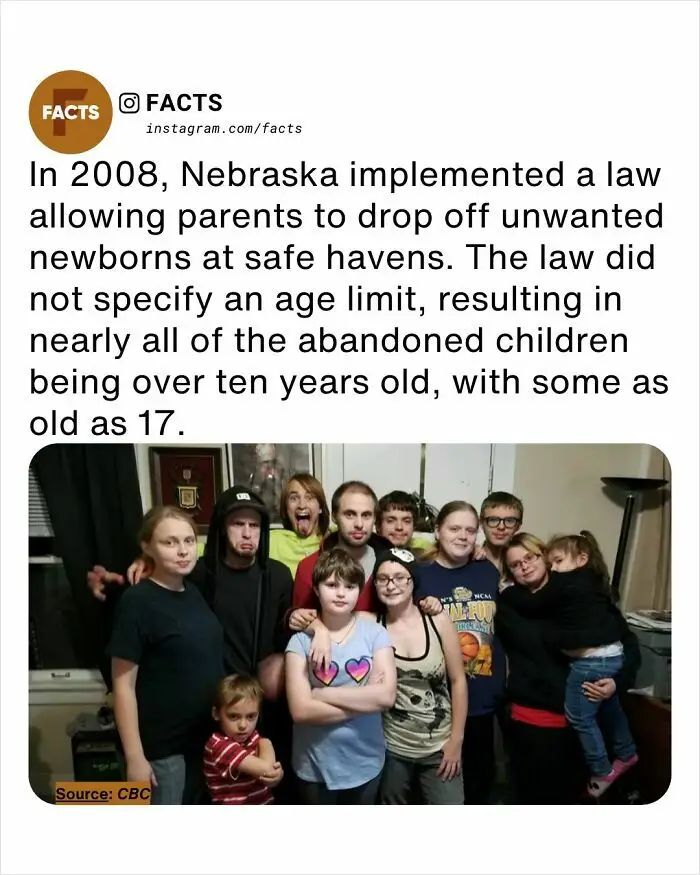
Nebraska's "safe-haven" law allows parents to abandon unwanted children at hospitals with no questions asked, was unique in a significant way: It went beyond babies and potentially permits the abandonment of anyone under 19.
While lawmakers may not have intended it, the month-old law raised the possibility that frustrated parents could drop off misbehaving teens or even severely disabled older children with impunity.
"Whether the kid is disabled or unruly or just being a hormonal teenager, the state is saying: 'Hey, we have a really easy option for you,' " said Adam Pertman, executive director of a New York adoption institute and a frequent critic of safe-haven laws back in 2008.
Report
16points
#56
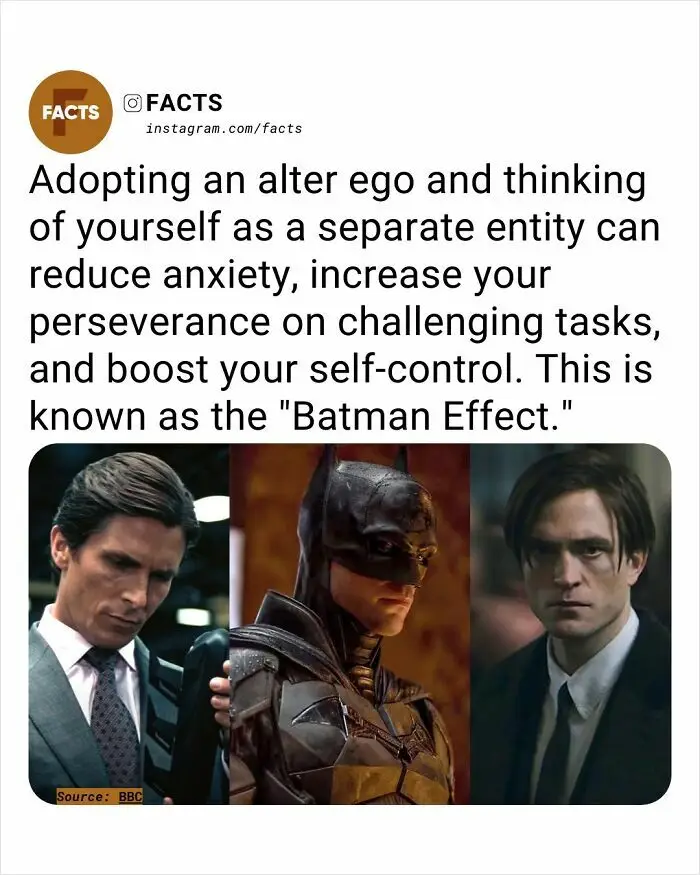
Thinking of yourself as a separate entity can reduce anxiety. It’s not you who has to perform. It’s "Batman." This seems to not only reduce anxiety but also build confidence and determination. It allows us to “self-distance” or “psychologically distance.” We step back from the situation and see it with less emotion and less passion.
It reins in that worry and stress and helps us to show additional restraint and discipline. Adopting an alter ego is a powerful way to step away from our immersion in a stressful or challenging moment, and it allows us to respond the way that our alter ego might, rather than the way we are about to.
It reins in that worry and stress and helps us to show additional restraint and discipline. Adopting an alter ego is a powerful way to step away from our immersion in a stressful or challenging moment, and it allows us to respond the way that our alter ego might, rather than the way we are about to.
Report
15points
#57

As a result, they may fear activities related to happiness because they believe they can ward off something bad from happening. This is often the case when someone has experienced a past physical or emotional traumatic event.
An introvert may be more likely to experience cherophobia. An introvert is a person who typically prefers to do activities alone or with one to two people at a time. They’re often seen as reflective and reserved. They may feel intimidated or uncomfortable in group settings, loud places, and places with a lot of people.
Perfectionists are another personality type that may be associated with cherophobia. Those who are perfectionists may feel happiness is a trait only of lazy or unproductive people. As a result, they may avoid activities that could bring happiness to them because these activities are seen as unproductive.
Report
15points
#58
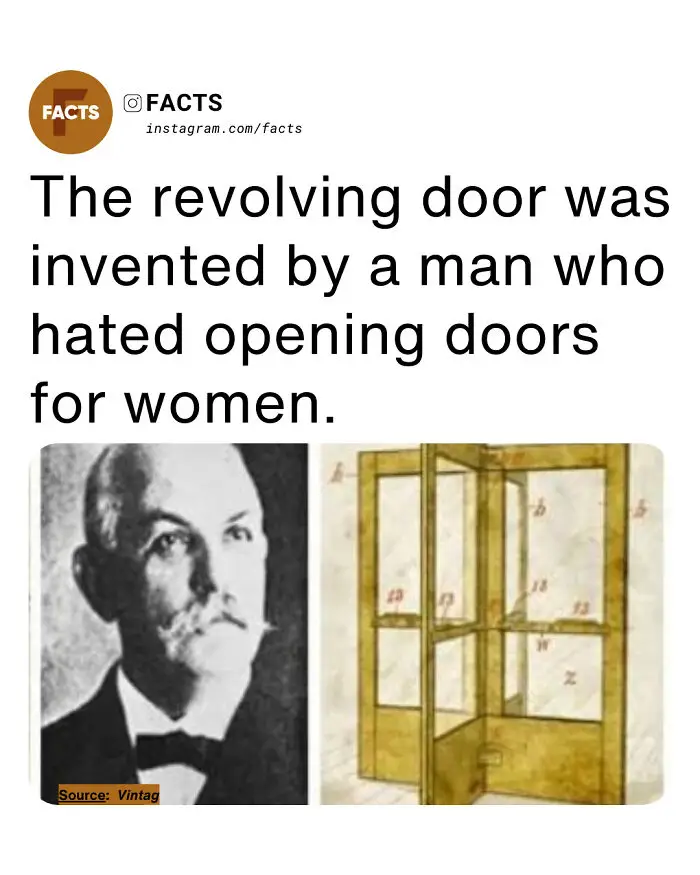
In the late 1800s, Theophilus van Kannel supposedly designed a revolving door because he hated chivalry. He didn’t like to parry with other men over who should enter or exit a door first. Even worse, he hated to open doors for women.
_____
🙅♂️ Although not much is known about Van Kannel’s life, there’s an interesting rumor concerning the inspiration behind his invention: He disliked the chivalrous act of holding open doors so ladies could pass through them. Thus, he spent most of his adult life focused on the invention, improvement, and installation of revolving doors.
Report
15points
#59
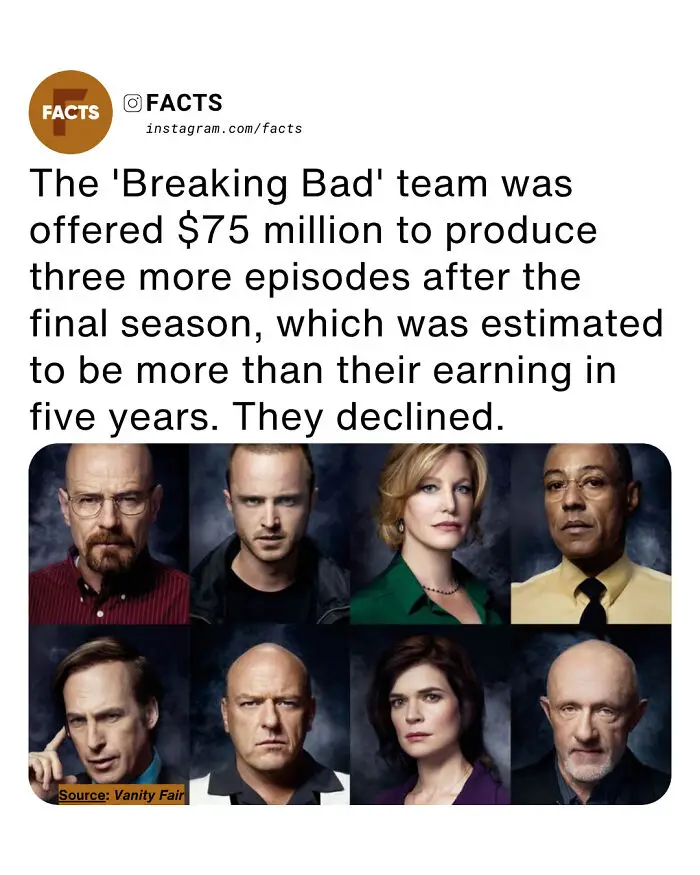
Jeffrey Katzenberg, co-founder of DreamWorks and the former chairman of Walt Disney Studios, had a radical idea for the final season of 'Breaking Bad.'
“I met with them maybe four or five months before the final season aired,” Katzenberg said. “I made a proposal to them that I would buy from them three additional episodes of ‘Breaking Bad’ for $25 million an episode. At the time, they were producing these shows for $3.5 million an episode, so to literally buy three new episodes for that amount of money meant they would have made more profit from the purchase of those three episodes than they’d made from five years.”
The “Breaking Bad” team turned down Katzenberg’s offer, mainly because the final episodes did not lend themselves to additional installments. (Look at where Bryan Cranston’s Walter White ended up in the series finale.) Looking back, Katzenberg maintains that releasing “Breaking Bad” episodes this way would’ve been a huge financial win.
Report
14points
#60
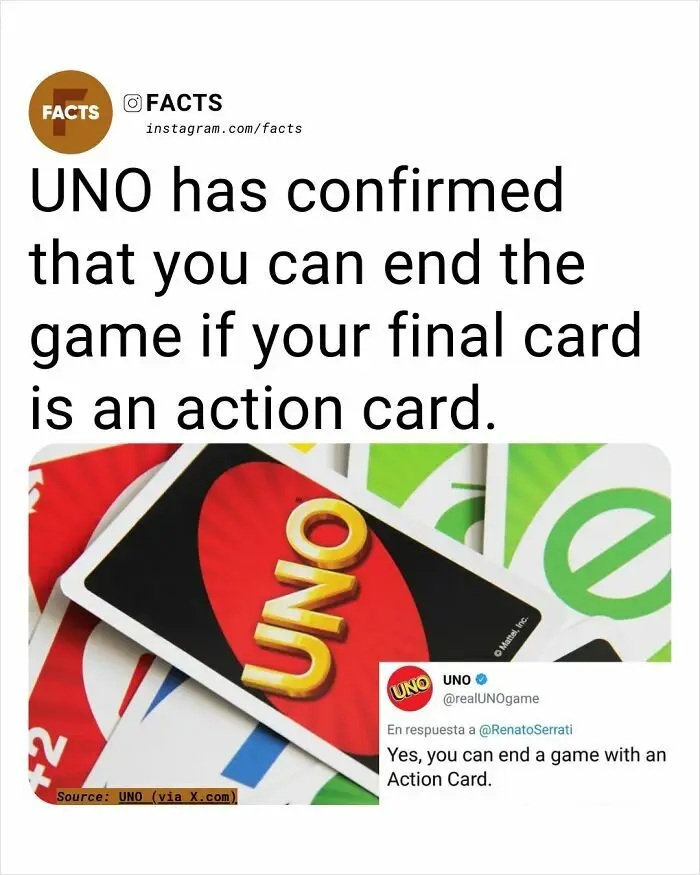
Your whole life was a lie.
All these years, we thought we couldn't end a UNO card game with Action cards. But the matter has finally been put to rest.
Now, we have the verdict from the horse's mouth.
All these years, we thought we couldn't end a UNO card game with Action cards. But the matter has finally been put to rest.
Now, we have the verdict from the horse's mouth.
Report
13points
