



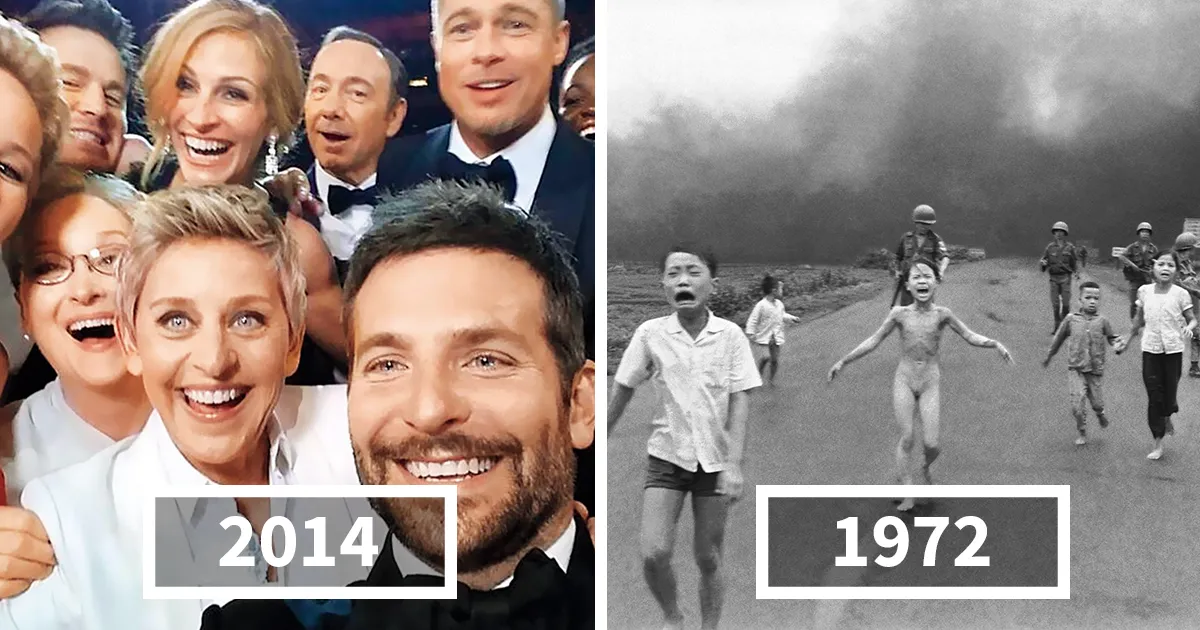

With millions of pictures taken every day, we can easily get lost in the vast world of images. That's why TIME magazine decided to create a list of the 100 most influential pictures ever taken. They teamed up with curators, historians, photo editors, and famous photographers around the world for this task. And now, you can find all of the most famous photos in one place, together with descriptions as to why these famous historical photos are such an important part of our legacy.
"No formula makes for iconic photos," the editors said. "Some rare historical photos are on our list because they were the first of their kind, others because they shaped the way we think. And some cut because they directly changed the way we live. What all of the 100 famous photos share is that they are turning points in our human experience."
The result they ended up with is not only a collection of superb historical photos but incredible human experiences as well. "The best photography is a form of bearing witness, a way of bringing a single vision to the larger world."
Ready to explore the world in a new view through the most famous photos of all time? If so, grab a cup of your favorite beverage and prepare for a journey that might just change the way you look at the world. The photo gallery of the most famous pictures of our age is right at your fingertips!
More info: time.com
#41 Black Power Salute, John Dominis, 1968
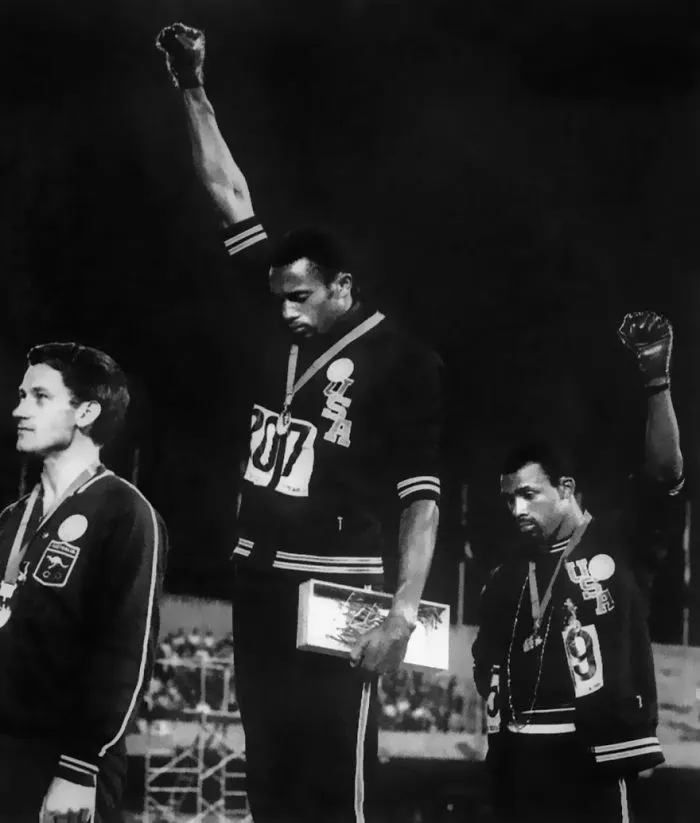
The Olympics are intended to be a celebration of global unity. But when the American sprinters Tommie Smith and John Carlos ascended the medal stand at the 1968 Games in Mexico City, they were determined to shatter the illusion that all was right in the world. Just before “The Star-Spangled Banner” began to play, Smith, the gold medalist, and Carlos, the bronze winner, bowed their heads and raised black-gloved fists in the air. Their message could not have been clearer: Before we salute America, America must treat blacks as equal. “We knew that what we were going to do was far greater than any athletic feat,” Carlos later said. John Dominis, a quick-fingered life photographer known for capturing unexpected moments, shot a close-up that revealed another layer: Smith in black socks, his running shoes off, in a gesture meant to symbolize black poverty. Published in life, Dominis’ image turned the somber protest into an iconic emblem of the turbulent 1960s.
Report
36points
#42 Soweto Uprising, Sam Nzima, 1976
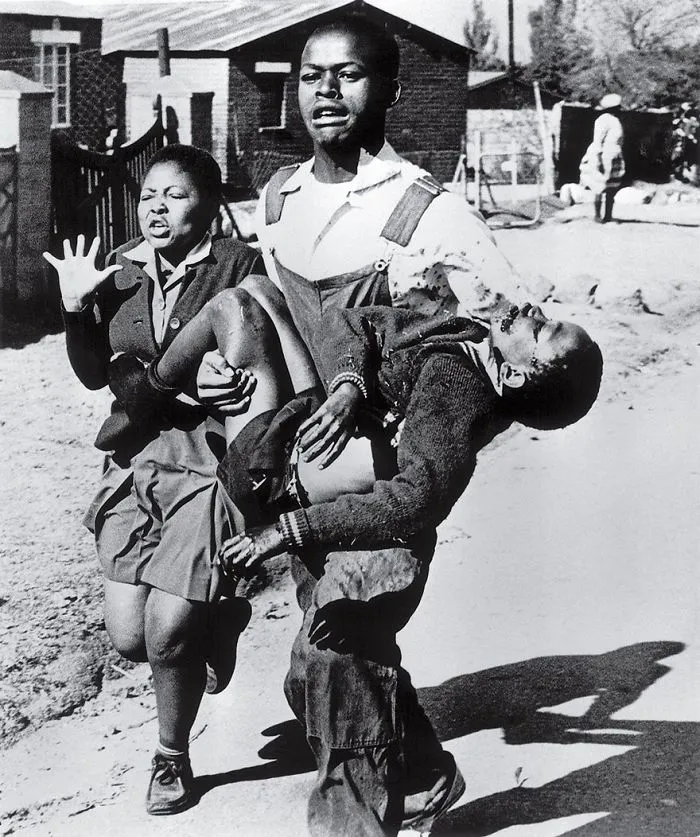
Few outside South Africa paid much attention to apartheid before June 16, 1976, when several thousand Soweto students set out to protest the introduction of mandatory Afrikaans-language instruction in their township schools. Along the way they gathered youngsters from other schools, including a 13-year-old student named Hector Pieterson. Skirmishes started to break out with the police, and at one point officers fired tear gas. When students hurled stones, the police shot real bullets into the crowd. “At first, I ran away from the scene,” recalled Sam Nzima, who was covering the protests for the World, the paper that was the house organ of black Johannesburg. “But then, after recovering myself, I went back.” That is when Nzima says he spotted Pieterson fall down as gunfire showered above. He kept taking pictures as terrified high schooler Mbuyisa Makhubu picked up the lifeless boy and ran with Pieterson’s sister, Antoinette Sithole. What began as a peaceful protest soon turned into a violent uprising, claiming hundreds of lives across South Africa. Prime Minister John Vorster warned, “This government will not be intimidated.” But the armed rulers were powerless against Nzima’s photo of Pieterson, which showed how the South African regime killed its own people. The picture’s publication forced Nzima into hiding amid death threats, but its effect could not have been more visible. Suddenly the world could no longer ignore apartheid. The seeds of international opposition that would eventually topple the racist system had been planted by a photograph.
Report
36points
#43 The Horse In Motion, Eadweard Muybridge, 1878
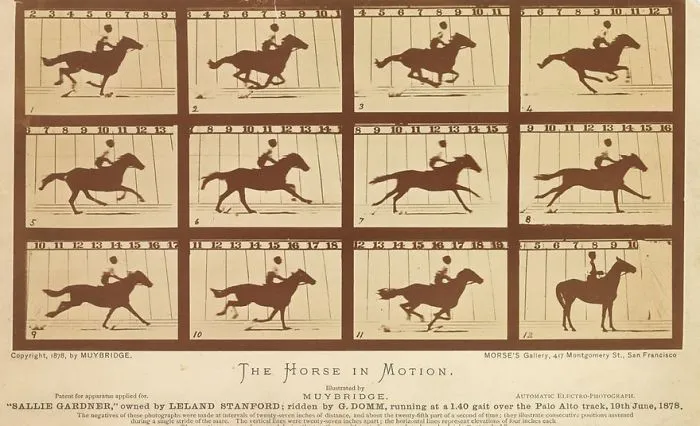
When a horse trots or gallops, does it ever become fully airborne? This was the question photographer Eadweard Muybridge set out to answer in 1878. Railroad tycoon and former California governor Leland Stanford was convinced the answer was yes and commissioned Muybridge to provide proof. Muybridge developed a way to take photos with an exposure lasting a fraction of a second and, with reporters as witnesses, arranged 12 cameras along a track on Stanford’s estate.
As a horse sped by, it tripped wires connected to the cameras, which took 12 photos in rapid succession. Muybridge developed the images on site and, in the frames, revealed that a horse is completely aloft with its hooves tucked underneath it for a brief moment during a stride. The revelation, imperceptible to the naked eye but apparent through photography, marked a new purpose for the medium. It could capture truth through technology. Muybridge’s stop-motion technique was an early form of animation that helped pave the way for the motion-picture industry, born a short decade later.
As a horse sped by, it tripped wires connected to the cameras, which took 12 photos in rapid succession. Muybridge developed the images on site and, in the frames, revealed that a horse is completely aloft with its hooves tucked underneath it for a brief moment during a stride. The revelation, imperceptible to the naked eye but apparent through photography, marked a new purpose for the medium. It could capture truth through technology. Muybridge’s stop-motion technique was an early form of animation that helped pave the way for the motion-picture industry, born a short decade later.
Report
35points
#44 Abraham Lincoln, Mathew Brady, 1860
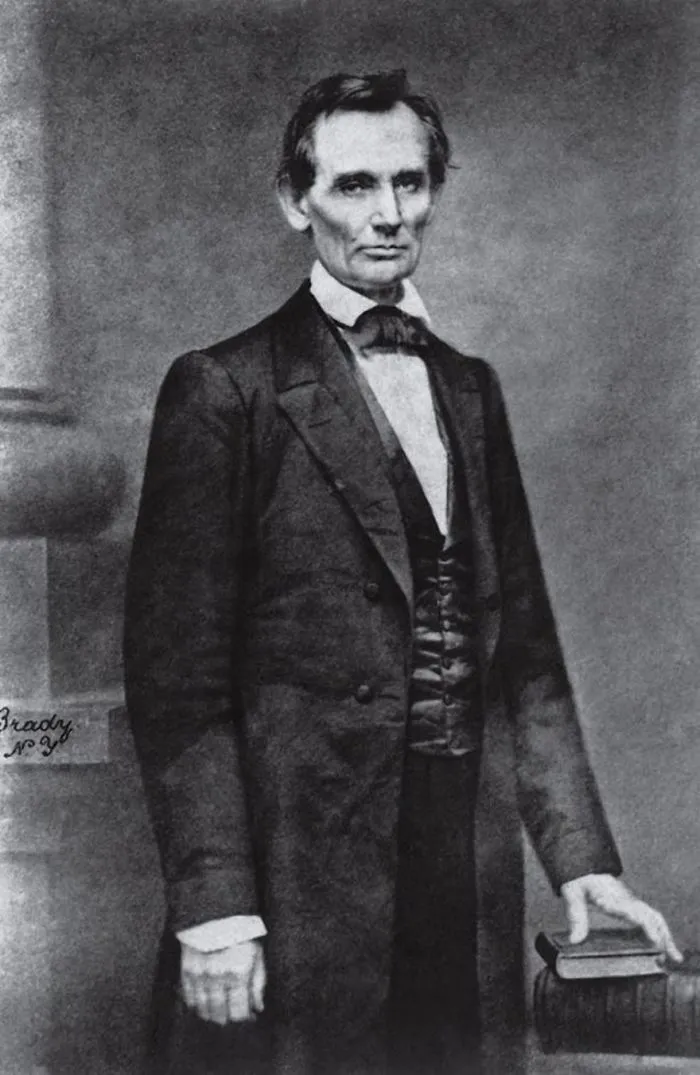
Abraham Lincoln was a little-known one-term Illinois Congressman with national aspirations when he arrived in New York City in February 1860 to speak at the Cooper Union. The speech had to be perfect, but Lincoln also knew the importance of image. Before taking to the podium, he stopped at the Broadway photography studio of Mathew B. Brady. The portraitist, who had photographed everyone from Edgar Allan Poe to James Fenimore Cooper and would chronicle the coming Civil War, knew a thing or two about presentation. He set the gangly rail splitter in a statesmanlike pose, tightened his shirt collar to hide his long neck and retouched the image to improve his looks. In a click of a shutter, Brady dispelled talk of what Lincoln said were “rumors of my long ungainly figure … making me into a man of human aspect and dignified bearing.” By capturing Lincoln’s youthful features before the ravages of the Civil War would etch his face with the strains of the Oval Office, Brady presented him as a calm contender in the fractious antebellum era. Lincoln’s subsequent talk before a largely Republican audience of 1,500 was a resounding success, and Brady’s picture soon appeared in publications like Harper’s Weekly and on cartes de visite and election posters and buttons, making it the most powerful early instance of a photo used as campaign propaganda. As the portrait spread, it propelled Lincoln from the edge of greatness to the White House, where he preserved the Union and ended slavery. As Lincoln later admitted, “Brady and the Cooper Union speech made me President of the United States.”
Report
34points
#45 Iraqi Girl At Checkpoint, Chris Hondros, 2005
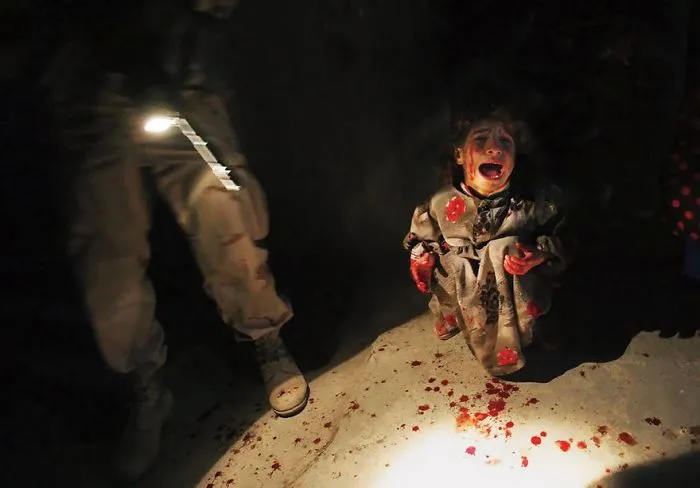
Moments before American photojournalist Chris Hondros took this picture of Samar Hassan, the little girl was in the backseat of her family’s car as they drove home from the Iraqi city of Tall ‘Afar. Now Samar was an orphan, her parents shot dead by U.S. soldiers who had opened fire because they feared the car might be carrying insurgents or a suicide bomber. It was January 2005, and the war in Iraq was at its most brutal. Such horrific accidents were not rare in that chaotic conflict, but they had never been documented in real time. Hondros, who worked for Getty Images, was embedded with the Army unit when the shooting happened. He transmitted his photographs immediately, and by the following day they were published around the world. The images led the U.S. military to revise its checkpoint procedures, but their greater effect was in compelling an already skeptical public to ask why American soldiers were killing the people they had ostensibly come to liberate and protect.
Hondros was killed during the civil war in Libya in 2011.
Hondros was killed during the civil war in Libya in 2011.
Report
34points
#46 Gorilla In The Congo, Brent Stirton, 2007
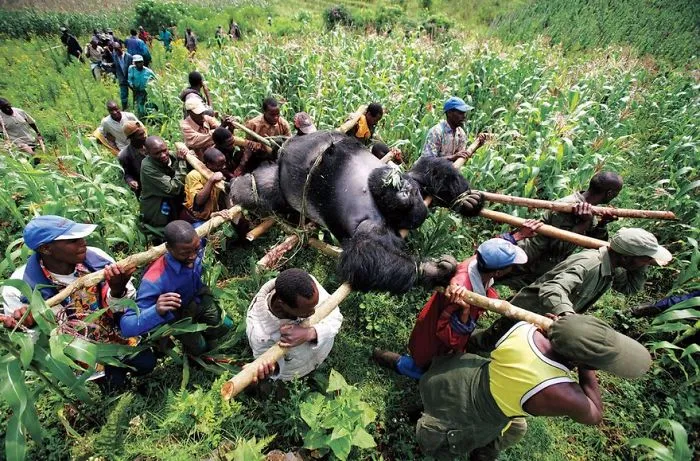
Senkwekwe the silverback mountain gorilla weighed at least 500 pounds when his carcass was strapped to a makeshift stretcher, and it took more than a dozen men to hoist it into the air. Brent Stirton captured the scene while in Virunga National Park in the Democratic Republic of Congo. Senkwekwe and several other gorillas were shot dead as a violent conflict engulfed the park, where half the world’s critically endangered mountain gorillas live.
When Stirton photographed residents and park rangers respectfully carrying Senkwekwe out of the forest in 2007, the park was under siege by people illegally harvesting wood to be used in a charcoal industry that grew in the wake of the Rwandan genocide. In the photo, Senkwekwe looks huge but vaguely human, a reminder that conflict in Central Africa affects more than just the humans caught in its cross fire; it also touches the region’s environment and animal inhabitants. Three months after Stirton’s photograph was published in Newsweek, nine African countries—including Congo—signed a legally binding treaty to help protect the mountain gorillas in Virunga.
Report
34points
#47 Bandit's Roost, Mulberry Street, Jacob Riis, Circa 1888
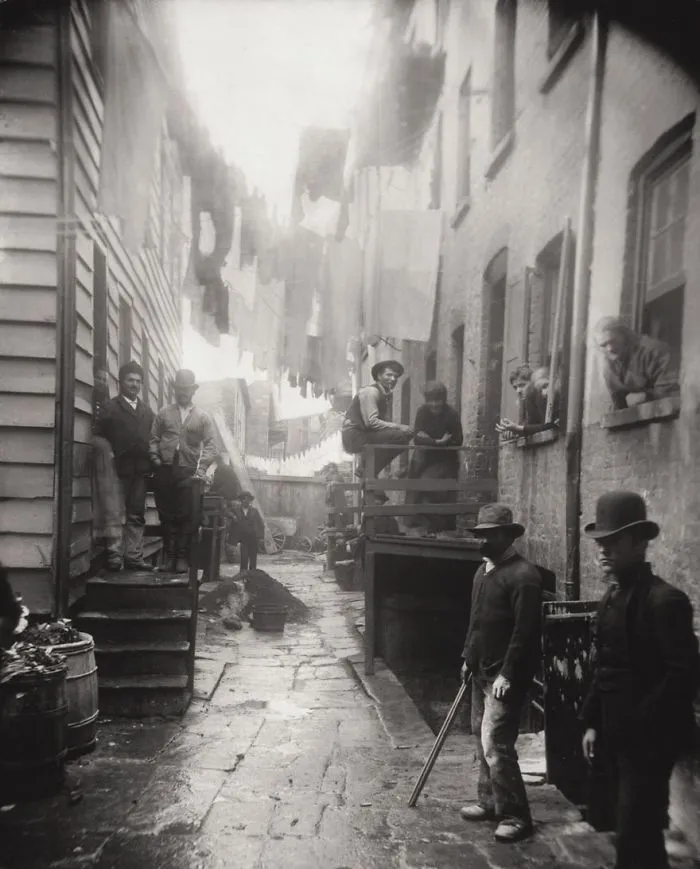
Late 19th-century New York City was a magnet for the world’s immigrants, and the vast majority of them found not streets paved with gold but nearly subhuman squalor. While polite society turned a blind eye, brave reporters like the Danish-born Jacob Riis documented this shame of the Gilded Age. Riis did this by venturing into the city’s most ominous neighborhoods with his blinding magnesium flash powder lights, capturing the casual crime, grinding poverty and frightful overcrowding. Most famous of these was Riis’ image of a Lower East Side street gang, which conveys the danger that lurked around every bend. Such work became the basis of his revelatory book How the Other Half Lives, which forced Americans to confront what they had long ignored and galvanized reformers like the young New York politician Theodore Roosevelt, who wrote to the photographer, “I have read your book, and I have come to help.” Riis’ work was instrumental in bringing about New York State’s landmark Tenement House Act of 1901, which improved conditions for the poor. And his crusading approach and direct, confrontational style ushered in the age of documentary and muckraking photojournalism.
Report
33points
#48 Milk Drop Coronet, Harold Edgerton, 1957
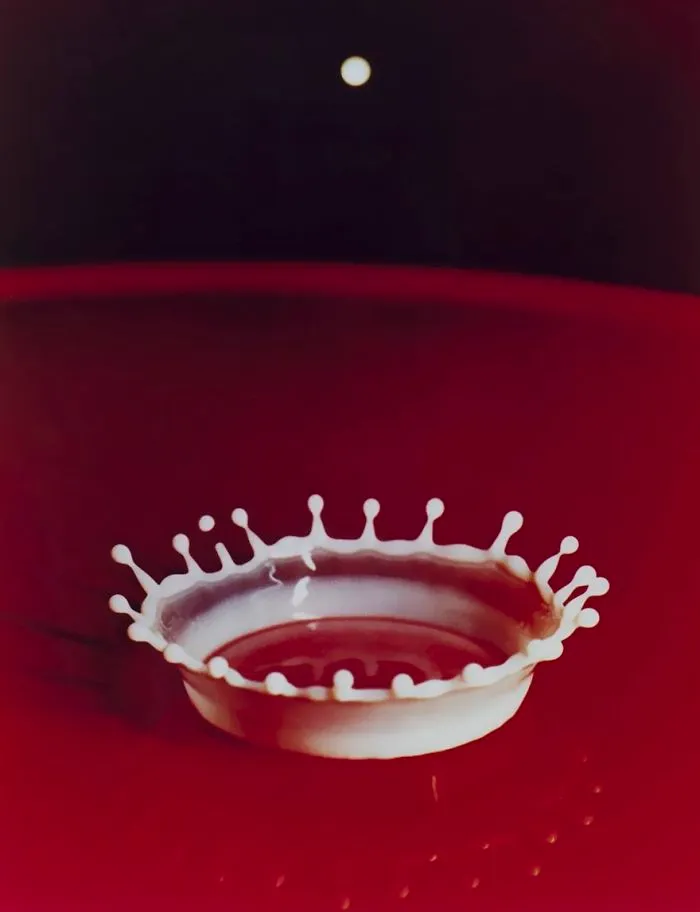
Before Harold Edgerton rigged a milk dropper next to a timer and a camera of his own invention, it was virtually impossible to take a good photo in the dark without bulky equipment. It was similarly futile to try to photograph a fleeting moment. But in the 1950s at his lab at MIT, Edgerton started tinkering with a process that would change the future of photography. There the electrical-engineering professor combined high-tech strobe lights with camera shutter motors to capture moments imperceptible to the naked eye. Milk Drop Coronet, his revolutionary stop-motion photograph, freezes the impact of a drop of milk on a table, a crown of liquid discernible to the camera for only a millisecond. The picture proved that photography could advance human understanding of the physical world, and the technology Edgerton used to take it laid the foundation for the modern electronic flash.
Edgerton worked for years to perfect his milk-drop photographs, many of which were black and white; one version was featured in the first photography exhibition at New York City’s Museum of Modern Art, in 1937. And while the man known as Doc captured other blink-and-you-missed-it moments, like balloons bursting and a bullet piercing an apple, his milk drop remains a quintessential example of photography’s ability to make art out of evidence.
Edgerton worked for years to perfect his milk-drop photographs, many of which were black and white; one version was featured in the first photography exhibition at New York City’s Museum of Modern Art, in 1937. And while the man known as Doc captured other blink-and-you-missed-it moments, like balloons bursting and a bullet piercing an apple, his milk drop remains a quintessential example of photography’s ability to make art out of evidence.
Report
31points
#49 Surfing Hippos, Michael Nichols, 2000
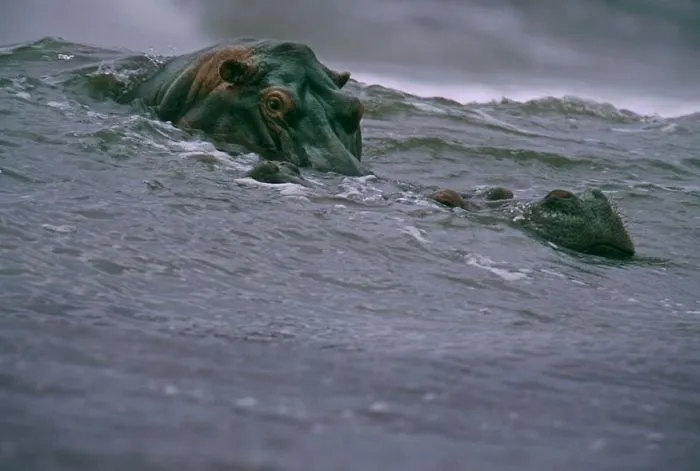
Seven billion human beings take up a certain amount of space, which is one reason why wilderness—true, untouched wilderness—is fast dwindling around the world. Even in Africa, where lions and elephants still roam, the space for wild animals is shrinking. That’s what makes Michael Nichols’ photograph so special. Nichols and the National Geographic Society explorer Michael Fay undertook an arduous 2,000-mile trek from the Congo in central Africa to Gabon on the continent’s west coast. That was where Nichols captured a photograph of something astonishing—hippopotamuses swimming in the midnight blue Atlantic Ocean. It was an event few had seen before—while hippos spend most of their time in water, their habitat is more likely to be an inland river or swamp than the crashing sea.
The photograph itself is reliably beautiful, the eyes and snout of the hippo peeking just above the rippling ocean surface. But its effect was more than aesthetic. Gabon President Omar Bongo was inspired by Nichols’ pictures to create a system of national parks that now cover 11 percent of the country, ensuring that there will be at least some space left for the wild.
Report
31points
#50 Moonlight: The Pond, Edward Steichen, 1904
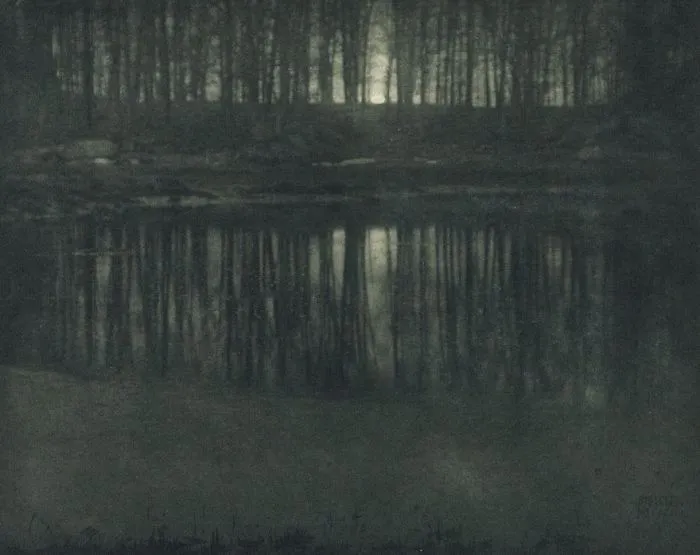
Is Edward Steichen’s ethereal image a photograph or a painting? It’s both, and that was exactly his point. Steichen photographed the wooded scene in Mamaroneck, N.Y., hand-colored the black-and-white prints with blue tones and may have even added the glowing moon. The blurring of two mediums was the aim of Pictorialism, which was embraced by professional photographers at the turn of the 20th century as a way to differentiate their work from amateur snapshots taken with newly available handheld cameras. And no single image was more formative than Moonlight.
The year before he created Moonlight, Steichen wrote an essay arguing that altering photos was no different than choosing when and where to click the shutter. Photographers, he said, always have a perspective that necessarily distorts the authenticity of their images. Although Steichen eventually abandoned Pictorialism, the movement’s influence can be seen in every photographer who seeks to create scenes, not merely capture them. Moonlight, too, continues to resonate. A century after Steichen made the image, a print sold for nearly $3 million.
Report
30points
#51 The Vanishing Race, Edward S. Curtis, 1904
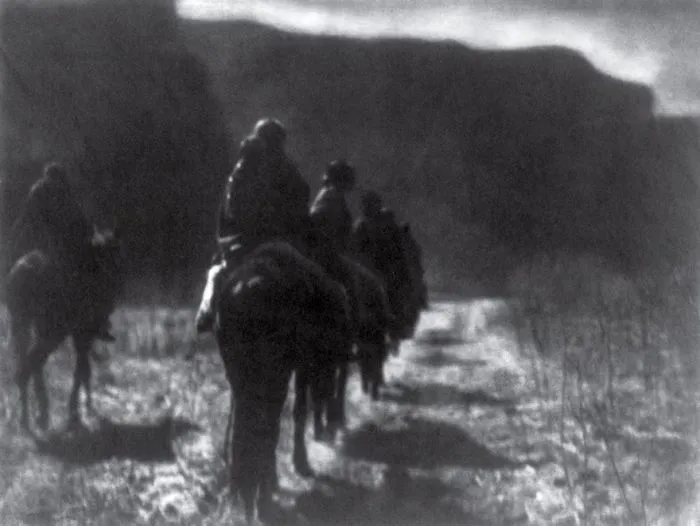
Native Americans were the great casualty of the U.S.’s grand westward advance. As settlers tamed the seemingly boundless stretches of the young nation, they evicted Indians from their ancestral lands, shoving them into impoverished reservations and forcing them to assimilate. Fearing the imminent disappearance of America’s first inhabitants, Edward S. Curtis sought to document the assorted tribes, to show them as a noble people—“the old time Indian, his dress, his ceremonies, his life and manners.” Over more than two decades, Curtis turned these pictures and observations into The North American Indian, a 20-volume chronicle of 80 tribes. No single image embodied the project better than The Vanishing Race, his picture of Navajo riding off into the dusty distance. To Curtis the photo epitomized the plight of the Indians, who were “passing into the darkness of an unknown future.” Alas, Curtis’ encyclopedic work did more than convey the theme—it cemented a stereotype. Railroad companies soon lured tourists west with trips to glimpse the last of a dying people, and Indians came to be seen as a relic out of time, not an integral part of modern American society. It’s a perception that persists to this day.
Report
28points
#52 Betty Grable, Frank Powolny, 1943
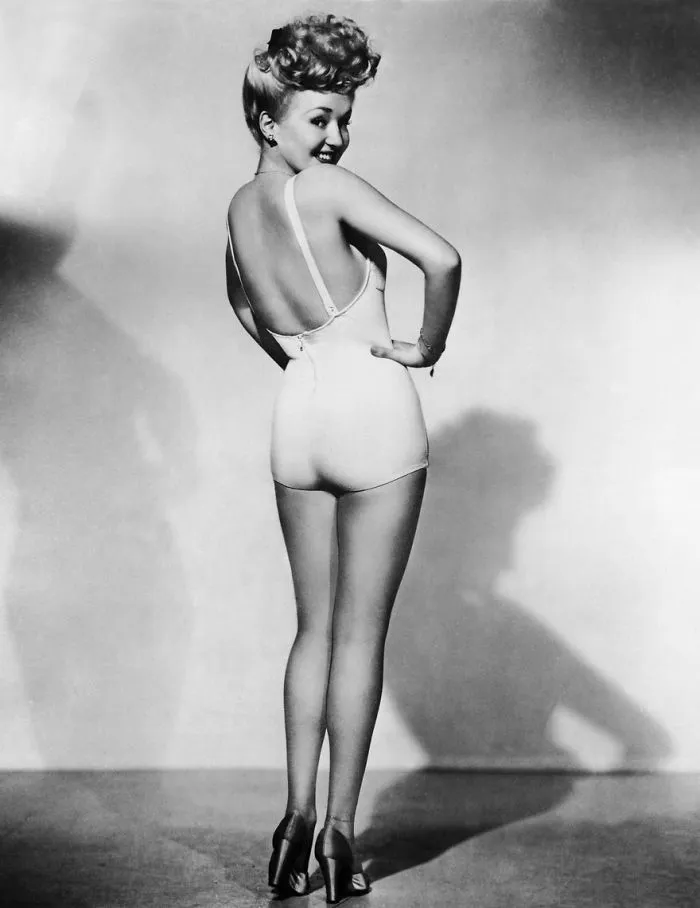
Helen of Troy, the mythic Greek demigod who sparked the Trojan War and “launch’d a thousand ships,” had nothing on Betty Grable of St. Louis. For that platinum blond, blue-eyed Hollywood starlet had a set of gams that inspired American soldiers, sailors, airmen and Marines to set forth to save civilization from the Axis powers. And unlike Helen, Betty represented the flesh-and-blood “girl back home,” patiently keeping the fires burning. Frank Powolny brought Betty to the troops by accident. A photographer for 20th Century Fox, he was taking publicity pictures of the actress for the 1943 film Sweet Rosie O’Grady when she agreed to a “back shot.” The studio turned the coy pose into one of the earliest pinups, and soon troops were requesting 50,000 copies every month. The men took Betty wherever they went, tacking her poster to barrack walls, painting her on bomber fuselages and fastening 2-by-3 prints of her next to their hearts. Before Marilyn Monroe, Betty’s smile and legs—said to be insured for a million bucks with Lloyd’s of London—rallied countless homesick young men in the fight of their lives (including a young Hugh Hefner, who cited her as an inspiration for Playboy). “I’ve got to be an enlisted man’s girl,” said Grable, who signed hundreds of her pinups each month during the war. “Just like this has got to be an enlisted man’s war.”
Report
27points
#53 Case Study House No. 22, Los Angeles, Julius Shulman, 1960
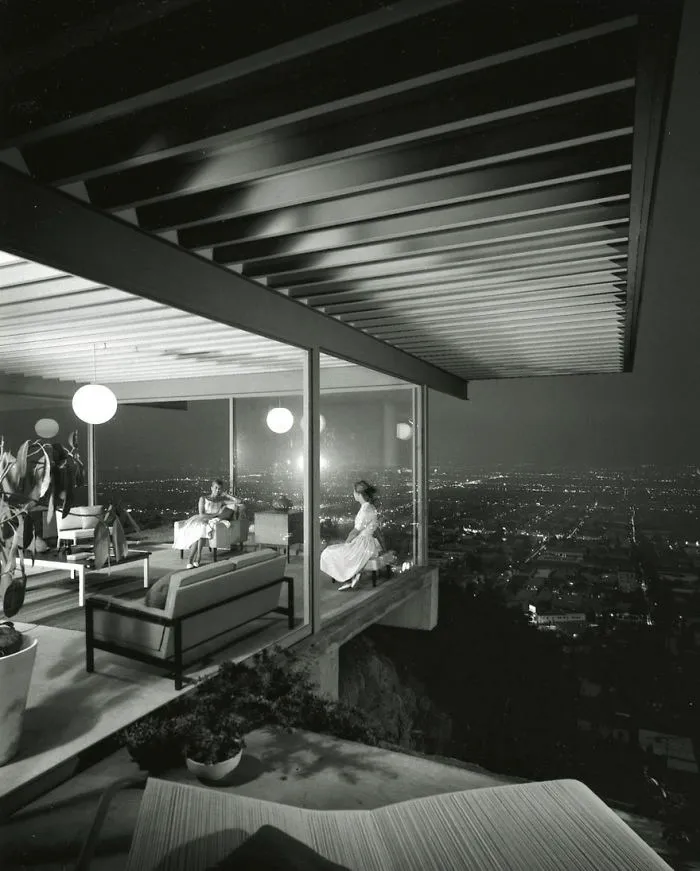
For decades, the California Dream meant the chance to own a stucco home on a sliver of paradise. The point was the yard with the palm trees, not the contour of the walls. Julius Shulman helped change all that. In May 1960, the Brooklyn-born photographer headed to architect Pierre Koenig’s Stahl House, a glass-enclosed Hollywood Hills home with a breathtaking view of Los Angeles—one of 36 Case Study Houses that were part of an architectural experiment extolling the virtues of modernist theory and industrial materials. Shulman photographed most of the houses in the project, helping demystify modernism by highlighting its graceful simplicity and humanizing its angular edges. But none of his other pictures was more influential than the one he took of Case Study House No. 22. To show the essence of this air-breaking cantilevered building, Shulman set two glamorous women in cocktail dresses inside the house, where they appear to be floating above a mythic, twinkling city. The photo, which he called “one of my masterpieces,” is the most successful real estate image ever taken. It perfected the art of aspirational staging, turning a house into the embodiment of the Good Life, of stardusted Hollywood, of California as the Promised Land. And, thanks to Shulman, that dream now includes a glass box in the sky.
Report
25points
#54 99 Cent, Andreas Gursky, 1999
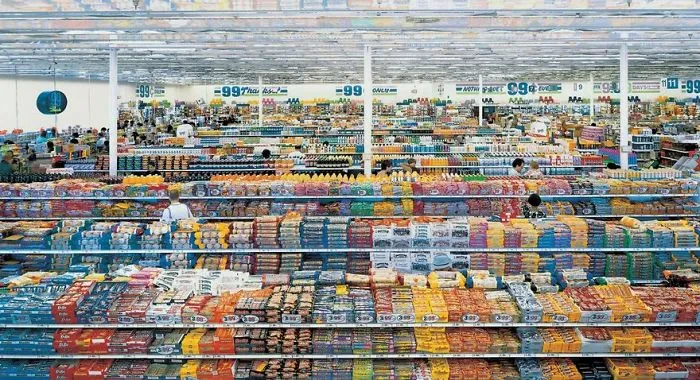
It may seem ironic that a photograph of cheap goods would set a record for the most expensive contemporary photograph ever sold, but Andreas Gursky’s 99 Cent is far more than a visual inventory. In a single large-scale image digitally stitched together from multiple images taken in a 99 Cents Only store in Los Angeles, the seemingly endless rows of stuff, with shoppers’ heads floating anonymously above the merchandise, more closely resemble abstract or Impressionist painting than contemporary photography. Which was precisely Gursky’s point. From the Tokyo stock exchange to a Mexico City landfill, the German architect and photographer uses digital manipulation and a distinct sense of composition to turn everyday experiences into art. As the curator Peter Galassi wrote in the catalog for a 2001 retrospective of Gursky’s work at the Museum of Modern Art in New York City, “High art versus commerce, conceptual rigor versus spontaneous observation, photography versus painting ... for Gursky they are all givens—not opponents but companions.” That ability to render the man-made and mundane with fresh eyes has helped modern photography enter the art world’s elite. In 2006, in the heady days before the Great Recession, 99 Cent sold for $2.3 million at auction. The record for a contemporary photograph has since been surpassed, but the sale did more than any other to catapult modern photography into the pages of auction catalogs alongside the oil paintings and marble sculptures by old masters.
Report
24points
#55 Blind, Paul Strand, 1916
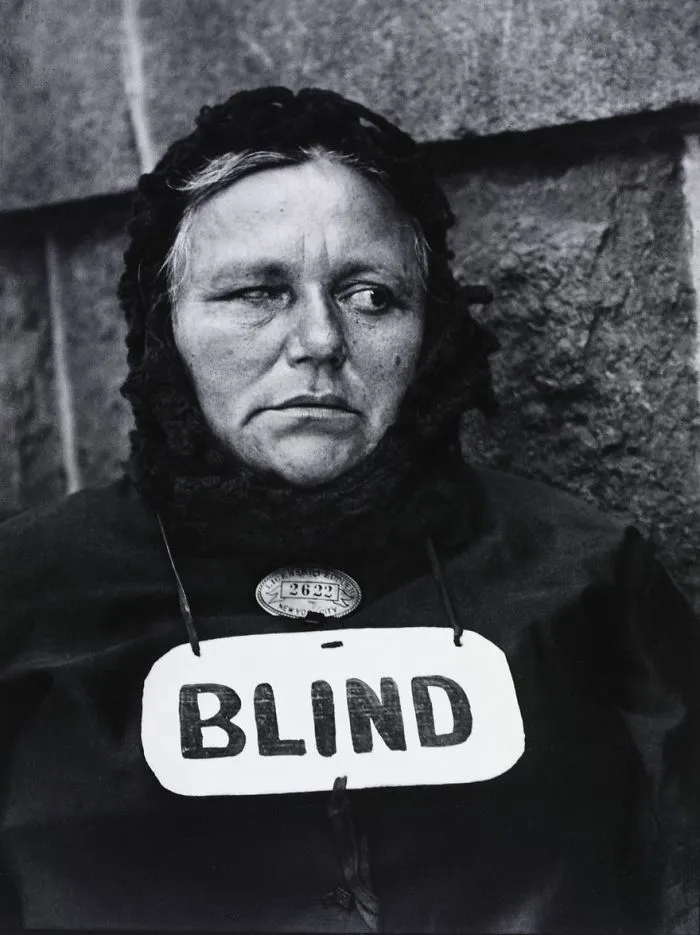
Even if she could see, the woman in Paul Strand’s pioneering image might not have known she was being photographed. Strand wanted to capture people as they were, not as they projected themselves to be, and so when documenting immigrants on New York City’s Lower East Side, he used a false lens that allowed him to shoot in one direction even as his large camera was pointed in another. The result feels spontaneous and honest, a radical departure from the era’s formal portraits of people in stilted poses. Strand’s photograph of the blind woman, who he said was selling newspapers on the street, is candid, with the woman’s face turned away from the camera. But Strand’s work did more than offer an unflinching look at a moment when the nation was being reshaped by a surge of immigrants. By depicting subjects without their knowledge—or consent—and using their images to promote social awareness, Strand helped pave the way for an entirely new form of documentary art: street photography.
Report
23points
#56 The Loch Ness Monster, 1934
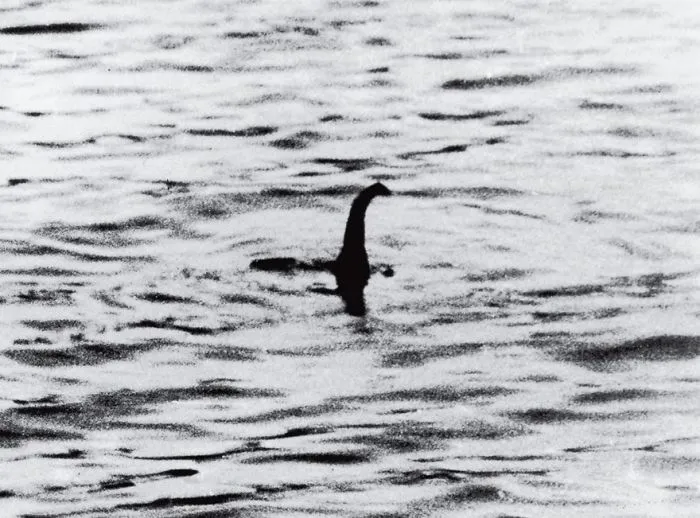
If the giraffe never existed, we’d have to invent it. It’s our nature to grow bored with the improbable but real and look for the impossible. So it is with the photo of what was said to be the Loch Ness monster, purportedly taken by British doctor Robert Wilson in April 1934. Wilson, however, had simply been enlisted to cover up an earlier fraud by wild-game hunter Marmaduke Wetherell, who had been sent to Scotland by London’s Daily Mail to bag the monster. There being no monster to bag, Wetherell brought home photos of hippo prints that he said belonged to Nessie. The Mail caught wise and discredited Wetherell, who then returned to the loch with a monster made out of a toy submarine. He and his son used Wilson, a respected physician, to lend the hoax credibility. The Mail endures; Wilson’s reputation doesn’t.
The Loch Ness image is something of a lodestone for conspiracy theorists and fable seekers, as is the absolutely authentic picture of the famous face on Mars taken by the Viking probe in 1976. The thrill of that find lasted only until 1998, when the Mars Global Surveyor proved the face was, as NASA said, a topographic formation, one that by that time had been nearly windblown away. We were innocents in those sweet, pre-Photoshop days. Now we know better—and we trust nothing. The art of the fake has advanced, but the charm of it, like the Martian face, is all but gone.
The Loch Ness image is something of a lodestone for conspiracy theorists and fable seekers, as is the absolutely authentic picture of the famous face on Mars taken by the Viking probe in 1976. The thrill of that find lasted only until 1998, when the Mars Global Surveyor proved the face was, as NASA said, a topographic formation, one that by that time had been nearly windblown away. We were innocents in those sweet, pre-Photoshop days. Now we know better—and we trust nothing. The art of the fake has advanced, but the charm of it, like the Martian face, is all but gone.
Report
22points
#57 Windblown Jackie, Ron Galella, 1971
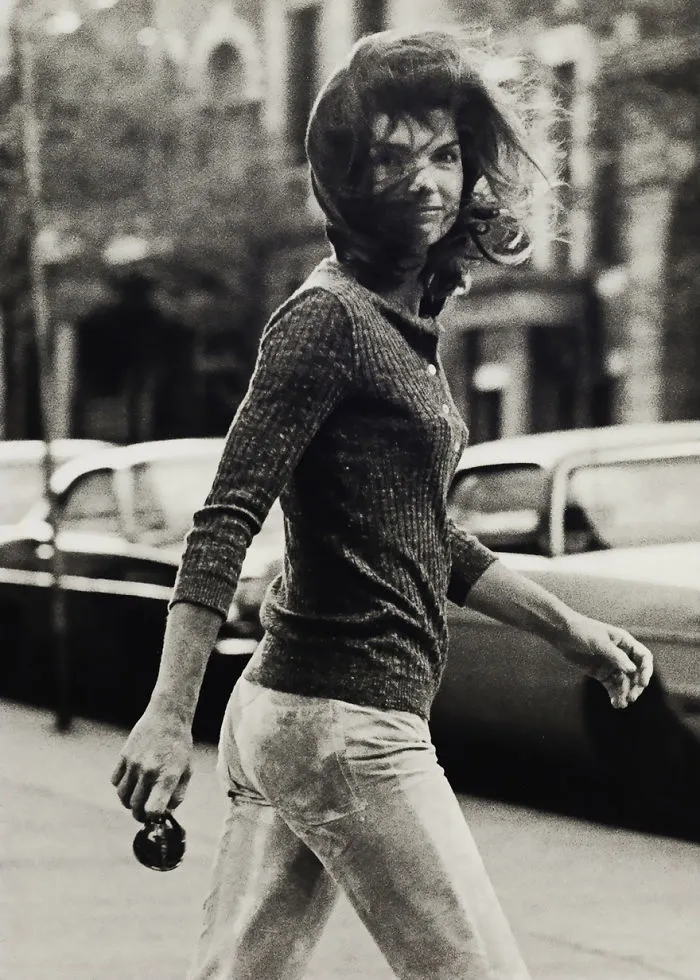
People simply could not get enough of Jacqueline Kennedy Onassis, the beautiful young widow of the slain President who married a fabulously wealthy Greek shipping tycoon. She was a public figure with a tightly guarded private life, which made her a prime target for the photographers who followed wherever she went. And none was as devoted to capturing the former First Lady as Ron Galella. One of the original freewheeling celebrity shooters, Galella created the model for today’s paparazzi with a follow-and-ambush style that ensnared everyone from Michael Jackson and Sophia Loren to Marlon Brando, who so resented Galella’s attention that he knocked out five of the photographer’s teeth. But Galella’s favorite subject was Jackie O., whom he shot to the point of obsession. It was Galella’s relentless fixation that led him to hop in a taxi and trail Onassis after he spotted her on New York City’s Upper East Side in October 1971. The driver honked his horn, and Galella clicked his shutter just as Onassis turned to look in his direction. “I don’t think she knew it was me,” he recalled. “That’s why she smiled a little.” The picture, which Galella proudly called “my Mona Lisa,” exudes the unguarded spontaneity that marks a great celebrity photo. “It was the iconic photograph of the American celebrity aristocracy, and it created a genre,” says the writer Michael Gross. The image also tested the blurry line between newsgathering and a public figure’s personal rights. Jackie, who resented the constant attention, twice dragged Galella to court and eventually got him banned from photographing her family. No shortage of others followed in his wake.
Report
21points
#58 The Hooded Man, Sergeant Ivan Frederick, 2003
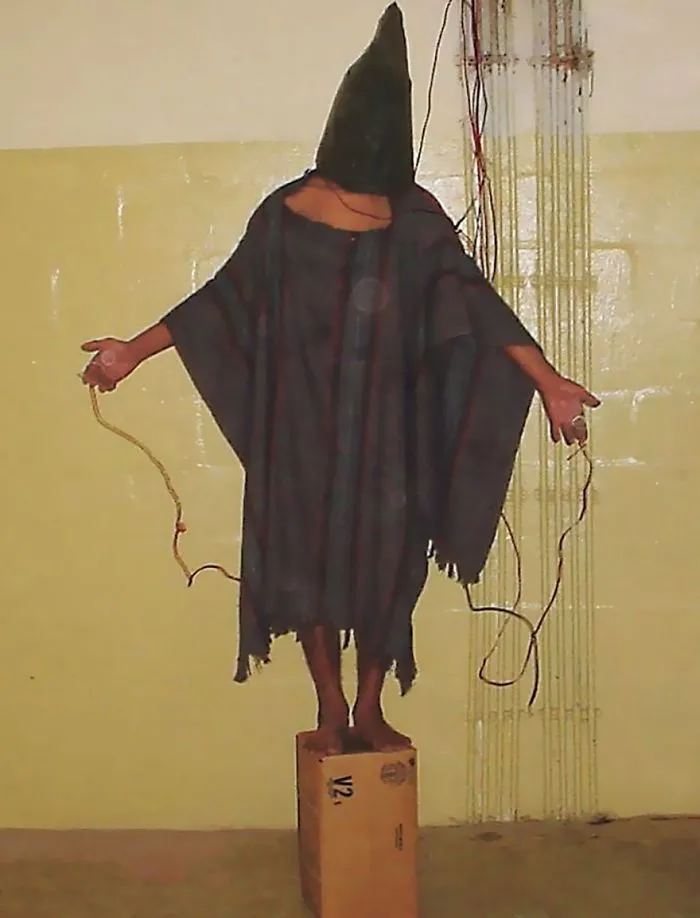
Hundreds of photojournalists covered the conflict in Iraq, but the most memorable image from the war was taken not by a professional but by a U.S. Army staff sergeant named Ivan Frederick. In the last three months of 2003, Frederick was the senior enlisted man at Abu Ghraib prison, the facility on the outskirts of Baghdad that Saddam Hussein had made into a symbol of terror for all Iraqis, then being used by the U.S. military as a detention center for suspected insurgents. Even before the Iraq War began, many questioned the motives of the American, British and allied governments for the invasion that toppled Saddam. But nothing undermined the allies’ claim that they were helping bring democracy to the country more than the scandal at Abu Ghraib. Frederick was one of several soldiers who took part in the torture of Iraqi prisoners in Abu Ghraib. All the more incredible was that they took thousands of images of their mistreatment, humiliation and torture of detainees with digital cameras and shared the photographs. The most widely disseminated was “the Hooded Man,” partly because it was less explicit than many of the others and so could more easily appear in mainstream publications. The man with outstretched arms in the photograph was deprived of his sight, his clothes, his dignity and, with electric wires, his sense of personal safety. And his pose? It seemed deliberately, unnervingly Christlike. The liberating invaders, it seemed, held nothing sacred.
Report
21points
#59 American Gothic, Gordon Parks, 1942
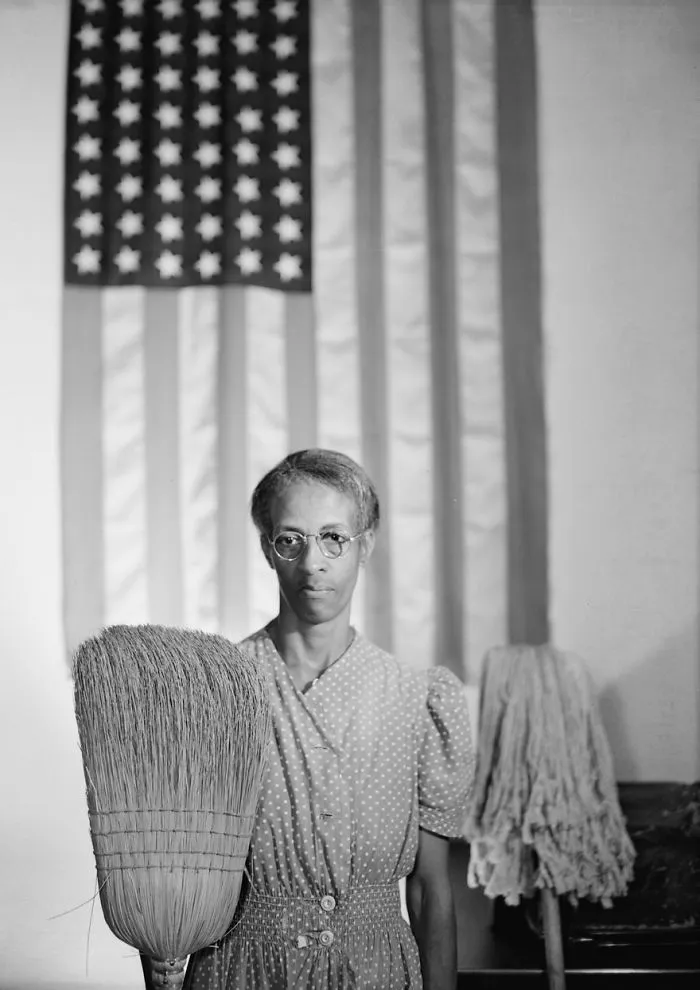
As the 15th child of black Kansas sharecroppers, Gordon Parks knew poverty. But he didn’t experience virulent racism until he arrived in Washington in 1942 for a fellowship at the Farm Security Administration (FSA). Parks, who would go on to became the first African-American photographer at LIFE, was stunned. “White restaurants made me enter through the back door. White theaters wouldn’t even let me in the door,” he recalled. Refusing to be cowed, Parks searched out older African Americans to document how they dealt with such daily indignities and came across Ella Watson, who worked in the FSA’s building. She told him of her life of struggle, of a father murdered by a lynch mob, of a husband shot to death. He photographed Watson as she went about her day, culminating in his American Gothic, a clear parody of Grant Wood’s iconic 1930 oil painting. It served as an indictment of the treatment of African Americans by accentuating the inequality in “the land of the free” and came to symbolize life in pre-civil-rights America. “What the camera had to do was expose the evils of racism,” Parks later observed, “by showing the people who suffered most under it.”
Report
20points
#60 Invasion Of Prague, Josef Koudelka, 1968
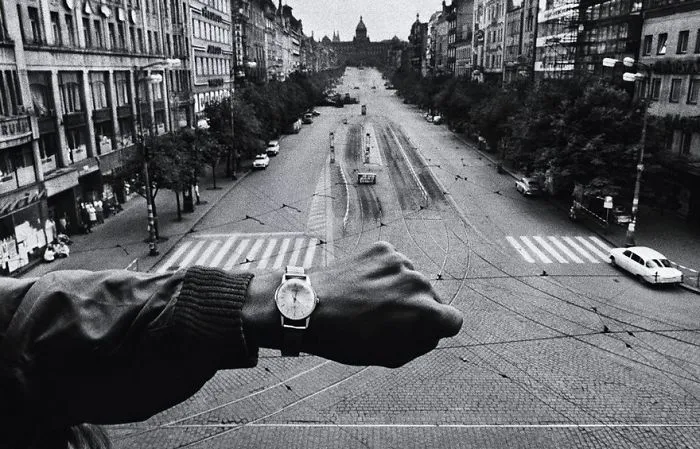
The Soviets did not care for the “socialism with a human face” that Alexander Dubcek’s government brought to Czechoslovakia. Fearing that Dubcek’s human-rights reforms would lead to a democratic uprising like the one in Hungary in 1956, Warsaw Bloc forces set out to quash the movement. Their tanks rolled into Czechoslovakia on August 20, 1968. And while they quickly seized control of Prague, they unexpectedly ran up against masses of flag-waving citizens who threw up barricades, stoned tanks, overturned trucks and even removed street signs in order to confuse the troops. Josef Koudelka, a young Moravian-born engineer who had been taking wistful and gritty photos of Czech life, was in the capital when the soldiers arrived. He took pictures of the swirling turmoil and created a groundbreaking record of the invasion that would change the course of his nation. The most seminal piece includes a man’s arm in the foreground, showing on his wristwatch a moment of the Soviet invasion with a deserted street in the distance. It beautifully encapsulates time, loss and emptiness—and the strangling of a society.
Koudelka’s visual memories of the unfolding conflict—with its evidence of the ticking time, the brutality of the attack and the challenges by Czech citizens—redefined photojournalism. His pictures were smuggled out of Czechoslovakia and appeared in the London Sunday Times in 1969, though under the pseudonym P.P. for Prague Photographer since Koudelka feared reprisals. He soon fled, his rationale for leaving the country a testament to the power of photographic evidence: “I was afraid to go back to Czechoslovakia because I knew that if they wanted to find out who the unknown photographer was, they could do it.”
Report
20points