






Every generation faces its fair share of advantages and challenges, and that will never change. Currently, a growing number of people are concerned about Generation Alpha, kids born between 2010 and 2024, who appear to be struggling with basic skills in school. Reading, writing, math… It’s not looking good.
#21
Children have been allowed to be 'unintentionally distracted'. Parents want to do something such as drive, eat, or talk to each other. So they give the toddler a device to watch. The child has learnt the equivalent of zoning out. Now try and break that learned behaviour.
Young children with devices don't ask their parents "what, why, how". They look it up and believe what they read. A third party (strangers) becomes the trusted source of knowledge. Adults are no longer the role model, the internet is.
Lazy parents, you created this. Now let's see you find a fix. If not, your children will be of very little value to you as you age.
Report
11points
#22
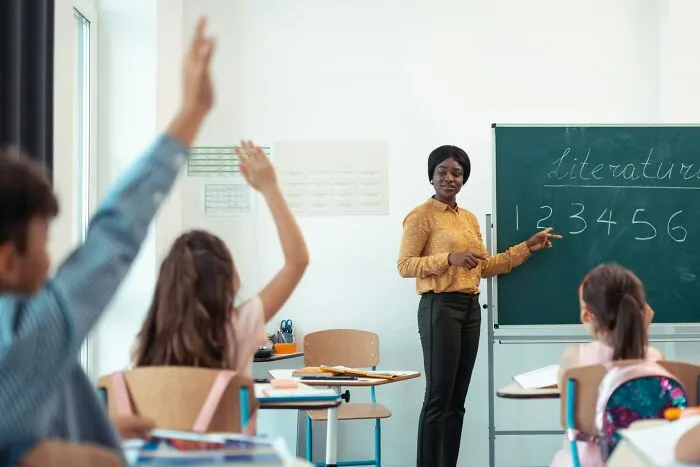
High school teacher here. The oldest Gen Alphas are sophomores and (younger) juniors now, and full disclosure I just finished a year with the worst junior class I’ve ever taught. I agree with a lot of what people are saying in this thread, but the biggest shock for me is something no one else is saying: **how transactional everything has become.**
First, the number of kids who just refused to work and then expected me to figure something out. Students who don't want to work have always existed, but this felt different. It wasn't just laziness, bad time management, or hating school. **It almost felt like I had a lot of students on strike from doing their work.** I'd give out the assignment and then they’d sit back with their hands behind their heads, basically daring me to make them do it. It didn’t matter if the assignment was easy, engaging, or "meaningful"; there was a persistent percentage of the class that just refused to even participate.
When I tried to address it, the dynamic felt like I was a boss meeting with a union leader for contract negotiations. It became incredibly common for them to pitch me "compromises": they’d agree to do one small part of an assignment but expect full credit, or they’d tell me they were taking a break to game for 10 minutes but would "get back to me" after. I remember one pair of girls who regularly sat for *40 minutes* doing absolutely nothing, just waiting to see if I’d "make an offer" to get them moving. And they really sat there doing nothing, occasionally glancing over at me with their hands folded on the desk. When I did speak to them, it was to complain and make demands: sometimes they didn't like the questions I asked on the paper and wanted new ones or maybe they timed me speaking for 7 minutes when I said I would only take 5 and now I owe them that time back.
**Even discipline became transactional.** When I gave a detention, instead of just getting mad or trying to weasel out of it, they’d pull out an encyclopedic "memory" of the school handbook. They were constantly throwing darts at the wall, looking for any loophole to justify why the rules didn't apply to them. There was a lot of tit for tat trying to find the angle to get the kid to do what I wanted them to do but make them feel like I was giving them a special deal. I was flexing my brain every single day having to think like a lawyer while still teaching these kids *and* acting like they're babysitter. Because not only were they making these demands or requests of me constantly, but they were still way academically lower than they should be and their behavior was atrocious on top of it.
And of course, I've questioned if this was just a result of my teaching style or just having bad assignments, but after talking to colleagues, it’s clear they are seeing the exact same thing. And now I'm going to be teaching some of these kids next year (and teaching freshman again, which makes me want to smash my head into a wall) really worrying about all of the little things I need to tighten up, change the language of, or do to just build up barriers of protection around myself. Because the other issue that has come along is now also having to deal with guidance, administration, special ed, and the families holding water for these kids, playing defense over the kind of things that was never ever a consideration before they came along. I've never gotten so many emails or phone calls asking me to change grades, modify assignments, or take back consequences. I guess in some respects it's making me a better teacher, but this is not what I signed up for. And I do wonder what exactly went on in these kids' lives before they got to high school that produced this attitude of everything getting to be debatable or flexible for them.
Report
11points
#23
Obligatory 'not a teacher but' I am a Girl Guide leader for the past 4 years.
I saw the helplessness people have talked about first hand. It is BAD.
At camp, with girls 10-12:
"I want a peanut butter and jam sandwich. "
'Okay, go ahead and make one, there is the stuff.'
"I don't know how. "
'Have you had a sandwich before ? What did it look like ? Try to re-create that.'
I then proceeded to watch as this girl, 11, sloooooowly worked out what steps she needed to do to take bread, peanut butter and jam.... and turn that into a pb&j. Props to her, she did it.... but my gawd did it make me wanna scream, or do it for her, neither of which would be helpful.
And I fully admit, it is easier with other peoples children. If it were my own kid, I would have been MORE tempted to just make the sandwich myself.
This also carried over to many other tasks: " I don't know how to wash dishes. I don't know how to find my own sleeping bag. I don't know where my mom packed my pajamas."
Our first couple camps were hard, but now, the girls that have been there a while get it, and the new ones catch on from the senior girls.
So, there is hope. Keep pushing these kids, they are still smart, they just need to be MADE to think.
Report
11points
#24
It looks like students using ChatGPT for even the most basic assignments. Even asking them to do something personal and creative gets me AI generated answers.
Report
10points
#25

Teacher for German high-school here (Gymnasium). For me it really is not the reading, writing or math skills. While orthography is horrendous, it's been that way with young children for a while now. The main issue is the inability to deal with problems. Solving a task with some unknown components. Figuring out a way to a solution. Things like this. I've always liked to do projects across multiple lessons where "researching" parts of the solution was necessary. Nowadays I'll put a wiki next to the project tasks from which they are to extract those things they are to research. It helps a lot, but some students are still unable to grasp the idea of "i don't know, so I'll figure it out" and just give up.
Report
10points
#26
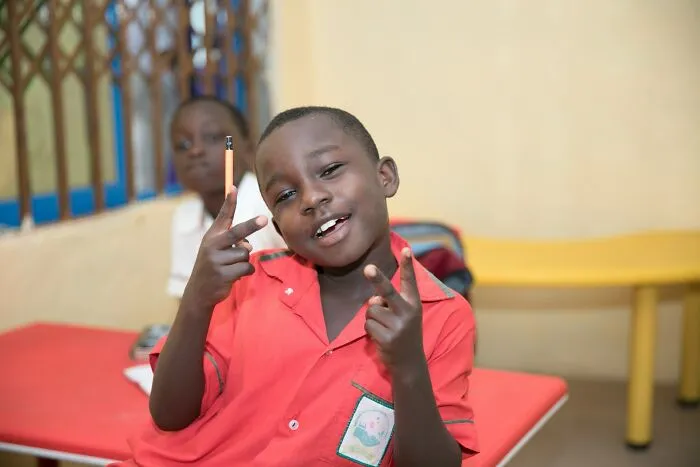
Yes, but what’s more concerning to me as a Gen Z teacher is the lack of independence. They will shut down if their hand is not held through every step. If I say I’m not going to help and I want them to try and figure it out on their own, some will cry. 14 year olds crying.
The TikTok sound stimming is also crazy. Kids SCREAM in the classroom. Yes, we were loud as kids, but would never scream. Just constant TikTok sounds on loop while they’re working. “We are Charlie Kirrrrkkkk” “FAAAAAHHH” “Oh heeeelll nooooo” “Tung tung tung tung tung tung” neverending… neverending. .
The TikTok sound stimming is also crazy. Kids SCREAM in the classroom. Yes, we were loud as kids, but would never scream. Just constant TikTok sounds on loop while they’re working. “We are Charlie Kirrrrkkkk” “FAAAAAHHH” “Oh heeeelll nooooo” “Tung tung tung tung tung tung” neverending… neverending. .
Report
10points
#27
Was on the tube the other day with a lot of 15-20 year olds. We had all just left a concert so there was no reliable WiFi and phones were low on battery.
No one could read the tube map. No one.
When I started giving people directions (I’m local and I love maps) people couldn’t follow more than two steps.
It’s terrifying how little people can do on their own now. .
No one could read the tube map. No one.
When I started giving people directions (I’m local and I love maps) people couldn’t follow more than two steps.
It’s terrifying how little people can do on their own now. .
Report
9points
#28
Director of a program that hosts young school age children up to third grade in the summer here.
12 of the 22 children enrolled in the school age classroom have learning challenges, half of which with formal IEPs and half that are apparent yet not officially represented in a learning plan.
The handwriting and general early literacy skills of these children are atrocious and frightening. 3rd graders who cannot reliably spell simple CVC words or basic, first 100 HF (high frequency) words are shockingly common. Very few of them are able to read basic, beginner chapter books such as Henry and Mudge, Frog and Toad or Amelia Bedelia, etc.. General fine motor skills and problem solving skills are also wanting in many of them. Some of these children struggle to focus to complete simple board games or learn and retain the rules of games they enjoy but need a lot of adult support to successfully play.
Not to bemoan how things "used to be" but I distinctly remember our final spelling test in first grade included words like "elephant" and "giraffe" and we were expected to recognize and write most foundational high frequency words (we had parents who came in to help us write little stories of our own in a writer's workshop type set up that got put in the classroom library) and the teacher regularly read books with complex vocabulary (his favorite word was "pandemonium"). We were taught to check out and return our own books at the school library, memorize our lunch code and bus number and color card (#264, Magenta) among so many other things.
The younger generation is not inherently less capable though. The children in the school age room love hearing complex chapter books and understand the storyline well. They are imaginative and creative but often dont know how to express themselves. They are empathetic and much more inclined to include and not judge other children. Something has changed and it is holding children back from learning critical capacities to be lifelong learners and to enjoy learning and reveling in pushing their abilities to the next level.
Report
9points
#29
Middle school math tutor via government program.
Granted I tutor low performers provided by the school, I have students that vary in proficiency. Here's a non-exhaustive list of things I've encountered over the past 6 months alone:
Some students dont know numbers past 10.
Use their fingers to count and for operations (not a huge problem but also kinda shows that they're unable to process it mentally)
Cannot do any operation involving 2 double digit numbers or higher
Some think that x = is a constant, being the same number for different problems
Not knowing 1-10 multiples
Struggle to solve expressions when the variable is given (ex: (4x + 24)/11, x = 5)
Word problems scare them (fair)
Anything involving linear equations and quadratics (y=mx+b, y=x², etc.)
I can go on...
Report
9points
#30
My wife as a teacher.
1) Yes, kids struggle with basic literacy
2) it was a problem 10 years ago as well, just ignored
3) the issue is now hitting high school graduation ages so it’s coming into focus now
4) everyone is at fault. Bad parents, bad teachers, bad policy, bad leadership
It’s societal more than anything, we’ve let standards drop to appease the dumb and then are upset when we see the impacts.
Report
9points
#31
I've said this a lot, but I will say it here too. I think the fact that kids don't have to watch only what "is on" is doing them a disservice. I learned a lot from educational TV growing up. I had no control over what was on TV. One day it might show me how an airplane works. Another day it might be a documentary on different types of glue (yes I saw that, seriously). Nowadays, you search for whatever you are already interested in and the algorithm reinforces that. You don't see as many different things. On YouTube you need to know what you are looking for before you can find it. Therefore, you are exposed to fewer new things.
I was born in 1980 for reference. I'm old. Now get off my lawn, you punks!
I was born in 1980 for reference. I'm old. Now get off my lawn, you punks!
Report
9points
#32
I am not a teacher but I am a parent of a child going into second grade. My daughter has always had clear boundaries of right vs. wrong, we are working on feelings constantly, and she loves to learn. Now I graduated from high school in 2007 so maybe my memory is a little bit rusty but the amount of little treats and prizes she gets from school are insane. Every week in Kindy and 1st grade she brought home something or told me how she got to sit at a special table during lunch where she and just a few other kids were given popsicles. I completely get where the teachers are coming from.. Reward the good kids and hopefully it will push others to get in line but it really is quite shocking just how many special things she gets. I feel like teachers are at their witts end trying to make the classroom run as smoothly as possible.
Report
9points
#33
They can’t finish their times tables. many of them give up. even after finishing more than half of it. “i forgot the rest”
some can finish within 10+ minutes.
a bit more in 5+ minutes.
My own PR is like 1m56sec as an adult math teacher. a few kids can do it in 2+ minutes.
I have a lot of friends from a lot of different backgrounds. Being able to complete the times tables (or even doing multiplication sprint sheets) was something we got actively trained in. I teach 10th grade and by the time they get to me, a lot of them cannot complete their times tables. It’s crazy to me but I try to teach them the pythagorean theorem and the quadratic formula anyways (while trying to improve their mental math skills). .
9points
#34
My friend has many 6th grade students that can’t read. Couple that with just putting your name on an assignment (and not doing any of it) is an automatic 55%. Oh yeah, and everyone passes.
Report
9points
#35
I’m back in college as a 41 year old and I’m doing a summer literature course right now. We have weekly discussion boards and last week the average grade was 2.6/10 because 90% of the class didn’t read the directions. We had to pick a specific prompt to respond to and most just wrote about the lecture generally. The prompt involved quoting a passage from the weekly readings and writing 100-150 words about it; the class is not difficult at all.
Not being able to follow basic instructions has been a consistent problem with my younger classmates.
These are Gen Z kids, I imagine the problem is much worse with Gen Alpha.
Not being able to follow basic instructions has been a consistent problem with my younger classmates.
These are Gen Z kids, I imagine the problem is much worse with Gen Alpha.
Report
8points
#36
If a math problem requires more than two steps, 80% of the class just completely blanks out.
Report
8points
#37
Teacher here in Europe:
Reading is not bad, but the ability to read longer parts takes a lot more work. Reading 5 pages can seem like a huge struggle. (well, for me as well... I used to be getter at it!)
Writing suffers a lot from the "I just paste into AI"
Kids are not stupid, but they need help to learn to focus. Its a bigger challenge in classes as science and masth where you sometimes need to failæ a few times before you get the concepts.
That said, practical teaching (experiments) and doing things without screens WORKS!
I have done a math class for year with no computers. The kids were frustrated in the beginning, but then they started getting results. And drawing on paper and working on paper ended up really upping their math skills a lot!
Report
8points
#38
I’m a former daycare teacher, it starts young. 4/5 year olds hated story time and hated “reading” even more.
Report
8points
#39
Teacher in Sweden and it's pretty freaking bad here too. Parents have failed their kids by not having them read more at a young age, instead they gave them phones and social media.
Report
8points
#40
English Teacher at a Sydney public school- I have started teaching since 2018 and I have noticed its gone worse, like reading and comprehending short one page texts is too much for them, like we need break them down into paragraphs just so its easier to comprehend what they are reading. Also with their writing, we have given students heavily guided scaffolds with sentence starters and examples but it seems its too much for them. I actually get worried how kids are going to be in the next 5 years.
Report
8points