



#1
There's a slow shift towards going back to paper and pen, the schools that have done this have shown drastically better results. I do paper assignments and my kids do better than the kids in classes where it's tech driven.
Generation Alpha, which succeeds Gen Z, has been deeply immersed in technology from birth. It’s estimated that, with increases in life expectancy, some members of Gen Alpha are likely to witness the dawn of the 22nd century.
An overdependence on tech, short attention spans, and a lack of interest in learning are all concerns that people have about this generation.
Specifically, what’s seen as very worrying is the relationship that Gen Alpha has with education and learning, and how tech is integrated into both.
Smartphones. Social media. Artificial intelligence. Screen time. It's all a mess.
#2

Kids can’t read well, and if they can it’s only short paragraphs. They struggle with basic instructions when they’re written without constant support and repetition. Even in my “honors” classes, the average reading level was at least 1-2 years behind.
Now, I will stress that there were absolutely some phenomenal and very bright students in my classes in recent years. But that number has gone down consistently over the past decade.
Curriculum is being dumbed down at a systemic level to push kids through to graduation.
#3
Then there are kids who break down in tantrums over the least little thing. Those who just say "no" when told to do an assignment. Second-graders who wander around the classroom writing swears on every surface. Kids who purposely kick other kids on the playground then gleefully run away.
You can't say no to the kids. You can't send them to the principal's office. There are no consequences for any of their actions. You either coddle them or you lose whatever imaginary control you have over the classroom. Every single classroom is dragged down by the kids with emotional problems that are impossible to solve.
“There's been a noticeable shift in student engagement and accountability. Many students today appear apathetic and disconnected from their own learning, and it's not simply a matter of motivation—it's systemic,” teacher Elizabeth McPherson told Newsweek.
“When students learn that minimal effort still yields promotion and that they can be chronically absent without consequence, they stop seeing the value in showing up—mentally or physically.”
Meanwhile, NYT bestselling author and digital creator with a background in teaching, Matt Eicheldinger, noted that commonplace smartphones and social media use have increased the burden on teachers, counselors, social workers, and admin staff.
#4

#5
#6
Its the parents and people in charge’s fault. EVERYTHING is done on Chromebooks so they genuinely never develop writing skills. In the middle schools, on the rare occasion that they have to read a book, they’re given an audiobook option in case actually reading feels like too much work.
No child left behind means that kids who are a year behind in learning development are still pushed onto the next grade. My dad literally isn’t allowed to fail kids - if they refuse to do an assignment, they still get a 55. When they email parents about their kids’ situations, the parents either say its the teacher’s fault or that they’re too overworked to deal with it and it isn’t their problem. And the state requires so much standardized testing that they’re forced to spend much of the year doing test prep and don’t have time to actually tailor the curriculum to the kids’ needs.
The students are, frankly, incredibly lazy, bordering on illiterate, and do not care. But that’s a result of the environment they’re in now.
According to McPherson, technology has its upsides, too, not just downsides. On the positive end of the scale, powerful tech gives students unlimited access to knowledge.
“That's a gift. But with that gift comes a cost: instant gratification. And that makes it hard for students to commit to learning processes that are slow, complex, or challenging,” she told Newsweek.
Meanwhile, Eicheldinger pointed out that students are struggling to control their impulses when it comes to tech use. They struggle with trying to play games all the time and find the need to constantly touch their digital devices.
“We had students who would sometimes be on a screen their entire learning day and then go home to 4-5 hours of additional recreational screen time.”
#7
#8
At least here, parents have a tendency of giving them screen time for most of their non school time. They rarely read to their kids and hardly have a conversation. Those kids struggle to retain any form of information. Meanwhile the kids who grow up reading as a daily routine with their parents at bedtime pick up our phonics program much faster. This year only 2 of my 10 students finished kg with a full understanding of our basic phonics program and are able to decode. The rest struggle to pronounce vowels and blend two sounds.
Its clear as night and day. The 2 kids that do read also can tell me what their parents do for work and where they are from. They ask questions and are generally curious kids. The other 8 couldnt tell me the what their parents do, and some of them couldnt even tell me what country/city they are from. They dont want to know why fire is hot, they just want to be told it is.
#9
What it looks like concretely: students who can produce a polished essay overnight but can't summarize it aloud the next morning. The polish is up, the ownership is down. And the fix every teacher I know is converging on is the same: make the live, unassisted moment the thing that counts, because it's the only thing left that can't be outsourced.
“We need to bring back accountability. We have to rethink the curriculum and how we deliver it. This generation is different, so the same strategies from decades ago simply don't work anymore. We need more hands-on, student-centered learning experiences—projects, discussions, simulations, real-world applications,” McPherson said.
"It's not about abandoning tradition—it's about adapting it. We need to be willing to reimagine what school looks like. And that reimagination should start with the people who are in the classroom every day—teachers—and the people we serve—our students.”
#10
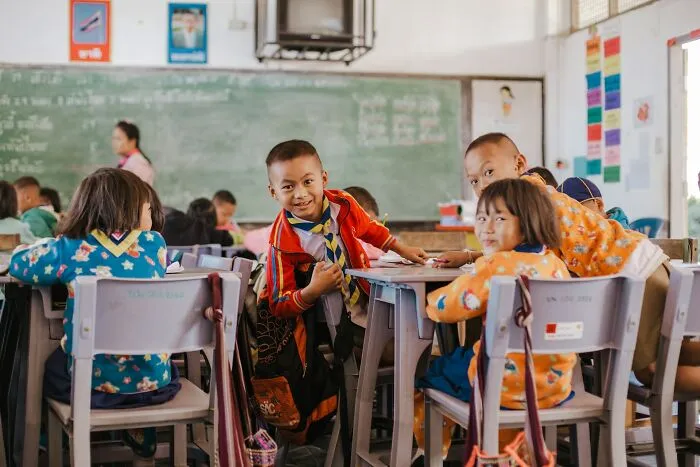
They refuse to Think.
I've literally had kids in my class not doing any work. When I asked them why, they said, "I don't have a pencil." I reminded them that I gave them one when I handed out the assignment, and they said, "But I don't have one."
I asked them to see if maybe they lost it. Again, no. I told them to look around their desk. Lo and behold, the pencil was 6 inches from their shoe in the aisle.
This is not a one off. I ALWAYS hand out pencils/ supplies with the assignment. EVERY DAY. Multiple kids, so so many times, choose not to do basic problem solving skills. It's mind boggling.
#11
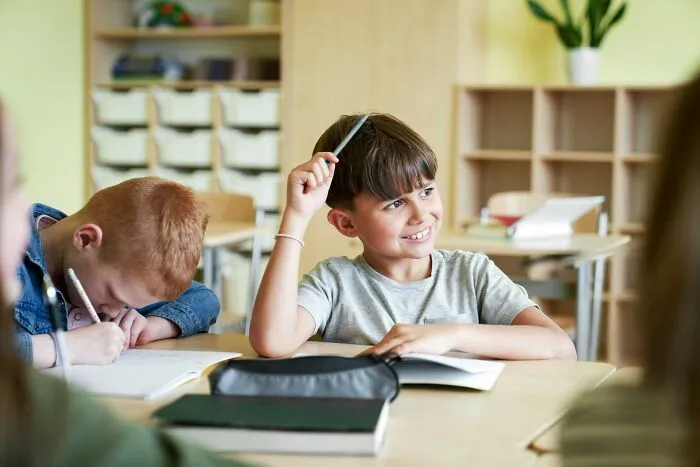
#12

And it wasn’t just one or two that may be struggling with dyslexia or other learning disabilities - it was all of them. Scary and sad stuff.
What’s your experience with Gen Alpha kids, Pandas? What are the biggest strengths and weaknesses that you personally believe this generation has?
Meanwhile, what do you think the older generations struggled with the most when they were young?
Whether you work in education or not, we’d like to hear your insights. Share yours in the comments when you’ve finished reading these teachers’ tales.
#13
#14
The major issues I've seen appearing have been
- dramatically reduced attention spans, particularly when watching films or longer reading. Eg the film Holes is studied and it's a slog getting students to pay attention and retrain what they watched.
- spelling remains consistent however grammar and punctuation has gotten worse. Run on and fragment sentences galore.
- having empathy for characters is slower to develop. I would normally see it in 80% of the class by year 9 now it's year 10 onwards the majority of students understand character motivation and empathy at any decent level.
- a decline in problem solving, not when applied to complex problems but general trouble shooting or finding a solution to small issues. It's almost a base level learned helplessness.
- a decline in personal responsibility eg homework in on time, remembering the correct items. Typically these issues disappear in senior years but still remain.
- rise of right wing extremism in general conversation and discussion. Asking for their evidence beyond trust me bro works in making them question their beliefs.
It's not that they can't read. It's a much more complex issue. I have also found a lack of basic domestic skills from families. Such as fixing small tears or lost buttons on uniforms, getting stains out of uniforms, cleaning shoes or belongings. In the early 2000s as a older teen I was responsible for my school uniform and I just don't see that now.
#15
Some of them openly challenge the textbook/disagree with it and called the professor a quack (he is the head of the department and working on his own textbook) and it’s genuinely so disturbing.
I asked them how they decide who is an expert and they also spoke about who is right the most or watching over time etc and not one of them said because of credentials or a PhD. That may not seem egregious but they had been dismissing some of the textbooks authors 50+ year long niche careers, countless foundational research contributions, and scientific innovations, while in a university level science course.
They framed everything as left vs right politically and while it’s great they’re looking to be politically engaged, this particular area of study has far greater nuance than this framing, and to paint the theory we’re learning and it’s experts as black and white or always up for debate hurt to hear.
One of my professors says it’s learned thoughtlessness. Ugh
Edit; after reading many comments I want to add that I believe this issue has roots in the fact that being an active engaged parent isn’t common. People just want to shut up their kids and go back to their phones/tablets themselves and disconnect from the very scary reality of the world right now. Plus with the pushback for birth control and all the right wing bills and propaganda against education….ugh. I’m scared to see the direction of the workforce and job market. It’s already so different from how it used to be. Degrees and training used to mean something. Now a bachelors is barely enough for an entry level job, but the price keeps going up. We need things to change.
#16

#17

Math is the worst. The approaches taken in explaining how numbers work was messed up for a while, and whereas memorizing may not be good for reading, doing so for things like times tables is very helpful. More importantly, theres no “number sense” and just panic anytime there’s numbers involved. Theres no “yeah that’s about right” and then doing the work to get it exact. I had a student put 1+0 into a calculator this year because they panicked anytime numbers were around. Math has always been an issue, but never like this. There’s no concept of how to approach any type of problem, it’s always a “let’s throw everything at the wall and maybe something will stick”.
Theres a LOT of work that needs to happen. We are passing kids through because the worst thing possible would be to keep them back, apparently. But they are failing and still graduating where they are functionally illiterate and can’t do basic math. It needs to start very early on, we need to hold kids back who can’t read or do math on grade level, like second or third grade, and not worry about hurting their feelings or what the parents would think or whatever.
#18
There's still some high flyers out there and the main difference is that their parents limit screen time and encourage reading.
#19
#20