





#1
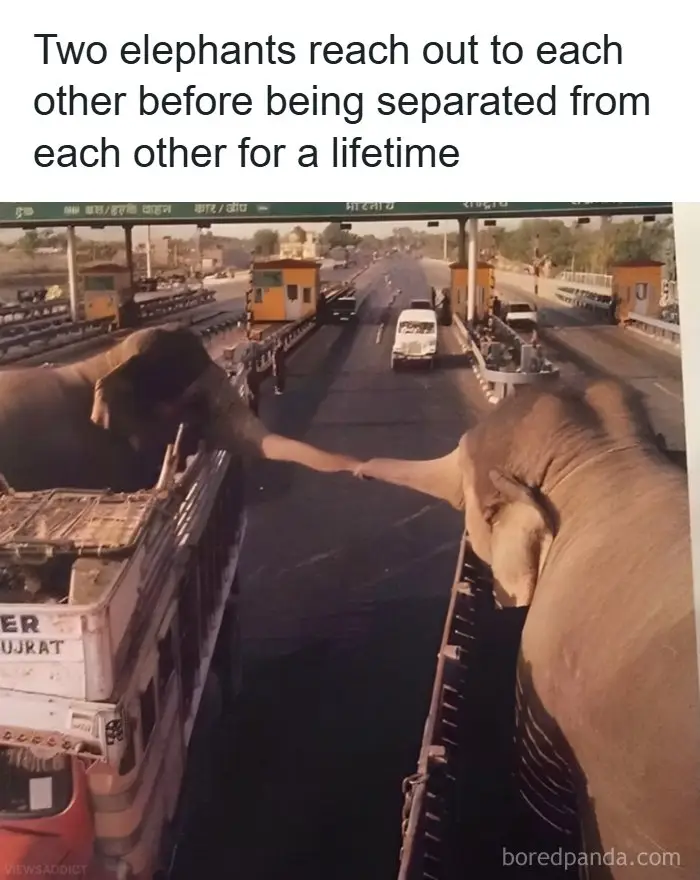
Elephants are among the most social and emotionally complex animals on Earth. At the heart of their lives is family, a tightly knit group led by a matriarch, where every member plays a role in caring for and protecting one another.
It’s well known that elephants value their family structure, perhaps more so than many other animals. Calves depend not only on their mothers but also on “allomothers,” relatives who help raise and guide them. Older elephants pass down knowledge of migration routes, water sources, and survival strategies. These bonds are more than practical, they are deeply emotional.
When elephants become separated from their families, they often experience profound distress. Researchers have documented signs of grief, from elephants lingering near the bones of deceased relatives to their mournful trumpets when a calf is taken away. Their sadness and pain reveal the depth of their attachments and highlight just how central family is to their existence.
#2

One night outside a karaoke bar, two men jumped him and beat him unconscious.
He woke up a completely different person. The world around him was no longer normal, everything he saw was made of geometric shapes and mathematical patterns.
Doctors diagnosed him with Acquired Savant Syndrome, a rare condition where brain trauma unlocks extraordinary abilities hidden inside the human brain.
Jason went from cheating on every math test to writing a book, giving TEDx talks and selling his mathematical fractal artwork worldwide.
Fewer than 100 people in the world have this condition. Makes you wonder what’s lying dormant inside your own mind.
#3
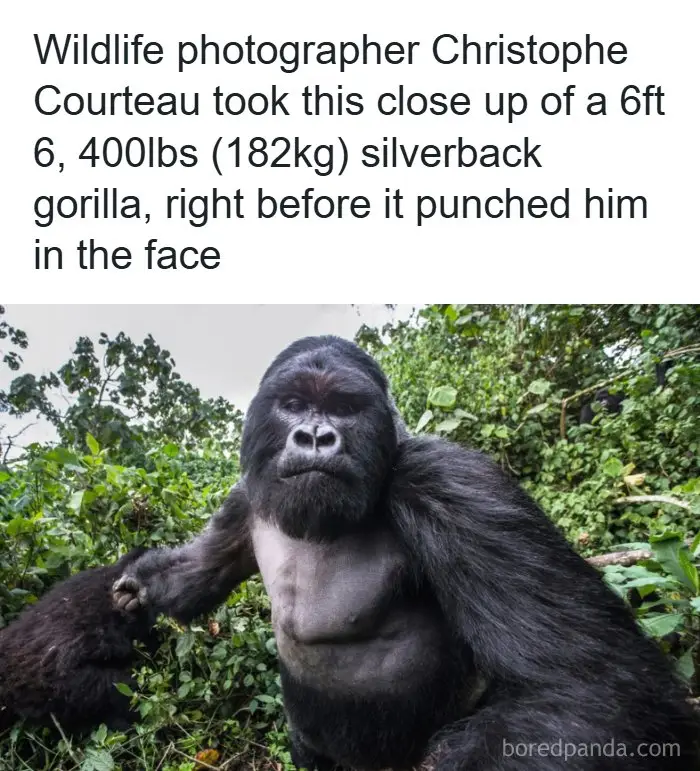
Christophe was punched at the Kwitonda gorilla group in Volcanoes National Park, Rwanda. Akarevuro, the silverback gorilla, was said to be intoxicated (drunk) from fermenting bamboo stems and became angry when he spotted the cameras.
Curiosity about your current environment, the past, and the world is what helps you survive and thrive. And yet, curiosity, as a whole, is a psychological phenomenon that remains poorly understood, despite being such a fascinating subject.
According to researchers Celeste Kidd and Benjamin Y. Hayden, who studied the psychology and neuroscience of curiosity, one reason we struggle to understand curiosity is “too much focus on delineating what is and is not curiosity.”
#4
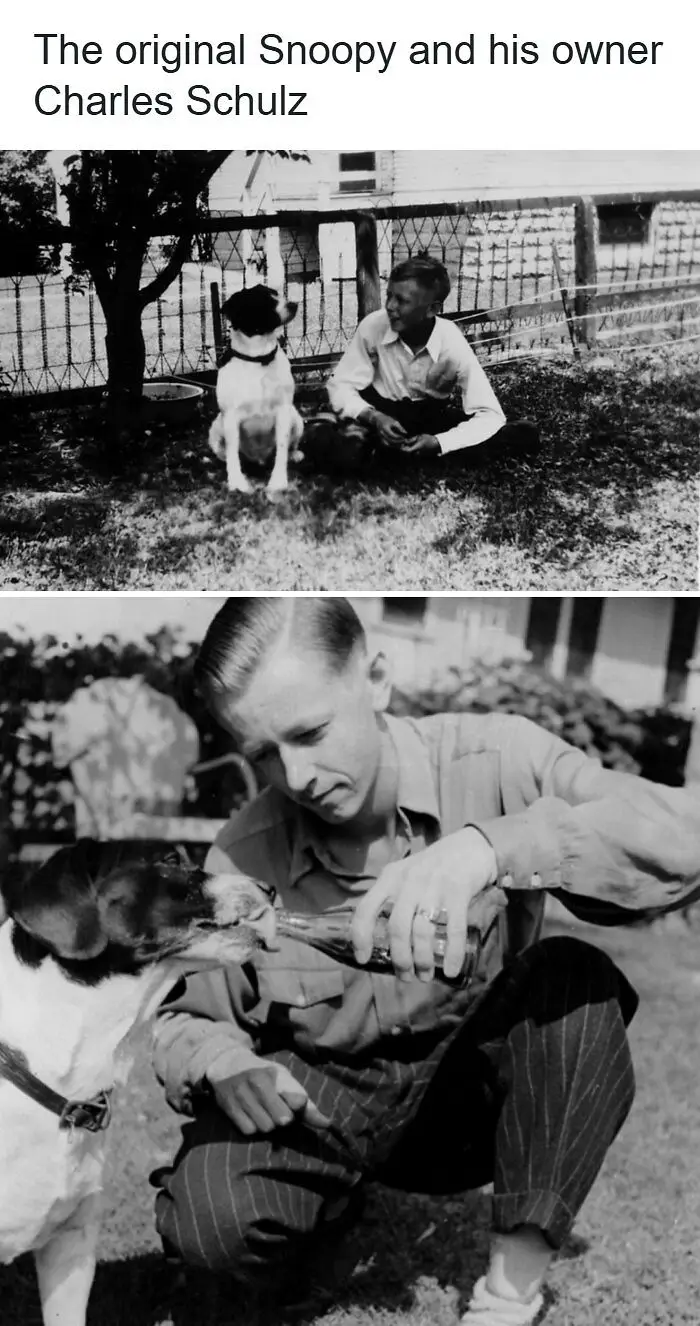
In the first picture is Charles Schulz and his dog Spike in 1935, when Schulz was 13 years old.
You can see Charles Schulz in Minnesota sharing a “pop” with his beloved childhood dog Spike (who had a notoriously strong stomach). Schulz would later pattern Snoopy’s appearance after Spike, and the dog’s behavior became the inspiration for some of Snoopy’s cartoon antics—perhaps even his love of root beer.
“Spike was the most intelligent, the wisest dog | ever knew. He had an amazing vocabulary, of words he understood. I could tell Spike to go down in the basement and bring me a potato, and he’d do it. We had long talks, he was a great listener. He was just plain smart, and the best friend I ever had.” — Charles M. Schulz, 1969.
#5
#6

Eliasch’s goal was to preserve the area’s biodiversity and raise awareness about the need to protect the Amazon. While the purchase sparked debate in Brazil about foreign ownership of rainforest land, it remains one of the most notable private conservation efforts in the region.
The researchers argue that broadening the scope of inquiry into curiosity allows for the study of information-seeking in non-human subjects, such as monkeys, rats, and groundworms.
“Animal techniques allow for a granular view of mechanism, allows a greater range of manipulations, and allows cross-species comparisons,” Kidd and Hyden write.
Meanwhile, a broader perspective on curiosity allows researchers to study its relationship with reward and learning, rather than trying to study it in isolation.
#7
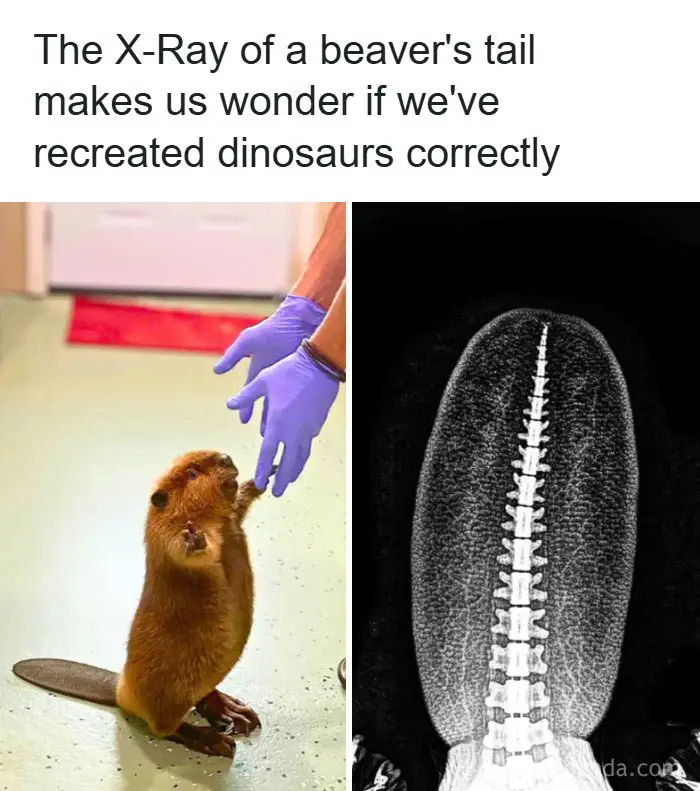
This illustrates a major challenge paleontologists face when reconstructing the bodies of extinct animals such as dinosaurs. Fossils usually preserve only bones and, in rare cases, impressions of skin or feathers. The muscles, fat, colors, and unique adaptations that shaped how these creatures looked and lived are often lost to time. Without modern beavers as a reference, one might wrongly assume they had thin, rat-like tails. Similarly, many dinosaur reconstructions have changed over the years as new fossil evidence revealed feathers, soft crests, or body shapes that were invisible from skeletons alone.
Rebuilding extinct animals is therefore a blend of science and imagination. Bones give us the framework, but the living creature, the texture, the weight, the vibrant adaptations, requires careful inference and sometimes a bit of guesswork. The beaver’s tail reminds us that even the strangest features of life often lie hidden beyond the bones.
#8
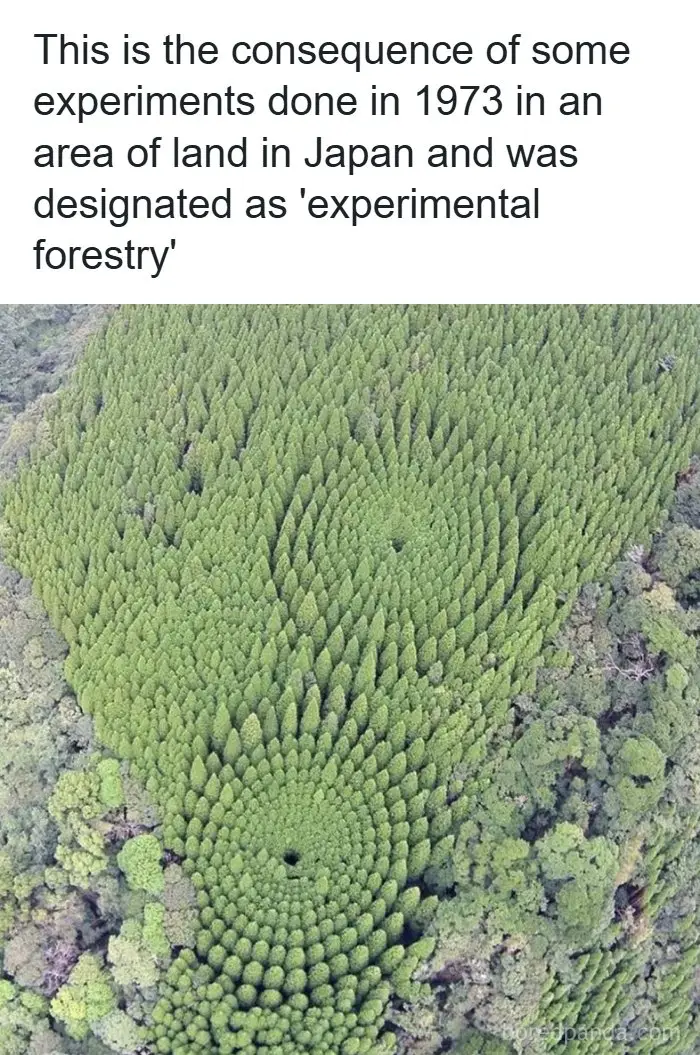
As you can see from today’s images, the forest has taken on this bizarre shape because there are the same number of trees in each ring, but each ring is smaller as you get closer to the center. It is very noticeable that the trees closest to each other are smaller, while those on the outer rings are significantly taller with a larger crown diameter.
Trees, as living beings, grow smaller when they are closer together, this happens due to the lack of space; furthermore, plants sense the presence of other plants near them and therefore grow according to the space they have available.
#9
Broadly speaking, curiosity allows human beings and other animals to:
- Activate learning systems
- Drive informative options and actions
- Improve performance
- Yield fitness benefits
“Although information is intangible, it has real value to any organism with the capacity to make use of it. The benefits may accrue immediately or in the future; the delayed benefits require a learning system,” the researchers explain.
#10
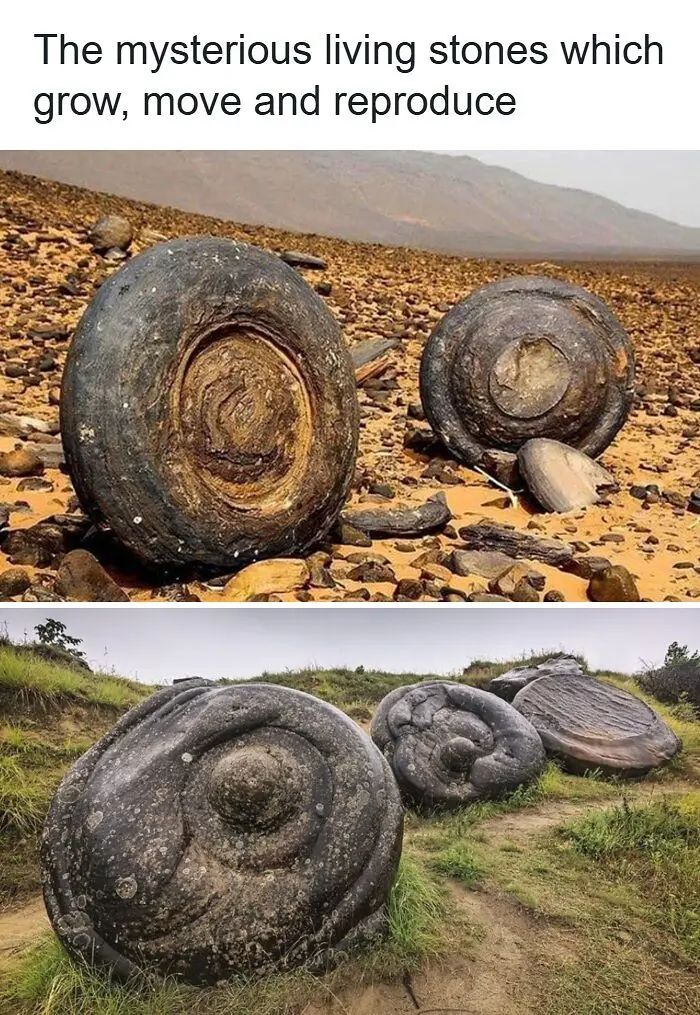
Starting out as pebbles and growing at about 2 inches (5 cm) per millennium, the ‘trovant’ stones are unique mineral structures that mimic plant and mammal life. The bizarre shaped stones almost appear to grow in the same way as plant tissue and they give ‘birth’ to new stones just like an animal.
Located primarily in the small Romanian village of Costesti, but also can be found in Lybia’s Kawakeb Valley, which is part of the Kafra region, the Trovants are not a typical rocks. Ranging from a few millimeters to as large as 10 meters (0,11 inches to 394 inches) these stones, after a heavy rain, appear to grow, expand, and sometimes even sprout new formations.
They are made of a hard stone in the heart, which as it goes outwards takes on the characteristics of a particular alloy similar to cement, or sand, which reacts with rainwater. This characteristic allows them to “multiply” and “move”. The minerals in rainwater form a reaction within that builds pressure inside, which makes the rock grow, move and multiply.
When they were sliced in half, they revealed concentric rings similar to those found in trees, each representing a period of growth.
Although they are not alive in the scientific sense, they are described as “alive” because of the way they appear to change over time, moving and giving rise to small rocks that resemble offspring.
Trovants were dubbed the “alive” and “moving” stones for these reasons.
#11

#12
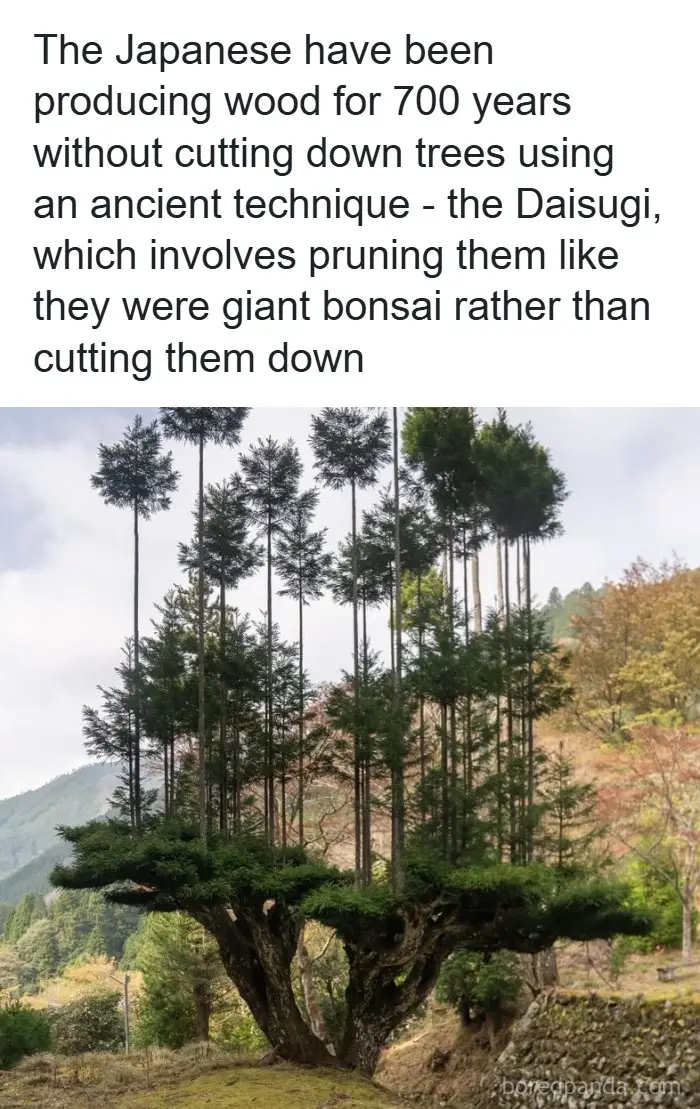
This method involves growing multiple straight, knot-free cedar trees from a single, existing tree by pruning and shaping the branches to encourage vertical growth. This allows for a sustainable harvest of timber without cutting down the original tree, making it a method of “growing trees on trees”.
What do you think, Pandas? What ideas spark your curiosity the most? What topics are you most excited about?
Generally speaking, how much time do you find every day to apply your curiosity to learning new things about the world?
What’s something new that you learned this week that you’d like to share with everyone else?
Tell us what you think in the comments.
#13
#14

DeFriest possessed extraordinary abilities, a photographic memory, mechanical genius, and an uncanny talent for replicating keys after just a glance, sometimes using only items like toothbrushes or scraps of metal. These gifts helped him repeatedly outwit prison security, which only led to more time and harsher punishment. After his multiple escapes by replicating keys using his memory, he earned the nickname of “Houdini of Prison.”
Most alarming, he was sent to prison despite four out of five doctors deeming him mentally unfit. The system ignored his autism and instead treated him as a dangerous escape artist. He spent much of his sentence in solitary confinement.
His story, brought to light by the 2014 documentary The Mind of Mark DeFriest, has become a powerful example of how the justice system can fail those with mental illness, punishing brilliance rather than understanding it. After more than three decades, DeFriest was finally granted parole in 2019, but only to a psychiatric facility.
#15
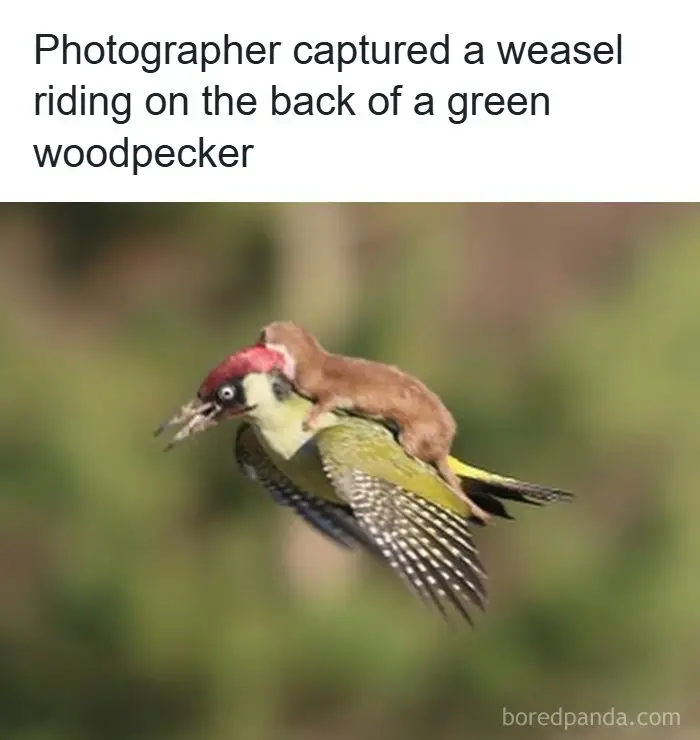
Though this looks like it could be a fantastic animal rendition of Jasmine’s magic carpet ride from Disney’s classic Aladdin, the photo is real and the truth behind it is somewhat more sinister. Martin Le-May, a hobby photographer in East London, took these photos of a woodpecker and a baby weasel fighting for their lives over Hornchurch Country Park.
#16
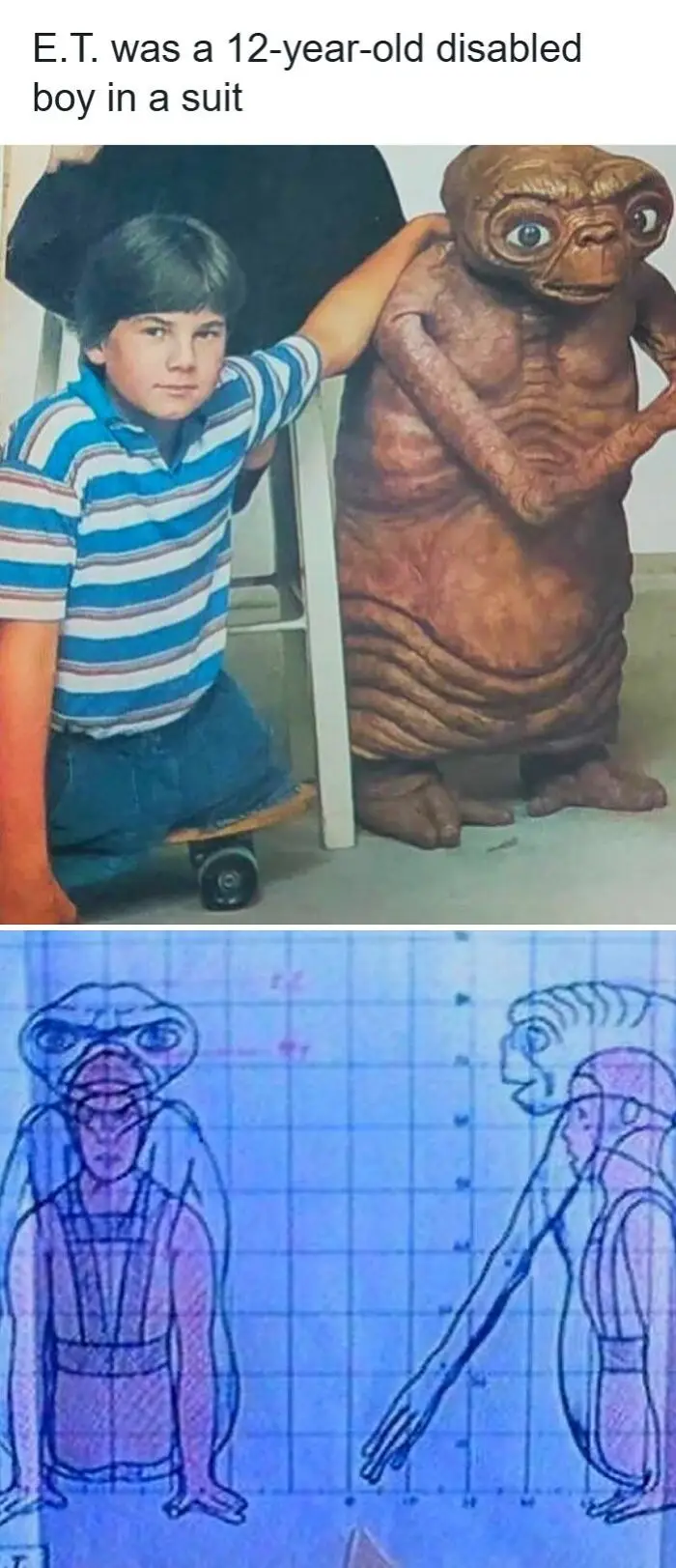
Matthew only got the role because of a chance physical therapy casting call in California. Spielberg’s team measured him and filmed him walking on his hands, though even Matthew later recalled thinking, “I’d never demonstrated…walking on my hands…how they could think I could fit inside a costume… but it kind of worked out that way.”
On set, he wore a four-foot rubber suit, peeking out through chest slits with the alien head placed atop his own. He performed scenes involving falls—like the beer-drinking moment—and recalls Spielberg regularly checking in on his safety:
“Spielberg came up to me and asked if I was all right… ‘Is there any way you could just walk straight into that cabinet… fall smack on your face?’”
Today, Matthew DeMeritt is likely the only living actor to have donned the E.T. suit. His contribution remained largely uncelebrated until anniversary screenings and fan retrospectives brought him back into the spotlight. His story is a remarkable testament to creativity meeting opportunity — and the often unseen hands (and hearts) behind cinematic magic.
#17
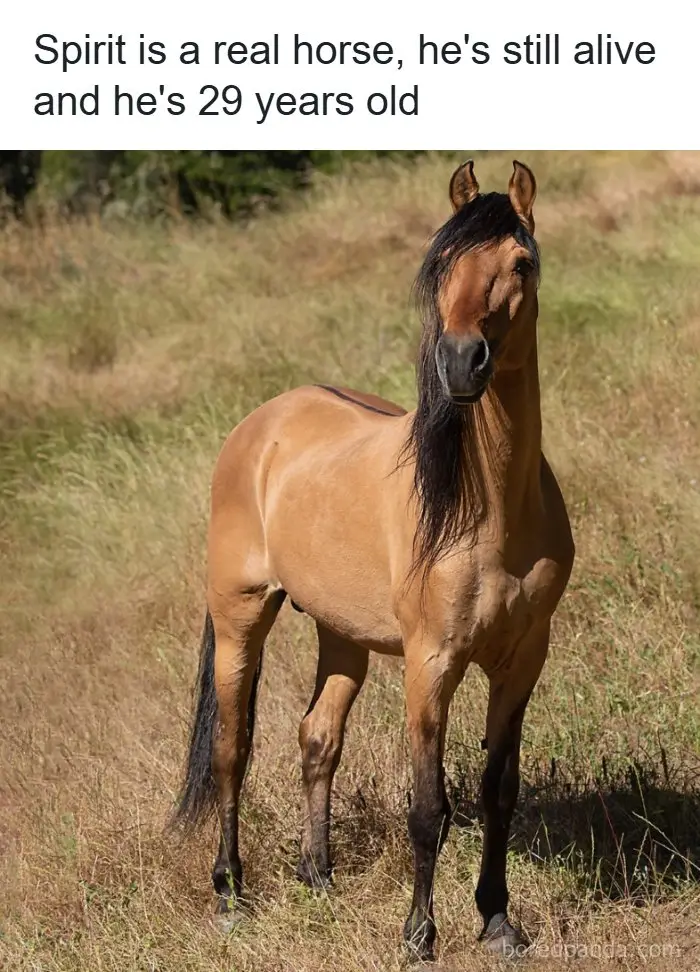
DreamWorks selected the now-named Spirit when he was a colt. Born to a stallion and mare that had been captured by the BLM in Oregon, Spirit was (and still is) a beautiful example of the Kiger mustang breed. His wide-set eyes and thick, wavy, multi-colored tail and mane became the inspiration for the animated horse that is still stealing hearts all these years later.
Like his animated character, the real-life Spirit is part of the fight to help wild horses maintain their natural habitats and freedom. While he lives at the sanctuary and loves interacting with people, Spirit is a prominent ambassador for wild horses. He engages youth around the world to learn more about America’s mustangs and every horse’s need for freedom and protection.
He lives on Return to Freedom’s headquarter facility in Santa Barbara County on 300 acres of pristine California pasture. From a young age he learned to be comfortable around people, but those who know him best say he has a spirit similar to that of his fictional character. He’s grown to be an important part of the wild horse sanctuary, and he’s helping educate the public about his breed and ways humans can protect all of America’s wild horses.
With Spirit’s claim to fame, he attracts crowds of fans to his sanctuary home. During these visits, the real-life Spirit helps the sanctuary spread an important message about what’s currently happening to the country’s wild horses and what the public can do to help.
Now 25 years old, the real-life Spirit is busy enjoying life at the sanctuary. He spends his days interacting with a few of his equine friends and enjoying attention and care from his favorite humans. He was born in captivity, but the spirit of independence and the wild west lives in his veins. And thanks to Spirit: Stallion of the Cimarron, his image will continue to show others that freedom is always worth fighting for.
#18

This tour was part of the Tokugawa shogunate’s effort to understand the changing world, which culminated in the Meiji Restoration just four years later, an event that would lead to the abolition of the samurai class.
The photo of the samurai posing in front of the Sphinx in 1864 was taken by the Italian-British photographer Antonio Beato.
The samurai were members of the Second Japanese Embassy to Europe (also known as the Ikeda Mission), a diplomatic tour sent by the Tokugawa Shogunate to negotiate with European powers. On their journey to France, they stopped in Egypt, where they visited the Pyramids and the Sphinx and had their pictures taken by Beato, who had a photographic studio in Luxor at the time.
#19

#20
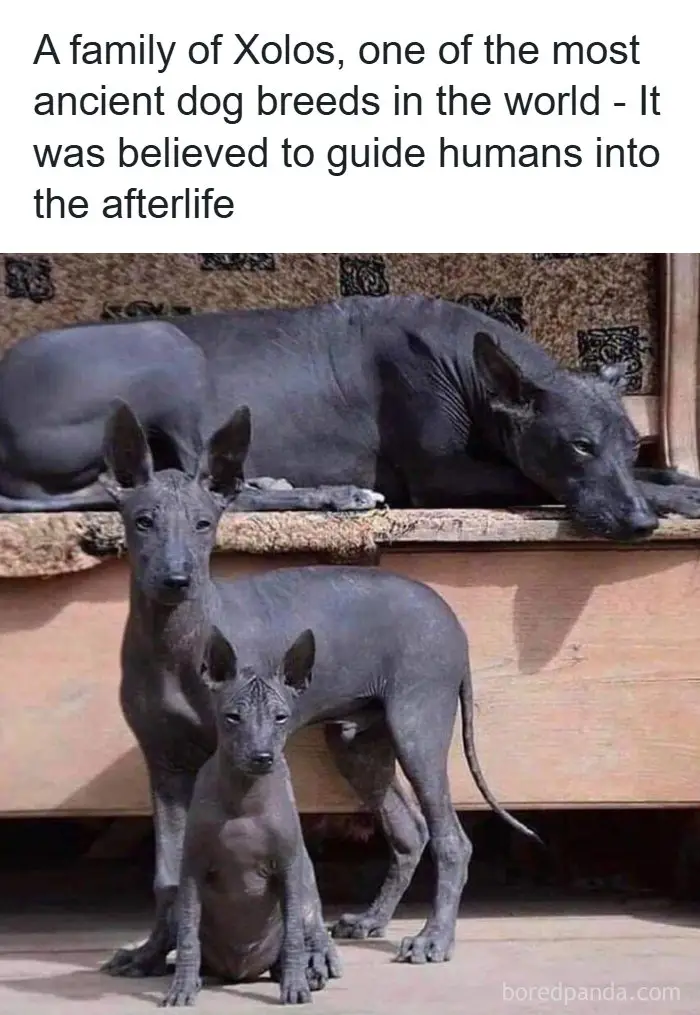
Ancient legends says Xolos were a gift to humans to guard them in life and guide them in the afterlife. Today, these dogs are routinely called “xolos” (pronounced cholos). They are among the oldest domesticated dog breeds; remains of one dog found at an archaeological site reportedly were dated to about 5,500 years ago.
The Aztecs considered the Xolo sacred, and invested them with mystical healing abilities.
They also believed that the Xolo would guide them to the afterlife when they passed away.
The breed’s full name, Xoloitzcuintli, derives from the name of the Aztec god of fire and lightning, Xolotl, as well as “itzcuintli,” the Aztec word for dog. They are also referred to as “Mexican hairless dogs.”
According to beliefs, an Aztec god named Xolotl specifically created this dog from the same bone of life as their humans, to guide the latter’s souls through the perilous Mictlán. Among the Xolo’s key responsibilities: helping pet parents cross the impossible Apanohuacalhuia River. Here, Xolos would wait at the shore in anticipation of their arrival.