



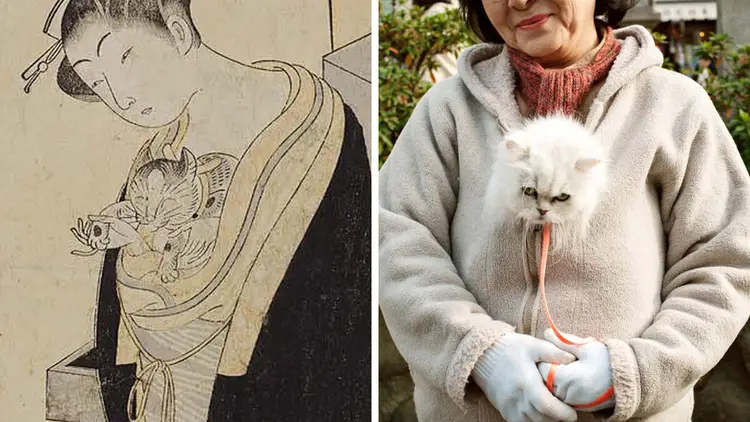


How much has everyday life really changed over the past two hundred years? Japanese street photographer Shin Noguchi explores this question through his project “Ukiyo-shashin/Ukiyo-e,” which pairs contemporary street photographs with traditional Japanese woodblock prints. Interestingly, Noguchi doesn't set out to recreate scenes from traditional Japanese art. His photographs capture spontaneous moments from his career, and the connections to ukiyo-e emerge naturally. Having admired Japanese art since childhood, he believes its influence has always shaped his photography, particularly how he composes his images.
We've featured Noguchi's street photography on Bored Panda before, but his latest project offers a different perspective on the everyday moments he has spent years documenting. By placing his photographs alongside ukiyo-e prints, he draws attention to the surprising similarities between life in Japan today and scenes depicted by artists centuries ago. After roughly two decades of photographing everyday life, Noguchi decided to share these artistic connections with a wider audience. However, his project isn't simply about finding visual similarities between old and new images. He's also interested in the emotions, relationships, and traditions that connect people across generations, even as their surroundings change dramatically. For Noguchi, these comparisons remind us that Japanese culture isn't confined to museums or history books. People continue to experience and shape it through their everyday lives. And perhaps most importantly, he hopes the project encourages viewers to pay closer attention to the ordinary moments around them, recognizing that these, too, are worth preserving.
Scroll down to explore Shin Noguchi's fascinating comparisons between contemporary street photography and traditional Japanese art. We also spoke with the photographer about the inspiration behind his project, how he discovers connections between past and present, and what he hopes people will take away from his work.
#21
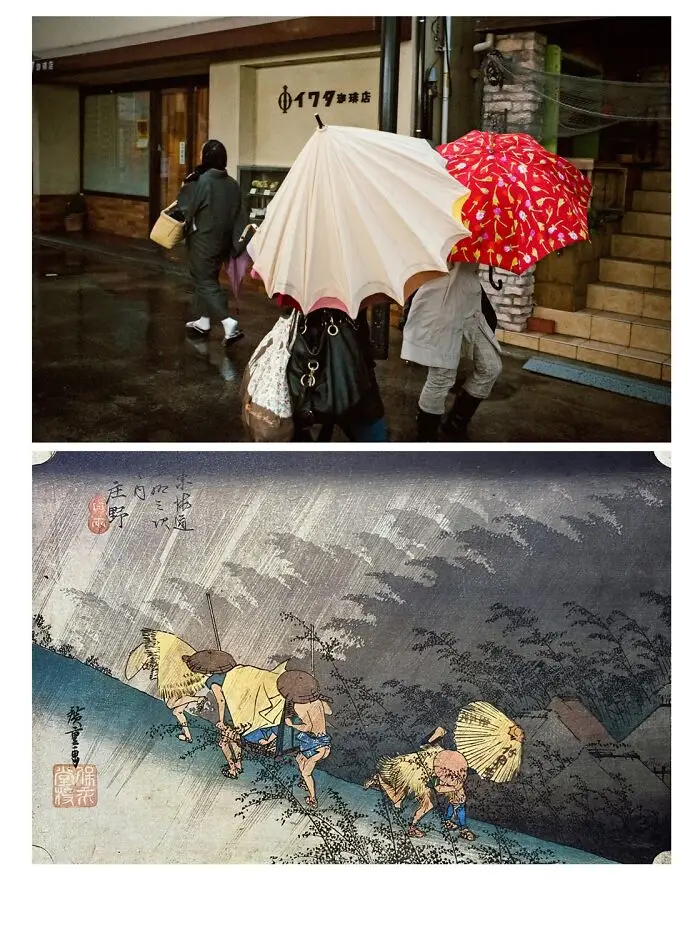
Photo: Pedestrians struggling with umbrellas during a powerful bomb cyclone in Komachi, Kamakura, Japan, April 3, 2012. © Shin Noguchi.
Ukiyo-e: Shono Hakuu (Driving Rain), from The Fifty-three Stations of the Tokaido, by Utagawa Hiroshige, circa 1833–1836. Source: Shin Noguchi's personal collection.
Report
4points
#22
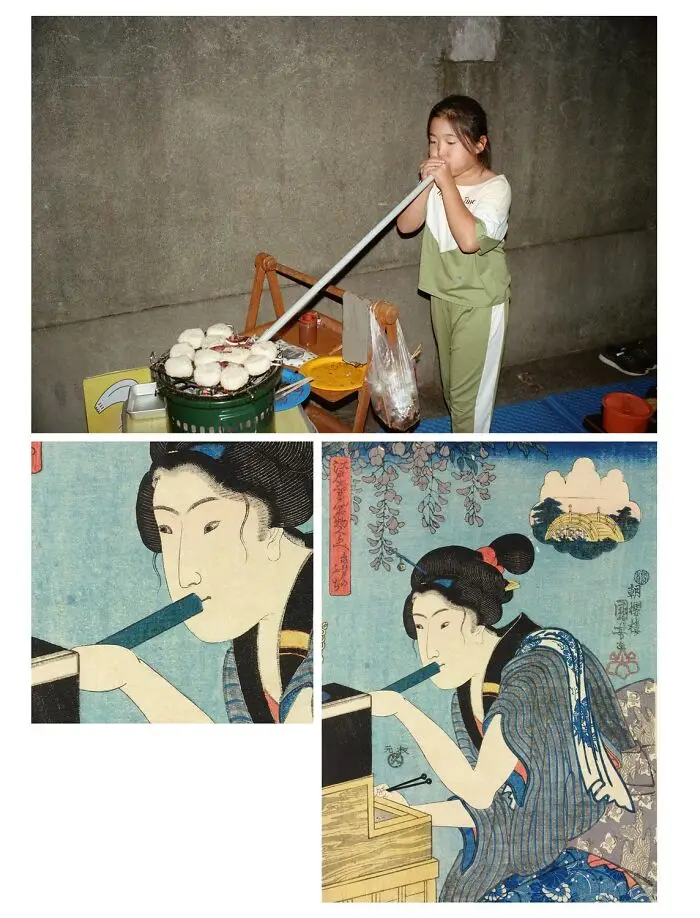
Photo: A young girl blowing into a tube at home in Kamakura, Japan. December 2023. © Shin Noguchi.
Ukiyo-e: “Kameido no Fuji,” from “Pride of Edo: Comparison of Famous Products” (1844), by Utagawa Kuniyoshi. © The Trustees of the British Museum.
Report
4points
#23
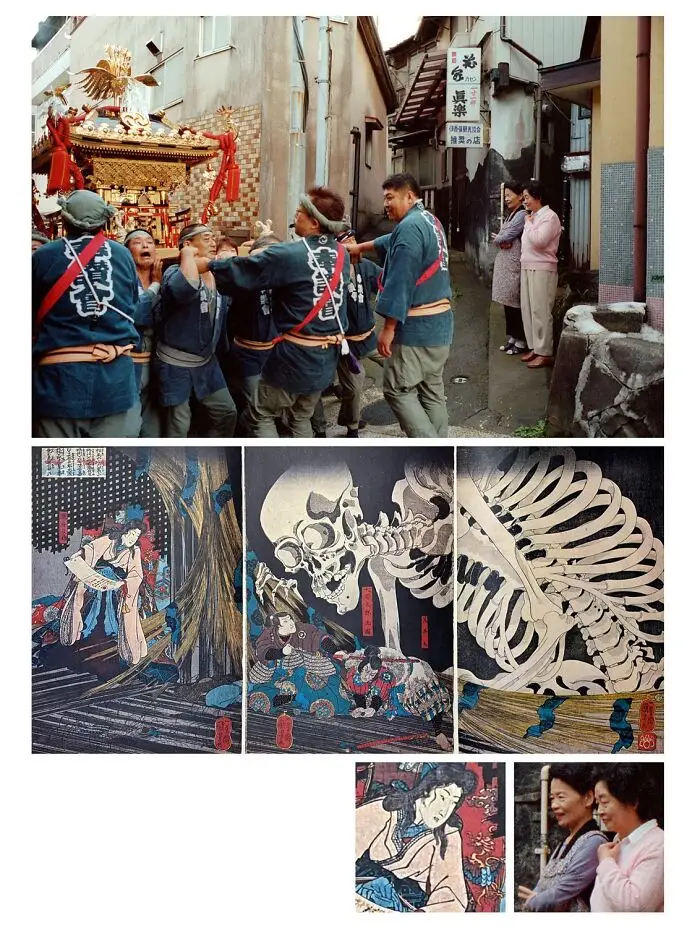
Participants carrying a traditional portable shrine during the Ikaho Matsuri Festival, while two women watch from the roadside in Ikaho, Gunma, Japan. September 2015. © Shin Noguchi.
Ukiyo-e: “Soma no Furudairi” (c. 1845–1846), by Utagawa Kuniyoshi. Scanned from a volume in Shin Noguchi's personal collection.
Report
4points
#24
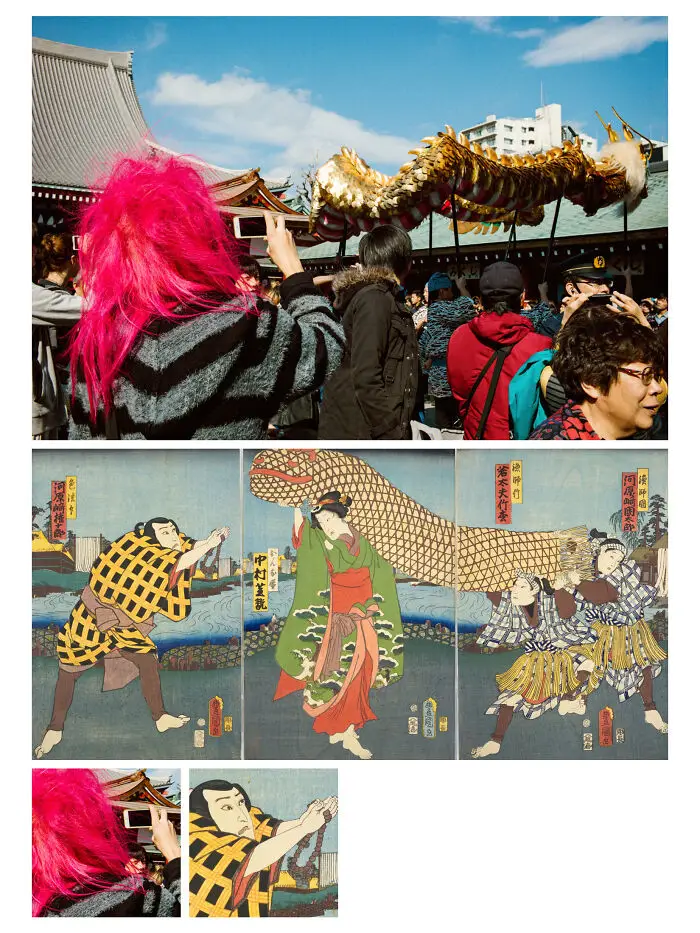
Photo: Sensoji Temple, Asakusa, Tokyo, March 2014
© Shin Noguchi
© Shin Noguchi
Ukiyo-e: The Fishermen Kuni and Take, the Woman Diver, and the Priest Shiki Hoin by Utagawa Kunisada, 1861
© National Diet Library
© National Diet Library
Report
4points
#25
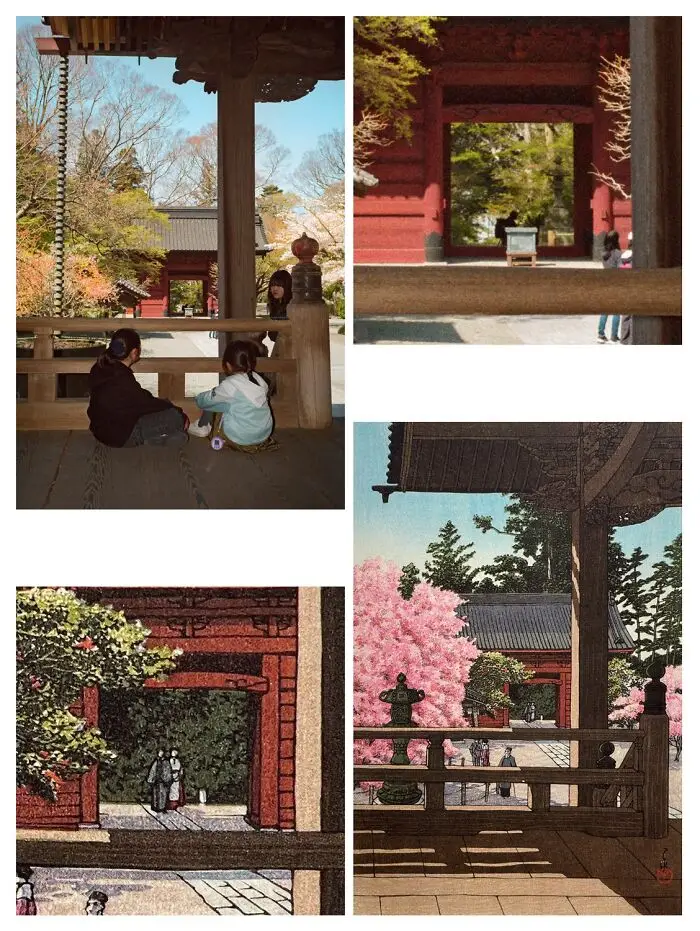
Photo: Three sisters spending time together at Myohonji Temple in Kamakura, Japan, April 2025. © Shin Noguchi.
Ukiyo-e: Myohonji Temple, Kamakura (Flowering Aronais), by Kawase Hasui, 1931. Source: Shin Noguchi's personal collection.
Report
3points
#26
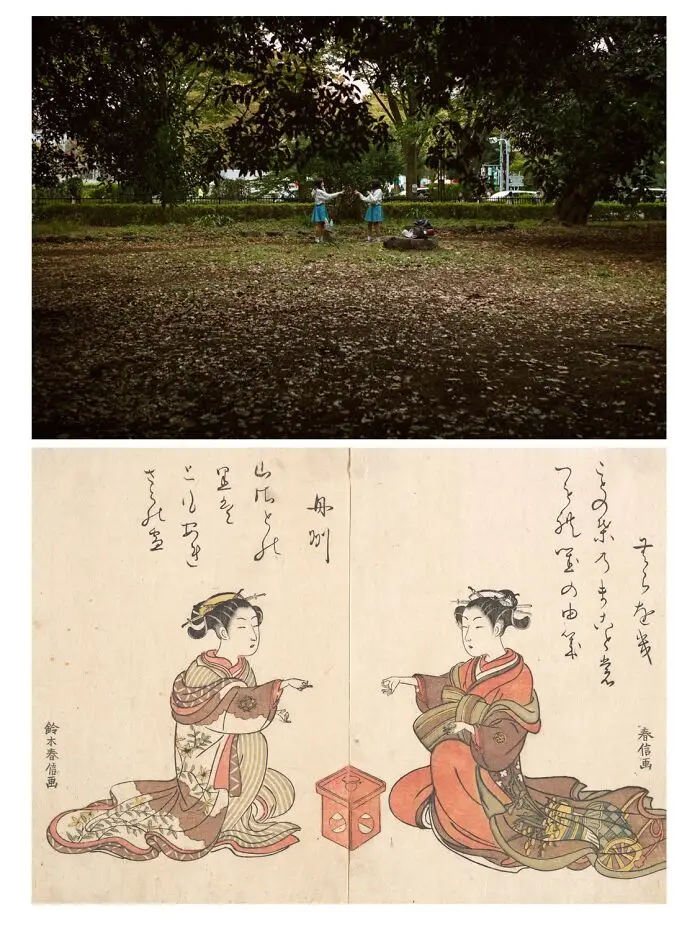
Photo: Two girls playing a traditional hand game beneath the trees in Yoyogi Park, Shibuya, Tokyo, October 2016. © Shin Noguchi.
Ukiyo-e: The Courtesans Murasaki and Shushu Play the Kitsune-ken Hand Game, by Suzuki Harunobu, circa 1770. ©The Metropolitan Museum of Art.
Report
3points
#27
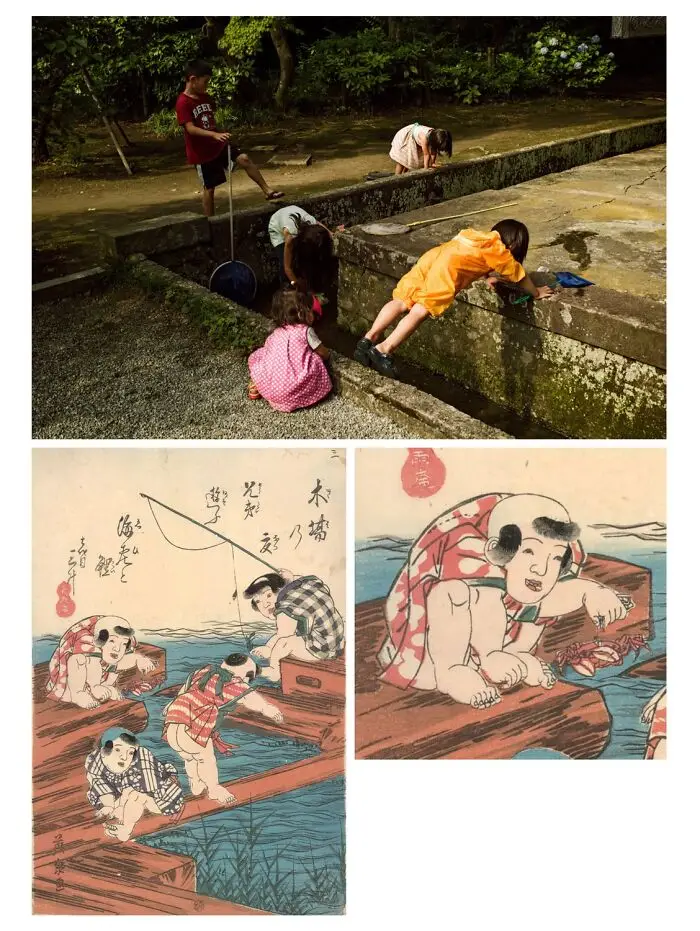
Photo: Children enthusiastically searching for crayfish along a stone-lined waterway at Myohonji Temple in Kamakura, Japan, June 2018. © Shin Noguchi.
Ukiyo-e: Kiba No Natsu (Summer in Kiba), by Keisai Eisen, circa 1835. ©Museum of Applied Arts, Vienna.
Report
3points
#28
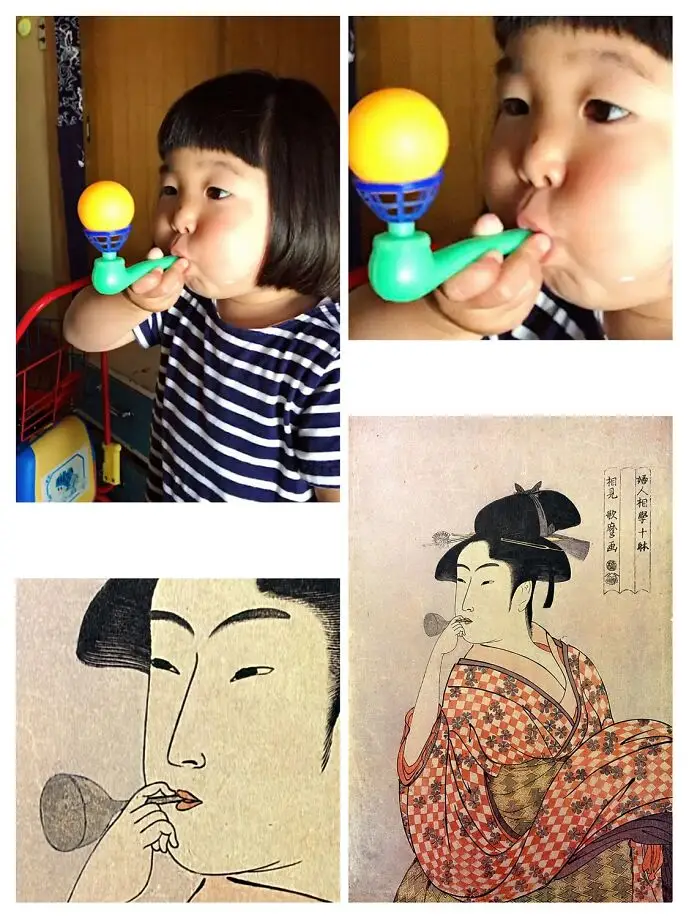
Photo: A young girl named Kotoyo blowing into a colorful toy at home in Kamakura, Japan, May 2017. © Shin Noguchi.
Ukiyo-e: Young Woman Blowing a Glass Pipe (Poppin), from Fujin Sogaku Jittai, by Kitagawa Utamaro, circa 1792–1793. Source: Shin Noguchi's personal collection.
Report
2points


