

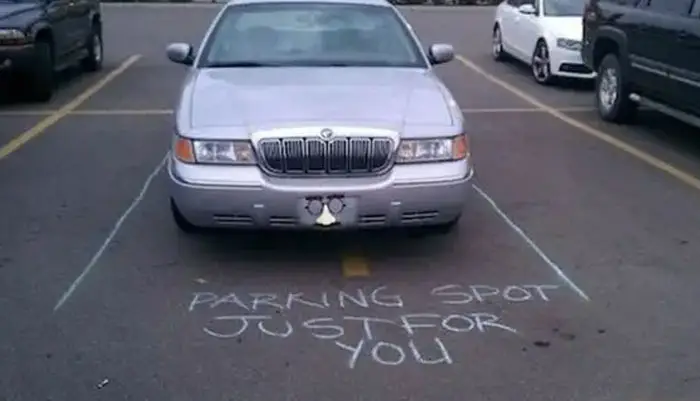
#3 Don't Park Like A Tool!
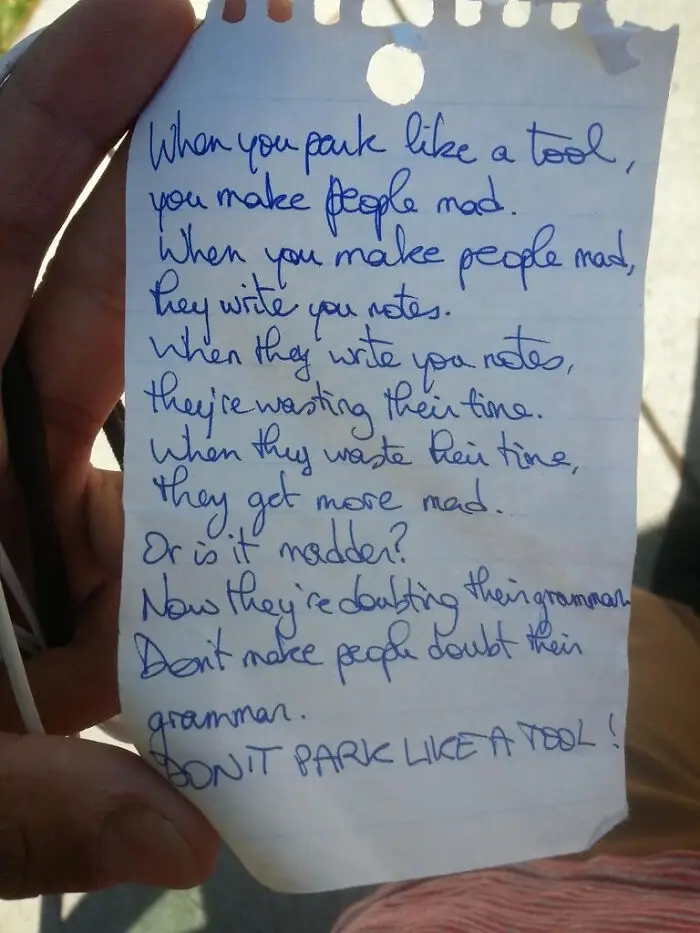
Bad parking can feel surprisingly personal because it breaks an unspoken agreement people have when sharing public spaces. According to Drive, drivers generally expect everyone to use available parking fairly and avoid making others deal with the consequences of their carelessness.
Someone who parks across two spaces, blocks another vehicle, or leaves their car at an awkward angle may seem to be prioritizing their own convenience over everyone else's. This can create more frustration than the parking mistake itself, particularly when other people are left struggling to find a spot or get where they need to go.
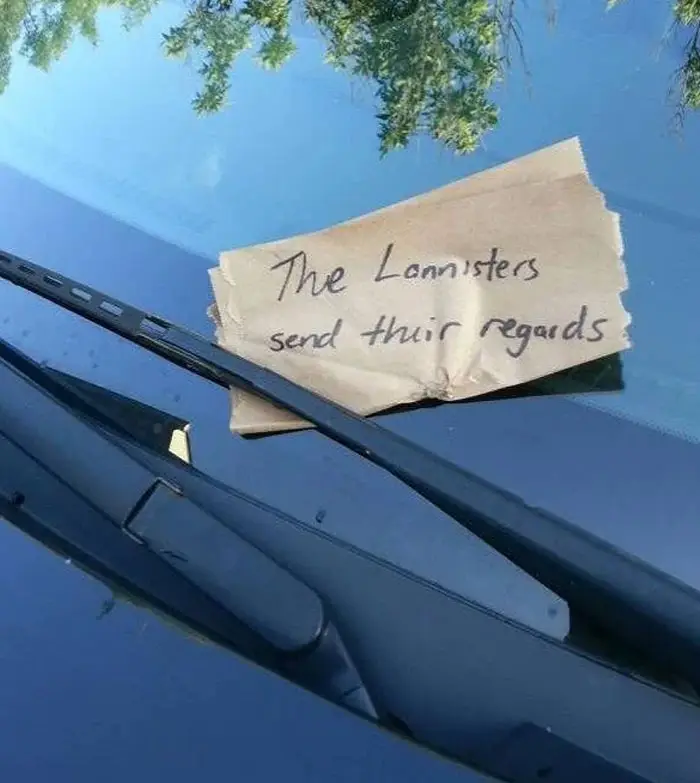
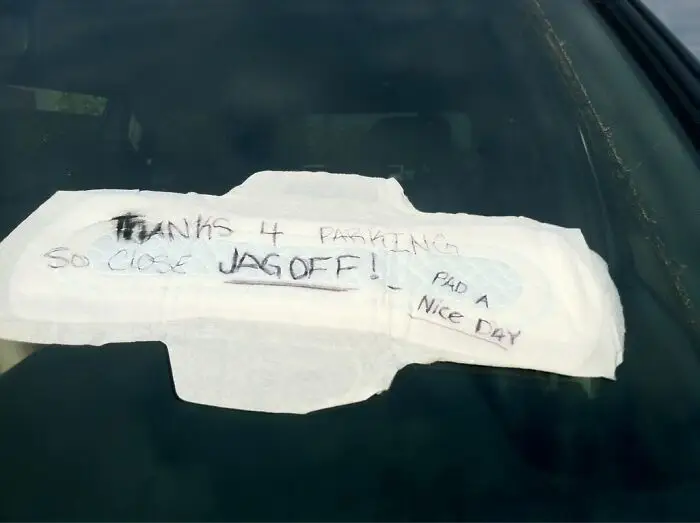
#5 A Friend Came Over To Visit And Parked In One Of The Generally Empty Spots At My Building. She Came Back To Find This On Her Windshield
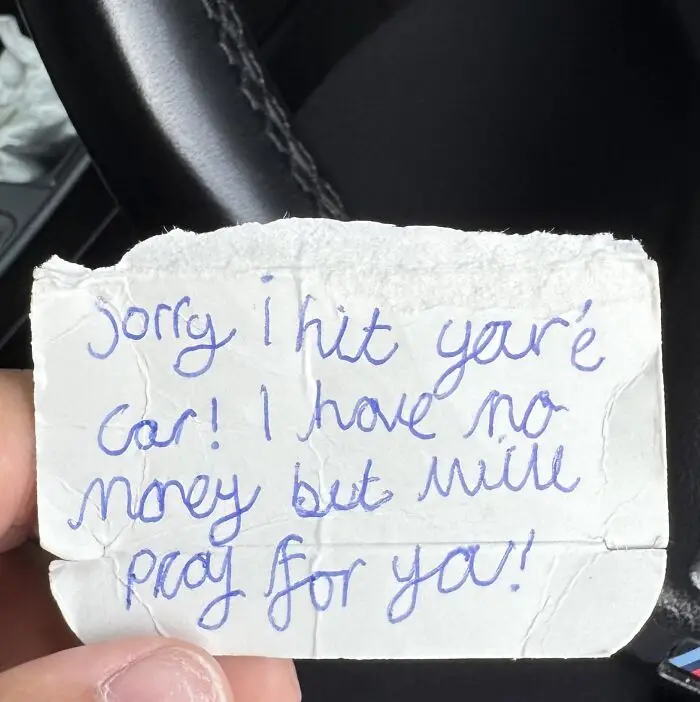
Part of this reaction also comes from how people perceive territory and personal space. Even though parking bays are public, drivers can become possessive of a space they believe they have a right to use. Cars can also feel like extensions of their owners, which explains why finding another vehicle parked too close or carelessly beside yours can feel like an intrusion.
The frustration can become even greater when someone is already running late, looking for a parking spot, or trying to get somewhere important. Interestingly, parking lines make these disagreements particularly easy to recognize because they establish clear visual boundaries. Unlike many social expectations, there is little ambiguity about whether a car is occupying more space than it should.
#7 My Grandfather Just Passed And We Were Cleaning Out His Car, He Always Had The Best Since Of Humor
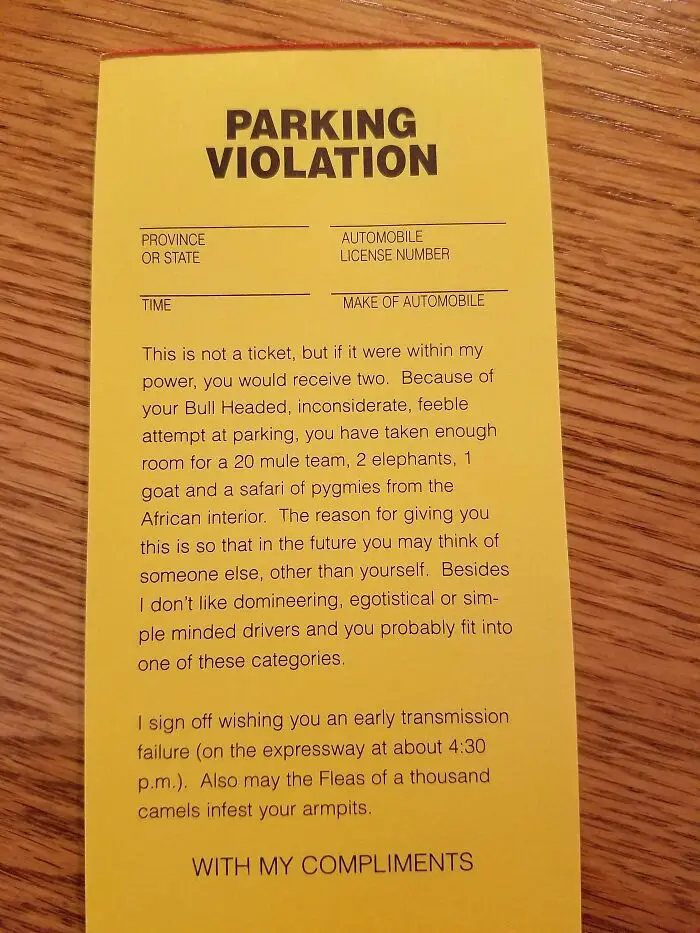
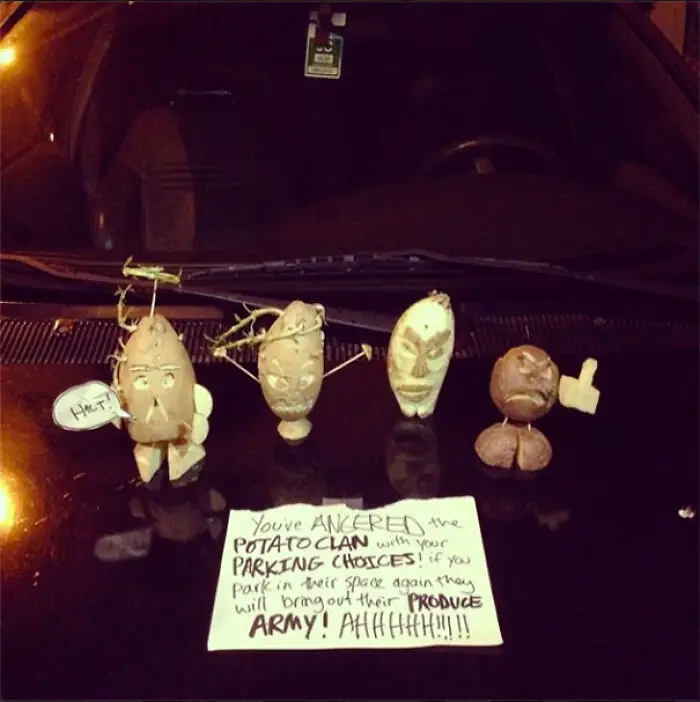
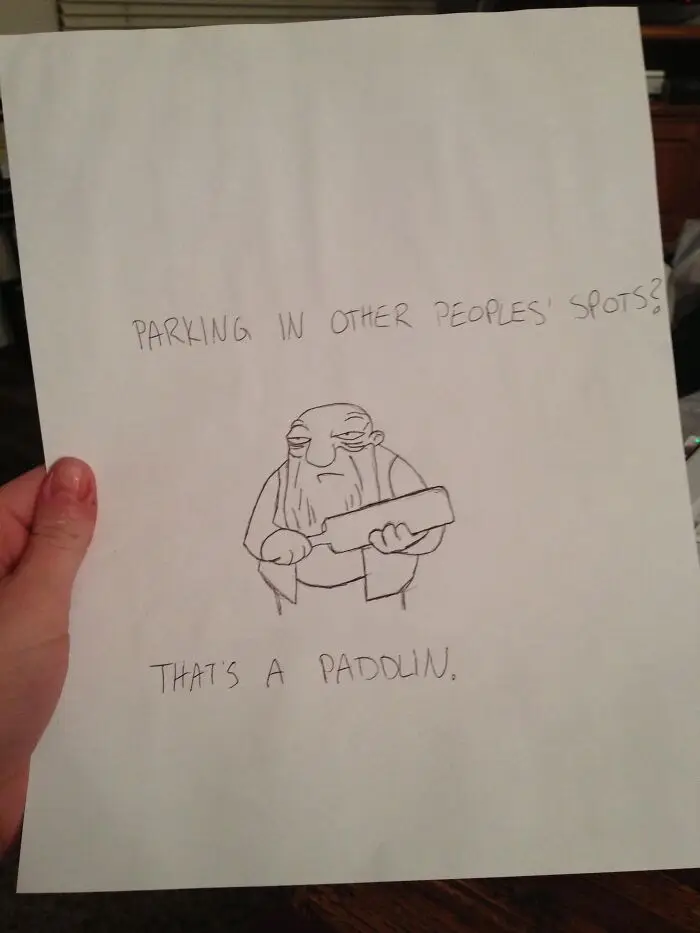
#9 Grumpy Cat Does Not Like People Parking In His Spot
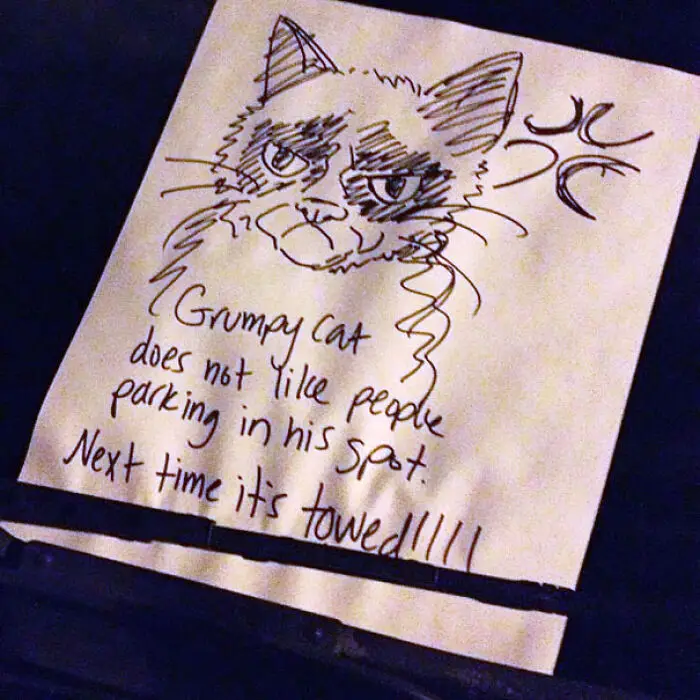
These expectations are part of a much broader set of unwritten rules governing how people share public spaces. Spacing explores how everyday etiquette largely comes down to recognizing that strangers have needs too, whether that means keeping doorways clear, allowing people to move freely, or avoiding unnecessary inconvenience.
Parking follows the same principle: people should take only the space they need and leave the rest available to others. Similar courtesies apply in everyday situations, such as not placing a bag on a seat someone else could use, moving aside when stopping on a busy pavement, and waiting your turn instead of pushing ahead in a queue.
#10 Some Acquaintances Of Mine Had An Interesting Method Of Deterring Bad Parking
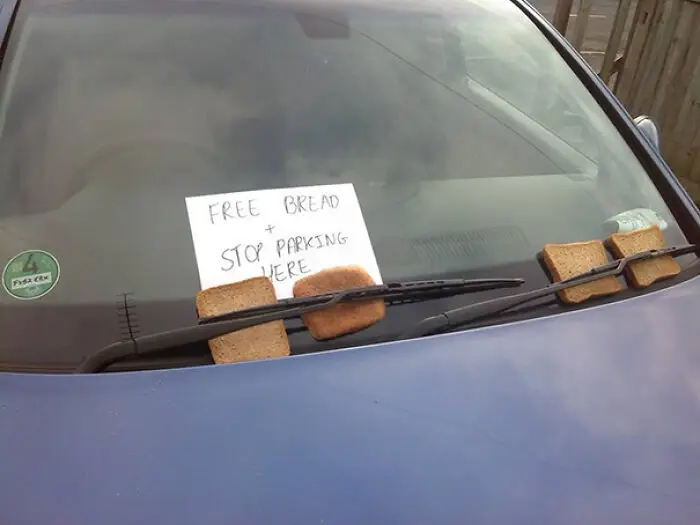
#11 This Is Now My Parking Spot
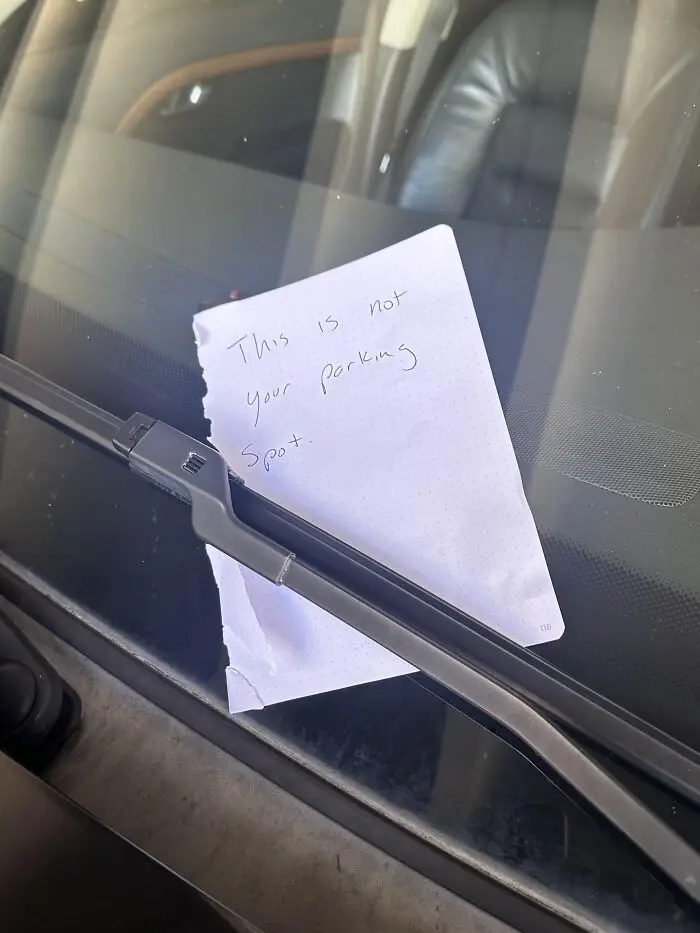
#12 New To This Apartment & Not Feeling Safe Now
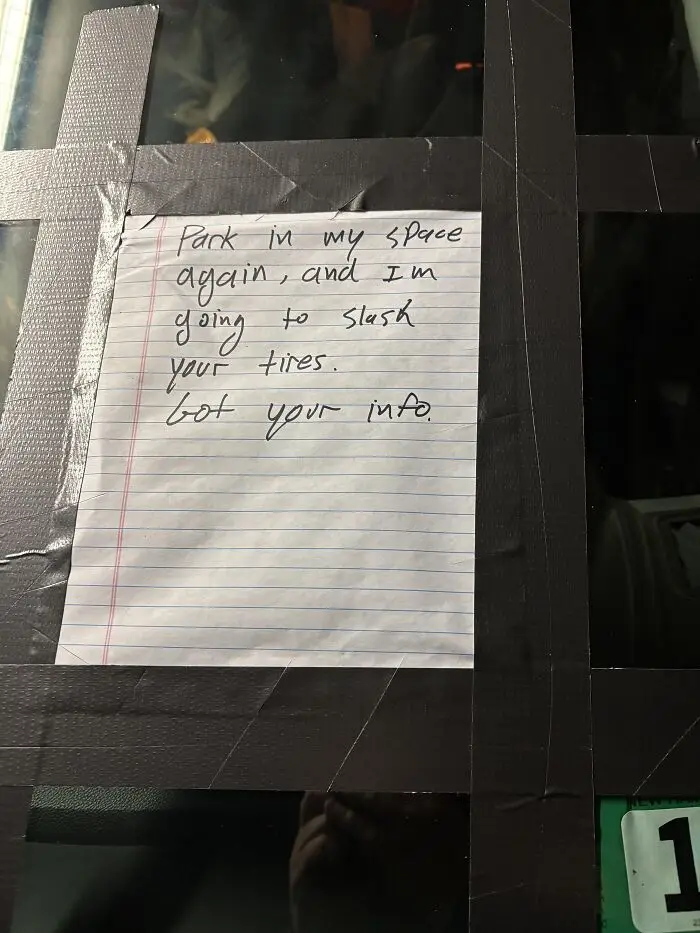
Following these small social conventions helps make communal areas more comfortable and prevents unnecessary disagreements. Even seemingly insignificant gestures, such as allowing passengers to exit a bus before boarding or leaving some personal space when there are plenty of empty seats, demonstrate consideration for others.
Keeping shared areas clean and communicating politely when people have competing needs also makes a difference. Much like parking properly, these behaviors require people to recognize that their actions affect those around them. When someone ignores these expectations, others may feel compelled to remind them that shared spaces come with shared responsibilities.
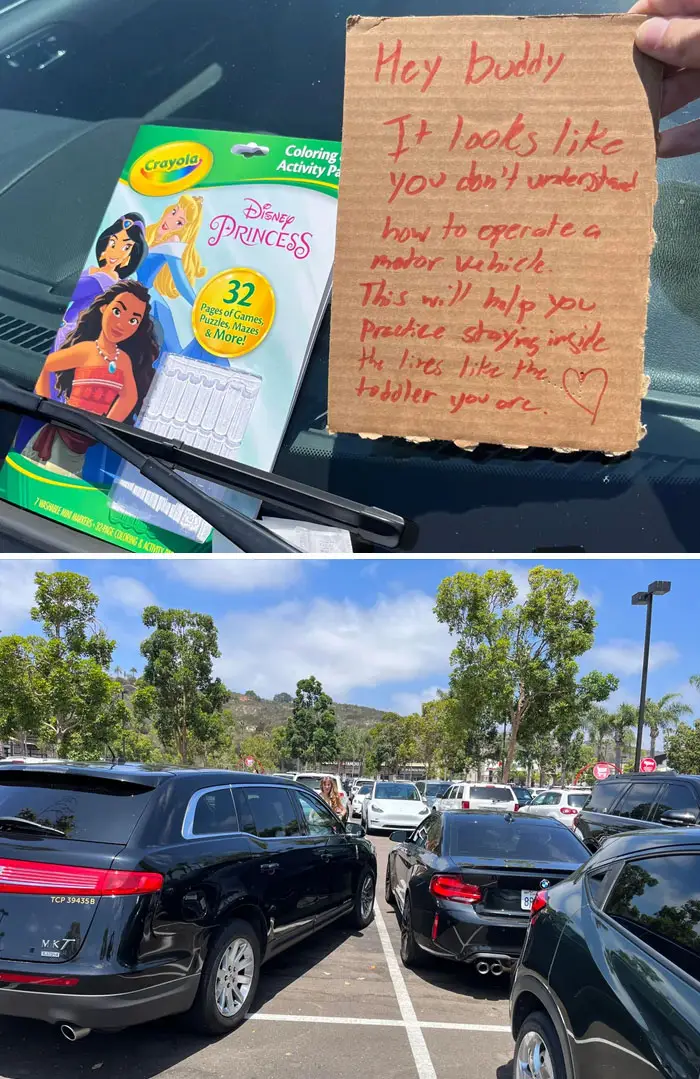
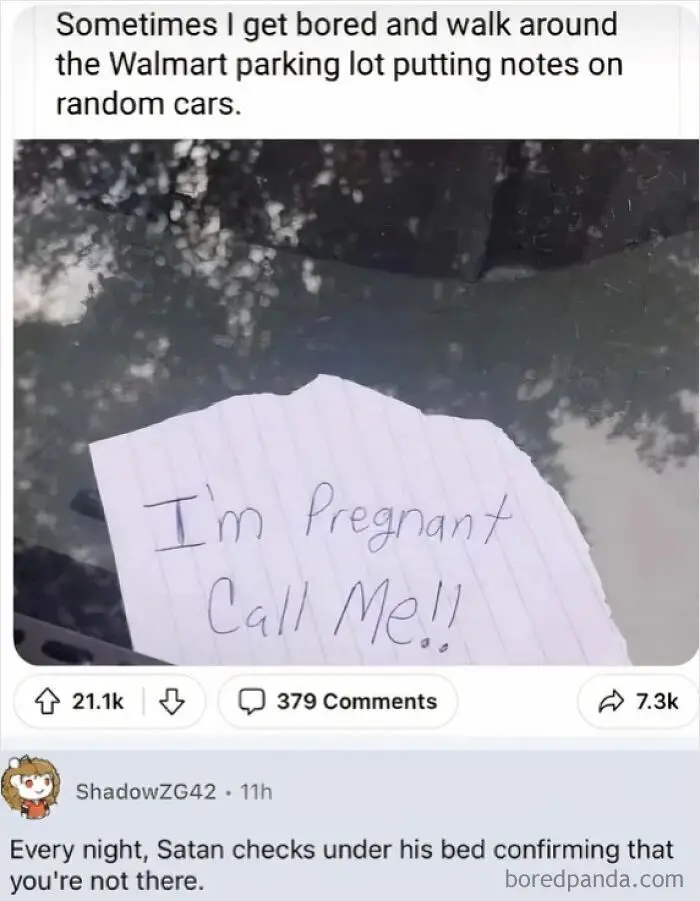
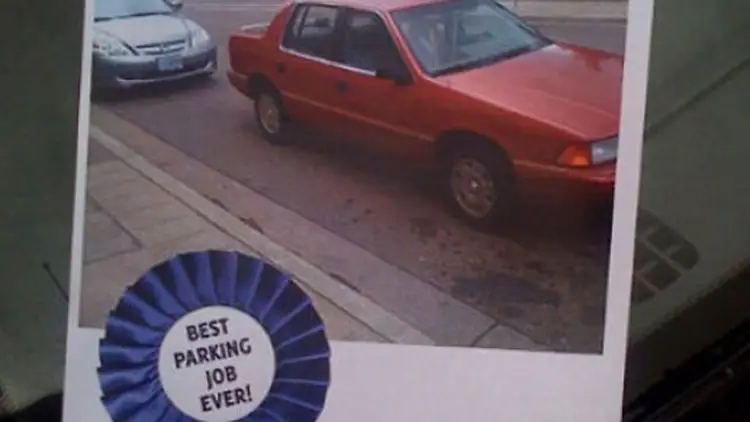
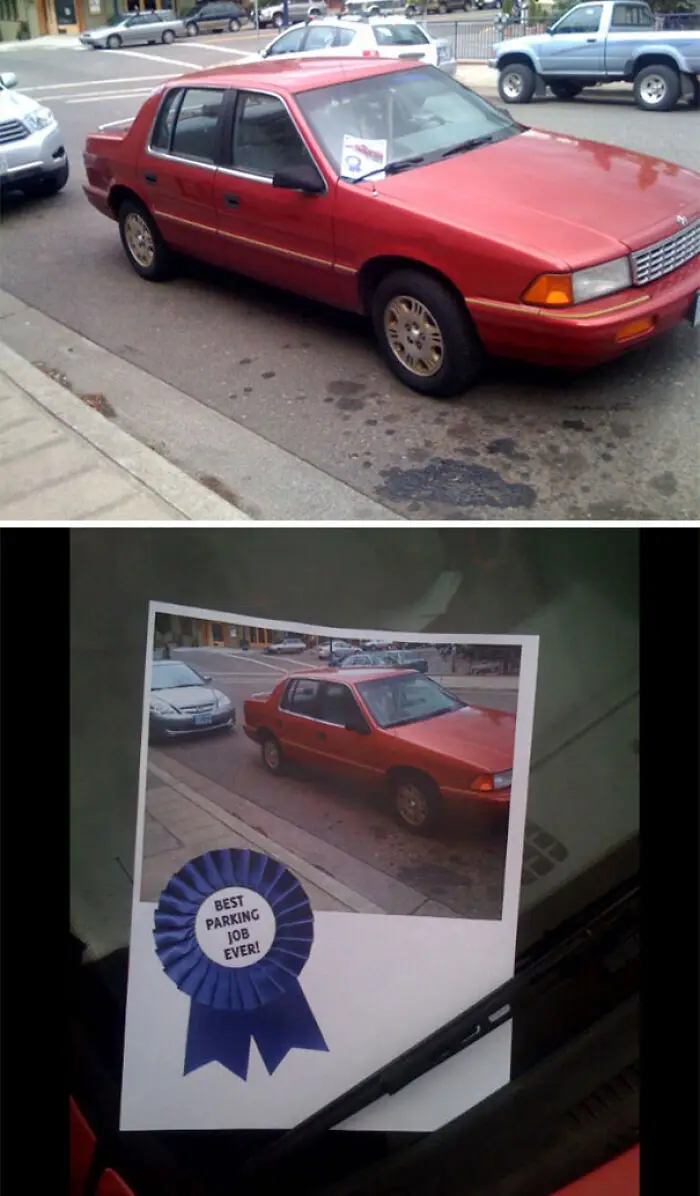
#15 The Last Of The Bad Parking Cards I Made A Few Years Back. Think I'll Keep This One
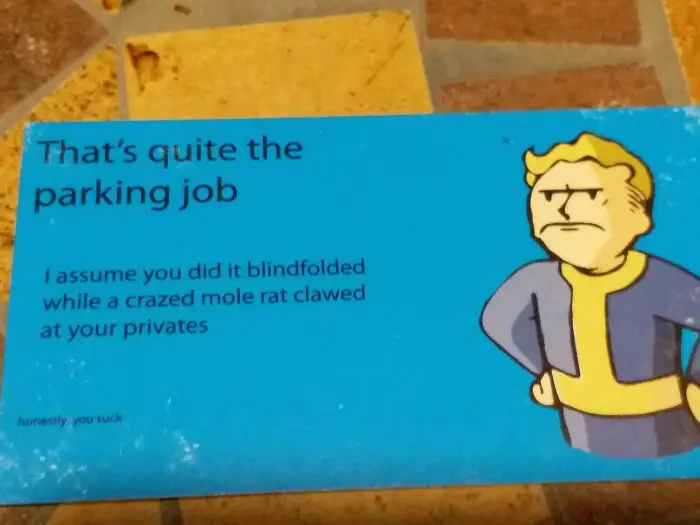
That desire to correct inconsiderate behavior can also explain why some people choose to speak up rather than simply walk away. The British Psychological Society explores the psychology behind calling people out, explaining that it can serve a useful purpose when someone highlights behavior that violates shared expectations or crosses an important boundary.
People may feel compelled to intervene when they witness unfairness, rudeness, or actions that could put others at risk. In a parking situation, leaving a note can be one way of making a driver aware that their actions have inconvenienced someone else, particularly when the person responsible is nowhere around.
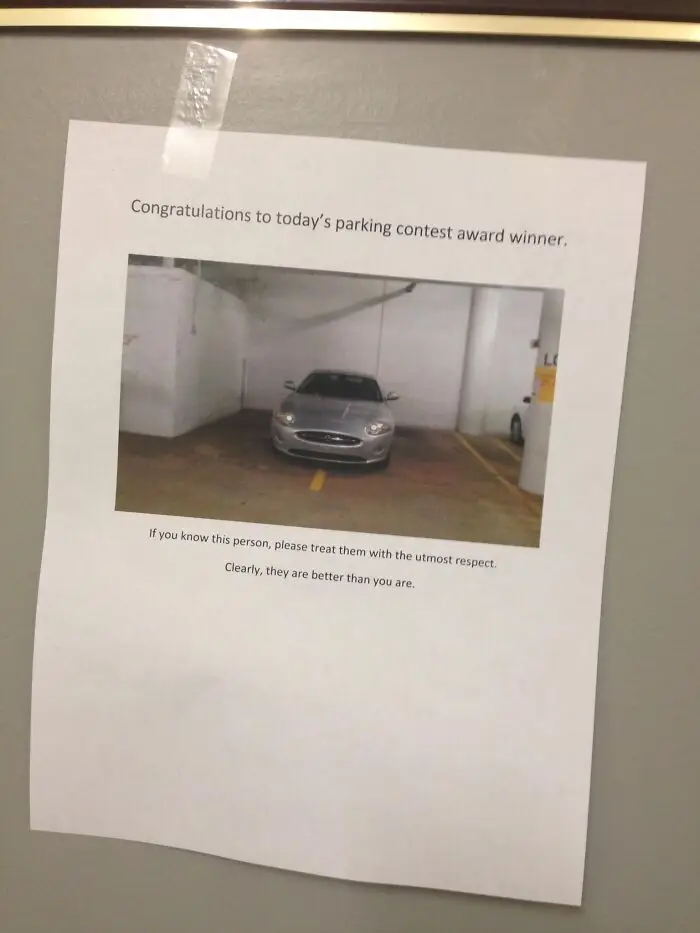
#16 Someone Posted These In The Parking Garage At My Work. Sounds Pissed. By The Way, This Car Was Parked In A Corner The Next Day In A Single Spot
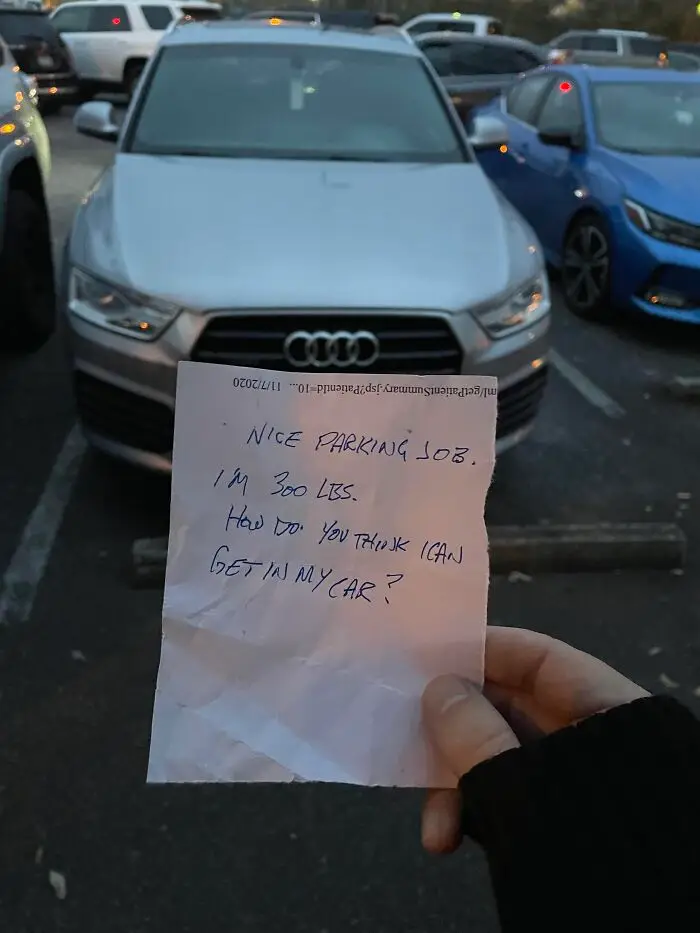
However, the reasons behind calling someone out are not always entirely about correcting the behavior. Social identity and the desire for approval can also influence how people respond to perceived wrongdoing. Publicly criticizing someone may allow individuals to demonstrate their own values or gain recognition from others who agree with them.
The problem is that criticism can quickly become more about embarrassing the person responsible than addressing the original issue. Being publicly called out can threaten someone's reputation and make them defensive, which may prevent them from acknowledging their mistake. There is therefore a difference between pointing out inconsiderate behavior and deliberately humiliating someone for it.
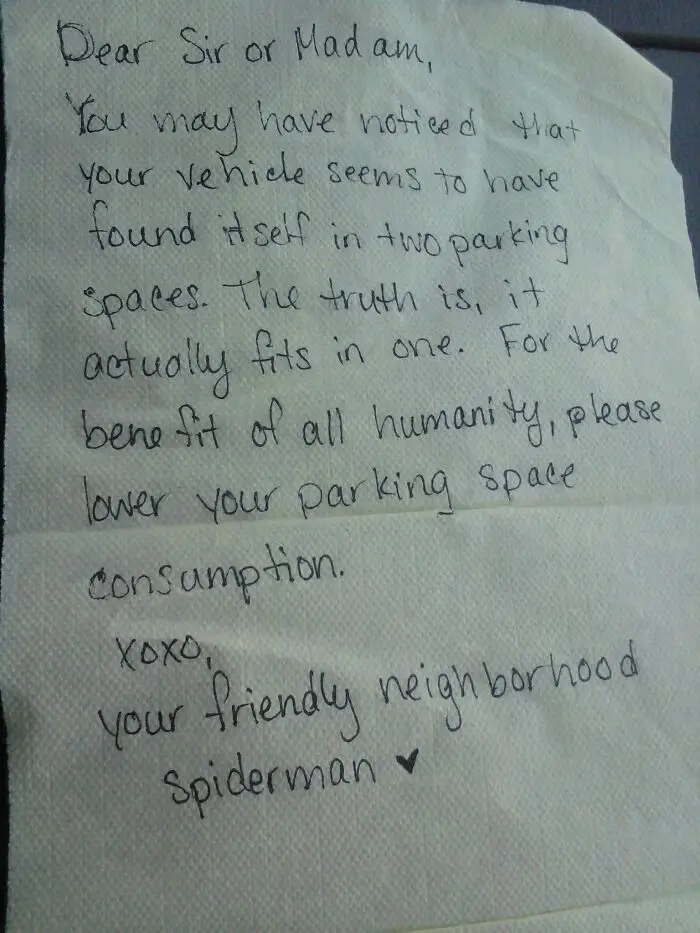
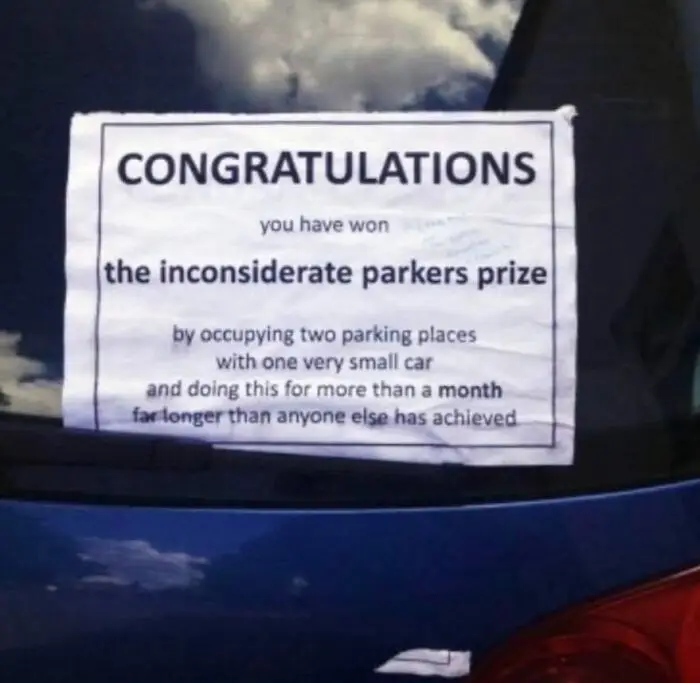
#19 Hey Reddit, A Couple Of Friends And I Left A Note For Someone Who Thought They Needed To Take Up Two Parking Spots