






People who are dating to marry, those who still read paper books, or use pen and paper to write out their notes aren't mythical creatures, although this part of humankind is ostensibly going extinct. Speaking of fictitious, legendary creatures, the mind often wanders to Greek and Roman lore. However, numerous cultures and ancient civilizations have featured various magic creatures that are still being talked about and occasionally mentioned today.
Just like 'Phoenix' isn't solely a city name in Arizona, neither is the term 'unicorn' exclusively referring to a startup company. The many unique words and names in today's dictionary derive from fantastical creatures, often mythical animals or deities from the past. And while many may have heard of such Greek mythical creatures like the Minotaur, Gorgons, and mermaids, there are plenty more no less popular mythical creatures and legendary monsters that allegedly roamed the lands, inhabited the seas and soared the skies.
Below, we've compiled a lengthy (yet not complete) list of mythical creatures that will surely spark your interest in lore and human history. Has any mythical creature on the list originated from your country? Or perhaps you believe that some legendary creature may still be residing among us? Let us know!
#81 Capricornus
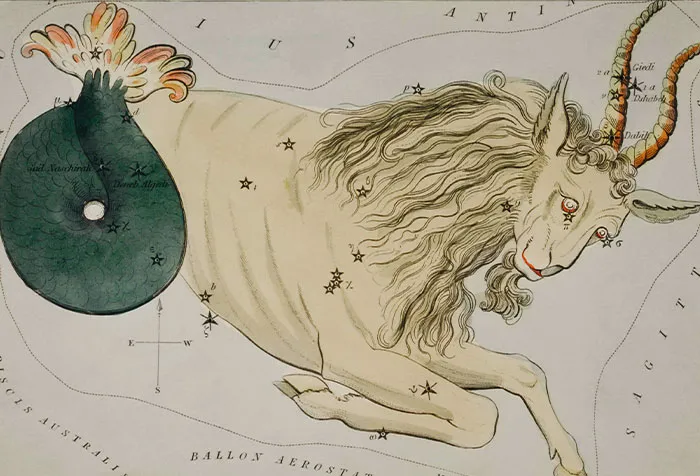
It's likely that Assyro-Babylonian representations of their god of wisdom, Oannes, half man, half fish, are where the concept for Capricornus, The Sea-Goat or Goat-Fish, as a creature with the head and body of a goat and the tail of a fish, came from. In Greek mythology, this constellation is linked to the period when the Olympian gods sought refuge in Egypt. The monster Typhon, the offspring of the Titan Tartarus and Earth, desired vengeance after their epic war with the Titans; thus, peace did not stay for very long. Typhon was a terrifying fire-breathing creature with arms with dragons' heads for fingertips and was taller than mountains. As the Olympian gods tried to escape, Zeus disguised himself as a ram, Hera as a white cow, and Pan (in some versions, Bacchus) as a goat. As Typhon drew near, Pan dove into the Nile but, in haste, only managed to change a portion of his body, emerging with a goat's body and a fish's tail. During this time, Typhon dismembered Zeus. Still, he was saved when Pan let out an audible shout that caused the monster to get distracted long enough for a nimble Hermes to gather the supreme god's limbs and meticulously restore him. In gratitude, Zeus gave Pan a home in the skies and a constellation.
Report
11points
#82 Al-Buraq
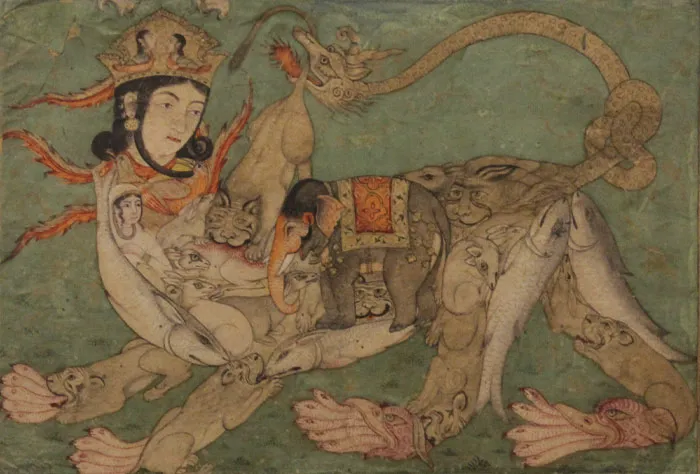
In Islamic mythology, Al-Buraq (or Buraq) - a mythical being with a human head and a horse's body - is intimately related to the Prophet Muhammad. Most hadiths constantly mention the Prophet riding Al-Buraq during his nighttime journey from Mecca to Jerusalem, an event known as the Isra'. After the Isra', the Prophet is said to ride the Buraq through the seven heavens in some legends; in other tales, he ties the Buraq to the mosque wall before ascending. Visuals of the Buraq often show it to have wings, a peacock's tail, and a woman's bust or head, frequently adorned with jewelry and a hat. It is still employed as a talismanic symbol in tazias (miniature shrines) and on vehicles in Pakistan and India.
Report
11points
#83 Tikbalang
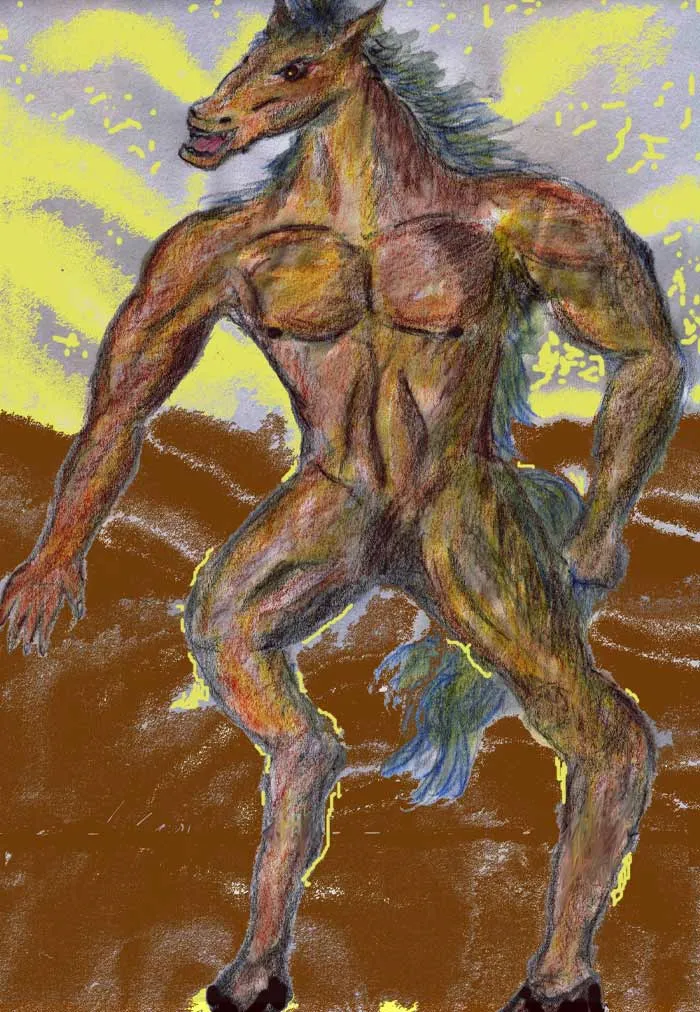
In Philippine folklore, a bipedal horse creature known as Tikbalang is claimed to prowl the country's mountains and jungles. It is occasionally thought to represent the transformation of an aborted fetus sent from limbo to earth. According to legend, Tikbalangs scare or trick travelers into diverting them off the correct route. No matter how far or in which direction the traveler turns, specific lures prevent them from returning to the right path. Tikbalangs are typically seen watching the area from the base of enormous trees for anyone who dares enter their kingdom's premises. Folklore also claims that the Tikbalang can change into a human or become invisible. Allegedly, the Tikbalang looks like a tall, skeletal creature with equine-like features. While its fur is a lighter tint, it has a thick, fluffy mane.
Report
11points
#84 Anzû
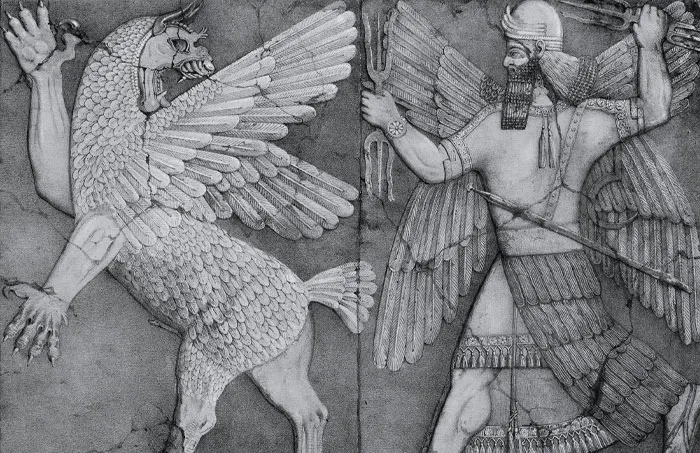
Anzû is a lesser deity or monster in several Mesopotamian mythologies. It is also known as dZû and Imdugud. He was either born as the son of Siris or by the pure waters of the Apsu and the vast Earth. Anzû was shown as a massive bird with the ability to breathe fire and water. Yet, he is sometimes depicted as an eagle with a lion's head.
Report
10points
#85 Harpy
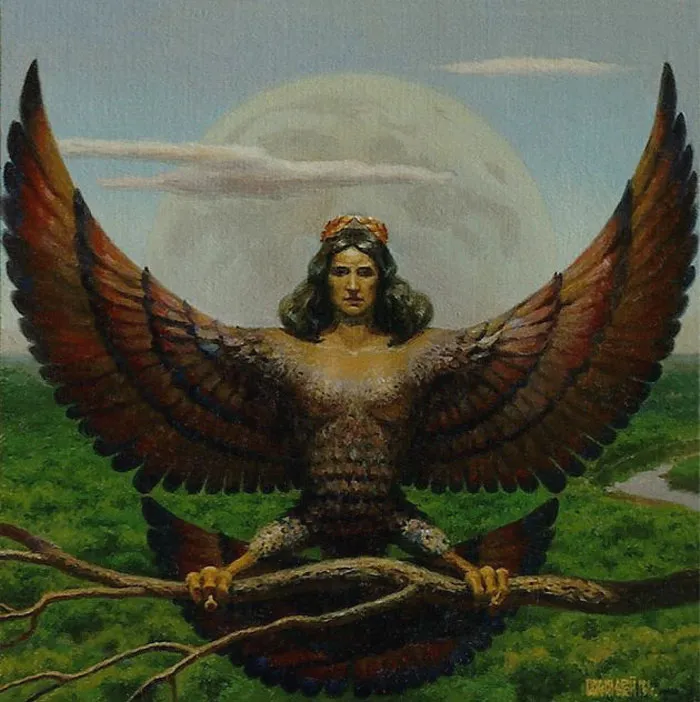
In Greek mythology, a harpy is a creature that is half bird, half woman. They were referred to as the "Hounds of Zeus" and served Zeus, who sent them out during storms to do his bidding. They were the embodiment of storm winds. The harpies would be held responsible if someone or something went missing. The harpies are said to be the daughters of Thaumas, the son of the earth goddess Gaia, and the Oceanid Electra, according to Hesiod's Theogony. The harpies were initially thought to be attractive young women with wings. However, they evolved into the horrifying animals we recognize nowadays. According to descriptions, they had long, fair hair, a lady's face and upper body, but the wings, legs, tails, and claws of a raptor, and everything they touched stank.
10points
#86 Piasa
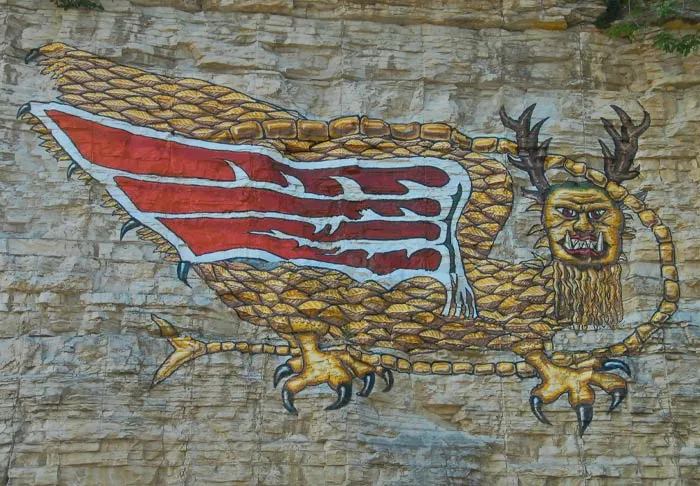
The Piasa is a fire-breathing winged creature, perhaps a dragon, that appears in stories of the Illini tribe. It is also named The Bird of the Evil Spirit or The Bird that Devours Men. Apparently, the creature had a shuddering shriek that was claimed to shake the ground below. It was also said to have kidnapped tribal members who lived close to the river. People believed that anyone was soon to be dead whenever one heard the beast's scream. Even though the creature had a weakness, it was exceedingly difficult to defeat, and it took years and a lot of blood to discover its weak spot. According to Native Americans, its body was roughly the size and shape of a horse. It had two white, deer-like horns angled wickedly from its head, long, white fangs pierced upward from the protruding lower jaw, and flames erupted from its nostrils. Its enormous wings beat the air with such force that trees bowed. Its stubby legs possessed dagger-like talons, and its spiked tail was so long that it looped around its monstrous body three times.
Report
10points
#87 Agropelter
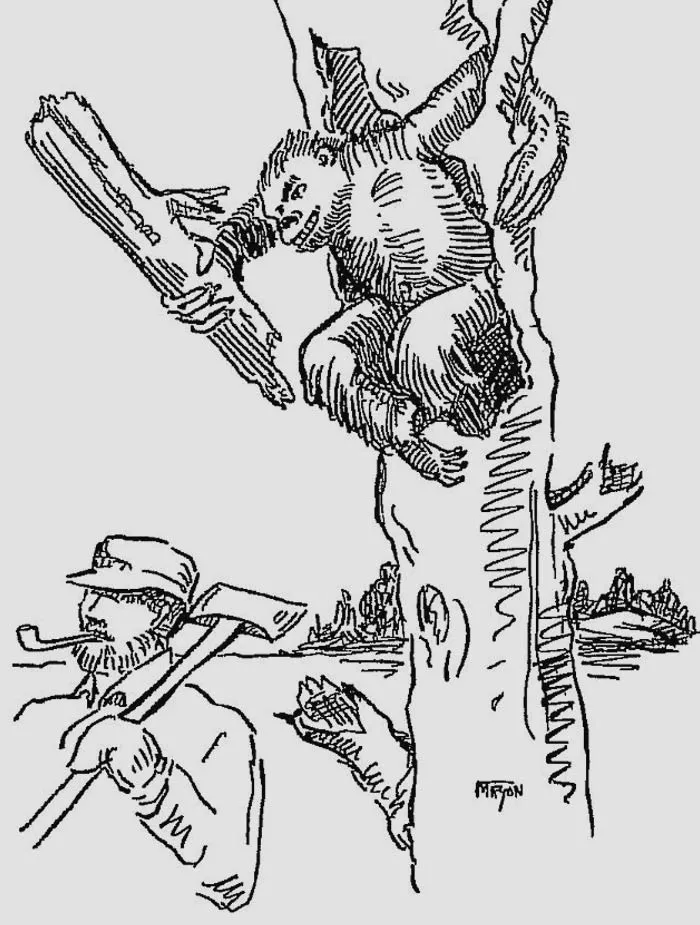
The fabled and terrifying Agropelter is claimed to live in hollow trees in forest areas from Maine to Oregon. The creature would watch from this vantage point for an unwary individual and hurl wooden splinters and branches at the intruder. Apparently, the beast is so swift that no one has ever seen it in its entirety. Yet, some claim that the Agropelter might be a slender, orangutan-sized ape-like creature. Its long, muscular, whip-like arms are its most notable characteristic. Thanks to them, the beast can fling dead branches with dead accuracy at intruders. These arms also provide the creature excellent free climbing skills and enable it to move fast between trees.
Report
10points
#88 Feathered Serpent
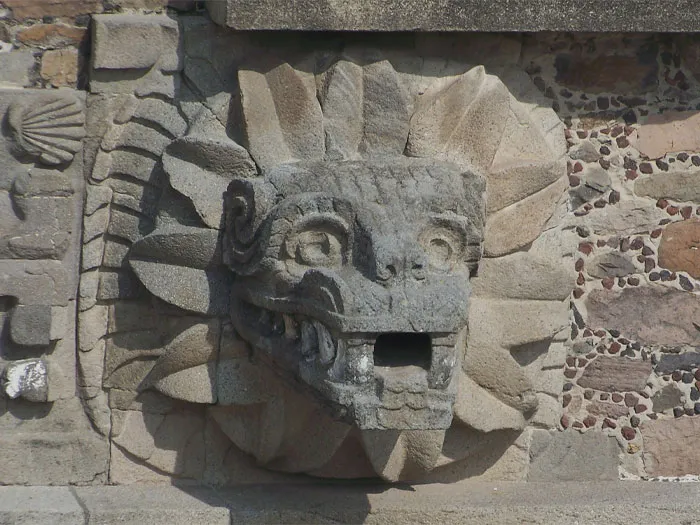
One of the most well-known mythical figures from Aztec mythology is Quetzalcoatl, the Feathered Serpent, whose legacy has endured the test of time and outside influence. Quetzalcoatl was regarded as the creator of mankind and the earth and one of the most revered gods in the pantheon of the Aztecs, even during their glory in the 15th century. He was essentially revered as an ancestor. The feathered serpent god, who first appeared in Central Mexico around 1200, was revered as the god of study, science, agriculture, crafts, and the arts and the patron god of priests and merchants.
Report
10points
#89 Hoop Snake
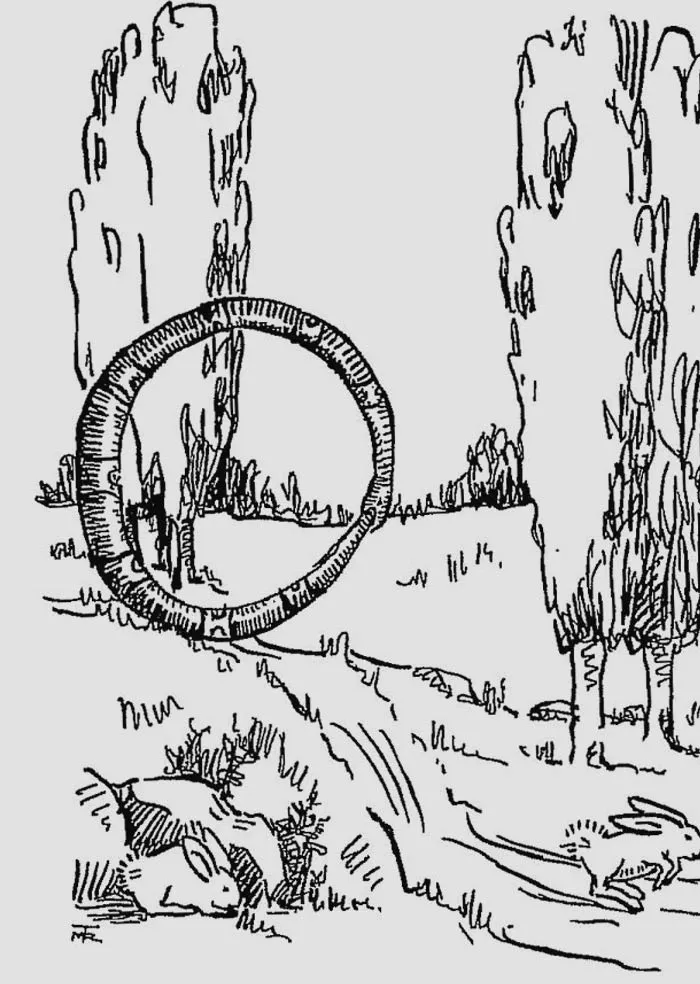
Alleged sightings of the Hoop Snake date back a long time. The Hoop Snake is said to have the ability to swallow a portion of its own tail, forming a ring shape. When tracking down its prey, it can shift into a position where it can start rolling after it, giving it an extraordinary advantage in speed and agility. When it gets close enough to its victim, it will immediately straighten its tail out of its mouth and strike the prey with either its teeth or a poisonous, barbed spike on the end of the tail. It is stated that the poison works instantly and can start to disintegrate species as large as trees in a matter of seconds.
Report
10points
#90 Ouroboros
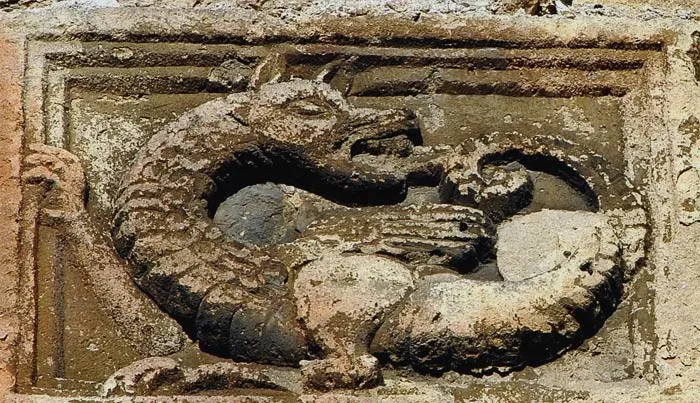
An ancient pre-existential primordial being known as the Ouroboros Dragon emerges as a celestial snake or dragon that is shown devouring its own tail. Ouroboros is frequently seen as a symbol of the endless cycle of rebirth and life, infinity, the idea of eternity, and eternal return. It also depicts the cyclical nature of life, death, and resurrection, which, like the Phoenix, leads to immortality. This serpent represented eternity and the soul of the world in Gnosticism. The Ouroboros, often known as the invincible snake, is thought to feed on its own regenerating tail. It has been a significant religious symbol throughout history, frequently appearing in both Greek and Egyptian iconography as well as the overall western mystical tradition.
Report
10points
#91 Peryton
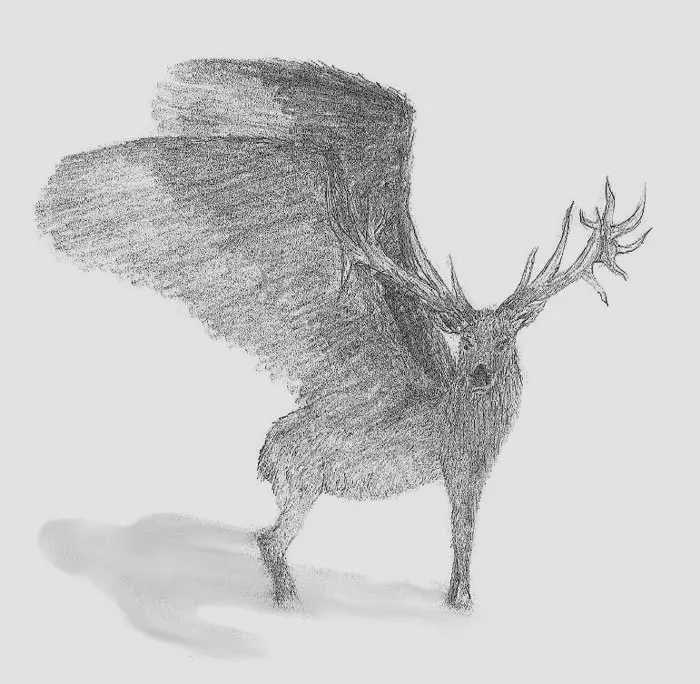
The Peryton is a mythical creature with the physical characteristics of both a deer and a bird. It is described as having a stag's head, neck, forelegs, and antlers, along with a huge bird's plumage, wings, and hindquarters. However, some interpretations depict the Peryton as a deer, except for its coloration and bird wings. Borges claims that Perytons were inhabitants of Atlantis until an earthquake obliterated the city, and the creatures fled by wing. Allegedly, a Peryton throws the shadow of a human until it kills one during its lifetime. After that, it begins to cast its own shadow. Sibyl, a woman in ancient times who was thought to utter the prophecies of a god, supposedly foretold that Rome would fall because of the Perytons.
Report
10points
#92 Centaur
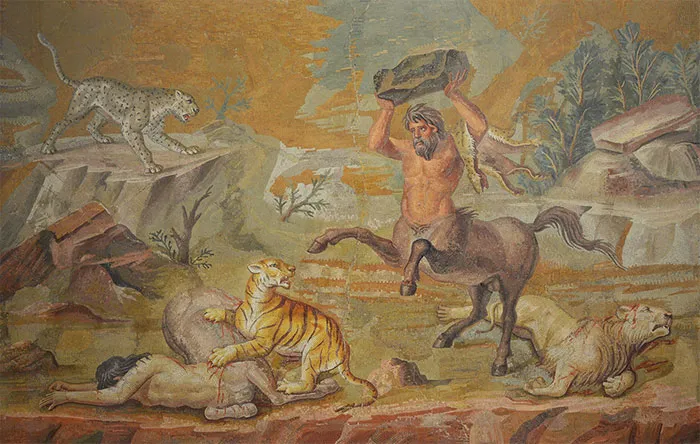
Greek mythology features horses and human hybrids known as Centaurs. They are composed of a horse's body and a man's torso, head, and arms. They were thought to be the offspring of Nephele, a cloud formed after Hera, and Ixion, king of the Lapiths. However, another myth holds that they were all the children of a single Centaurus and the Magnesian mares. Greek mythology claimed that the centaurs lived in Thessaly, specifically in the mountains of Mount Pelion.
Report
10points
#93 Cheval Mallet
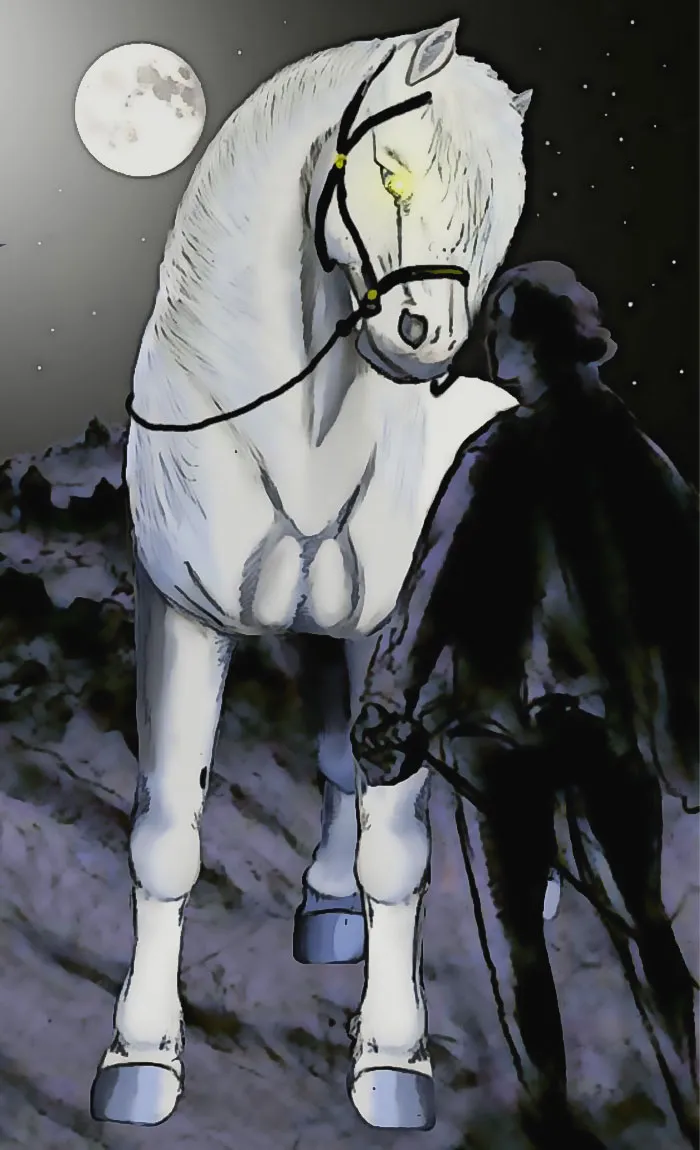
A beautiful and malicious white horse that can assume the appearance of a black horse, featured in French legend, is described as Cheval Mallet. It emerges in the early morning or the middle of the night, prancing and dancing while clad in a lavish bridle. However, that beauty is deceptive. This beautiful horse is a wicked creature that approaches weary travelers on the road at night to offer them a seat on its back. But not to bring them home. Instead, Cheval Mallet will rear up and plunge into a ferocious stampede for the traveler who hopped onto its back, galloping through the night till day. The rider will be slain when the horse throws them, either by being stepped on or thrown into a pool or fountain where the exhausted traveler will drown. Except for travelers who fling six coins marked with a cross in front of the beast's hooves or those with a St. Benoit's medal, which protects the animals, the only possible result of the encounter with the horse is death.
Report
10points
#94 Uchchaihshravas
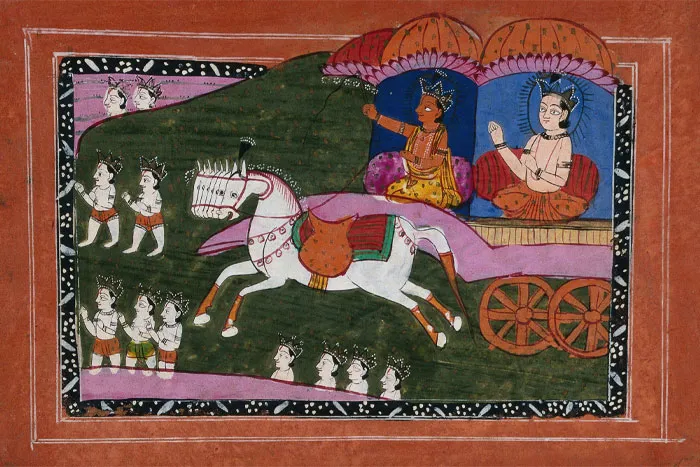
According to Hindu legend, Uchchaihshravas, a winged horse with seven heads, was created when the milk ocean was churned. It is regarded as the prototype, king, and best horse. It's sometimes called Indra's vahana ("vehicle"). In Hindu mythology, Indra was the King of the gods. However, Uchchaihshravas is also known as the horse of Bali, the king of demons. According to legend, Uchchaihshravas is pure white in color.
Report
10points
#95 Minyades
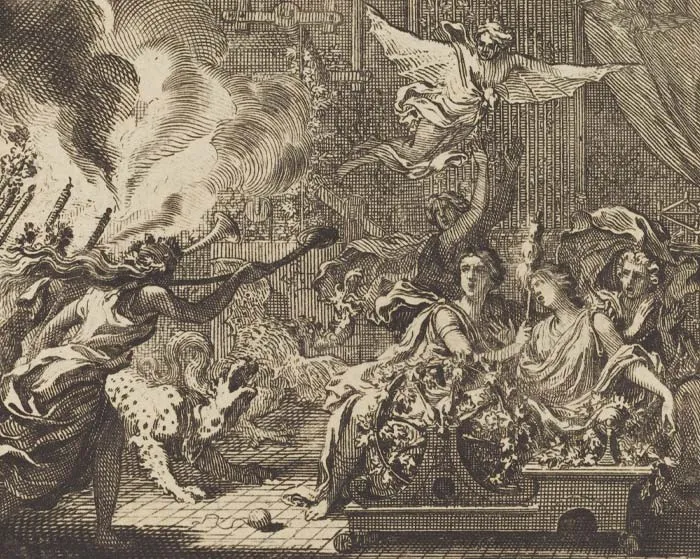
In Greek mythology, the three sisters known as the Minyades were Minyas' daughters. Alcathoe, Leucippe, and Arsippe were their names. All followers of the god Dionysus would get drunk and party in the mountains and forests when his cult first gained popularity in Greece. The Minyades continued to live quietly at home but did not adhere to these customs. Due to this contempt for his rules, Dionysus became enraged and changed the three sisters into bats. Another legend says that the sisters were requested to obey the god's traditions when he appeared in front of them. Still, when they refused, the god changed into a bull, a lion, and eventually a panther, driving the Minyades insane. They then sought to honor the god, so Leucippe willingly offered her son Hippasus as a sacrifice. After tearing him to bits, the three women fled the house and ran frantically across the mountains. They were ultimately changed into bats out of pity by the god Hermes.
Report
9points
#96 Jackalope
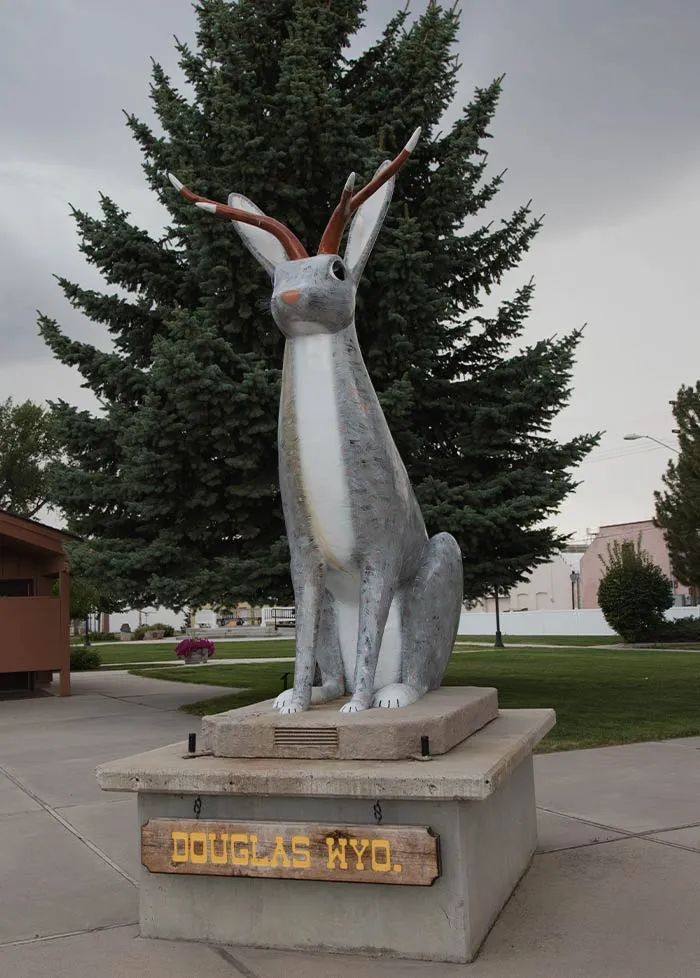
A legendary animal hybrid from North American folklore is the jackalope. The creature is referred to as a hare or jackrabbit with antlers that resemble those of a deer or an antelope. As far back as the Huichol myth, when they were portrayed as mysterious beings that gave deer their horns, there have been tales of horned rabbits. Douglas Herrick of Douglas, Wyoming, is credited with creating the jackalope. Apparently, after returning from a successful rabbit hunt and putting the carcasses down next to a pair of antlers, he made a fake mount of a rabbit head with deer antlers and sold it for $10. However, the notion of a horned rabbit quickly went out of hand. They were characterized as virulent, hostile creatures that could imitate human voices and sing along to campfire tunes. Soon they became a common urban legend. Because of how they would attack people by goring their legs with their antlers, lumberjacks had to protect themselves by wearing stovepipes. According to a tale, giving a jackalope whiskey to drink is the only way to appease one enraged.
Report
9points
#97 Python
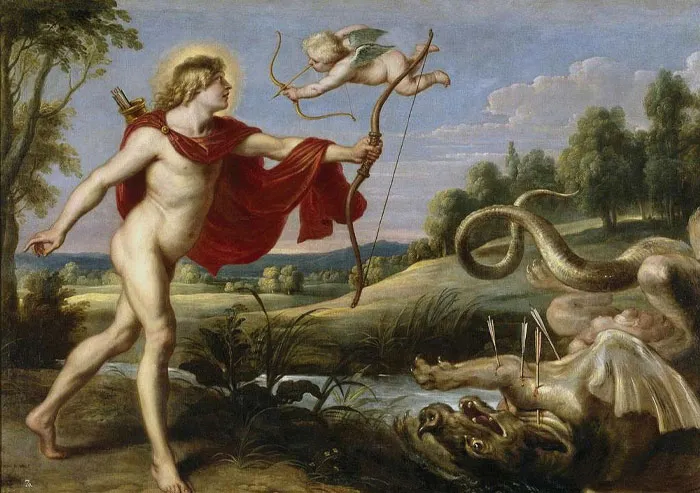
Python was the Delphic oracular serpent in Greek mythology. Apparently, Zeus' wife Hera sent Python to pursue the goddess Leto throughout the lands after Zeus slept with her, and she was due to give birth to Artemis and Apollo. Python hindered Leto from giving birth to her children anywhere the sun shone. As a result, when Apollo was an adult, he searched for the Python, heading straight for Mount Parnassus, where it dwelt. He then tracked the snake to Delphi, chasing it until he killed it with his bow and arrow.
Report
9points
#98 Amalthea
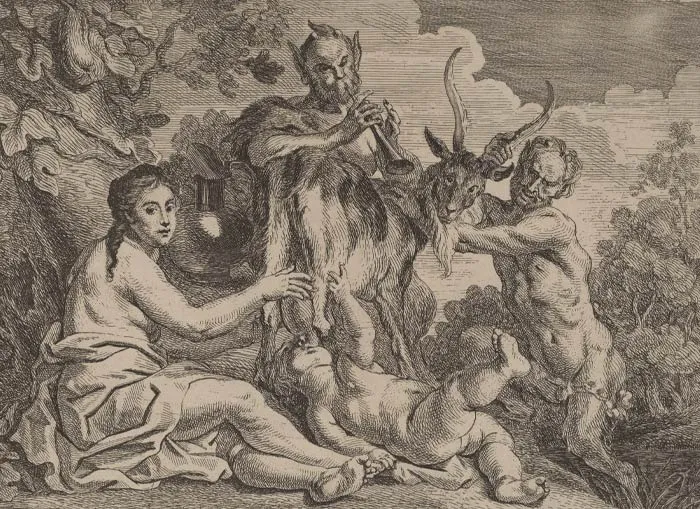
Amalthea was a milk-feeding she-goat nurse for Zeus growing up. She cared for him in a cave on Mount Dicte in Crete. When the deity was fully grown, he used her skin to make his thunder shield and cornucopia, the horn of plenty. Amaltheia was thought by some to be a nymph rather than a goat. She was assigned to the constellation Capra, the stellar cluster surrounding Capella on the arm of the charioteer Auriga. The "goat on the arm" was most likely a representation of Zeus' stormy aigis-shield, which was occasionally seen in classical art as a tasseled hide draped across his arm. For the Greeks, the rising of Capella signaled the arrival of bad weather. The ancient Greek word aigis has the dual meanings of "stormy weather" and "goat-skin," which explains the myth's tight association between the two.
Report
9points
#99 Lamassu
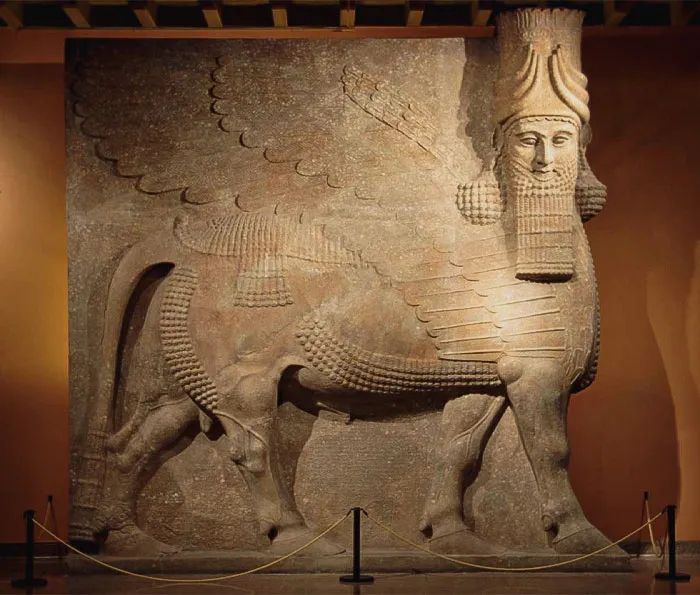
A celestial creature known as the lamassu often appears in mythology in Persian, Mesopotamian, and other Iranian cultures. Lamassu are human-headed, eagle-winged bulls that once protected the cities. They have the horns and ears of a bull and are human above the waist and a bull below. They were believed to be mighty creatures and were Babylonian people’s domestic guardian spirits. Lamassu were inscribed on clay tablets, which were then buried beneath the threshold of a dwelling because people felt safer knowing that their spirits were there. It was thought that a house with a Lamassu nearby would be a lot happier than one without. Later, they also started serving as the kings’ guardians, permanently stationed at the entryway.
Report
8points
#100 Typhon
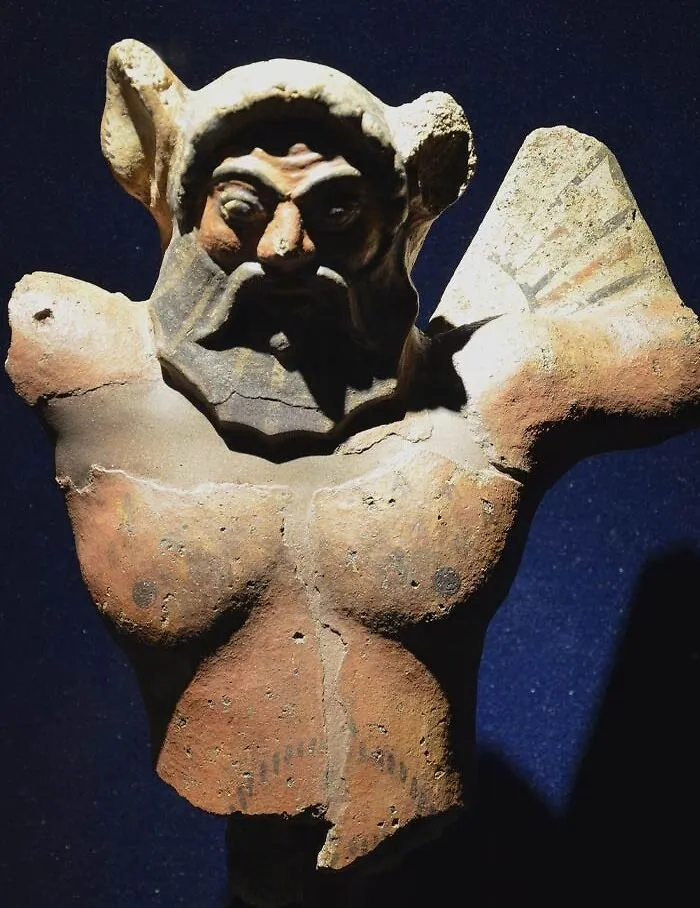
Typhon was a terrifying storm giant that besieged heaven before being vanquished by Zeus. Devastating storms that erupted from the underworld were allegedly caused by him. Typhoeus was described as a giant with wings whose head was reputed to have touched the stars. Apparently, he had two coiled serpents in place of his legs and was shaped like a man from the waist up. He had a beard covered in filth, pointy ears, and eyes that flashed fire. According to some, he possessed two hundred hands which consisted of fifty serpent-headed fingers and a hundred heads - one human, the other ninety-nine animal.
Report
8points


