




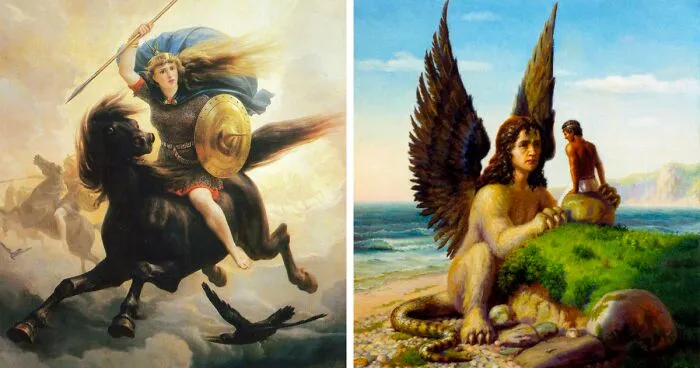


People who are dating to marry, those who still read paper books, or use pen and paper to write out their notes aren't mythical creatures, although this part of humankind is ostensibly going extinct. Speaking of fictitious, legendary creatures, the mind often wanders to Greek and Roman lore. However, numerous cultures and ancient civilizations have featured various magic creatures that are still being talked about and occasionally mentioned today.
Just like 'Phoenix' isn't solely a city name in Arizona, neither is the term 'unicorn' exclusively referring to a startup company. The many unique words and names in today's dictionary derive from fantastical creatures, often mythical animals or deities from the past. And while many may have heard of such Greek mythical creatures like the Minotaur, Gorgons, and mermaids, there are plenty more no less popular mythical creatures and legendary monsters that allegedly roamed the lands, inhabited the seas and soared the skies.
Below, we've compiled a lengthy (yet not complete) list of mythical creatures that will surely spark your interest in lore and human history. Has any mythical creature on the list originated from your country? Or perhaps you believe that some legendary creature may still be residing among us? Let us know!
#101 Ceryneian Hind
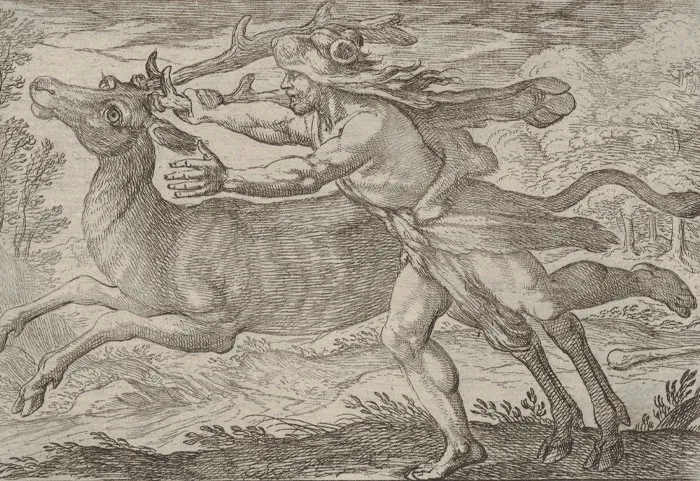
Greek mythology describes the Ceryneian Hind as a large female deer that dwelt in Keryneia. It was a sacred animal to Artemis, the huntsman goddess. Despite being a female, it possessed antlers that resembled those of a man and were made of gold, while its hooves were made of bronze. It could outrun an arrow that was flying. The third assignment King Eurystheus gave the mythical hero Heracles to perform in the tale of the Labours of Heracles was to capture the Ceryneian Hind. He thought the hero wouldn't be able to catch the hind because of its incredibly high speed. At the same time, he believed that capturing the sacred animal would incite Artemis' anger, and she would kill him. For an entire year, Heracles pursued the hind in many places inside and outside Greece. There are several accounts of how he finally succeeded in taking it down; one claims that he used a trap net to lightly harm it before taking it down as it slept. According to a different account, Artemis urged the hero to leave the hind alone before returning to tell Eurystheus what had transpired so that the mission would be deemed successful.
Report
8points
#102 Chollima
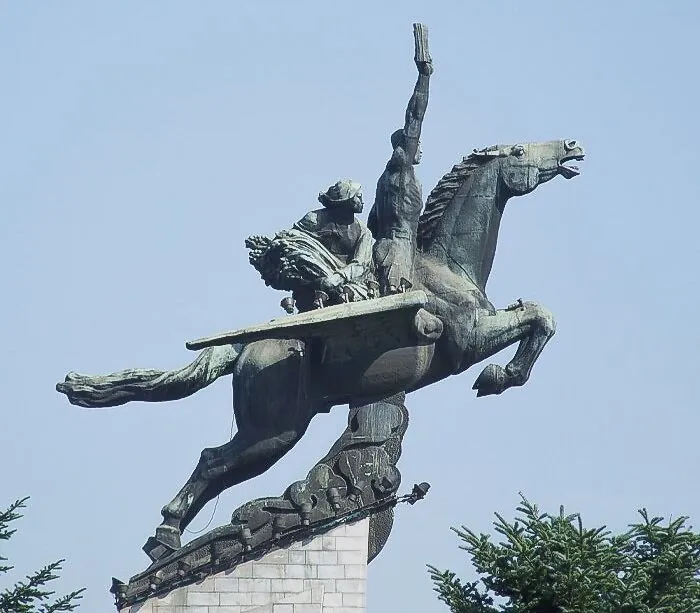
In mythology from Korea, China, and Japan, the Chollima is a horse frequently depicted as having wings. Apparently, it could run 1000 li (Chinese mile), which equals around 500 km or 310 mi daily. According to legend, no one could subdue him. While they frequently appear in Siberian mythology, the legend has its roots in Central Asia. They often stand for the bravery and tenacity of the Korean people as they advance at the pace of Chollima. Chinese people now refer to individuals with latent skills and abilities as Qianlima.
Report
8points
#103 Baku
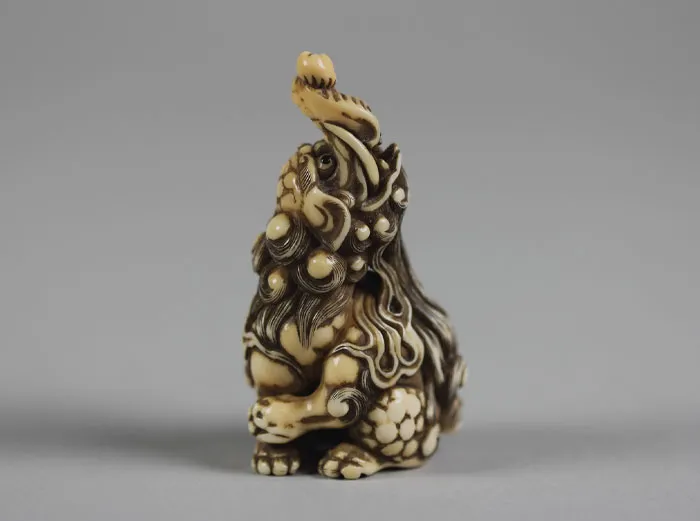
Japanese mythical creatures known as Baku "feed on" nightmares and dreams. Appearance-wise, Baku is a bizarre holy creature with the features of a bear, an elephant, a rhinoceros, an ox, and a tiger, among others. Even though they have a hideous appearance, Baku are regarded as holy protectors of humanity and powerful forces of good. They serve as guardian spirits and keep an eye on people. It is believed that they consume human dreams, particularly nightmares, and that evil spirits and Yokai fear them.
Report
8points
#104 Sidehill Gouger
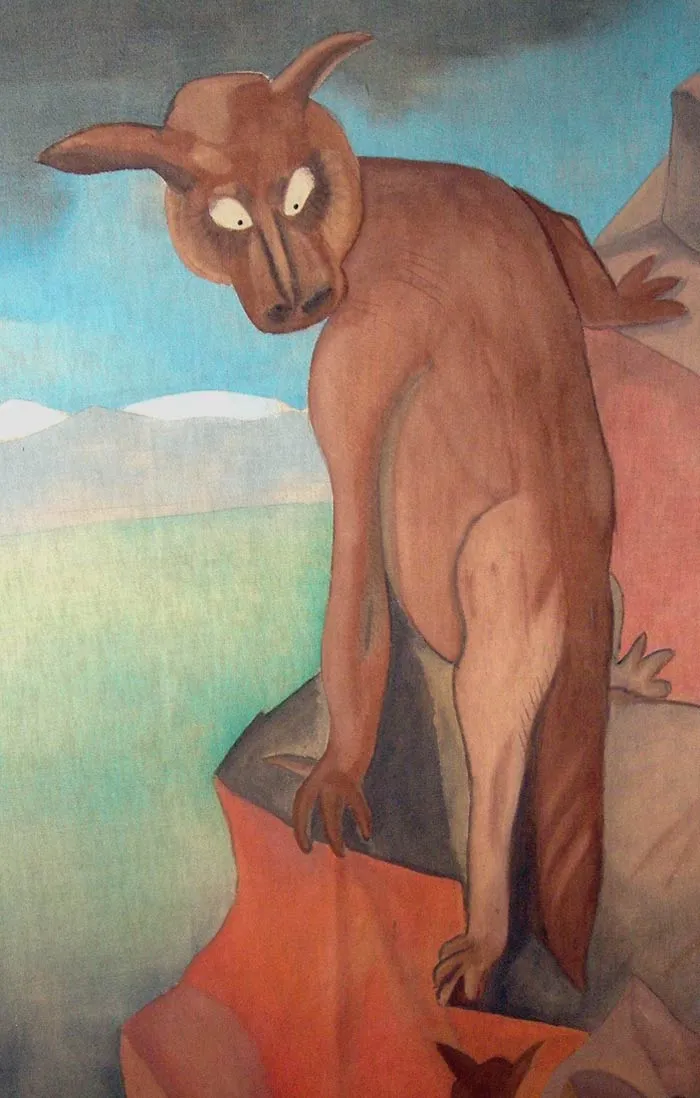
Sidehill Gougers are mythical animals from North America that have legs on one side of their bodies that are shorter than the legs on the other. This adaptation allows them to live on hillsides. Due to this peculiarity, they can only move in one direction up steep hillsides; if they are lured or pursued into the plain, they become imprisoned in an endless loop. Since their feet are designed for hillsides, they can't stand upright on flat ground. Once a Gouger accidentally tumbles down a slope, it can be captured or starve to death. Since they can only move in one direction, Gougers must fight to the end when a clockwise Gouger encounters a counterclockwise Gouger. Apparently, there was also a mythical creature similar to the Gouger in France, known as the Dahu.
Report
7points


