





People who are dating to marry, those who still read paper books, or use pen and paper to write out their notes aren't mythical creatures, although this part of humankind is ostensibly going extinct. Speaking of fictitious, legendary creatures, the mind often wanders to Greek and Roman lore. However, numerous cultures and ancient civilizations have featured various magic creatures that are still being talked about and occasionally mentioned today.
Just like 'Phoenix' isn't solely a city name in Arizona, neither is the term 'unicorn' exclusively referring to a startup company. The many unique words and names in today's dictionary derive from fantastical creatures, often mythical animals or deities from the past. And while many may have heard of such Greek mythical creatures like the Minotaur, Gorgons, and mermaids, there are plenty more no less popular mythical creatures and legendary monsters that allegedly roamed the lands, inhabited the seas and soared the skies.
Below, we've compiled a lengthy (yet not complete) list of mythical creatures that will surely spark your interest in lore and human history. Has any mythical creature on the list originated from your country? Or perhaps you believe that some legendary creature may still be residing among us? Let us know!
#61 Scorpion Man
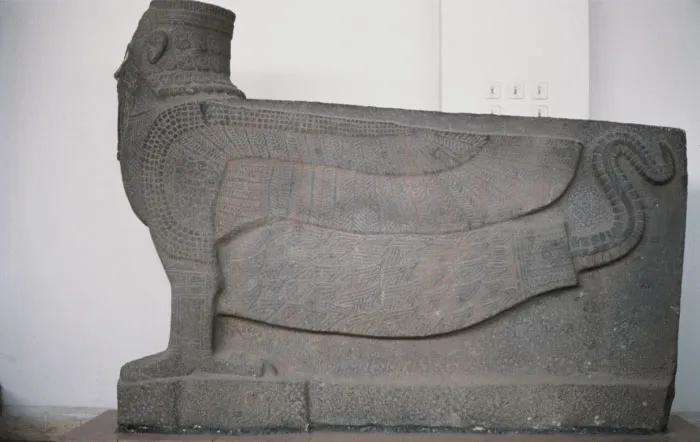
Several tales in the now-extinct Akkadian language, spoken in ancient Mesopotamia, include scorpion men, also known as aqrabuamelu or girtablilu. The Scorpion Men are said to have a man's head, torso, and arms and a scorpion's body. They were initially made by Tiamat to wage war on the younger gods in retaliation for Apsu's treachery, who was her mate. They serve as guards at the gates of the sun god Shamash in the Mashu mountains in the Gilgamesh Epic. These lead into Kurnugi, the realm of darkness. When Shamash leaves each day, the scorpion men open the doors for him, and when he returns to the underworld at night, they close the doors after him.
Report
12points
#62 Ibong Adarna
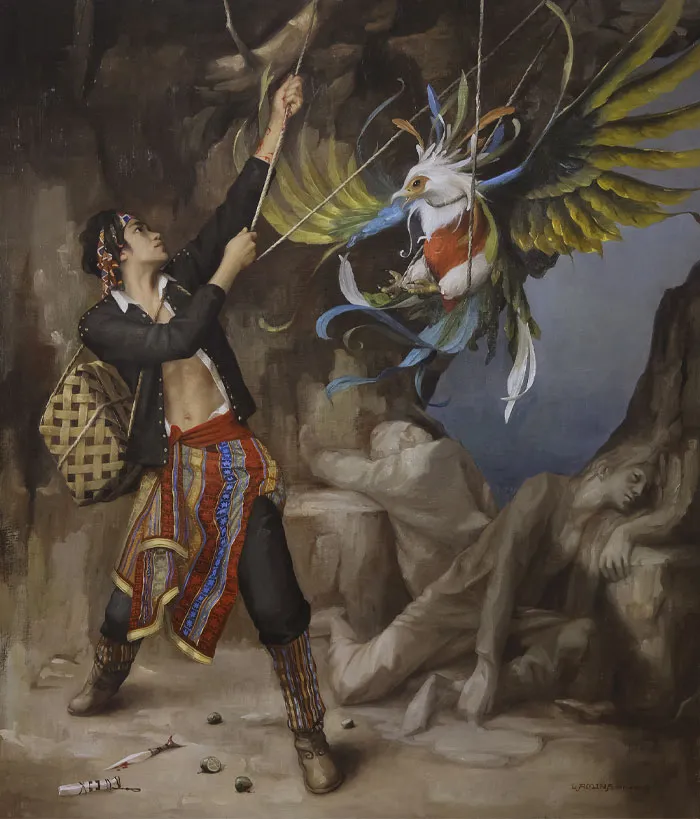
The Ibong Adarna, a legendary bird from Philippine folklore, is described as the most colorful bird in the imaginary Kingdom of Berbania. It is said to have a very long tail covered in many bright metallic colors that shift to even more lovely tones and hues after each of the seven pleasant songs it sings. These hues include garnet, dark crimson, pearl, bronze, emerald, diamond, crystal, and gold. Apparently, anyone can fall asleep listening to the bird's singing.
Report
12points
#63 Simurgh
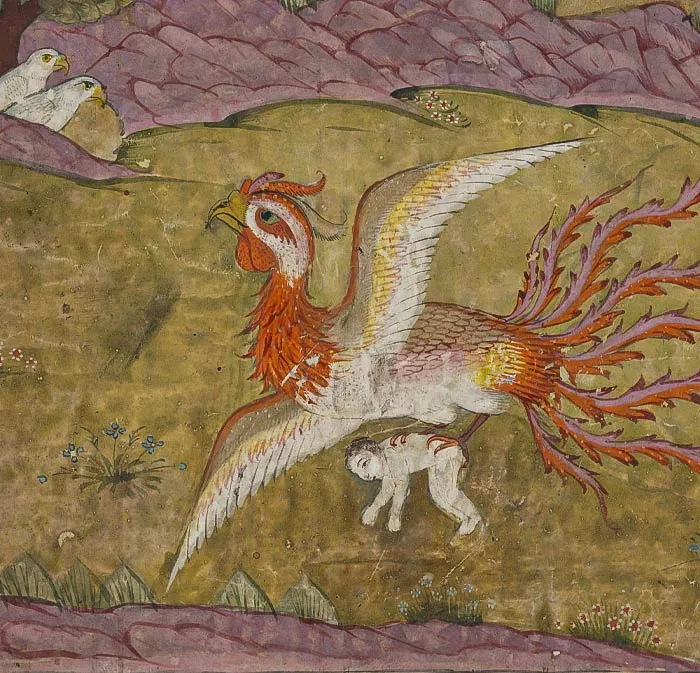
The current Persian term for a fantastic, benevolent, and mythological flying being is "Simurgh." It was believed that the Simurgh would purify the land and provide fertility. The creature served as a mediator and a messenger between the Earth and the sky, representing their unity. According to Iranian folklore, the bird was so old that it had lived through three world destructions. The Simurgh collected so much knowledge by surviving for so long that it is believed to own all human knowledge. According to one legend, the Simurgh lived for 1,700 years before setting itself ablaze, much like the phoenix. In a Kurdish folktale, a hero saves Simurgh's children by killing a snake that was trying to eat them as it was climbing a tree. The Simurgh rewards him with three of her feathers, which the hero can burn to request her aid. The Simurgh later uses the feathers to carry the hero to a far-off location. Additionally, it may be seen on the head or shoulders of monarchs and clergy, indicating their divine status.
Report
12points
#64 Tengu
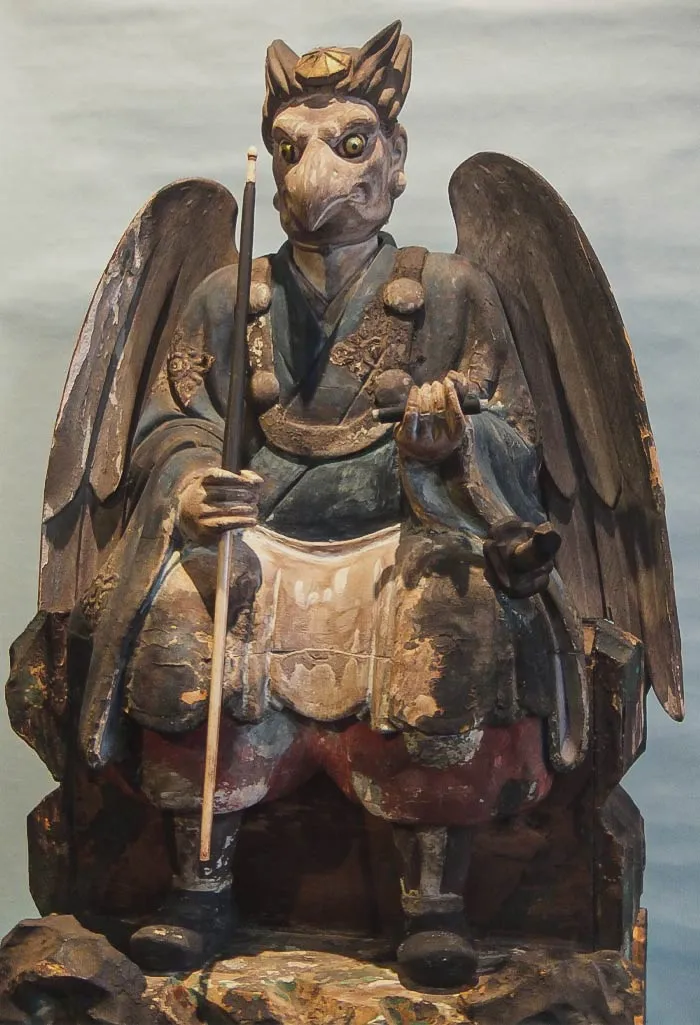
Tengu are winged Japanese mountain and forest spirits known as Yōkai. They occasionally serve as messengers for the gods or even become deities themselves. Shape-shifting into humans or animals, communicating to people without moving their mouths, swiftly changing locations without using wings, and showing up in people's dreams are only a few of their supernatural abilities. Also, they are renowned for their mastery of martial arts. Tengu are typically depicted as humanoid Yōkai with feathered wings on their backs and clothed in the robes of a monk. The two most common head shapes in Japan are that of a red-faced man with a long nose and that of a bird.
Report
12points
#65 Qilin
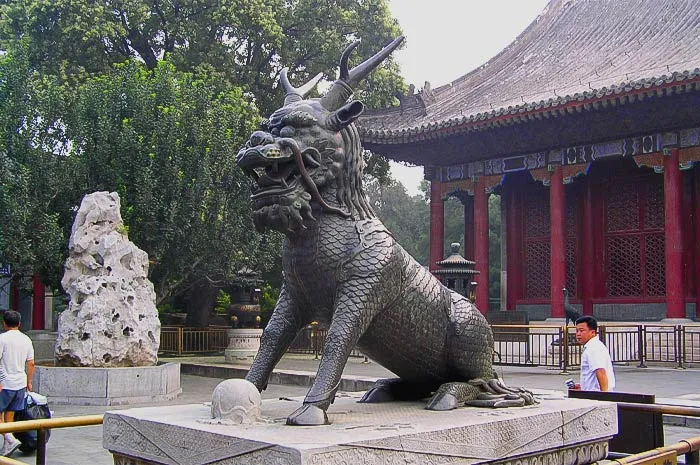
According to Chinese mythology, the fabled hooved chimerical creature known as the Qilin comes when a wise man or distinguished monarch is about to arrive or depart. The Qilin also appears in the mythologies of other civilizations, including Japan, Korea, and Vietnam. Gentle in nature, Qilin never grazes on lush grass or consumes living things. Common characteristics of Qilin include comparable heads with antlers, eyes with thick eyelashes, always upward-flowing manes, and beards. The body is entirely or in part scaled, and it frequently resembles an ox, a deer, or a horse. They are always portrayed with cloven hooves. According to legend, Qilin twice manifested in the capital of Emperor Yao and the garden of the fabled Yellow Emperor, both events of which served as evidence of the emperors' benevolence. It has also been said that the arrival of a Qilin foreshadowed the birth of the great sage Confucius.
Report
12points
#66 Auðumbla
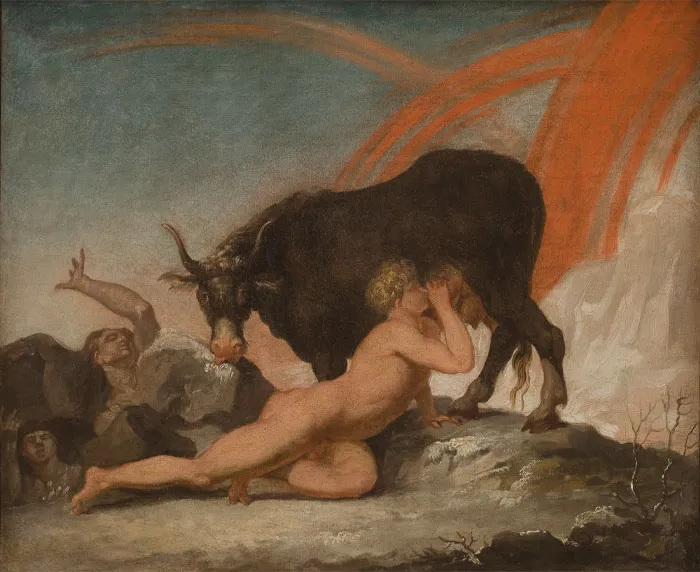
In Norse mythology, Auðumbla is the primeval cow from whom the primordial frost jötunn Ymir consumed the milk. Over three days, she licked away the salty rime rocks and revealed Búri, grandfather of the gods and brothers Odin, Vili, and Vé. Only the Prose Edda, which Icelander Snorri Sturluson wrote in the 13th century, mentions the enigmatic cow. The cow is thought to have originated in a very early layer of Germanic mythology and ultimately belonged to a larger group of prehistoric goddesses who were either associated with cows or who were themselves bovines. Various spellings of the cow's name, Auumbla, Auhumla, and Auumla, can be found in the Prose Edda manuscripts. However, it is generally recognized that all these names refer to a "hornless cow rich in milk."
Report
12points
#67 Sleipnir
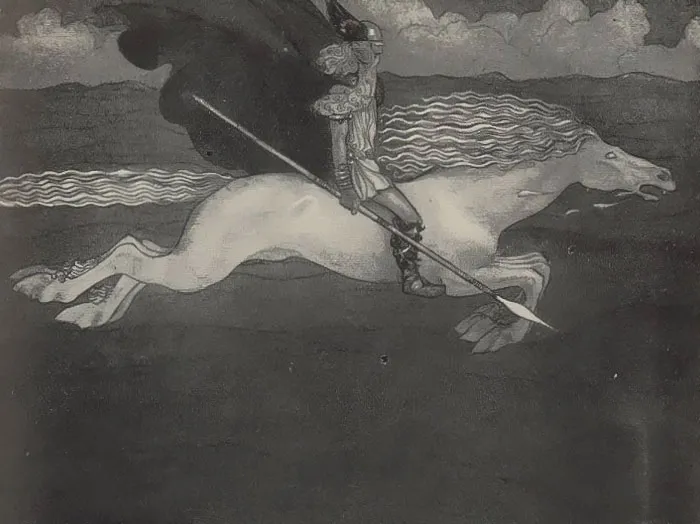
The eight-legged horse of the god Odin is named Sleipnir. Sleipnir, likely to be categorized as a fylgja, is one of Odin's numerous shamanic aiding spirits, including the valkyries, Hugin, and Munin. Astride Sleipnir, Odin frequently travels around the Nine Worlds. Many indigenous traditions from all over the world feature the eight-legged horse as a symbol of the mode of transportation utilized by shamans in their ecstatic voyages throughout the cosmos. The shamanic horse par excellence is Sleipnir, just as Odin is the supreme shaman. According to the legend of The Fortification of Asgard, Sleipnir was created when the deity Loki transformed into a mare and became pregnant with the stallion of a giant.
Report
12points
#68 Behemoth
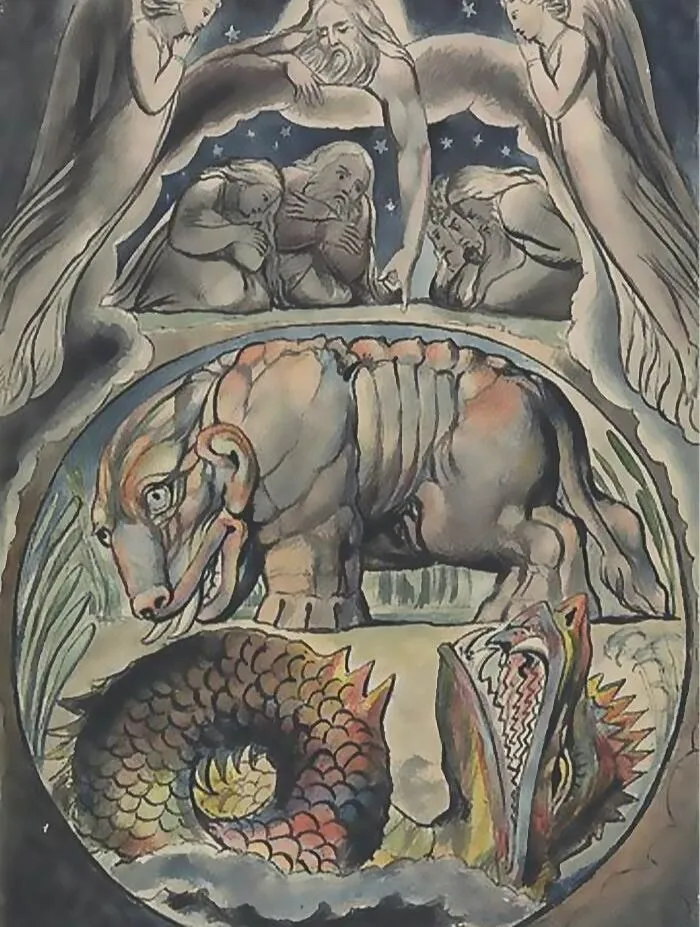
A giant mythical land creature from Hebrew mythology named Behemoth is mentioned in the Hebrew bible's Book of Job. In the literal sense, Behemoth means "beast." Although it is unknown precisely what kind of animal the Behemoth is supposed to represent, the Book of Job describes it as munching grass "like an ox," which gave rise to the custom of portraying the Behemoth as a huge ox. Various Christian and occult writers reimagined the Behemoth as a gigantic elephant-like demon much later, during the Georgian and Victorian eras. Some academics argue that the Behemoth was initially intended to refer to a massive hippopotamus.
Report
12points
#69 Selkie
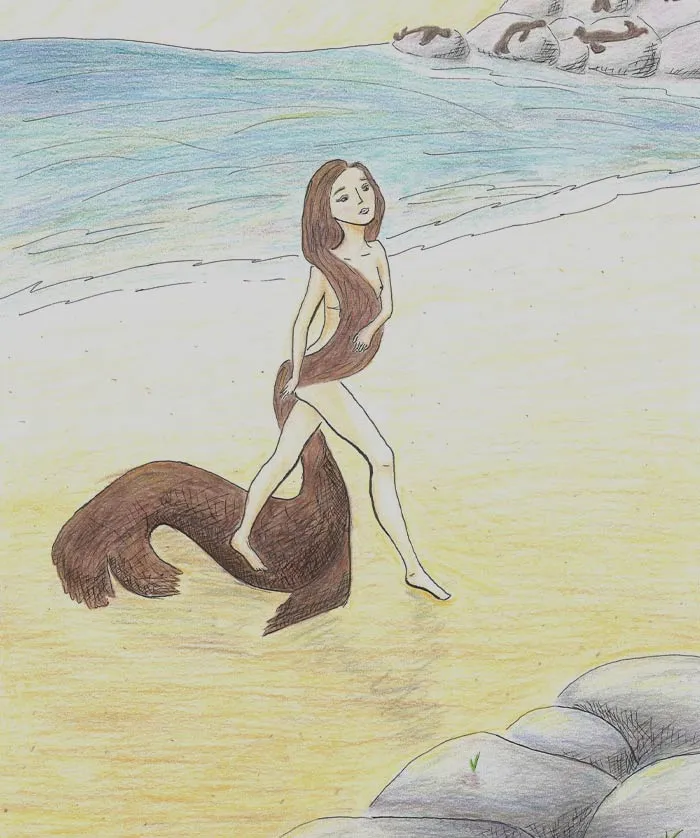
Selkies are mythical creatures, therianthropes, able to shed their skin to transform from seal to human form. An Orcadian folklorist claims that the correct term for these shapeshifters is "selkies." In contrast, Shetland treatises only use the terms "mermen" or "merwomen." Numerous selkie folklore tales have been gathered from the Northern Isles (Orkney and Shetland). Folktales commonly include female selkies being forced into relationships with humans by someone taking and concealing their sealskin, illustrating the swan maiden kind of story motif.
Report
11points
#70 Alicanto
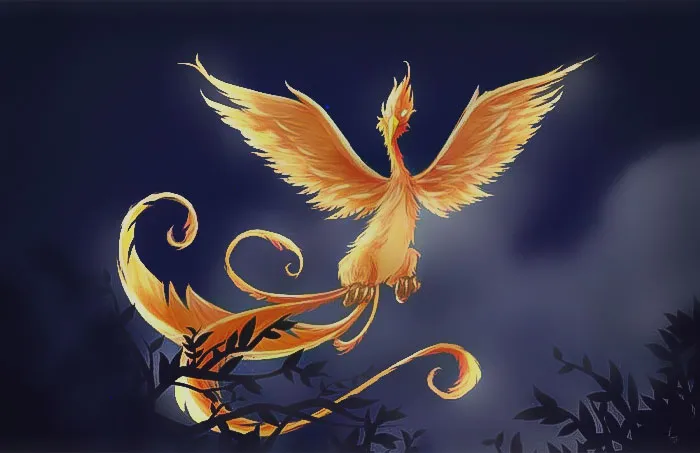
The Alicanto is a mythological bird from Chilean folklore and mythology that lives in the Atacama Desert and other parts of the country. The Atacama desert is said to be abundant in minerals and ores. The legend is that Alicanto lives there and consumes various metals found in the desert. Its eyes are said to emit bright lights, and its wings sparkle at night with lovely metallic colors. Its consumption of various metals is thought to be the cause of these beautiful illuminations. For instance, when the bird consumes gold, it emits a golden light. When it consumes silver, it releases a silvery light; when it consumes copper, its light may be reddish. Because of the light emanating, the bird apparently also doesn't have a shadow.
Report
11points
#71 Bennu
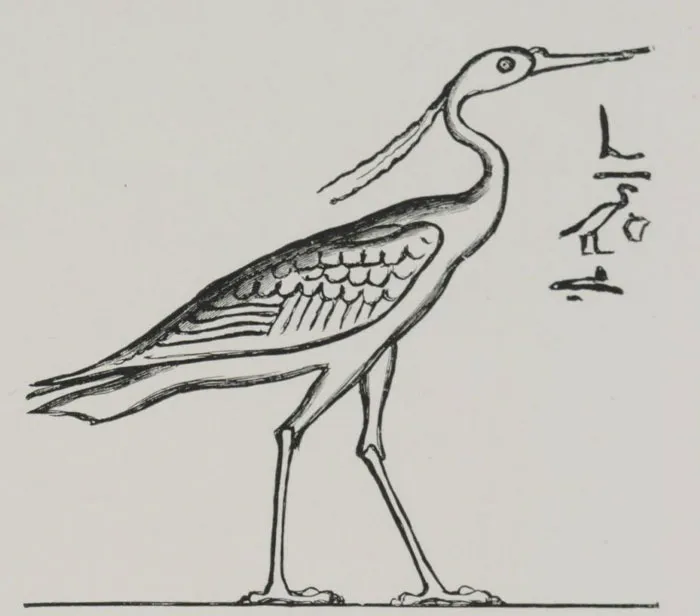
Ancient Egyptians associated the Bennu Bird, a sacred bird, with the gods Ra and Atum. According to legend, the bird was present at the moment of genesis. Some academics believe that the Bennu Bird resembled a grey heron. These bird species appear prominently in many mythologies, including Greek ones. Perhaps the heron was the inspiration for later paintings of the Bennu Bird. However, the bird may have been initially a yellow wagtail, a representation of the god Atum, with whom the Bennu bird had a close affinity.
Report
11points
#72 Gandabherunda
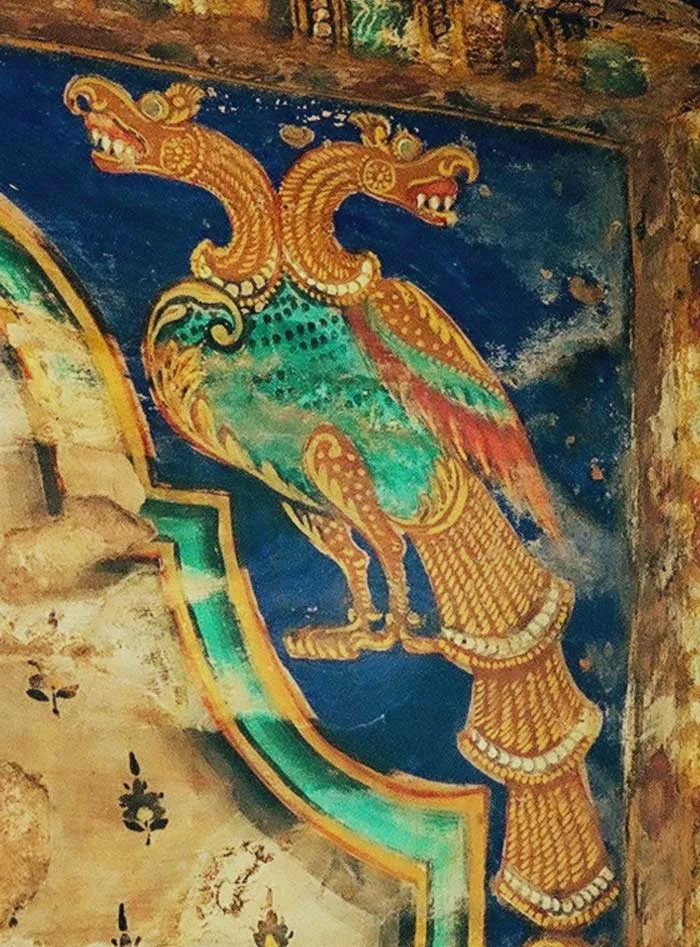
The Gandabherunda, a two-headed bird with incredible strength and magical ability, originated in Hindu mythology. Hindu temples often have Gandabherunda images, which are supposed to be a way of fending against or combating evil forces. To show off its formidable strength, the bird is frequently shown holding an elephant in its beak or talons. Gandabherunda, the man-lion incarnation of Vishnu, is believed to be one of Narasimha's bodily manifestations.
Report
11points
#73 Turul
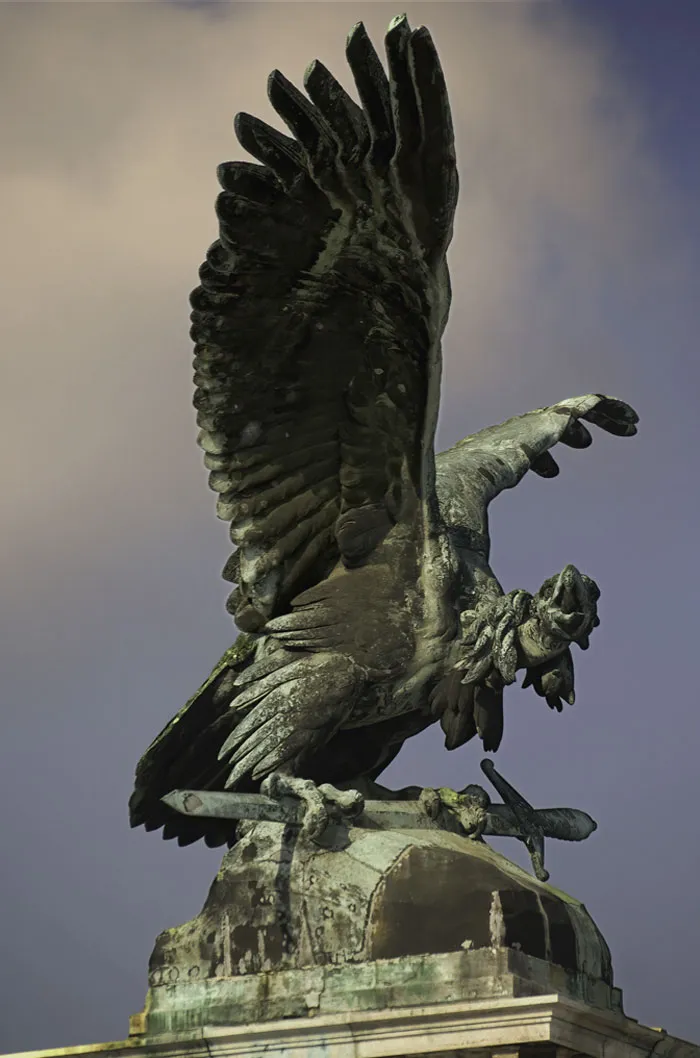
The mythical bird known as Turul is pictured as a cross between a hawk and a falcon. According to Hungarian folklore, the Magyar princess Emese had a dream in which a Turul appeared. In this dream, a crystal-clear stream began to flow from her, and as it traveled westward, it turned into a mighty river. According to dream interpreters, this meant Turul's symbolic impregnation of her and indicated that she would have a son who would lead his people out of their Levedia home. Later, Emese gave birth to Álmos, the father of Árpád, the great Magyar leader and the founder of Hungary. Turul is frequently depicted as having spread wings and a sword in its talons. There were three enormous statues of Turul in Hungary before World War I, each having a 15-meter wingspan. Today, the statue in Tatabánya is the sole one still standing after two were destroyed.
Report
11points
#74 Nemean Lion
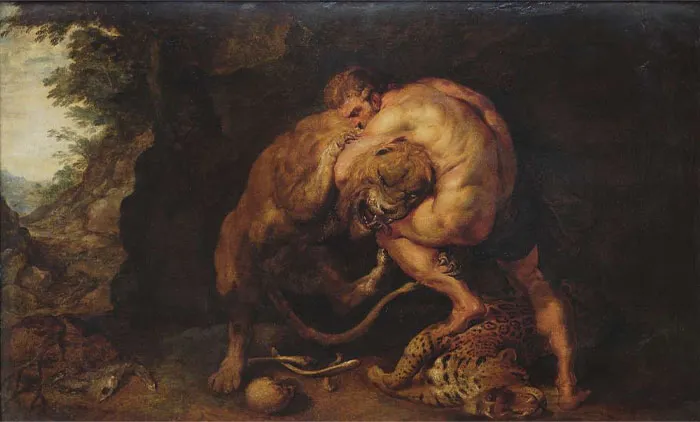
Greek mythology often recounts the tale of the Nemean Lion, a fabled beast with huge teeth who tore through Nemea. Apparently, it was unstoppable because human weaponry could not penetrate its fur. It was believed to be the offspring of Typhon and Echidna, the parents of all monsters. In other versions, its parents are identified as Zeus and Selene. Slaying the Nemean Lion was the first assignment that King Eurystheus gave the heroic Heracles. According to one interpretation, the lion lured women from Nemea and kept them in its den as bait to lure warriors. When the brave warrior saw the woman, she would transform into a lion and attack him. Other legends claim that the Nemean Lion wasn't merely a wild animal living in a cave. Apparently, Hera took the lion to Zeus' temple in Nemea and made him stand watch so that the locals could not worship Zeus, as Hera was constantly seeking retribution against him for his numerous infidelities.
Report
11points
#75 Shen
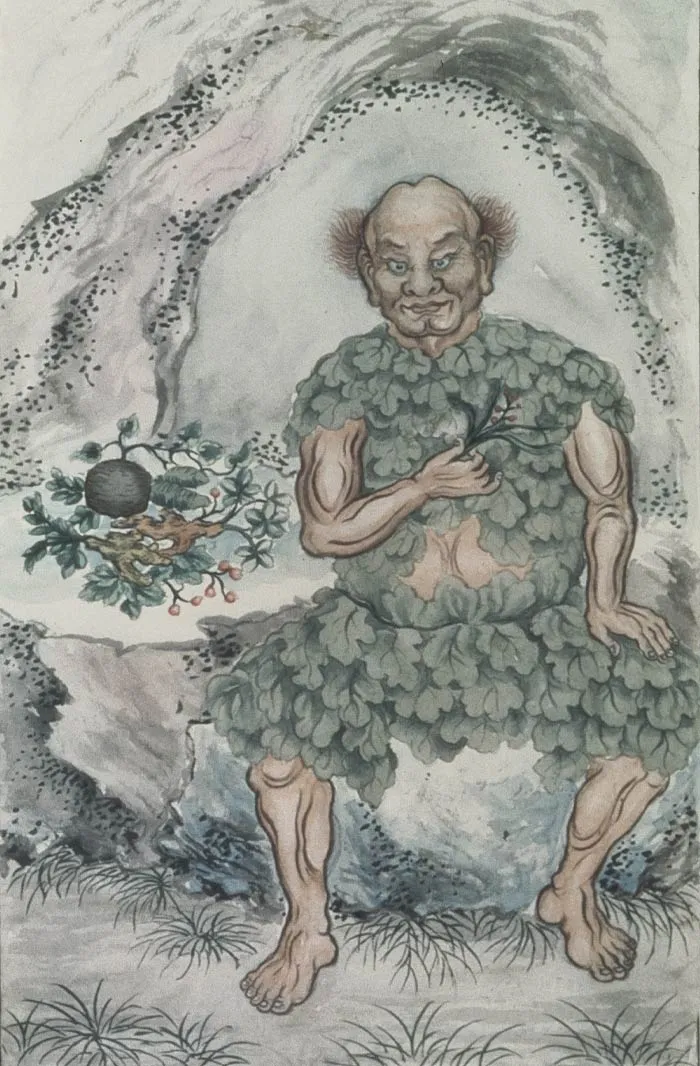
There are many supernatural animal spirits in Chinese mythology. Perhaps one of the strangest is a Shen, a giant mollusk or a clam creature that can build imaginary cities and landscapes. In classical Chinese texts, large bivalve mollusks like oysters, clams, or mussels are called "shen." In fact, these shells appear to have served an (unknown) mystical purpose in funerals and sacrifices. Later writings emphasized the Shen as a legendary giant oyster or clam that yielded enormous magical pearls. Around the medieval centuries, the Shen evolved into its current manifestation. It is now believed to be a massive, clam-like spirit creature that could blow bubbles from its tubes to create the illusion of skyrocketing buildings and fantastical fairylands.
Report
11points
#76 Sun Wukong
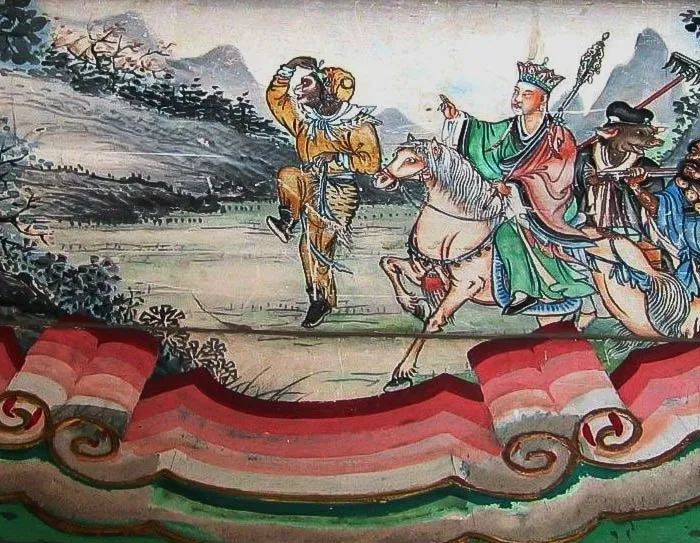
The mythological entity Sun Wukong, commonly referred to as the Monkey King, appears in several legends dating back to the Song dynasty that began in 960 and lasted until 1279. The Monkey King plays the title character in the 16th-century Chinese classic novel Journey to the West. The plot recounts the exploits of Sun Wukong, an immortal demonic monkey who develops great power after years of spiritual training and rebels against heaven's supremacy. Like Loki in Norse mythology and Lucifer in Judeo-Christian mythology, this trickster god loses his favor when a supreme divinity, the Buddha, casts him into an earthly jail. But unlike his Western counterparts, the monkey turns to Buddhism and travels to India with the monk to gather Buddhist sutras. According to the story, he is a stone-born monkey who gains superhuman abilities through engaging in Taoist rituals.
Report
11points
#77 Black Tortoise
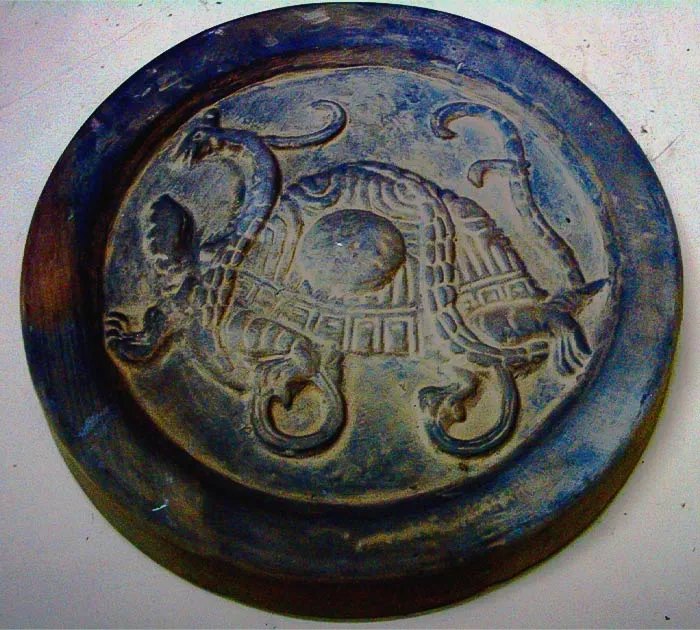
One of the Four Symbols of the Chinese constellations is the Black Tortoise. It is typically pictured as a tortoise and a snake intertwined. In Chinese, it is also known as Xuanwu, while in Japan, it is called Genbu. It is also frequently referred to as the Black Warrior of the North, symbolizing the north and the winter season. The creature's name is the same as that of the significant Taoist deity Xuanwu, who is occasionally accompanied by a turtle and a snake. Long ago, the tortoise and the serpent were revered as immortal spiritual beings in China. It's possible that the Minyue people's tradition of creating graves in the shape of turtles stemmed from their wish to place the deceased under the protection of the Black Tortoise.
Report
11points
#78 Gorgon
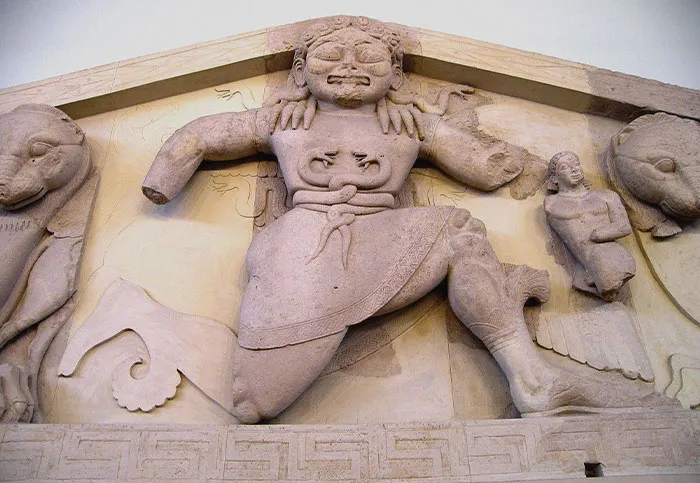
Arguably one of the most well-known mythical creatures featured in Greece's mythology is the Gorgon. Interestingly, Homer only ever mentioned one Gorgon, a demi-god from the underworld. However, the later Greek poet Hesiod expanded the number of Gorgons to three - Stheno, Euryale, and Medusa. They were the daughters of the sea god Phorcys and his sister-wife Ceto. According to Attic mythology, Gaea, the goddess of Earth, created the Gorgon to help her sons fight the gods. The Gorgons were depicted in early classical art as winged female creatures with snakes for hair, round faces, flat noses, tongues hanging out, and protruding teeth. The only mortal of the three was Medusa, who is shown as beautiful but lethal in later art. Medusa was killed by Perseus by chopping off her head. Her two Poseidon-born children, Chrysaor and Pegasus, were born from the blood gushed from her neck. It was believed that all who gazed upon the severed head of Medusa would turn to stone. Masks carved to resemble the horrifyingly deformed head of the Gorgon were also worn as a defense against the evil eye.
Report
11points
#79 Naga
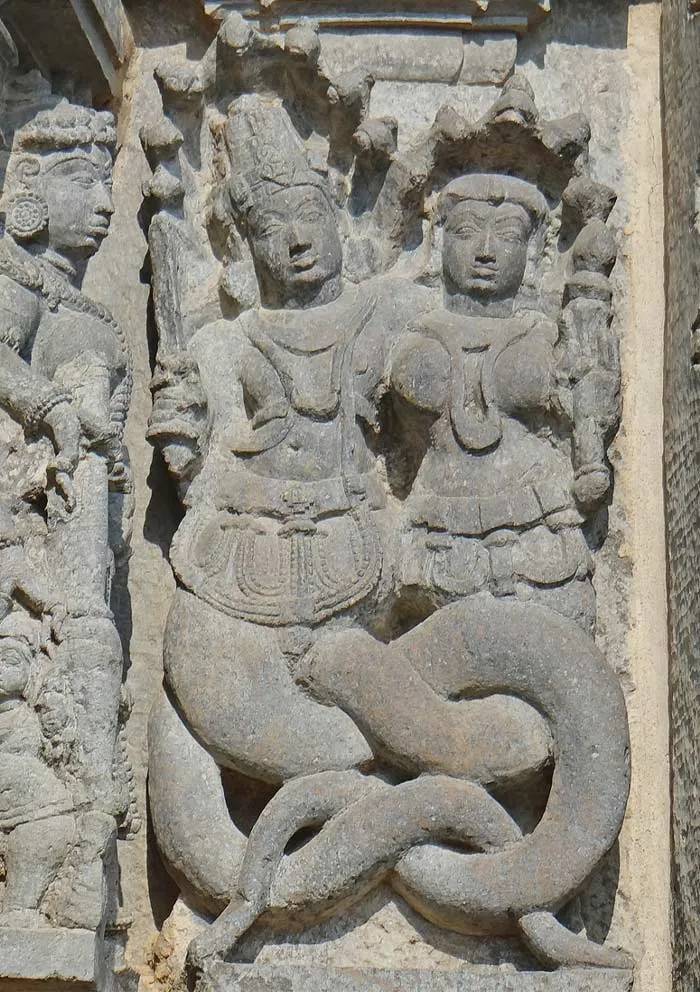
Nagas, human-snake hybrids, are rather familiar in various Eastern cultures and traditions. A Naga's exact appearance varies, but in general, it is thought to resemble a human from head to waist and then transition into a serpent from there. Other representations include a single or multiple-headed snake that has the power to assume a human form or even a person with snakes growing out of their heads, much like Medusa. Nagas frequently possess magical abilities, most related to their ability to switch between their two natural forms. They reside in the underworld of Hinduism known as Patala, the realm of the dead. A typical Naga is a smug and arrogant being with an enticing exotic aura emanating from them. Even though their strong, bordering on heavenly presence may seem menacing, they are not wicked. Nagas are potent and frequently perform guard duties when called upon by a supernatural being. They are brutal in their work and may be overly protective of the secrets they guard, slaying intrepid or foolish explorers. They are typically kind when not on guard duty, provided they are not provoked.
Report
11points
#80 Tarasque
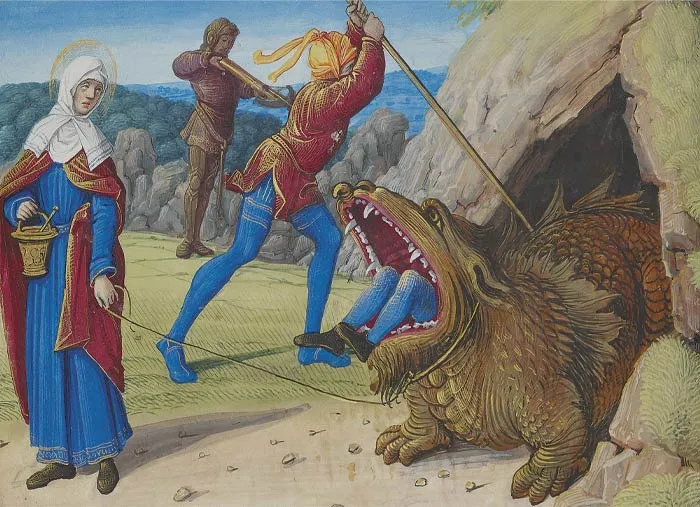
The town of Tarascon was named after the Tarasque, a fabled creature that terrorized the Provence part of France. It was said that this monster wiped out every living thing that got in its way, whether on land or in the river, man or animal. Even its breath would burn anything it touched, and it could spew fire from both its eyes and mouth. Legions of men were dispatched to fight it, but their spears and weapons were ineffective against its impenetrable shell. The few people who had seen the Tarasque spoke of it in low, frightened tones. They described it as looking like a massive crocodile with elephant-sized legs and a supple, scaled body. It regularly exhaled fire and smoke, giving the impression that a blue cloud with red lightning bolts was around its head.
Report
11points


