






The past is far more interesting and bizarre than you think. In reality, it's much more nuanced and captivating than what you probably learned back in school. It’s humbling to realize learning never stops, and we could all use some extra lessons.
#41
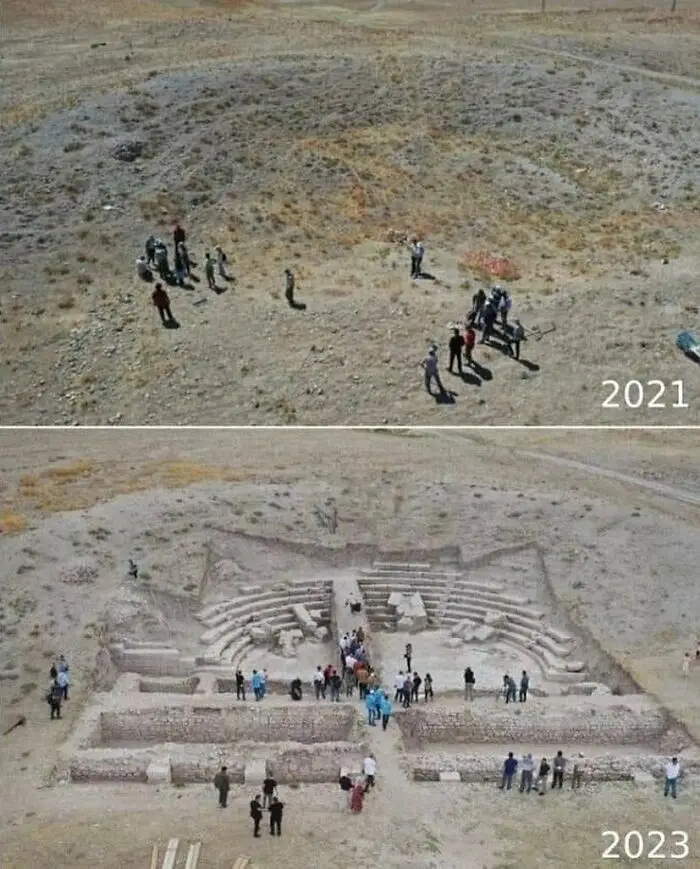
Excavations of the ancient theater in Savatra, on the territory of modern Turkey
Report
20points
#43
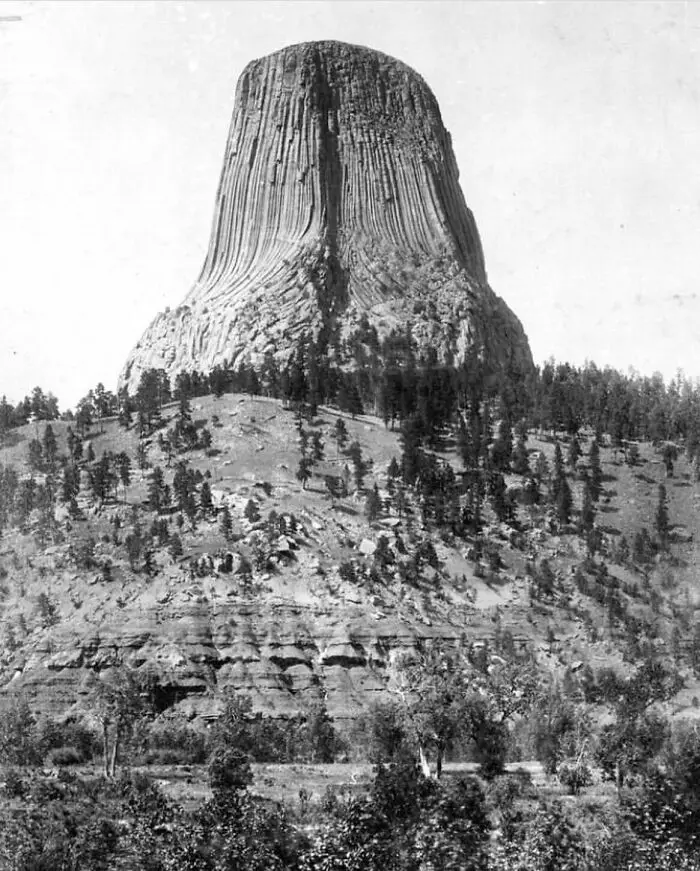
Devils Tower (also known as Bear Lodge Butte) is a butte, possibly laccolithic, composed of igneous rock in the Bear Lodge Ranger District of the Black Hills, near Hulett and Sundance in Crook County, northeastern Wyoming, above the Belle Fourche River.
It rises 1,267 feet (386 m) above the Belle Fourche River, standing 867 feet (264 m) from summit to base. The summit is 5,112 feet (1,558 m) above sea level The name "Devil's Tower" originated in 1875 during an expedition led by Colonel Richard Irving Dodge, when his interpreter reportedly misinterpreted a native name to mean "Bad God's Tower".All information signs in that area use the name "Devils Tower", following a geographic naming standard whereby the apostrophe is omitted.
The landscape surrounding Devils Tower is composed mostly of sedimentary rocks. The oldest rocks visible in Devils Tower National Monument were laid down in a shallow sea during the Triassic.This dark red sandstone and maroon siltstone, interbedded with shale, can be seen along the Belle Fourche River. Oxidation of iron minerals causes the redness of the rocks. This rock layer is known as the Spearfish Formation. Above the Spearfish Formation is a thin band of white gypsum, called the Gypsum Springs Formation, Jurassic in age.
Overlying this formation is the Sundance Formation.During the Paleocene Epoch, 56 to 66 million years ago, the Rocky Mountains and the Black Hills were uplifted.Magma rose through the crust, intruding into the existing sedimentary rock layers.
Report
19points
#44
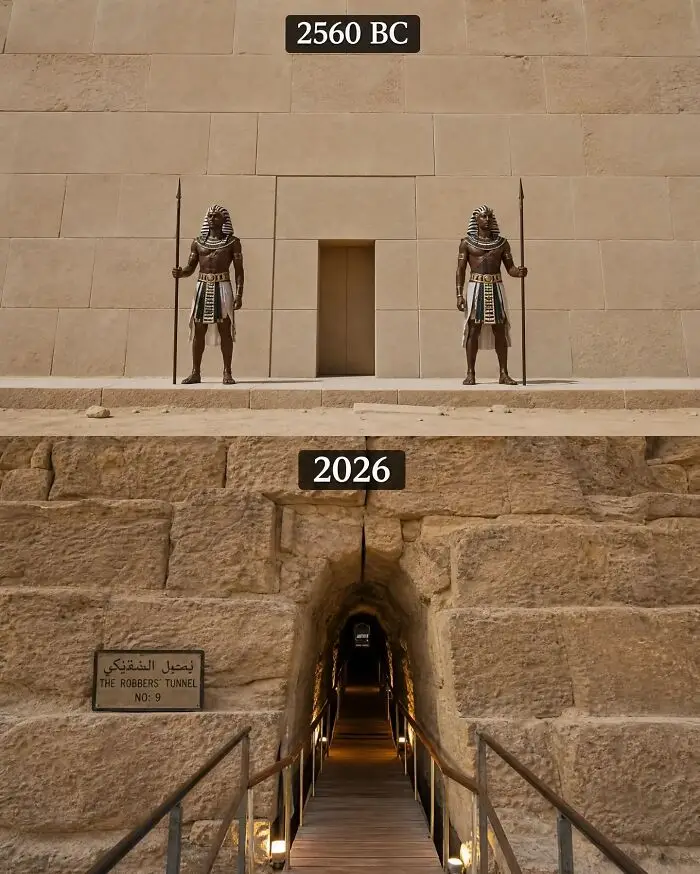
The Giza Pyramids The Giza Pyramids were built during the Old Kingdom period of Egypt (approximately 2580-2500 BC), in the 4th Dynasty. The largest pyramid (the Great Pyramid) was built for Pharaoh Khufu (Cheops).
The pyramids next to it were built for his son Khafre (Kefren) and his grandson Menkaure (Mikerinos). These pyramids were designed as tombs for the pharaohs and were completed with the advanced engineering knowledge of the time and the labor of tens of thousands of workers.
Today, they are among the most iconic ancient structures in the world and are a symbol of Egypt. They have a history of approximately 4500 years in total.
Report
18points
#47
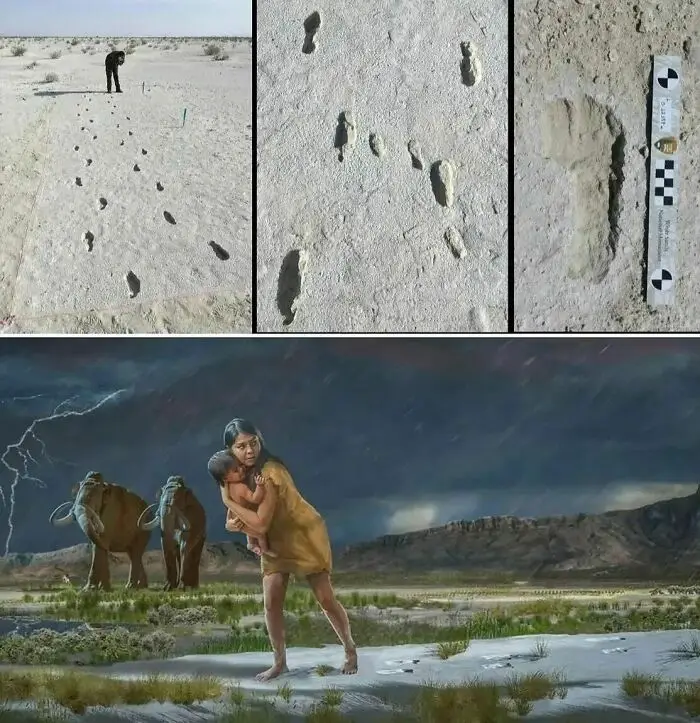
This very ancient chain of human footprints stretches for 1.5 km in White Sands National Park, USA. The footprints were left by a young girl (or a teenage boy) who went on a dangerous journey 13,000 years ago, carrying a 2-year-old child in her arms. These people were walking along the shore of the lake that has dried up now, the first chain of tracks was hurried, the man was moving at a speed of about 6 km / h, at times he lowered the baby to the ground, then picked him up again and hurried, often slipping.
The second chain goes in the opposite direction, the girl is no longer in a hurry, the steps are more confident, there are no traces of the child. Scientists do not know what the order of events was, whether she came for the child, with whom she then hurriedly left, or vice versa, hurriedly gave someone the baby and went back. In any case, the journey was very dangerous and desperate, the footprints of people crossed the footprints of saber-toothed cats, wolves and huge mammoths of Columbus.
Report
18points
#48
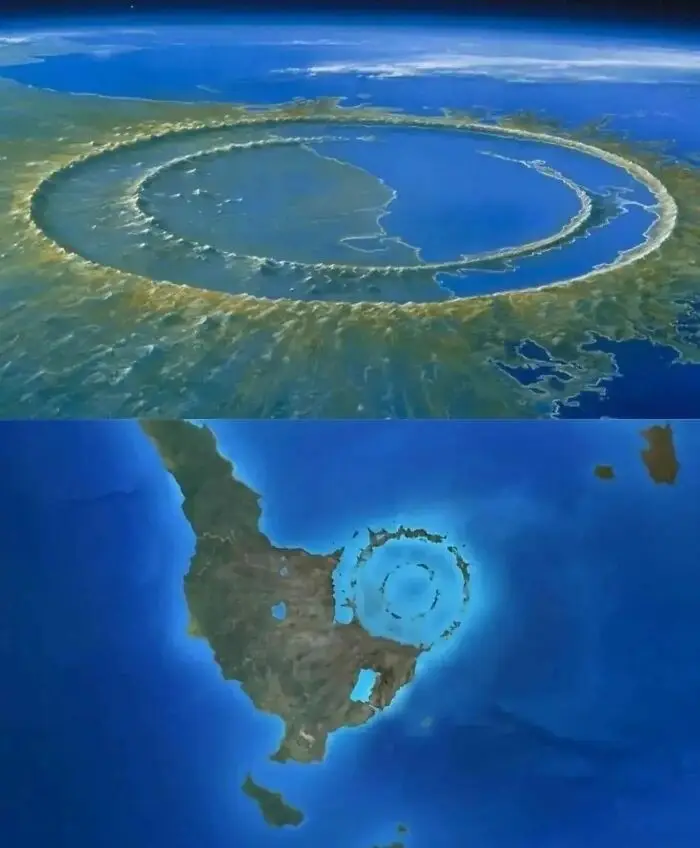
Chicxulub crater was formed when a large asteroid (10 km in diameter) crashed into the Earth.
Many scientists believe that this event caused the extinction of the dinosaurs.
Report
17points
#49
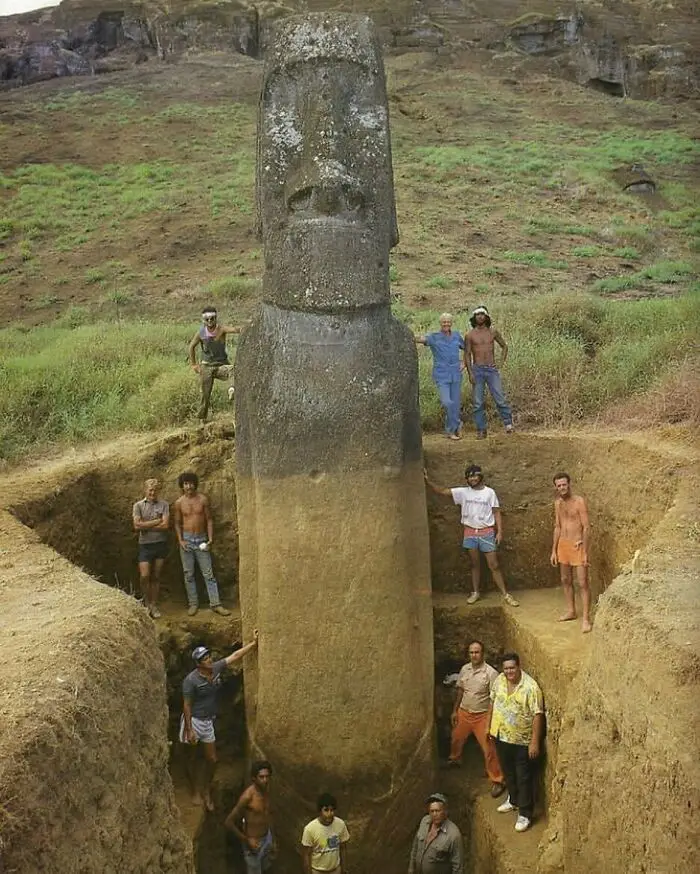
A Moai statue unearthed during excavations on Easter Island. Approximately 1000 statues, the largest of which is 10 meters long and weighs 82 tons
Report
17points
#50
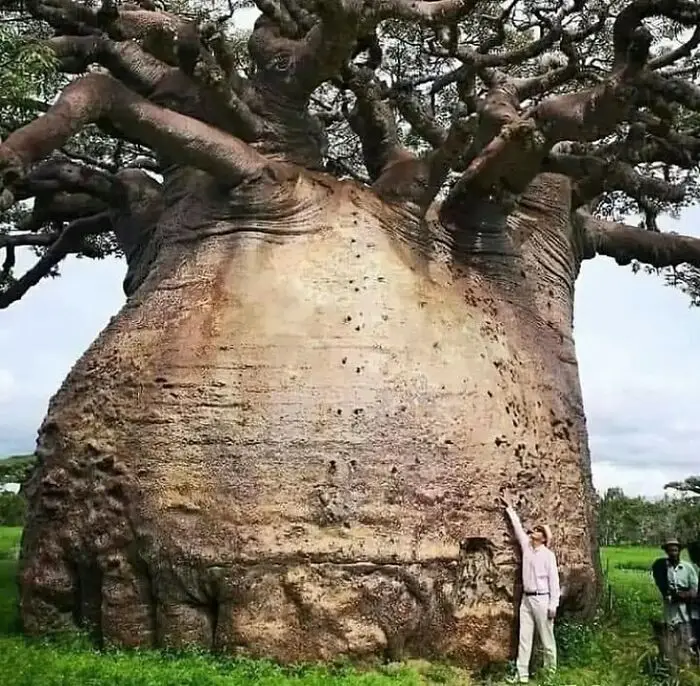
Baobab: Iconography of the "GB of Life" The majestic baobab is an icon of the African continent and is at the center of many African traditional and folk remedies. The baobab is a prehistoric species that predates humanity and the division of continents more than 200 million years ago.
Indigenous to the African savannah, where the climate is extremely dry and windy, it is a symbol of life and positivity in a landscape where nothing else can thrive. Over time, baobabs have adapted to their environment, they are succulent, which means that during the rainy season they absorb and store water in their large truck, which allows them to produce fruit rich in nutrients in the dry season, when all the places are dry and dry.
Thus, it became known as the "Tree of Life". Baobabs grow in 32 African countries. They can live up to 5,000 years, reach 30 meters in height and 50 meters in the ocean. Baobab trees can provide shelter, food and water for animals and humans, which is why many savannah communities have made their homes near bao trees.
Report
17points
#51
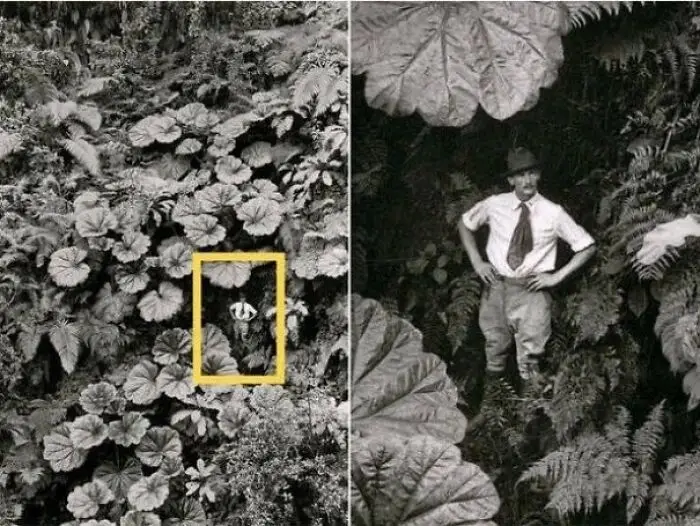
Giant vegetation near volcanoes. The Hawaiian island of Maui.
"The human figure gives a clear idea of the size of the green giant growing in a narrow gorge on the slope of the extinct volcano Haleakala," says the February 1924 issue of National Geographic.
Report
16points
#52
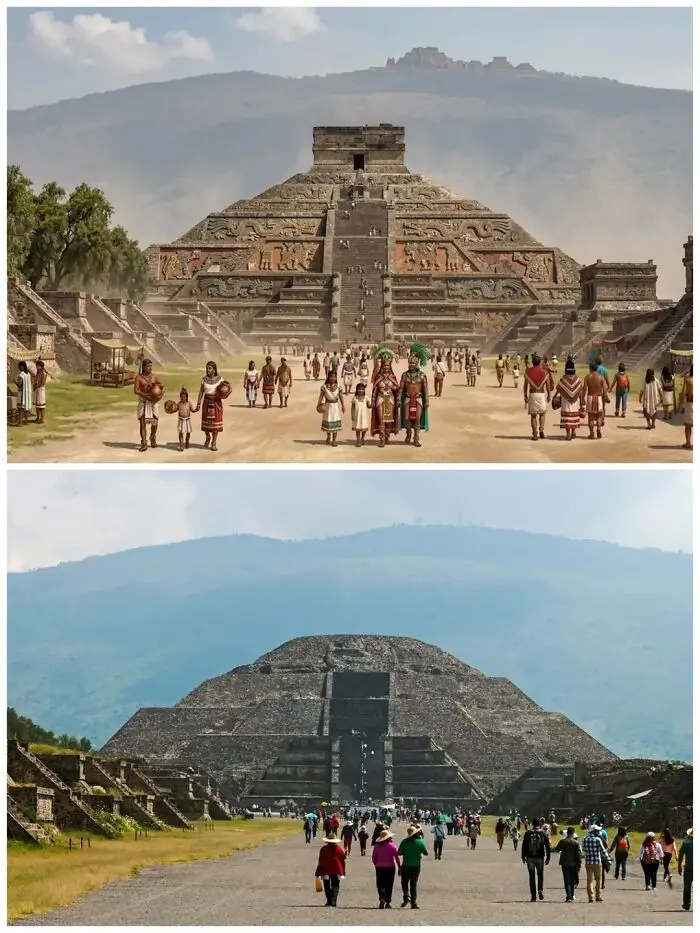
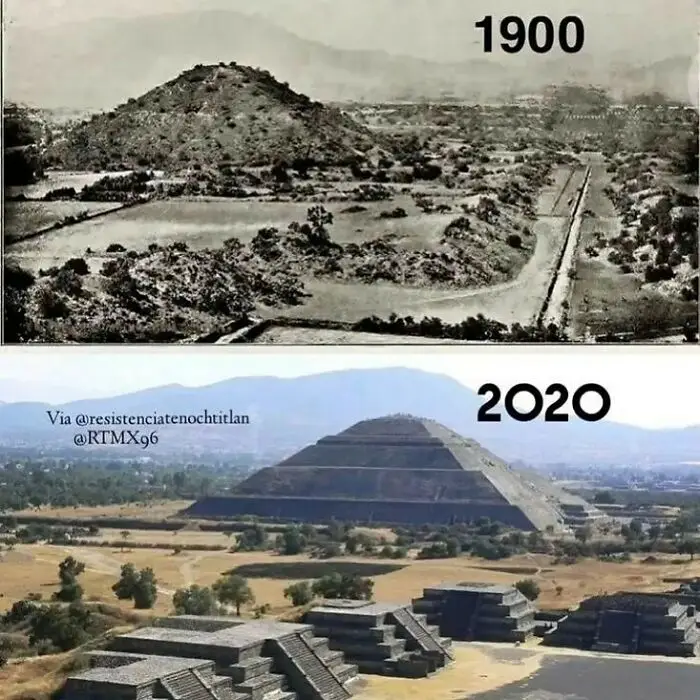
The Pyramid of the Sun: Between Past and Present, the Third Largest Pyramid in the World After the Great Pyramid of Giza in Egypt It is one of the largest and most important archaeological sites in the ancient city of Teotihuacan, located in Mexico, about 40 kilometers northeast of Mexico City.
It is the third largest pyramid in the world after the Great Pyramid of Giza in Egypt and the Great Pyramid of Cholula in Mexico. It stands approximately 65 meters tall, with a base extending over 220 meters on each side. Construction: The pyramid was built around 200 AD using limestone, earth, and local materials. It is distinguished by its stepped design, which was once covered with a layer of plaster (gypsum) painted with vibrant designs.
Cultural Significance: The exact name of the civilization that built it is unknown (it predates the Aztec civilization by centuries), but the Aztecs named it the «Pyramid of the Sun» when they later discovered the abandoned city and believed it to be the birthplace of the gods. Archaeological discoveries: Scientists discovered a tunnel extending beneath the pyramid leading to cavernous chambers, believed to have been used for ritual purposes related to sun or ancestor worship.
Report
16points
#53
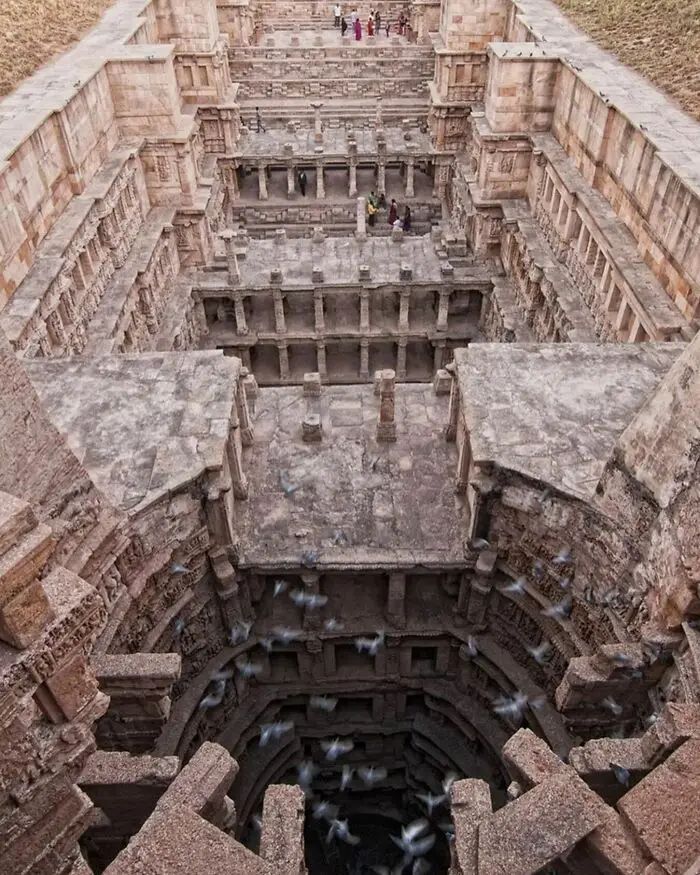
Unique well Rani-ki-Vav (Rani-ki-Vav), India.
Rani-ki-Vav is an underground stepped well located in Patan, Gujarat, India. The length of the well is 64 m, width 20 m, depth — 24 m. The stepped stairs are located on the east side, the water sources are on the west side. It is one of the largest examples of Gujarati step wells.
The name "Rani-ki-vav" translates as "The Well of the steps of the queen".
It is generally believed that the well was built by Udayamati, the widowed Queen Bhimdeva I (1022 — 1063 AD) in memory of the king. Bhimdev was the son of Mularaj, the founder of the Solanki dynasty in Patan. The well was later flooded by the nearby Saraswati River and was lost until the late 1980s, when it was discovered and excavated by archaeologists. During excavations, magnificent carvings and statues of the well were found in pristine condition.
Under its last step, which descends to the water, a 30-meter secret passage leading to the city of Sidhpur was discovered. Most likely, it was built in case of war, for the evacuation of the rulers of Patan.
In June 2014, "Rani-ki-vav" was included in the UNESCO World Heritage List.
Rani-ki-Vav is an architecture of great cultural significance for India. Today, Rani ki Vav is an important tourism destination in Gujarat.
Report
16points

#57
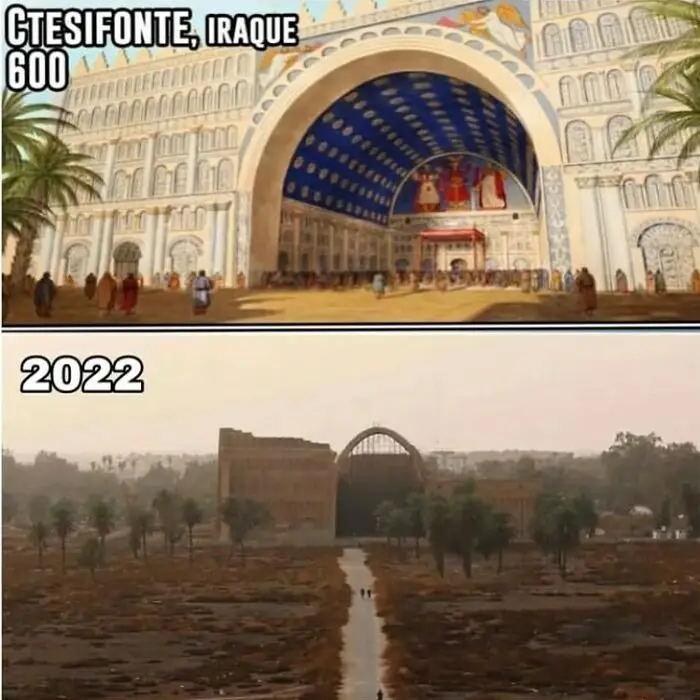
Ctesiphon was one of the main cities of Mesopotamia, it was the capital of the Parthian empire and later of the Sassanid one.
Report
12points

#59
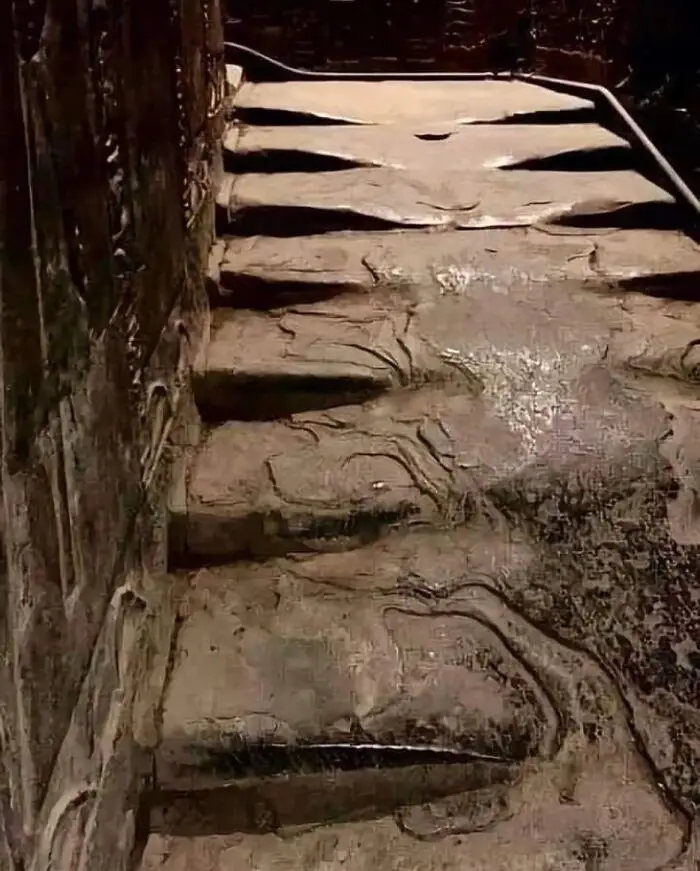
The staircase to the Temple of Hathor is a complete mystery to archaeologists. The steps of the staircase of the Temple of Hathor, located in Egypt, are completely melted, which science cannot explain in any way, since they are built of solid granite. Upon closer examination of the staircase steps, it becomes clear that their damage could not have been caused by erosion or normal wear and tear
Report
11points
#60
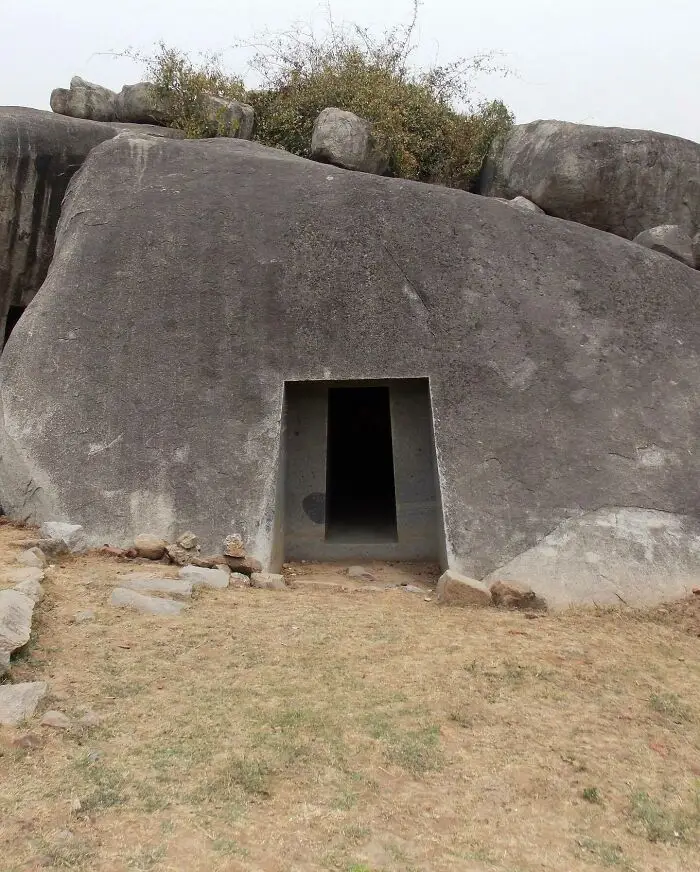
India. Nagarjuni, cave 2. The amazing quality of surface treatment. WOW
Report
10points