

The past is far more interesting and bizarre than you think. In reality, it's much more nuanced and captivating than what you probably learned back in school. It’s humbling to realize learning never stops, and we could all use some extra lessons.
#61
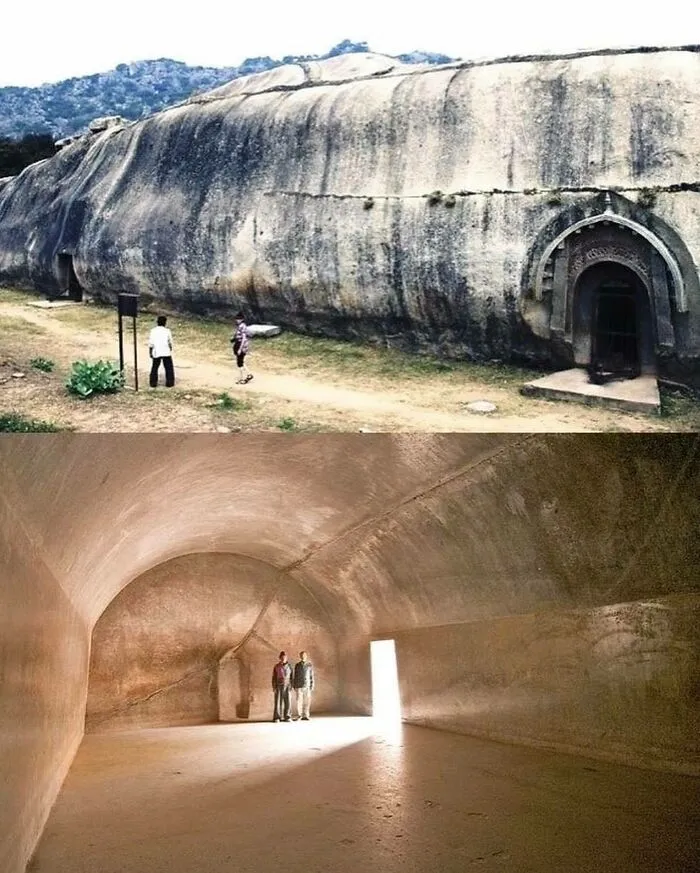
First photo: view of the entrance to the Lomas Rishi Cave (Barabar caves)
India (Bihar), our days.
The second photo: the same place in 1870.
What do you think?
India (Bihar), our days.
The second photo: the same place in 1870.
What do you think?
Report
3points
#62
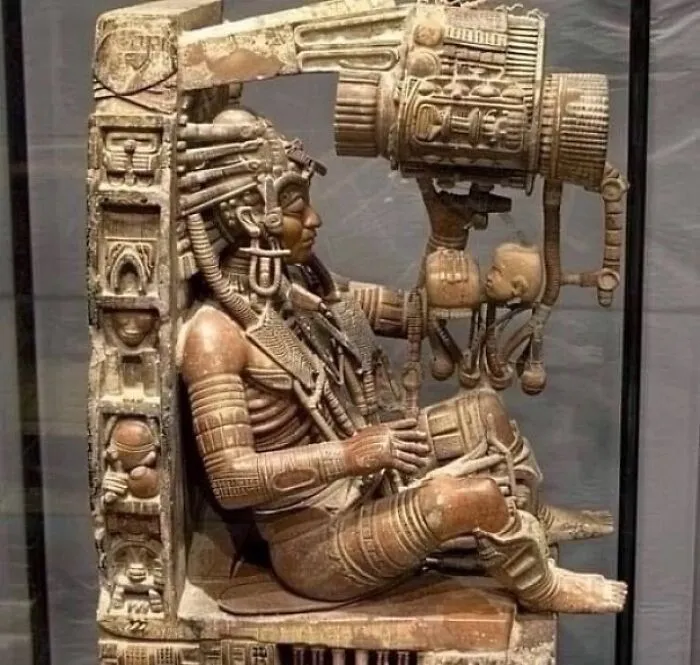
The mysterious astronaut Maya Palenque has captured the imagination of many scientists and enthusiasts. This figure, depicted on the lid of the sarcophagus of Pacal the Great in Palenque, has sparked discussions about extraterrestrial links with the Maya civilization.
Could this intricate carving really depict an ancient astronaut piloting a spaceship, suggesting a deeper connection with beings beyond our world? Or is it a flight of people’s imagination?
Could this intricate carving really depict an ancient astronaut piloting a spaceship, suggesting a deeper connection with beings beyond our world? Or is it a flight of people’s imagination?
Report
2points
#63
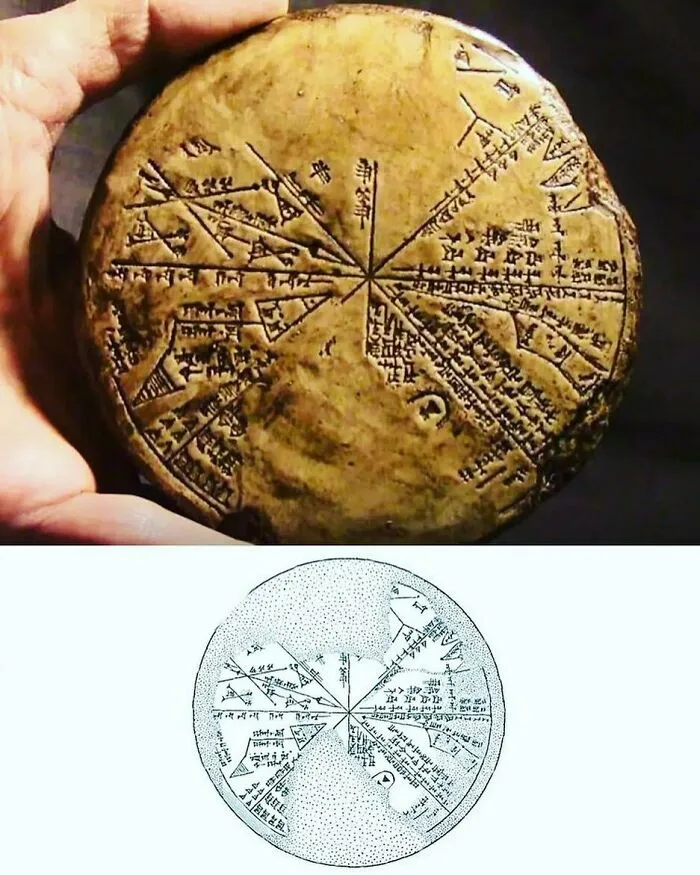
The artifact, which is kept in the British Museum, is a round clay tablet found in the library of King Ashurbanipal in Nineveh, Iraq. Initially, this artifact was identified by archaeologists as a find of Assyrian origin. According to Sitchin and other scientists, this would be evidence of high technology and possible contacts with extraterrestrial civilizations in ancient times. presenting the landing map of the god Enlil. It's actually an astrolabe: a star map is depicted on the table, and modern studies of Moderna archaeoastronomy have made it possible to understand how it was connected, in particular, with the sky that could be observed from Mesopotamia in 650 BC. The shapes identify the constellation known today as Gemini, then the Pleiades and two triangles mark the bright stars of Pegasus. Thus, the find dates back two and a half millennia after the Sumerians and about 600 years after the decline of the worship of Enlil in favor of Marduk, the Babylonian God, again replaced by Assur, the Assyrian God.
Report
2points