



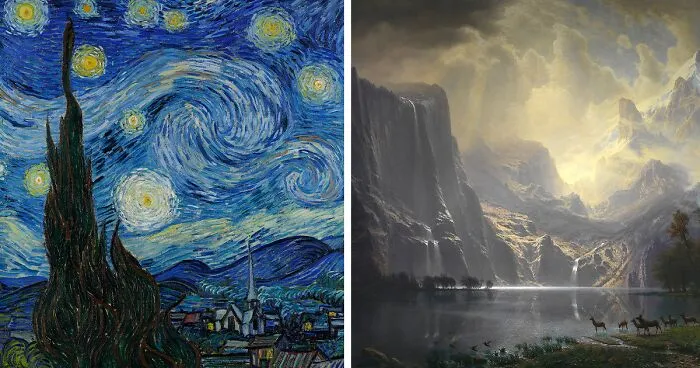


There is much beauty to be found in the world around us. There is so much to enjoy on this Earth and see, yet so much is often left overlooked. From modern towns to wide-open ranges of nothing but nature, landscape painting attempts to capture it all. This style of painting gives a lot of room for creativity to go wild. Landscape paintings can capture a moment for what it is — a passing thing — and create an opportunity to enjoy the view.
All works of creativity are just fruits of the mind and painted landscapes sometimes feel surreal, blending elements of reality and fiction. We can see the world from a different perspective through these artistic creations. Some of history’s most famous artists have mastered combining natural scenery with man-made structures or emotional human elements, creating a harmonious balance between nature and humanity.
From desolate buildings to love-infused couples, the greatest landscape paintings seamlessly integrate multiple elements, offering a rich, multi-layered viewing experience that transcends reality while grounding us in familiar emotions and scenes.
If you are out looking for a drop of inspiration, look no further than the paintings of famous landscapes below, one after another, and high chances are that those landscape painting ideas will start planting seeds in your head, too. If one of the paintings ignited your creative light, be sure to upvote it. If you have more to add about the painting, comment below and share what you know.
#21 Olive Trees With Yellow Sky And Sun
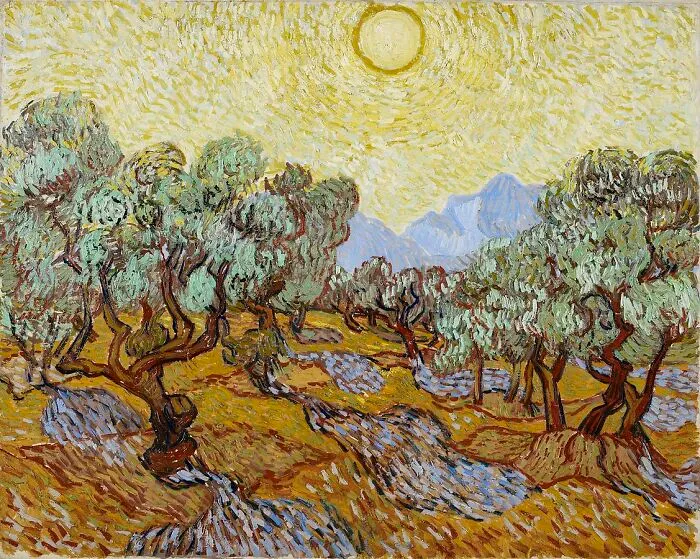
Artist: Vincent Willem Van Gogh | Year (completed): 1889 | Period: Post-Impressionism
Vincent Van Gogh wanted to depict the olive trees differently as a result of his opposition to the painting of Christ in the Olive Garden. He had learned during his stint at the asylum that olive trees were revered in Saint Remy, just as the willows were in his land, which is why he decided to work with them. Van Gogh's legacy is portrayed in the picture of Olive Trees with a Yellow Sky and Sun, which is an undeniable masterpiece.
Report
22points
#22 The Abbey In The Oakwood
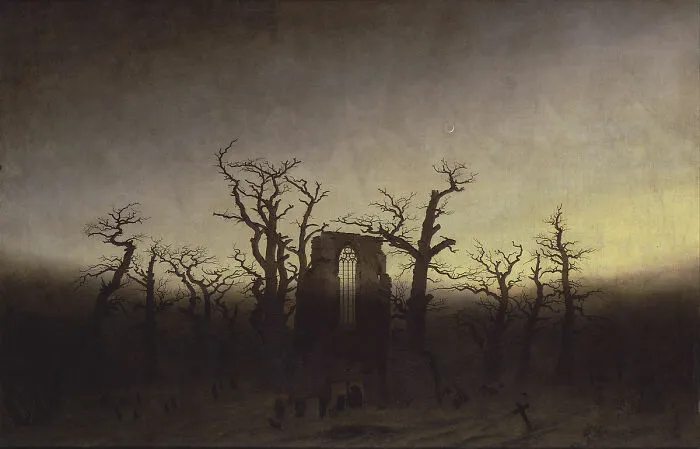
Artist: Caspar David Friedrich | Year (completed): 1810 | Movement: Romanticism
A historic abbey is depicted in the center of the painting by Friedrich. By showing people carrying a coffin toward the abbey, Friedrich is trying to evoke the sense of time passing. The idea is that no matter what we do, nature will always win, taking over the buildings and outliving the human race.
22points
#23 Early Spring
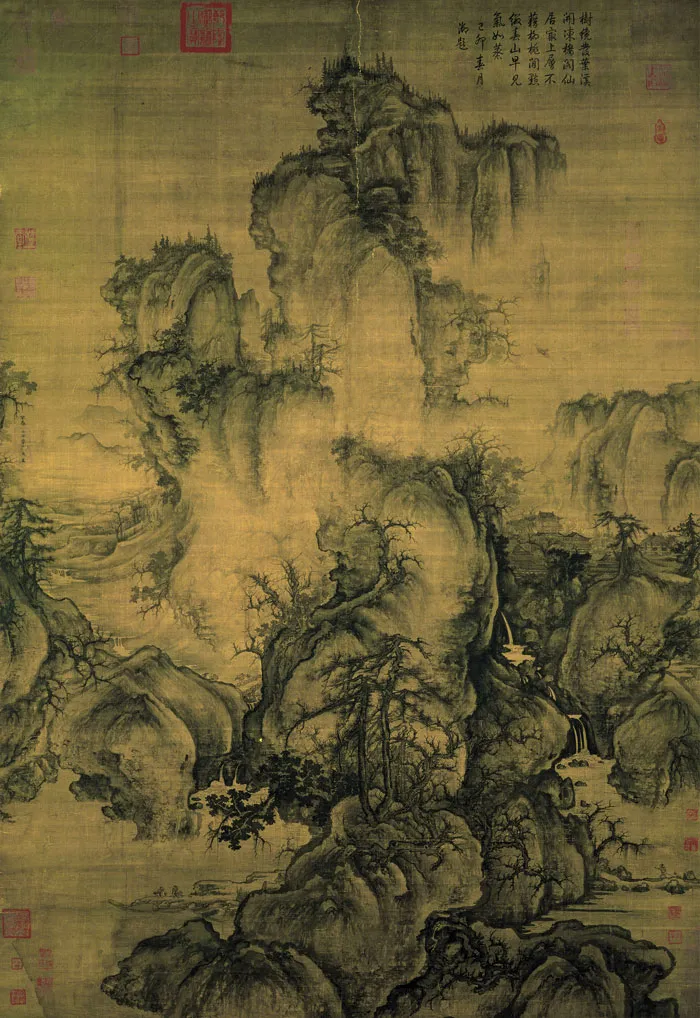
Artist: Guo Xi | Year (completed): 1072 | Movement: Northern Song
Early Spring shows Guo Xi's creative methods for creating different viewpoints, which he dubbed "the angle of totality." "Floating Perspective," a technique that moves the viewer's fixed eye and emphasizes the distinctions between Chinese and Western styles of spatial representation, is another name for this kind of visual representation. When it comes to painting, Guo Xi is frequently referred to as a "Northern Song master."
Report
22points
#24 Wheat Field With Cypresses
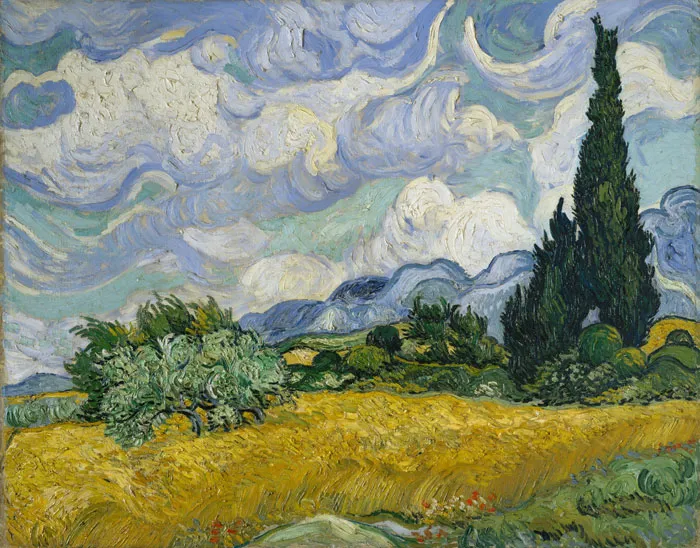
Artist: Vincent Willem Van Gogh | Year (completed): 1889 | Period: Post-Impressionism
Golden wheat fields, a dark fastigiate Provençal cypress towering like a green obelisk to the right, lighter green olive trees in the middle distance, hills and mountains visible in the background, and white clouds whirling in an azure sky are all depicted in the painting. Van Gogh considered the painting to be one of his "greatest" summer landscapes, which inspired him to create two studio versions.
Report
21points
#25 View Of Toledo
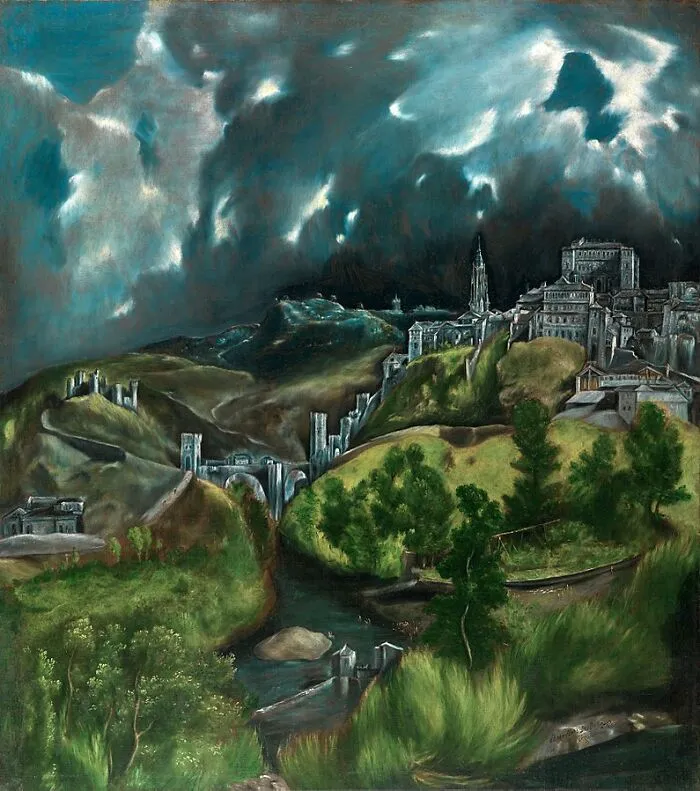
Artist: El Greco | Year (completed): 1600 | Period: Mannerism
One of El Greco's two surviving landscape paintings, together with View and Plan of Toledo, is titled View of Toledo. Black, white, and rich greens are among the painting's strong colors. It is entirely earth tones. The stark color contrast between the deep blue of the heavens above and the vibrant green of the hills below is what stands out most. View of Toledo conveys to visitors an impression of Toledo's gloom or moodiness. In the vicinity of the city, observers can see that the sky becomes unusually gloomy.
Report
21points
#26 The Oxbow
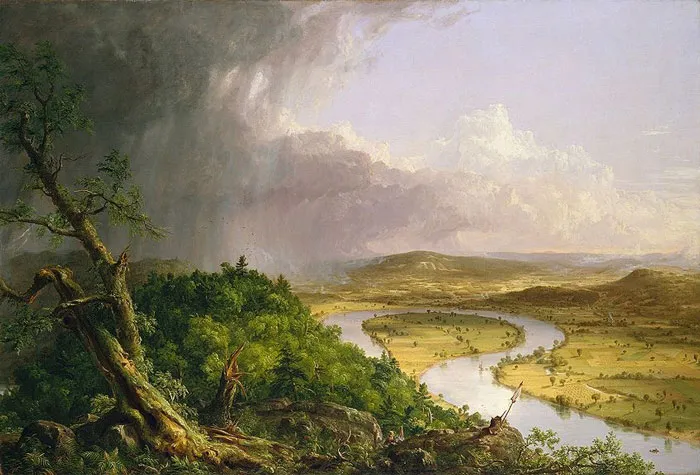
Artist: Thomas Cole | Year (completed): 1836 | Period: Romanticism
When looking at The Oxbow, the viewer can see that Cole divided the composition into two unequal parts by drawing a diagonal line from the lower right to the upper left. The painting's left side features a breathtaking picture of the landscape that inspires sentiments of peril and even terror. The dark storm clouds that appear to be pouring rain on the nearby middle ground serve to emphasize this. This area of the picture shows a pristine landscape, God's creation unaltered by man. It is untamed and wild.
Report
20points
#27 The Olive Trees
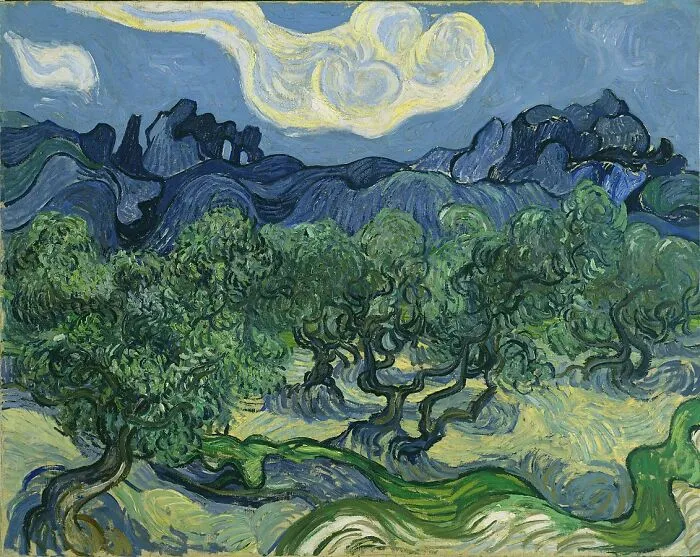
Artist: Vincent Willem Van Gogh | Year (completed): 1889 | Period: Post-Impressionism
Van Gogh found the olive orchards near Saint-Rémy to be a rewarding subject. He tried to come up with a decent approach to depict the olive trees' erratic growth. He came up with the idea of using wavy brushwork, strong outlines around the tree trunks, and stylized blue shadows.
Report
20points
#28 The Ninth Wave
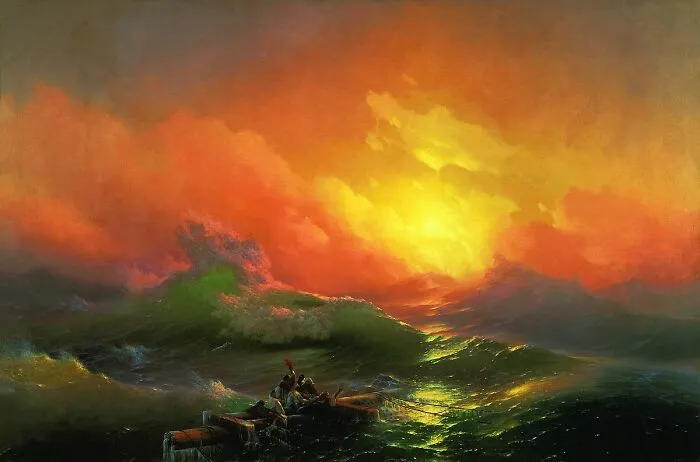
Artist: Ivan Aivazovsky | Year (completed): 1850 | Period: Romanticism
The Ninth Wave shows a sea after a night storm and individuals clinging to shipwreck debris in an attempt to save themselves from certain death. The debris, which is shaped like a cross, seems to be a Christian allegory for deliverance from sin on earth. Warm colors in the artwork lessen the sea's ominous undertones, making it seem more likely that the humans would survive. Both the destructiveness and the beauty of nature are depicted in this painting.
Report
20points
#29 Kindred Spirits
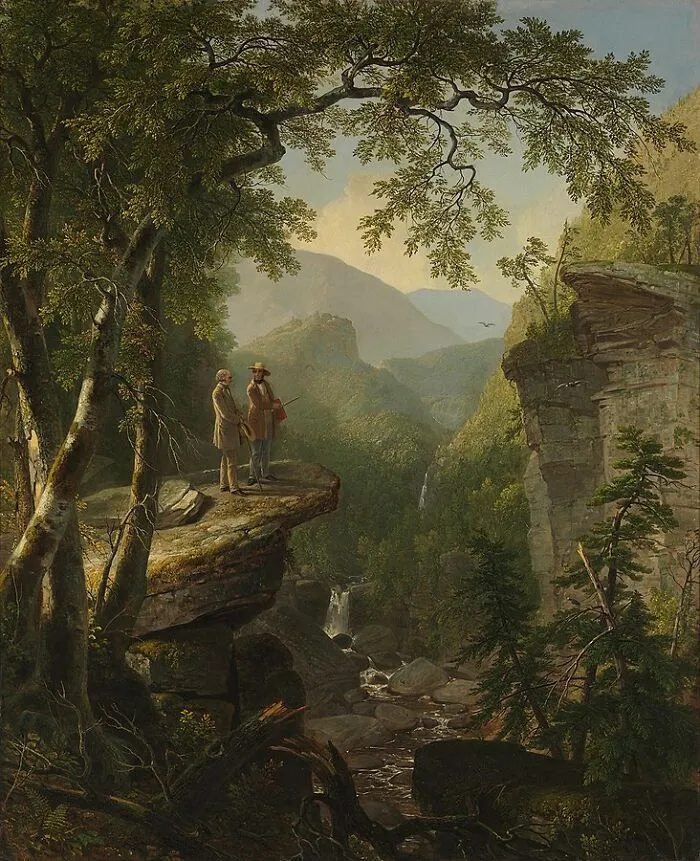
Artist: Asher B. Durand | Year (completed): 1849 | Movement: Hudson River School
Kindred Spirits is fundamentally a piece of memory art. Cole and Bryant's friend Durand portrayed his pals in a setting that both Cole and Bryant referenced in their artistic works. The picture depicts the idea of connecting with nature by combining two locations — Kaaterskill Falls and the Clove — in an idealized manner.
20points
#30 Morning In A Pine Forest
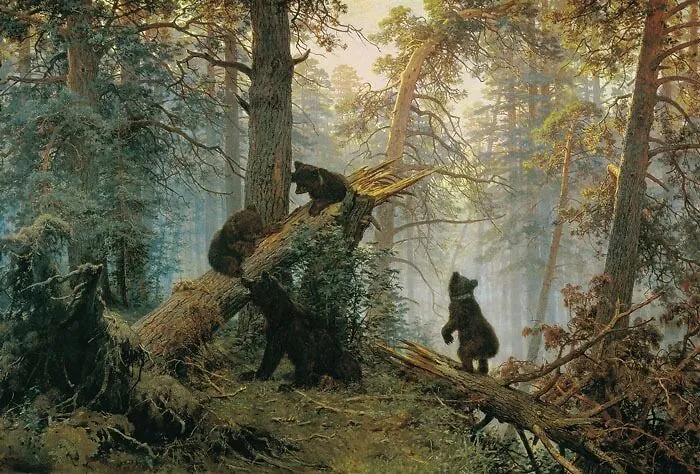
Artists: Ivan Shishkin, Konstantin Savitsky | Year (completed): 1889 | Movement: Realism
Morning in a Pine Forest features a mother bear and three young bears in an evergreen coniferous forest. Spruce and pine trees highlight how timeless the world of nature is. The viewer might get the feeling that they are in an impenetrable hidden thicket where the bear family is playing on a broken pine tree because of the enormous prominent trees.
Report
20points
#31 Wheatfield With Crows
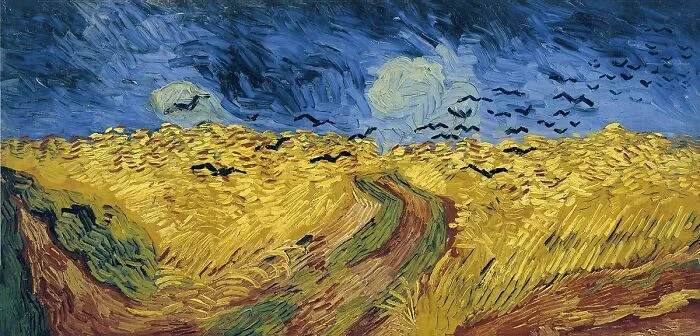
Artist: Vincent Willem Van Gogh | Year (completed): 1890 | Period: Post-Impressionism
The most well-known of Van Gogh's paintings might be Wheatfield with Crows, frequently said to be his final composition. Many believe that the ominous sky, the ravens, and the dead-end route represent his impending demise, but this is only a legend. He produced several other pieces following this one.
Report
19points
#32 Rain, Steam And Speed – The Great Western Railway
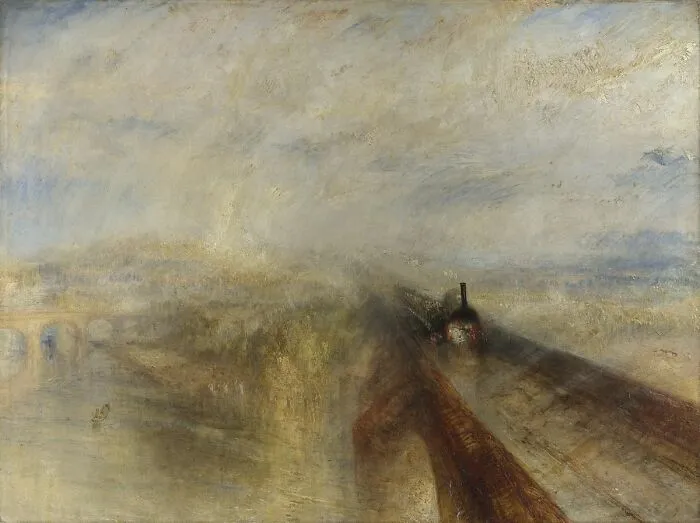
Artist: J. M. W. Turner | Year (completed): 1844 | Style: Romanticism
Turner stood apart from other artists because of the painting's appearance of immense speed in a motionless work of art. The painting blends the might of nature and technology. It was created during the end of the Industrial Revolution, which saw a significant transition from an agrarian to a machine-based economy in the Victorian era.
Report
19points
#33 Impression, Sunrise
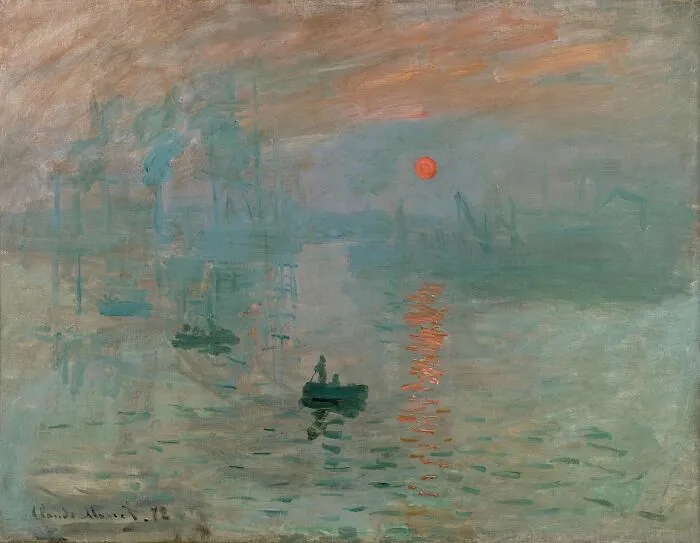
Artist: Claude Monet | Year (completed): 1872 | Movement: Impressionism
The painting has a foggy background that Monet represents with a mist. The dark containers, where little to no detail is instantly visible to the audience, contrast well with the orange and yellow tones. There are several boats in the painting, and all of them seem to move with the waves of water.
Report
19points
#34 Autumn In The River Valley
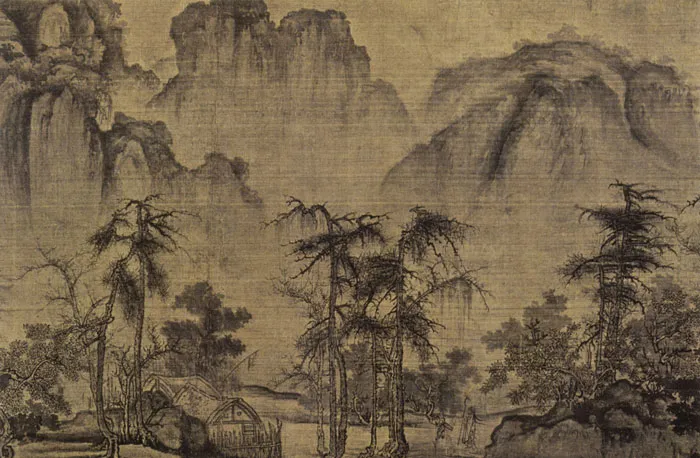
Artist: Guo Xi | Year (completed): 1072 | Movement: Northern Song
Based on a real location, Guo Xi was able to capture the area in the season when it is the most beautiful — autumn. Like with other Guo Xi paintings, Autumn In The River Valley is colorless, yet still warm. A village is seen at the bottom of the painting, surrounded by trees, while mountains reside in the background.
Report
19points
#35 The Slave Ship
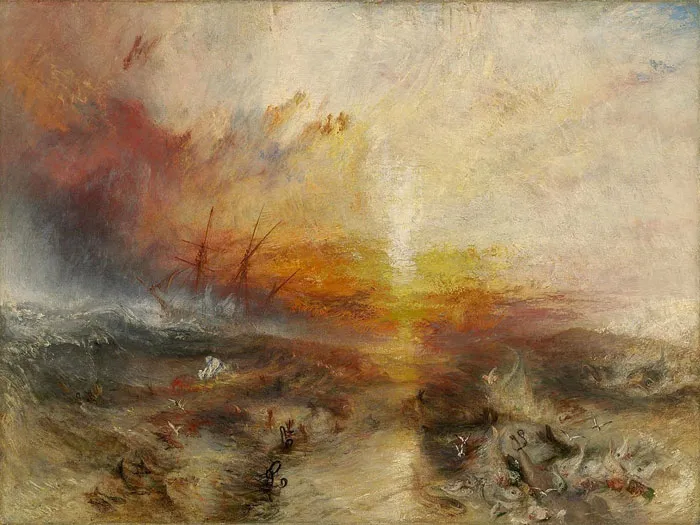
Artist: J. M. W. Turner | Year (completed): 1840 | Period: Romanticism
This landscape painting immediately conjures up images of a massive deep-red sunset over a stormy sea, signaling the approach of a typhoon. A ship is sailing off into the distance upon closer investigation. This ship can be recognized as the kind of swift ship that slavers used to get away from navy patrol boats.
Report
18points
#36 Guests From Overseas
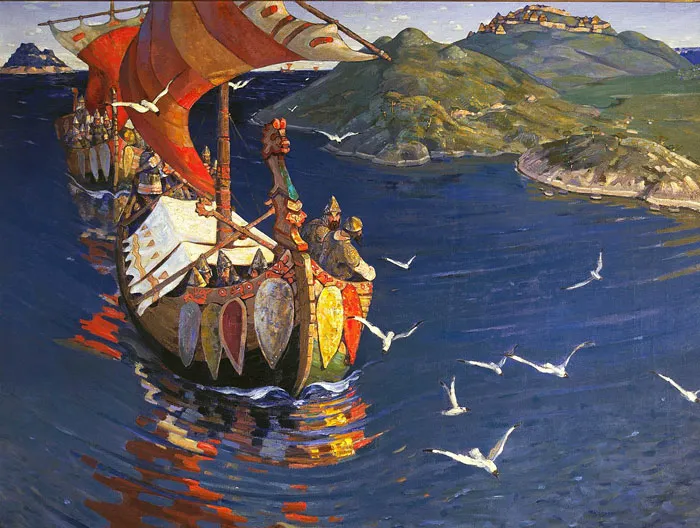
Artist: Nicholas Roerich | Year (completed): 1901 | Style: Russian symbolism
The artwork honors Rurik's arrival in Rus. It depicts vikings, in their boats, on a body of water, moving, looking around the surrounding grounds, as if they were worried. Three barrows, or chieftain burial sites, can be seen at the top of one hill, and a Slavic settlement built with towers and a wall is seen on the opposite hill.
Report
18points
#37 The Bridge At Narni
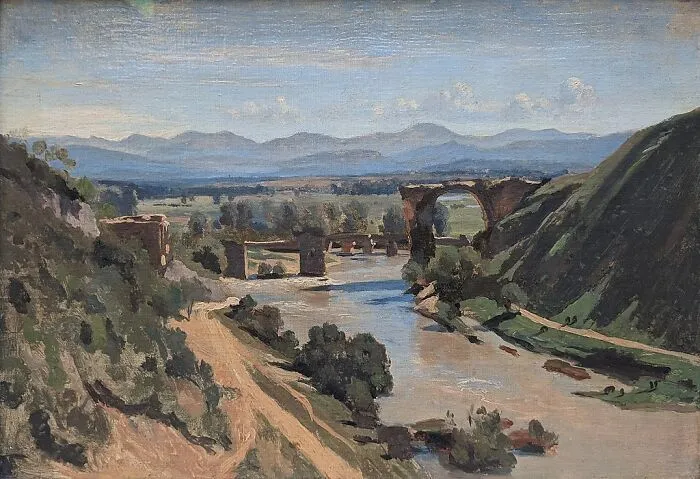
Artist: Jean-Baptiste-Camille Corot | Year (completed): 1826 | Period: Realism
Bridges are the perfect objects for any landscape painting. The Bridge at Narni, Jean-Baptiste-Camille Corot's first significant piece, was displayed at the Paris Salon in 1827 while he was still in Italy. He showcased a sizable landscape of the Fontainebleau forest in 1833, and it won a second-class medal. Corot got the freedom to exhibit his paintings without having to ask the judges for their approval.
Report
18points
#38 Estaque
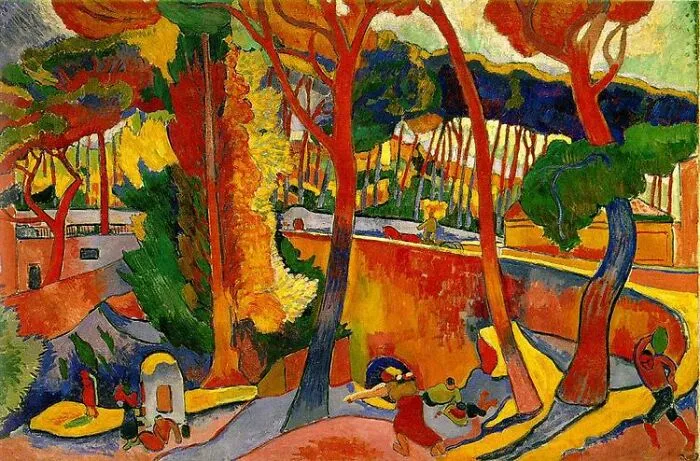
Artist: André Derain | Year (completed): 1905 | Movement: Fauvism
Estaque is the perfect example of Fauvism. In addition to being attractive and lively, the colors are also employed in complementary pairs from the color wheel. Oranges with blues and reds with greens are the colors used. The orange tree trunks and the varied color of the leaves, which span from blue-green-red, draw attention to this color contrast across the entire painting.
Report
18points
#39 The Parc Monceau
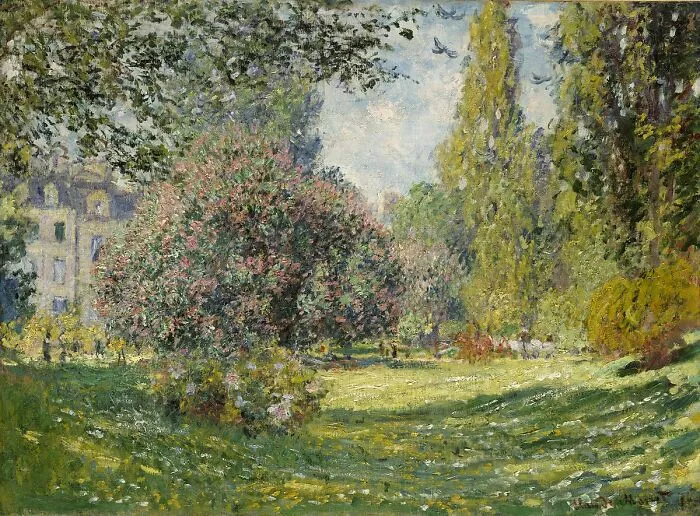
Artist: Claude Monet | Year (completed): 1876 | Movement: Impressionism
The Parc Monceau was designed as an English park in the late eighteenth century and is located in Paris on the boulevard de Courcelles and is surrounded by upscale townhouses. This impressionist painting from 1877 focuses on the expanses of lush grass and blossoming trees.
Report
18points
#40 The Fighting Temeraire
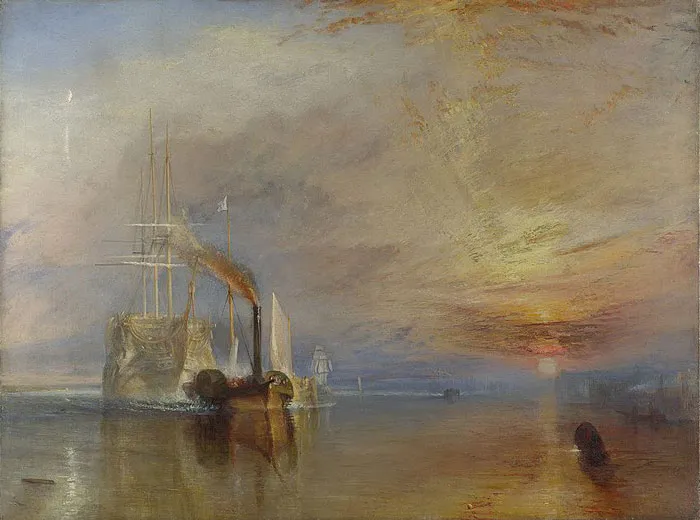
Artist: J.M.W. Turner | Year (completed): 1839 | Period: Romanticism
The antique cruiser, the key element of the painting, is seen well to the left of the painting, rising in stately splendor and nearly ghostly hues against a triangle of blue sky and rising mist that brings it into sharp relief. The blackened, filthy tugboat with its tall chimney, which stirs the calm river's surface, contrasts with the antique ship's elegance.
Report
17points
