



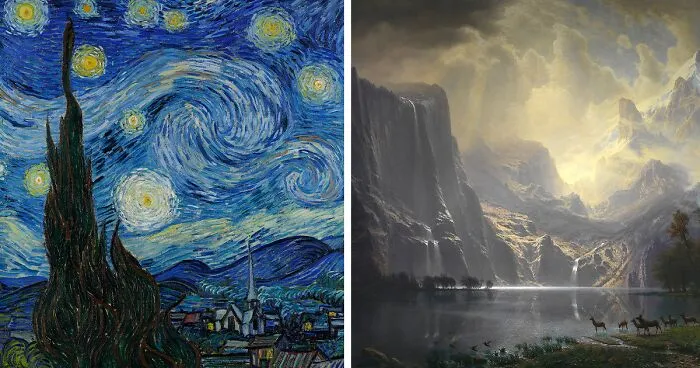


There is much beauty to be found in the world around us. There is so much to enjoy on this Earth and see, yet so much is often left overlooked. From modern towns to wide-open ranges of nothing but nature, landscape painting attempts to capture it all. This style of painting gives a lot of room for creativity to go wild. Landscape paintings can capture a moment for what it is — a passing thing — and create an opportunity to enjoy the view.
All works of creativity are just fruits of the mind and painted landscapes sometimes feel surreal, blending elements of reality and fiction. We can see the world from a different perspective through these artistic creations. Some of history’s most famous artists have mastered combining natural scenery with man-made structures or emotional human elements, creating a harmonious balance between nature and humanity.
From desolate buildings to love-infused couples, the greatest landscape paintings seamlessly integrate multiple elements, offering a rich, multi-layered viewing experience that transcends reality while grounding us in familiar emotions and scenes.
If you are out looking for a drop of inspiration, look no further than the paintings of famous landscapes below, one after another, and high chances are that those landscape painting ideas will start planting seeds in your head, too. If one of the paintings ignited your creative light, be sure to upvote it. If you have more to add about the painting, comment below and share what you know.
#41 Ploughing In The Nivernais
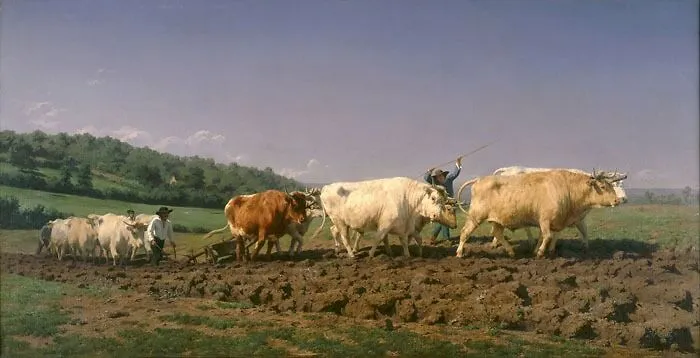
Artist: Rosa Bonheur | Year (completed): 1849 | Period: Realism
Nothing says hard work like working in the fields with your oxes and yourself. Ploughing in the Nivernais, which depicts a bunch of oxen pulling the plow along with the farmers, was one of Rosa Bonheur's earliest notable triumphs. The French government commissioned the artwork, which received the Salon gold award in 1849.
17points
#42 Heart Of The Andes
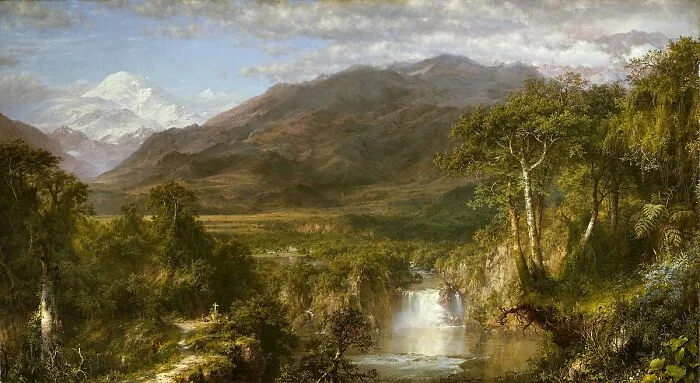
Artist: Frederic Edwin Church | Year (completed): 1859 | Period: Hudson River School
It is about 10 feet (3 meters) broad and more than 5 feet (1.7 meters) high, depicting an idealized scene in the South American Andes, a region Church visited twice. The landscape's center-right feature is a waterfall-fed pool with a sparkling surface. In the distance, Ecuador's Mount Chimborazo with its snow-capped peak can be seen.
Report
17points
#43 Winter Landscape With Figures On Ice
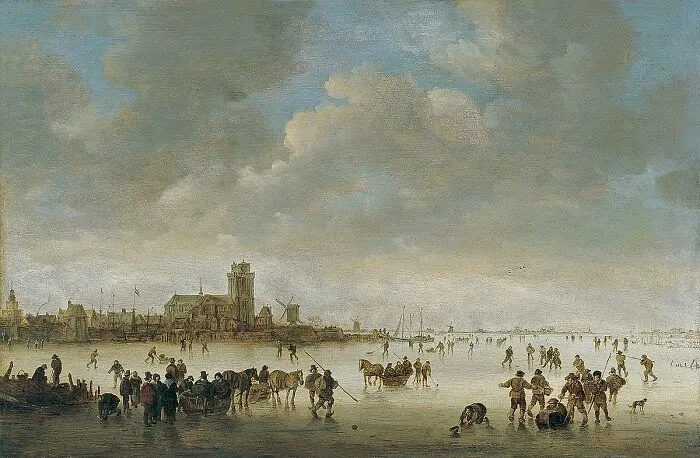
Artist: Jan Van Goyen | Year (completed): 1643 | Period: Dutch Golden Age
At the time, Jan Van Goyen emphasized the sky and atmospheric qualities by using lower horizon lines. The scene is drenched in a consistent palette of browns, grays, and greens that nearly appears monochromatic due to the paint's surface. The 1643-dated and signed artwork is a great example of his developed, mature style.
Report
17points
#44 The Monk By The Sea
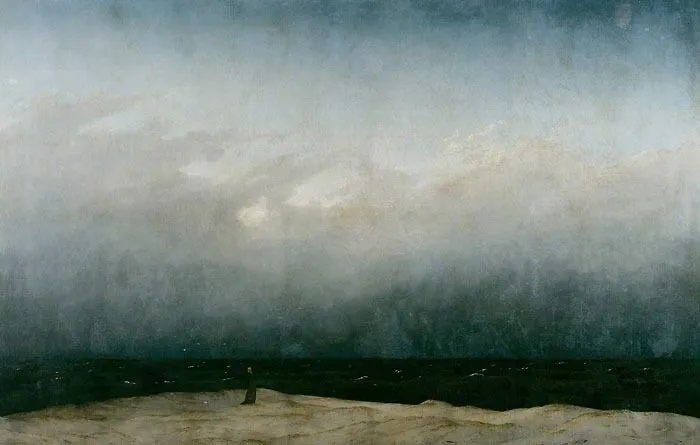
Artist: Caspar David Friedrich | Year (completed): 1810 | Period: German Romanticism
On the sand, a bald monk stands. He is staring into the immensely huge sea's leaden darkness. Surprisingly, the gray band of clouds over the water disappears, and the upper edge of the image is filled with blue sky. The monk's frail form before the majesty of nature and the presence of God is highlighted by the wide expanses of sea and sky.
16points
#45 The Hay Wain
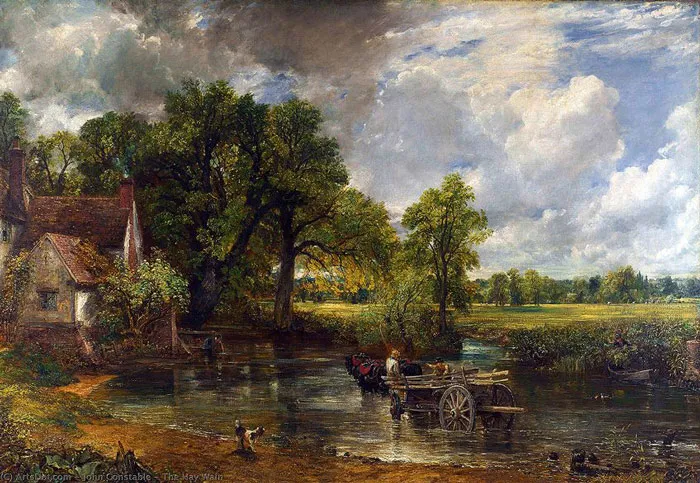
Artist: John Constable | Year (completed): 1821 | Period: Romanticism
The piece shows three horses carrying what appears to be a large farm wagon or a wood wain across a river as its main feature. On the far left, one can see Willy Lott's Cottage, which is also depicted in a Constable painting of the same name. Although the image is close to Flatford Mill in Suffolk, the right bank's scenery is actually in Essex because the stour divides the two counties.
Report
16points
#46 Flatford Mill
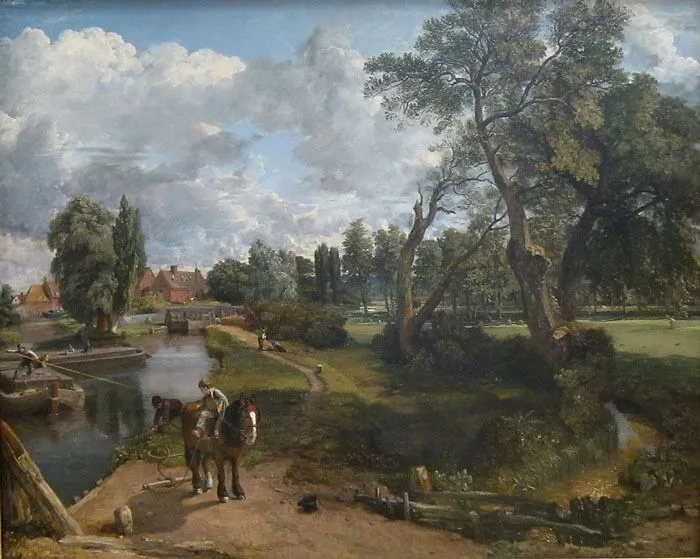
Artist: John Constable | Year (completed): 1816 | Period: Romanticism
The painting shows two lighter barges and their crew moving through a working rural area in Suffolk as they ascend the River Stour from Dedham Lock. The lighter barges were pulled along the river by a horse, whose ropes are disconnected so that the lighter barges could be poled beneath the Flatford bridge, which they are now approaching. One child is seen disengaging a rope in the photo, and another is perched atop a tow horse.
Report
16points
#47 The Angelus
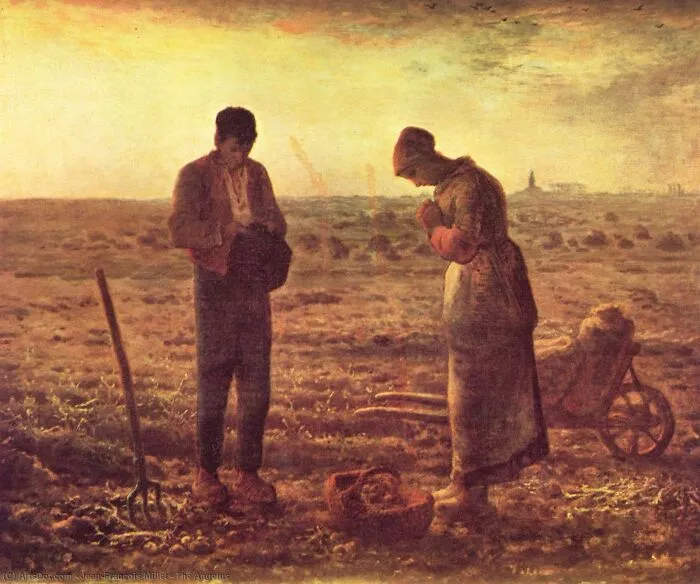
Artist: Jean-François Millet | Year (completed): 1859 | Period: Realism
The Angelus might be one of the grimmest landscape paintings that perfectly captures the sad life of medieval peasants. Two peasants are seen praying near a basket, with a church standing in the far distance. Originally, it seems like the couple prayed to a basket of potatoes, but after an x-ray of the painting was done, it was revealed that a casket-like object was in the place of the basket.
Report
16points
#48 The Harvesters
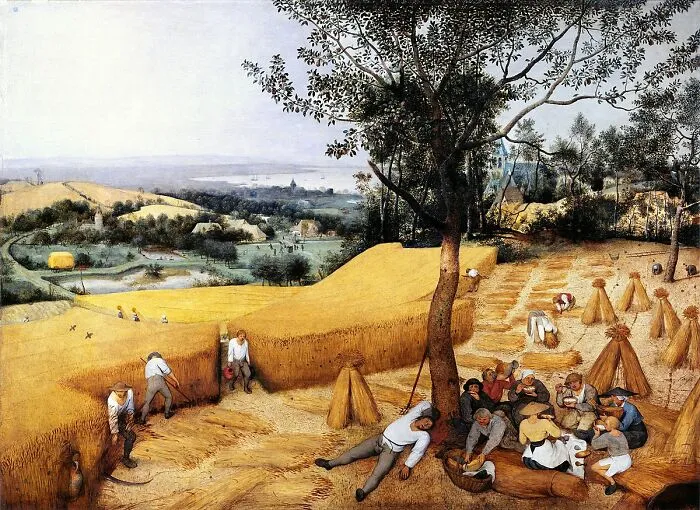
Artist: Pieter Bruegel | Year (completed): 1565 | Period: Renaissance
The peasants and their work are the highlight of the painting. There are no religious overtones, which were typical of landscape paintings at the time. Notably, the peasants are depicted as both producing and consuming food, with some of them seen eating while others are harvesting wheat. This painting served as the source of inspiration for Hayao Miyazaki's short film Mr. Dough and the Egg Princess.
16points
#49 La Montagne Saint Victoire Barnes
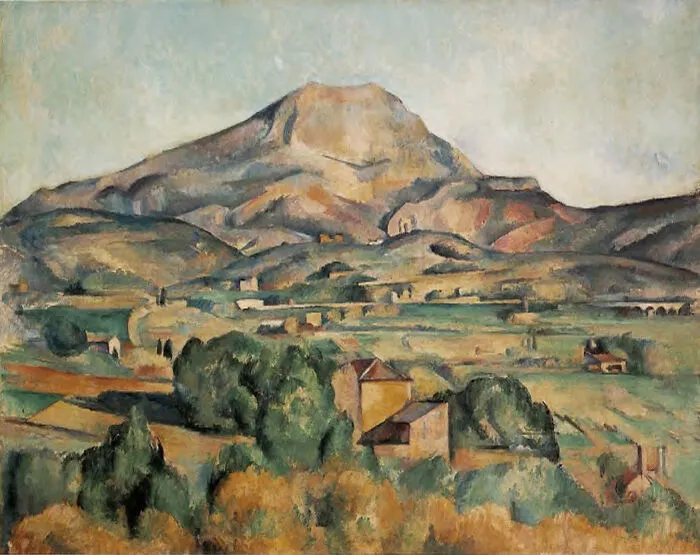
Artist: Paul Cézanne | Year (completed): 1895 | Period: Impressionism
One of Cézanne's favorite motifs was the Mont Sainte-Victoire, which loomed over the southern French region of Aix-en-Provence. He spent his early years exploring its landscape and depicted it in numerous paintings from various angles. The mountain also had symbolic significance for the artist, who saw it as a representation of the traditional French countryside amid an era of fast industrialization and modernity. An old Roman aqueduct may be seen on the right side of the picture.
Report
16points
#50 Gloucester Harbor
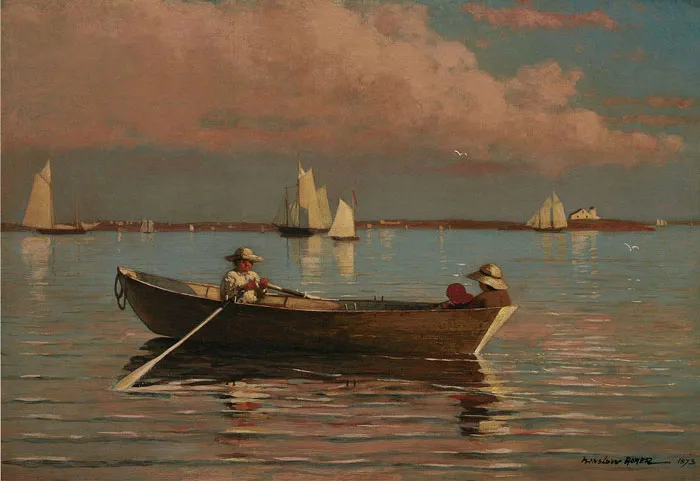
Artist: Winslow Homer | Year (completed): 1873 | Style: Realism
Nothing says friends like a nice boat journey on a nice day. In the painting, one figure is rowing, and the other two are seated in the boat's stern. There are several sailboats on the lake in the distance and beyond them, a strip of land. The sky above everything is covered in red and pink clouds as the sun is starting to set.
Report
16points
#51 Paisagem Do Arno
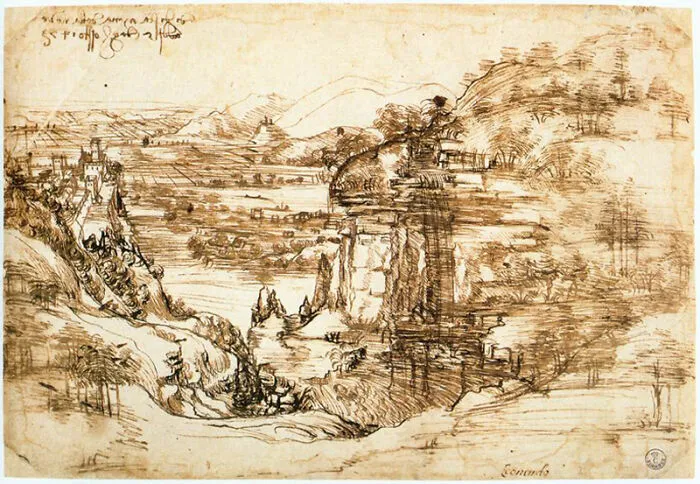
Artist: Leonardo Da Vinci | Year (completed): 1473 | Period: Early Renaissance
An artist is as good as he can handle the tools given to him. A bad painter with a whole set of colors can create a monster of a painting, while a master with only a pencil and paper can create a magnificent artwork. Leonardo Da Vinci is a master of landscape painting and pencil drawing, and the Paisagem Do Arno proves it.
Report
15points
#52 The Course Of Empire: Destruction
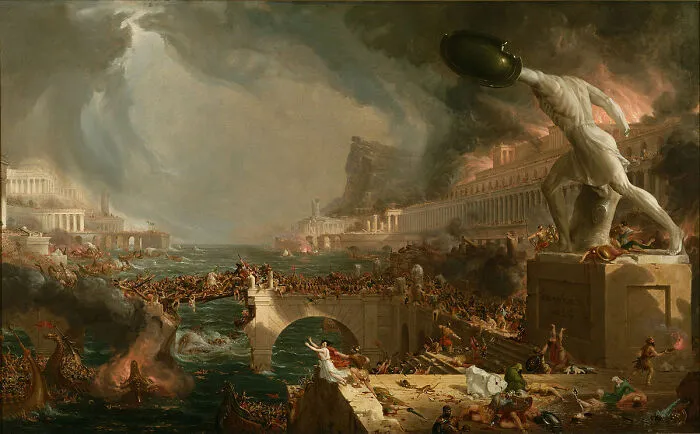
Artist: Thomas Cole | Year (completed): 1836 | Movement: Hudson River School
A headless statue of some venerable hero stands in the foreground, still marching toward the unknowable future. The bodies lie where they fell, in fountains and atop monuments erected to commemorate the prosperity of the now-destroyed civilization, in the failing light of the late afternoon.
15points
#53 The Vale Of Dedham
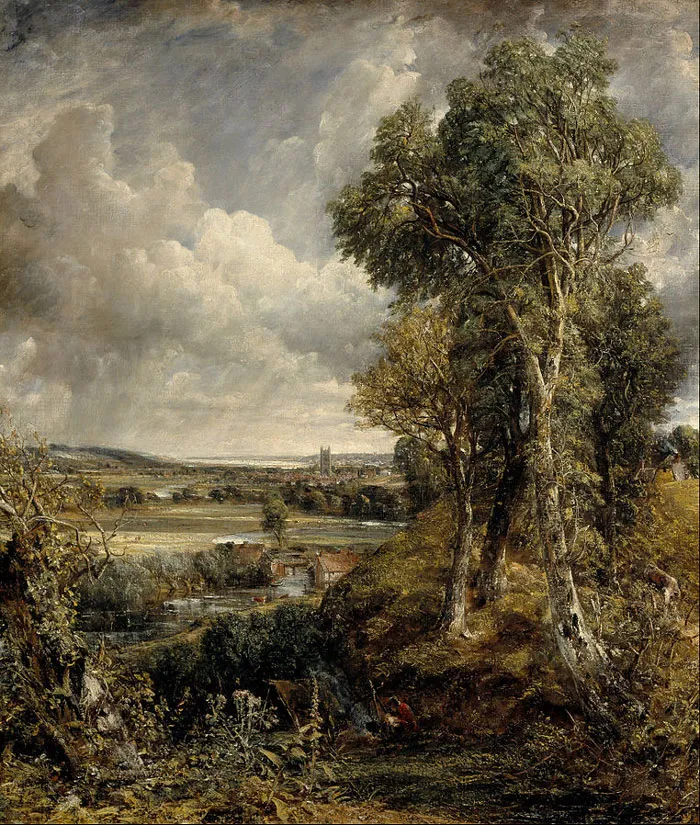
Artist: John Constable | Year (completed): 1828 | Period: Romanticism
Part of the composition's inspiration came from Claude's Landscape with Hagar and the Angel, which features strong foreground trees. Constable's thorough observation of nature, however, is what inspired the overcast sky and other elements. To heighten the illusion of shimmering light, he added some white paint and did it liberally.
15points
#54 Mont Sainte-Victoire
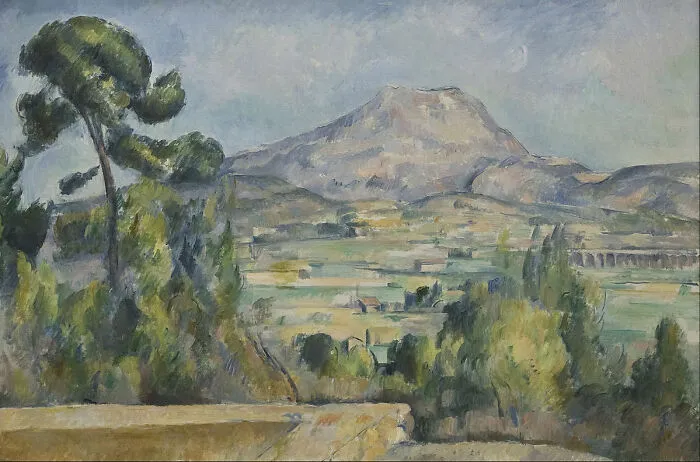
Artist: Paul Cézanne | Year (completed): 1890 | Period: Impressionism
This mountain was the subject of many Paul Cézanne paintings. Paintings by Cézanne at Mont Sainte-Victoire can be divided into two primary periods: his "time of synthesis," roughly from the 1870s to 1895, and his "late era," roughly from 1895 to his demise in 1906. His settings typically included the gray-white limestone mountain Mont Sainte-Victoire as well as the lowlands and valleys from which the mountain emerged.
15points
#55 Beach Scene
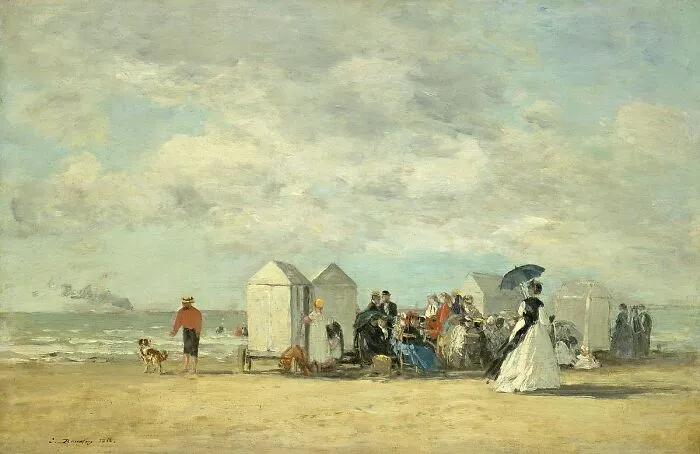
Artist: Eugène Boudin | Year (completed): 1862 | Movement: Impressionism
The resorts of Deauville and Trouville are where Boudin is said to have gotten the inspiration to create this painting. There, Boudin concluded that the rich people of the world and the peasants of nearby cities have the same right to walk on that beach.
Report
15points
#56 Pastoral Landscape: The Roman Campagna
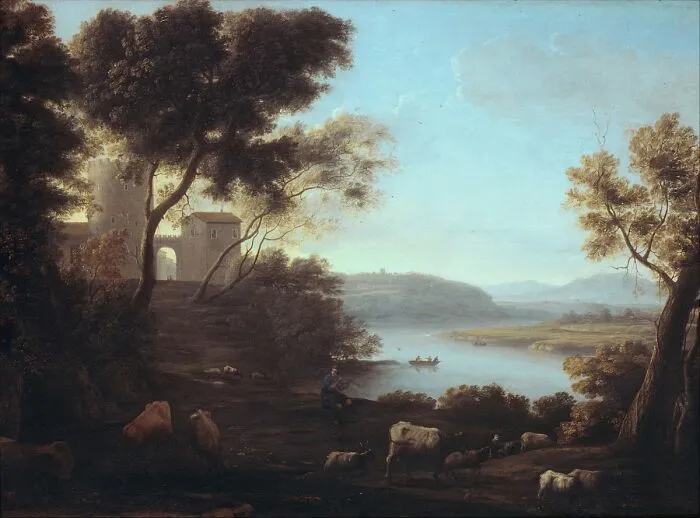
Artist: Claude Lorrain | Year (completed): 1639 | Period: Baroque
The building on the left is typical of Claude's landscapes, as is the contrast between the brilliant light in the background and the lyrical shadow in the foreground. According to an inscription discovered on the back of the drawing, this painting was created in Rome, but it was dedicated to a client in Paris.
Report
15points
#57 Spring (The Earthly Paradise)
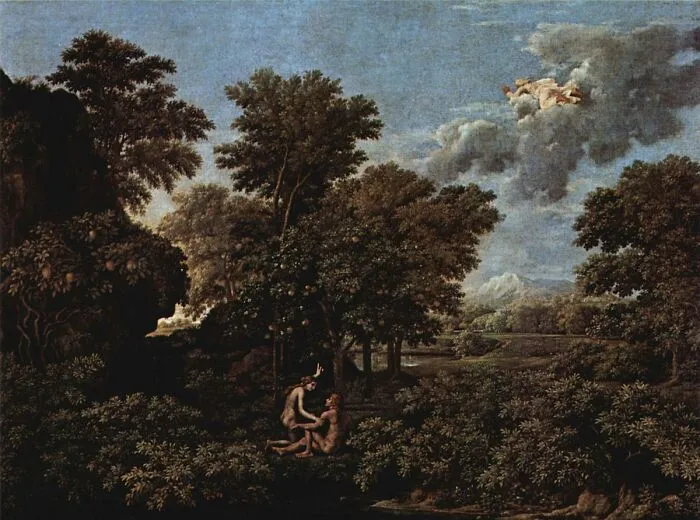
Artist: Nicolas Poussin | Year (completed): 1664 | Style: Classicism
For the son of Cardinal Richelieu, the Duc de Richelieu, Poussin created The Four Seasons, his final group of four oil paintings. The pictures in the paintings portray the majesty and power of nature and offer a philosophical view of the world outside. Spring is the most famous one of the four, capturing the season and the feelings of it perfectly.
Report
14points
#58 The Grand Canal At The Church Of La Salute
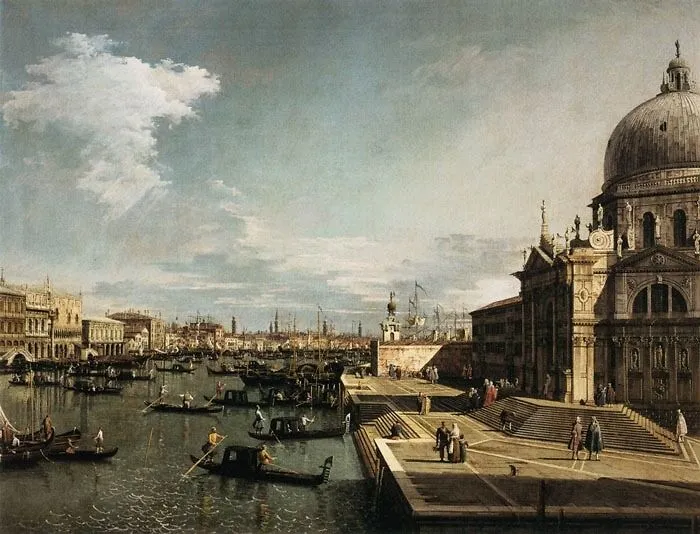
Artist: Giovanni Antonio Canaletto | Year (completed): 1730 | Period: Rococo
Italian artist Giovanni Antonio Canaletto, better known as Canaletto, painted The Grand Canal At The Church Of La Salute in oil on canvas. This is one of the twelve variations of the Grand Canal of Venice that were presented by the painters of the Grand Canal. The painting is estimated to have been finished around the year 1730.
Report
14points
#59 The Voyage Of Life: Youth
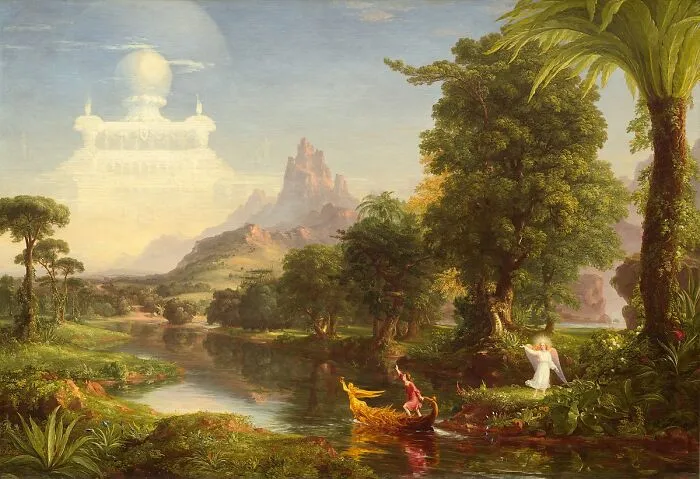
Artist: Thomas Cole | Year (completed): 1842 | Period: Romanticism
Part of a four-painting series, Youth explores the ideas of the young person. Green landscapes dominate the majority of the painting. Trees are flourishing, and mountains and a mythical castle stand in the background. A young person sets off on a boat and an angel stands on the shore, bidding farewell to the voyager.
Report
14points
#60 The Sainte-Victoire Mountain Seen From The Bibémus Quarry
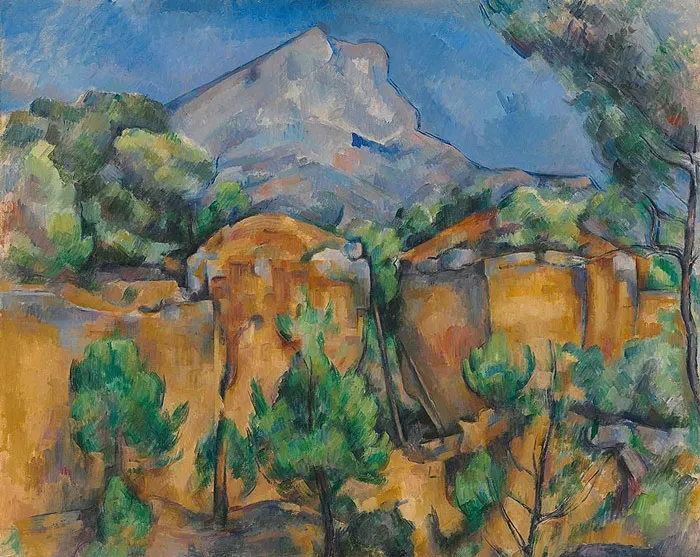
Artist: Paul Cézanne | Year (completed): 1897 | Period: Post-Impressionism
One of Paul's numerous intricate paintings is The Sainte-Victoire Mountain Seen From The Bibémus Quarry. At first glance, in the painting there appears to be a mountain standing over the Quarry's stone pile. Additionally, the attractiveness is enhanced by the trees in the front and some near the mountain.
Report
12points
