




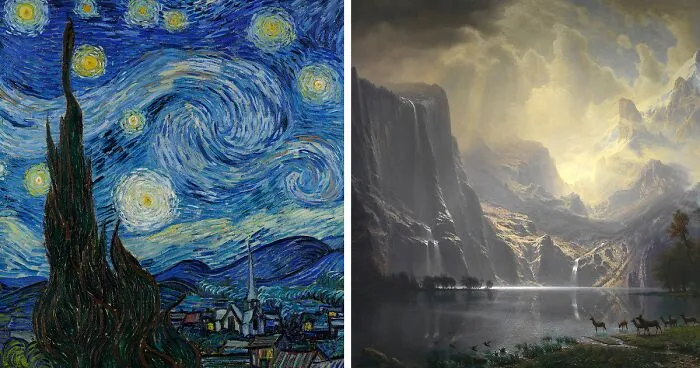


There is much beauty to be found in the world around us. There is so much to enjoy on this Earth and see, yet so much is often left overlooked. From modern towns to wide-open ranges of nothing but nature, landscape painting attempts to capture it all. This style of painting gives a lot of room for creativity to go wild. Landscape paintings can capture a moment for what it is — a passing thing — and create an opportunity to enjoy the view.
All works of creativity are just fruits of the mind and painted landscapes sometimes feel surreal, blending elements of reality and fiction. We can see the world from a different perspective through these artistic creations. Some of history’s most famous artists have mastered combining natural scenery with man-made structures or emotional human elements, creating a harmonious balance between nature and humanity.
From desolate buildings to love-infused couples, the greatest landscape paintings seamlessly integrate multiple elements, offering a rich, multi-layered viewing experience that transcends reality while grounding us in familiar emotions and scenes.
If you are out looking for a drop of inspiration, look no further than the paintings of famous landscapes below, one after another, and high chances are that those landscape painting ideas will start planting seeds in your head, too. If one of the paintings ignited your creative light, be sure to upvote it. If you have more to add about the painting, comment below and share what you know.
#1 The Great Wave Off Kanagawa
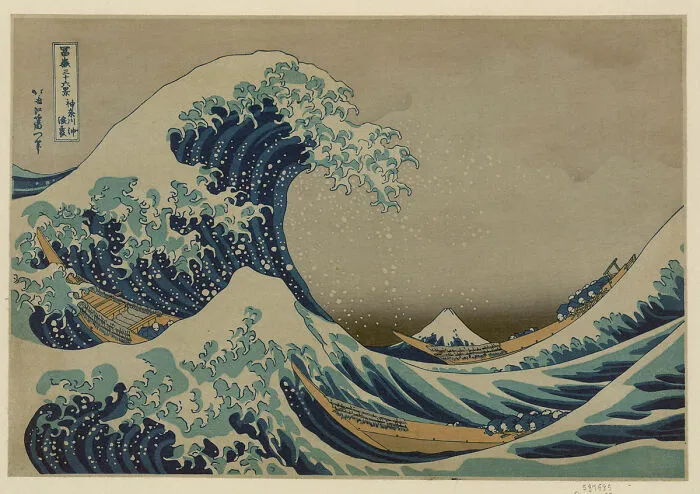
Artist: Katsushika Hokusai | Year (completed): 1831 | Period: Impressionism
The Great Wave Off Kanagawa might be one of the most famous Japanese paintings, which has a following even in the western hemisphere. It shows how huge waves are about to crash into some fishermen and their boats. In the background, the mountain Fuji is peaking out and acts like a northern star.
Report
35points
#2 The Starry Night
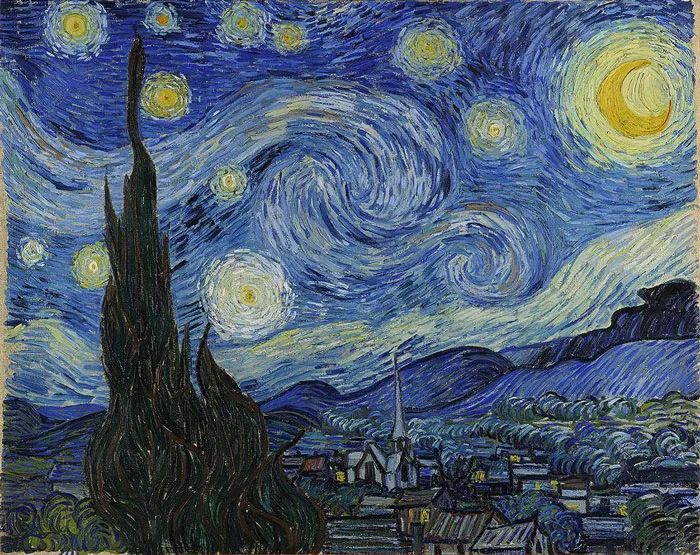
Artist: Vincent Willem van Gogh | Year (completed): 1889 | Period: Post-Impressionism
The night sky, packed with stars and the moon, takes up most of this medium-sized oil painting on canvas. It occupies three-quarters of the picture plane and is characterized by strongly swirling patterns that seem to wash across its surface like waves. It also appears tumultuous, almost agitated. It is encircled by concentric circles of radiant white and yellow light and is pocked with luminous orbs, including the crescent moon to the far right and Venus, the morning star, to the left of the center.
32points
#3 Looking Down Yosemite Valley, California
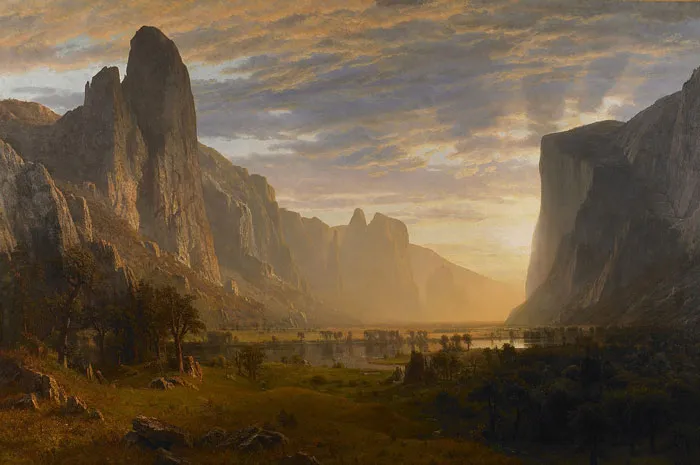
Artist: Albert Bierstadt | Year (completed): 1865 | Movement: Hudson River School
It was Bierstadt's first substantial depiction of Yosemite, a subject for which he would later gain notoriety. It offers a glimpse of one of America's most picturesque locations. Based on sketches he did in 1863, Bierstadt depicted the valley from a viewpoint above the Merced River, gazing west with Sentinel Rock and El Capitan enclosing the view on the right and left, respectively. In the distance, Middle Cathedral Rock's spire may be seen.
32points
#4 The Magpie
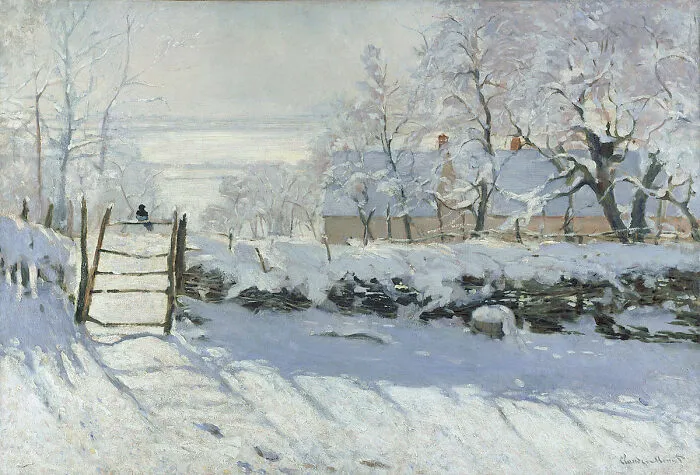
Artist: Claude Monet | Year (completed): 1869 | Period: Impressionism
The Magpie's canvas shows a lone black magpie perched on a gate fashioned from a wattle fence as the sunbeams touch newly fallen snow, casting blue shadows. One of Monet's earliest uses of colored shadows, which subsequently came to be linked with the Impressionist movement, may be seen in this picture.
31points
#5 Among The Sierra Nevada Mountains
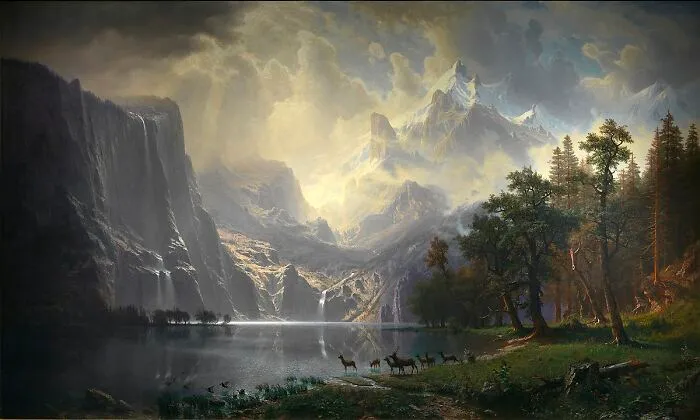
Artist: Albert Bierstadt | Year (completed): 1868 | Style: Luminism
The painting features craggy mountains on the left and a luminous sky with the Sun's rays peeping through the clouds in the background. On the right side of the painting, there is a peaceful lake with a group of deer and waterfowl on the edge of a mountain. If you have a careful eye, you might have spotted a trout in the water on the left, in the shade of a rock.
Report
31points
#6 Water Lilies
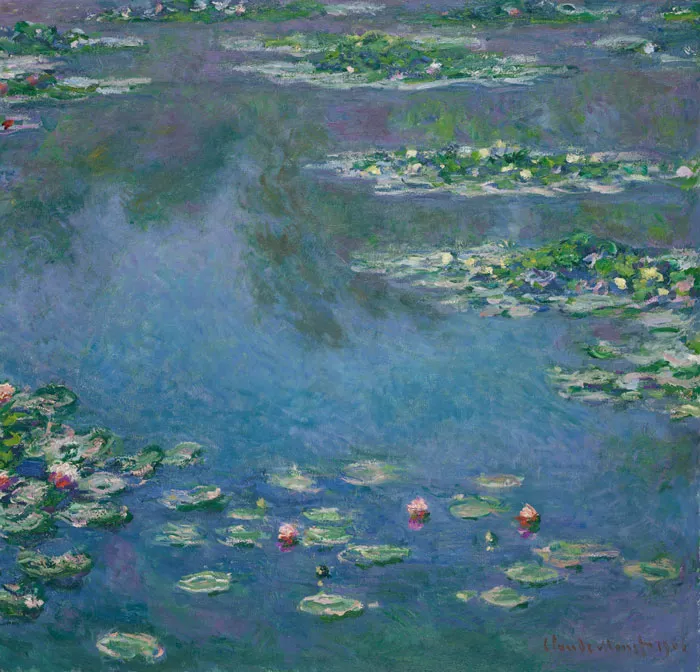
Artist: Claude Monet | Year (completed): 1906 | Movement: Impressionism
Claude Monet had completely abandoned the horizon line by the time he created Water Lilies. The artist glanced down, concentrating just on the pond's surface with its cluster of vegetation floating in the reflection of sky and trees, in this spatially ambiguous work. Monet produced the representation of a horizontal surface on a vertical one.
Report
31points
#7 Sunlight And Shadow: The Newbury Marshes
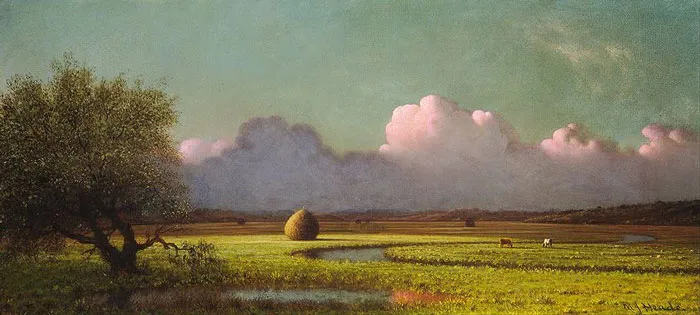
Artist: Martin Johnson Heade | Year (completed): 1875 | Style: Luminism
Sunlight and Shadow painting tries to engulf its viewer with some beautiful shots of nature. Every small detail adds up to make a wonderful landscape — the creek coming from the right to the middle of the painting, the pinkish clouds above, the trees, and the haybales. But the most important part is played by the sunlight and shadows, opposite things that work perfectly together.
30points
#8 Starry Night On The Rhone
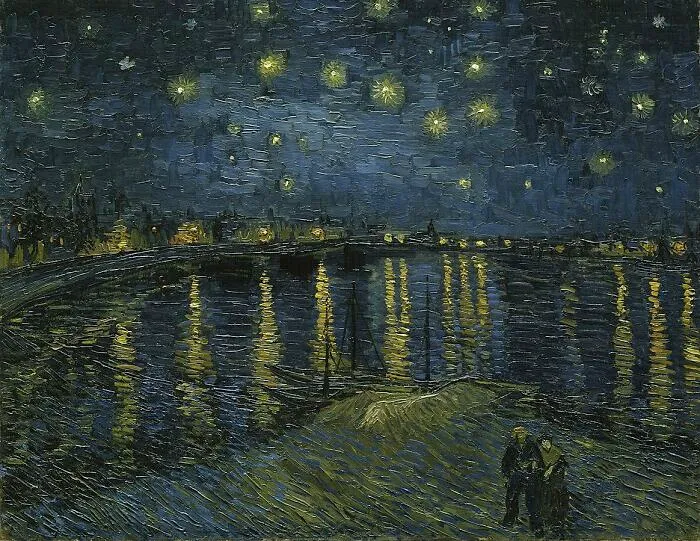
Artist: Vincent Willem Van Gogh | Year (completed): 1888 | Period: Post-Impressionism
Van Gogh painted Starry Night Over the Rhone on the bank of the Rhône, which was just a short distance from the Yellow House on the Place Lamartine, where he resided. Some of his more well-known works, notably The Starry Night, the most well-known Van Gogh painting of night stars, were inspired by the night sky and the effects of lighting.
Report
30points
#9 Cafe Terrace At Night
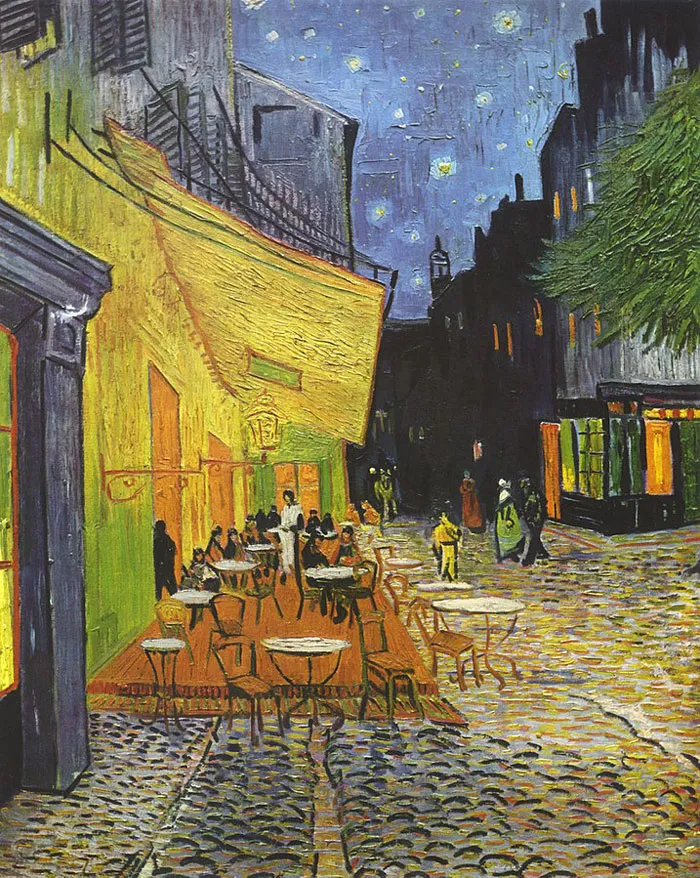
Artist: Vincent Willem Van Gogh | Year (completed): 1888 | Period: Post-Impressionism
Vincent Willem Van Gogh hit the art world with another big painting. Named Cafe Terrace At Night, this painting perfectly captures the movement of Post-Impressionism. Soon, Van Gogh started to insert his unique "night effects" into more of his works. Revealed in 1888, the "night effect" became an iconic Van Gogh addition.
Report
29points
#10 The Embarkation Of The Queen Of Sheba
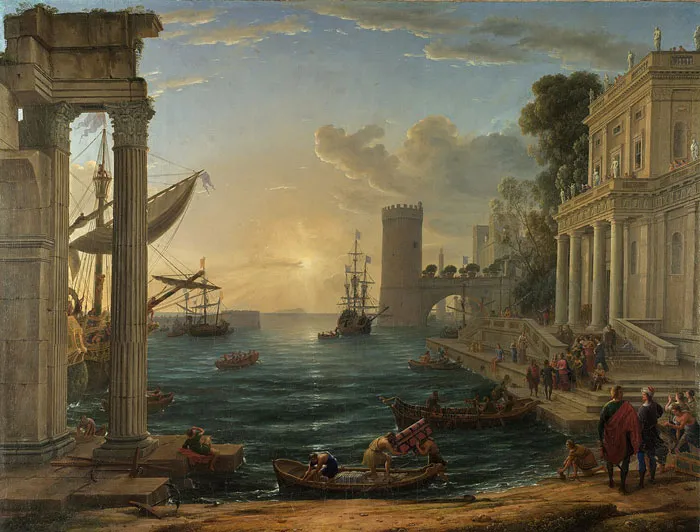
Artist: Claude Lorrain | Year (completed): 1648 | Period: Classicism
The painting's approximately two-meter width and one-and-a-half-meter height gave Claude Lorrain plenty of room to develop the theme he chose for it. He avoided over-detailing the canvas and let the sky take up half of the space. Although there are a few clouds to our right, the sky is largely clear.
Report
28points
#11 The Japanese Footbridge And The Water Lily Pool
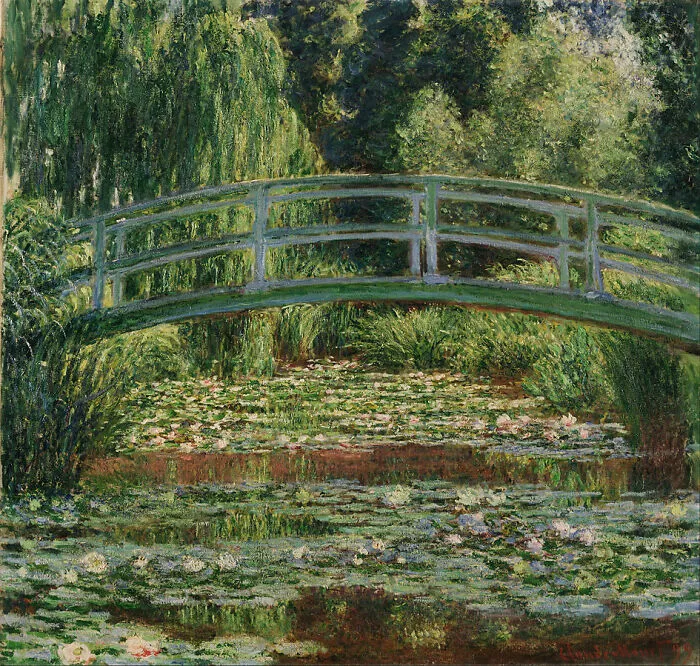
Artist: Claude Monet | Year (completed): 1899 | Period: Impressionism
The water lily's green leaves are dispersed around the pond and may be seen floating on top of the water. The huge flowers of the water lilies, which are blooming in abundance, protrude from the water. Although the flowers are primarily white, Monet gives them a few glimpses of other colors, including blue, pink, red, and yellow.
27points
#12 Travelers Among Mountains And Streams
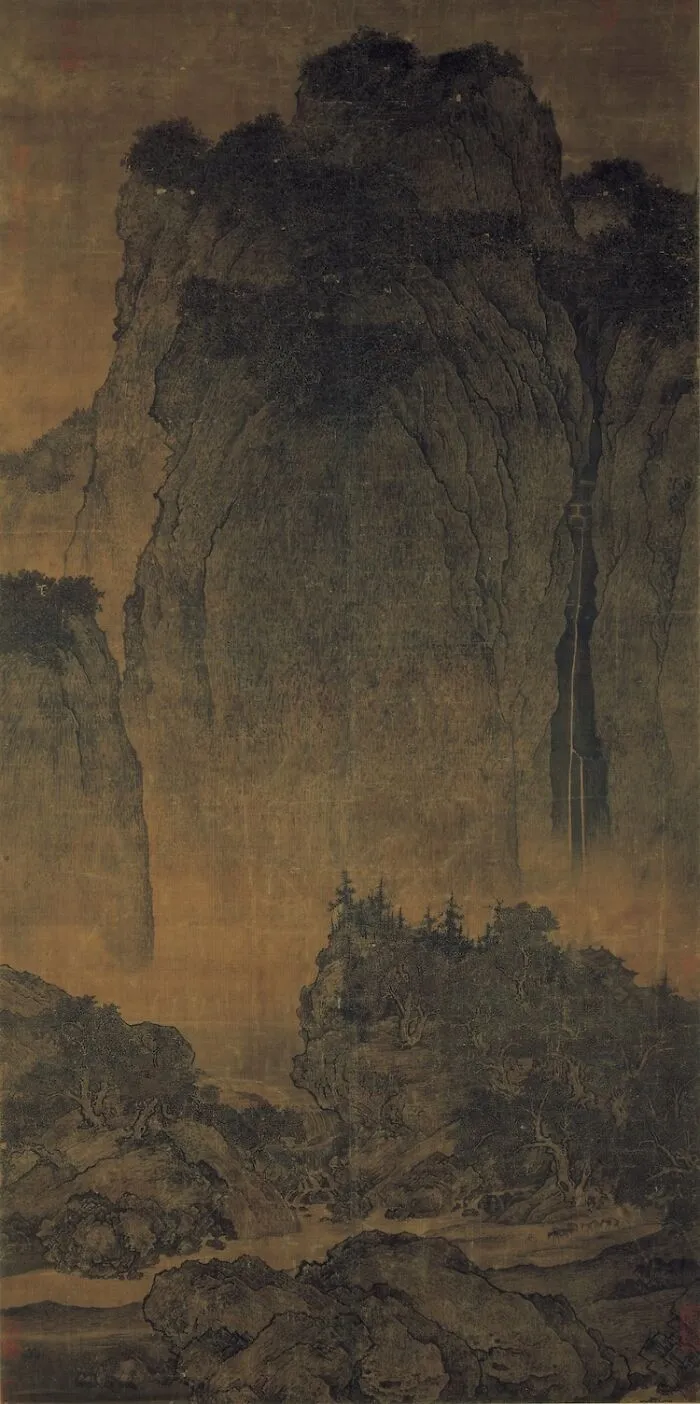
Artist: Fan Kuan | Year (completed): 1000 | Style: Northern Landscape
The gigantic landscape picture Travelers among Mountains and Streams establishes a standard to which later painters would frequently look for inspiration. Fan Kuan used angular contour strokes to depict the mountains and slopes and raindrop-like brush dabs to fill them in, emphasizing their majestic and timeless characteristics.
27points
#13 Irises
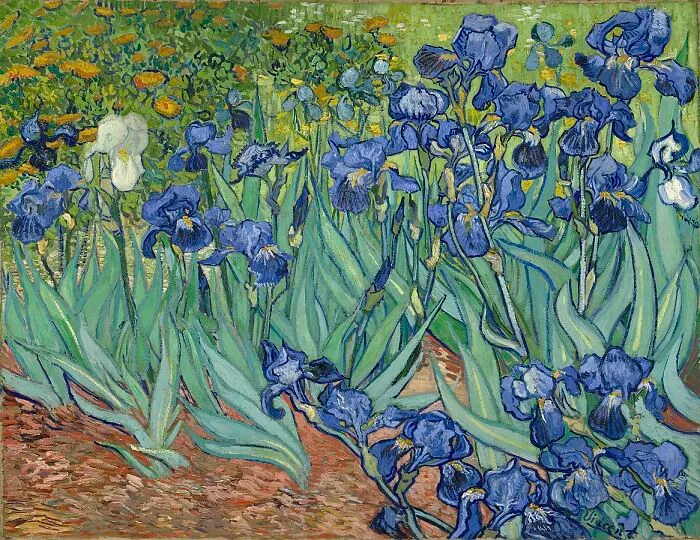
Artist: Vincent Willem Van Gogh | Year (completed): 1889 | Period: Post-Impressionism
This is the first painting that Vincent Van Gogh did during his stay in the mental asylum. Irises, as the name might give out, is about irises, but painted ones. There are a lot of colors in this painting, and all of them seem to harmonize together. While the blue and green colors dominate the landscape, hints of yellow and white complete this masterpiece.
Report
26points
#14 View Of Haarlem With Bleaching Fields
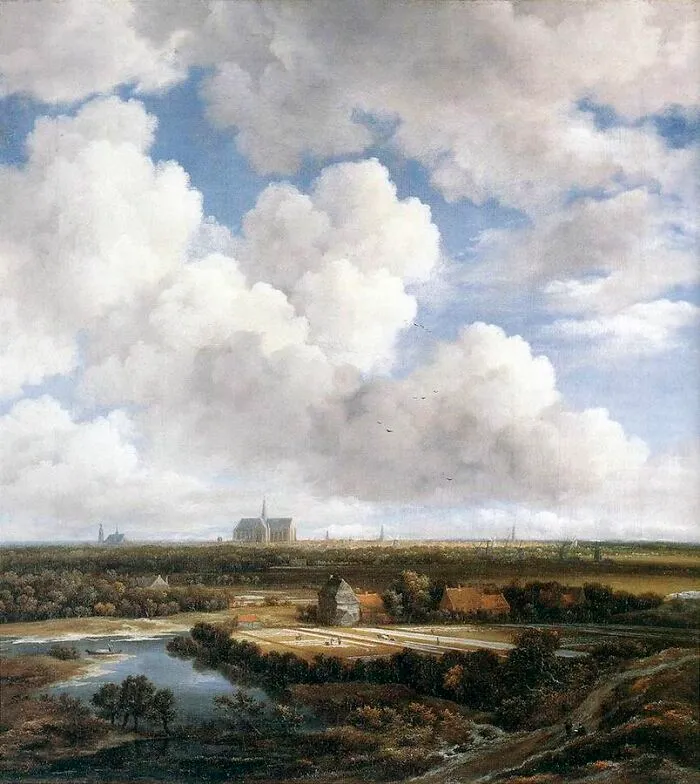
Artist: Jacob Van Ruisdael | Year (completed): 1670 | Period: Dutch Golden Age
Van Ruisdael was able to catch the essence of the Dutch landscape in this painting. We stare out across the flat plain toward the distant city of Haarlem from a high dune. There is a vast sky above the city with passing clouds. In his painting, Van Ruisdael depicts the sun as it moves from one area of light to another. From the fields where linen is stretched out to bleach to Saint Bavo's Church in the distance, he draws our eyes deep into the painting along the patches of sunshine.
26points
#15 The Sea Of Ice

Artist: Caspar David Friedrich | Year (completed): 1824 | Period: Romanticism
One of the greatest Friedrich works, it was regarded with confusion because of its unconventional subject matter and radical composition. According to Friedrich, the Arctic appears like a sea of ice, hence the name of the painting. Small icebergs are stacked on top of one another in the painting's foreground, giving them the appearance of steps. The icebergs, however, are mashed together to create a tower of ice in the background.
Report
25points
#16 The Hunters In The Snow
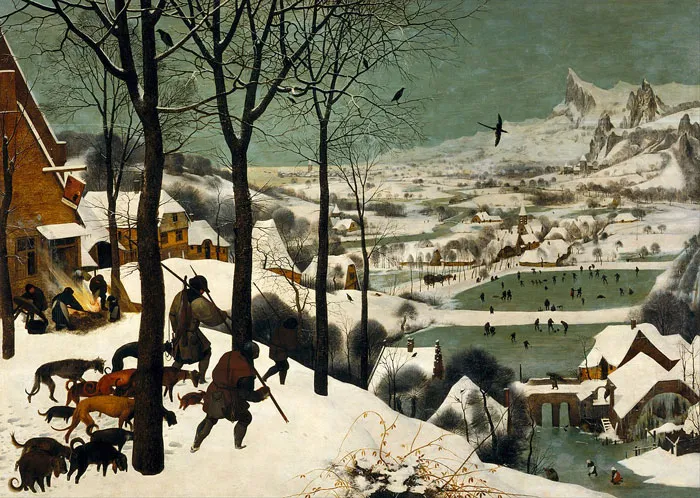
Artist: Pieter Bruegel the Elder | Year (completed): 1565 | Period: Northern Renaissance
A calm, chilly day with gloomy skies is what one sees when looking at the painting. The trees are bare, the colors are subdued whites and grays, and there is a haze of wood smoke. An outside fire is used by several adults, a youngster, and an inn to prepare food. Flat-bottomed valleys with craggy peaks visible on the opposite side make up the landscape itself.
24points
#17 Wanderer Above The Sea Of Fog
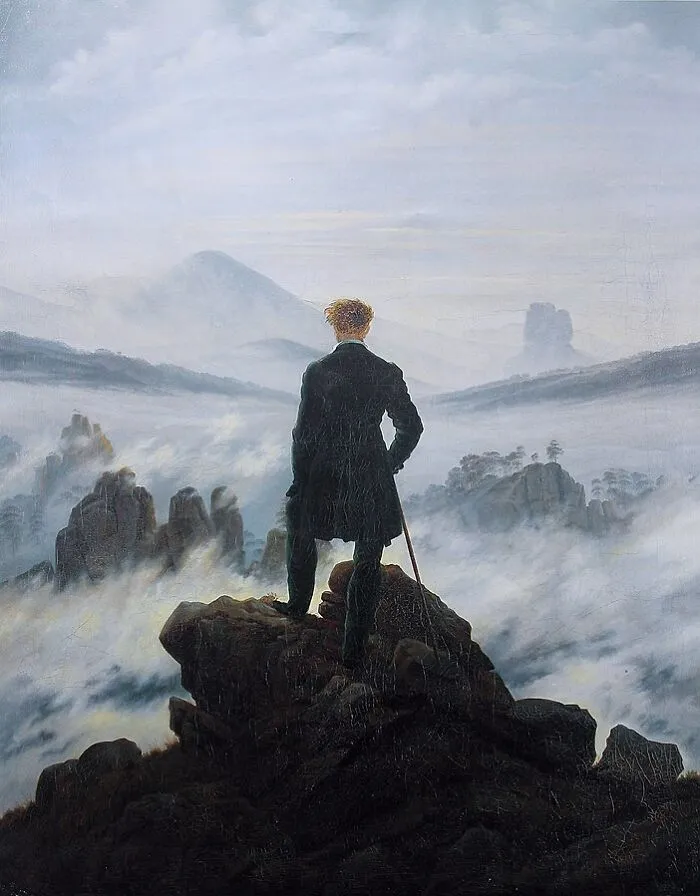
Artist: Caspar David Friedrich | Year (completed): 1817 | Period: German Romanticism
In the painting, a tall man is standing on a rocky ledge with his back to the spectator. He is holding a walking stick with his right hand while wearing a dark green overcoat. The wanderer looks out at a scene shrouded in a dense sea of fog, his hair blowing in the wind. Several further ridges protrude from the pile in the center, probably not dissimilar to those the traveler is standing on.
Report
24points
#18 Wivenhoe Park
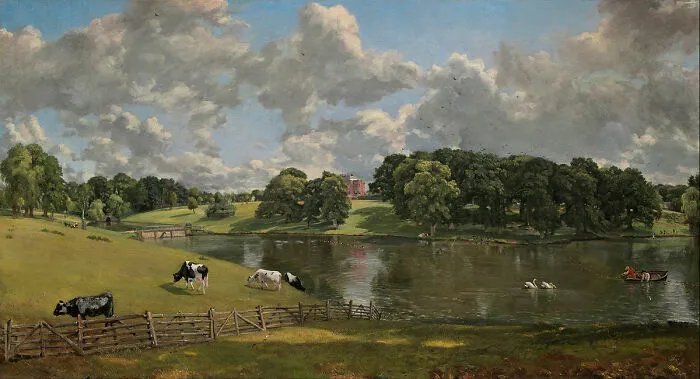
Artist: John Constable | Year (completed): 1816 | Period: Romanticism
No one can capture the English natural beauty like John Constable does. This almost photographic-clear environment exudes a lovely sense of calm and harmony. The artist's imaginative synthesis of the actual site is evident in the enormous sections of dazzling sunshine and cool shade, the rambling line of the fence, and the lovely balance of trees, meadows, and rivers.
24points
#19 Saint-Georges Majeur Au Crépuscule
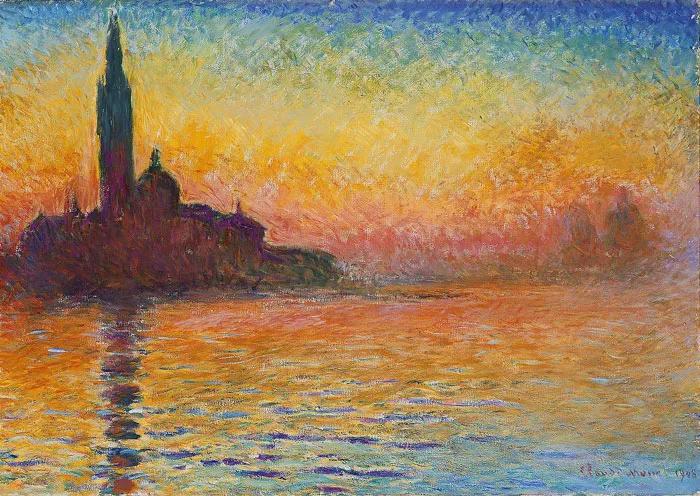
Artist: Claude Monet | Year (completed): 1908 | Style: Impressionism
It shows enigmatic structures that seem to materialize out of thin air; they resemble floating objects in the backdrop. The forms are inserted lightly but not sufficiently to conceal their identity. The Church of San Giorgio Maggiore, with its bell tower rising to the top of the picture, is the main subject of the artwork. The Grand Canal's mouth and Santa Maria Della Salute's dimly lit domes are to the right.
Report
23points
#20 The Hermitage At Pontoise
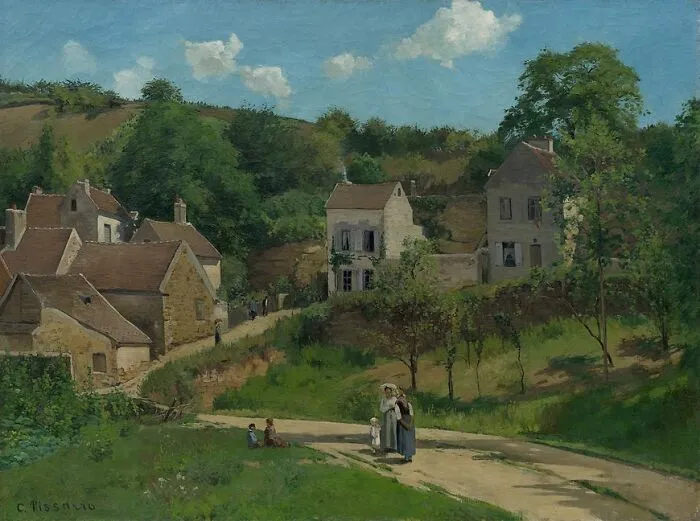
Artist: Camille Pissarro | Year (completed): 1867 | Period: Romanticism
This image depicts the meandering village way at the foot of the Hermitage, a collection of homes in Pontoise, France, where the painter Camille Pissarro lived between 1866 and 1882. He selected the rural surroundings of the province capital for several large-scale landscapes that have been dubbed his early masterpieces.
Report
23points
