







And not every fact needs to have an obvious practical purpose to be worthwhile. Research points out that trivia can provide small opportunities to exercise memory because recalling information requires more active mental work than simply reading it again. This relates to the testing effect, in which retrieving information from memory can strengthen its later recall.
A casual trivia question can therefore do more than provide a moment of entertainment; it can turn an otherwise forgettable piece of information into something the brain has actively practiced retrieving. Curiosity can also encourage people to investigate related subjects, allowing one unusual fact to become the starting point for learning about something much bigger.

There is a social side to this fascination, too. Random facts give people something easy to share, whether it's an unexpected discovery mentioned during a conversation or knowledge brought up during a trivia game. They can create moments of surprise and give people common ground without requiring everyone to share the same interests or expertise.
A strange fact about an animal, for example, might lead to questions about evolution, biology, or the environment, turning a tiny piece of trivia into a much wider exploration. What looks like meaningless information can therefore become a memory exercise, a conversation starter, or simply the first step toward discovering something else, and perhaps that's part of why people never seem to get tired of finding out something they didn't know before.


#27

Unlike most trees that grow upward from a single trunk, the Cashew of Pirangi spreads outward across the ground. Its branches bend downward under their own weight, and when they touch the soil, they can develop new roots. Over time, this unusual growth pattern allows the tree to expand across a vast area, creating the appearance of an entire forest formed by one tree.
The tree is believed to have been planted in the 1880s, although its extraordinary size and growth pattern have inspired claims that it could be much older. Some estimates suggest it may be more than a thousand years old, but this age has not been conclusively established. Its exact age therefore remains a subject of debate.
Today, the Cashew of Pirangi is one of Brazil’s most fascinating botanical landmarks. Its enormous canopy provides shade for visitors, while its unusual network of branches demonstrates how plants can adapt and grow in unexpected ways. The tree is a striking example of nature’s ability to create something that seems almost impossible, turning a single plant into a sprawling living wonder.
It's oddly satisfying to discover a fact that completely changes how you look at something familiar. Whether it fills a small gap in our knowledge, sticks in our memory because it was surprising, or sends us down a rabbit hole of related information, these little discoveries remind us that there is always more to learn.
We may know how to use countless things every day, but that doesn't necessarily mean we understand them as well as we think we do. And perhaps that's what makes interesting facts so much fun. They don't have to change our lives or solve a major problem to be worth knowing. Sometimes, learning one completely unexpected detail is enough to make an ordinary day a little more interesting.
What is the most random fact you know that you still remember years later? Share it in the comments, we'd love to see what strange pieces of knowledge our readers have collected over the years!
#28

That purchase became an important turning point in Brown’s life. The go kart gave him an opportunity to experience racing firsthand and develop a deeper passion for the sport. What began as a teenage interest gradually grew into a serious ambition, motivating him to learn more about competition, drivers, and the business behind motorsports.
Brown eventually became involved in professional racing, first as a driver and later as a businessman and motorsports executive. He founded Just Marketing International, a company specializing in motorsports marketing, and built a reputation for understanding the commercial side of racing. His work brought him into contact with major teams, sponsors, and influential figures across the industry.
In 2018, Brown became the chief executive officer of McLaren Racing, one of the most historic names in Formula One. His journey from buying a go kart with game show winnings to leading a world renowned racing organization demonstrates how a small decision can sometimes open the door to an extraordinary career. It is a reminder that following a genuine passion can create opportunities that are difficult to imagine at the beginning.
#29
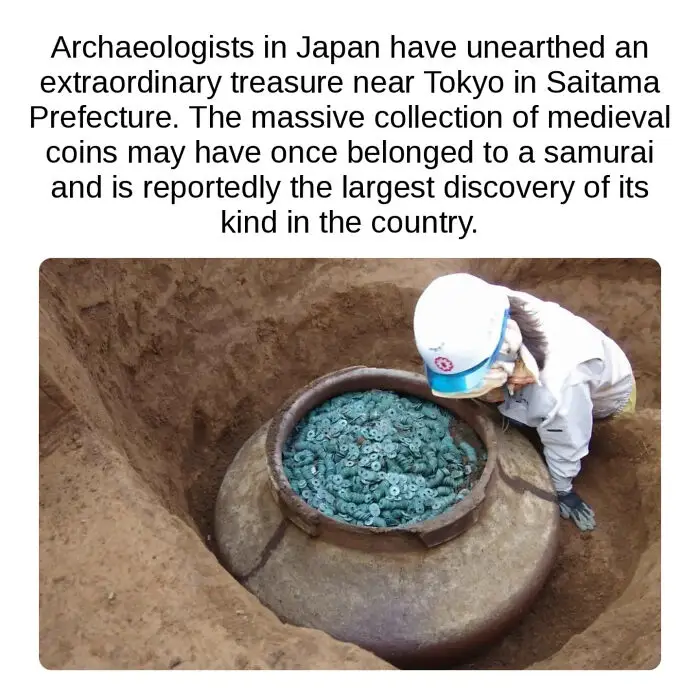
Many of the coins featured square or circular openings in their centers, allowing them to be threaded together using ropes for easier storage and transportation. The collection included Japanese coins as well as several older Chinese coins from the Ming and Tang dynasties, suggesting the extensive circulation of currency and trade between different parts of East Asia.
Archaeologists initially estimated that the jar contained more than 100,000 coins, making it an enormous discovery. However, a wooden tablet buried alongside the hoard provided an intriguing clue about its actual size. It contained the Japanese inscription "nihyaku rokuju," meaning 260, which may refer to 260 kan, a traditional counting unit representing 1,000 coins.
If this interpretation is correct, the jar could have contained as many as 260,000 coins. The discovery offers a fascinating glimpse into medieval Japanese wealth, monetary systems, and the lengths people went to protect their fortunes during times of political instability.

#31
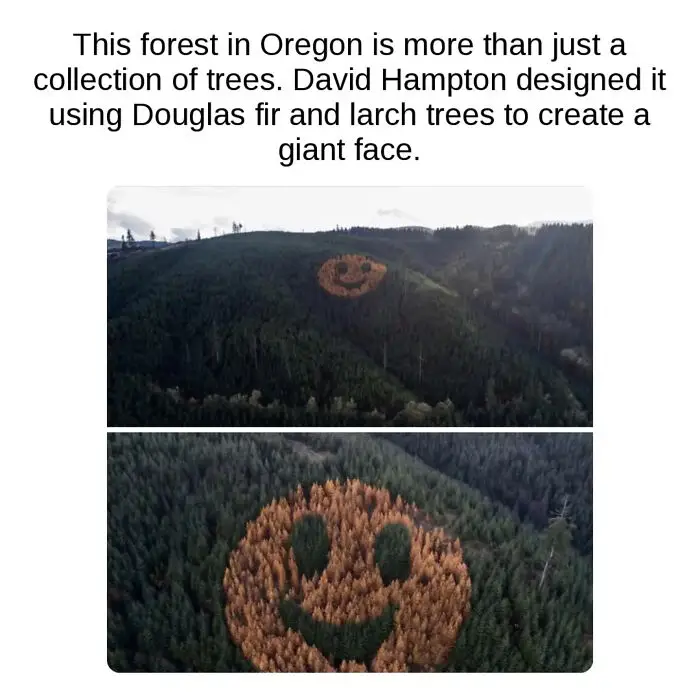
The face was carefully created using two different tree species. Rope was used to measure the circle, while Douglas fir trees were planted to form the eyes and mouth. Larch trees filled in the rest of the face, creating a striking contrast between the different shades of green and orange.
The design relies on the natural growth and seasonal changes of the trees rather than paint or artificial decorations. As autumn arrives, the larch trees change color, making the cheerful expression stand out against the surrounding forest.
Although both species are eventually intended to be harvested, the forest smiley face is expected to remain visible for at least another 30 to 50 years. It is a wonderful example of how thoughtful forestry can combine nature, creativity, and a little happiness into one unforgettable landscape.




#36

These minerals are believed to have formed under unusual conditions inside the parent asteroid from which the meteorite originated. Studying them could help scientists better understand the extreme temperatures, pressures, and chemical processes that take place during the formation of asteroids and other celestial bodies.


#40
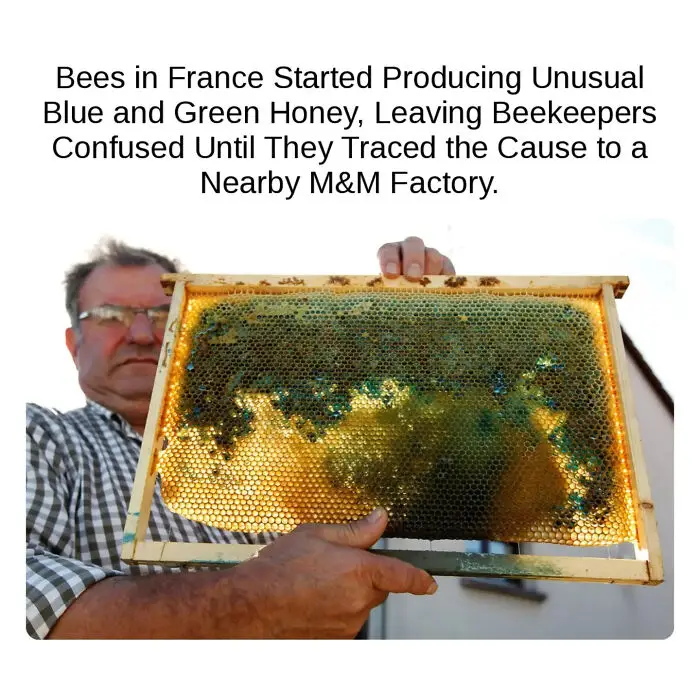
After investigating the mystery, they traced the unusual colors to a nearby biogas plant that processed waste from an M&M’s candy factory. Bees had apparently found their way to sugary residue from the candy production process and were collecting it as an alternative food source to flower nectar.
The blue and green colors came from the artificial food dyes used in the colorful candy shells. As the bees collected the sugary material and brought it back to their hives, the pigments affected the appearance of the honey. The incident demonstrated how bees can sometimes exploit unexpected food sources when they are available nearby.
The discovery raised concerns among beekeepers because honey contaminated by industrial food waste could be difficult to sell as a natural product. In response, the facilities involved took steps to prevent bees from accessing the sugary waste. The unusual honey became a memorable example of how human activities can unexpectedly influence wildlife and the products that nature provides.
