



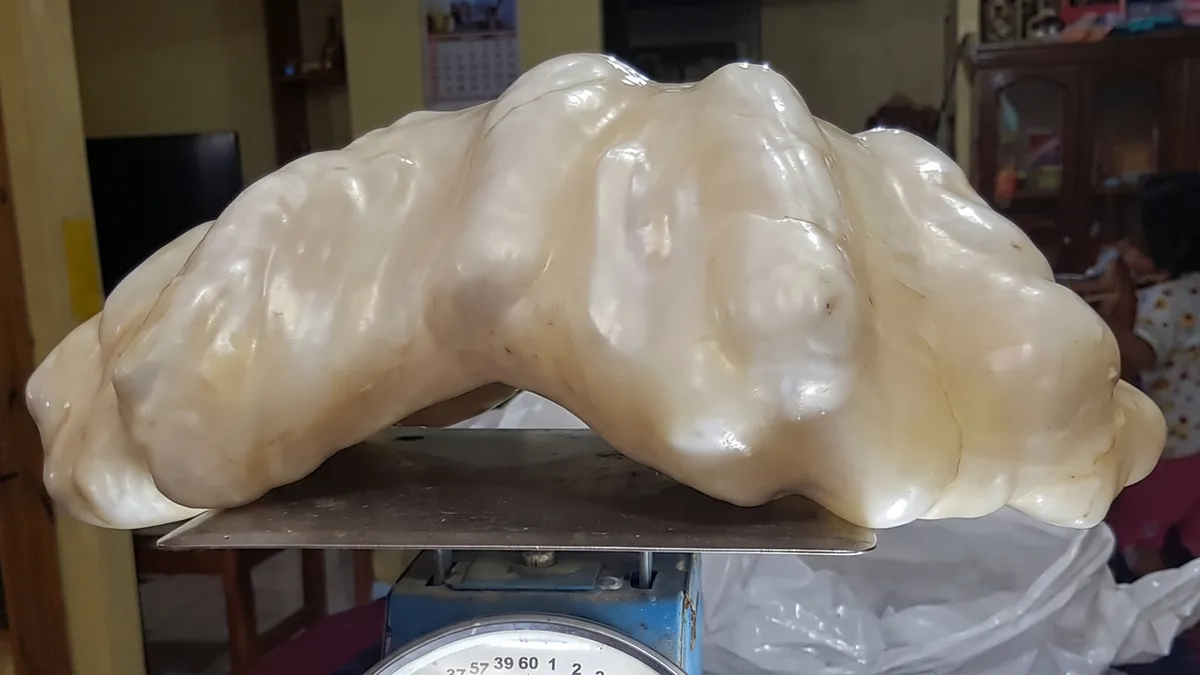


Some people really think they're all that... But do they have blue blood, three hearts and nine brains? Can they edit their own RNA and change color or skin texture in a fraction of a second? We think not. However, do you know who can? An octopus. They have a central brain plus a mini-brain in each of their eight arms, and unlike humans, roughly two-thirds of their neurons are located in their arms rather than their head. Why are we telling you this? Because it's just a tiny taste of what's to come...
Bored Panda recently stumbled upon an Instagram account called MRU.INK. It's filled with fascinating and unusual facts like the ones above. The page is dedicated to seeking out the truth, and it digs deep to do so. From history to archaeology and everything in between, there's no shortage of knowledge around here.
We've put together an awesome list of the account's best posts, made up of pictures and the stories behind them. Expect to encounter a 75-pound giant pearl, the oldest printed book on earth, and a sword thrust into solid rock.
#21
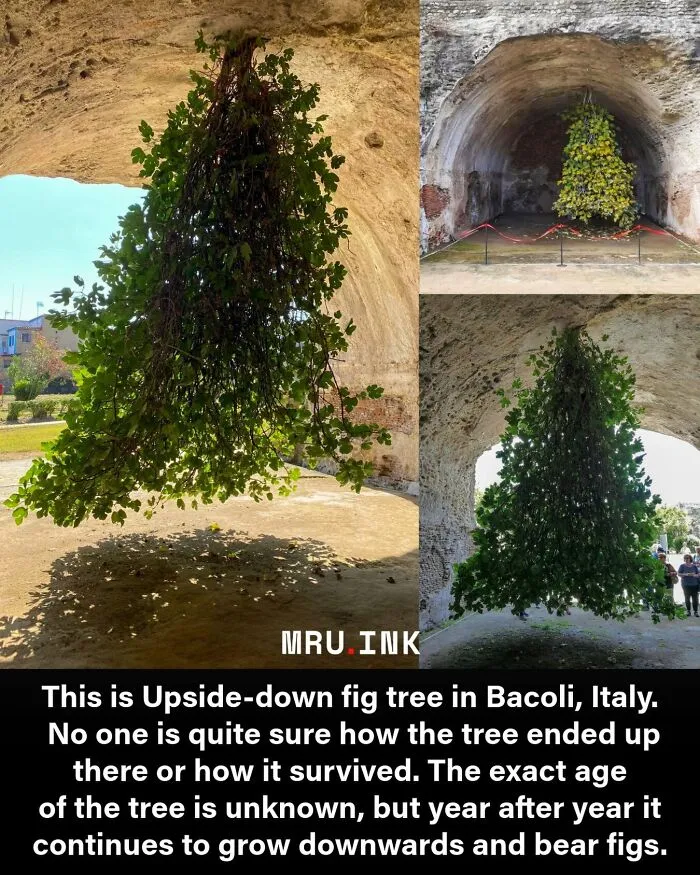
In the ancient ruins of Baia, near Bacoli, Italy, a wild fig tree grows in one of nature’s strangest arrangements. Its roots grip the ceiling of a vaulted Roman structure, while its branches descend toward the ground like a living curtain. The tree is found in the Archaeological Park of the Baths of Baia, close to the so-called Temple of Mercury. Some local accounts suggest it may have survived archaeological excavations in the 1940s, adapting to its unusual position, though the exact origin remains uncertain. Remarkably, the tree still produces figs, turning an ancient ruin into a botanical mystery that continues to thrive.
Report
14points
#22
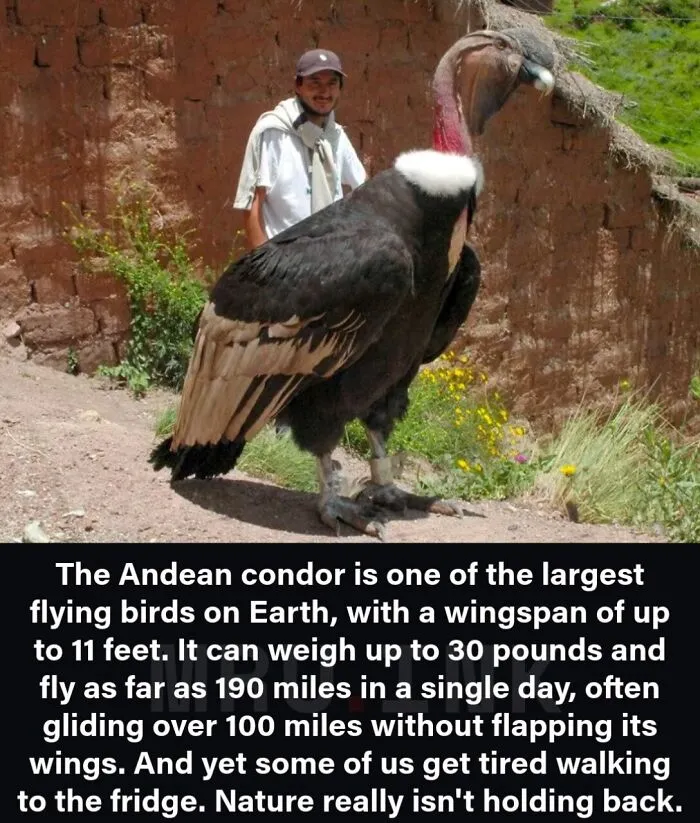
High in the Andes, one of nature’s greatest gliders rules the skies. The Andean condor uses rising currents of warm air to soar across vast mountain landscapes, conserving energy while searching for food. Its remarkable wings can span up to 11 feet, making it one of the largest flying birds alive. Even more astonishing, studies have shown that condors can spend remarkably long periods in flight with barely a single wingbeat. These scavengers also play a vital ecological role by consuming animal carcasses and helping keep their mountain ecosystems clean. Evolution really did give this bird an incredible upgrade.
Report
13points
#23
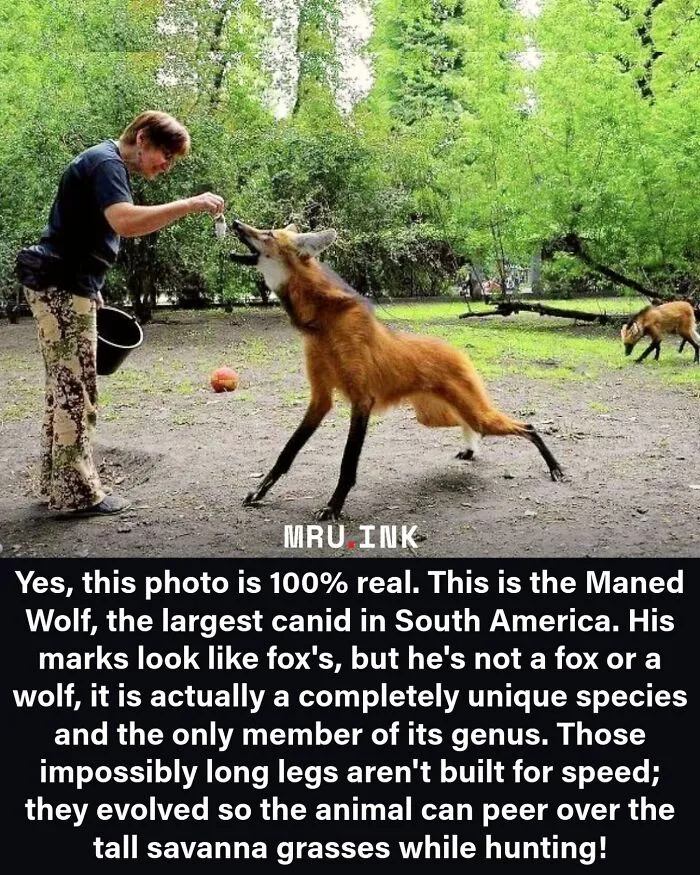
The maned wolf (Chrysocyon brachyurus) is the largest canid in South America and the sole species in its genus. Though its reddish coat and distinct markings resemble a giant fox, this solitary creature is neither a fox nor a wolf. Thriving in the vast grasslands of South America, it possesses extraordinarily long legs evolved to help it see over tall vegetation. Highly omnivorous, this unique animal hunts small prey but relies heavily on wild plants, particularly the native wolf apple.
Report
13points
#24
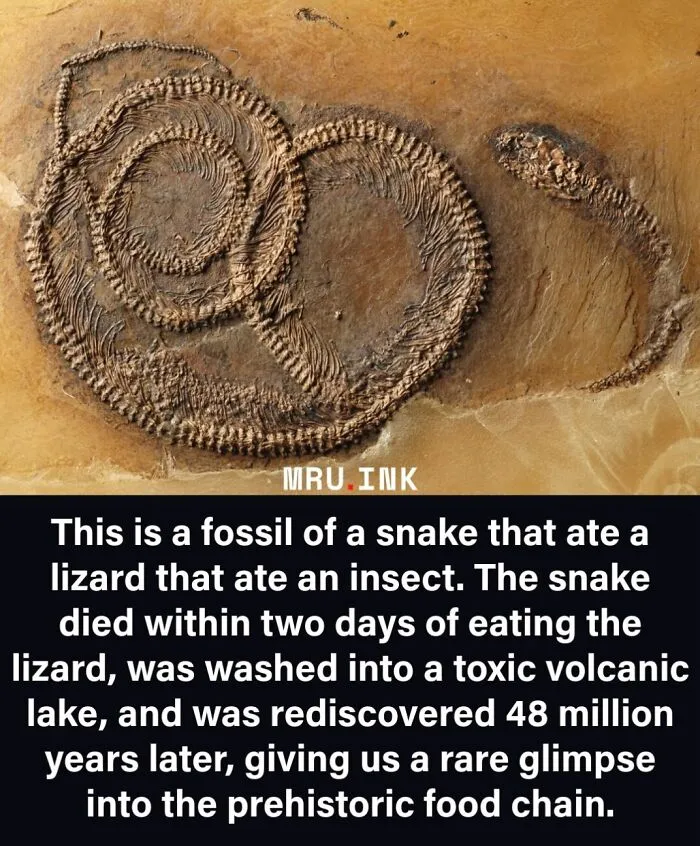
This 48-million-year-old fossilized Palaeopython showcases nested fossilization (trophic chain preservation). CT-scanning revealed that the swallowed lizard (Geelthesaurus) was ingested headfirst, a snake feeding strategy unchanged today. Surprisingly, the beetle inside the lizard’s gut still retained structural coloration, its exoskeleton gleaming iridescent turquoise. Cyanobacterial mats lining the lake bottom acted as a protective shroud, shielding the dying snake from scavengers while mineralizing its digestive tract fast enough to capture three distinct ecological tiers frozen mid-digestion.
Report
13points
#25
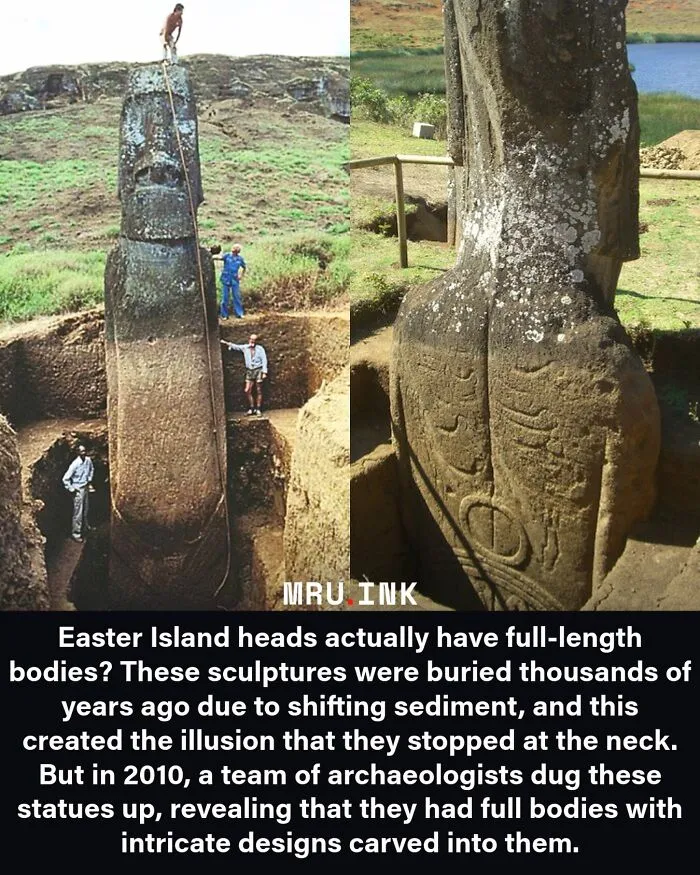
While famous as floating “heads,” Easter Island’s iconic Moai actually feature full-length bodies buried deep underground. Centuries of shifting natural sediment created the illusion that they stopped at the neck. In 2010, archaeologists excavating these massive stone statues dug them up to reveal complete torsos standing over 20 feet tall. Even more astonishing, their backs were covered in intricate petroglyph carvings, including Polynesian vaka canoes, highlighting the masterful artistry of the ancient Rapa Nui people.
Report
12points
#26

Indonesia’s Blue Fire Volcano, where molten sulfur ignites into dazzling electric-blue flames, casting an ethereal glow against the midnight sky-an ultra-rare natural phenomenon found in just two places on Earth!
Report
12points

#28
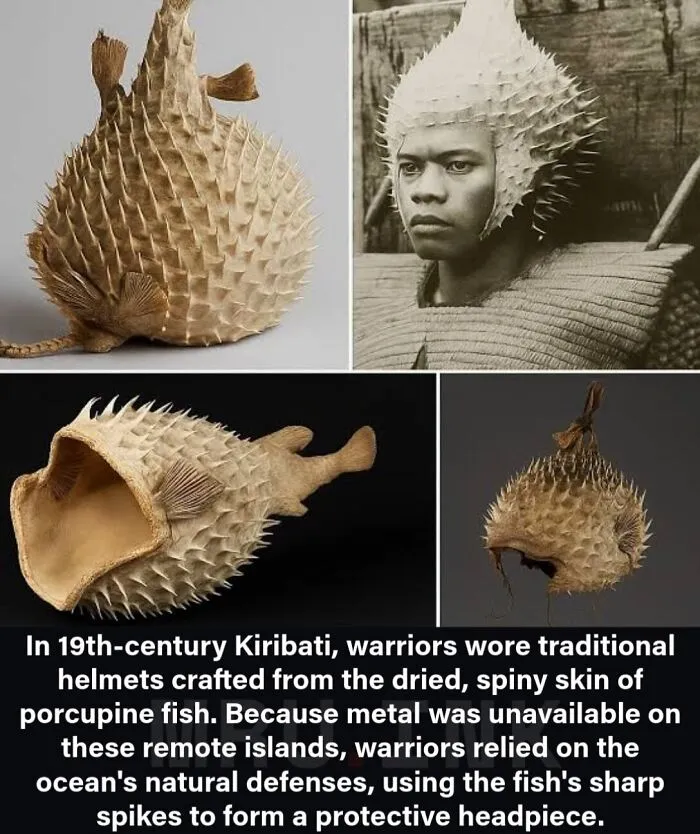
Beyond basic protection, Kiribati porcupinefish helmets (te barantauti) held deep spiritual significance. Artisans inflated and dried whole fish over coconut-husk fires to harden the spines permanently outwards. Paired with dense suit armor woven from woven coconut fiber (te tei), these intimidating headpieces transformed warriors into ferocious ocean spirits to psychologically disorient opponents during island duels.
Report
11points
#29
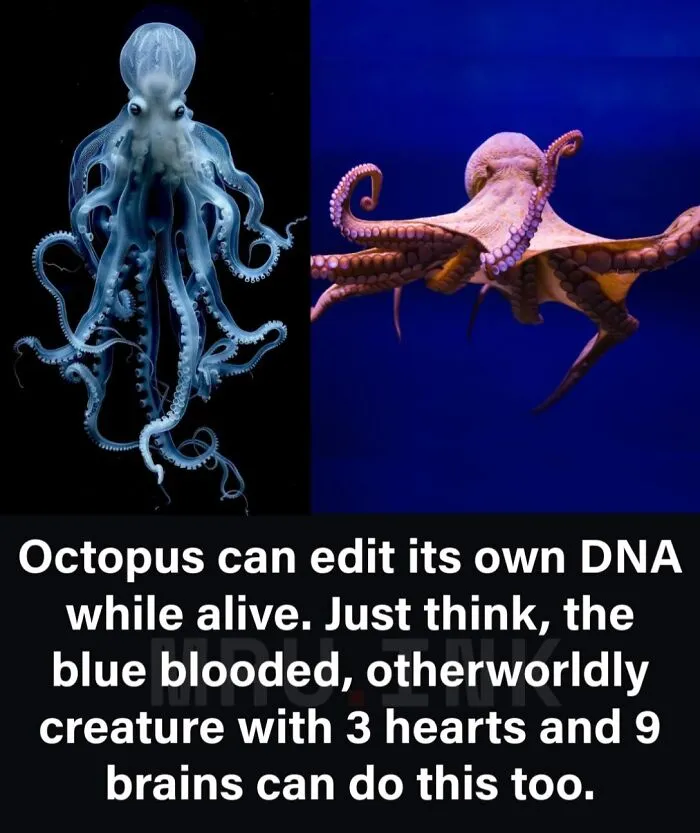
DNA is like an instruction book that stores an organism’s genetic information. Cells use these instructions to produce RNA, which helps them manufacture proteins essential for life. Although DNA and RNA work together, they are different molecules. DNA stores the original genetic instructions, while RNA carries a working copy of some of that information.
Octopuses possess an extraordinary ability called RNA editing, which allows them to modify certain RNA molecules after they have been produced from DNA. These changes can alter the instructions used to build proteins without changing the original DNA sequence. Think of it as editing a copy of a document while leaving the original untouched.
What’s particularly fascinating is that octopuses extensively edit RNA in their nervous systems, potentially allowing them to adjust how certain proteins function. Scientists are investigating how this ability helps them respond to environmental changes, including temperature fluctuations. Unlike organisms that rely prima.
Report
11points
#30
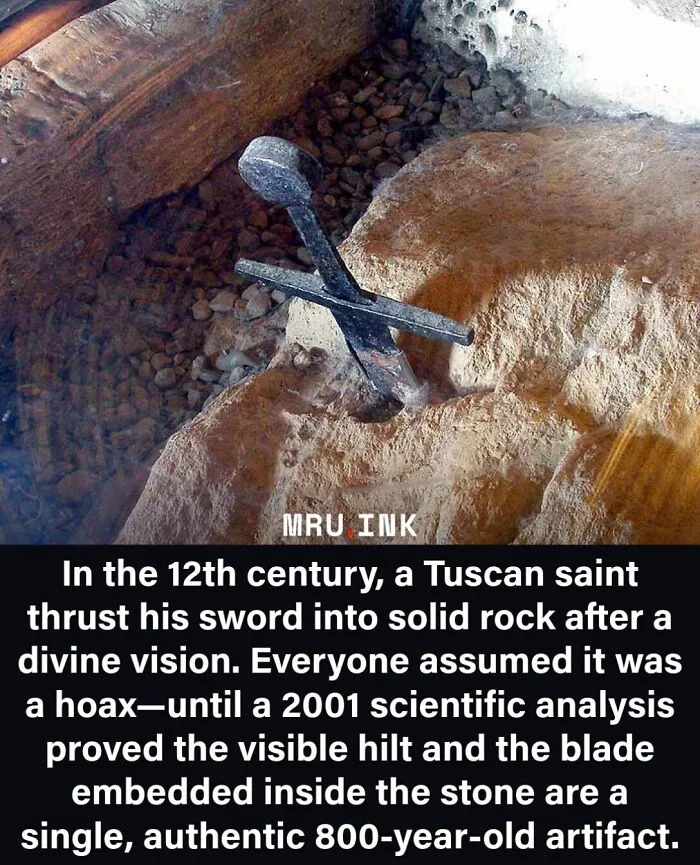
Known as Italy’s Excalibur, the Sword of Saint Galgano hides an extra secret. Beyond the continuous blade, 2001 ground-penetrating radar scans uncovered a hidden underground chamber beneath the stone. Inside lies an ancient tomb containing a pair of 12th-century mummified hands. Local legend claims they belonged to an envious thief who tried to pull the sword from the rock, only to be ambushed and mauled by wild wolves sent to guard the sacred weapon.
Report
11points
#31
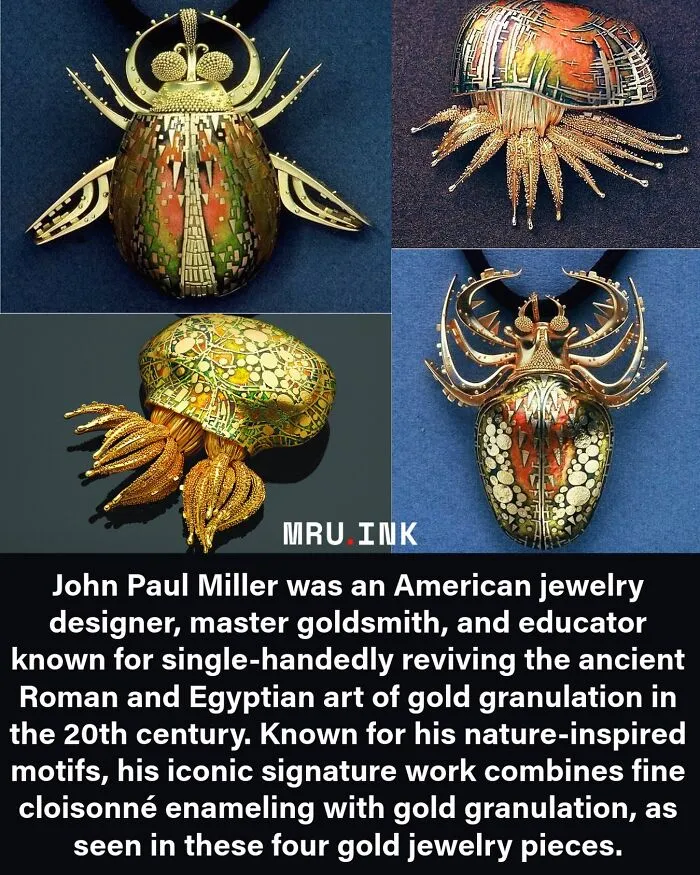
Beyond reviving the ancient technique of gold granulation, John Paul Miller was a master of combining high-karat gold with vibrant, high-temperature cloisonné enamel. Inspired by marine life, insects, and botanical forms, his intricate creatures took hundreds of hours to craft, requiring precise torch-firing without melting delicate gold spheres. Beyond his studio work, Miller spent over 40 years teaching at the Cleveland Institute of Art, where he profoundly influenced generations of modern American metalsmiths. Today, his rare, highly coveted masterworks are preserved in premier permanent collections worldwide, including the Cleveland Museum of Art and the Smithsonian American Art Museum.
Report
11points
#32
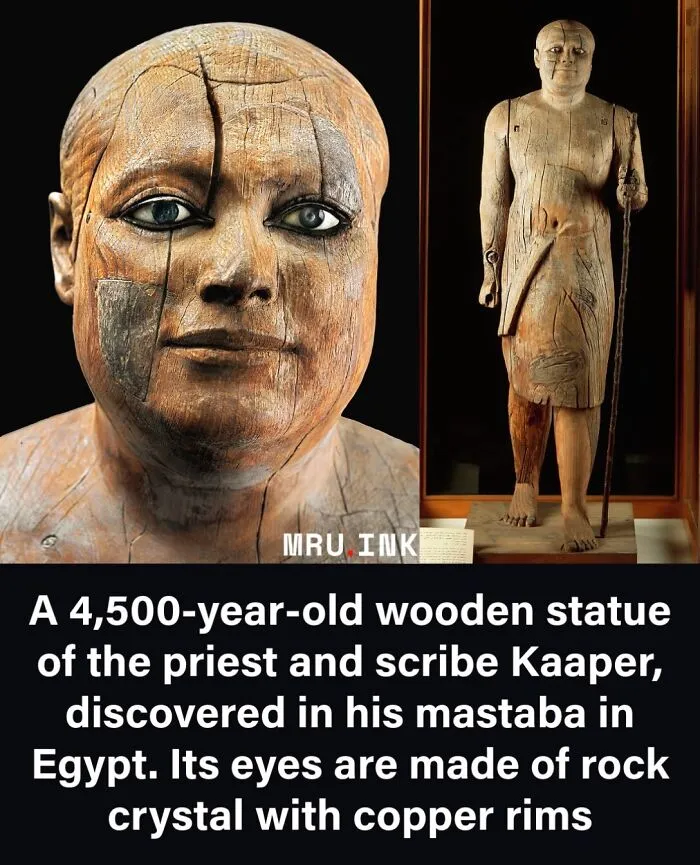
Unearthing Kaaper’s sycamore statue in 1860 startled Egyptian excavators—its lifelike realism so closely resembled their local mayor that they nicknamed it Sheikh el-Balad (“Village Chief”).
Unlike idealized, slim royal statues, Kaaper’s corpulent torso intentionally signified high administrative status and prosperity in the Old Kingdom. Remarkably, dry desert air preserved this rare wooden masterpiece, complete with its original plaster traces, for millennia.
Unlike idealized, slim royal statues, Kaaper’s corpulent torso intentionally signified high administrative status and prosperity in the Old Kingdom. Remarkably, dry desert air preserved this rare wooden masterpiece, complete with its original plaster traces, for millennia.
Report
11points
#33
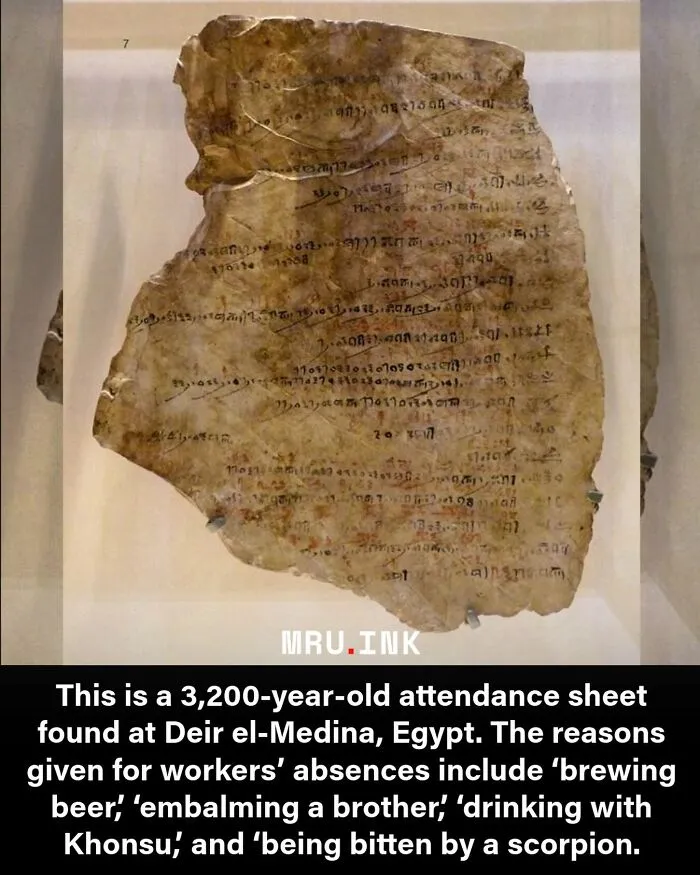
More than 3,200 years ago, Egyptian workers already had something surprisingly familiar: an attendance register. Found at Deir el-Medina, the village of craftsmen who built and decorated royal tombs, this limestone ostracon records 40 workers across 280 days. Written in Hieratic script, it lists names, dates, and reasons for absence in black and red ink. Some entries mention illness, brewing beer, religious duties, family matters, and even a scorpion bite. One worker was absent for “drinking with Khonsu,” while another was occupied with embalming his brother. Far from being mere bureaucracy, the record offers a rare glimpse into the everyday lives of ancient Egyptian workers.
Report
11points
#34
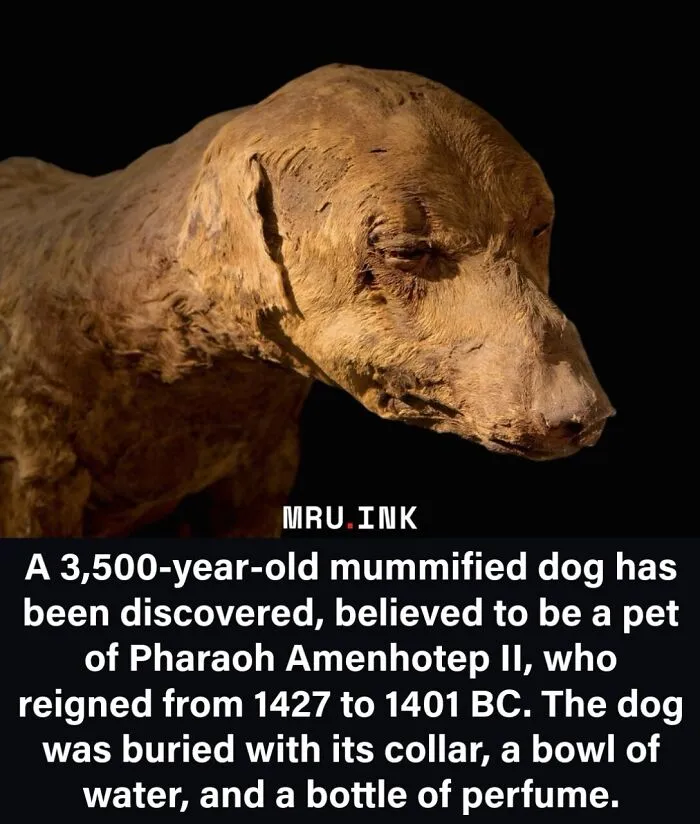
When archaeologist Edward Ayrton discovered this mummy in tomb KV50 in 1906, it was found standing upright against a tomb wall, stripped of its linen wrappings by ancient grave robbers. It was buried alongside a mummified baboon in a unique cluster of royal pet tombs. Analysis suggests this hound may be a Tesem—an extinct Ancient Egyptian hunting dog known for its lean build, pointed ears, and curled tail.
Report
10points
#35
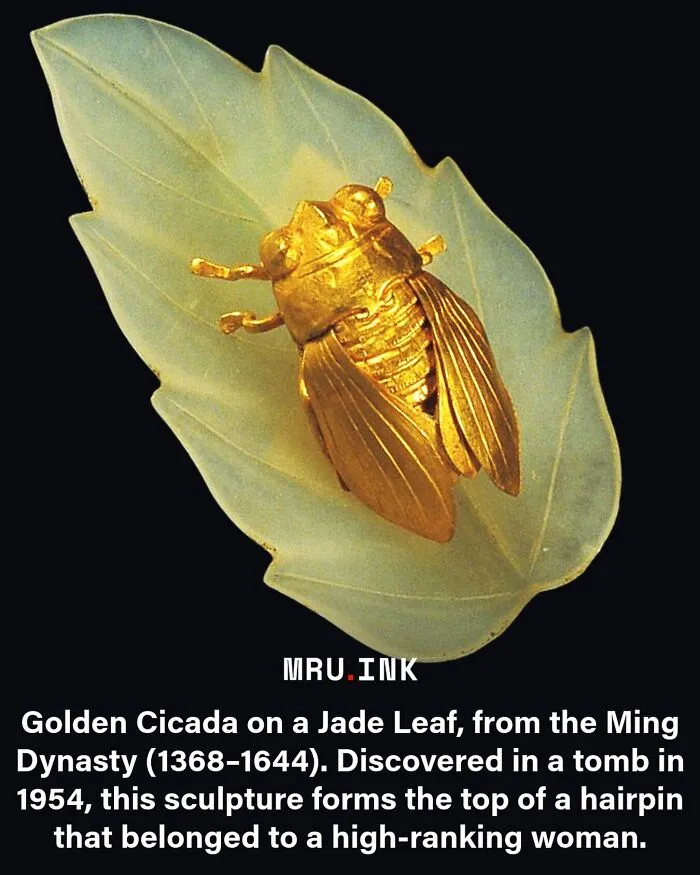
Excavated from the tomb of Lady Qian in Suzhou, this masterpiece visually embodies the Chinese idiom jinzhi yuye (“golden branches, jade leaves”), symbolizing noble birth and high status.
The cicada is crafted from 95% pure gold and represents rebirth and purity, while the lifelike leaf is carved from translucent Hotan jade. Weighing only 4.6 grams, the cicada’s ultra-thin wings highlight the absolute pinnacle of Ming Dynasty goldsmithing and luxury.
The cicada is crafted from 95% pure gold and represents rebirth and purity, while the lifelike leaf is carved from translucent Hotan jade. Weighing only 4.6 grams, the cicada’s ultra-thin wings highlight the absolute pinnacle of Ming Dynasty goldsmithing and luxury.
Report
10points
#36

An ancient kauri tree discovered in New Zealand preserved an extraordinary 42,000-year-old record of Earth’s magnetic field reversal, known as the Laschamps Excursion. Its tree rings revealed dramatic changes in cosmic radiation and climate, giving scientists an unprecedented glimpse into one of the planet’s most mysterious geological events.
Report
10points
#37

In 1204, a Japanese courtier recorded an extraordinary red glow in the night sky, a possible account of an intense geomagnetic storm. Centuries later, scientists discovered that ancient trees preserve evidence of powerful solar events through unusual spikes in radioactive carbon-14, produced when cosmic radiation interacts with Earth’s atmosphere. By combining tree rings with historical records, researchers can investigate solar activity long before modern instruments existed. Such discoveries reveal something remarkable: ancient people were not merely observing history; they were recording clues that science would only learn to interpret centuries later. Their diaries became unexpected scientific archives.
Report
10points
#38

The majestic Kailashnath Temple in Ellora is a marvel carved from a single rock, starting in reverse - first the roof, then the pillars, and finally the base. This breathtaking masterpiece stands as the only structure in the world built using this astonishing technique.
Report
10points
#39
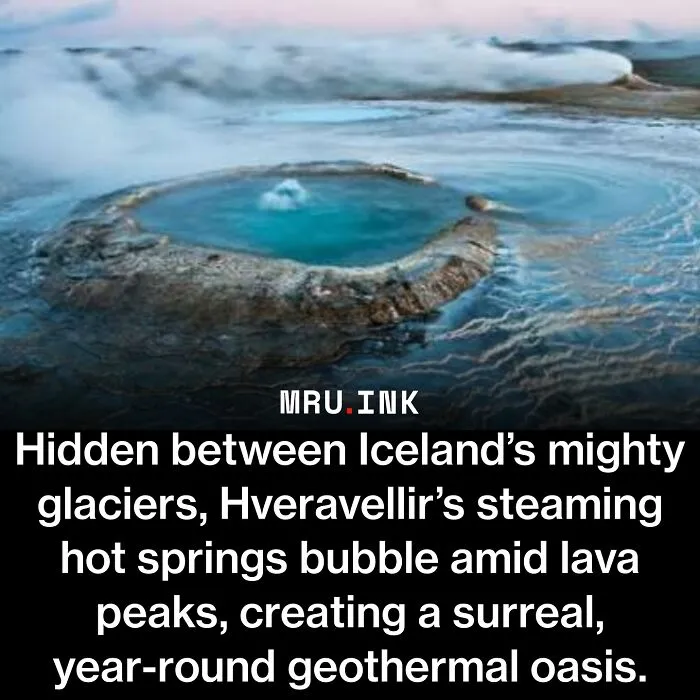
Hidden between Iceland’s mighty glaciers, Hveravellir’s steaming hot springs bubble amid lava peaks, creating a surreal, year-round geothermal oasis.
Report
10points
#40

On the deep-sea floor, anchored in total darkness and near-freezing water, stands a thin glass spike that may be one of the oldest living creatures ever measured. It’s a sponge—and it has been alive since the last Ice Age was ending.
Scientists analyzed the chemistry locked inside the glassy skeleton of a deep-sea glass sponge called Monorhaphis chuni, and the layers told a story spanning roughly 11,000 years.
That means this creature was already growing when woolly mammoths still roamed the Earth, when humans were just beginning to experiment with the world’s very first agriculture, and when the Ice Age was giving way to the world we know today.
It has no brain. No heart. No muscles. It simply filters seawater, adding microscopic layers of glass to its skeleton century after century as it keeps going.
The secret? The deep ocean never rushes. No seasons. No predators. No chaos. Just cold, dark, still water—and time. Some animals measure their lives in years. This one measures its life in the rise and fall of ice ages.
Report
9points