

#1
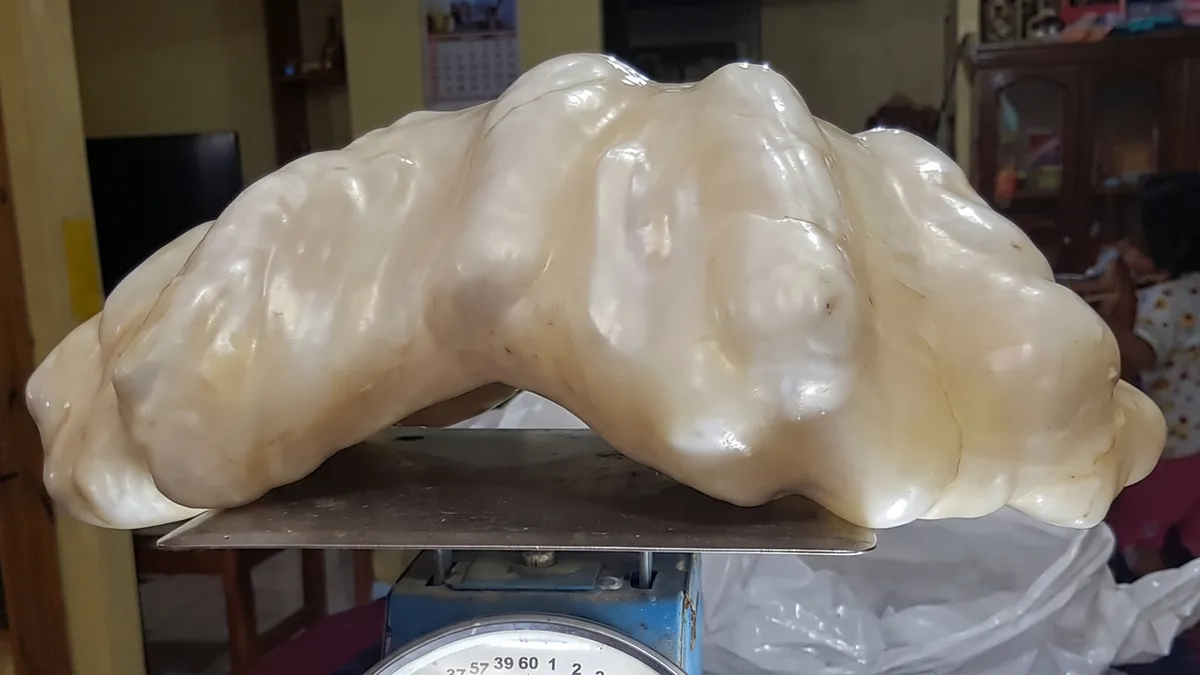
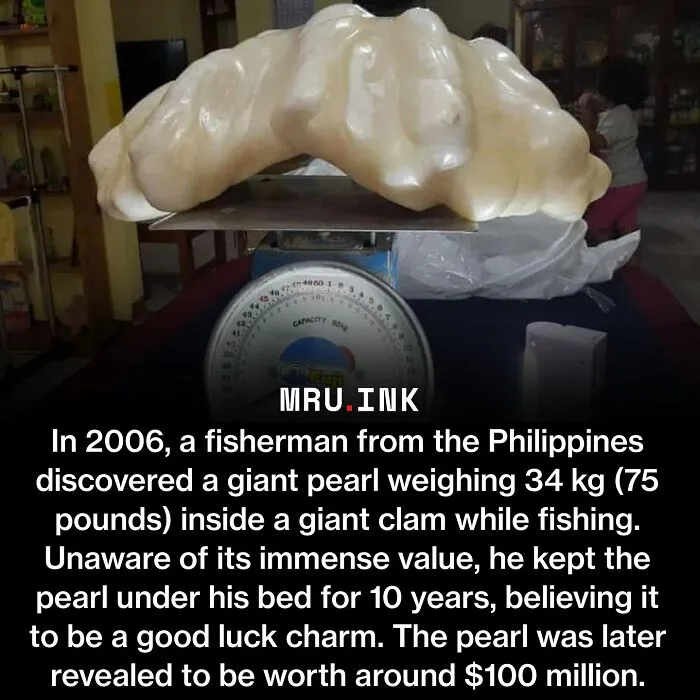
Imagine having more than $100 million under your bed and not having the foggiest clue... Many people might want to kick themselves, especially if the loot remained there for ten whole years, and then you just gave it away, none the wiser.
That's exactly what happened to one many from a man from Palawan Island in the Philippines. It was an ordinary day of fishing for him when his boat’s anchor caught on something so heavy that he had to swim down to dislodge it.
Possibly expecting to see a rock, the fisherman instead encountered a giant clam. Inside it: an enormous pearl measuring 1ft wide and 2.2ft long, and weighing in at a hefty 75lb.
#2

#3
The man had no idea that what he was holding could potentially change his life forever, but he took it home anyway. And placed it under his bed as a good luck charm.
“He said every time he goes out for fishing he will touch the pearl,” a relative told the Guardian back in 2016.
When it was time to move, the fisherman gave the pearl to his aunt since it was too heavy to lug around. Aileen Cynthia Maggay-Amurao happened to work in local government as a tourism officer, and asked her nephew if she could give the pearl to the mayor to be used as a new tourist attraction for the city.
#4

#5

#6
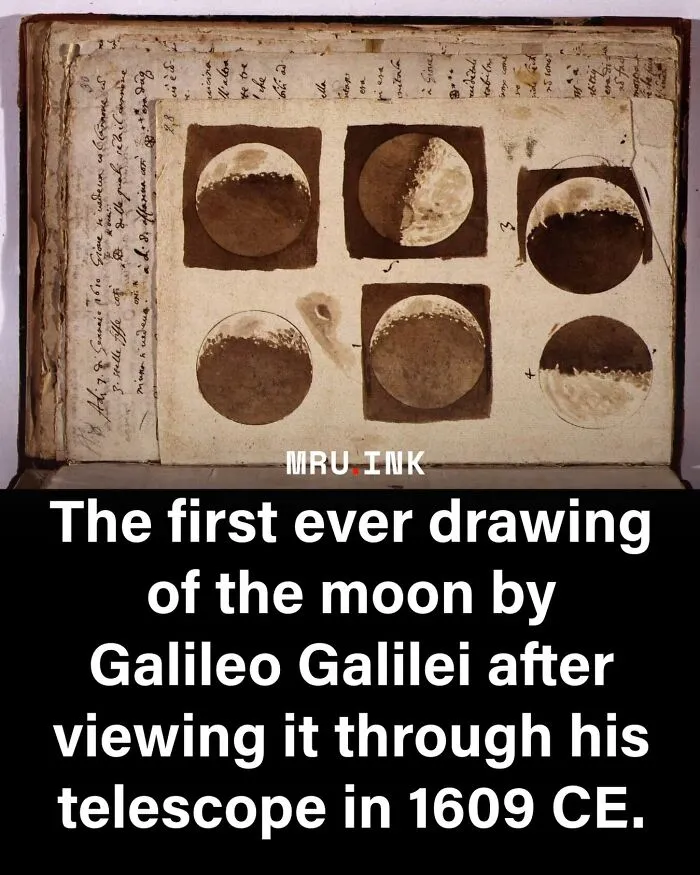
What he saw was revolutionary.
Rather than a perfectly smooth celestial sphere—as many believed at the time—Galileo observed mountains, valleys, and craters, carefully capturing them in a series of remarkably detailed drawings. By studying the patterns of light and shadow along the Moon’s terminator (the boundary between day and night), he concluded that the lunar surface was rugged and uneven.
These observations were published in Sidereus Nuncius (The Starry Messenger) in 1610 and became some of the most influential scientific illustrations in history. They challenged centuries of accepted belief and helped lay the foundation for modern astronomy.
Although the English astronomer Thomas Harriot made the first known telescopic drawings of the Moon a few months earlier in July 1609, Galileo’s observations were the first to correctly interpret the Moon’s topography and communicate its scientific significance to the world.
Sometimes, a simple sketch can change humanity’s view of the universe forever.
#7

#8

Beyond luxury, green held deep spiritual meaning in Mughal culture, representing salvation, healing, and protection against evil. Shah Jahan was even said to use emeralds to soothe his grieving eyes after his wife’s passing. These magnificent spectacles were auctioned at Sotheby’s in October 2021 alongside their diamond-lensed twin, the Halqeh-e Nur.
#9
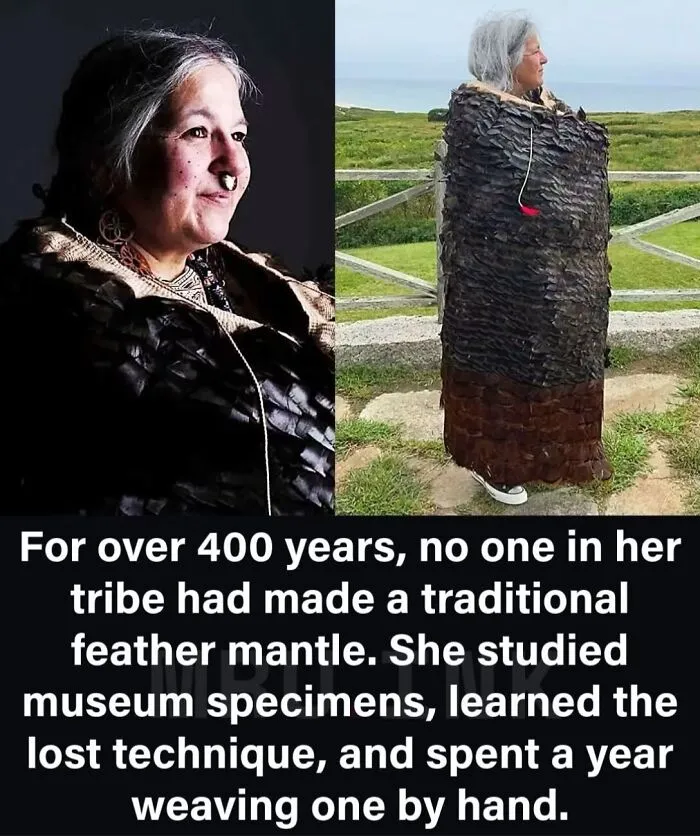
With the production of two rows per day, each requiring approximately two hours, the project was completed over the span of a year from start to finish. Her work constitutes the first—and most historically accurate—close-twine feather mantle created in Aquinnah Wampanoag territory in the past 400 years.
#10
#11

#12

In 1997, geneticists analyzing mitochondrial DNA discovered a direct maternal descendant living in the exact same town: history schoolteacher Adrian Targett. Their unbroken family link spans 300 generations, showing remarkable local genetic continuity over 9,000 years.
#13
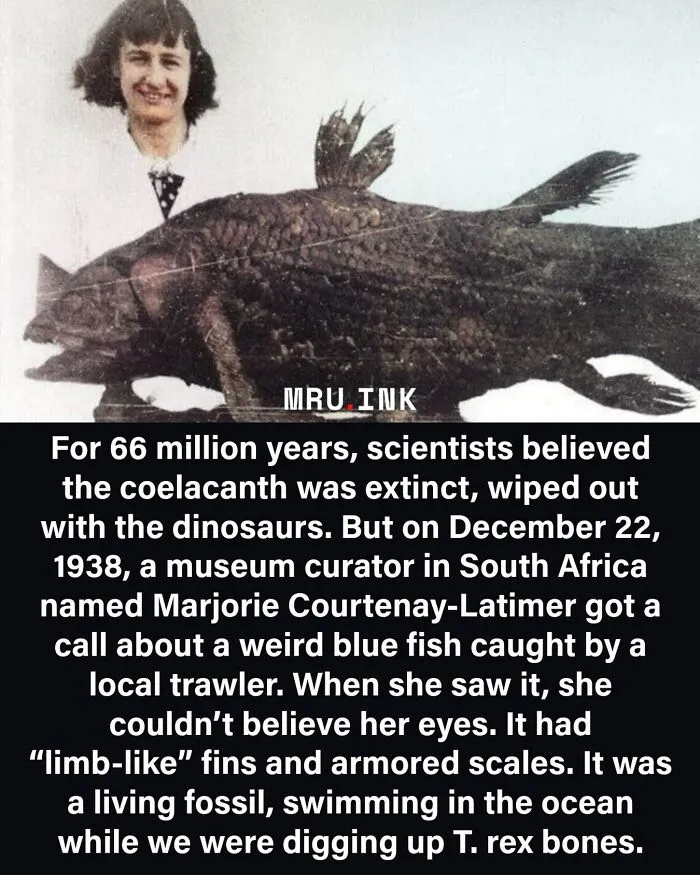
South African museum curator Marjorie Courtenay-Latimer was contacted about a strange blue fish caught by a local fishing vessel near the Chalumna River. When she examined it, she noticed its unusual fleshy, lobed fins, thick scales, and distinctive anatomy. The fish was later identified as a coelacanth, a group known previously only from fossils.
Its lobed fins were particularly remarkable. Unlike the thin, ray-supported fins of most modern fish, coelacanth fins contain internal bones and muscles arranged in a pattern that resembles the early structure of vertebrate limbs. This made the animal especially important for understanding how ancient fish were related to the evolutionary transition toward four-limbed vertebrates.
The discovery was scientifically astonishing: a lineage thought to have vanished millions of years ago was still alive in the deep ocean.
Today, coelacanths are not considered literally “unchanged living fossils.” They have continued evolving over millions of years. Yet their survival provides scientists with a rare glimpse into an ancient branch of vertebrate evolution—and a remarkable reminder that extinction in the fossil record does not always mean extinction in reality.
#14
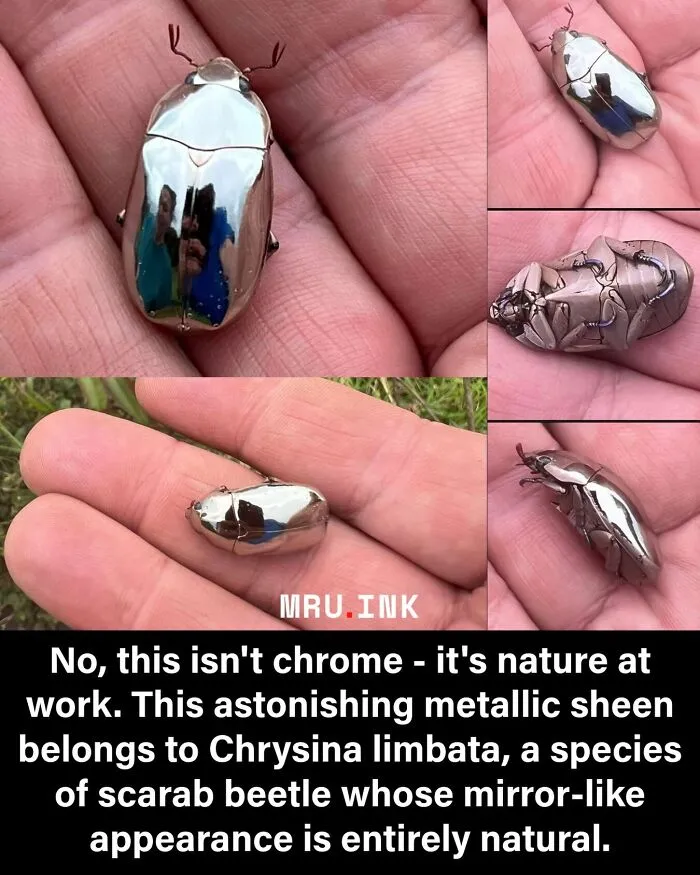
The science behind that chrome-like shine is genuinely elegant. Researchers at the University of Costa Rica found that the beetle’s exoskeleton, made of the same chitin found in cockroaches and crayfish shells, is built from roughly 70 microscopically thin layers stacked with slightly different refractive indices. Each layer reflects a small slice of incoming light, and those slices stack and reinforce each other until they combine into a bright, mirror-like glare, the exact same physical principle, called structural coloration, that makes butterfly wings and peacock feathers shimmer without a drop of actual pigment involved.
The purpose behind that shine isn’t showing off, it’s camouflage. Physicist William Vargas, who led the original 2011 study, explained that reflecting light from every direction lets the beetle blend into a rainforest canopy full of wet, glossy leaves, essentially disappearing into the glare rather than standing out from it.
The discovery has since moved well beyond entomology, researchers are now studying these layered chitin structures as inspiration for building better fiber-optic mirrors and light-based technology, borrowing a trick a rainforest beetle figured out long before humans did.
Does it change how you see the beetle, knowing that shine exists to hide it rather than show it off?
#15

This method produced perfectly straight, knot-free logs called taruki, essential for traditional tea-room alcoves. The harvested wood is 140% as dense and twice as strong as standard cedar, allowing a single tree to yield harvestable lumber every 20 years for centuries.
#16
#17
#18

#19

#20