






Learning doesn’t always mean flipping through heavy textbooks or sitting in a long lecture. Sometimes, it just takes scrolling through your feed and stumbling upon a fun fact that makes you go, “Wait, really?”
That’s where the Instagram page ‘The Real Nurtle’ truly shines. With each post, it serves up bite-sized gems of information that are as entertaining as they are surprising Whether it’s a quirky bit of science or a bizarre law from across the world, this roundup is full of facts that’ll impress your friends or give you an edge at your next trivia night. Keep scrolling for a fun ride through random knowledge; you never know which one might come in handy or spark your next big curiosity kick!
#41

Butterfly wings may look smooth to the naked eye, but under a macro lens, they reveal a world of intricate tiny scales layered like shingles on a roof. Each scale contributes to the vivid colors and patterns we see from afar.
These scales are made of chitin, the same natural material found in insect shells, and can reflect or absorb light in unique ways. That’s why their colors can appear to shift depending on the angle of view.
The amazing photographer Thorben Danke captured these close-ups using high-resolution macro techniques, revealing a highly structured, almost textile-like surface. His work offers a stunning glimpse into the hidden beauty of nature’s smallest details
Report
20points
#42
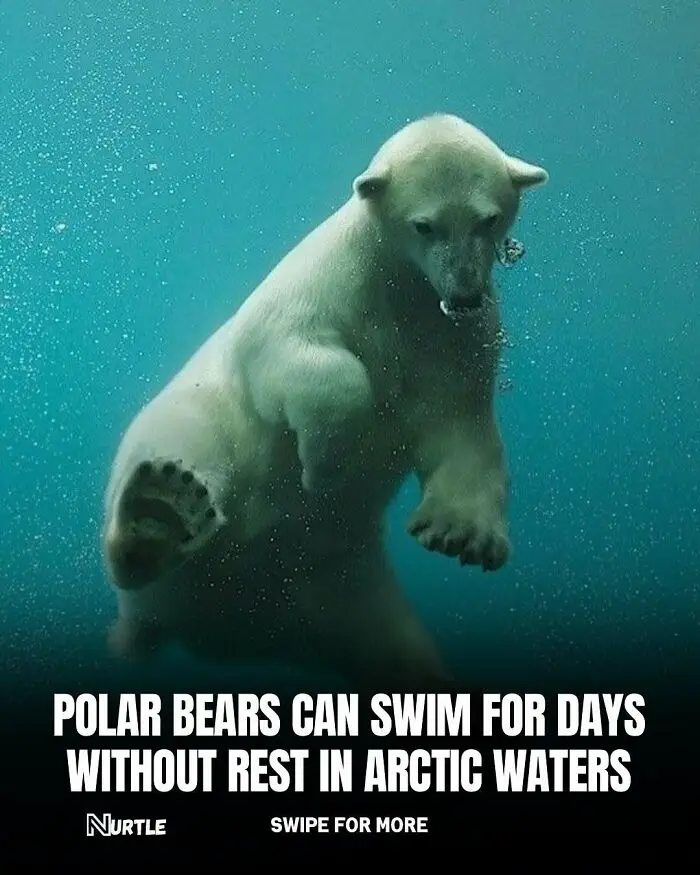
Polar bears aren’t just strong swimmers, they’re built for endurance. In the icy waters of the Arctic, they can swim for hours at a time, sometimes for days, without touching land.
This ability helps them follow drifting sea ice and track seals across long distances. Their large front paws act like powerful paddles, while a thick layer of fat insulates them from the cold.
In one recorded case, a polar bear swam over 400 miles non-stop. It’s not a choice, it’s survival in one of the harshest environments on Earth.
Report
20points
#43

The city of Birmingham in England experienced an unusual pink glow across the night sky during snowfall, caused by powerful LED stadium lighting reflecting off low clouds and falling snow.
The light source was traced to Birmingham City FC’s stadium, St Andrew’s, where high-intensity LED floodlights were in use. Modern LEDs emit a broader and more saturated color spectrum than older sodium lamps, making atmospheric reflections far more vivid.
When snow falls, each snowflake acts like a tiny reflective surface. Combined with low cloud cover, the light becomes trapped and scattered, creating a large-scale glow visible across wide parts of Birmingham. The effect is strongest during snowfall or heavy mist, when light cannot escape upward.
Similar phenomena have been observed near greenhouses using grow lights and at sports venues worldwide, but it remains rare in dense urban areas at this scale.
Report
19points
#44

Meet the Gloster Canary, a tiny songbird with what looks like a perfect bowl cut. Its round crest sits neatly over its head, giving it the appearance of a bird that just walked out of a vintage salon.
The breed originated in England in the 1920s and quickly became a favorite among bird enthusiasts for its soft voice and charming look. There are two types: the “Corona,” known for its iconic hair-like feathers, and the “Consort,” which has the same shape but no crest.
Despite the hairstyle jokes online, these birds are calm, friendly, and easy to care for. Their comical look might make people laugh, but they’re genuinely one of the most beloved canary breeds in the world.
Report
19points
#45

1800’s drip making modern fits look basic. 👘🎩
Count Magnus Brahe was one of King Karl XIV Johan’s closest advisors and served as Sweden’s Marshal of the Realm. When the king died in 1844, Brahe attended the funeral wearing a full black mourning ensemble.
The outfit included a long cloak, a tailored coat, a tall black top hat, gloves, and other formal details. While black mourning clothes were standard in European aristocracy at the time, Brahe’s attire stood out for its precise tailoring and completeness, reflecting both his rank and his personal connection to the king.
King Karl XIV Johan, born Jean-Baptiste Bernadotte in France, rose from Napoleonic marshal to King of Sweden and Norway. His death marked the end of a long and stabilizing reign. Brahe’s formal mourning dress was not unusual in color or purpose, but the high-quality craftsmanship and ceremonial presence made it exceptional for the occasion.
Report
19points
#46

A new viral photo trend is taking over social feeds: the “shadow cat” challenge.
People are crouching in sunlight and arranging their hands behind their heads to create shadow shapes that resemble cats—with pointed ears, stretched tails, and even whiskers. What looks like a simple seated pose becomes a playful feline silhouette when viewed on the pavement.
The trend’s mix of creativity and optical illusion has caught fire in schools and city streets, especially across East Asia, with friends lining up to recreate the effect for photos.
Report
19points
#47
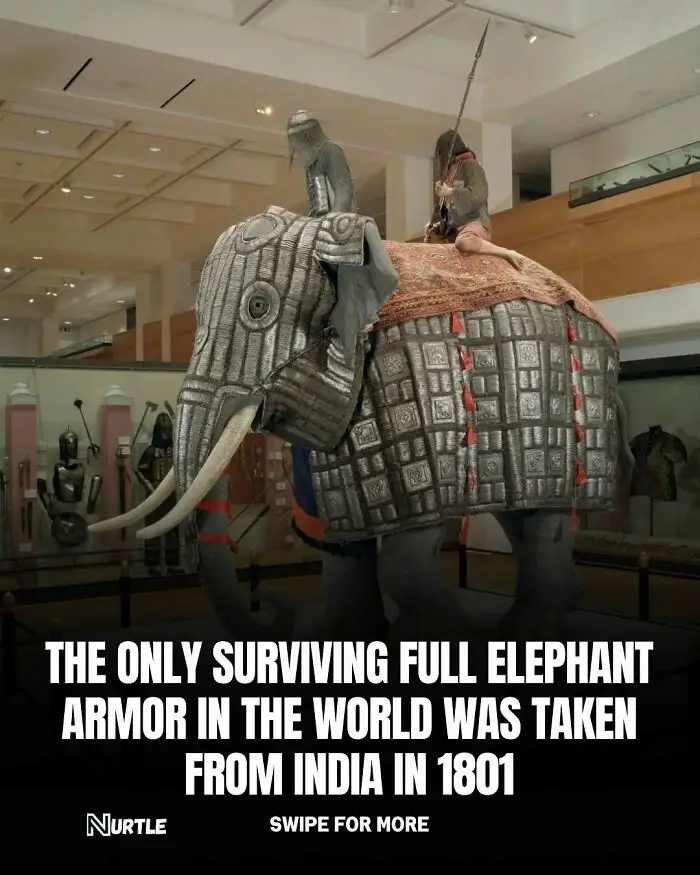
This is one of the rarest artifacts in existence: a full suit of mail and plate armor designed for a war elephant. Built to protect both the elephant and its riders in battle, it dates back to late 18th-century India.
The armor was acquired—more accurately, looted—by Lady Clive, wife of the British Governor of Madras, sometime between 1798 and 1800. It was shipped to Britain in 1801, during a period of aggressive colonial extraction by the British Empire.
Today, it stands as both a technological marvel and a reminder of the imperial plundering of cultural treasures.
Report
19points
#48

Sunflowers have been used in the cleanup efforts after nuclear disasters like Chernobyl and Fukushima—not for decoration, but for their unique ability to absorb toxic substances from the ground.
These plants are “hyperaccumulators,” meaning they can pull heavy metals and radioactive elements like cesium-137 and strontium-90 from soil and water.
While they aren’t a perfect solution, sunflowers help reduce contamination levels and are often part of larger environmental recovery strategies. Their roots quietly pull in toxins, offering a natural way to assist in healing some of the planet’s most damaged sites.
Report
19points
#49

Located on the slopes of Pacaya Volcano in Guatemala, this pizza is cooked using natural volcanic heat, not an oven.
The man behind it is chef Mario David García Mansilla, who began experimenting with Pacaya’s extreme temperatures after noticing that cracks and vents near the lava fields consistently reached 300°C or more. Instead of placing food directly on molten rock, he uses metal trays and carefully positions them inside heat pockets formed by volcanic stones, where the temperature stays stable enough to cook dough evenly.
Pacaya is one of Central America’s most active volcanoes, but its slow-moving lava flows and predictable heat zones allow controlled cooking when conditions are safe. The pizzas bake in just a few minutes, driven entirely by geothermal energy, with no fuel, electricity, or traditional fire involved.
This method isn’t a one-off demonstration. García Mansilla developed it as a functional geothermal cooking technique, combining local volcanic conditions with professional culinary control.
Report
18points
#50

This newborn rabbit has barely entered the world, yet already looks like a tiny old man. With wrinkled pink skin, closed eyes, and tufts of white fur growing around its nose and ears, it almost looks like it’s wearing a moustache.
Baby rabbits, called kits, are normally born hairless and blind. In the first days, fur begins to grow in patches, often around the face and paws first. That gives this little one such an unusual “grandpa” look, even though it’s only days old.
It is also likely a Lionhead rabbit, a breed known for its mane-like fur around the head. Those first tufts on its face are the beginnings of the fluffy “lion mane” it will develop as it grows older.
Report
18points
#51
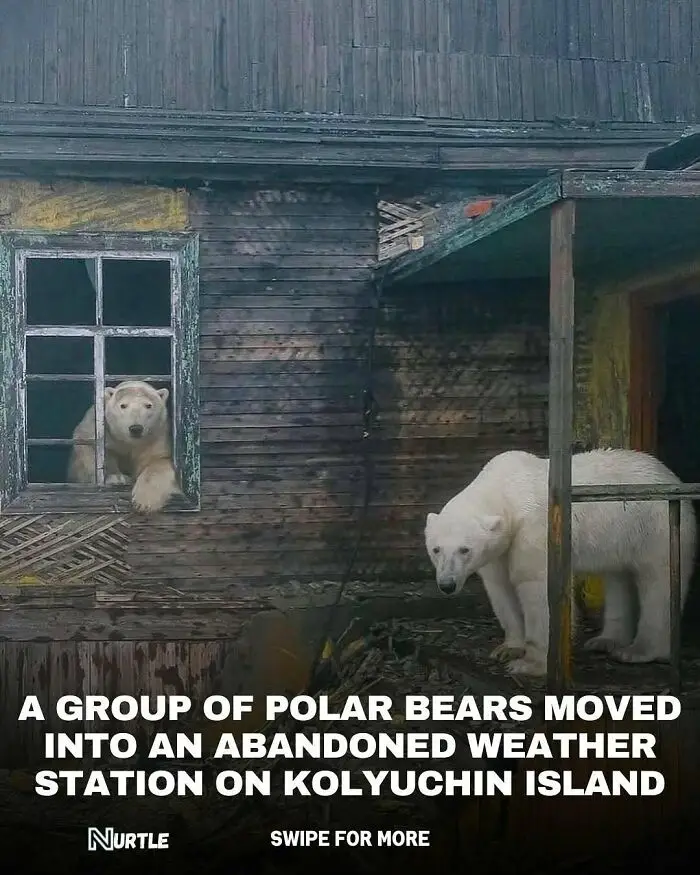
Polar bears have been spotted by the amazing photographer @master.blaster , turning an abandoned Soviet-era weather station on Kolyuchin Island into their own shelter.
The remote island in the Chukchi Sea was once home to scientists but has been deserted for decades, leaving the structures to decay.
With melting sea ice reducing their natural hunting grounds, polar bears often explore human-made ruins in search of safety or food. Images from the site show the animals lounging in doorways and peeking through broken windows, blending eerily into the ghost town.
Kolyuchin Island lies off the coast of Russia’s Chukotka region, an area so isolated that the station is only reachable by boat or helicopter. What was once a hub for Arctic research is now a surreal reminder of how wildlife adapts to abandoned human spaces.
Report
18points
#52

Deep inside a flooded tunnel in Kani City, Japan, stands a single Torii gate that once marked the entrance to the Amagamine Ochobo Inari Shrine. What’s now an eerie underground site used to be part of a festival space, abandoned after severe flooding made it inaccessible.
Torii gates in Shinto mark the border between everyday life and sacred spaces, symbolizing a passage into the realm of the gods. This one, hidden in a dark water-filled tunnel, carries a surreal and almost unsettling energy.
Over time, it became a mysterious spot for explorers and photographers who document forgotten places across Japan.
Report
17points
#53

In a surprising twist on a childhood classic, the iconic green plastic soldiers have been reimagined as yoga practitioners.
Created in 2014 by artist Dan Abramson, the project—called Yoga Joes—transforms traditional army figures into peaceful models of mindfulness. Each figure strikes a familiar yoga pose, from warrior and cobra to downward dog and headstand, all while keeping their classic military stance and expression.
The goal? To make yoga more accessible and less intimidating, especially for people who wouldn’t normally give it a try. The result is a quirky fusion of nostalgia, humor, and wellness that’s gained a cult following across the internet.
Report
16points
#54
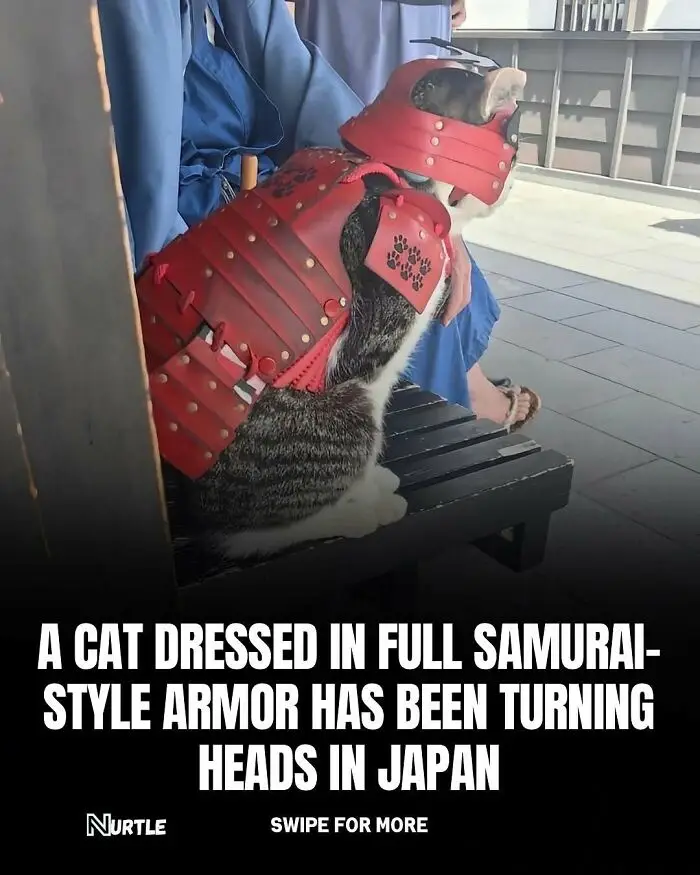
The feline, calmly sitting by a building while leashed, wore a striking red suit of miniature armor—complete with shoulder plates, a helmet, and even tiny paw prints etched into the design.
While it may look like something out of a manga, this is part of a growing trend in Japan where pet owners dress their cats or dogs in historically inspired outfits. Some of these pieces are handmade by local artists who specialize in creating custom pet armor that’s both detailed and safe for animals to wear.
Whether it’s street cosplay, a viral photo shoot, or just one very fashionable cat—one thing’s clear: this samurai kitty is winning the internet.
Report
16points
#55
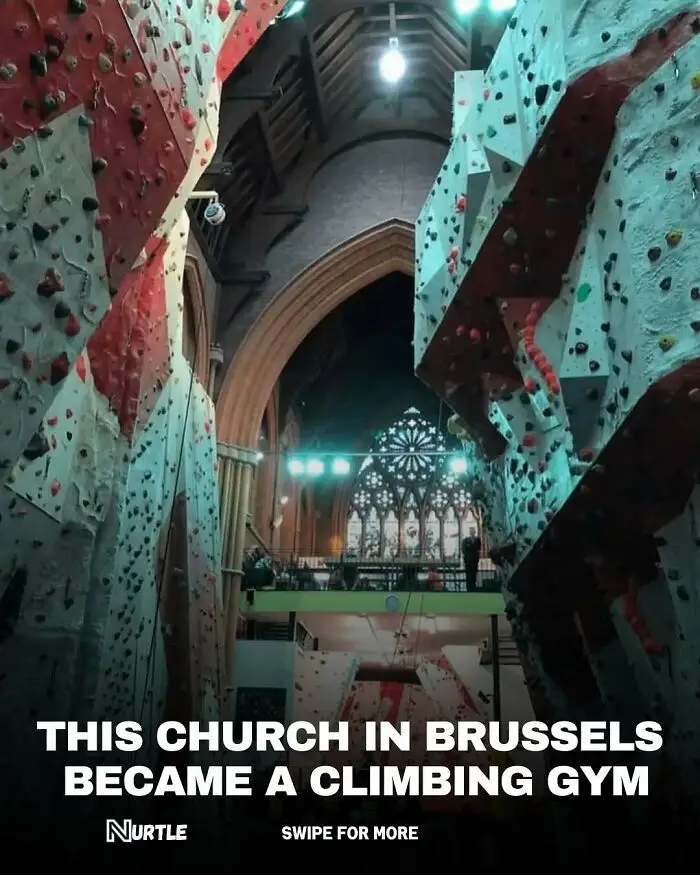
A historic church in Brussels has been transformed into a climbing gym after years of declining attendance and high maintenance costs. The Saint Anthony of Padua Church was repurposed to preserve the building while giving it a new purpose for the local community.
Today, climbers scale walls that stretch up toward the original vaulted ceilings, blending modern sport with historic architecture. The gym, called Maniak Padoue, has become a unique spot where history and recreation meet.
Report
15points
#56

Hidden in the hills near Kuchani, Serbia, a small 18th-century wooden church sits quietly beneath a cluster of pine trees. Measuring just 130 square feet, it was built by the local Serbian Orthodox community during the Ottoman period.
While the Ottoman Empire allowed limited religious freedom across its vast territory, some communities still chose to worship in private. This led to the creation of small, movable churches like this one, tucked away in remote areas for safety and peace of mind.
Centuries later, the structure remains intact, serving as both a symbol of faith and a reflection of the complex coexistence between the empire and the people who lived under it.
Report
15points
#57

In what might be the cutest form of bureaucracy ever, pets in Hong Kong are shown holding their very own “identity cards”, complete with photo, name, gender, and date of birth.
While Hong Kong doesn’t legally issue official ID cards to animals, it does require pet microchipping and registration, especially for dogs. So these playful pet IDs are more of a fun twist on that system and a hilarious way to show off your furry friend’s “credentials.”
Report
15points
#58

Plastic objects produced decades ago continue to wash up on beaches and coastlines, sometimes still identifiable by their shape, material, or manufacturing style. These items can originate from the 1960s through the 1990s and beyond, showing how long plastic persists once it enters the ocean.
Many of these discoveries are documented by @archeoplastica, a research project led by Italian scientist Enzo Suma. Since 2018, the project has recovered and cataloged plastic objects from the sea that span multiple generations of plastic production. The focus is not on branding, but on how the material itself survives for decades.
Plastic does not biodegrade in marine environments. Instead, it slowly breaks down through exposure to sunlight, saltwater, and physical abrasion. This process can take many decades, and even then, the plastic does not disappear. It fragments into smaller pieces while remaining chemically intact.
As a result, plastic discarded long ago still exists today, either as large objects or as microplastics dispersed throughout oceans, sediments, and marine life. Scientists estimate that the majority of plastic produced since the mid-20th century still remains somewhere in the environment.
This is direct evidence that we need to change how we produce, use, and discard plastic.
Report
14points
#59

A private Facebook group with more than 416,000 members has one simple rule: everyone acts like an ant.
Inside the group, users post as if they’re part of a working colony. Every update is written from an ant’s perspective, whether someone is “guarding the Queen,” “foraging for sugar,” or “calling for help after getting stepped on.”
Members reply in the same style. A single picture of a crumb can get thousands of comments calling others to “lift,” “carry,” or “bring it to the Queen.” There are even roleplay emergencies, missing-ant reports, and group missions to secure food sources.
The entire community revolves around staying in character.
Just pure ant roleplay that somehow grew into one of the biggest niche groups on the platform.
Report
14points
#60

Located in the Soviet Union during the early 1970s, this experimental rail project tested whether jet propulsion could push a train far beyond normal speeds. Engineers mounted two AI-25 jet engines, the same type used on the Yak-40 aircraft, onto a purpose-built test car to study acceleration, braking, and track stability at extreme velocity.
During trial runs, the prototype reached about 170 miles per hour, showing that the technology worked on straight test sections. The problem was everything around it. The noise, fuel consumption, and intense force on the rails meant the entire track system would have needed major upgrades. That turned the jet train into a research project rather than a transport plan.
The prototype ended its tests once engineers collected the data they needed, and it remains a reminder of how far Cold War research sometimes went in the search for new transport ideas.
Report
14points
