Learning doesn’t always mean flipping through heavy textbooks or sitting in a long lecture. Sometimes, it just takes scrolling through your feed and stumbling upon a fun fact that makes you go, “Wait, really?”
That’s where the Instagram page ‘The Real Nurtle’ truly shines. With each post, it serves up bite-sized gems of information that are as entertaining as they are surprising Whether it’s a quirky bit of science or a bizarre law from across the world, this roundup is full of facts that’ll impress your friends or give you an edge at your next trivia night. Keep scrolling for a fun ride through random knowledge; you never know which one might come in handy or spark your next big curiosity kick!
#21
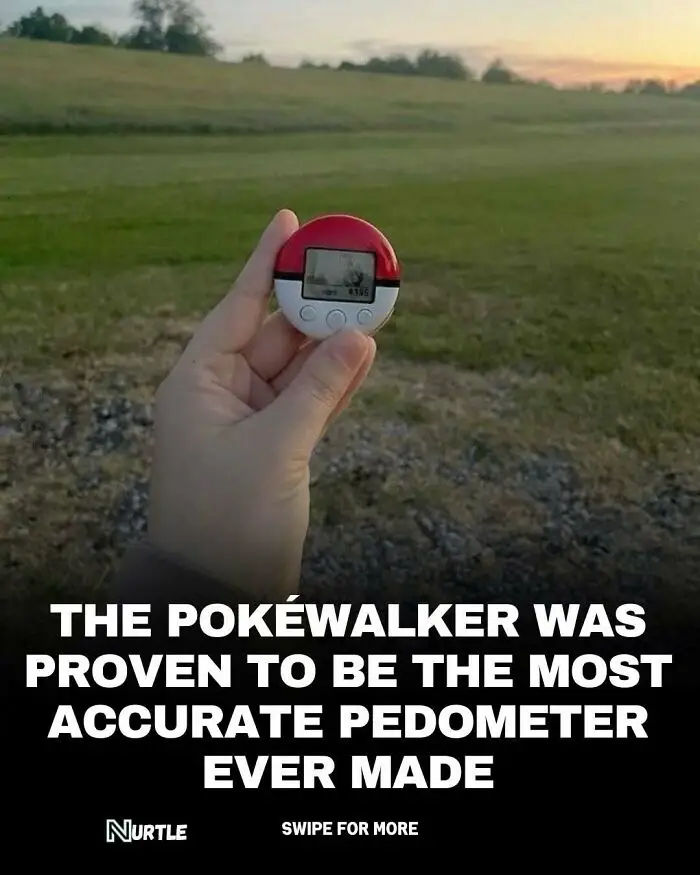
The Pokéwalker was released in 2009 as a physical accessory bundled with Pokémon HeartGold and SoulSilver for the Nintendo DS. Shaped like a Poké Ball, the device functioned as a pedometer that let players transfer a Pokémon from their game and level it up by walking in the real world.
Every step counted toward experience points, item unlocks, and in game encounters, turning daily movement into actual progress inside the game. Players could also find items and Pokémon depending on distance walked, making physical activity part of core gameplay rather than a side feature.
In 2011, a study by Iowa State University found that the Pokéwalker was the most accurate consumer pedometer, with lower step counting error than many dedicated fitness trackers on the market.
Years before fitness wearables became mainstream, Nintendo had already turned walking into a game mechanic.
Strawberries are rebels in the fruit world. Not only do they wear their seeds on the outside, but they flaunt about 200 of them. How’s that for making a statement? They’re also technically not true berries, which just adds to their quirky charm. Blackberries, on the other hand, come in over a thousand different species. Mother Nature sure got creative in the berry department.
#22
In cold, dry conditions, animal fur can build up static electricity.
That static charge attracts lightweight snowflakes and helps them cling to the fur instead of falling off.
Fur also traps air and insulates body heat, so the outer surface stays cold. Because less heat reaches the snowflake, it does not melt immediately and remains visible on the fur.
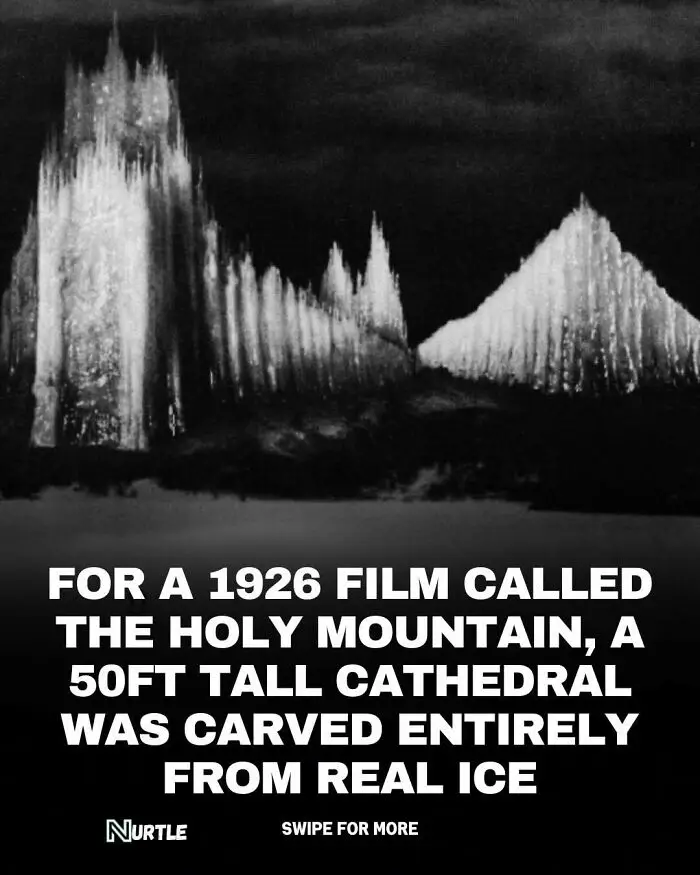
For the 1926 silent film The Holy Mountain, director Arnold Fanck ordered the construction of a full-scale cathedral carved entirely from real ice. The structure stood around 50 feet tall and was built in the Alps specifically for the production.
The cathedral was shaped over several months, using blocks of ice carved and stacked around a hidden metal framework to keep it standing. Once filming ended and temperatures changed, the structure was left to melt and collapse naturally.
At the time, large-scale artificial sets were common, but building one entirely from ice was extreme even by 1920s standards. No replicas were made, and nothing survives today beyond the footage captured on film and a handful of production photographs.
These photos bring back how strange everyday life became in early 2020. For a while, scenes like this were normal everywhere. People improvised protection, stores changed their layouts, and routines shifted almost overnight.
What felt intense at the time now feels distant. Cities were empty, travel stopped, and the whole world moved into the same pattern at the same moment. Looking at images like these shows how quickly everything changed and how fast we moved on from something that shaped daily life for so long.
If you’ve ever been tempted to toss grapes into a microwave, don’t. They’ll literally explode, and we’re not talking metaphorically. Something about the shape and water content causes them to spark and burst. It’s science, but it’s also a cleanup you don’t want. Grapes are better off chilled or in wine, not flying around your microwave.
#25
LEGO once rewarded employee loyalty with actual gold.
Between 1979 and 1981, the company gifted 2x4 LEGO bricks made of solid 14-karat gold to workers who hit their 25-year milestone. Each gold brick weighed about 25 grams and could click onto standard LEGO pieces just like the plastic ones.
But this wasn’t a global tradition. It only happened at LEGO’s Hohenwestedt factory in Germany, and fewer than 100 of these bricks are believed to exist.
Today, they’re among the rarest LEGO items in the world, with auction prices soaring above $15,000.
Snowflake was the world’s only known albino gorilla. Discovered in 1966 in Equatorial Guinea, he was captured by local farmers and eventually brought to the Barcelona Zoo, where he lived for nearly 40 years.
What made Snowflake so unique was his complete lack of pigmentation, giving him white fur and pinkish skin — a condition extremely rare in gorillas. Genetic studies later revealed that his albinism was caused by inbreeding, which made his case even more unusual in the wild.
Despite his condition, Snowflake lived a long life under careful care. Visitors from all over the world came to see him, making him one of the most famous animals in captivity. He passed away in 2003, but remains the only albino gorilla ever recorded.
Giant pandas are officially no longer listed as endangered. The species is now classified as vulnerable after a sustained increase in its wild population.
This shift reflects decades of conservation efforts in China, including strict habitat protection, the expansion of panda reserves, and coordinated breeding programs. Together, these measures helped stabilize and grow the population, which now exceeds 1,800 pandas living in the wild.
Pandas were previously pushed to the brink by deforestation, agricultural expansion, and fragmented bamboo forests. Because their diet depends almost entirely on bamboo, even limited habitat loss had a direct impact on survival.
Being listed as vulnerable does not mean pandas are out of danger. Their habitat remains fragmented, and climate change continues to threaten bamboo growth across large parts of their range, making continued protection essential.
Cayenne pepper isn’t just spice; it’s also first aid in a bottle. A sprinkle on a small wound can help stop bleeding, thanks to its clotting properties. And if you eat it, it might boost your circulation and improve blood pressure. So yes, it burns, but it also heals. It’s basically nature’s feisty multitasker. Use it wisely, and maybe keep it handy.
Whether it’s a fruit pretending to be a vegetable, or a flower family secretly giving us snacks, food is full of surprises. These facts aren’t just fun; they’re a great way to see your plate in a whole new light. Learning about everyday things is oddly satisfying, isn’t it? Which one of these posts did you find the most interesting?
#28
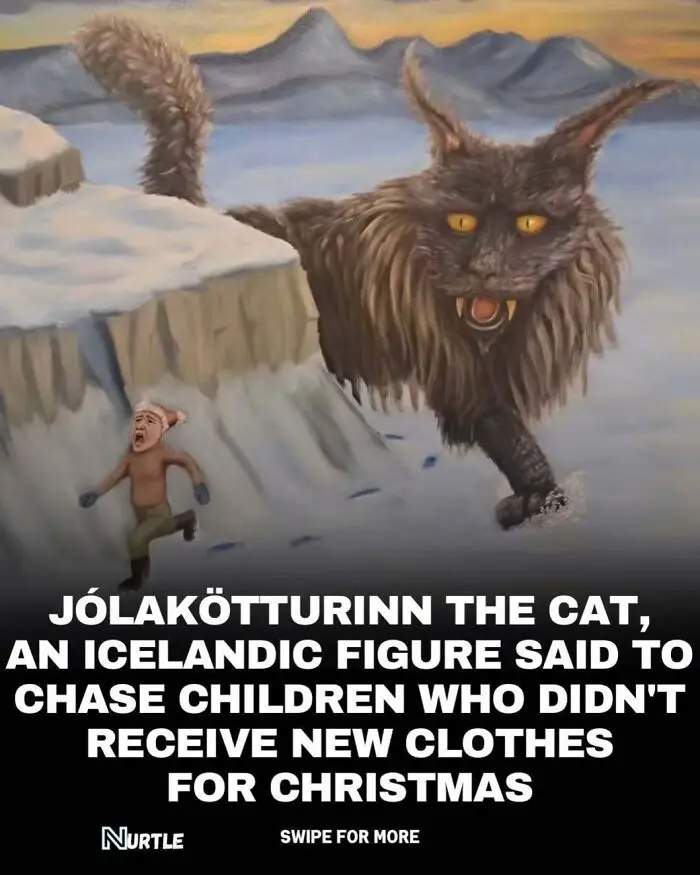
Jólakötturinn, known as the Yule Cat, is a figure from Icelandic folklore said to eat children who did not receive new clothes for Christmas. The story dates back to at least the 19th century and is closely tied to Iceland’s historical wool industry.
In rural Iceland, families relied heavily on wool production to survive harsh winters. Everyone, including children, was expected to help process wool before winter arrived. Those who completed their work were rewarded with new clothing made from the finished wool.
The Yule Cat legend acted as a warning. Children who failed to do their share of the labor were said to be at risk of being eaten by the cat, while those who worked hard were safe and received new garments. The story reinforced productivity and discipline during the darkest months of the year.
Today, the Yule Cat remains a well-known part of Icelandic Christmas folklore, often referenced in stories, decorations, and poems, though it’s now treated as cultural tradition rather than a literal threat.
Some cats are born with extra toes, a genetic condition known as polydactyly. While most cats have 18 toes, polydactyl cats can have 20 or more, usually on their front paws, giving them a wide or mitten-like appearance.
The condition is caused by a dominant genetic mutation, meaning it can be passed down from just one parent. In most cases, it does not affect a cat’s health, movement, or lifespan. Many polydactyl cats live completely normal lives without any medical issues related to the extra toes.
Polydactyl cats are especially common in coastal areas of the US, Canada, and the UK. Sailors often kept them on ships, believing their larger paws helped with balance and made them better hunters, which helped spread the trait through port towns.
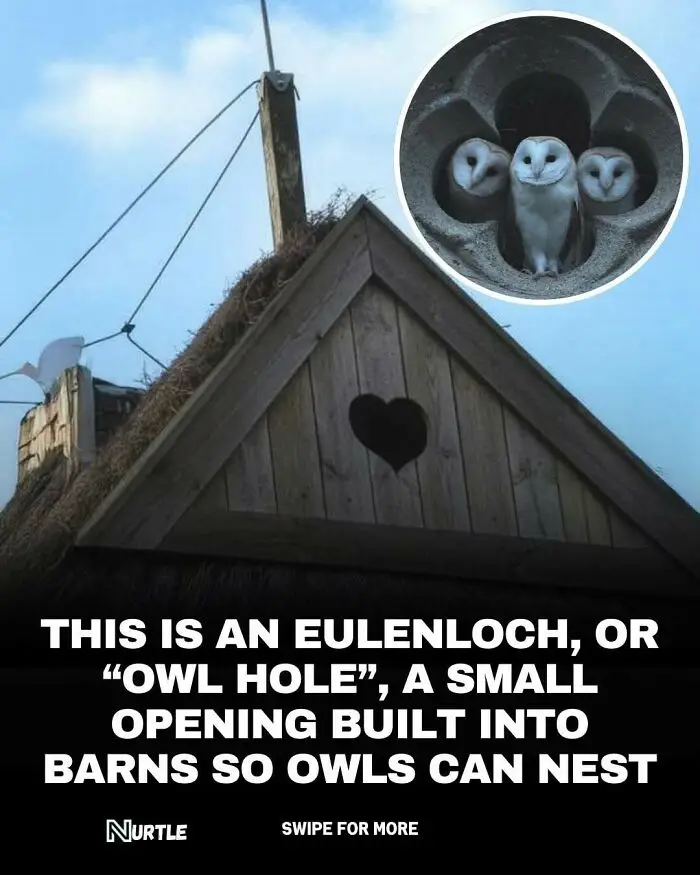
An Eulenloch, literally meaning “owl hole,” is a small opening traditionally built into the upper walls of rural barns across parts of Central Europe. Its purpose was to allow owls to enter barns and nest inside.
Farmers used Eulenlöcher as a natural form of pest control. Owls hunting from inside barns helped reduce populations of mice and rats that threatened stored grain, hay, and wooden structures. The holes were usually placed high up to keep predators out and give owls a safe nesting spot.
These openings were not decorative. Their size, placement, and shape were carefully chosen so owls could pass through while limiting access for larger animals. In many regions, barn owls became closely tied to farm life because of this architectural feature.
As modern farming methods changed and barns were sealed or demolished, Eulenlöcher became far less common. Conservation groups now sometimes reintroduce owl openings or nest boxes to help declining barn owl populations return to agricultural areas.
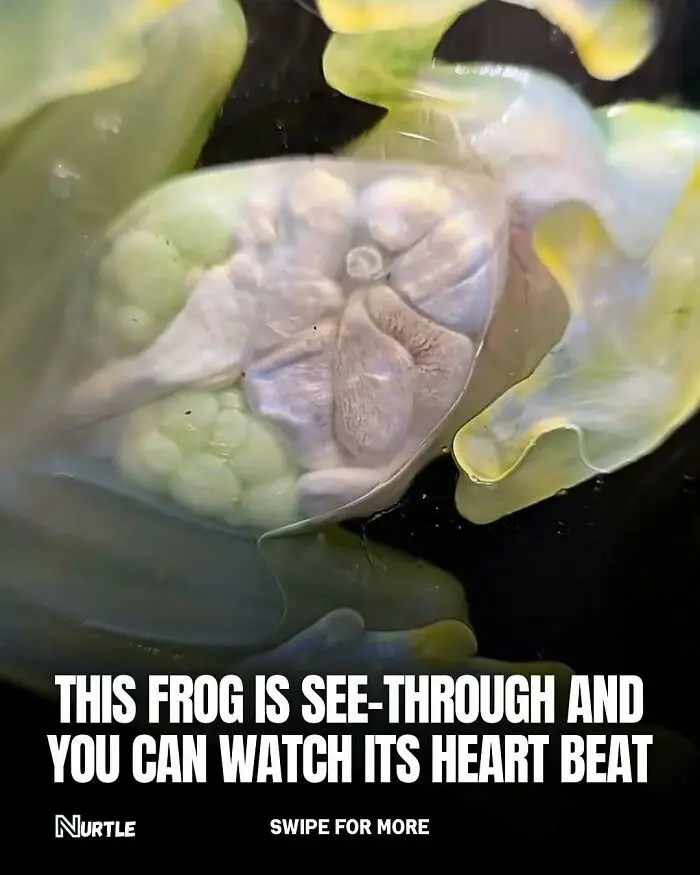
Located in Central and South America, the glass frog is one of nature’s strangest survival designs. Its skin is so clear that you can literally see its heart beating inside, along with its organs.
This transparency is more than just unusual—it’s a powerful defense mechanism. By letting light pass through its body, the frog avoids casting a shadow, blending almost seamlessly with the green leaves it rests on. Predators looking for movement or shapes often miss it entirely.
Scientists discovered that when glass frogs sleep, they push most of their red blood cells into their liver. This reduces the visible color in their bodies, making them nearly invisible while resting. When they wake up, the red blood cells return to circulation.
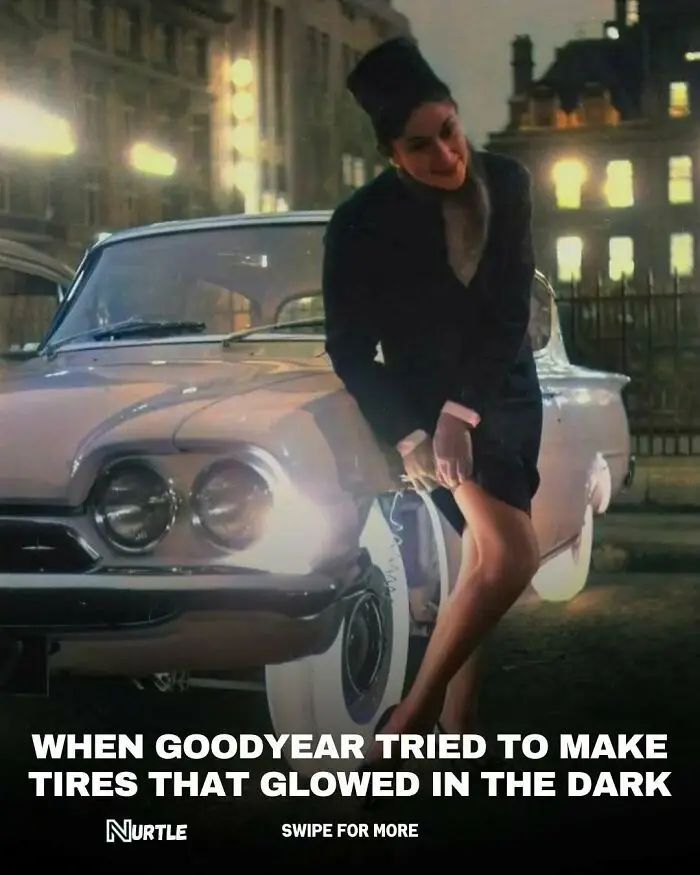
In the 1960s, Goodyear engineers began testing something straight out of science fiction, glowing tires. Made from a synthetic rubber called Neotan, the translucent material was heated and molded to produce a soft glow whenever the car moved.
Each tire contained small lights inside the rim that could flash or stay lit, creating a futuristic effect that turned heads at car shows and night parades. The company hoped it would revolutionize the look of cars, blending performance with style.
But the idea never made it past the prototype stage. The material proved too fragile and expensive for real-world use, leaving only photos and a few surviving test models as proof that glowing tires once existed.
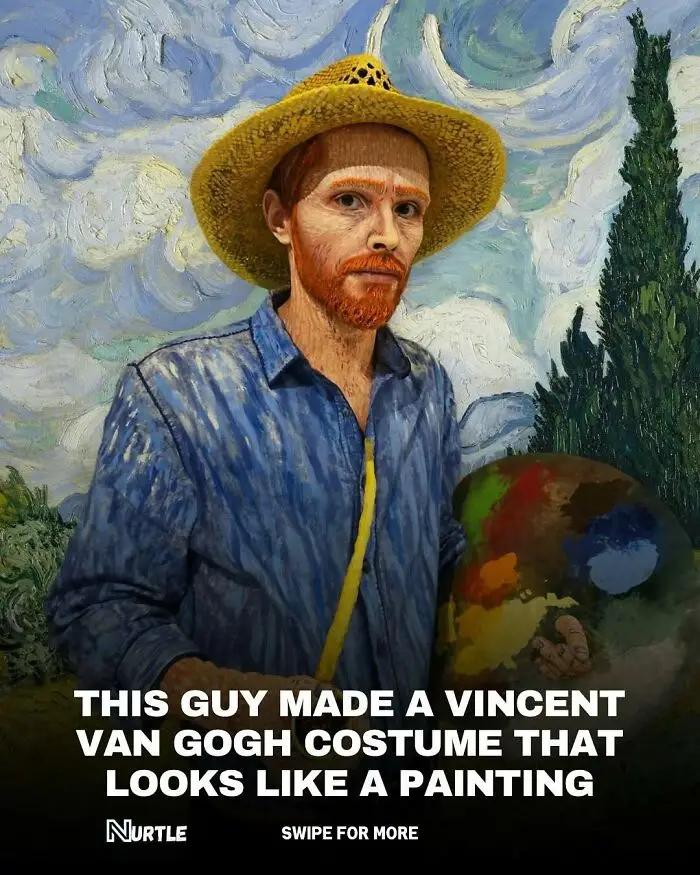
A cosplayer named Jesse transformed himself into Vincent van Gogh with a costume that looks like it stepped straight out of a painting. Using textured paint effects, layered fabric, and careful makeup work, he recreated Van Gogh’s iconic self-portrait with remarkable accuracy.
The costume includes the painter’s signature straw hat, blue shirt, and color palette, with every visible detail painted to mimic the thick brushstrokes of Van Gogh’s art. It’s a striking blend of cosplay and fine art, blurring the line between reality and canvas.
Would you dare to pull this off at your graduation?
At Kyoto University in Japan, graduation looks very different.
Instead of wearing standard caps and gowns, students are free to wear whatever they want. From anime characters and historical costumes to mythical creatures and wild original designs, the outfits turn the ceremony into a full-on spectacle.
The tradition started organically in the early 2000s, when students began showing up in creative costumes. Over time, the university fully embraced it, allowing graduates to express themselves without any strict dress code.
For many students, this isn’t just for fun. They spend months preparing their costumes, using the moment to express their identity and creativity. It’s become a powerful symbol of individuality in a country where uniformity often dominates academic culture.
Even the faculty supports the tradition, seeing it as the perfect way to mark the end of years of hard work while celebrating personal freedom.
Kyoto’s unique approach has since attracted attention far beyond Japan, making it one of the most visually stunning graduation traditions in the world.
Cats are known for slipping into boxes, drawers, and the tiniest gaps they can find. It’s not random behavior but rooted in instinct.
In the wild, tight spaces protect cats from predators and help them stay warm by conserving body heat. The enclosed feeling gives them comfort and control over their surroundings.
So when a cat curls up in a cramped spot, it’s not just being silly, it’s acting on a survival instinct.
In a remote village in Yunnan, a young student named Wang Fuman became known across China after arriving at school with his hair and eyebrows covered in frost. He had walked several kilometers through freezing temperatures to make it in time for an important exam, a routine that was normal for him and many other children in the region.
His school sits in one of Yunnan’s mountainous areas where winters are harsh and heating at home is limited. The long daily walk exposes students to cold winds and rough terrain, but education remains a priority for families who often live far from the nearest classroom.
The pictures of Wang’s frozen hair drew attention to the difficulties students face in rural parts of China. Local authorities later improved insulation at the school and provided basic support for children who travel long distances in cold weather.
A fire rainbow, also known as a circumhorizontal arc, is one of the rarest atmospheric sights. It appears when sunlight passes through flat, hexagonal ice crystals in cirrus clouds high above the Earth. The crystals bend the light into a spread of colors that stretch across the sky in horizontal bands.
Unlike normal rainbows, this phenomenon has nothing to do with rain. It only happens when the sun is high in the sky and the crystals are perfectly aligned, making the conditions incredibly rare. When everything lines up, the clouds ignite into bright streaks of red, orange, green, and blue, creating the illusion of fire burning across the horizon.
Deep beneath the surface of Chihuahua, Mexico, lies one of the most surreal places on Earth: the Giant Crystal Cave.
Discovered completely by accident in 2000, this underground marvel was found when two brothers were drilling into the Naica Mine in search of silver. What they uncovered instead was something no one expected — a hidden chamber filled with enormous selenite crystals, some stretching up to 11 meters (36 feet) long.
The cave had been sealed off from the outside world for hundreds of thousands of years, allowing the crystals to grow to massive sizes in the hot, mineral-rich environment. But stepping inside isn’t easy — with temperatures reaching 58°C (136°F) and nearly 100% humidity, scientists can only explore it for minutes at a time using protective gear and oxygen tanks.
Since its discovery, the cave has attracted geologists and researchers from around the globe, all eager to study how such extreme conditions gave rise to one of Earth’s most unique natural formations.
In 2000, Xue posed for a photo at May Fourth Square in Qingdao, China. She had no idea that the man casually walking in the background, Ye, would one day become her husband.
More than a decade later, in 2011, the two officially met in Chengdu. They fell in love, married soon after, and only later discovered the old photo. The image revealed they had unknowingly crossed paths 11 years earlier, captured in the same frame without realizing it.
For the couple, the photo became a symbol of fate, a reminder that sometimes life brings people together long before they even notice.
In 1960, Tokyo looked nothing like the city people picture today. The skyline was still low and spread out, dominated by wooden houses, tiled roofs, and tightly packed neighborhoods rather than glass towers.
Even Tokyo Tower, completed just two years earlier, stood out dramatically because almost nothing around it rose higher than a few stories. At the time, strict height limits and building regulations kept construction low, partly due to earthquake concerns and postwar rebuilding priorities.
Most of the city was still recovering from World War II. Entire districts had been destroyed, and reconstruction focused on housing and infrastructure rather than vertical expansion. Streets were narrow, communities were dense, and daily life revolved around walkable neighborhoods.
That began to change in the early 1960s as Japan entered a period of rapid economic growth. The 1964 Tokyo Olympics became a turning point, pushing modernization, new transport systems, and eventually the removal of height restrictions.
What followed over the next decades was one of the fastest urban transformations in modern history, turning Tokyo from a low rise city into one of the most vertical megacities on Earth.