






Learning doesn’t always mean flipping through heavy textbooks or sitting in a long lecture. Sometimes, it just takes scrolling through your feed and stumbling upon a fun fact that makes you go, “Wait, really?”
That’s where the Instagram page ‘The Real Nurtle’ truly shines. With each post, it serves up bite-sized gems of information that are as entertaining as they are surprising Whether it’s a quirky bit of science or a bizarre law from across the world, this roundup is full of facts that’ll impress your friends or give you an edge at your next trivia night. Keep scrolling for a fun ride through random knowledge; you never know which one might come in handy or spark your next big curiosity kick!
#61

Spanish artist Vorja Sánchez has built a reputation for turning the sky into his sketchbook. Instead of treating clouds as scenery, he uses them as the base for eerie, fluid creatures that seem to drift through mountain valleys and misty horizons.
Each creation starts with a photograph taken during his hikes around northern Spain. He then draws directly over the image, following the natural movement of the clouds until something recognizable takes shape, a serpent, a spirit, or something in between.
The result blurs the line between nature and imagination, as if the sky itself were alive.
Report
14points
#62

This isn’t just a helmet—it’s 1600 years of silence turned into gold.
Found in Serbia in 1955, this 4th-century Roman parade helmet was likely worn by a Greek citizen of the Roman Empire. Not meant for battle, but for spectacle. Ceremonies, parades, or perhaps imperial events where the gleam of gold spoke louder than any rank.
Made of gilded bronze, decorated with glass inlays and intricate metalwork, the helmet still shines like it remembers who once wore it. The weight of empire, pride, and identity—all pressed into one dazzling artifact.
Today, it rests behind glass. Quiet, but not forgotten.
Report
14points
#63

Built in 2019 inside the Sino-French Science Park near Chengdu in China, this non-denominational Christian church was designed by Shanghai Dachuan Architects using thousands of thin white aluminum beams. The result? A translucent frame that seems to float in the air, casting almost no shadow.
Surrounded by lavender fields, the church glows in daylight, giving it a surreal, impressionist feel. Its openness to light is what inspired the name “Shadowless Church.”
Beyond its striking design, the building blends Eastern and Western influences and serves as both a place of worship and a cultural landmark — offering a modern take on spirituality, architecture, and sustainability.
Report
14points
#64

A K-9 unit dog named Deke received custom titanium tooth caps after years of service wore down his natural teeth. The German Shepherd was 6 years old and worked in detection and apprehension, where strong, intact teeth are essential for duty.
The procedure was done to protect his remaining teeth and extend his service life, allowing him to continue working without pain or risk of further damage. Titanium is used because it is lightweight, extremely durable, and safe for long-term use in animals.
Report
13points
#65

Founded in 1932 by Japanese immigrants, the small city of Assaí in Paraná, Brazil, became home to one of the largest Japanese communities in South America. With its streets lined by white ipê trees and a Japanese-style castle at its heart, the city is often mistaken for a town in Japan.
Assaí is known for blending Japanese and Brazilian culture, from traditional Tanabata festivals to local cuisine and architecture. The city once thrived on cotton and coffee farming but has since shifted toward industry and community-driven projects, maintaining a deep cultural connection to its founders.
Today, it remains the Brazilian municipality with the highest proportion of Japanese descendants, symbolizing how immigration can shape identity and landscape in unexpected ways.
Report
13points
#66
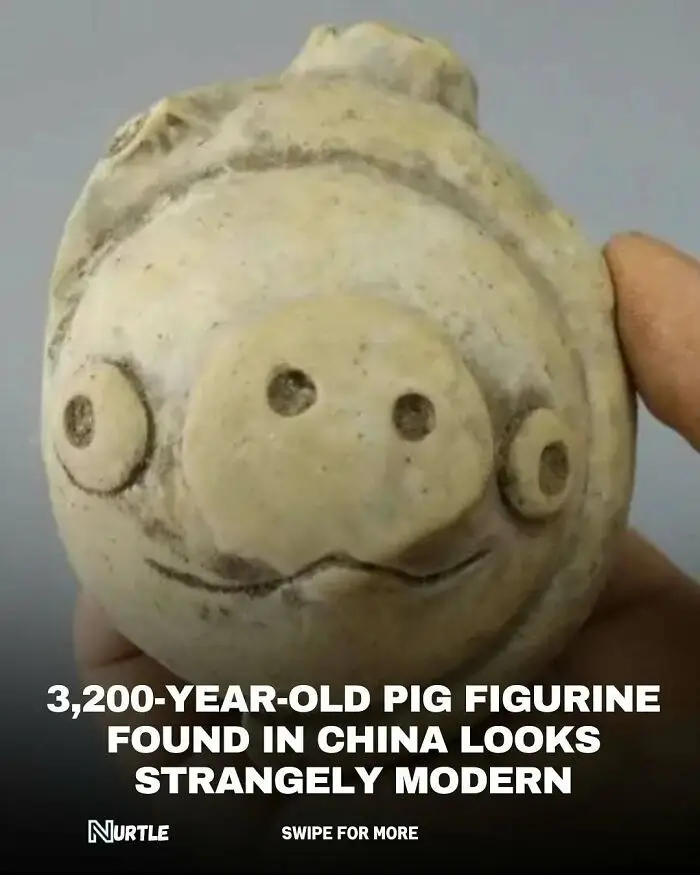
Archaeologists in Sichuan, China, uncovered a small clay pig figurine during excavations at the Lianhe Ruins in 2020. Chinese media report that the piece dates back about 3,200 years, linking it to the ancient Shu culture near the Sanxingdui site.
The figure has a round head, flat snout, and simple carved features that many compared to a modern cartoon pig. Its age and location have been confirmed by China’s archaeological authorities, though no formal excavation paper has yet been released.
Oh, and yes, it really does look like a piggie out of Angry Birds.
Report
13points
#67

A strange but fascinating plant has evolved a wild defense strategy: its leaves naturally fold and shape themselves to resemble hummingbirds. The illusion is so convincing that even predators are fooled.
This camouflage helps deter insects that might otherwise eat or lay eggs on its surface. Many bugs avoid areas with active hummingbirds, as the fast-flapping birds often feed on insects or disturb them while feeding on nectar.
It’s still unclear exactly how this evolutionary mimicry developed, but researchers believe the plant benefits from both visual protection and reduced contact with harmful species.
This isn’t the only example of nature’s clever design, but it might be one of the most creative.
Report
13points
#68

The total solar eclipse of February 3, 1911, became a major field event for astronomers working across North Africa and the Mediterranean. Egypt was one of the best viewing locations, offering clear skies and a long stretch of totality, which made it ideal for collecting scientific measurements.
Research teams set up observation stations to study the Sun’s corona, which can only be seen when the Moon fully blocks the solar disk. They used telescopes, spectrographs, and early photographic equipment to record the corona’s temperature, structure, and magnetic patterns. These observations helped confirm that the corona extends far into space and changes shape depending on solar activity.
At the time, eclipse photography was still developing, so scientific documentation often mixed photographs with technical drawings. The widely shared image associated with this eclipse is actually an illustration created in 1911 by Bruno Hans Bürgel, used to visually represent how the eclipse looked over the region.
The 1911 eclipse remains one of the more significant early 20th-century eclipse studies, combining coordinated fieldwork, improving technology, and an ideal viewing path that passed directly over Egypt.
Report
12points
#69
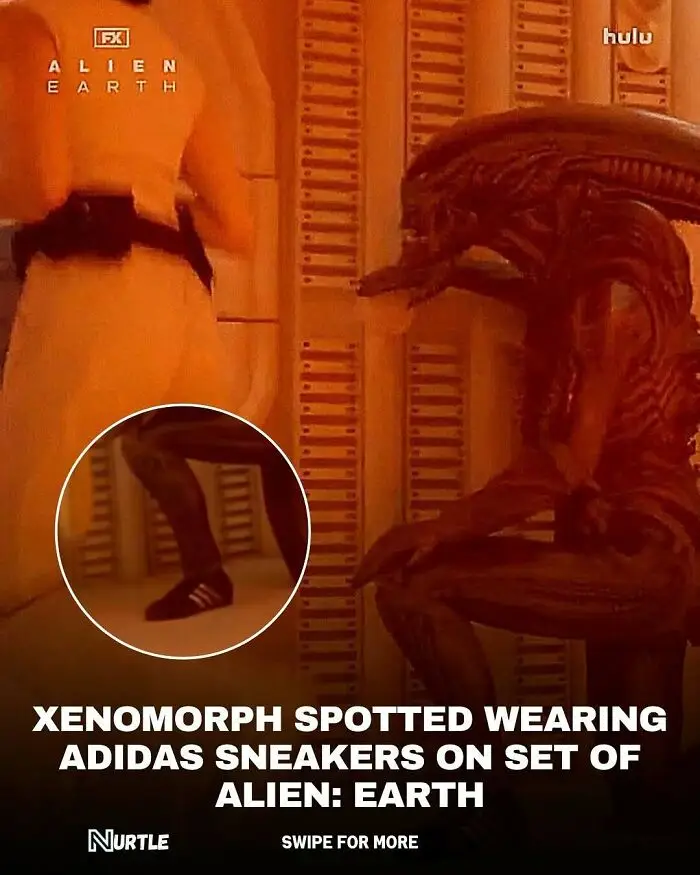
Behind the scenes of FX’s Alien: Earth (2025), fans spotted something unexpected. A Xenomorph suit actor was filmed taking a break while still in costume, but wearing a pair of Adidas sneakers.
The moment, shared online, shows the alien casually sitting in full creature design with the iconic three stripes on its feet. Since it’s clearly from set and not the actual show, it looks like a simple case of comfort over continuity during filming.
Still, the image has taken off as a meme, giving fans a surreal crossover between sci-fi horror and streetwear.
Report
12points
#70

In Osaka, Japan, artists have turned abandoned phonebooths into eye-catching aquariums filled with live goldfish. These public installations blend art and nostalgia, breathing new life into relics of the pre-smartphone era.
Each booth is sealed, lit from within, and carefully maintained to house colorful goldfish swimming among glass bubbles and urban reflections. Locals see it as a playful reminder of how fast technology changes — and how beauty can emerge from what’s left behind.
The project has become a quiet attraction in the city, inviting passersby to stop, stare, and reflect.
Report
12points
#71

In Japanese, the phrase “Kitto Katsu” (きっと勝つ) means “you’ll surely win.” It sounds almost identical to the way “Kit Kat” is pronounced in Japanese—so the candy took on a whole new meaning.
Because of this lucky wordplay, Kit Kats in Japan became popular good luck gifts, especially for students taking exams. Nestlé leaned into this cultural moment, launching hundreds of unique Kit Kat flavors across the country.
Today, Japan has over 400 flavors, including wasabi, sweet potato, sake, soy sauce, and dozens of region-specific editions. They’re not just snacks—they’re collectibles, souvenirs, and sometimes even lucky charms.
Report
12points
#72

It’s called volcanic lightning, and it forms when ash, gas, and rock particles explode out of a volcano and violently collide in the sky. These collisions create static electricity—just like in a thunderstorm—except it’s happening inside a plume of ash and lava.
The result? A blinding storm of fire and lightning, all coming from one eruption.
Volcanic lightning has been captured during eruptions around the world—from Chile to Japan to Iceland—and it’s one of the most extreme displays nature can produce.
Report
12points
#73

A luxury estate inside Golden Oak at Walt Disney World Resort is listed for around $14M and includes one of the most extreme custom home theaters ever built. The private cinema is designed to replicate the interior of the Millennium Falcon, complete with cockpit-style walls, sci-fi lighting, and immersive detailing inspired by the Star Wars films.
The mansion is located in Orlando, Florida, within Disney’s exclusive residential community that offers private resort access and Disney concierge services. Homes in Golden Oak are known for ultra-high security, custom architecture, and direct proximity to the parks.
The property spans close to 11,000 square feet and includes 7 bedrooms and 9 bathrooms. Beyond the theater, the home features a Mediterranean-style design, a resort-style pool with rock formations, a spa, multiple outdoor living areas, and a garage built to accommodate car lifts for collectors.
The Star Wars theater was professionally built as a permanent installation, not a temporary set or themed room. The detailing is fixed into the walls and ceiling, turning the space into a full-scale replica rather than a decorative homage.
Golden Oak homes rarely include heavily themed interiors at this level, making this property stand out even within Disney’s own luxury community. The listing targets buyers who want both high-end real estate and a private, immersive entertainment experience tied directly to Star Wars.
Report
11points
#74

Located in Los Angeles, Chromasonic is an immersive art exhibit that lets visitors step inside entire rooms of shifting color and sound.
The installation is designed to change how people perceive space. Walls glow in deep blues, reds, and yellows while layered soundscapes surround you, creating the feeling that light itself has become the architecture.
Artists behind the project describe it as an experiment in sensory awareness, blurring the line between art, science, and meditation.
Visitors don’t just look at the work, they walk through it and feel it.
Report
11points
#75

Inside the Basilica di Sant’Antonio in Padua, one of the Catholic world’s strangest relics is kept on display: the jaw and tongue of Saint Anthony of Padua.
When his tomb was officially opened in 1263, more than 30 years after his death, most of his body had decomposed. According to records from the basilica, his jaw and vocal organs were found preserved, something church officials immediately linked to his reputation as one of the most powerful preachers of the Middle Ages.
Instead of returning them to the tomb, the remains were placed inside an ornate reliquary bust, made with gold, enamel, gemstones, and religious figures. The jaw is still visible behind glass today, displayed in the Chapel of the Relics.
The discovery is remembered every year in Padua during the Feast of the Tongue, marking the moment the relic was revealed inside the basilica.
Report
10points
#76

Along the road leading to Sidra Medicine in Al Rayyan stands one of the most striking public art installations in the region. The Miraculous Journey, created by British artist Damien Hirst, is a sequence of 14 massive bronze sculptures that follow the entire development of a human fetus from conception to birth.
The sculptures were commissioned as part of Qatar’s public art program and stand directly outside the women and children’s hospital. Each piece shows a different stage of growth, ending with a newborn standing more than 14 meters tall. Together they weigh over 200 tons and stretch across the length of the hospital’s entrance road.
The installation was designed to match the hospital’s focus on maternal and neonatal care, turning the approach to the building into a step-by-step visual timeline of human development. The series has become a recognizable landmark for drivers entering the medical campus.
Report
10points
#77

Troy Hurtubise dedicated his life to creating suits strong enough to withstand a grizzly bear attack. His obsession began after a near-fatal encounter with a bear in his twenties, inspiring him to design armor that would let him study the animals safely up close.
Over the years, he built several versions of his suit, each one heavier and more advanced. His designs, like the Mark VIII model, featured reinforced plating, hydraulic joints, and a helmet with built-in cameras and sensors.
Despite becoming somewhat of a cult figure for his fearless experiments, Hurtubise never got the chance to test his final design. He died in a car accident in 2018, leaving behind a legacy of creativity, courage, and one of the strangest inventions in wildlife research.
Report
10points
#78

Jon Brower Minnoch was born in 1941 in the United States and is officially recognized as the heaviest human ever recorded. At his peak, his weight was estimated at around 1,400 pounds, a condition caused by a combination of severe obesity and a rare fluid retention disorder, likely linked to heart and kidney failure.
By his early 30s, Minnoch’s health had deteriorated to the point where daily movement became nearly impossible. In 1978, he was admitted to hospital after his condition became life threatening. Transporting him required dozens of medical staff and reinforced equipment, highlighting the extreme nature of his case.
Under strict medical supervision, Minnoch was placed on a controlled hospital diet. Over the following months, he lost more than 900 pounds, one of the largest medically documented weight losses ever. Despite this, the underlying condition never fully resolved. After leaving the hospital, fluid retention returned, and much of the weight was gradually regained.
Jon Brower Minnoch died in 1983 at the age of 41. His case remains one of the most extreme and closely studied examples in medical history, often cited in discussions about obesity, metabolic disorders, and the limits of the human body.
Report
9points
#79

This tiny Roman amulet, only 3 centimeters tall, was carved from silver nearly 2,000 years ago.
The grotesque face, with its long hooked nose and exaggerated features, wasn’t meant to be pretty. It was designed to ward off evil and protect its wearer from harm.
Objects like this were common in the Roman world, where superstition and symbolism played a role in everyday life.
Jewelry wasn’t only decoration, sometimes it was a shield against the unknown.
Report
9points
#80

Dubai has unveiled an ambitious $3 billion plan to create the world’s largest artificial reef and floating city, known as Dubai Reefs. Spanning over 200 square kilometers, the project will include underwater hotels, floating villas, marine research hubs, and eco-resorts, all powered entirely by renewable energy.
The development is designed to host 1 billion corals and 100 million mangrove trees, making it both a futuristic luxury destination and a large-scale marine restoration effort. Alongside its tourism appeal, Dubai Reefs will serve as a hub for ocean farming, education, and biodiversity research, aiming to support sustainable food sources and protect marine life.
Early reef modules have already been deployed, with plans to expand across hundreds of kilometers in the coming years. Once complete, Dubai Reefs will not only reshape the city’s coastline but also stand as a model for how urban development and ocean conservation can coexist.
Report
9points
