

And not every fact needs to have an obvious practical purpose to be worthwhile. Research points out that trivia can provide small opportunities to exercise memory because recalling information requires more active mental work than simply reading it again. This relates to the testing effect, in which retrieving information from memory can strengthen its later recall.
A casual trivia question can therefore do more than provide a moment of entertainment; it can turn an otherwise forgettable piece of information into something the brain has actively practiced retrieving. Curiosity can also encourage people to investigate related subjects, allowing one unusual fact to become the starting point for learning about something much bigger.

#23

These minerals are believed to have formed under unusual conditions inside the parent asteroid from which the meteorite originated. Studying them could help scientists better understand the extreme temperatures, pressures, and chemical processes that take place during the formation of asteroids and other celestial bodies.
There is a social side to this fascination, too. Random facts give people something easy to share, whether it's an unexpected discovery mentioned during a conversation or knowledge brought up during a trivia game. They can create moments of surprise and give people common ground without requiring everyone to share the same interests or expertise.
A strange fact about an animal, for example, might lead to questions about evolution, biology, or the environment, turning a tiny piece of trivia into a much wider exploration. What looks like meaningless information can therefore become a memory exercise, a conversation starter, or simply the first step toward discovering something else, and perhaps that's part of why people never seem to get tired of finding out something they didn't know before.
#26
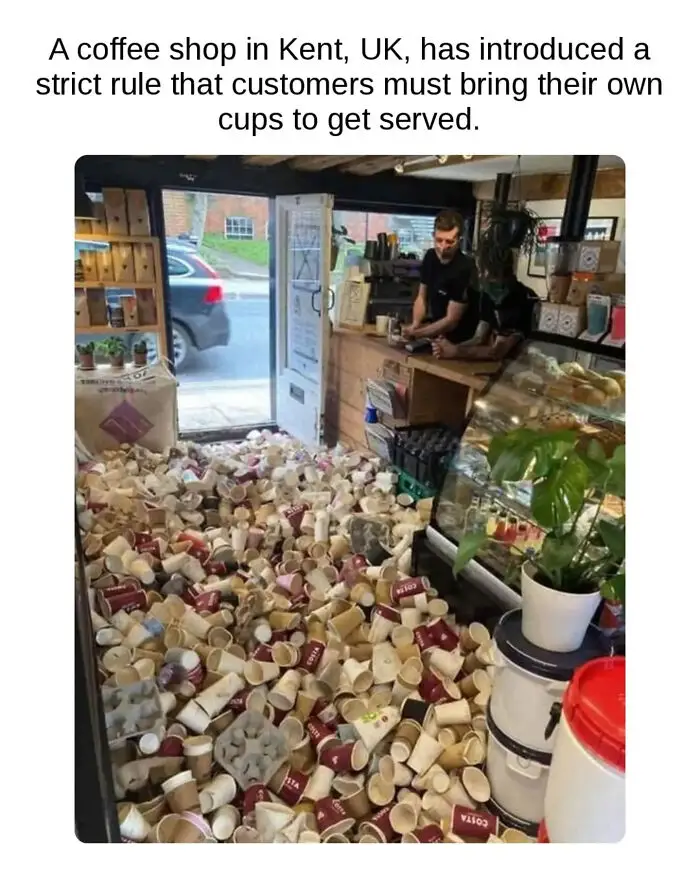
To show the scale of the problem, Otto’s Coffee House and Kitchen filled its shop floor with disposable cups. This powerful display highlighted how quickly takeaway cups can accumulate and contribute to environmental pollution.
The initiative encourages customers to bring their own cups instead of relying on single use alternatives. This simple habit can help reduce waste and promote more sustainable consumption.
Otto’s Coffee House and Kitchen hopes its efforts will inspire other coffee shops around the world to follow the same approach. Its message is clear: small changes in everyday habits can make a meaningful difference to the environment.

It's oddly satisfying to discover a fact that completely changes how you look at something familiar. Whether it fills a small gap in our knowledge, sticks in our memory because it was surprising, or sends us down a rabbit hole of related information, these little discoveries remind us that there is always more to learn.
We may know how to use countless things every day, but that doesn't necessarily mean we understand them as well as we think we do. And perhaps that's what makes interesting facts so much fun. They don't have to change our lives or solve a major problem to be worth knowing. Sometimes, learning one completely unexpected detail is enough to make an ordinary day a little more interesting.
What is the most random fact you know that you still remember years later? Share it in the comments, we'd love to see what strange pieces of knowledge our readers have collected over the years!
#28
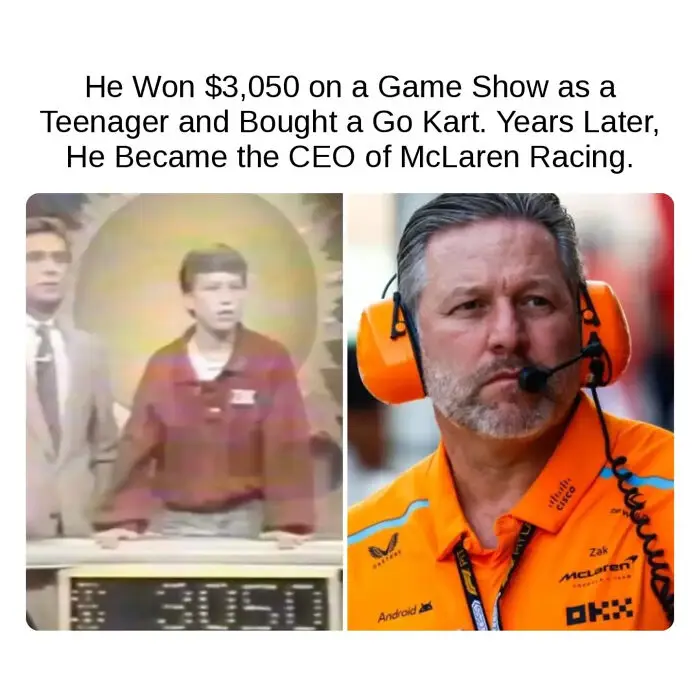
That purchase became an important turning point in Brown’s life. The go kart gave him an opportunity to experience racing firsthand and develop a deeper passion for the sport. What began as a teenage interest gradually grew into a serious ambition, motivating him to learn more about competition, drivers, and the business behind motorsports.
Brown eventually became involved in professional racing, first as a driver and later as a businessman and motorsports executive. He founded Just Marketing International, a company specializing in motorsports marketing, and built a reputation for understanding the commercial side of racing. His work brought him into contact with major teams, sponsors, and influential figures across the industry.
In 2018, Brown became the chief executive officer of McLaren Racing, one of the most historic names in Formula One. His journey from buying a go kart with game show winnings to leading a world renowned racing organization demonstrates how a small decision can sometimes open the door to an extraordinary career. It is a reminder that following a genuine passion can create opportunities that are difficult to imagine at the beginning.
#30
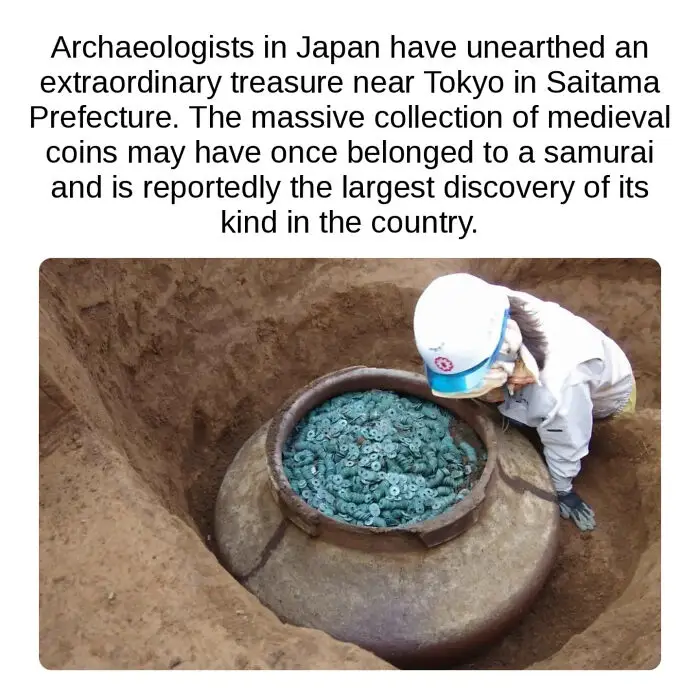
Many of the coins featured square or circular openings in their centers, allowing them to be threaded together using ropes for easier storage and transportation. The collection included Japanese coins as well as several older Chinese coins from the Ming and Tang dynasties, suggesting the extensive circulation of currency and trade between different parts of East Asia.
Archaeologists initially estimated that the jar contained more than 100,000 coins, making it an enormous discovery. However, a wooden tablet buried alongside the hoard provided an intriguing clue about its actual size. It contained the Japanese inscription "nihyaku rokuju," meaning 260, which may refer to 260 kan, a traditional counting unit representing 1,000 coins.
If this interpretation is correct, the jar could have contained as many as 260,000 coins. The discovery offers a fascinating glimpse into medieval Japanese wealth, monetary systems, and the lengths people went to protect their fortunes during times of political instability.
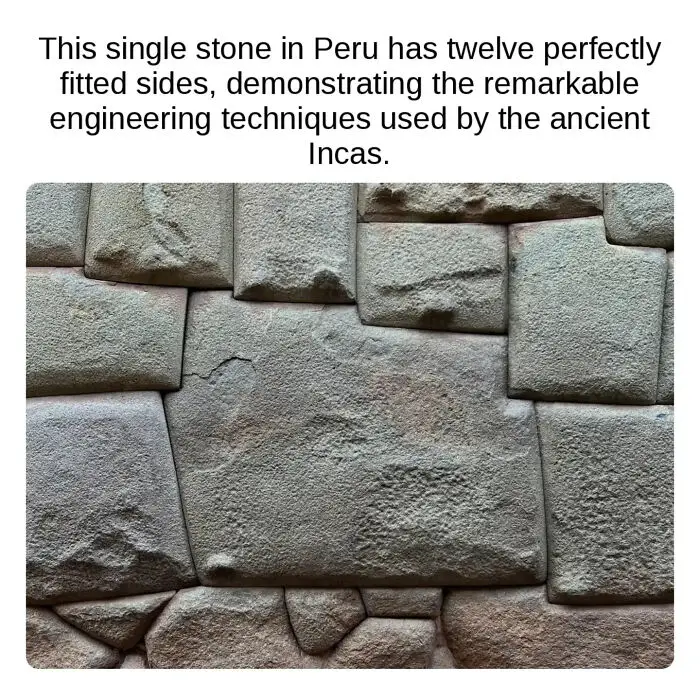
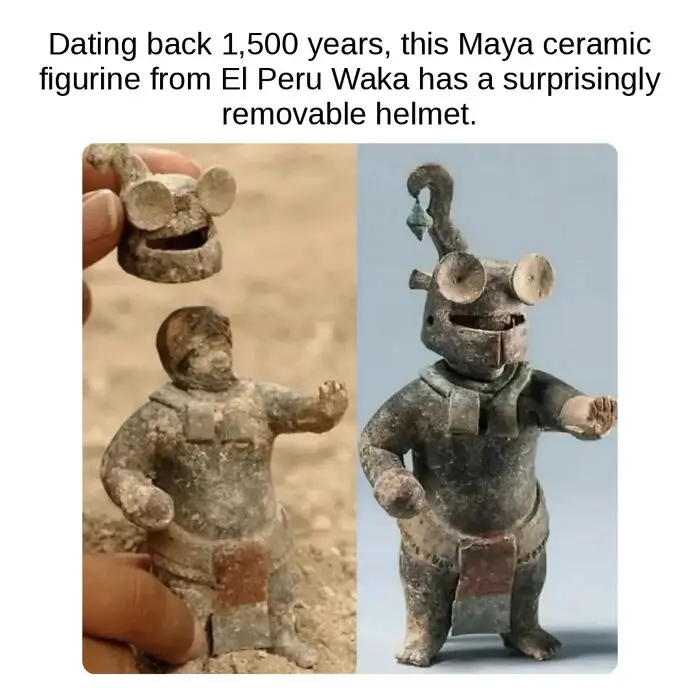

#37
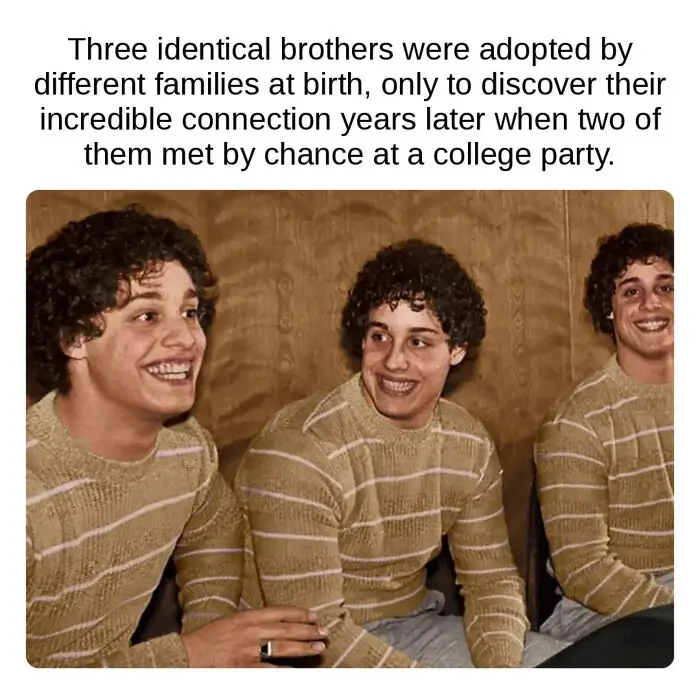
As the story unfolded, it became clear that they were not the only identical twins or triplets separated through the agency. Several children had been placed in different households as part of a secret research project led by psychiatrist Peter Neubauer.
Neubauer wanted to investigate how different family backgrounds and social environments influenced the personality development of genetically identical siblings. By studying children raised apart, he hoped to understand the roles that genetics and upbringing played in shaping human behavior. However, the children and their families were not fully informed about the true purpose of the separations, raising serious ethical concerns.
The study was never published in the form Neubauer had originally intended, and it faced widespread criticism over its methods and lack of informed consent. Records related to the research were deposited at Yale University, with access restrictions extending until 2065. The case remains a disturbing example of how scientific curiosity can come at a devastating human cost when ethical responsibilities are ignored.