

Trust and the overall feeling of safety are some of the most important parts of any relationship. Couples don't have to agree on everything, and mistakes are bound to happen, but honesty and accountability are what help people navigate difficult situations together. When one person's decisions begin affecting everyone around them, however, the damage can extend far beyond the original mistake.
That is what happened to one woman after her husband got into a car accident while driving his company vehicle. Although nobody was injured, he allegedly gave the police, his employer, and their insurance company a completely fabricated account of what happened. When dashcam footage from the other driver exposed his version of events, the consequences quickly escalated.
Putting your family at risk is bad enough, but refusing to take responsibility afterward can make an already painful situation even worse

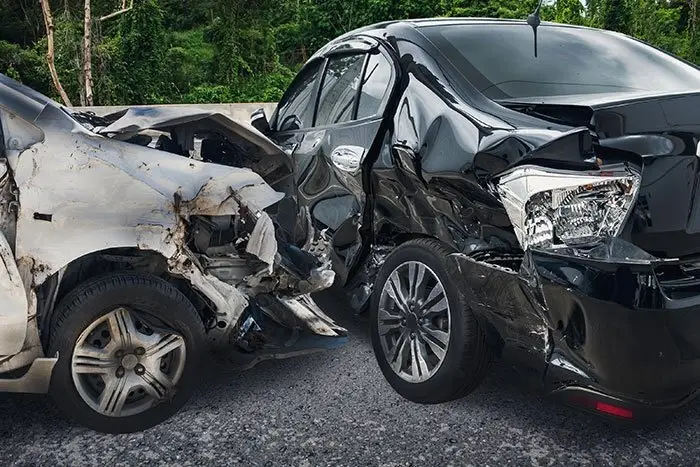
The woman's husband got into a car accident while driving his company vehicle, damaging both cars and a traffic signal, but nobody was injured
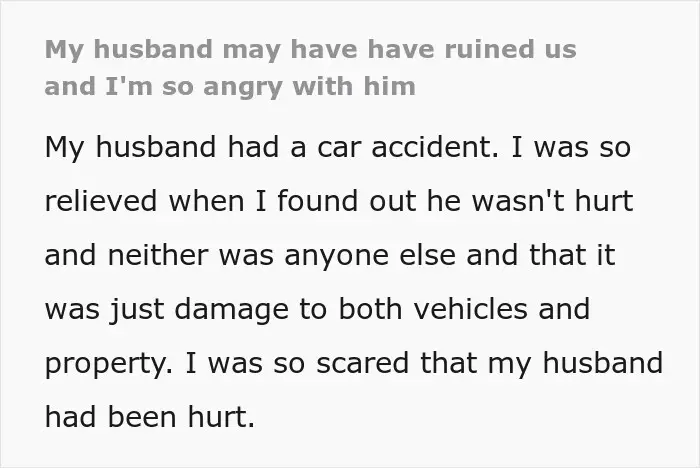

The husband, however, blamed the other driver and gave the police, his employer, and their insurance company a false account of what happened
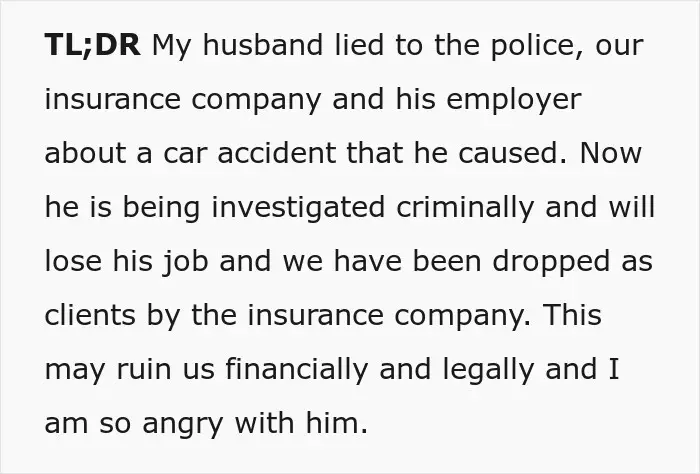
She provided some more information regarding their insurance, clarifying why it is so difficult to just find another insurance company
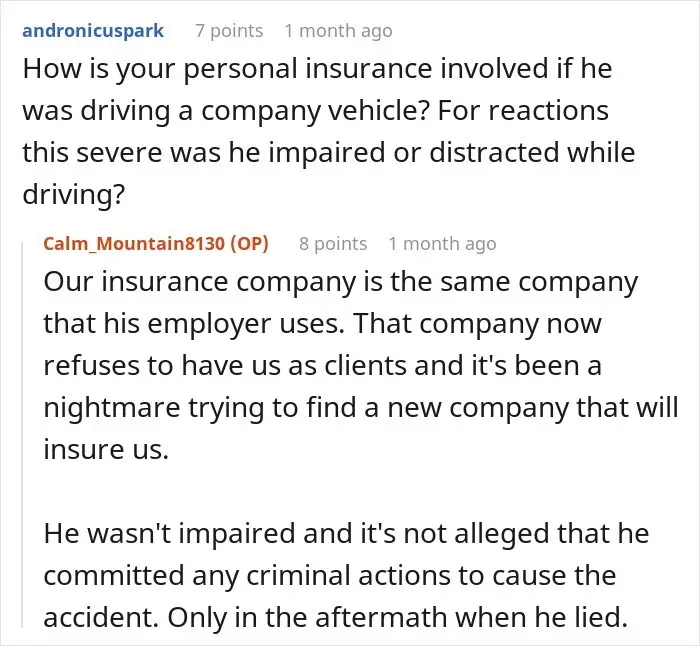
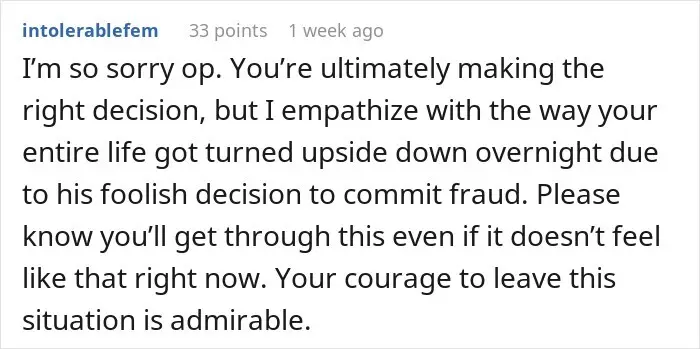
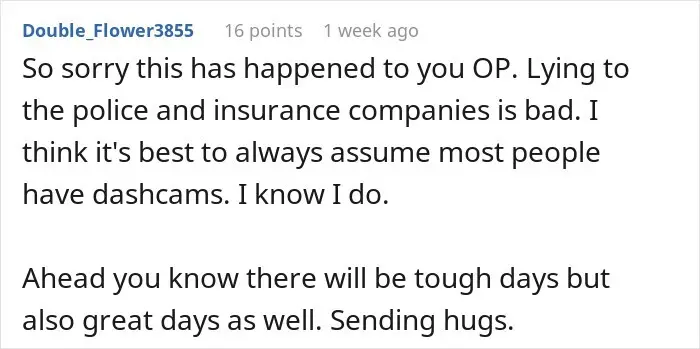
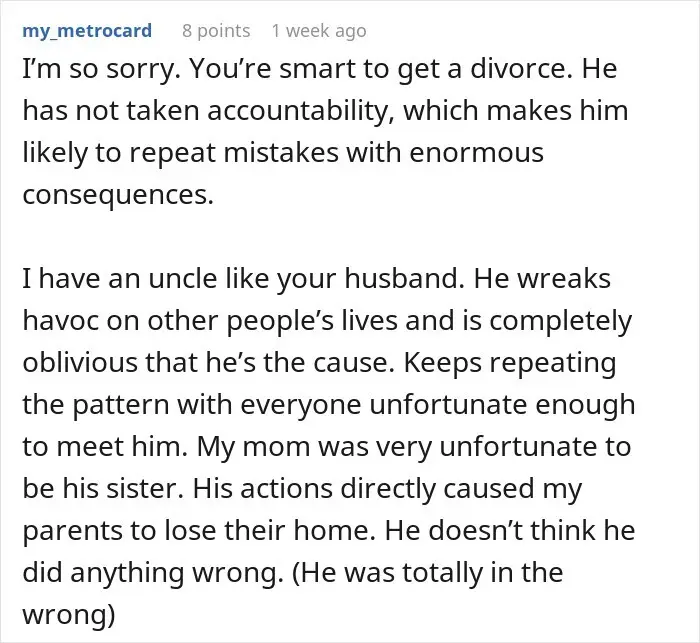
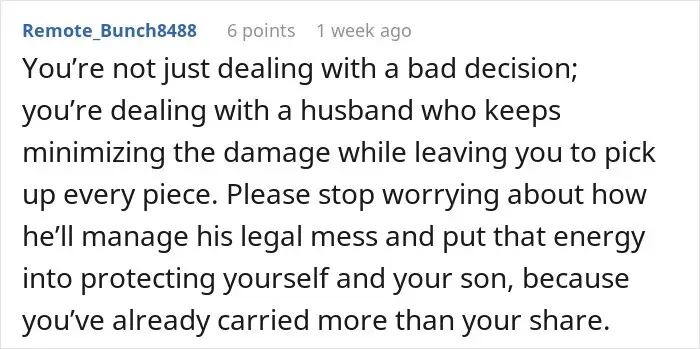
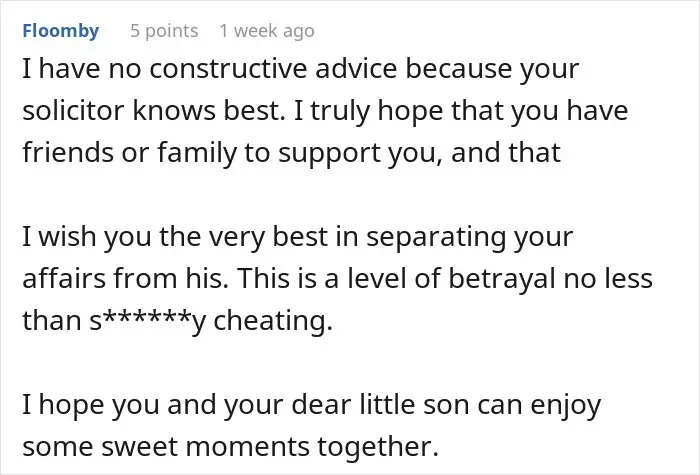
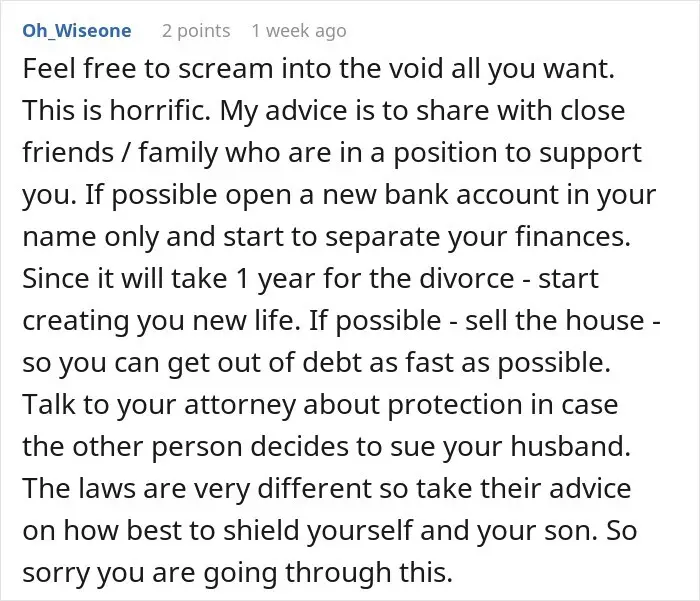
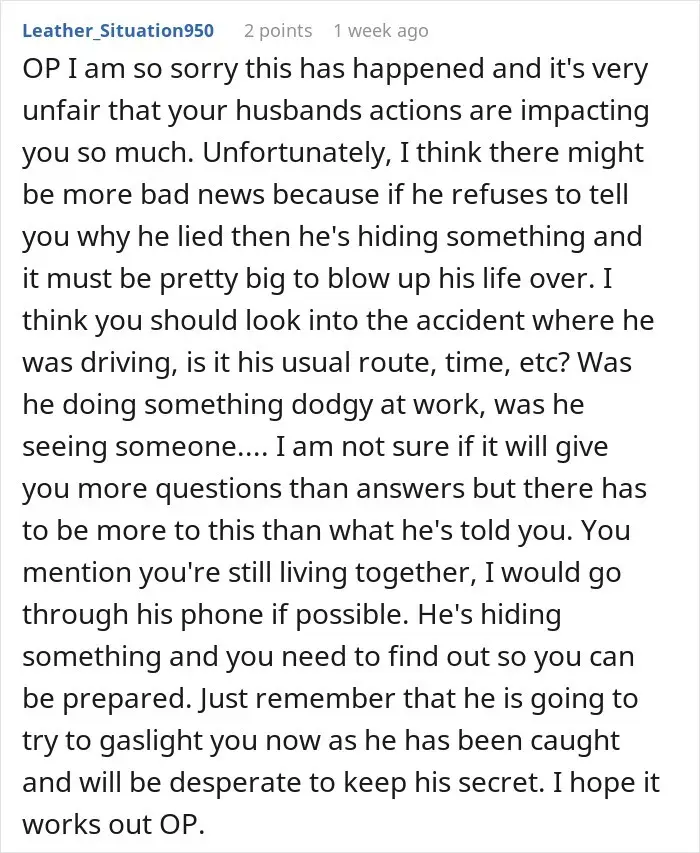
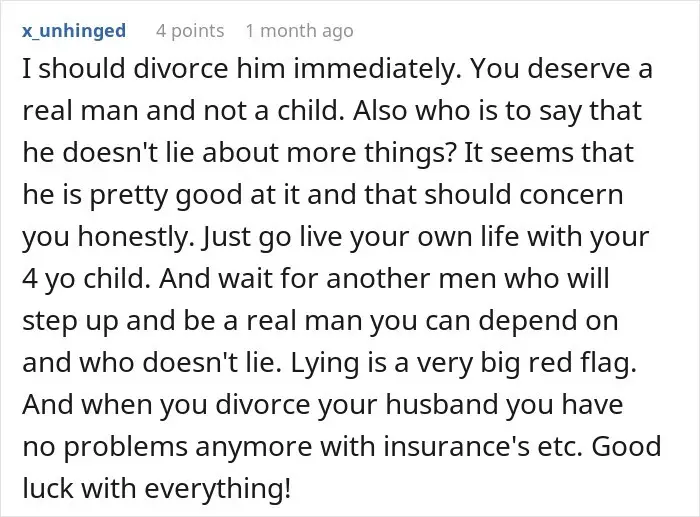
Netizens urged the woman not to clean up after him, insisting that his actions were worth divorcing over
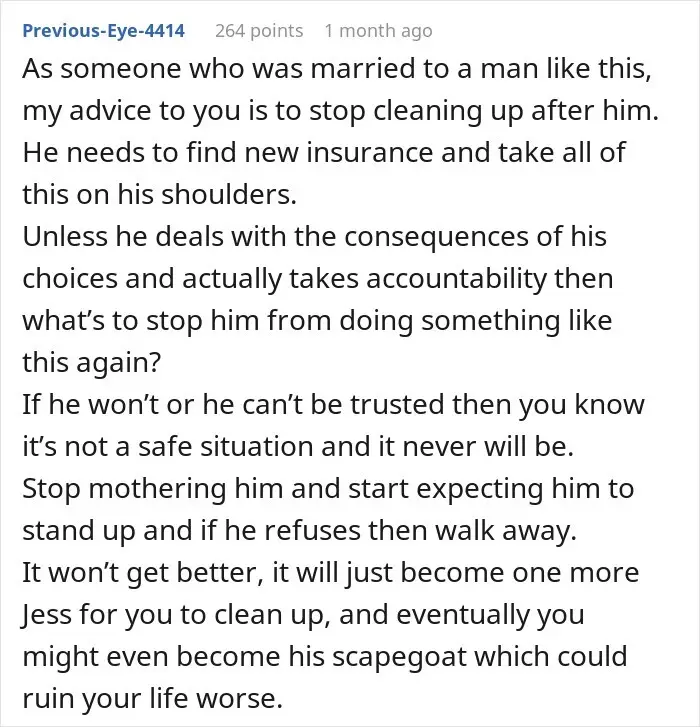
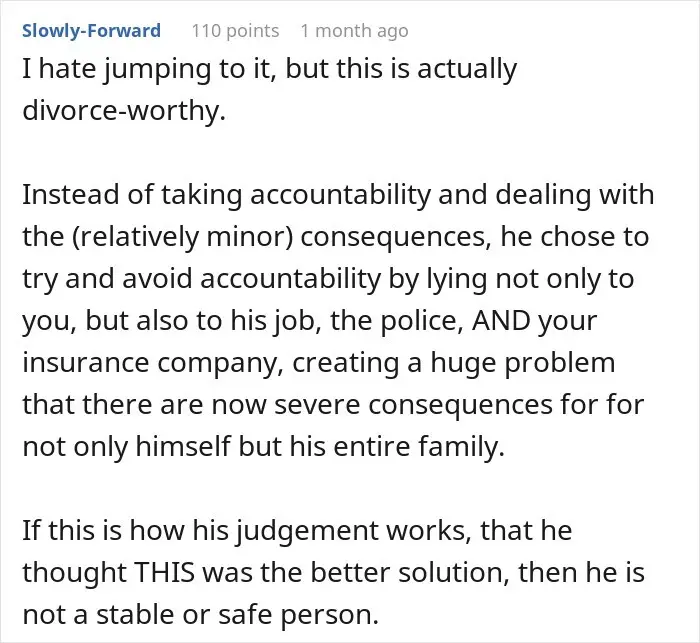

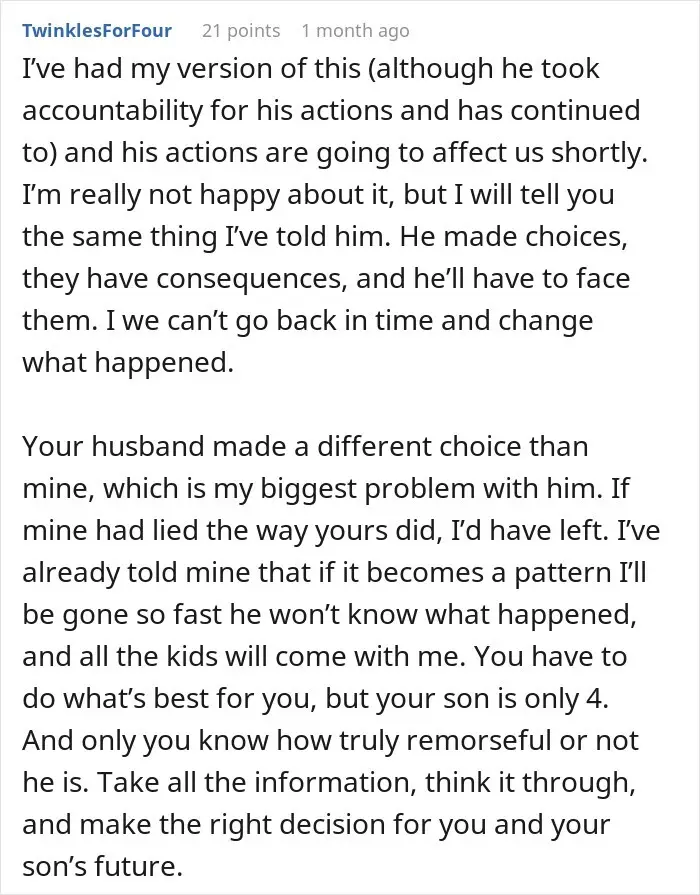


Unfortunately for him, dashcam footage exposed his lies, leading to a criminal investigation, his dismissal, and the family's insurance provider dropping them
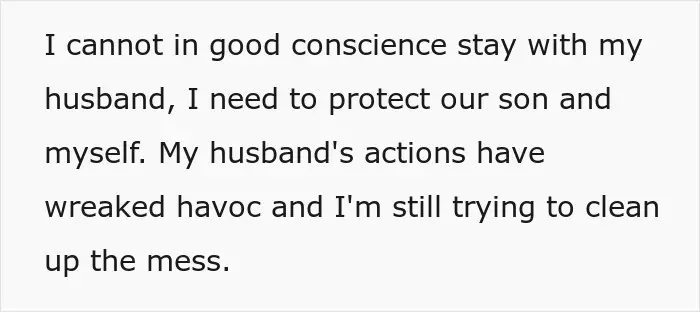


Struggling with expensive insurance quotes and potential legal costs, the woman grew increasingly frustrated as her husband continued to downplay his actions
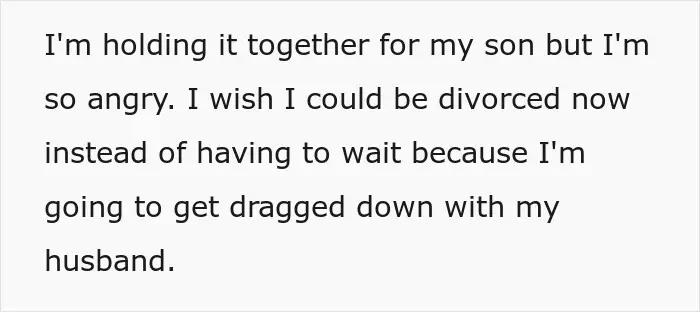
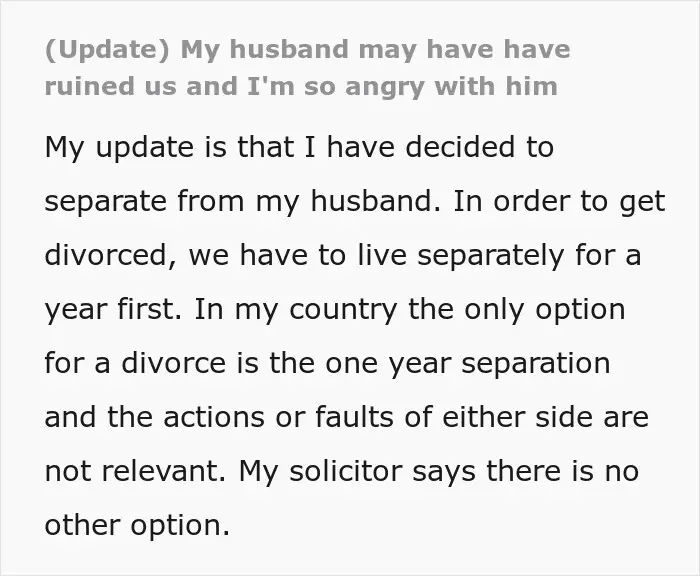
She eventually decided to separate from him to protect herself and their four-year-old son, although divorce would require a year of living apart
Car accidents often come down to conflicting accounts. One driver might remember a particular maneuver differently, while another insists they had the right of way. Without independent evidence, investigators may have to piece together what happened using vehicle damage, road conditions, witness statements, and other available information. Dashcam footage can make that process considerably easier by providing a visual record of the moments leading up to a collision.
According to Legal500, dashboard camera recordings can be used in legal proceedings, although their evidential value depends on the quality of the footage and what it actually shows. Importantly, recordings can also reveal the actions of the person who owns the camera. This means that footage intended to support one driver's account could end up contradicting it.
Insurance policies depend on customers providing accurate information and cooperating honestly when something goes wrong. When an insurer believes someone has deliberately misrepresented events, the consequences can extend beyond refusing to pay for a particular repair. Depending on the policy, the circumstances, and the applicable laws, it may also reconsider whether it wants to continue providing coverage.
The Financial Ombudsman Service explains that misrepresentation can lead insurers to increase premiums, change policy terms, settle claims proportionately, or avoid a policy altogether. Its guidance also makes an important distinction between careless and deliberate misrepresentation. The consequences depend on the circumstances and the relevant consumer protection rules, rather than every inaccurate statement automatically resulting in cancellation.

It makes sense, then, why dishonesty can become such a serious financial problem, particularly when a household relies on one provider for several policies. Money problems rarely stay confined to bank accounts. When a couple suddenly faces expensive insurance premiums, potential legal bills, and uncertainty about their home and business coverage, the pressure can affect how they communicate and make decisions together.
Verywell Mind discusses that financial strain can put even otherwise happy relationships under considerable pressure. The stress can make partners less patient with each other, particularly when one person feels they are carrying more of the financial burden, or if they feel like they are being forced to deal with the consequences of the other's decisions.
Besides, in this particular case, it goes beyond a financial inconvenience and enters into the territories of trust and betrayal. Discovering that a partner has lied can make a person question much more than the specific incident that exposed the dishonesty. They may start wondering whether other things they've been told were also untrue, or whether they can rely on their partner when another difficult situation arises
Psychology Today notes that trust is an important foundation of close relationships because it allows people to feel secure and believe that their partner has their best interests at heart. When it is shaken, the damage can be particularly difficult to repair when the person responsible refuses to acknowledge what happened or continues minimizing their actions. Given this, it is not surprising that the woman thought it best to leave the marriage.
What do you think about this situation? Could you forgive a partner whose lies put your family's financial security at risk? Share your thoughts with us in the comments!
The woman also provided more information about the situation in the comments, confirming that there were no loopholes regarding the divorce laws
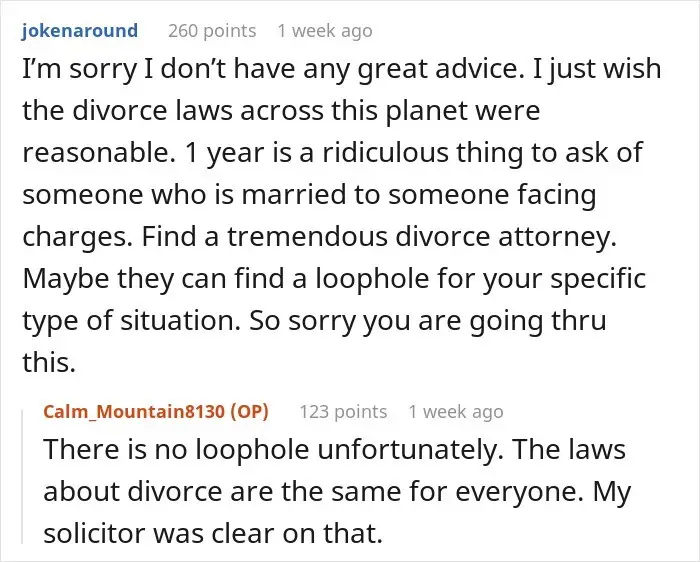
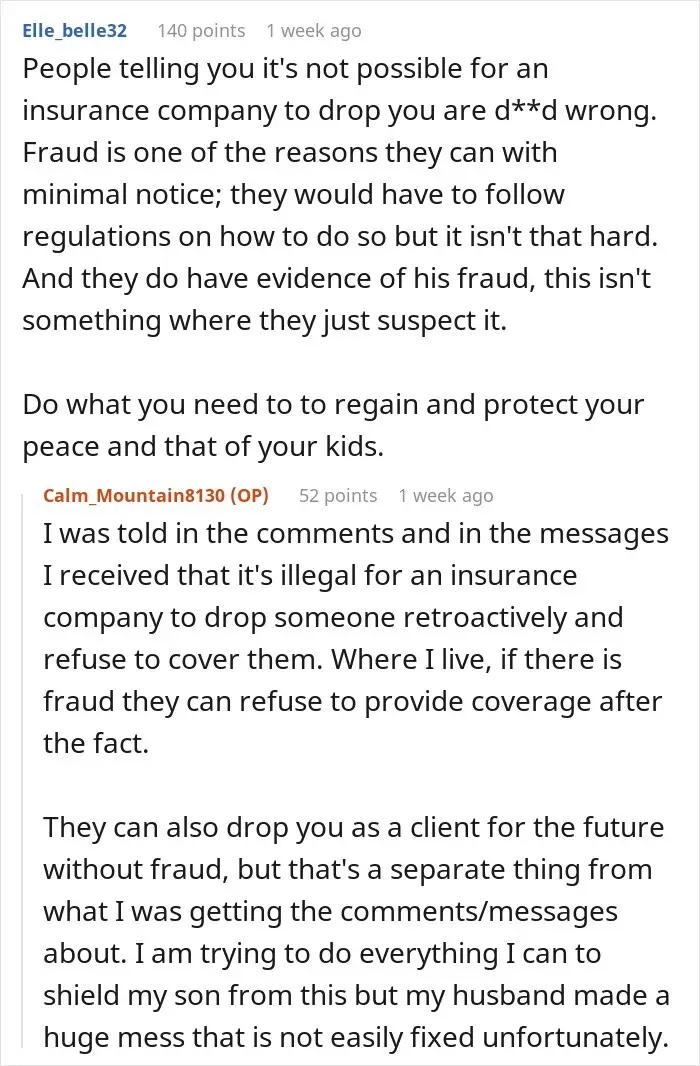
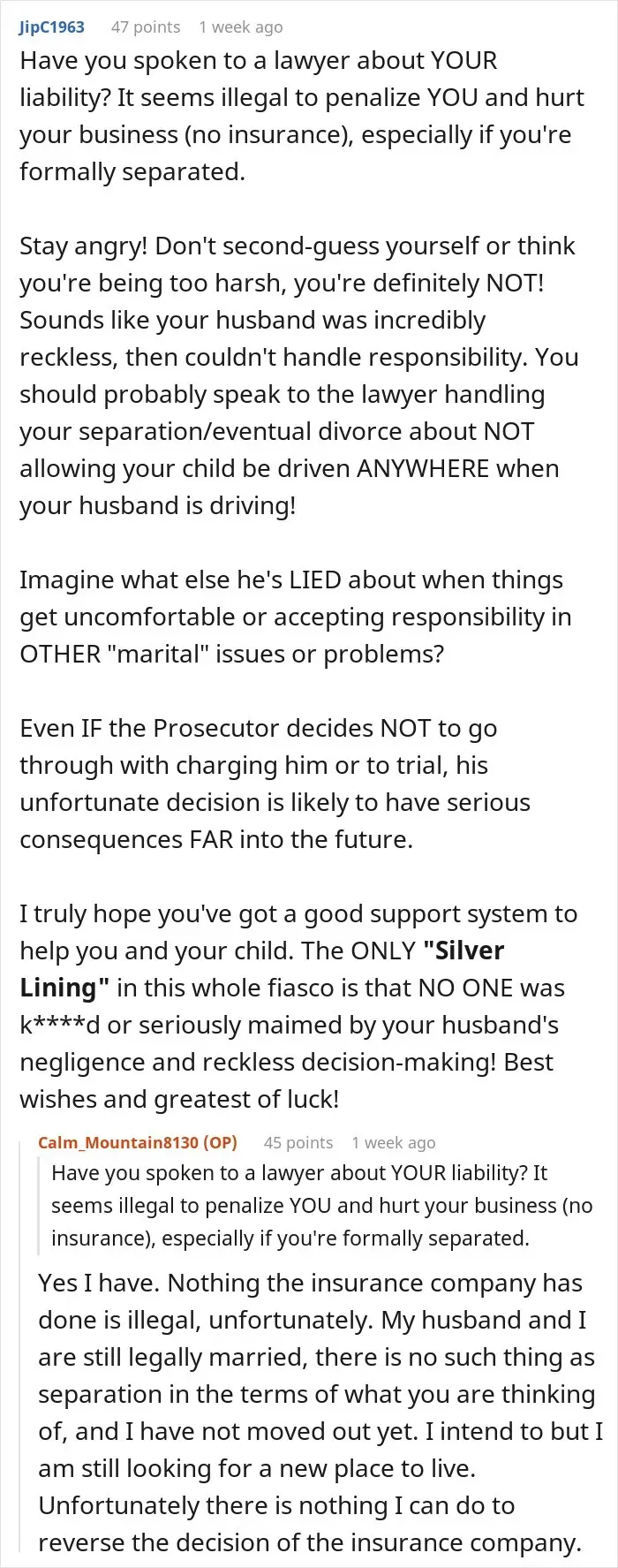
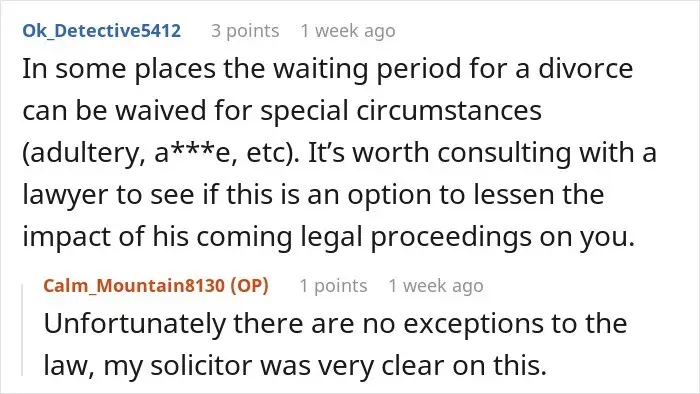
Ultimately, netizens expressed sympathy for her while applauding her decision to get a divorce