


#1

#2

#3

The fascination with disturbing and unusual subjects is closely tied to a psychological trait known as morbid curiosity. According to Psychology Today, this describes the human tendency to seek information about frightening, dangerous, or unpleasant things, even when they might trigger feelings of fear or disgust.
Rather than meaning that people enjoy suffering, this curiosity is largely driven by a desire to understand potential threats. Learning about criminal behavior, disasters, unusual medical conditions, and dangerous situations can help people recognize warning signs and make better decisions if they ever encounter similar circumstances.

#5

#6

There is also an interesting balance between wanting to know more and wanting to stay away from danger. Fear and disgust generally encourage people to avoid threatening situations, while curiosity pushes them to investigate what makes those situations frightening in the first place.
Reading about a disturbing crime or watching a horror film allows people to explore these fears without putting themselves in actual danger. This may explain why true crime documentaries, horror movies, and accounts of unexplained events remain so popular. When people feel sufficiently safe, experiencing a little fear can even become entertaining, offering excitement without the consequences of facing a genuine threat.

#8

#9

However, human curiosity has not always been harmless, particularly when it comes to scientific research. CNN examines the dark history of human experimentation, revealing how the pursuit of knowledge has sometimes been influenced by racism, political power, military ambitions, and institutional control.
Throughout history, vulnerable groups have been subjected to experiments that disregarded their basic rights and well-being. One of the clearest examples occurred in Nazi concentration camps, where prisoners were forced to endure extreme cold, disease exposure, sterilization procedures, and high-altitude experiments, often with devastating consequences.
These were not simply cases of researchers making mistakes, but deliberate violations of human dignity in which people were treated as expendable.
#10

attached to his helmet, Cù Chi base camp, Vietnam in 1968.
#11

#12
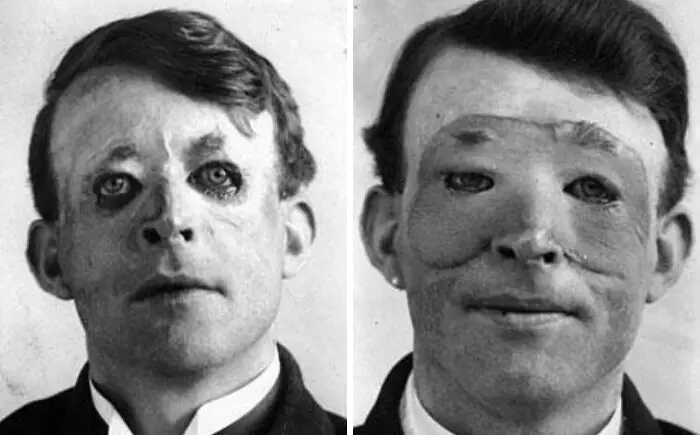
Other notorious cases demonstrate that such practices were not limited to wartime Europe. The Tuskegee syphilis study, conducted between 1932 and 1972, involved Black men who were misled about the nature of the research while researchers observed the progression of their illness.
Even after penicillin became the standard treatment, participants were not given the medication. Experiments conducted at Holmesburg Prison in the United States also involved inmates being exposed to chemicals, infections, and pharmaceutical products.
The exposure of these practices helped bring greater attention to the need for informed consent, independent ethical reviews, and stronger protections for people participating in research. Today, these safeguards are essential reminders that scientific progress should never come at the expense of basic human rights.


#15

Scientific investigation has also revealed that the human body itself can produce some remarkably unusual conditions. Live Science explores several rare medical disorders that sound almost fictional but have identifiable biological, neurological, or developmental causes.
Auto-brewery syndrome, for instance, can cause a person to experience symptoms of intoxication after consuming carbohydrates because microorganisms in the digestive system produce alcohol. Foreign accent syndrome can affect someone's speech following a brain injury, making them sound as though they have acquired a different accent.
Another unusual condition, congenital insensitivity to pain, prevents people from experiencing pain even though they can still feel touch, pressure, and temperature. These cases demonstrate how differently the body's systems can function when something disrupts their normal processes.
#16
#17


Some of these conditions are particularly fascinating because they affect abilities most people rarely think twice about. Alien hand syndrome can cause a person's hand to perform movements without their conscious intention, while Cotard's syndrome can lead someone to believe they no longer exist or that parts of their body have decayed.
There is also fibrodysplasia ossificans progressiva, a rare genetic disorder in which muscles and connective tissues progressively turn into bone, sometimes following injuries or inflammation. Other conditions affect everyday experiences in unexpected ways, such as aquagenic urticaria, which causes skin reactions after contact with water.
Although these disorders are uncommon, they offer valuable opportunities for researchers to understand the nervous system, genetics, and the complex mechanisms that allow the human body to function.
#19

From 1910 to 1912, they survived by eating their sled dogs and abandoned rations from previous expeditions while evading bears, wolves, and foxes.
Once, when a polar bear broke into their cabin in the middle of winter, they had to fight it off with only an axe.
#20