







#21
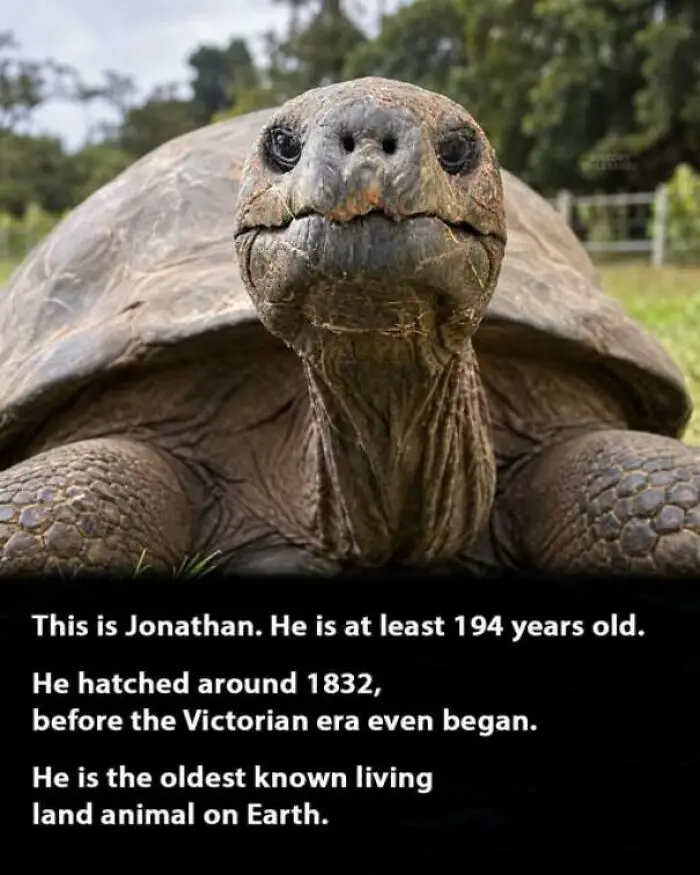
More than 140 years later, Jonathan still lives on the grounds of Plantation House, the residence of St. Helena's governor. He is recognized as the oldest known living land animal and the oldest recorded turtle or tortoise in history. Remarkably, because his estimated age is conservative, Jonathan may actually be even older than 194.
London had its own unforgettable moment in the summer of 1858, when hot weather turned the River Thames into such a powerful stench that Parliament, which sits right on its banks, could barely get anything done, and Punch magazine had a field day drawing Father Thames as a grumpy old man.
#22

Ebeling worked for Morton Thiokol, the company responsible for Challenger's solid rocket boosters.
On January 27, 1986, temperatures at the launch site were expected to fall unusually low.
Ebeling and several fellow engineers were deeply concerned about how the cold would affect the rubber O-rings that sealed joints in the boosters.
During a lengthy conference with NASA, Thiokol engineers initially recommended that Challenger not launch in the unusually cold conditions.
Management ultimately reversed that recommendation and approved the launch.
Ebeling went home devastated.
He told his wife, Darlene:
“It's going to blow up.”
The following morning, Challenger lifted off.
Seventy-three seconds later, the shuttle broke apart, it took all seven crew members' lives.
The investigation found that an O-ring in the right solid rocket booster had failed to seal properly in the unusually cold conditions.
Ebeling spent decades blaming himself for not doing more, despite having argued against the launch.
#23
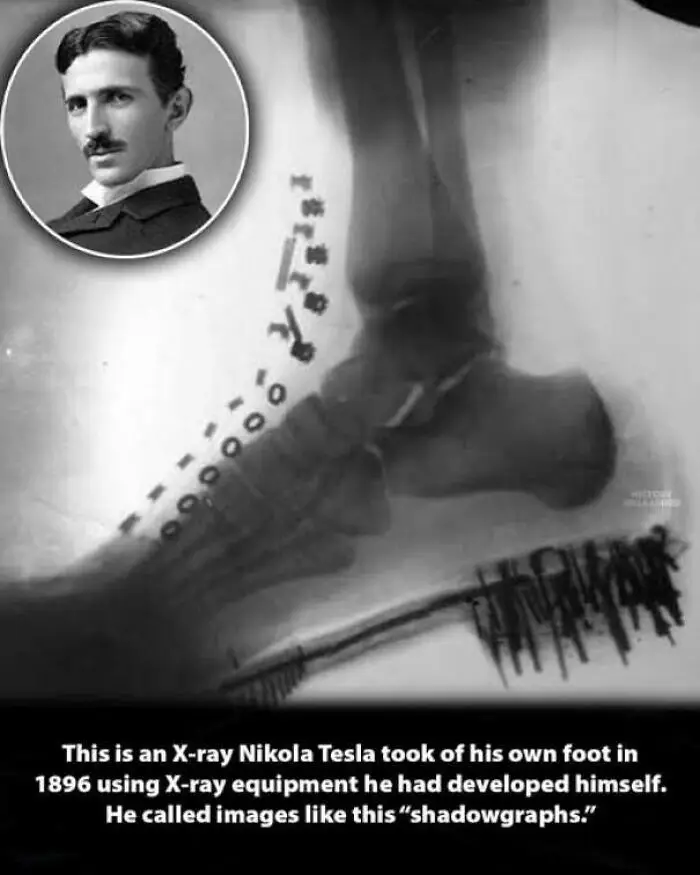
X-rays had only recently been announced to the world.
German physicist Wilhelm Röntgen discovered them in 1895, but scientists and inventors quickly began experimenting with the mysterious new form of radiation.
Among them was Nikola Tesla.
Tesla developed his own experimental X-ray equipment, including a special vacuum tube powered using the high-voltage technology he had been developing.
He referred to the resulting X-ray photographs as “shadowgraphs.”
In 1896, Tesla produced this remarkable image of a human foot still inside its shoe.
The image is identified by the Nikola Tesla Museum as Tesla's own foot.
You can clearly see the bones of his foot through the shoe, along with the metal components used in its construction.
Tesla produced the image using X-rays generated by his own vacuum tube from a distance of approximately eight feet.
His experiments weren't limited to producing unusual photographs.
Tesla investigated how X-rays behaved, experimented with different equipment and even began recognizing the dangers associated with prolonged exposure to the radiation.
More than 130 years later, the original shadowgraph survives in the collection of the Nikola Tesla Museum.
An X-ray of Nikola Tesla.
Taken by Nikola Tesla.
Using equipment developed by Nikola Tesla.
In 1896.
#24
Roosevelt had left the White House the previous year.
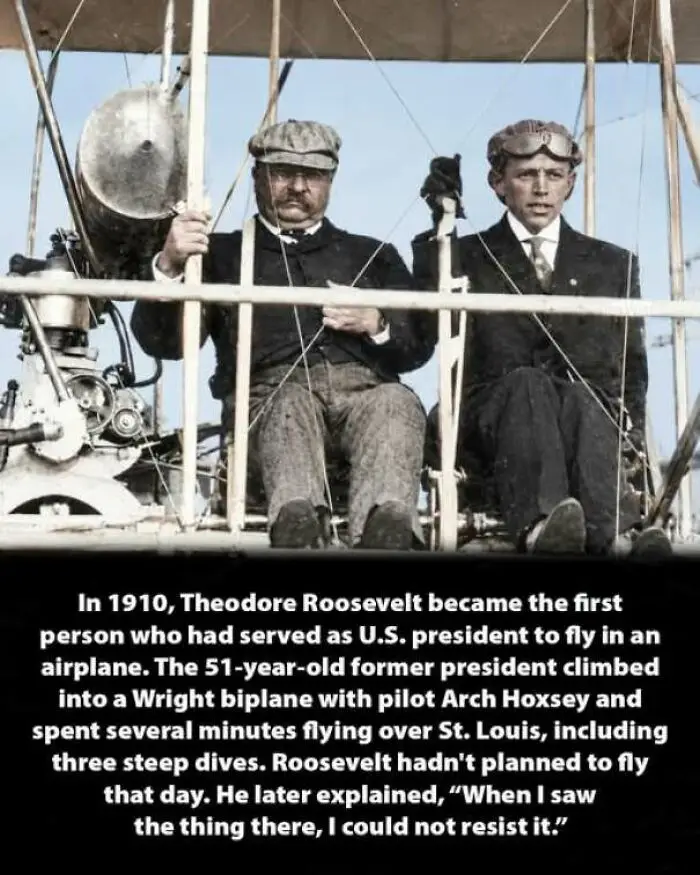
On October 11, 1910, the 51-year-old former president was visiting Kinloch Field near St. Louis, Missouri, while campaigning for the state's Republican Party.
Aviation was still remarkably new.
The Wright brothers had made their famous first powered flight less than seven years earlier.
At the field, pilot Arch Hoxsey invited Roosevelt to climb aboard his Wright biplane.
Roosevelt initially declined.
Then he changed his mind.
With Hoxsey at the controls and Roosevelt sitting beside him, the aircraft took off.
The flight lasted only about four minutes, but Hoxsey didn't simply circle gently above the field.
According to the Smithsonian's National Air and Space Museum, he put the aircraft through three steep dives with the former president aboard.
Roosevelt apparently loved it.
Asked afterward why he had suddenly decided to fly, he explained:
“You know I didn't intend to do it, but when I saw the thing there, I could not resist it.”
The spontaneous decision made Theodore Roosevelt the first person who had served as U.S. president to experience powered airplane flight.
His successor, William Howard Taft, remained firmly on the ground.
It would not be until 1943 that Franklin D. Roosevelt became the first sitting U.S. president to travel by airplane while in office.
Lawmakers soaked the curtains in chloride of lime to fight the smell, which did not work, but as Historic UK explains, the Great Stink finally pushed politicians to act. The fix was a massive sewer network designed by engineer Joseph Bazalgette, and much of it is still doing its job today.
#25
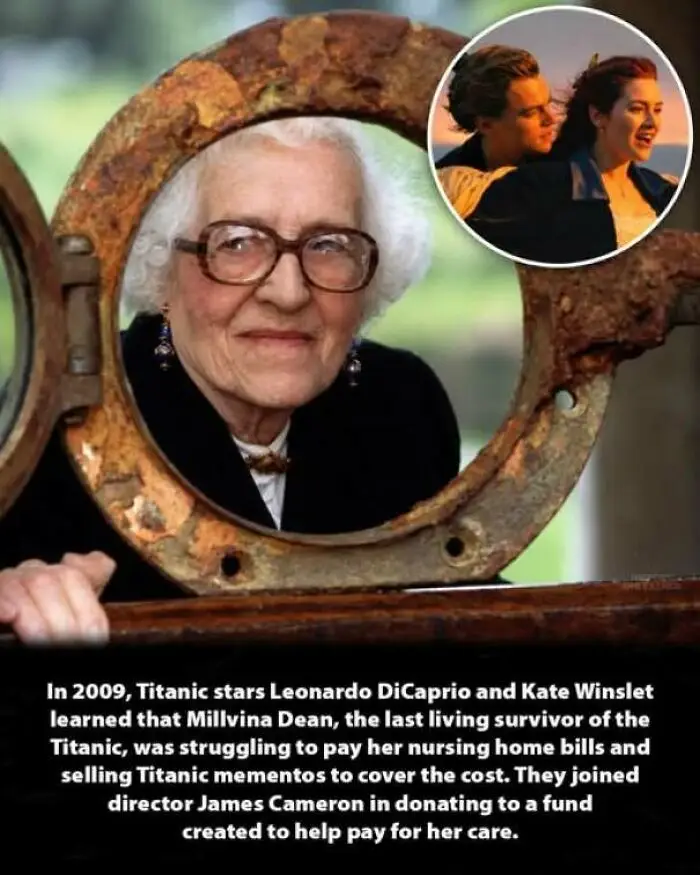
Millvina Dean was just nine weeks old when she boarded the Titanic with her parents and older brother in April 1912.
She was the youngest passenger aboard.
When the ship struck an iceberg, Millvina, her mother and her brother were placed into a lifeboat and survived.
Her father did not.
Millvina was too young to remember the disaster, but she would ultimately become its final living survivor.
Nearly a century later, however, she found herself struggling with the cost of nursing home care.
After breaking her hip, Millvina moved into a private nursing home. By 2008, she began selling possessions connected to the Titanic to help pay her bills.
Among them was a small suitcase that had been filled with donated clothing and given to her family after they survived the disaster.
In 2009, a campaign called the Millvina Fund was established to help cover the cost of her care.
Leonardo DiCaprio and Kate Winslet, whose performances in the 1997 film Titanic had made them international stars, contributed to the fund.
Director James Cameron also donated.
It was an extraordinary connection between the history and the movie it inspired.
The actors who became famous portraying fictional passengers aboard Titanic had helped care for the last surviving person who had actually been there.
Millvina Dean passed away on May 31, 2009.
She was 97 years old.
#26
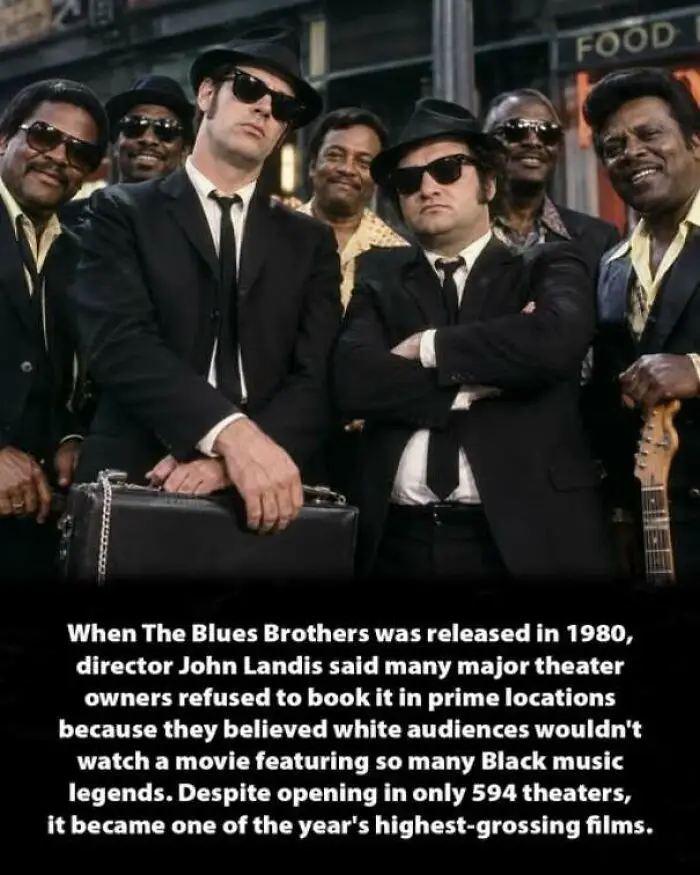
The movie starred John Belushi and Dan Aykroyd, but its cast also featured an extraordinary collection of Black musical legends, including Aretha Franklin, James Brown, Ray Charles, Cab Calloway and John Lee Hooker.
According to director John Landis, that became an unexpected problem when Universal began trying to book the movie into theaters.
Landis recalled that many exhibitors viewed it as a “Black movie” and believed white audiences wouldn't come to see it.
He said many prime theaters consequently refused to book the film.
One major theater owner told Landis that he would show the movie in Compton, but not in the prestigious theaters of Westwood, Los Angeles.
As a result, The Blues Brothers opened in just 594 theaters, far fewer than a major production would normally receive.
Audiences showed up anyway.
The movie earned more than $57 million at the domestic box office and became one of the highest-grossing films released that year.
Decades later, The Blues Brothers remains a comedy and musical classic.
#27
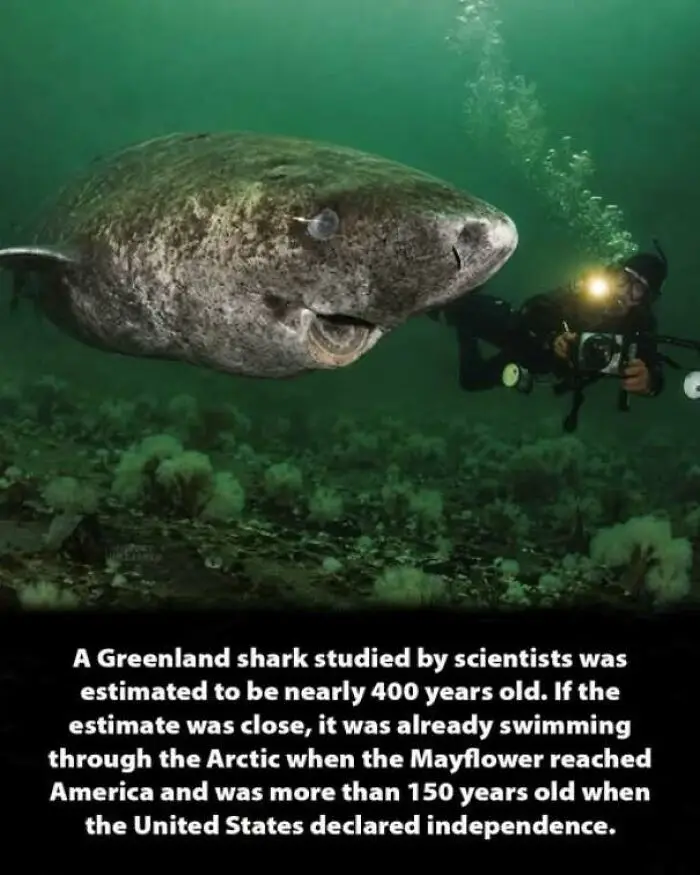
For years, scientists suspected that Greenland sharks lived extraordinarily long lives.
The animals grow incredibly slowly, inhabit the cold depths of the North Atlantic and Arctic oceans, and can reach more than 16 feet in length.
But determining their age presented a problem.
Unlike many fish, Greenland sharks don't have the hard structures scientists normally use to count growth layers.
So researchers tried something different.
In a landmark 2016 study, scientists radiocarbon dated proteins found in the centers of the eye lenses of 28 female Greenland sharks.
The results were astonishing.
The largest shark was estimated to be approximately 392 years old.
There was considerable uncertainty in that number. Scientists calculated that the animal was likely somewhere between 272 and 512 years old.
But even the conservative estimates revealed something remarkable.
Greenland sharks are the longest-lived vertebrates known to science.
If the central estimate for that shark was close, it would have been born around the early 1600s.
It could have already been swimming through the North Atlantic when the Mayflower reached America in 1620.
It would have been more than 150 years old during the American Revolution.
And Greenland sharks themselves don't appear to reach maturity until roughly 150 years of age.
Scientists still don't know exactly how long the oldest members of the species can survive.
But somewhere in the cold, dark waters of the North Atlantic, there may be sharks alive today that have been swimming there for centuries.
Every now and then, an accident turns into science. In 1992, a cargo ship hit a storm in the North Pacific and lost a shipping container full of bath toys, sending 28,800 rubber ducks, turtles, beavers and frogs into the sea. Oceanographer Curtis Ebbesmeyer and a network of beachcombers tracked where the toys washed up, which turned out to be everywhere from Alaska to Scotland, and the Friendly Floatees, as they became known, taught researchers a great deal about how ocean currents move.
#28
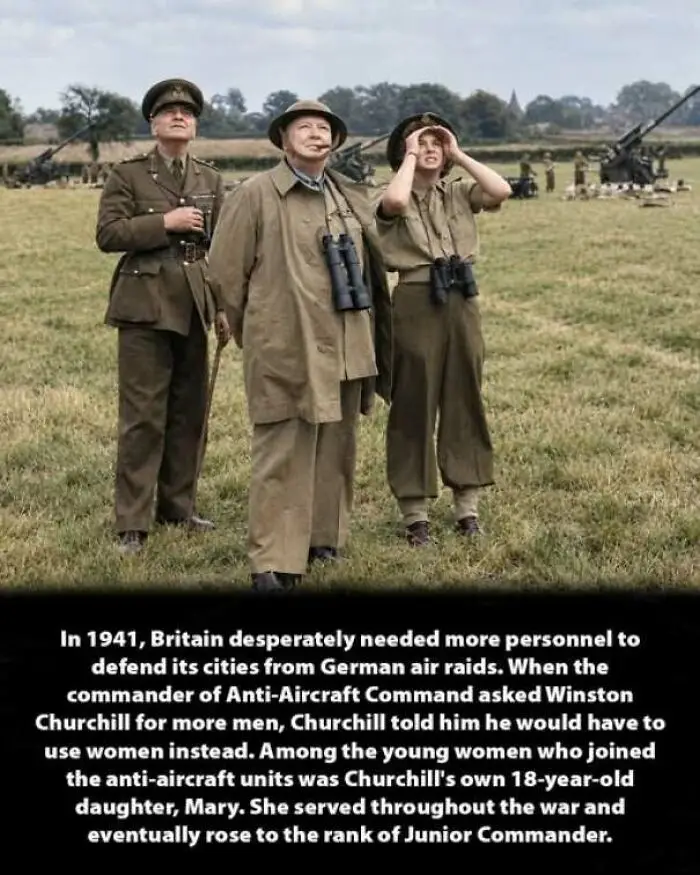
In 1941, Britain was struggling to find enough manpower for its enormous anti-aircraft defenses. General Frederick Pile, head of Anti-Aircraft Command, later recalled asking Churchill for thousands more men. Churchill refused and told him he would have to make greater use of women instead.
That same year, Churchill's youngest daughter, Mary, joined the Auxiliary Territorial Service at age 18. She was assigned to mixed anti-aircraft batteries, where women worked alongside male soldiers operating the sophisticated equipment used to locate enemy aircraft and direct the guns defending Britain.
Mary wasn't given a ceremonial position because she was the prime minister's daughter. She trained and served with anti-aircraft units during the war, including batteries protecting London from German attacks. She eventually rose to the rank of Junior Commander, equivalent to an Army captain.
By the end of the war, the prime minister who had told his generals to use women in Britain's defenses had watched his own daughter spend years serving among them.
#29
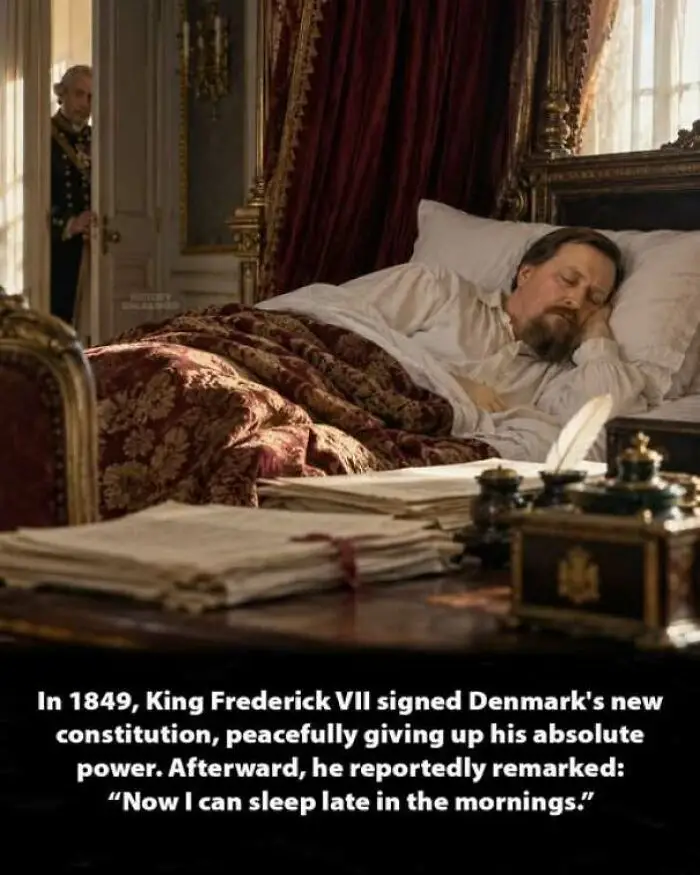
Denmark had been governed as an absolute monarchy for nearly two centuries when Frederick VII inherited the throne in 1848.
Across Europe, demands for political reform were growing, and Denmark was no exception.
Rather than attempt to preserve absolute royal rule, Frederick accepted a constitutional system.
On June 5, 1849, he signed Denmark's new constitution, ending the absolute monarchy and establishing a constitutional system with an elected parliament and protections for individual rights.
According to a story that became associated with the king, Frederick reacted to surrendering his absolute authority with a remarkably casual observation:
“Now I can sleep late in the mornings.”
Different versions of the remark survive, so the exact wording is uncertain.
But Frederick VII's decision marked one of the most important political changes in Danish history.
June 5 is still celebrated in Denmark as Constitution Day.
#30

Los Angeles teacher Harriet Glickman believed that adding a Black child to one of America's most popular comic strips could have a positive influence on children.
She wrote Schulz and asked him to consider the idea.
Schulz was initially hesitant. He worried that introducing a Black character could appear patronizing.
Glickman continued corresponding with him and encouraged Black friends to share their thoughts with Schulz as well.
He eventually decided to move forward.
On July 31, 1968, Franklin made his first appearance in Peanuts, simply meeting Charlie Brown at the beach.
Although much of the response was positive, Schulz also received angry criticism. He later described it as some of the strongest criticism he could remember.
When objections arose over Franklin being shown alongside white children at school, Schulz refused to change how he portrayed him.
He later recalled telling his syndicate:
“Either you print it just the way I draw it or I quit.”
Franklin remained part of the Peanuts world for the rest of Schulz's career.
Our final story belongs to Wojtek, a Syrian brown bear adopted as a cub by Polish soldiers during the Second World War. He reportedly helped carry heavy ammunition boxes, and he was officially enlisted as a private so he could travel with his unit, eventually earning a promotion to corporal. After the war he retired to Edinburgh Zoo, where he lived until 1963, and a bronze statue of him now stands in Princes Street Gardens. History is full of serious moments, but it clearly has a soft spot for the strange ones too.
#31
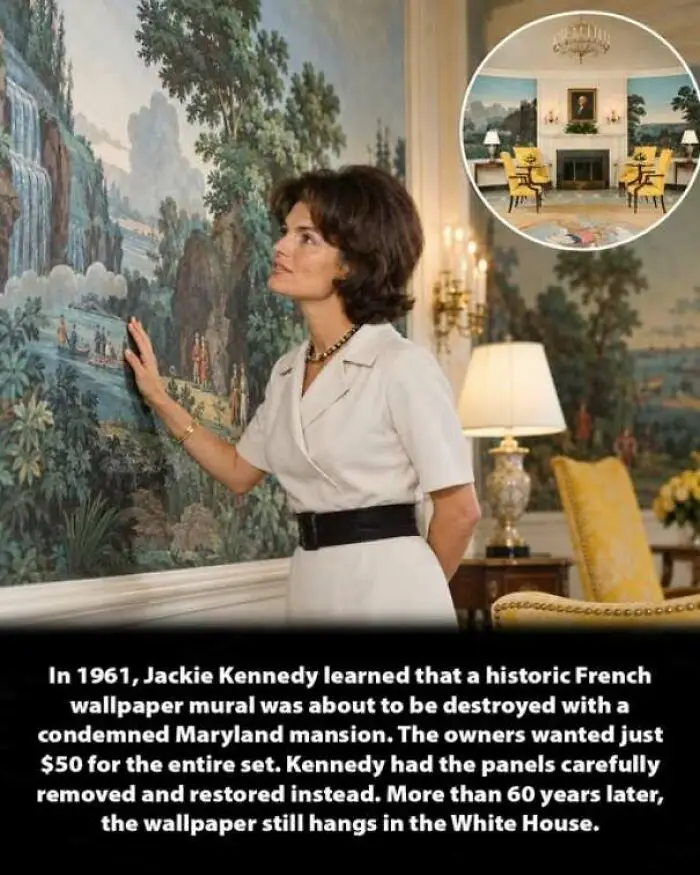
A demolition crew was preparing to tear down a century-old house in Thurmont, Maryland, when Peter Hill learned about the remarkable wallpaper hanging inside. Created in France in 1834, the panoramic mural was titled Views of North America and depicted scenes including Boston Harbor, West Point, Niagara Falls and New York.
Hill bought the entire set for just $50, with one condition: he had to remove it quickly before the house was demolished. Using a putty knife and razor blade, he carefully peeled the historic panels from the walls.
Hill contacted the Smithsonian Institution, where an expert recognized what he had found. At the time, First Lady Jacqueline Kennedy was leading an ambitious effort to restore the historic character of the White House.
In April 1961, Hill brought the wallpaper to the White House and showed it to Kennedy. She admired it, and Hill suggested that it would be perfect for the Diplomatic Reception Room.
The National Society of Interior Designers ultimately purchased the wallpaper from Hill for $12,500 and donated it to the White House. Artists repaired the damaged edges, and a team of specialists spent weeks installing it around the oval room.
More than six decades later, the $50 wallpaper rescued from a house awaiting demolition still covers the walls of the White House Diplomatic Reception Room.
#32
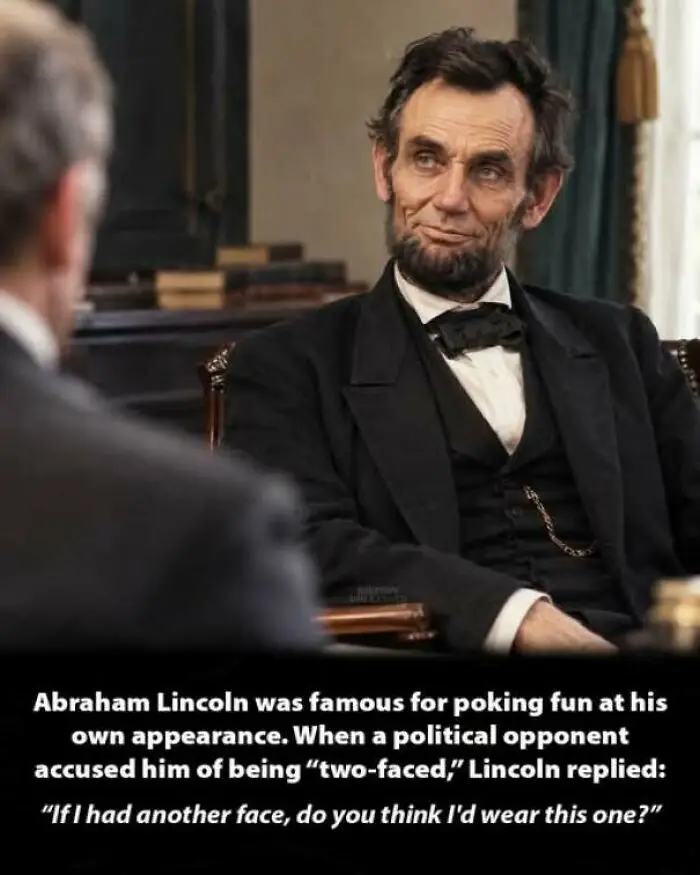
Lincoln's appearance was frequently mocked by political opponents and even commented upon by friends and contemporaries.
Rather than avoiding the subject, Lincoln often used self-deprecating humor to disarm people.
One of the most famous stories involves someone accusing him of being “two-faced.”
Lincoln reportedly responded:
“If I had another face, do you think I'd wear this one?”
The exact exchange is difficult to verify from Lincoln's surviving writings, so historians generally treat it as an attributed anecdote rather than a firmly documented quotation.
But the joke certainly fits a well-documented part of Lincoln's personality.
He frequently joked about his unusual appearance and once referred to his own “poor, lean, lank face.”
For Lincoln, humor wasn't simply entertainment.
It was often a way to handle criticism, connect with people and occasionally turn an insult back on the person delivering it.
#33
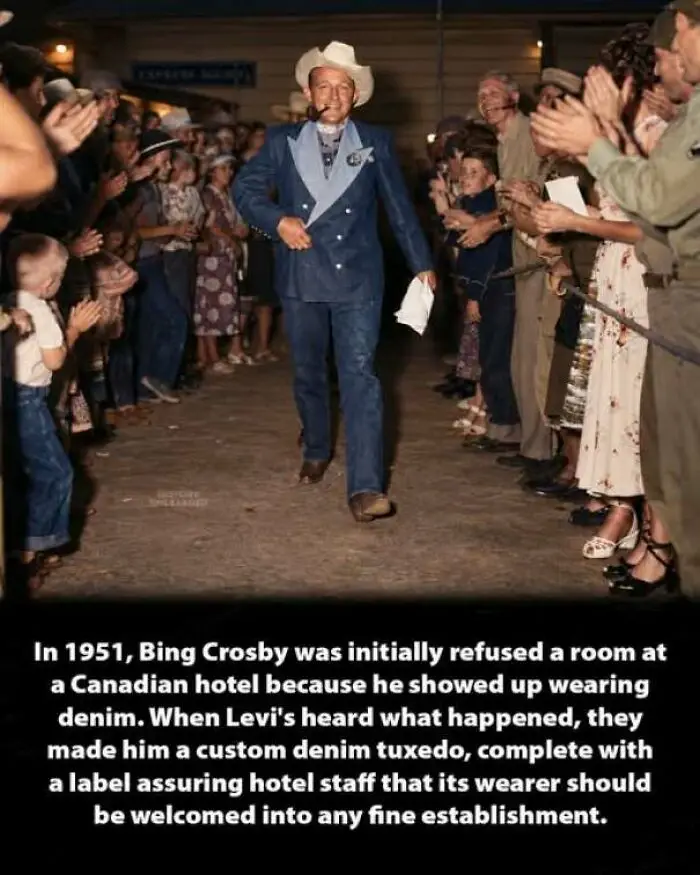
Crosby and a friend had been on a hunting trip in Canada when they arrived at a hotel in Vancouver dressed in denim.
The desk clerk didn't recognize one of America's most famous entertainers and initially refused to give them a room because their clothing wasn't considered appropriate for the hotel.
Another employee eventually recognized Crosby, and the situation was resolved.
But word of the incident reached Levi Strauss & Co.
The company's designers decided to make sure Crosby would never have the same problem again.
They created a custom tuxedo jacket from the same denim used for Levi's jeans, complete with copper rivets and a corsage made from red Levi's tabs.
Inside, they added a large leather label addressed to hotel staff declaring the denim appropriate for even the finest establishments.
Levi's presented the tuxedo to Crosby later that year.
The story became closely associated with the denim-on-denim look eventually known as the “Canadian tuxedo.”
#34

Across Germany, roughly 25,000 castles, palaces and historic manor houses remain, ranging from medieval ruins to enormous royal residences.
One of the most remarkable is Eltz Castle.
Hidden in a wooded valley near Wierschem, the castle has remained in the possession of the same family since the 12th century.
The Eltz family is first documented there in 1157.
Over the following centuries, generations of the family expanded the castle while continuing to live within its walls.
Unlike many European castles, Eltz survived centuries of warfare without being destroyed.
Nearly 900 years after the family's story there began, Eltz Castle remains in their hands.
Today, it is managed by the 34th generation of the Eltz family.
#35

He immediately wanted one.
Although Puyi had been forced to abdicate as a child, he was still allowed to live inside Beijing's Forbidden City, where the remnants of the imperial court continued treating him as emperor.
When his Scottish tutor, Reginald Johnston, explained how telephones worked, Puyi became fascinated. He soon learned that his own father already had one and ordered palace officials to install a telephone for him too.
His advisors were horrified.
They argued that telephones had no place in imperial tradition and worried that allowing ordinary outsiders to speak directly to the emperor would damage his dignity.
Puyi later believed they were worried about something else.
For most of his childhood, he had been extraordinarily isolated from the outside world. Newspapers and his foreign tutor were already giving him access to information palace officials couldn't completely control.
A telephone would give him another direct connection.
Puyi refused to back down.
The telephone was installed.
Then the 15-year-old emperor received a telephone directory.
He began calling people around Beijing for fun.
Puyi later recalled calling a famous Peking opera performer and an acrobat, then hanging up without identifying himself. He also called a restaurant and ordered a meal to be delivered to a fake address.
Eventually he called prominent intellectual Hu Shih and challenged him to guess who was calling.
When Hu couldn't, Puyi revealed his identity.
The scholar was so surprised that he later checked with Puyi's tutor to make sure the Emperor of China really had just randomly called him.
More than a century ago, palace officials worried about what might happen if a teenager gained unrestricted access to the latest communication technology.
He got it and immediately started making prank calls.
#36
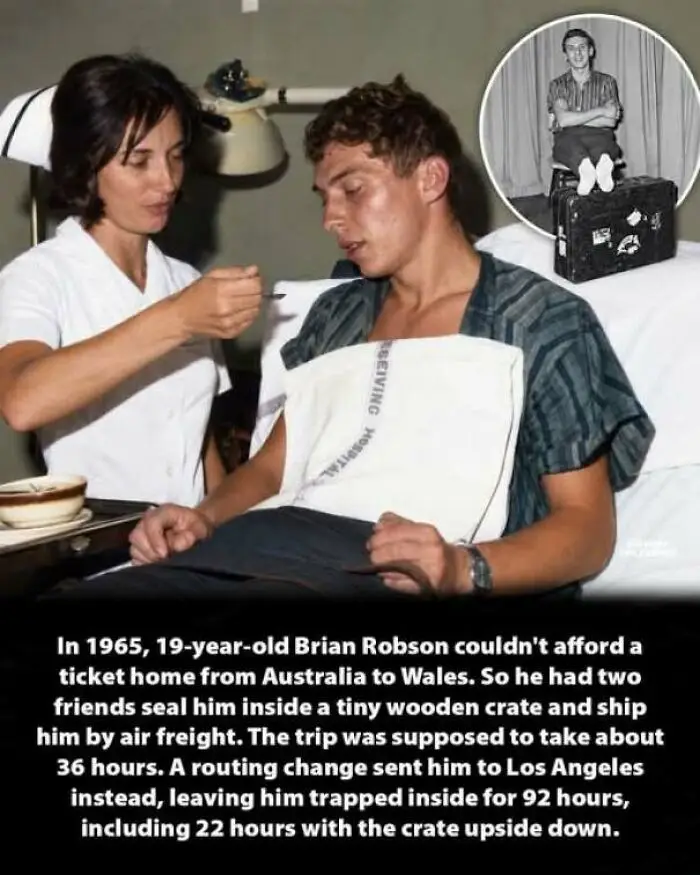
Robson had moved from Wales to Australia, but quickly became homesick.
The problem was that he couldn't afford the airfare back to Britain.
Inspired by an Australian athlete who had previously shipped himself across the world as freight, Robson came up with an extraordinary plan.
With the help of two friends, he climbed inside a wooden crate measuring roughly three feet in each direction.
He packed a small amount of water, a flashlight, pillows, a suitcase and an empty bottle.
Then his friends sealed the crate and sent him as air freight.
Robson expected the journey to London to take about 36 hours.
It didn't.
A connecting flight was full, throwing his carefully planned route into chaos.
At one point, his crate was left upside down for roughly 22 hours.
Instead of traveling directly toward Britain, he was eventually placed aboard a Pan Am flight bound for Los Angeles.
Robson drifted in and out of consciousness during the ordeal.
By the time airport workers in Los Angeles discovered him, he had spent roughly 92 hours inside the box.
He was taken to a hospital, where he spent several days recovering.
Robson eventually made it back to Britain, although thankfully not inside the crate.
Decades later, he described the experience in a book appropriately titled The Crate Escape.
#37
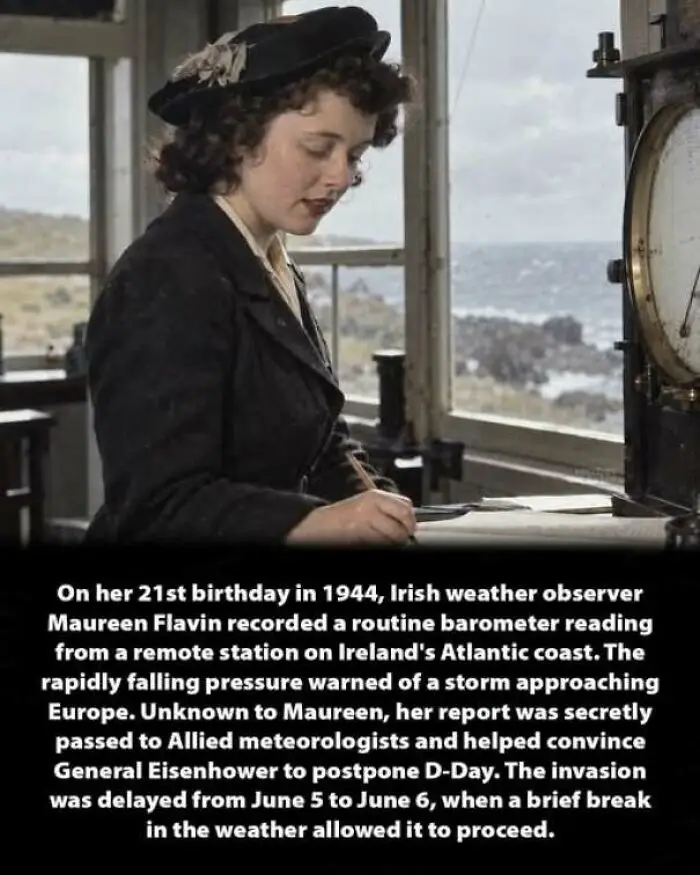
Maureen worked at the remote Blacksod weather station on Ireland's Atlantic coast. Every hour, day and night, weather observations were recorded and sent to Dublin.
That morning, Maureen noticed something concerning. The barometer was falling rapidly, the wind was increasing and the weather was deteriorating.
She reported the readings as usual.
What Maureen didn't know was that her information wasn't stopping in Dublin. Although Ireland remained neutral during World War II, Irish weather observations were secretly being shared with Britain.
And just across the Irish Sea, Allied commanders were preparing for the largest amphibious invasion in history.
D-Day was originally planned for June 5.
Maureen's observations from Blacksod provided crucial evidence that a storm was approaching. Allied meteorologist James Stagg used the incoming weather data to warn General Dwight D. Eisenhower that conditions on June 5 could be disastrous for the thousands of ships, aircraft and landing craft preparing to cross the English Channel.
Eisenhower postponed the invasion.
Then the weather changed again.
Observations from Blacksod showed atmospheric pressure beginning to rise as the front passed, helping forecasters identify a short window of improved conditions.
On June 6, 1944, Eisenhower gave the order.
More than 150,000 Allied troops landed in Normandy.
Maureen continued doing her job without knowing that the routine numbers she had recorded from a tiny weather station on Ireland's western edge had helped influence one of the most consequential military decisions of World War II.
She wouldn't learn the significance of her weather reports until years later.
#38

James Watson had received the 1962 Nobel Prize in Physiology or Medicine alongside Francis Crick and Maurice Wilkins for their work concerning the molecular structure of DNA.
More than 50 years later, Watson decided to auction his gold Nobel medal.
The sale made him the first living Nobel laureate to put his medal up for auction.
At Christie's in New York, bidding climbed to $4.1 million, with the final price reaching $4.757 million after the buyer's premium.
The winning bidder was later revealed to be billionaire Alisher Usmanov.
But Usmanov hadn't bought the medal because he wanted to keep it.
Days after the auction, he announced that he intended to return the medal to Watson, while allowing the scientist to keep the proceeds from its sale.
Usmanov said he believed the medal should remain with the person who had earned it and wanted the money he spent to support scientific research.
Watson got his Nobel medal back.
And the millions from its sale remained available for the causes he wanted to support.
#39
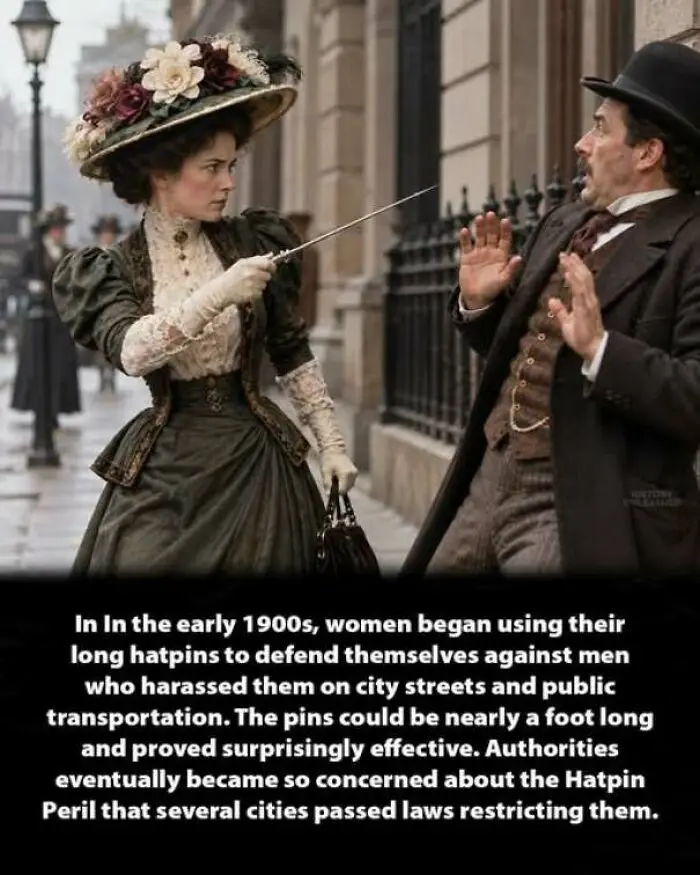
Women's hats had become enormous and elaborate, and keeping them securely attached sometimes required hatpins approaching a foot in length.
They were essentially long, thin pieces of metal ending in a sharp point.
At the same time, growing numbers of women were traveling through American cities independently.
Street harassment was common.
Men who approached, grabbed or otherwise harassed women in public were often called “mashers.”
Women quickly discovered that the enormous pins holding their hats in place could serve another purpose.
Self-defense.
Newspapers began reporting incidents of women pulling out their hatpins when men refused to leave them alone.
In New York in 1903, Leoti Blaker was riding in a crowded stagecoach when a man sitting beside her repeatedly moved closer and eventually put his arm around her.
Blaker pulled out her nearly foot-long hatpin and drove it into his arm.
The man screamed and got off at the next stop.
Other stories followed.
The hatpin became so closely associated with women defending themselves that newspapers began warning of the “Hatpin Peril.”
Soon, authorities began worrying about the pins themselves.
In 1910, Chicago lawmakers debated restricting long hatpins in public.
Women were not amused.
During the debate, women's club representative Nan Davis reportedly told officials:
“If the men of Chicago want to take the hatpins away from us, let them make the streets safe.”
Chicago passed its ordinance anyway.
Similar restrictions appeared in several other cities.
For a brief period in the early 20th century, an ordinary piece of women's fashion had become something else entirely.
A means of self-defense.
#40
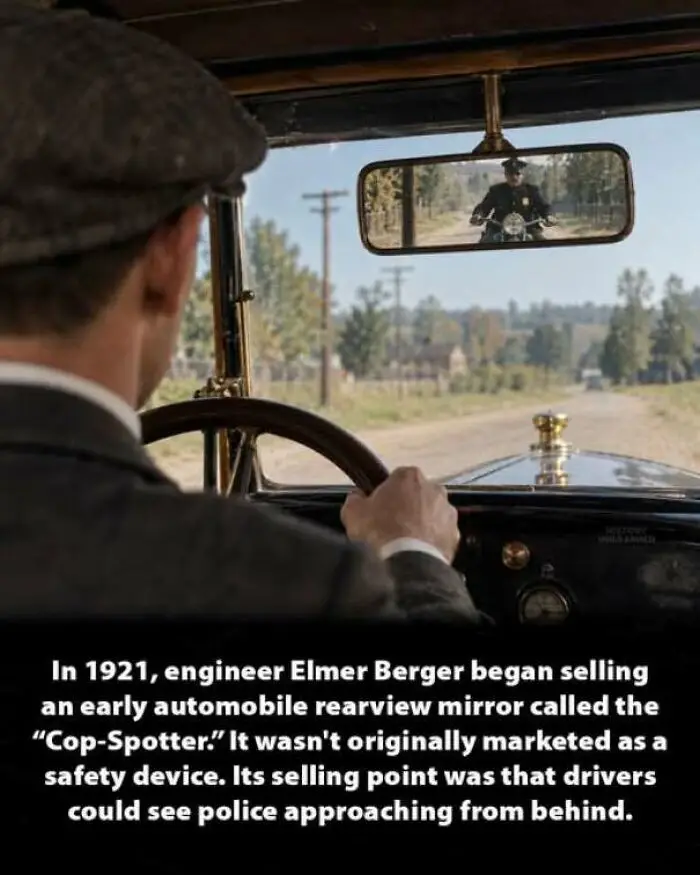
Rearview mirrors weren't entirely new by the 1920s. Drivers and inventors had experimented with them for years, and racer Ray Harroun famously mounted one on his car for the first Indianapolis 500 in 1911.
But in 1921, engineer Elmer Berger began selling an aftermarket automobile mirror with an unforgettable name:
The “Cop-Spotter.”
Rather than emphasizing road safety, the name advertised another advantage of being able to see behind your car: drivers could spot police approaching from the rear.
Berger's adjustable plate-glass mirror measured roughly 3 by 7 inches, attached near the top of the windshield and sold for around $3.50.
Rearview mirrors would eventually become an essential piece of automotive safety equipment.
But one of the products that helped popularize them had a much more mischievous appeal.
