





With today’s 24/7 news cycle, it’s hard to keep up with everything that’s going on. And it’s even more challenging to learn about the past while history is unfolding right in front of our eyes. But if you’re interested in learning about historical items that you probably didn’t hear about in school, you’ve come to the right place, pandas.
We visited the Historical Marvels Facebook group and compiled a list of their most fascinating posts below. From incredible archeological finds to fun facts about the most interesting locations on Earth, we hope you enjoy scrolling through these posts. And be sure to upvote the ones that teach you something new!
#41
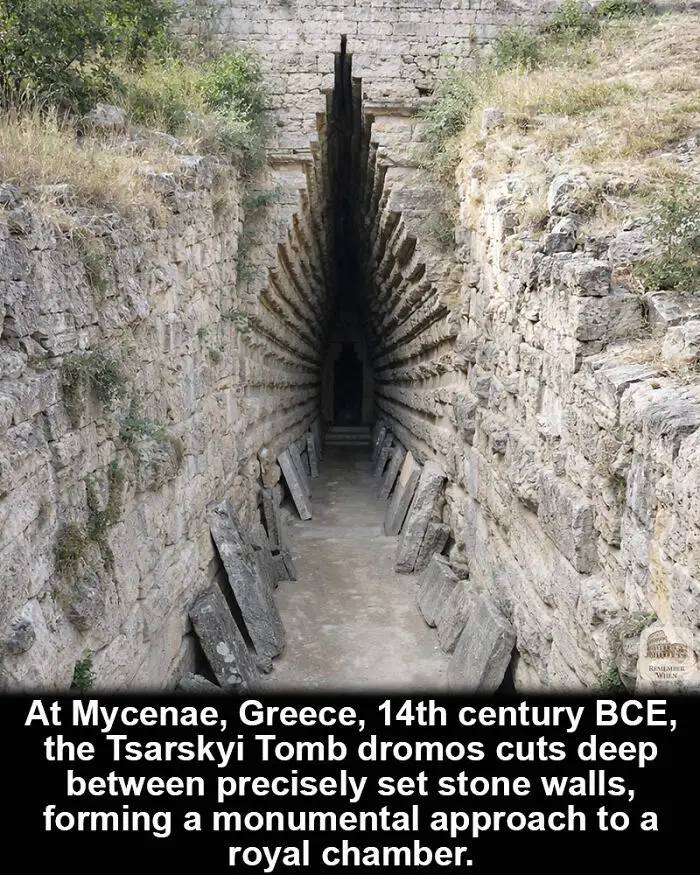
The tomb begins with a long descent. At Mycenae, Greece, in the 14th century BCE, the Tsarskyi Tomb was approached through a deep dromos cut into the hillside. The passage is lined with large, carefully set stones forming steep, symmetrical walls.
The corridor narrows toward the burial chamber entrance. Stone blocks stabilize the cut bedrock, creating a monumental approach rather than a simple path. The design directs movement and frames the tomb façade. The precision suggests planned excavation and coordinated masonry work.
The engineering lies in the approach itself. The dromos structures the experience before entry. The exact methods used to cut and align the passage remain uncertain.
Report
19points
#42
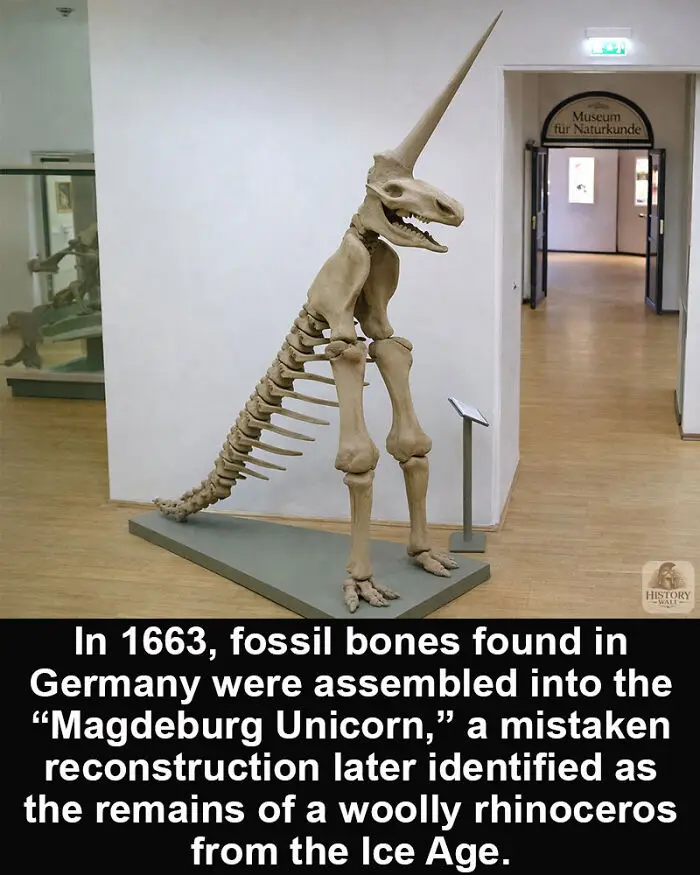
The discovery was genuine. The conclusion was the worst fossil reconstructions ever made. In 1663, fossilized bones were unearthed near Magdeburg, in present-day Germany.
At the time, paleontology did not yet exist as a scientific discipline. Scholars relied heavily on biblical descriptions and ancient writings when interpreting unusual remains.
The bones were assembled into what became known as the “Magdeburg Unicorn.” A prominent horn was placed on the skull, and the skeleton was presented as physical proof of a legendary creature long described in texts. The reconstruction reflected the worldview of the 17th century more than the anatomy of the animal itself.
As scientific methods advanced, researchers revisited the remains. Comparative anatomy eventually demonstrated that the fossils belonged to a woolly rhinoceros, an Ice Age species that once roamed Europe.
The skeleton still stands as a reminder.
Facts can be discovered.
Understanding takes longer
Report
19points
#43
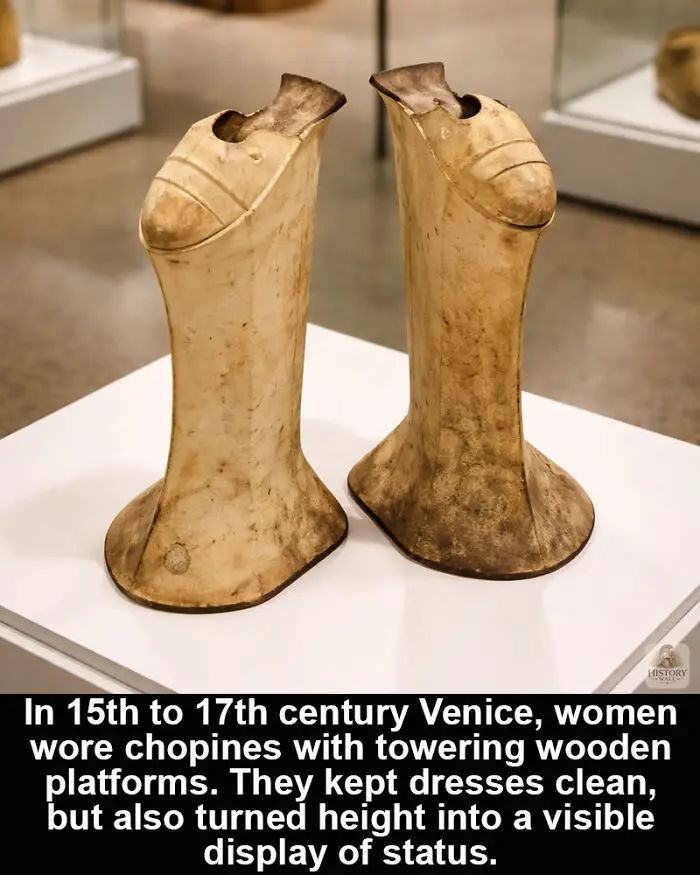
They were not just shoes. They changed how people moved through the city. In Venice between the 15th and 17th centuries, women wore chopines, high platform footwear designed to lift them above the mud and debris of the streets.
Made with tall wooden bases, these shoes protected expensive fabrics from damage, but their height quickly became a visible sign of wealth. The higher the platform, the more status it implied. Both noblewomen and courtesans adopted them, turning function into display.
Walking in them required balance, sometimes assistance, and careful movement through narrow streets.
The objects remain.
How practical they were beyond symbolism is still open to question.
Report
18points
#44
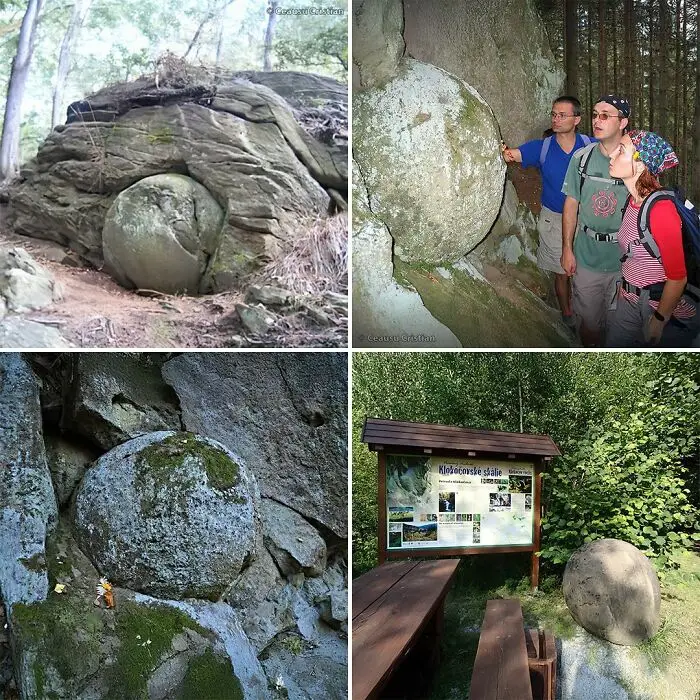
In the heart of Megoňky, Slovakia, lies a geological wonder that captivates the imagination: mesmerizingly round rock spheres. These extraordinary natural formations vary in size, measuring anywhere from a modest 12 inches to an awe-inspiring 6.5 feet in diameter, with legendary giants that once reached a staggering 10 feet. Though the quarry walls may now only whisper of the colossal 16-foot spheres that once graced the land, their intriguing indentations tell a tale of a time long past. Theories abound regarding their origin, with suggestions ranging from the bizarre – such as dinosaur eggs or alien artifacts – to the scientifically grounded. Most experts lean towards the notion that these remarkable orbs are a natural phenomenon, dating back over 40 million years. Regardless of their origin, the spheres of Megoňky remain a source of wonder and curiosity, enchanting every visitor drawn to this unique destination.
Report
17points
#45
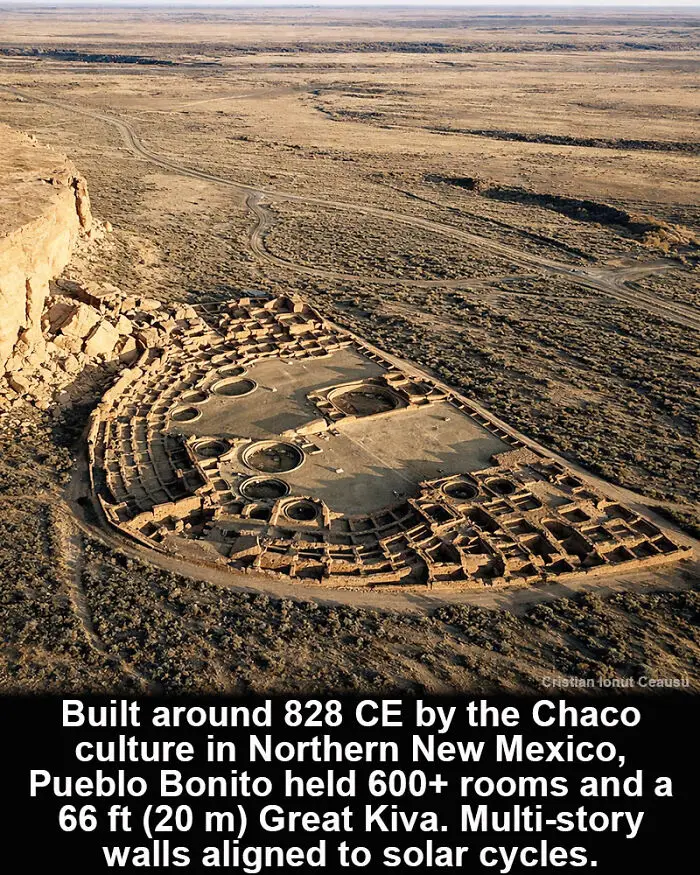
A desert complex built at scale. Around 828 CE, Pueblo Bonito rose in Chaco Canyon, northern New Mexico, eventually expanding to more than 600 rooms arranged in a massive D-shaped plan.
The structure reached up to four stories. Its centerpiece, the Great Kiva, measured over 66 feet, 20 meters, in diameter. These circular chambers were roofed with large wooden beams, most now gone after centuries of decay.
The timber did not come from nearby. Many beams were transported from mountain forests roughly 50 miles, 80 km, away. With no pack animals or wheeled vehicles, each log had to be carried by coordinated human effort.
Stone masonry walls used shaped sandstone blocks with a core-and-veneer technique. Some alignments appear linked to solar and lunar cycles. The scale, engineering, and logistics suggest Pueblo Bonito functioned as a regional ceremonial and administrative center rather than a simple settlement.
Report
17points
#46
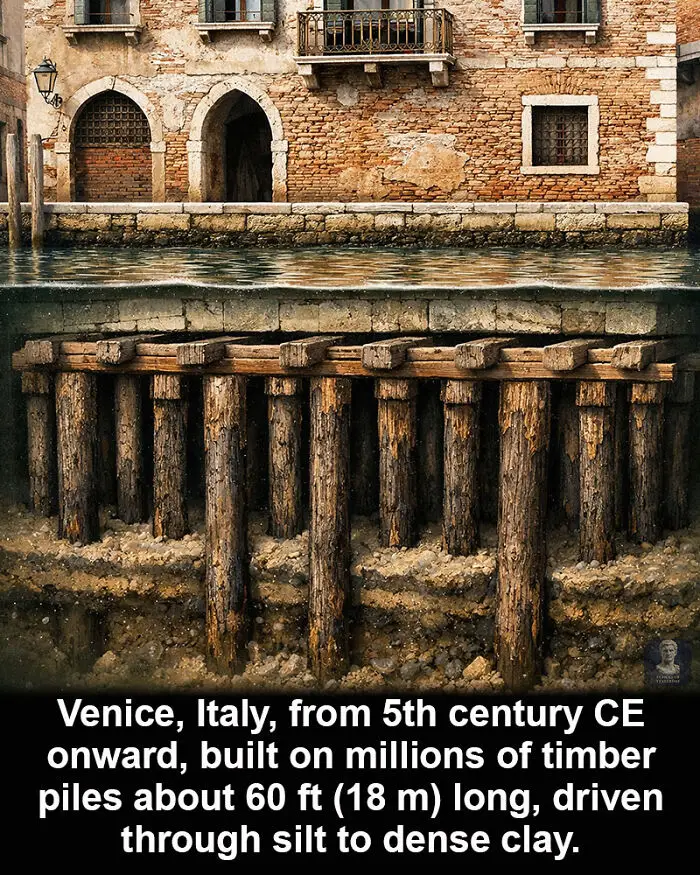
The city appears to float, yet its foundations are buried wood. Venice, Italy, founded from the 5th century CE, was built on millions of timber piles driven deep into lagoon sediments.
Workers hammered long wooden trunks, often reaching about 60 ft (18 m), through soft silt until they reached compact clay. The piles were placed tightly together, creating a dense platform. Horizontal beams and stone slabs were then laid above, forming the base for buildings.
Submerged in oxygen-poor water, the wood resisted decay. Over time, minerals from the lagoon hardened the timber, turning the piles into stable supports capable of carrying heavy masonry.
Palaces, churches, and towers rose on this hidden grid. The water dominates the surface, but beneath Venice lies a submerged forest that still supports the city centuries later.
Report
17points
#47

For nearly 1,000 years, a wooden canoe rested silently beneath the waters of Lake Waccamaw in North Carolina. Its rediscovery began unexpectedly in 2021 when three teenagers swimming in the lake stepped onto what they first believed was a fallen log.
As they dug through the mud, the object continued to extend far beyond what they expected. What emerged was the outline of a long, ancient canoe.
The family alerted the North Carolina Office of State Archaeology, which confirmed the discovery as a rare Native American watercraft. The canoe measures about 28 feet (8.5 meters) long and is estimated to be around 1,000 years old.
Archaeologists worked alongside members of the Waccamaw Siouan Tribe, whose ancestors lived in the region for centuries. Tribal Chief Michael Jacobs described the discovery as an opportunity to better understand the Indigenous history of southeastern North Carolina.
For nearly two years the canoe remained stabilized near the discoverers’ pier while experts prepared a careful recovery operation. Eventually, a team of divers and archaeologists lifted the vessel from the lake.
The canoe will now undergo preservation and scientific analysis in a laboratory.
What researchers hope to learn is not only how the vessel was made, but how people once traveled, traded, and lived along the waters of Lake Waccamaw centuries ago.
Report
17points
#48
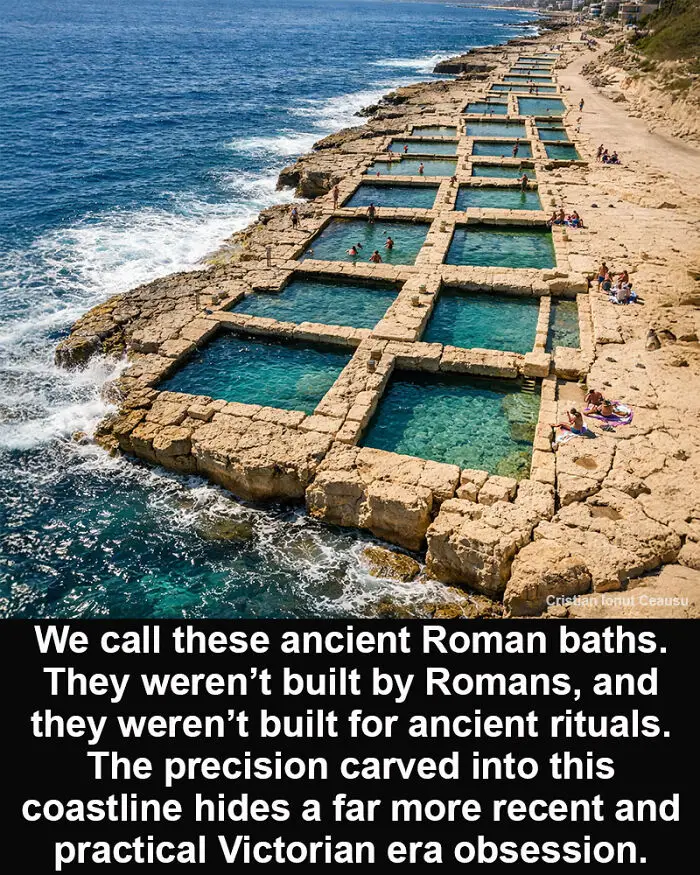
The coastline of Sliema, Malta, is defined by geometric basins that seem to bleed directly from the rock. Tourists and locals alike gaze at the Fond Għadir pools, often attributing their creation to the engineering prowess of the Roman Empire.
The narrative is alluring, but it falls apart under scrutiny. These structures are not remnants of an ancient past, but deliberate creations of the Victorian era.
In the 19th century, these pools served as secluded sanctuaries. They were carved to enforce privacy and modesty, allowing Victorian society to immerse themselves in the sea while remaining protected from the public eye.
The precision required to chisel these canals into the limestone is remarkable, suggesting a mastery of the coastal geology that modern construction often overlooks.
Historians have confirmed the timeline, yet the deeper story remains elusive. We see the shapes they left behind, but we only catch glimpses of the social pressures that demanded such labor-intensive architecture.
The techniques are clear, but the full extent of their original function feels incomplete. As we walk along the shoreline today, the rock reveals a history that is much closer to our own time than we dare to imagine.
Report
15points
#49
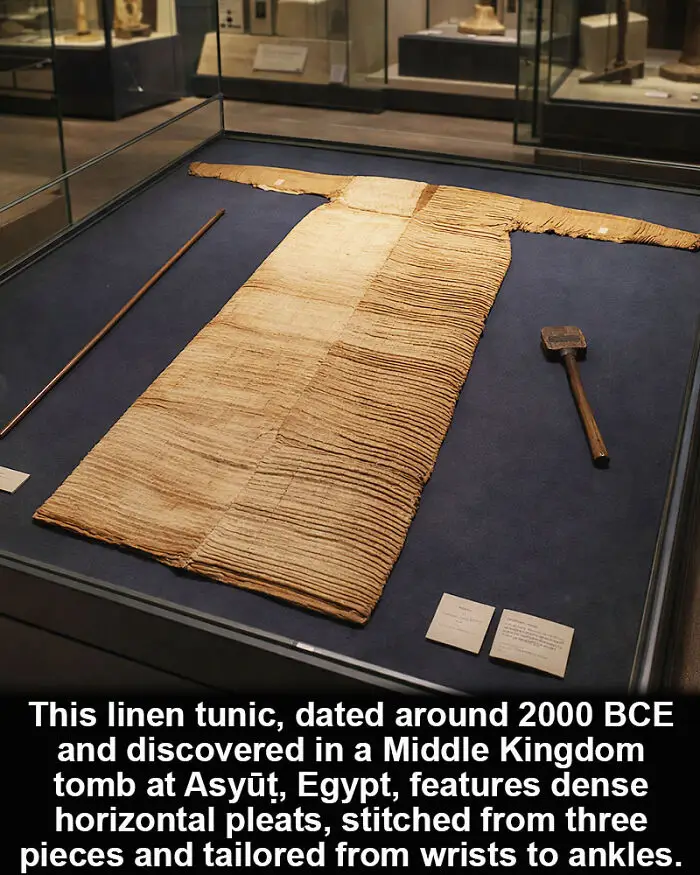
This linen tunic from Asyūṭ in Middle Kingdom Egypt, dated around 2000 BCE, preserves a surprisingly tailored form. The garment was stitched from three pieces of linen and finished with dense horizontal pleats. The cut follows the body from wrists to ankles, suggesting a close fit rather than loose draping.
Such shaping required measured folding and deliberate construction. The design challenges the assumption that early Egyptian clothing relied mainly on simple wrapped fabric.
The sealed tomb preserved the linen for nearly 4,000 years. The tunic’s construction is clear, yet how widespread this fitted style was in everyday use remains debated.
Report
15points
#50
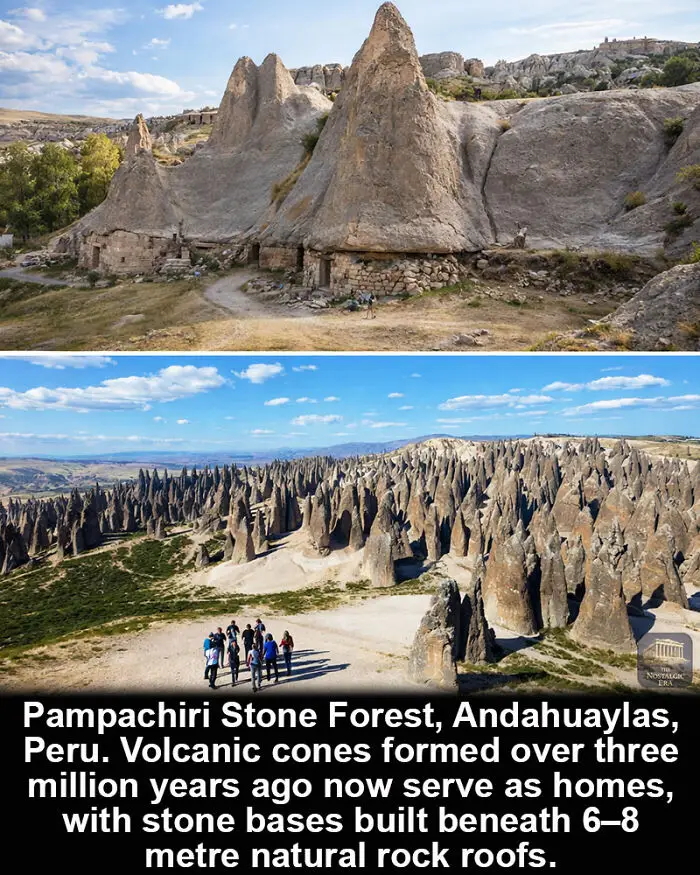
The houses existed before the builders arrived. In Pampachiri, Andahuaylas Province in southern Peru, cone-shaped rock formations formed by volcanic activity and erosion over three million years ago now function as dwellings. The cones rise roughly 20 to 26 feet, creating natural roofs.
Residents constructed stone walls at the base of the formations, enclosing interior spaces beneath the rock. About thirty of these cone structures are currently used as homes by families in the area. The surrounding landscape contains many similar formations.
The geology provided the structure, while people completed the architecture. Natural shapes became practical shelters adapted to local living conditions.
Report
15points
#51
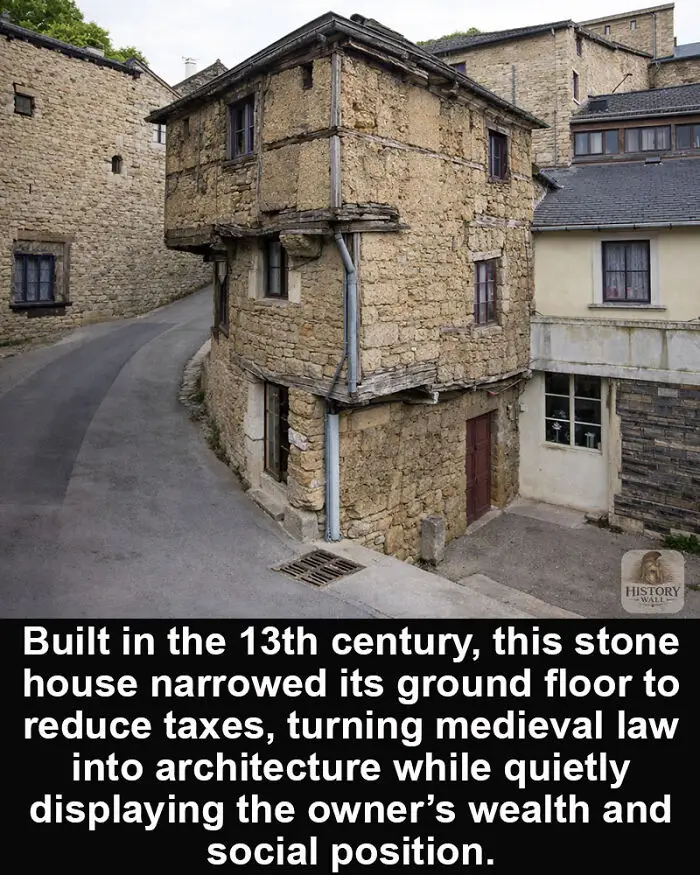
At first glance, the proportions feel wrong. That was intentional. Dating back nearly 700 years, this house in Aveyron is considered the oldest surviving private residence in France. Built in the 13th century, it belonged to a woman named Jeanne, whose choices are still visible in stone.
The ground floor is deliberately smaller than the upper levels, a design used to reduce land footprint taxes calculated at street level. Above it, the structure expands outward, reclaiming space without paying for it.
The materials tell a second story. Thick stone walls, carefully cut blocks, and durable construction signal wealth. This was not a poor dwelling bending rules out of desperation, but a calculated response by someone who understood both law and status.
Medieval towns were dense, regulated, and unforgiving. Architecture became negotiation. Every beam and corner carried intent.
Today, restoration efforts aim to preserve this balance between ingenuity and survival. The house remains standing not because it was simple, but because it was clever. It shows how medieval life shaped buildings as much as stone shaped cities.
Report
15points
#52
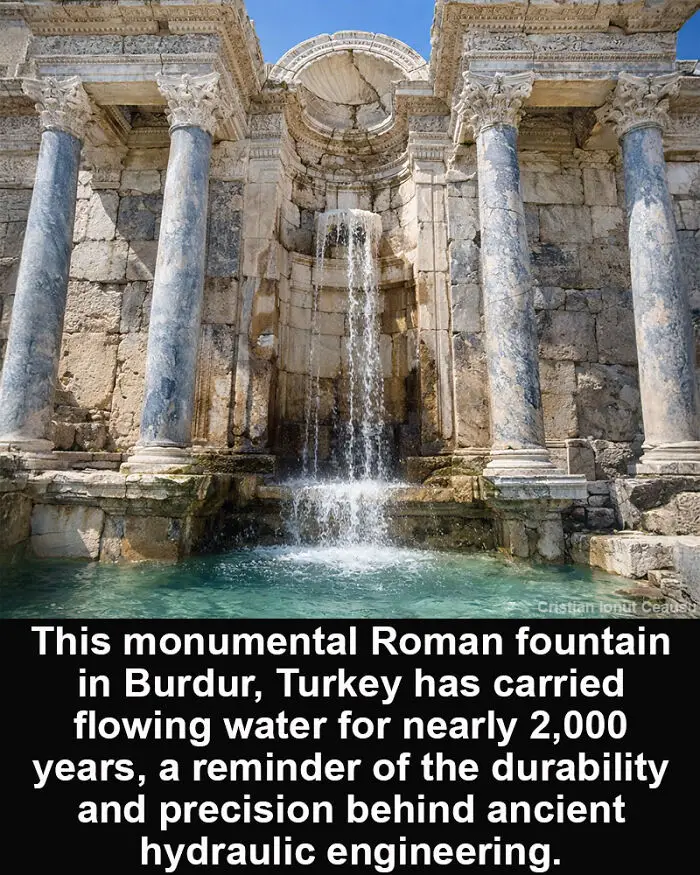
Some ancient structures survive as silent ruins. Others continue to function exactly as they were designed. In the region of Burdur in southwestern Turkey, a monumental Roman fountain associated with the ancient city of Sagalassos has been known to flow with water nearly two thousand years after its construction.
The fountain once stood as part of a prosperous Roman urban center in the mountains of Anatolia. During the Roman Imperial period, Sagalassos developed into an important regional city, complete with baths, theaters, temples, and elaborate public fountains. These fountains were not only decorative monuments but also vital elements of urban water distribution.
Roman engineers constructed extensive aqueduct systems that transported water from distant springs to cities. Once the water reached urban centers, carefully designed channels and pressure systems distributed it to fountains, baths, and households. The fountain visible today reflects both the artistic and technical sophistication of that system.
Carved marble columns, sculpted architectural elements, and flowing water combine to create a structure that still demonstrates the durability of Roman hydraulic design.
The fountain continues to flow.
Exactly how the ancient system maintained its reliability across centuries remains a striking reminder of Roman engineering skill.
Report
15points
#53
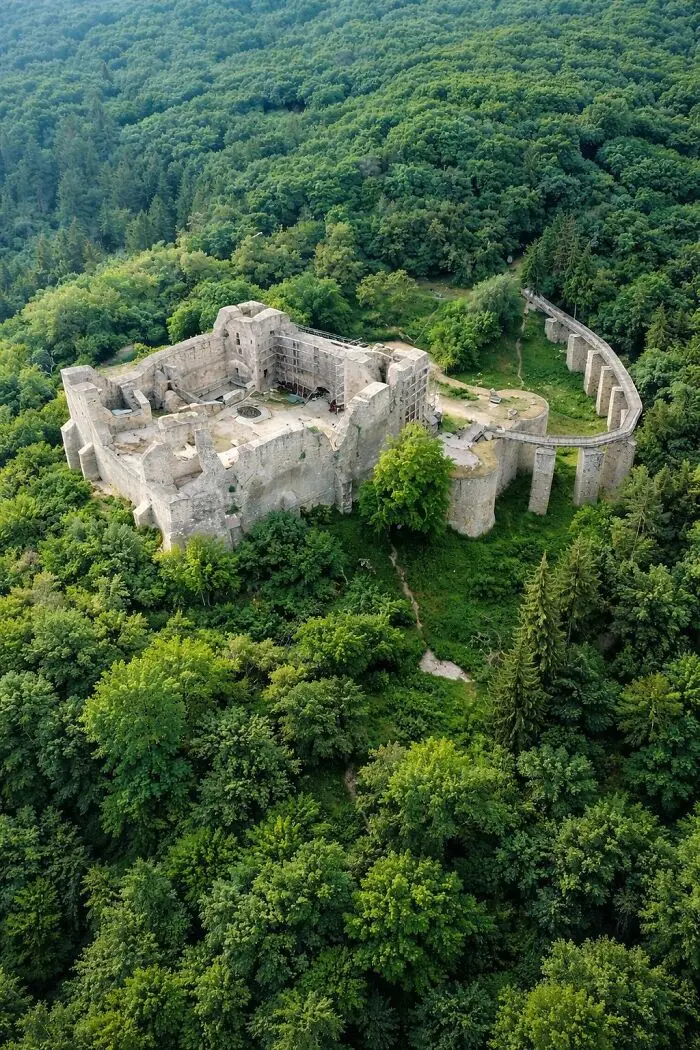
Neamț Fortress – the stronghold that resisted kings Built at the end of the 14th century, Neamț Fortress was one of the most powerful strongholds of medieval Moldavia. In 1395, the King of Hungary, Sigismund of Luxembourg, launched a military campaign against Moldavia, seeking to expand his influence beyond the Carpathians. His armies advanced close to the fortress, a key strategic point. However, according to Moldavian chronicles, the fortress did not fall, and its resistance became a symbol of independence and defense. Today, Neamț Fortress remains one of the most impressive testimonies of Romania’s medieval past.
Report
14points
#54
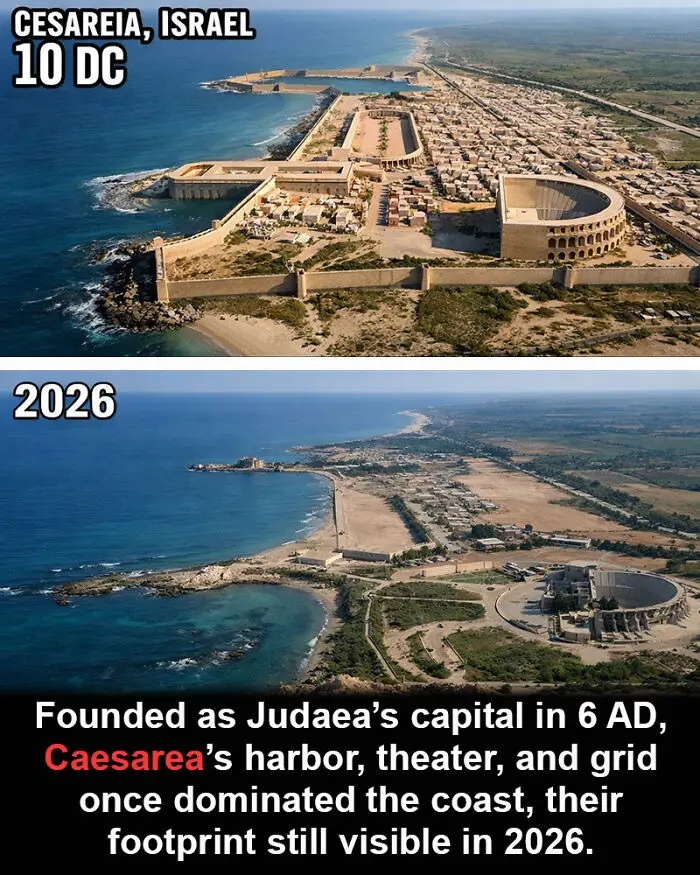
The shoreline changed, the footprint persisted. In 6 AD, Caesarea on Israel’s Mediterranean coast became the capital of Roman Judaea, built with an engineered harbor, theater, and organized urban grid. The city later appears in the Acts of the Apostles, linked to Paul, Peter, and Philip, placing it within early Christian history.
Ancient descriptions and archaeology indicate a coastal metropolis with maritime infrastructure extending into the sea. Over time, sections of the harbor submerged while the theater and structural foundations remained visible on land. The modern aerial view still follows the outline of the Roman plan.
The layout is documented, but daily life within the city is reconstructed from fragments. Buildings survive in parts, and the harbor exists partly underwater. The location remained continuous. The full scale of the original city remains partly inferred.
Report
14points
#55
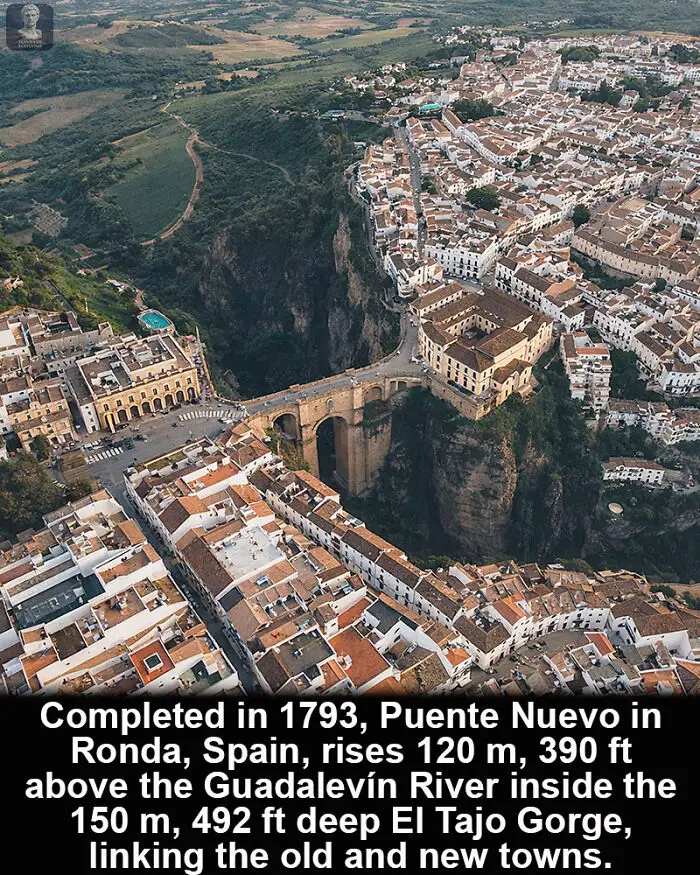
It appears carved from the canyon wall rather than placed across it. Completed in 1793, Puente Nuevo in Ronda, Spain, spans the El Tajo Gorge high above the Guadalevín River.
The bridge rises about 120 m, 390 ft above the water, while the canyon reaches roughly 150 m, 492 ft in depth. Massive masonry piers anchor directly into the rock, visually merging the structure with the cliff faces.
The crossing links Ronda’s old and new towns. From many angles, the bridge seems embedded into the canyon rather than standing independently.
Historical records confirm the construction, yet the full logistics of building within such steep terrain remain partly inferred. The structure is visible and measured, but the complete construction process inside the gorge remains open to interpretation.
Report
14points
#56
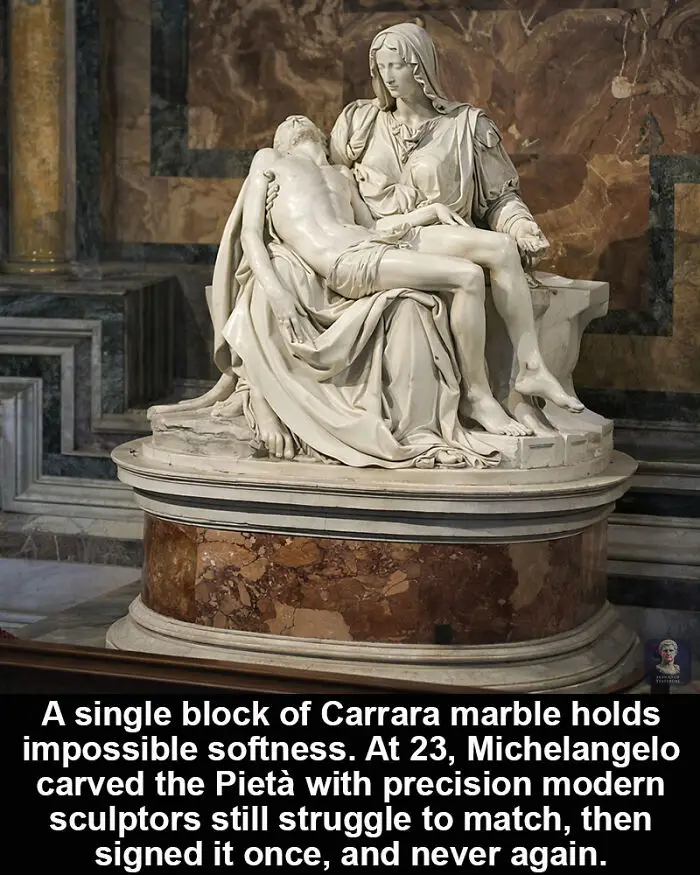
At just 23, Michelangelo Buonarroti produced a sculpture in Rome that resists simple explanation. The Pietà, completed between 1498 and 1500 for a French cardinal, was carved from a single block of Carrara marble with a finish so refined it suggests flesh more than stone.
The Virgin Mary does not match expectations. She appears younger than her son, her expression controlled, almost detached. Her robes expand far beyond natural proportion, quietly solving the problem of supporting Christ’s body without visible strain. These decisions feel deliberate, not symbolic decoration.
This is also the only work Michelangelo ever signed, the name cut across Mary’s sash. After this, he never repeated the act.
The craftsmanship is documented. The intent behind these choices remains open.
Report
14points
#57
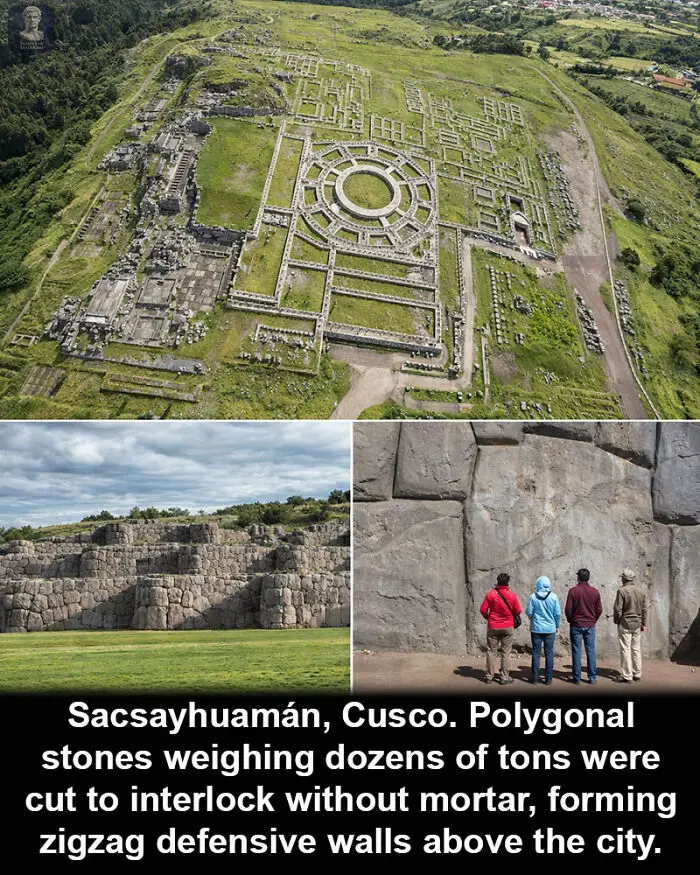
The walls rely on shape, not cement. Sacsayhuamán, on the northern edge of Cusco, consists of enormous polygonal stones fitted together without mortar. Many blocks weigh dozens of tons, with some exceeding 100 tons. Their irregular faces interlock tightly, creating stable joints.
The layout forms three large zigzag terraces. These angled walls provided defensive advantages while also acting as retaining structures for the hillside. The largest stones appear in the lower courses, supporting smaller ones above.
The precision comes from shaping each block to match its neighbors. The result is a continuous wall where weight and geometry hold the structure together.
Report
14points
#58
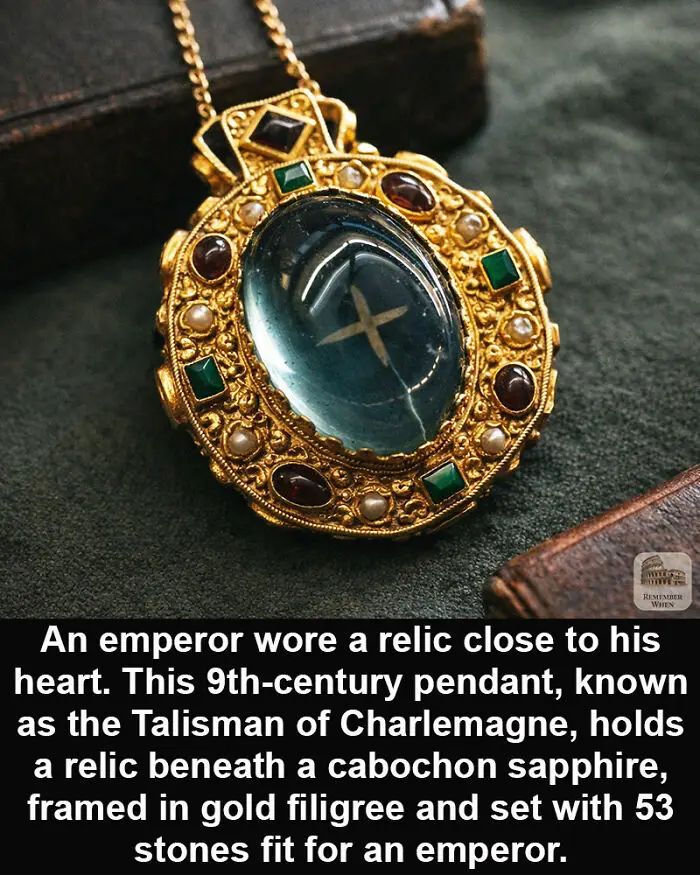
Power was worn, not displayed from afar. The Talisman of Charlemagne, crafted in the 9th century, reflects the fusion of faith and authority in the Carolingian world. Its circular gold frame is richly decorated with filigree and inset with 53 precious stones.
At its center lies a large cabochon-cut sapphire, beneath which a relic was placed, transforming the pendant into a portable shrine.
Tradition connects the piece to Caliph Harun al-Rashid, suggesting it may have been a diplomatic gift to Charlemagne, ruler of a vast Frankish empire. Whether every detail of that story can be confirmed, the talisman’s status is clear. It was buried with Charlemagne in 814, signaling its personal importance.
In the year 1000, Emperor Otto III reportedly reopened the tomb and recovered the pendant. Over centuries, it traveled through royal and ecclesiastical hands before finding a home in the Tau Palace at the Cathedral of Reims.
Its craftsmanship is documented. Its full symbolic meaning remains layered in history
Report
14points
#59
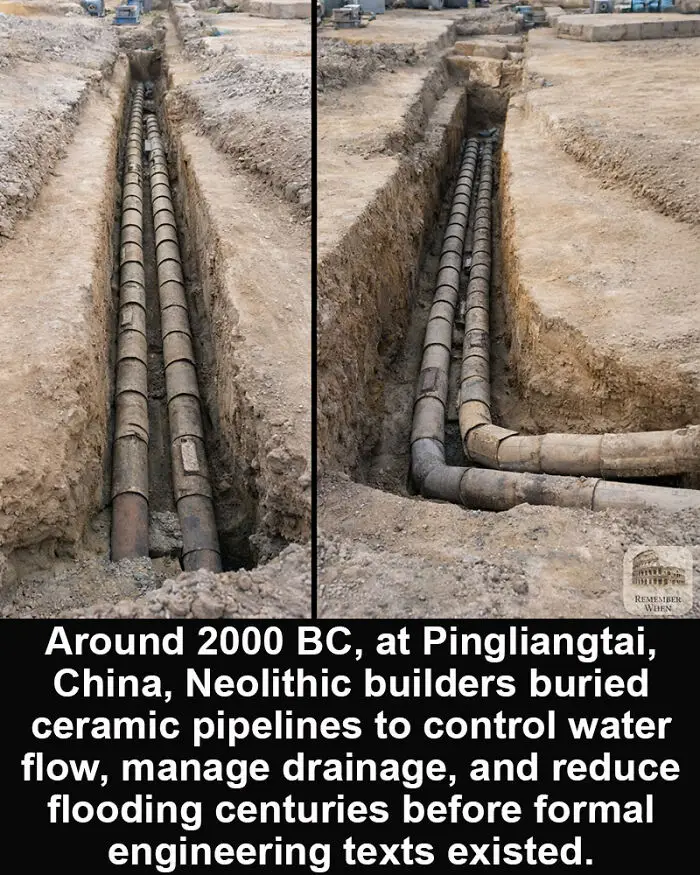
These pipes were never meant to be seen. At the Pingliangtai site in China’s Central Plains, archaeologists uncovered a network of ceramic water pipes dating to around 2000 BC. Buried beneath the settlement, the system redirected water away from living areas, reducing flood risk in a landscape prone to seasonal rainfall.
The pipes were carefully fitted, aligned, and standardized. This was not improvisation. It reflects advance planning, coordinated labor, and a shared understanding of water behavior. The settlement above depended on what was hidden below.
Pingliangtai belonged to a late Neolithic culture transitioning toward early urban life. There were no written plans, no metal tools, and no formal engineering tradition as later societies would define it. Yet the infrastructure functioned with clarity and intent.
Archaeologists can describe how the pipes worked. They cannot fully explain how such planning emerged so early, or how knowledge was transmitted across generations. The system suggests a level of organization that complicates simple ideas of primitive villages.
Long before cities were defined by walls or monuments, some were defined by what they buried underground.
Report
14points
#60
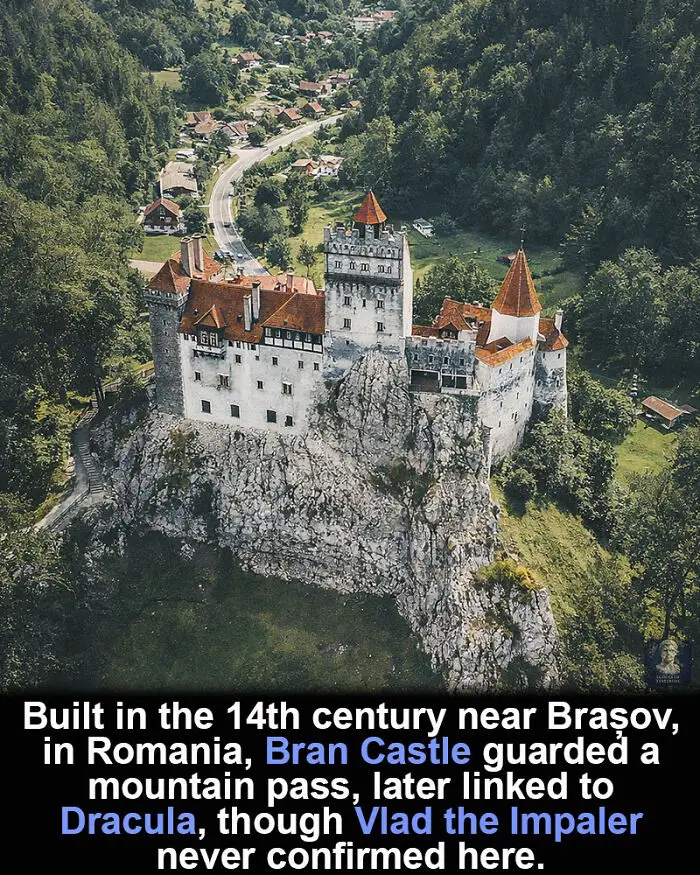
The castle fits the legend, the history does not. Built in the 14th century near Bran and Brașov in Transylvania, Bran Castle guarded a crucial mountain pass linking regions across the Carpathians. Its dramatic towers and narrow interiors later aligned with imagery popularized by Bram Stoker’s Dracula.
Despite the association, no historical proof confirms Vlad the Impaler lived at Bran. As ruler of Wallachia, he moved between fortified sites for strategic reasons, with Poenari Castle frequently cited as a principal residence. The Dracula link developed from atmosphere and geography rather than documented occupation.
Today, Bran Castle stands as a major tourist destination shaped by both architecture and myth. The structure is authentic. The Dracula connection remains symbolic rather than historical.
Report
13points
