

Bored Panda
79 Interesting “Historical Marvels” That Have Survived Through Time To Amaze Us Today
History,CuriositiesAPR 2, 2026

79 Interesting “Historical Marvels” That Have Survived Through Time To Amaze Us Today

44
12
With today’s 24/7 news cycle, it’s hard to keep up with everything that’s going on. And it’s even more challenging to learn about the past while history is unfolding right in front of our eyes. But if you’re interested in learning about historical items that you probably didn’t hear about in school, you’ve come to the right place, pandas.
We visited the Historical Marvels Facebook group and compiled a list of their most fascinating posts below. From incredible archeological finds to fun facts about the most interesting locations on Earth, we hope you enjoy scrolling through these posts. And be sure to upvote the ones that teach you something new!

#21

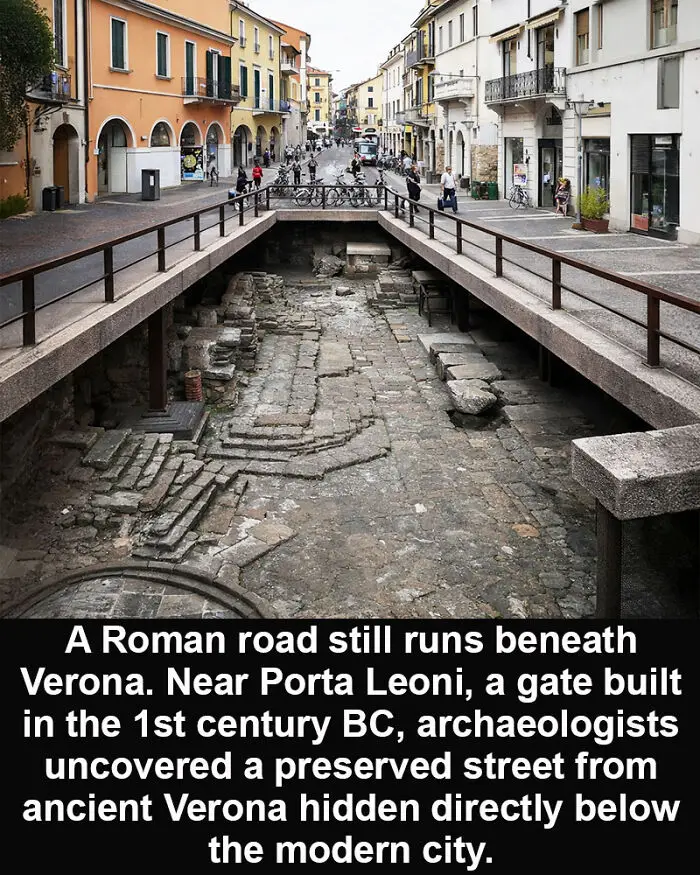
Ancient Roman road ruins beneath modern Verona showcase historical marvels preserved from the 1st century BC near Porta Leoni.
A Roman street still lies beneath everyday life. In the historic center of Verona, Italy, near the remains of Porta Leoni, archaeologists revealed part of the ancient Roman city preserved directly below the modern street level.
The contrast between the two worlds is striking: pedestrians move above while a two-thousand-year-old roadway rests quietly beneath them. Porta Leoni itself dates to the 1st century BC and once served as one of the principal entrances to Roman Verona during the late Roman Republic.
Excavations in the area exposed the original stone pavement of a Roman street leading into the gate. The surface still bears the uneven wear of ancient traffic, where carts and pedestrians once entered the city through its fortified gateway.
Large stone blocks, drainage channels, and fragments of surrounding structures reveal how carefully the Romans organized their urban space.
Over centuries, Verona continued to grow. Medieval construction, Renaissance rebuilding, and modern development gradually raised the street level above the Roman remains. Instead of disappearing, the older city simply became a lower layer beneath the newer one.
Today visitors can stand above the excavation and look directly down onto the ancient road.
The ruins clearly show where Roman Verona stood. How many more layers of the city still lie hidden below remains an open question.
22points

Something else that makes archaeology special is that it uses multiple fields of knowledge all at once, Chirikure notes. Once something is discovered, it needs to be interpreted, and sometimes translated. This might require input from several different experts to help get the full picture of what’s been found. But that doesn't mean that these findings are only interesting to scientists. Archeological sites are some of the most popular tourist destinations in the world, such as Stonehenge, Machu Picchu, and Pompeii. So clearly, people are fascinated by archaeology!    

#22
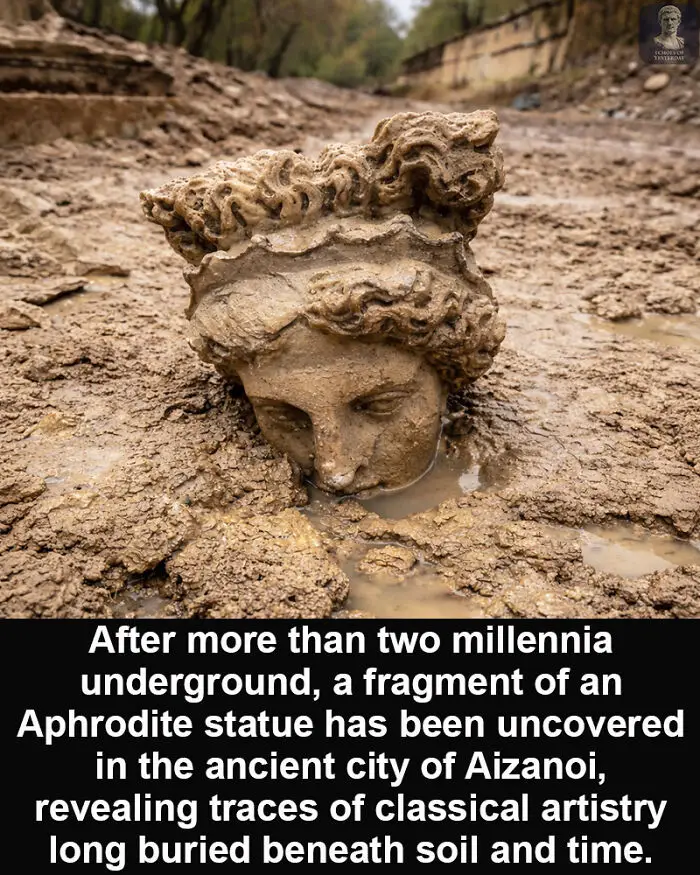
Fragment of an ancient Aphrodite statue uncovered in Aizanoi, a historical marvel showcasing classical artistry surviving through time.
In 2023, excavations in Aizanoi brought a classical presence back into view. The ancient city, located in modern western Turkey and known for its Roman-era Temple of Zeus, has long revealed architectural remains and inscriptions.
This time, archaeologists uncovered a fragment identified as part of a statue of Aphrodite, buried for more than two thousand years.
The sculpture surfaced from layers of compacted soil shaped by centuries of natural processes. Though incomplete, the fragment preserves the refined features typical of classical artistry, indicating it once formed part of a larger composition displayed in a civic or sacred space.
Only a portion has been recovered.
Whether additional fragments remain nearby is still unknown, and ongoing excavations may clarify the statue’s original setting and scale.
22points

#23

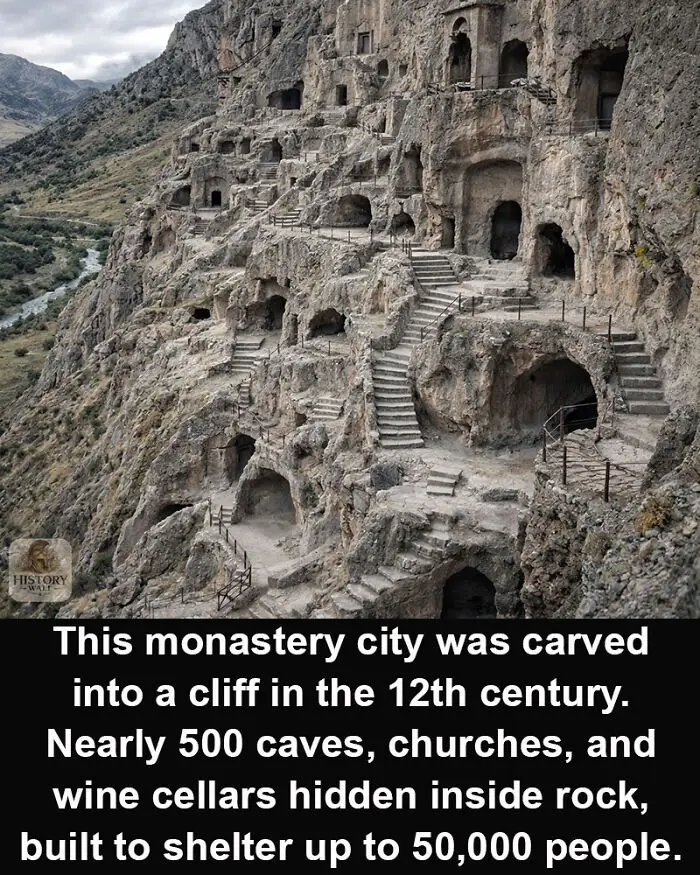
Monastery city carved into cliff with caves and churches, a historical marvel surviving from the 12th century.
Vardzia, a 12th-century cave monastery complex in southern Georgia, was carved into the Erusheti Mountain on the left bank of the Mtkvari River. Behind the stone façade lie around 500 caves, linked by tunnels and stairways, forming dwellings, churches, storage chambers, and wine cellars. One surviving church still preserves fragments of medieval frescoes painted directly onto rock walls.
At its zenith, the site could shelter up to 50,000 people. The scale alone challenges assumptions about medieval construction in the Caucasus. Historians understand the political context and royal patronage behind its creation, yet the logistical coordination required to hollow out an entire mountainside remains difficult to fully reconstruct.
The structure is documented. The intention behind its precise layout and defensive integration is still debated.
22points

#24

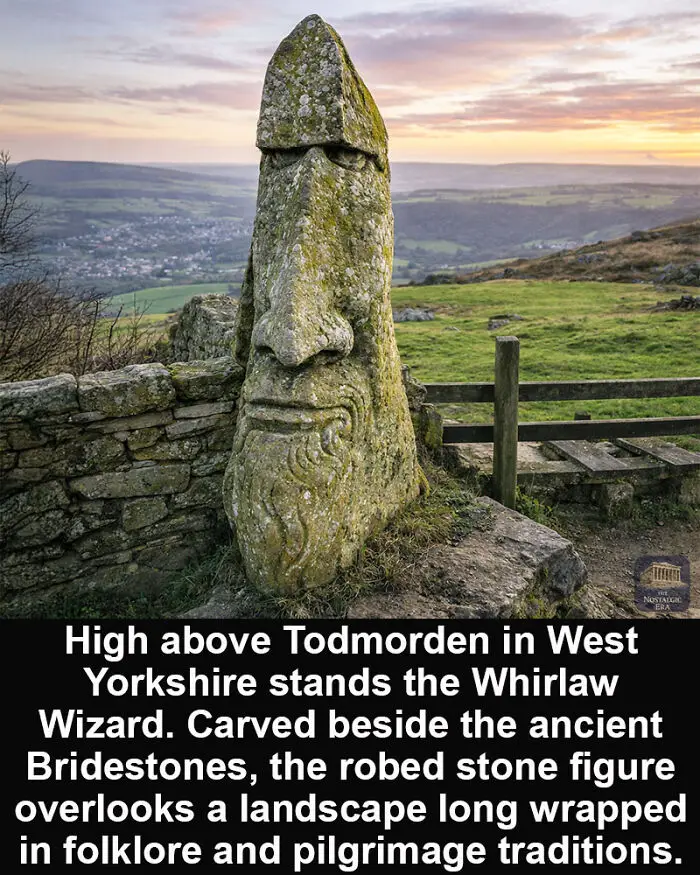
Stone carving known as the Whirlaw Wizard in West Yorkshire, a historical marvel surviving through time and folklore traditions.
A stone face watches the valley. High on the hills near Todmorden in West Yorkshire stands a striking sculpture known as the Whirlaw Wizard. Carved directly into the rock, the robed figure appears to stare quietly across the surrounding countryside.

The sculpture sits close to a group of unusual rock formations known as the Bridestones. These weathered stones have drawn attention for centuries and are surrounded by local tradition. Some stories refer to them as the Todmorden Giants, while others call them the Plague Stones, linking them to old regional legends and historical folklore.

The Whirlaw Wizard itself resembles a hooded figure with a long beard, often interpreted as a wizard or shaman watching over the landscape. Its exact meaning remains open to interpretation, adding to the atmosphere of the site.

Over time, the Bridestones and the nearby sculpture have become a recognizable symbol of the Todmorden area. Walkers, photographers, and visitors often climb the hillside to see the figure and the ancient stones overlooking the valley below.

The rocks themselves are shaped by natural forces.

But the stories surrounding them continue to grow
22points

Are you feeling inspired to learn more about history after scrolling through this list, pandas? Keep upvoting the photos that teach you something new, and let us know in the comments below if you have any more fun facts you’d like to share. Then, if you’re looking for another article from Bored Panda featuring fascinating archaeological finds, look no further than right here!

#25
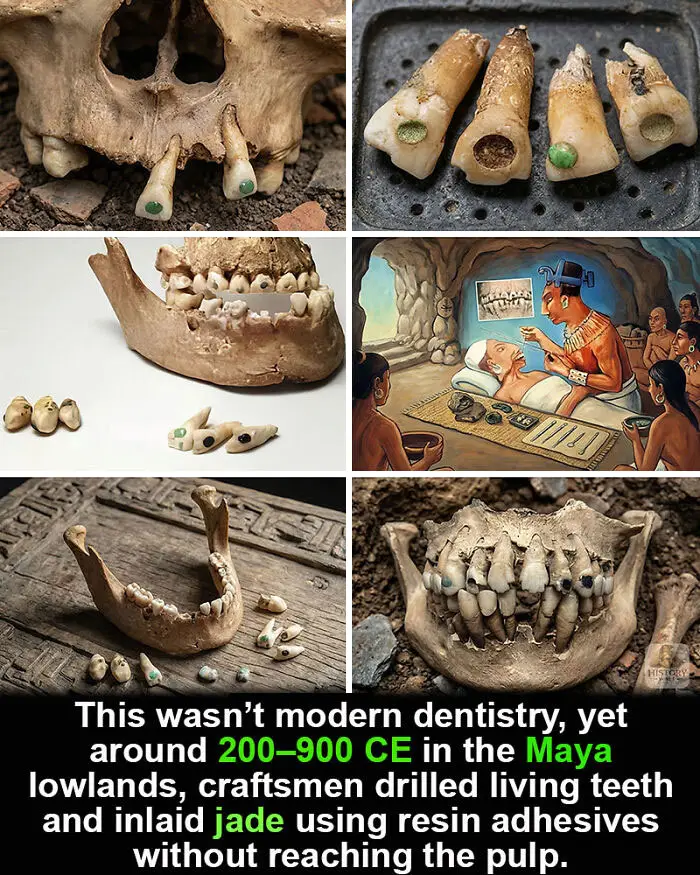
Ancient Maya dental craftsmanship showing historical marvels of jade inlaid living teeth drilled between 200–900 CE.
The teeth were alive, the drilling was deliberate. Between roughly 200 and 900 CE in the Maya lowlands, individuals modified their teeth by inserting jade and other stones into carefully carved cavities. The holes were chipped or drilled directly into enamel, then filled with decorative inlays.
Adhesives appear to include plant resins mixed with mineral powders, holding the stones in place. Many examples avoid penetrating the pulp, suggesting knowledge of tooth structure. The result combined cosmetic display with controlled technical execution.
Archaeological finds show variations in style, placement, and materials across Maya regions. The technique is documented. Whether driven primarily by status, ritual identity, or aesthetics remains debated, leaving the intention open
21points

#26

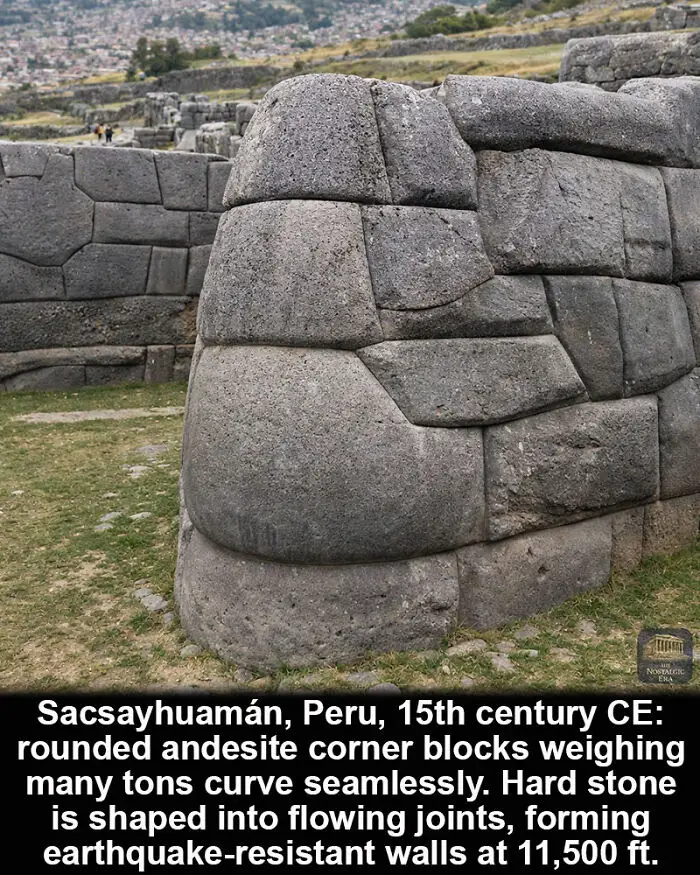
Rounded andesite corner blocks at Sacsayhuamán form earthquake-resistant historical marvel walls in Peru.
The corner is not angular, it is sculpted. At Sacsayhuamán near Cusco, Peru, 15th century CE, a massive rounded andesite block forms the edge of the wall, curving smoothly into neighboring stones without mortar.
Unlike straight masonry, the corner is shaped as a continuous surface. The hard andesite appears softened into flowing contours, with joints wrapping around adjacent blocks. Some stones in the complex weigh many tons and were positioned at about 11,500 ft (3,500 m) above sea level.
This rounded geometry reduces stress concentration and allows slight movement during earthquakes. The walls have endured repeated seismic activity while maintaining tight joints.
Researchers suggest shaping with hammerstones, abrasion, and repeated fitting. Yet the smooth curved transitions in extremely hard stone remain difficult to reproduce. The structure is measurable, but the exact technique behind the rounded corner remains unresolved.
21points

#27

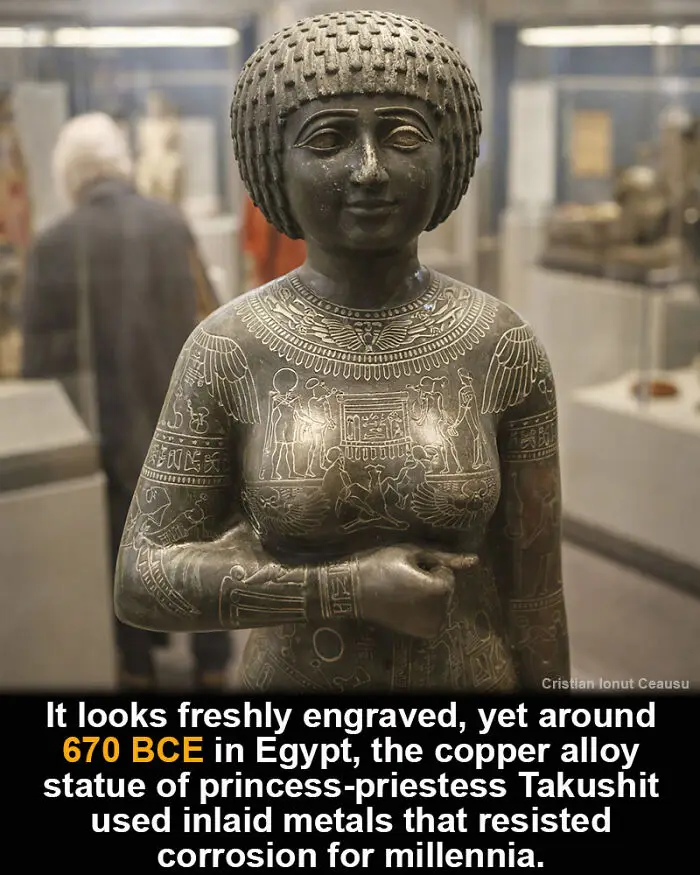
Copper alloy statue of princess-priestess Takushit from ancient Egypt, a historical marvel that survived through time and resisted corrosion.
The surface looks recent, the statue is ancient. Around 670 BCE in Egypt, the copper alloy figure of princess-priestess Takushit was decorated with intricate inlaid metals forming hieroglyphic scenes across the body. The inscriptions remain sharply visible despite millennia.
The contrasting metals and controlled engraving suggest careful alloy preparation and finishing techniques. Corrosion appears limited, preserving both text and imagery. The result combines sculpture, inscription, and metallurgy in a single object.
Now held in the British Museum, the statue demonstrates sophisticated metalworking in the Late Period. The craftsmanship is evident. The precise workshop methods behind its long-term preservation remain unresolved.
21points

#28

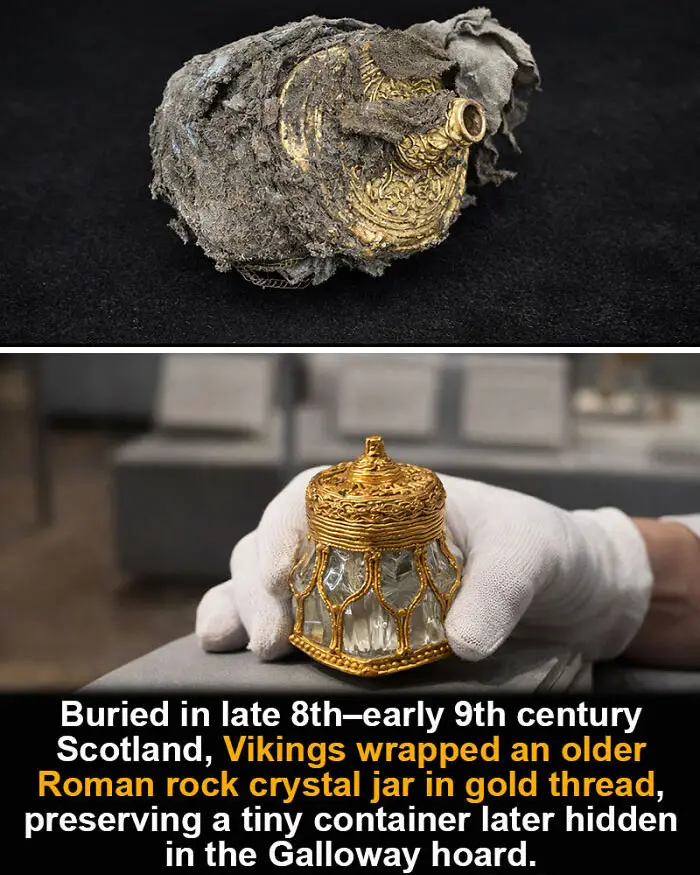
Viking-wrapped Roman rock crystal jar in gold thread, a historical marvel preserved from the 8th to 9th century Scotland.
The object is Roman, the wrapping is Viking. In the late 8th to early 9th century, western Scotland, the Galloway hoard preserved a small rock crystal jar originally made in the Roman world and later encased in gold thread. The container measures about 5 cm, 2 inches high, and was placed in a silk-lined leather pouch before burial.
The elaborate wrapping suggests the jar was valued beyond simple storage. Its transparency and protective casing imply ceremonial handling. The reuse connects different cultural traditions within a single object.
Discovered in 2014 in a ploughed field, the hoard preserved the jar remarkably intact. The craftsmanship is clear. The substance once held inside remains unknown, leaving its precise role open.
21points

#29

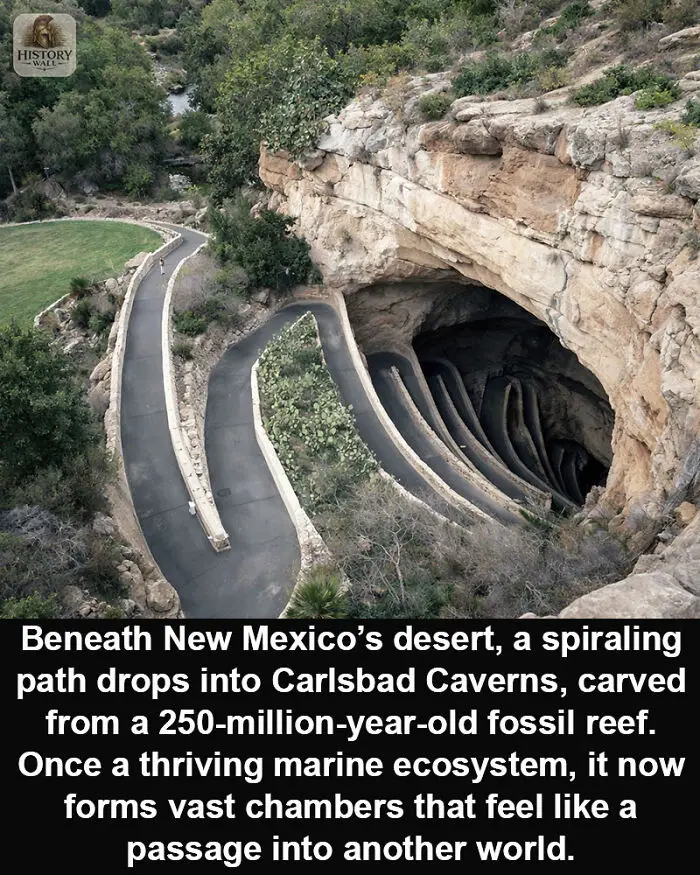
Spiraling path leading into Carlsbad Caverns, a historical marvel carved from a 250-million-year-old fossil reef.
A reef turned to stone. Carlsbad Caverns in New Mexico was not shaped by fire or lava, but by the slow chemistry of an ancient ocean. Around 250 million years ago, during the Permian period, this region was covered by a shallow sea.
A massive reef formed along its edge, built by sponges, algae, and marine organisms whose remains became limestone.
Over time, tectonic uplift raised the reef above sea level. Later, acidic groundwater dissolved the limestone, carving immense chambers beneath the desert. The result is a cavern system filled with dramatic passages, delicate formations, and walls that still contain marine fossils from that vanished sea.
The spiraling entrance path leads visitors steadily downward, creating a sense of descent into something far older than human memory. What feels like a journey into the depths of the Earth is, in fact, a walk through the remnants of an ancient ocean preserved in rock.
21points

#30

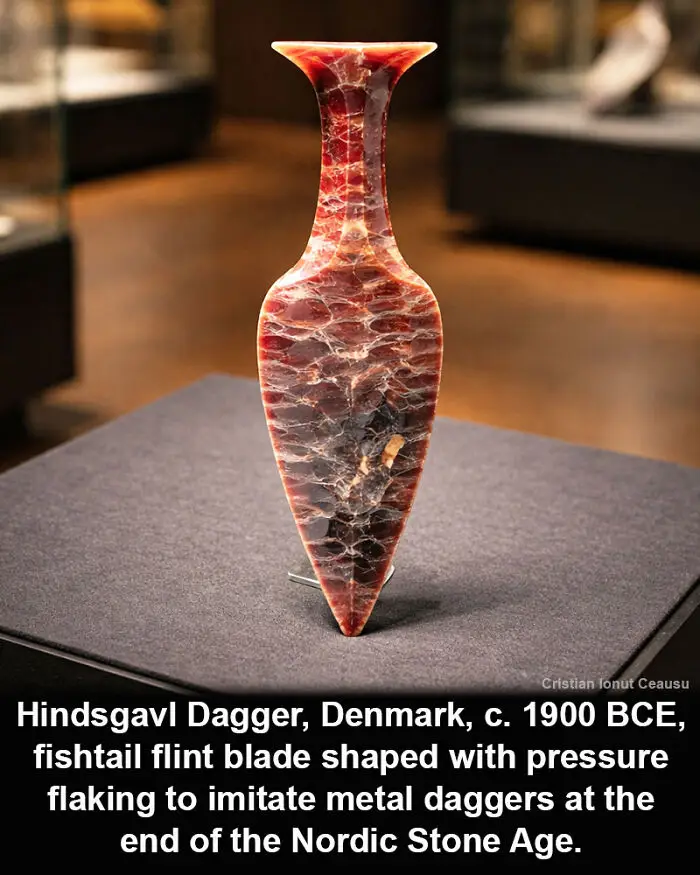
Historical marvel Hindsgavl Dagger from Denmark, a finely crafted flint blade shaped to resemble metal daggers.
The dagger looks metallic, yet it is entirely stone. The Hindsgavl Dagger from Denmark, dated around 1900 BCE at the end of the Nordic Stone Age, is crafted from flint using fine pressure flaking. The blade narrows sharply while the handle widens into a fishtail shape.
The thin, symmetrical profile resembles early metal daggers. The surface shows carefully controlled flake removals creating a balanced outline. The delicate edges suggest display or symbolic use rather than heavy cutting.
This craftsmanship appears during a period when metal objects were emerging in northern Europe. The precise techniques required remain debated, but the dagger demonstrates advanced flint working shaped to imitate metal forms
21points

#31

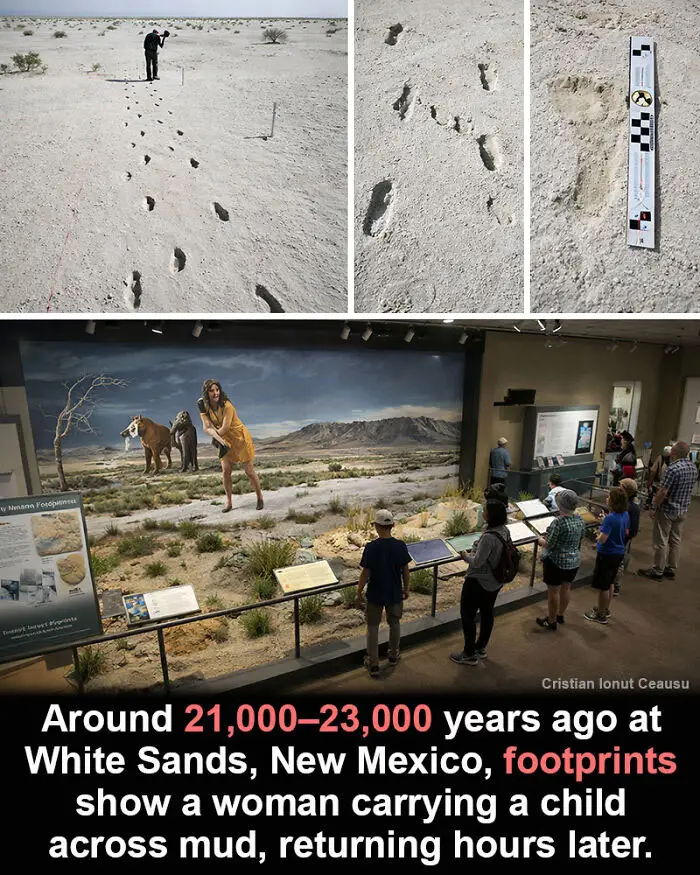
Ancient footprints at White Sands, New Mexico, a historical marvel showing a woman carrying a child from 21,000 years ago.
The footprints show movement, not a camp. Around 21,000 to 23,000 years ago at White Sands, New Mexico, a trackway records a woman crossing wet ground while carrying a child. The impressions vary in depth, and smaller prints appear briefly beside the main path.
Later footprints follow the same route in reverse, indicating a return journey. The spacing and direction suggest purposeful travel rather than wandering. The sequence captures a short moment preserved in sediment.
Researchers document the trackway clearly. The reason for the trip, whether relocation, search, or escape, remains uncertain, leaving the story open.
20points

#32

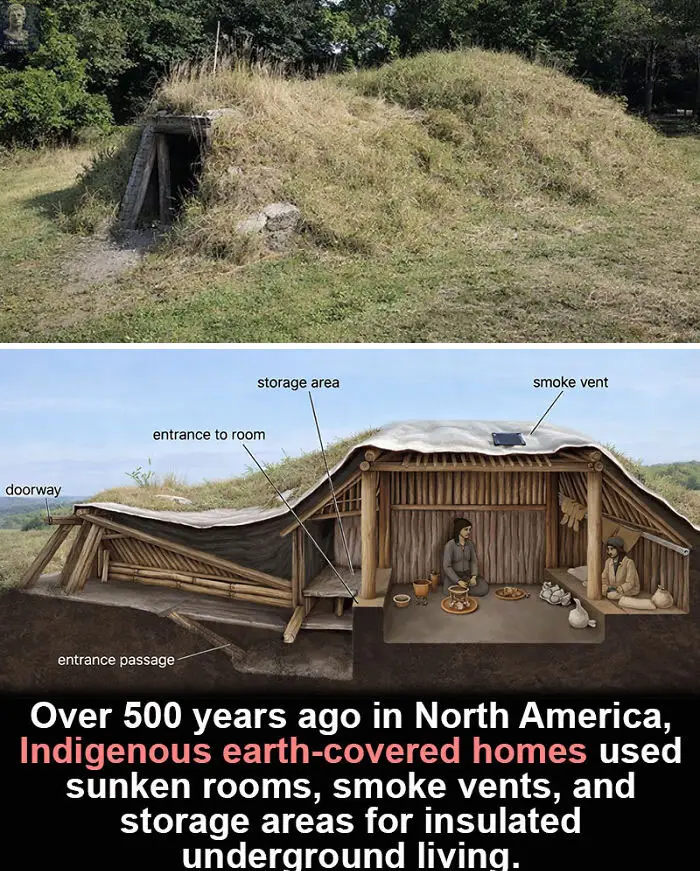
Indigenous earth-covered homes in North America showcasing historical marvels of insulated underground living techniques.
The house looked like a mound, the living space lay below. More than 500 years ago in North America, some Indigenous communities built earth-covered homes with sunken interiors supported by wooden frameworks and layered with soil. From the outside they appeared as low grassy domes rather than exposed buildings.
Access came through a narrow entrance passage that reduced wind and trapped warmth. Inside, a central hearth vented smoke through an opening above, while storage areas lined the walls. The surrounding earth acted as insulation, stabilizing temperature during winter cold and summer heat. The design adapted architecture directly to climate.
Archaeological remains and ethnographic records document these structures across different regions. The principle is consistent, but materials and layouts vary widely. The concept endured. The specific forms depended on local traditions.
20points

#33

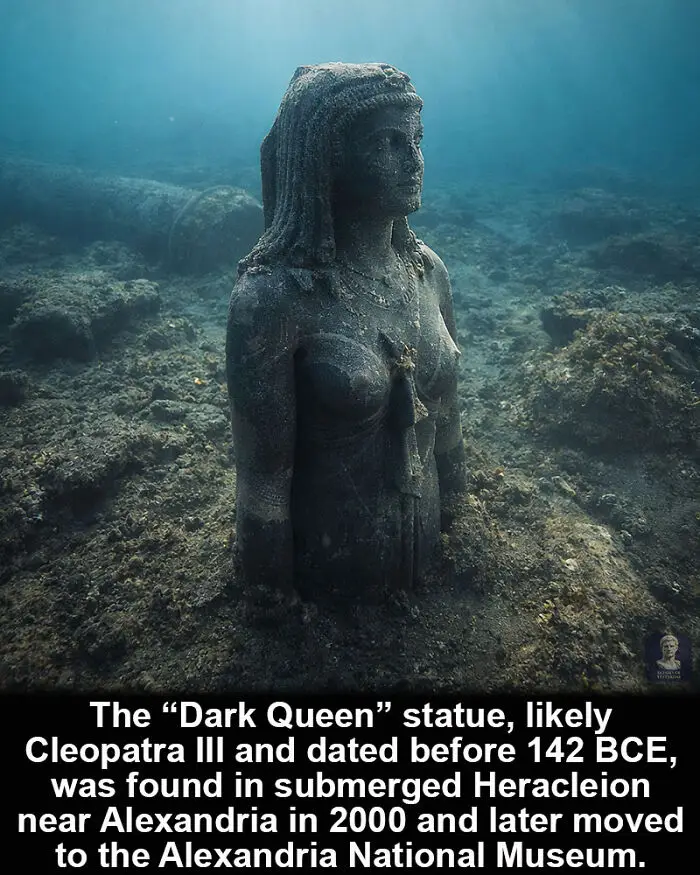
Underwater historical marvel statue of the Dark Queen Cleopatra III in submerged ancient city near Alexandria.
It stands underwater, yet once belonged to a royal city. This “Dark Queen” statue, often linked to Cleopatra III and dated before 142 BCE, was discovered in 2000 in the submerged city of Heracleion near Alexandria.
Heracleion functioned as a major port before sections of the city sank beneath the Mediterranean. The statue remained buried in seabed sediment for centuries.
Cleopatra III ruled as a Ptolemaic co-regent and played a significant political role. The sculpture likely formed part of dynastic representation within the harbor complex.
After recovery, the artifact was transferred to the Alexandria National Museum. The statue survives clearly, yet the exact identification and original context within Heracleion remain debated.
20points

#34

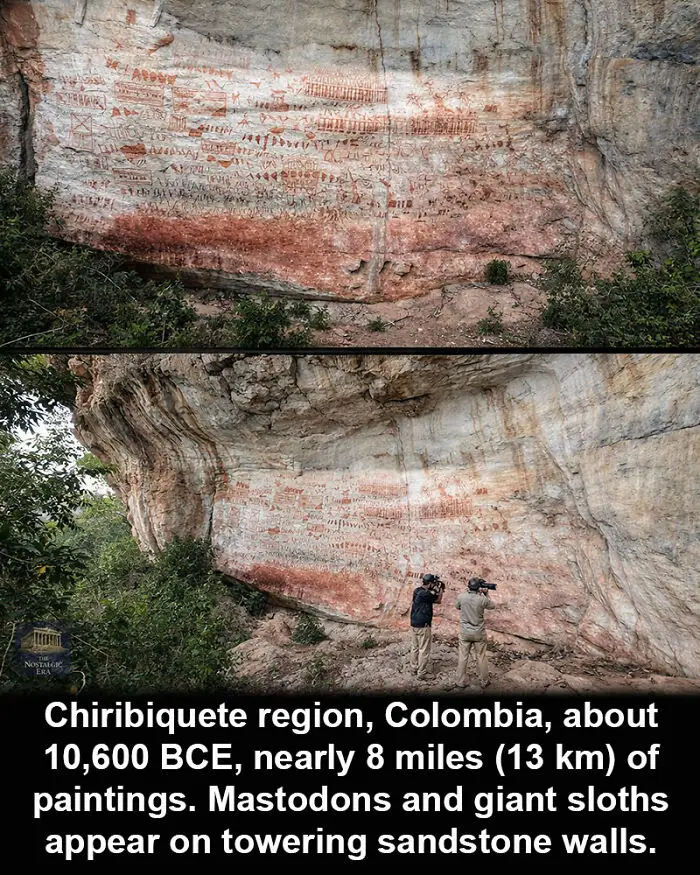
Ancient paintings of mastodons and giant sloths on towering sandstone walls in Chiribiquete, a historical marvel in Colombia.
The animals vanished, the paintings remained. In the Chiribiquete region of the Colombian Amazon, extensive rock art dated to about 10,600 BCE stretches across roughly 8 miles (13 km) of sandstone cliffs.
The panels depict large mammals interpreted as mastodons, giant sloths, and other Ice Age fauna. Human figures, handprints, and geometric designs appear beside them. Many images are positioned high above ground level, suggesting scaffolding or natural ledges were used to reach the surfaces.
These paintings likely accumulated over long periods, documenting animals that disappeared near the end of the last Ice Age. The scale indicates repeated visits by different groups.
Dating relies on nearby deposits and stylistic analysis rather than direct pigment testing. The scenes are preserved, but whether they record daily life, ritual meaning, or memory of vanished animals remains unresolved.
20points

#35

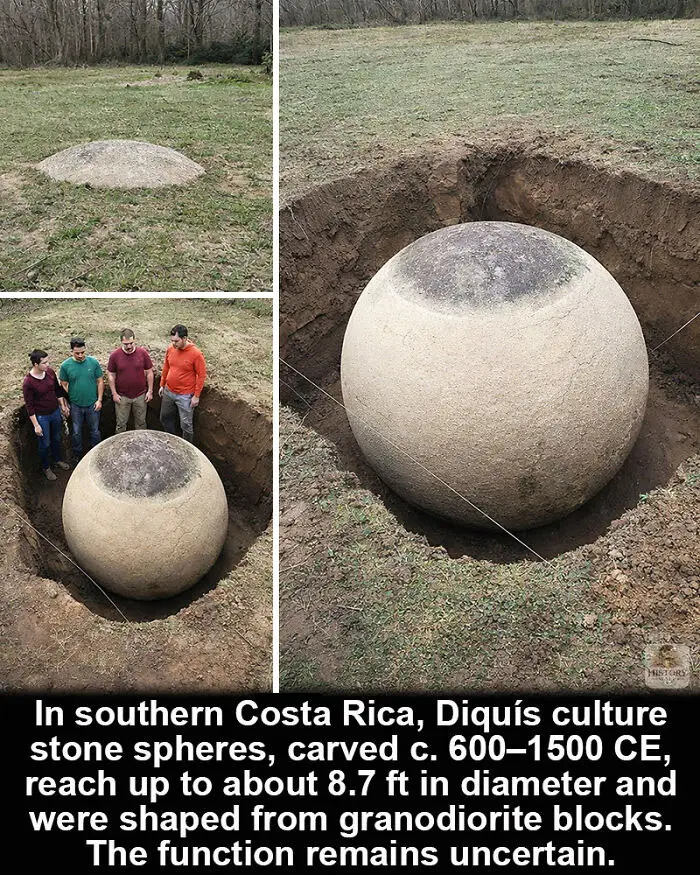
Large historical marvel stone sphere from Diquís culture partially buried in soil with people standing nearby for scale.
The stones were shaped into near-perfect spheres. In southern Costa Rica, Diquís culture stone spheres dated roughly 600–1500 CE were carved from granodiorite boulders. The largest examples measure about 8.7 ft (2.66 m) in diameter. Surface finishing shows pecking, grinding, and smoothing techniques.
Many spheres were originally positioned near settlements, plazas, and elevated ground. Some were found partially buried, indicating intentional placement. Sizes vary from small stones to multi-ton spheres. Archaeological context links them to the Diquís cultural region.
The function remains uncertain. Proposals include markers, status symbols, or spatial alignments. The shaping methods demonstrate controlled stoneworking.
20points

#36

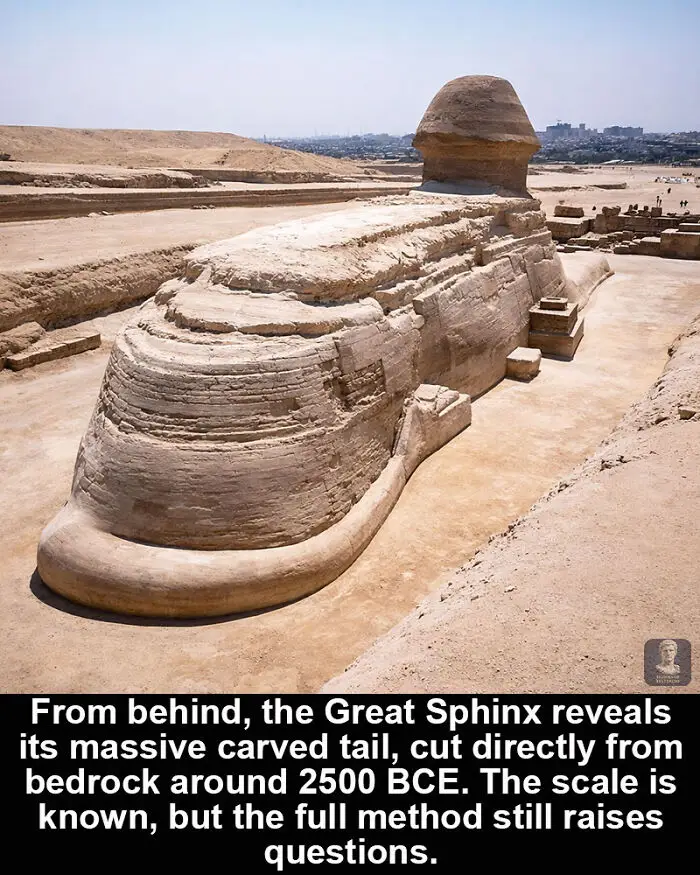
Great Sphinx historical marvel carved from bedrock, showcasing ancient craftsmanship that has survived through time in Egypt.
The familiar view hides the process behind it. The Great Sphinx of Giza, carved around 2500 BCE under Pharaoh Khafre, is typically seen from the front, where its human face dominates the landscape.
From behind, the perspective shifts. The full lion body becomes clear, including the massive carved tail that runs along its back, revealing how the monument was shaped directly from the surrounding limestone plateau.
This was not assembled piece by piece. It was carved in place, transforming natural rock into a unified form that has endured for millennia.
The structure remains.
The full sequence of how it was carved at this scale is still not completely understood.
20points

#37

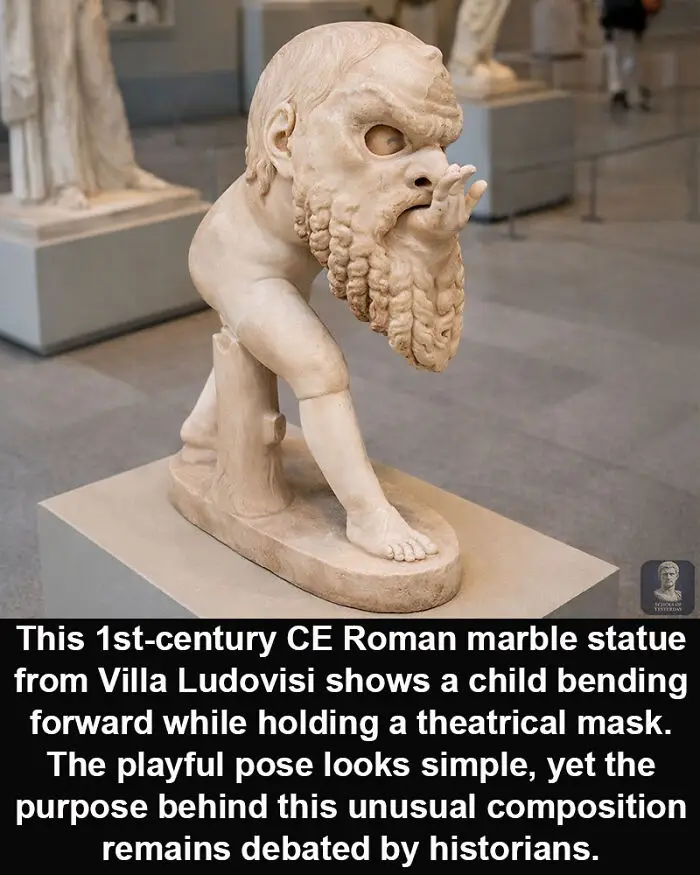
Roman marble statue from 1st century CE showing unique theatrical mask in playful pose, an intriguing historical marvel.
At first glance, it feels playful. But the more closely this statue is studied, the stranger it becomes. This marble sculpture from the 1st century CE was discovered at Villa Ludovisi in Rome.
It depicts a child bending forward while holding a theatrical mask in front of the face. The mask itself is large and dramatic, with exaggerated features typical of Roman stage masks used in ancient theater.
Roman sculpture rarely focused on childhood scenes like this. Most surviving works celebrate gods, emperors, heroic figures, or mythological narratives. Here, instead, the sculptor captured a moment of imitation, a child appearing to “become” the character represented by the mask.
One detail stands out. The mask is carved with deep eye openings and a carefully detailed beard, clearly representing a mature theatrical character, not a child. The contrast between the small body and the adult mask creates a curious visual tension that Roman viewers likely understood immediately.
Some scholars believe the statue may have decorated a garden or villa courtyard where theatrical themes were popular. Others suggest it reflected the broader Roman fascination with performance, identity, and disguise.
The date is known. The location is documented.
What the sculptor truly intended this scene to represent is still debated.
20points

#38

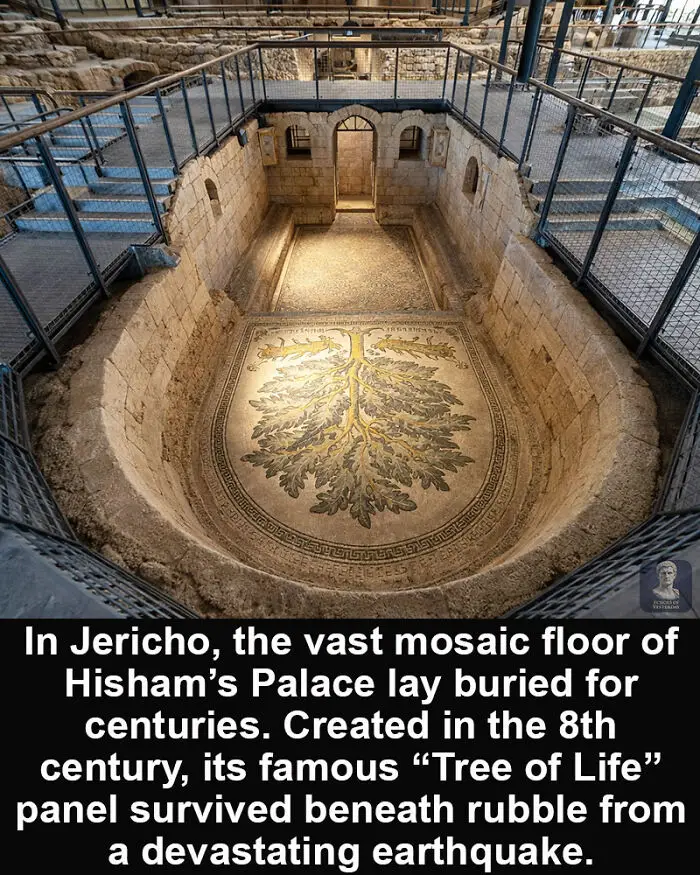
Mosaic floor of Hisham’s Palace in Jericho featuring the Tree of Life, a historical marvel surviving centuries underground.
A mosaic hidden beneath centuries of rubble. In the ancient city of Jericho, one of the most remarkable floor mosaics of the early Islamic world lies within the ruins of Hisham’s Palace, a complex built in the 8th century during the Umayyad period.
The palace was part of a larger desert estate that included reception halls, courtyards, and bathhouses decorated with detailed stone mosaics. Among them, the most famous design appears in the palace bathhouse floor, often called the “Tree of Life” mosaic.
At the center stands a stylized tree spreading its branches across the panel. On one side, gazelles graze peacefully beneath the branches. On the other side, a lion attacks its prey. Many scholars interpret the scene as a symbolic contrast between peace and power.
The mosaic floor itself is enormous, made from thousands of carefully arranged stone tiles forming geometric and natural motifs across dozens of panels.
In 947 AD, a powerful earthquake struck the region, causing parts of the palace to collapse. The debris buried sections of the mosaic, unintentionally preserving it for centuries.
The ruins were rediscovered in the 19th century, and British archaeologist Robert Hamilton conducted major excavations in the 1930s.
Today Hisham’s Palace remains one of the most important early Islamic archaeological sites in Palestine.
20points

#39

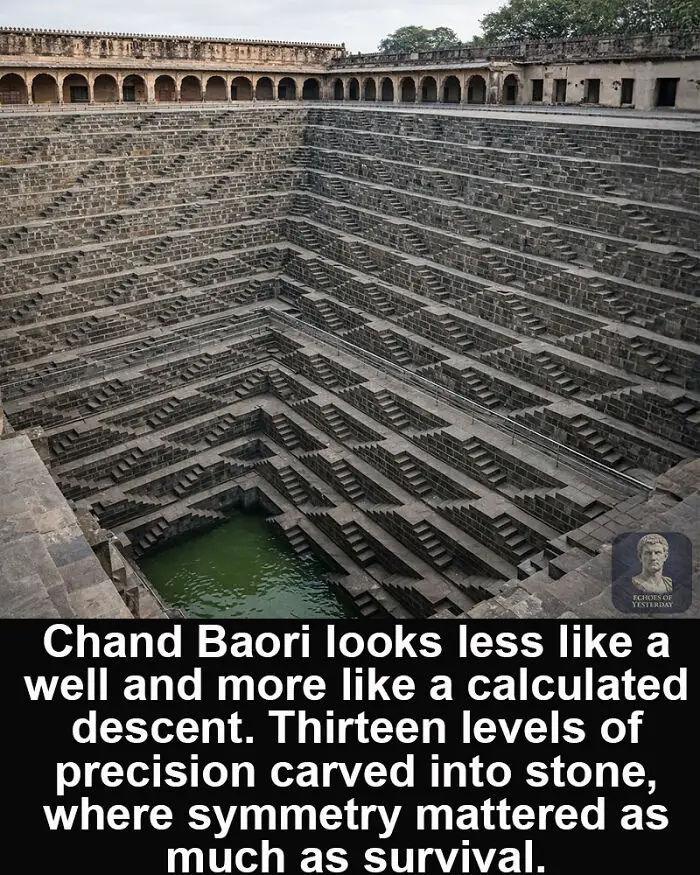
Chand Baori stepwell showcasing historical marvels with thirteen precise stone levels and intricate symmetrical design.
In Abhaneri, Rajasthan, Chand Baori sinks deep into the earth with exact repetition. Thousands of steps follow strict geometry, not decoration. This was infrastructure designed with discipline, where mathematics quietly controlled water, temperature, and movement.
Post description (~150 words)
Chand Baori immediately unsettles modern expectations of ancient engineering. Built around the 9th–10th century, this stepwell descends more than 30 meters across 13 levels, formed by thousands of perfectly aligned stone steps. The design is not ornamental excess. It is controlled repetition, executed in an era without modern surveying tools.
One concrete detail defines the structure: each step mirrors the next with minimal deviation, creating a geometric grid that stabilizes the walls while maximizing access to water as levels rise and fall. The well also maintained cooler temperatures, sometimes several degrees lower than the surrounding desert heat.
Chand Baori functioned as both infrastructure and social space, carved with deities and mythological figures that framed daily life around water. Archaeology explains its purpose and age. It does not fully explain how such precision became routine, or why this logic vanished from later construction traditions.
20points

#40

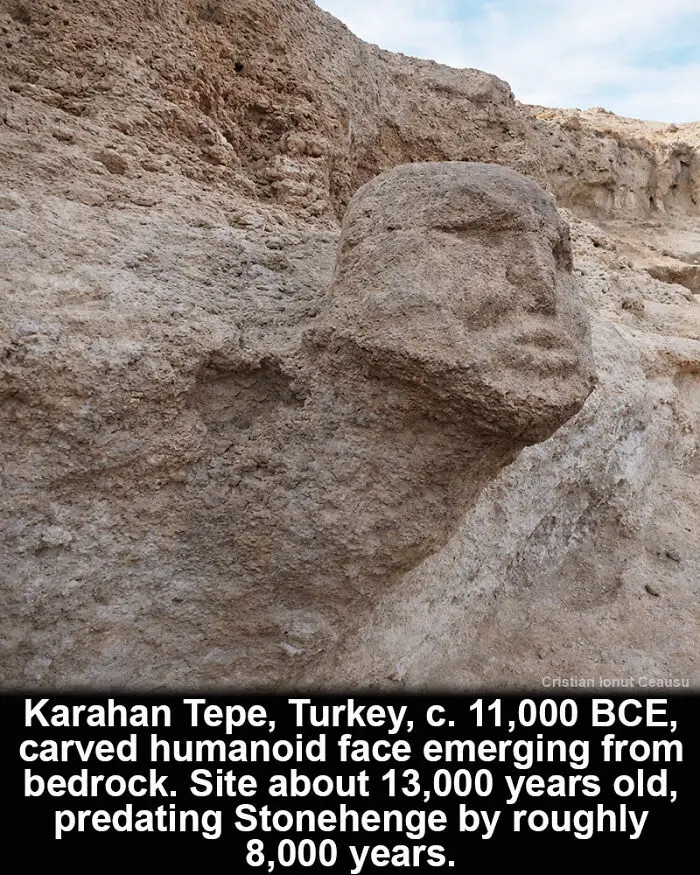
Ancient carved humanoid face emerging from bedrock at Karahan Tepe, a historical marvel surviving over 13,000 years in Turkey.
The face appears unfinished, yet intentionally carved. At Karahan Tepe in southeastern Turkey, dated to about 11,000 BCE, a humanoid head emerges directly from bedrock within a large megalithic complex.
The site, estimated to be around 13,000 years old, predates Stonehenge by roughly 8,000 years and is part of the same Pre-Pottery Neolithic tradition as nearby Göbekli Tepe. Excavations have revealed pillars, carved figures, enclosures, and areas interpreted as domestic spaces, suggesting sustained occupation.
Some sculptures have been interpreted as depicting unusual human traits, including figures described with extra digits. Animal imagery, including predators, appears alongside human forms carved into stone.
Only a fraction of Karahan Tepe has been excavated. The structures were deliberately buried in antiquity, and the reason remains debated. The visible carvings suggest a complex Ice Age community, but the full extent of the site is still unknown.
19points
44
12