



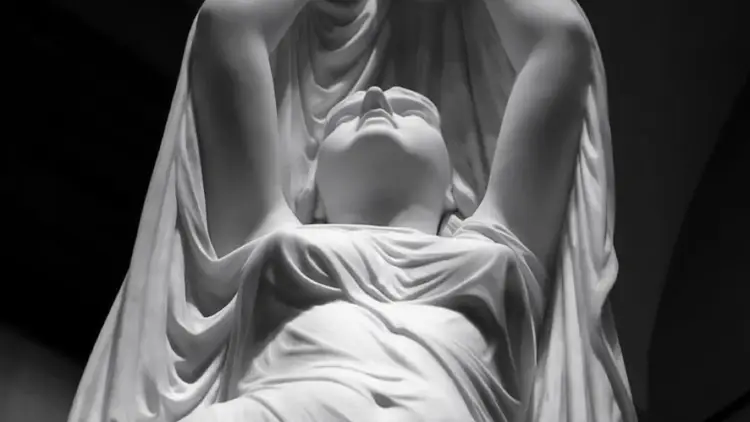



According to a Lithuanian saying, the deeper you go into the forest, the more trees you find. It means that the closer you examine something, the more questions and complexity you’ll uncover.
History works the same way. What first appears straightforward on the surface branches into much greater detail, contradictions, and unexpected connections once you spend time with it.
Just take a look at the posts by the Instagram account ‘Historica Leaks.’ Whether it’s the intricacy of ancient Greek sculpture or local life in a quiet corner of Norway, it captures both the grand and the ordinary in equal measure.
More info: Instagram
#81
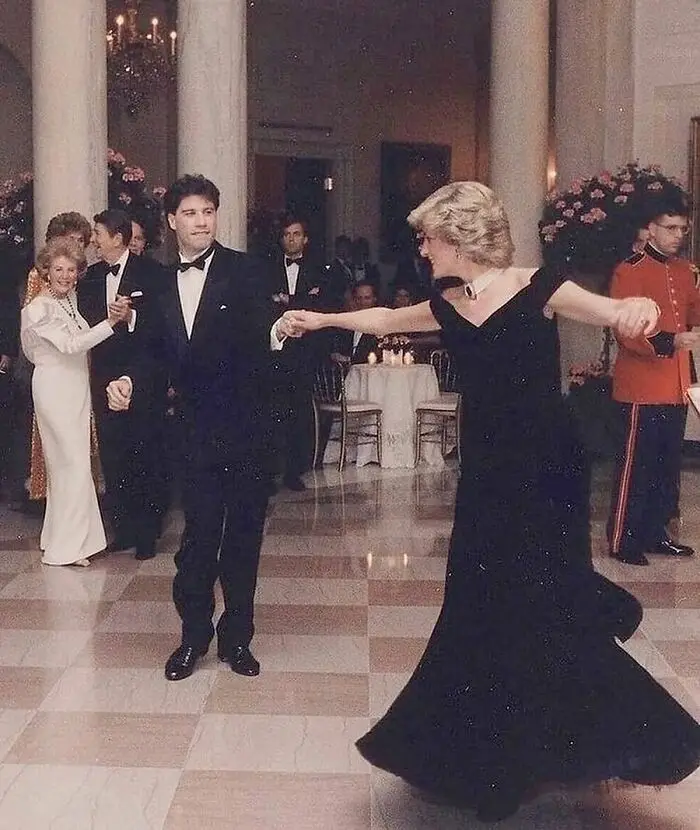
Princess Diana dancing with John Travolta, Clint Eastwood and President Ronald Reagan at a White House dinner, 1985
Report
22points
#82
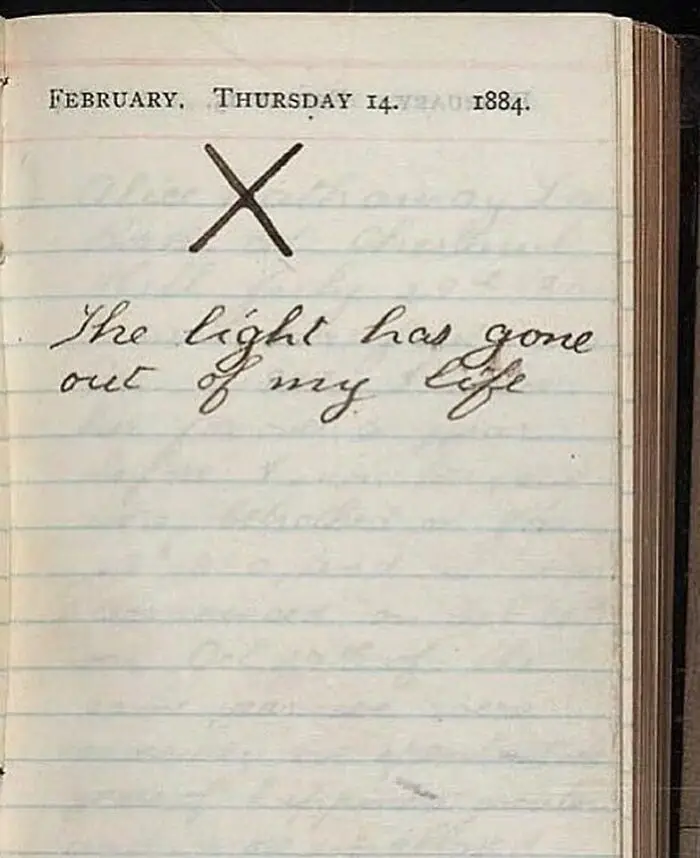
Theodore Roosevelt’s diary entry on Valentine’s Day, after his wife and mother died within hours of each other on the same day, 1884. He wrote:’X.. the light has gone out of my life.’
Report
21points
#83
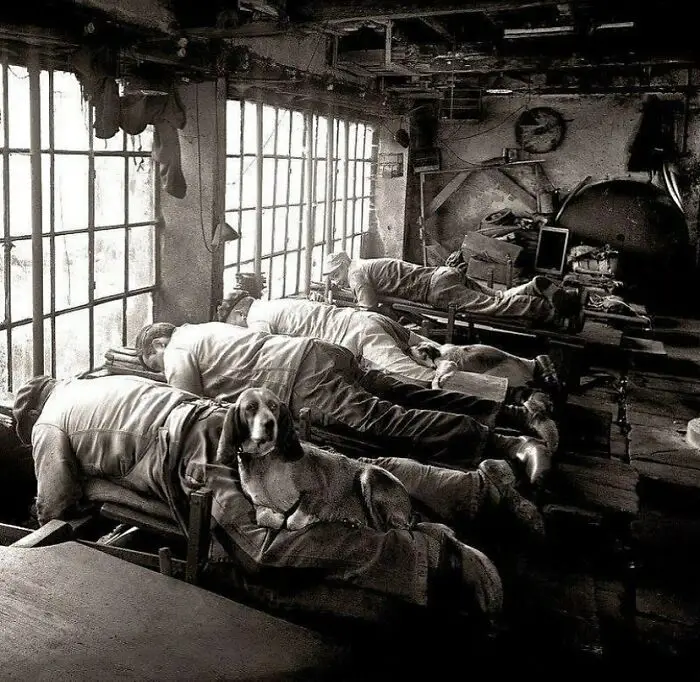
French knife grinders were called ventres jaunes ("yellow bellies" in English) because of the yellow dust that would be released from the grinding wheel. This photo from 1902 shows the workers on their stomachs in order to save their backs from being hunched all day. They were also encouraged to bring their dogs to work to keep them company and also act as mini heaters by having them rest on their owners' legs.
Report
21points
#84
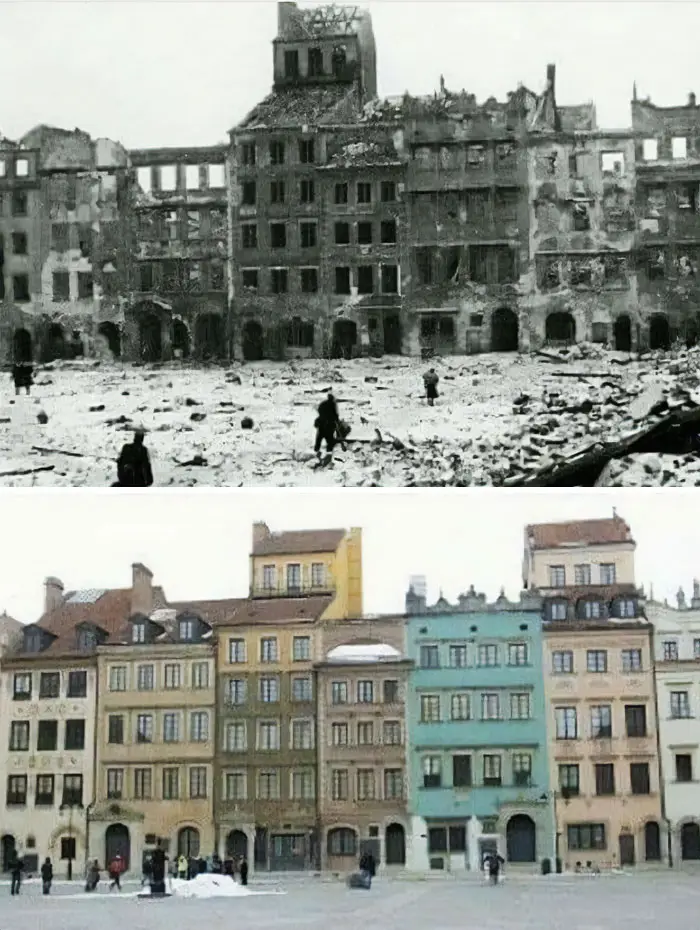
Warsaw, Poland 76 years ago vs today. Before World War II, the city was a major center of Jewish life and culture in Poland. Warsaw's prewar Jewish population of more than 350,000 constituted about 30 percent of the city's total population. Following the German invasion of Poland on September 1, 1939, Warsaw suffered heavy air attacks and artillery bombardment. German troops entered Warsaw on September 29, shortly after its surrender. The Warsaw Uprising was a major World War II operation, in the summer of 1944, by the Polish underground resistance, led by the Polish resistance Home Army, to liberate Warsaw from German occupation. The Uprising was fought for 63 days with little outside support. It was the single largest military effort taken by any European resistance movement during World War II. During the Warsaw Uprising in August 1944, more than 85% of Warsaw's historic centre was destroyed by N**i troops. After the war, a five-year reconstruction campaign by its citizens resulted in today's meticulous restoration of the Old Town, with its churches, palaces and market-place.
Report
21points
#86

Pictured above are Michelin Men in the 1920s. Michelin was founded in 1888 by the Michelin brothers, André (1853–1931) and Édouard (1859–1940), the company manufactured tires for bicycles and horse-drawn carriages before introducing pneumatic tires for automobiles in the 1890s. In 1926, Michelin began reviewing restaurants so that more people would travel further distances in their cars to eat at these restaurants. This in turn would wear down their tires faster, and force them to buy more. The star system that Michelin uses goes up to three and is broken down by whether or not it's worth driving to the restaurant. One star: "A very good restaurant in its category" (Une très bonne table dans sa catégorie). Two star: "Excellent cooking, worth a detour" (Table excellente, mérite un détour). Three star: "Exceptional cuisine, worth a special journey" (Une des meilleures tables, vaut le voyage).
Report
19points

#89
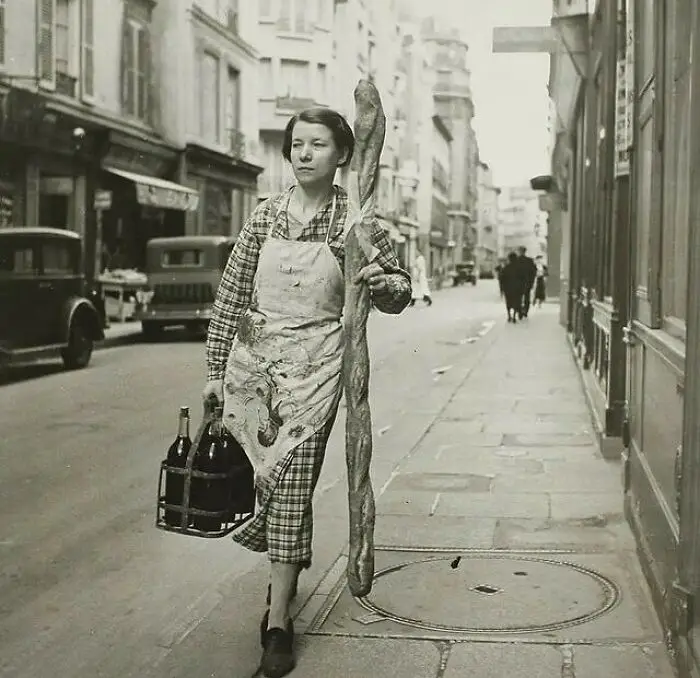
A French woman with her baguette and six bottles of wine, Paris, France, 1945.
Report
18points
#90
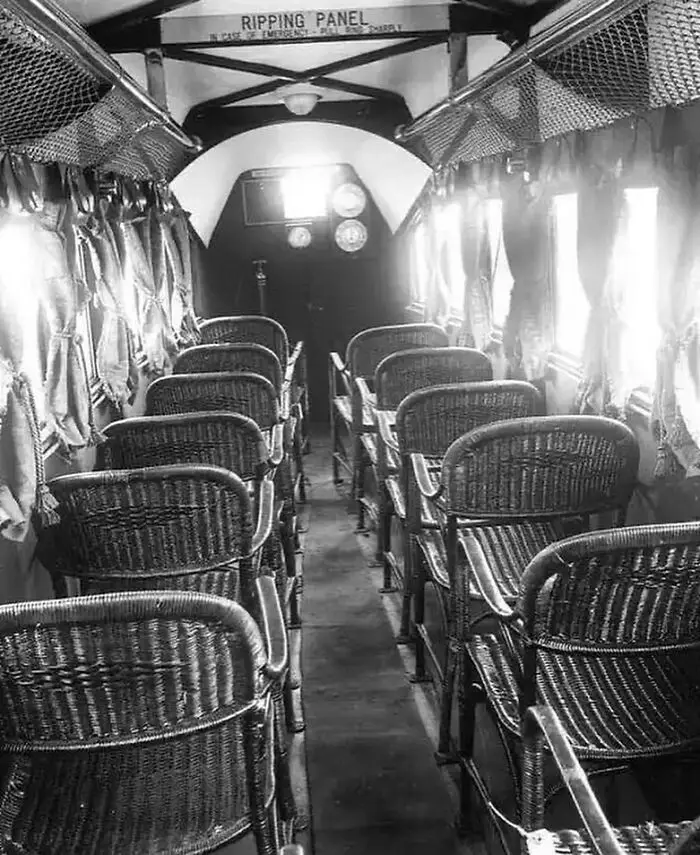
The inside of a comercial airplane in 1930. Under the ripping panel it says: "In case of emergency, pull ring sharply." Original caption: “The ripping panel tore away from around the window, allowing the window to be removed or folded down, allowing the passengers to exit in an emergency. If you zoom in on the windows, you'll notice a loop of material above each window. The aircraft is an Imperial Airlines biplane called a Handley Page W10 (swipe left to see its exterior). The first prototype was built in 1919 and it started commercial flights in the early 1920s until it was retired in 1934. The aircraft had an enclosed cabin that fit 12 passengers and two crew members in an open cockpit. It was also the first airliner to have a bathroom on onboard.”
Report
18points
#92
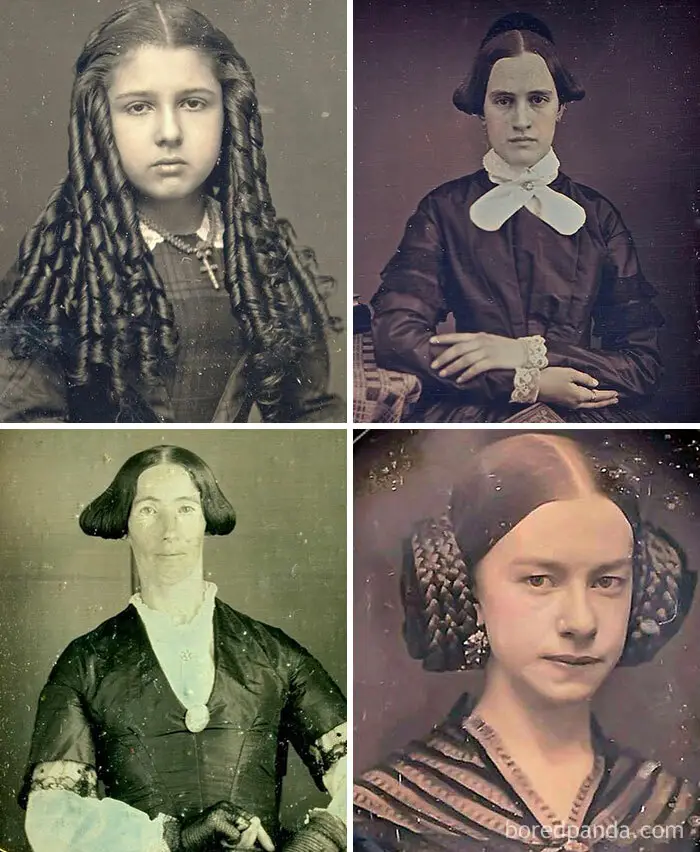
Old photos showcasing the unique and intricate styling of Victorian women's hairstyles, 1870s-1900s
Report
17points
#94

Pictured above is Lao Huang, a 87 year old cormorant fisherman living in Yangshuo. Cormorant fishing is traditional fishing method in which fishermen use trained cormorants to fish in rivers, but sadly the 1300-year-old fishing method now only survives as a tourist attraction in modern days. Ukai is a traditional fishing method which uses trained cormorants to catch river fish such as sweetfish (ayu). This type of fishing has been around for over 1300 years, most prominently along the Nagaragawa River in Gifu City, where the master fishermen have official patronage from the emperor. Historically, cormorant fishing has taken place in Japan and China, as well as Greece, North Macedonia, and, briefly, England and France. It is first attested as a method used by the ancient Japanese in the Book of Sui, the official history of the Sui Dynasty of China, completed in 636 CE. Ukai is practiced by master fisherman working from long wooden boats. Each fisherman leads about a dozen cormorants on leashes who swim alongside the boat and dive under the water to catch fish by swallowing them whole. The fish are kept in a special pouch in the cormorant's throat to be retrieved later and are prevented from being swallowed by a snare around the bird's neck. Each boat carries a large fire to provide light for the boatmen to steer and the birds to fish by. These days, ukai is held mainly as a tourist attraction. Special sightseeing cruises are offered that shadow the ukai boats and allow tourists to get an up-close look at the action. Details depend on each site, but the boats typically operate daily during the season except when the rivers have h**h water levels.
Report
17points
#95
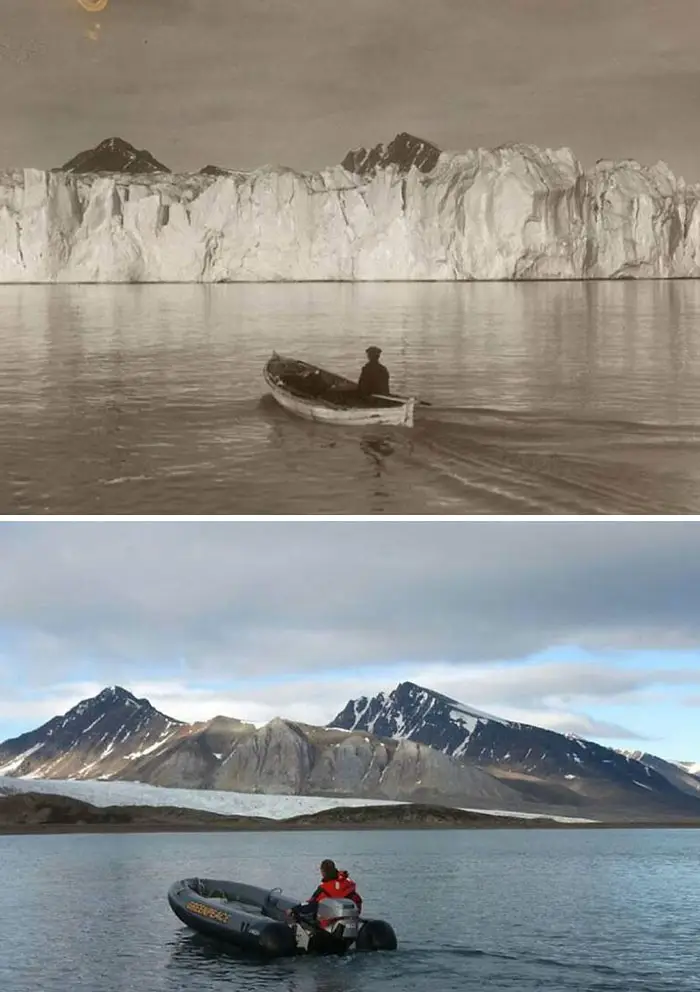
The Arctic 105 years ago vs today. The Arctic region is a unique area among Earth's ecosystems. The cultures in the region and the Arctic indigenous peoples have adapted to its cold and extreme conditions. Life in the Arctic includes zooplankton and phytoplankton, fish and marine mammals, birds, land animals, plants and human societies. Christian Åslund, a Swedish photojournalist who works with Greenpeace, gathered some early photos of glaciers ice in Svalbard, Norway from the Norwegian Polar Institute, and juxtaposed them next to his own photos of the same locations from 2002. The differences in these before and after photos were unbelievable. He's using the photo series to promote #MyClimateAction, a National Geographic campaign encouraging discussion about climate change and as a protest against Norwegian oil companies drilling in the melting ice in the Arctic region. Predictions using statistical models applied to the first thirty years of climate projections (2006–2035) suggested that the Arctic could be ice-free in the decade 2030–2040, with the year 2034 as the most likely.
Report
16points
#96
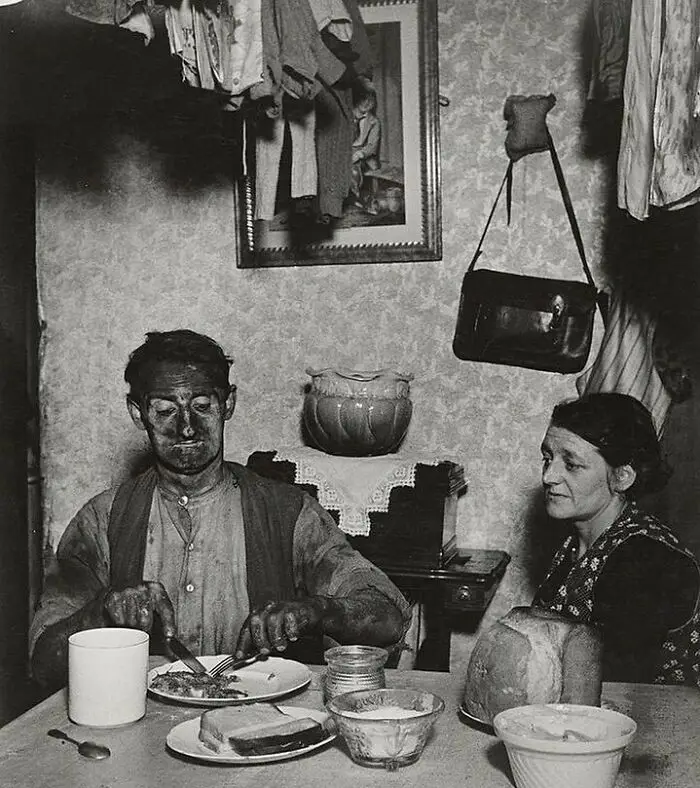
Northumbrian miner at his evening meal, 1937. People have worked as coal miners for centuries, but they became increasingly important during the Industrial revolution when coal was burnt on a large scale to fuel stationary and locomotive engines and heat buildings. Towards the end of the 20th century, the Royal Commission on the Historical Monuments of England (RCHME) undertook a survey of the structures, people and settlements associated with the nation's coal industry. At its peak in 1913 there were around 2,600 working pits in Great Britain, employing a workforce of around 1,100,000 people. It produced 287,000,000 tons of coal for domestic and foreign consumption. From that point the industry declined and by 1992 the number of pits had reduced to 50, employing 43,800 people. “In 1937, Brandt traveled to Northern England to photograph the coal-mining regions and industrial towns. He was not commissioned to take these, and instead sought after the subject matter for its visual appeal. In this photograph, a man and woman sit inside their home at a dinner table. The man is covered in coal, eating from the plate in front of him. The woman sits to the right, looking solemn. The room is covered in patterned wallpaper, crowded with hanging clothing, a purse, and a decorative painting on the wall behind the seated couple.”
Report
16points
#97

Pictured above is 28 year old Marcy Borders (July 19, 1973 – August 24, 2015), an American legal assistant who worked for Bank of America at its branch located in the World Trade Center. She survived its collapse following the al-Qaeda attacks on September 11, 2001. As captured by photographer Stan Honda, who was roaming the streets that day, she became known as the “Dust Lady”. Honda once said: “Over the years it has been odd for me to think of me having a photo with a legacy,” he says. “I studied many photographers who have very well-known images and never thought I could have an image like that. I think since the photo of Marcy Borders is of a single person trying to cope with the chaos of that day, people can relate to that.” In 2011, Ms Borders described how the terror of the day gave way to 10 years of depression and addiction. “It was like my soul was knocked down with those towers,” she said. Borders was diagnosed with stomach cancer in August 2014. Borders's cancer had resulted in a $190,000 debt—even though she had not yet received surgery and she still needed additional chemotherapy. Borders said she could not even afford to get her prescriptions filled. She alleged that her cancer was triggered by the toxic dust she was exposed to when the World Trade Center collapsed, having once stated, "I definitely believe it because I haven't had any illnesses. I don't have h**h blood pressure, h**h cholesterol, diabetes." Borders died from cancer on August 24, 2015.
Report
16points
#98
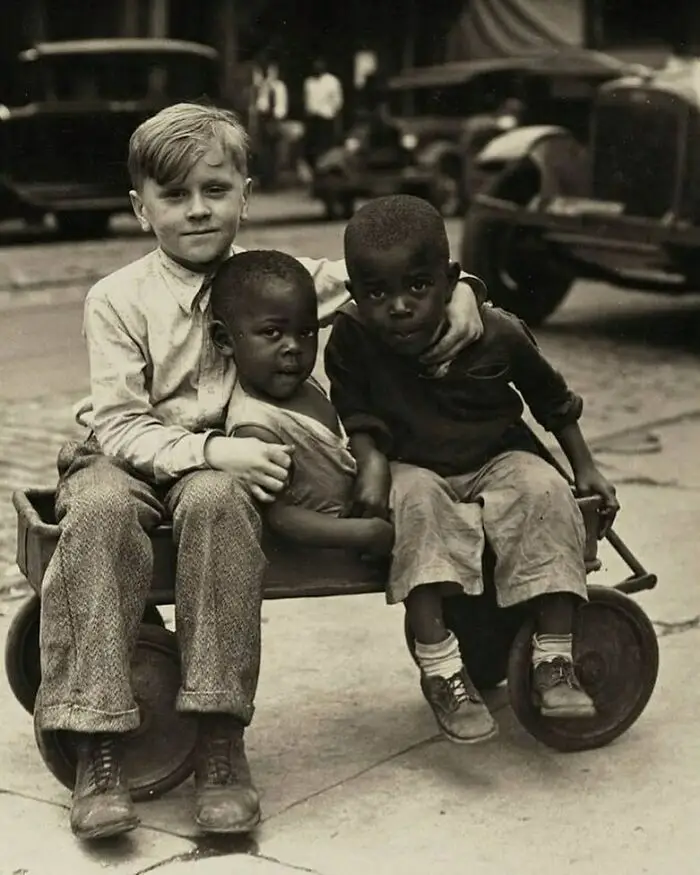
Three children in a wagon, US, 1930s. The 1930s in the United States began with an historic low: more than 15 million Americans–fully one-quarter of all wage-earning workers–were unemployed. Between 1930 and 1933, more than 9,000 banks closed in the U.S., taking with them more than $2.5 billion in deposits. The decade was defined by a global economic and political crisis that culminated in the Second World War. During the Depression, most people did not have much money to spare. However, most people did have radios–and listening to the radio was free. The most popular broadcasts were those that distracted listeners from their everyday struggles: comedy programs like Amos ‘n’ Andy, soap operas and sporting events. Swing music encouraged people to cast aside their troubles and dance. Bandleaders like Benny Goodman and Fletcher Henderson drew crowds of young people to ballrooms and dance halls around the country. And even though money was tight, people kept on going to the movies. Musicals, “screwball” comedies and hard-boiled gangster pictures likewise offered audiences an escape from the grim realities of life in the 1930s.
Report
16points
#99
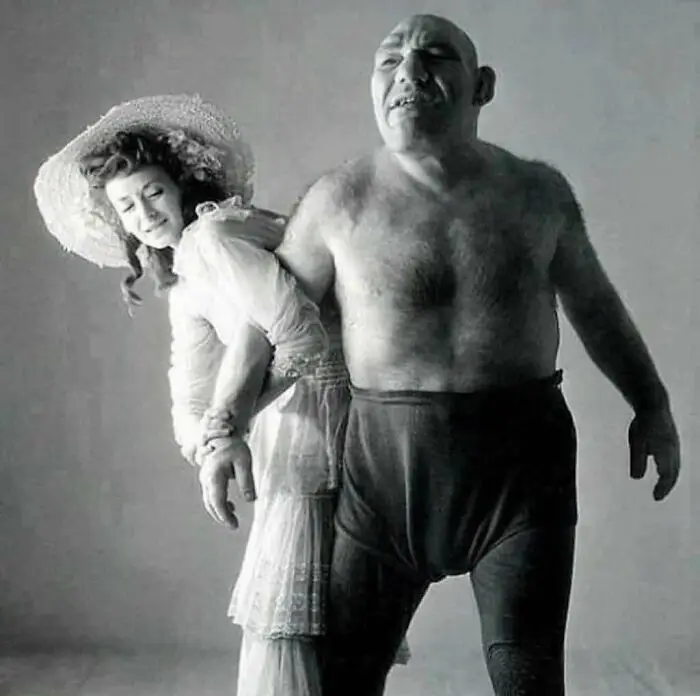
Pictured above is Maurice Tillet (1903-1954), most commonly known by his professional wrestling name The French Angel and his wife Olga. For years many have believed that William Steig, the creator of Shrek, drew his character from the professional wrestler Maurice Tillet. Dreamworks has neither confirmed nor denied this, but the similarities are uncanny. During his wrestling career, Tillet was a leading box office draw in the early 1940s and was twice World Heavyweight Champion in the American Wrestling Association run by Paul Bowser in Boston.
Report
16points
#100

H**h school yearbook photo, 1996. The original caption from a Reddit user: "When I was in band camp at App State in 94, I saw this skater kid who played french horn. He had a similar hairdo (and pulled it off way better than I did). He had straight hair, and I'm blessed with a curly madness. I tried to emulate it, to no avail. But what you see before you is what I had. Dad wasn't stoked, mom let me be me, and I was Grandmother's favorite."
Report
14points