






It is never too late to learn something new. When it comes down to it, we’re all incredibly curious about the world. But among all the responsibilities, stress, and constant rushing around, some of us temporarily forget it. Often, all it takes is just one truly intriguing and unexpected nugget of information to make you crave more knowledge.
If you’re in the mood to expand your mind, we’ve got you covered. We are featuring some of the most interesting and unusual world, science, history, and entertainment facts and photos to reframe how you perceive the past, as shared on the popular ‘Lost In Time History’ Instagram account. Got your notepad ready? Let’s go.
#21

A Facebook community called “People Who Sort of Look Like Adam Sandler but Aren’t Adam Sandler” collects photographs of ordinary people who bear a strange resemblance to the actor. Members submit strangers, relatives and even old family photographs, with some looking almost identical to Sandler and others only sharing his expression, hairstyle or relaxed clothing.
The page became popular in 2019 and attracted more than 200,000 followers, proving that there are far more accidental Adam Sandler lookalikes than anyone expected. The funniest posts are often the least obvious, showing people who somehow look like him despite having completely different ages or backgrounds.
Report
3points
#22
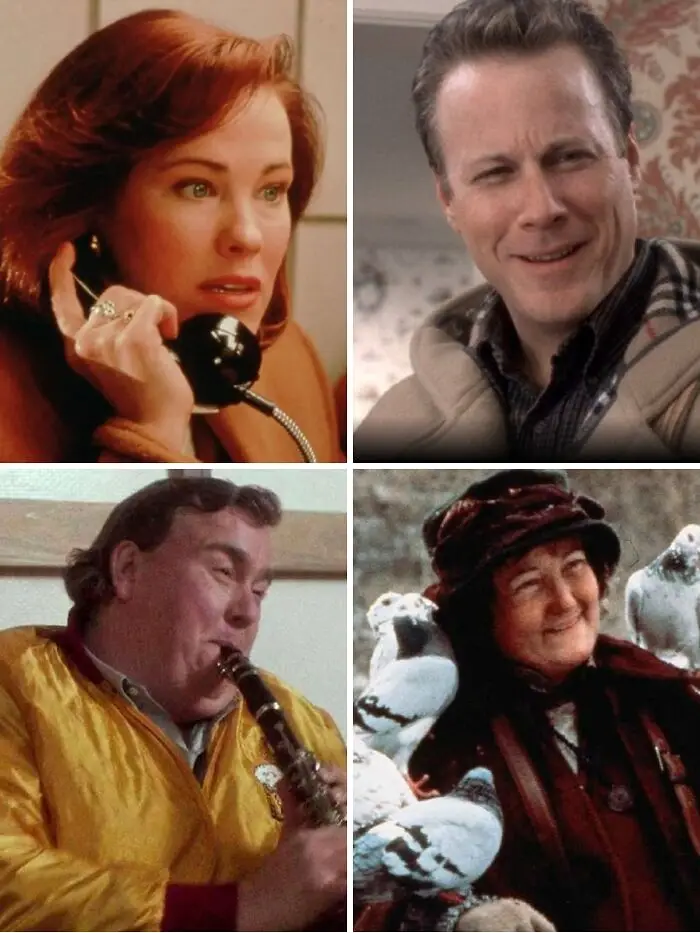
Several beloved actors from Home Alone are no longer with us, but their performances remain part of Christmas for millions. Catherine O’Hara, who played Kevin’s determined mother Kate, passed away in January 2026 aged 71. She left behind her husband Bo Welch, their two sons and a five-decade career that stretched from SCTV and Beetlejuice to her award-winning role as Moira Rose in Schitt’s Creek.
Brenda Fricker, remembered as the lonely Pigeon Lady who forms an unlikely friendship with Kevin in Home Alone 2, passed away in Dublin in July 2026 aged 81. She was also the first Irish woman to win an Academy Award, and colleagues remembered her as an irreplaceable performer whose warmth reached audiences around the world.
John Candy appeared for only a few minutes as Gus Polinski, but turned the kindly polka musician into one of the original film’s most loved characters. He passed away in 1994 aged just 43, leaving behind his wife Rosemary, their two children and films still watched by new generations. Friends and co-stars continued to remember him for his generosity and the kindness he showed both on and off screen.
Report
3points
#23

In 1973, Japanese photographer Masahisa Fukase began photographing his wife, Yoko Wanibe, from their Tokyo apartment window as she left for work. In the early images she smiles, waves and performs for his camera, sometimes posing with umbrellas, costumes or exaggerated gestures. The photographs became the series From Window.
As the series continued, Yoko appeared increasingly distant in some of the photographs, leading viewers to describe it as Fukase accidentally capturing his wife falling out of love with him. That interpretation cannot be proven from facial expressions alone, but their marriage did end in 1976 after 12 years. Fukase later created his bleak series Ravens in the period following their separation.
Report
3points
#24
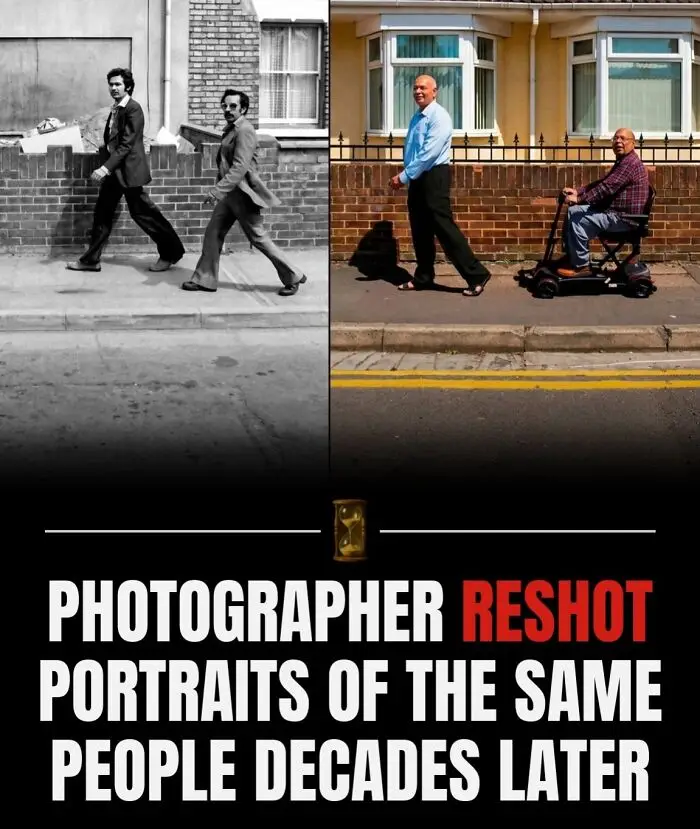
For nearly a decade during the 1970s and 1980s, Chris Porsz spent his lunch breaks photographing everyday people on the streets of Peterborough, England. He captured ordinary moments—a couple holding hands, teenagers laughing, children playing, workers heading home—without knowing who most of them were. Decades later, he began an extraordinary project to track down the same people and recreate the photographs in exactly the same locations, often more than 30 or 40 years after the originals were taken.
Finding them became a story in itself. Using local newspapers, social media, and word of mouth, Porsz located hundreds of his original subjects, many of whom had completely forgotten the photographs existed. Some arrived with spouses, children, or even grandchildren who weren’t in the original image, while others recreated the same pose, hairstyle, or expression they had decades earlier. The before-and-after portraits became a striking record of how time changes people while familiar places often remain recognisable.
The project was published in books including Reunions and New Reunions, with many of the recreated images going viral around the world. Together, the photographs don’t just show people growing older—they capture friendships that lasted, relationships that endured, and moments that would otherwise have been lost forever, all recreated in the exact spot where they first happened.
Report
3points
#25

Across the former Soviet Union, ordinary roadside bus stops were often built like miniature works of art. Some resembled spaceships, seashells or concrete sculptures, while others were covered in colourful mosaics showing local landscapes, animals and traditions. Because these small structures attracted less official attention than major buildings, designers were often able to experiment more freely.
Many stood alone beside remote roads in places such as Kazakhstan, Armenia, Ukraine and Uzbekistan, making their elaborate designs seem even more unexpected. No single style was used across the Soviet Union, so each region created shelters that reflected its own culture and surroundings.
Canadian photographer Christopher Herwig first noticed them during a long-distance cycling trip in 2002. He later travelled more than 50,000 kilometres across the former Soviet republics documenting hundreds of these unusual structures before more were altered, abandoned or lost.
Credit: @herwig_photo @soviet_busstops.
Report
3points
#26

Michael Jackson had a famously difficult relationship with his father, Joe Jackson, who managed the Jackson 5 when Michael was still a child. Michael later said his father was extremely strict during rehearsals and that simply seeing him could make him frightened. Despite their enormous success, Michael said those childhood experiences stayed with him throughout his life.
One detail Michael repeatedly spoke about was his appearance. He said his father would tease him about the size of his nose and call him “big nose” and “ugly.” Michael later described becoming deeply self-conscious about his face as a teenager, saying he would sometimes avoid looking at people because he believed he was unattractive.
Their relationship remained complicated as Michael grew older. He credited his father’s discipline with helping make the Jackson 5 successful, while also openly discussing how unhappy parts of his childhood had been. Joe later disputed some of Michael’s descriptions of his parenting, leaving very different accounts of what life inside the Jackson family had actually been like
Report
3points
#27

Despite painting more than 35 self-portraits, Vincent van Gogh (1853–1890) has only one widely accepted surviving photographic portrait. It was taken in January 1873, when he was just 19 years old, long before he became one of history’s most famous artists.
At the time, Van Gogh was working for an art dealership in The Hague, Netherlands. He had yet to begin his career as a painter, which only started several years later. In fact, almost all of the paintings that made him famous were created during the final decade of his life.
For decades, historians believed a second photograph showed Van Gogh as a 13-year-old boy. However, in 2018, researchers at the Van Gogh Museum discovered that it actually depicted his younger brother Theo. Van Gogh himself disliked being photographed, believing paintings captured people more meaningfully than photographs
Report
3points
#28
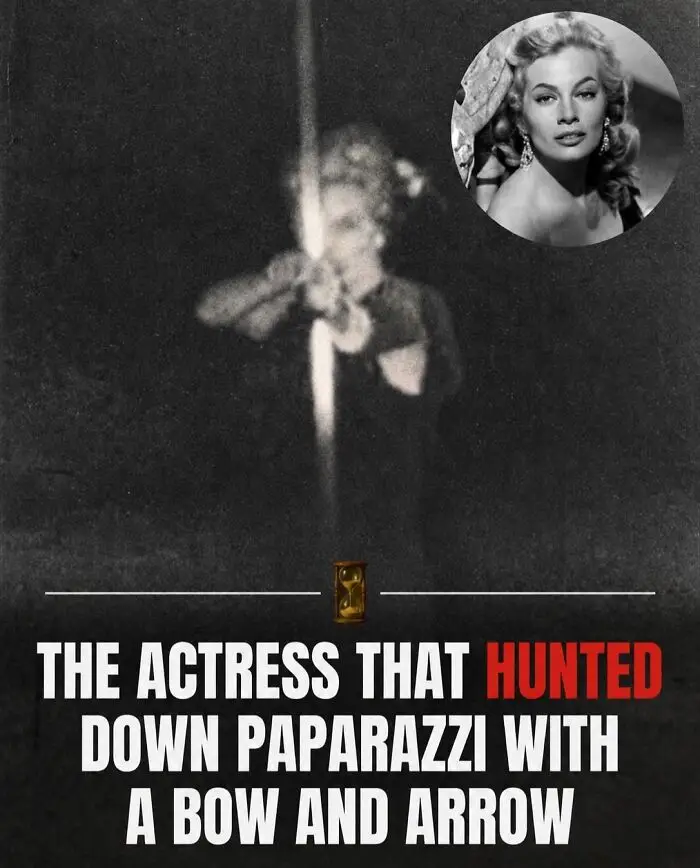
In 1960, Anita Ekberg was one of the most photographed women in the world. Fresh off La Dolce Vita, where she played a movie star surrounded by photographers, she soon found herself living the same story in real life.
After being followed through Rome and all the way back to her villa, Ekberg confronted the paparazzi waiting outside her home. She returned barefoot with a bow and arrows, reportedly demanding their photographs before the confrontation escalated.
The resulting images became an extraordinary document of the era that helped create modern paparazzi culture. The celebrity was supposed to be the prey, but this time, she fought back.
Report
3points
#29
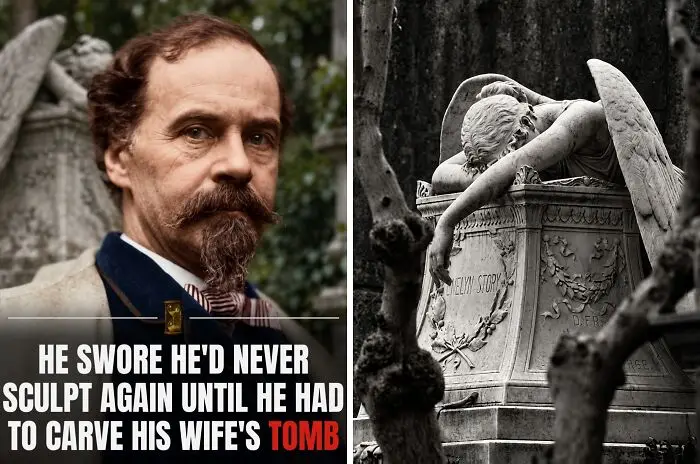
He gave up sculpture after losing his wife. Then his children convinced him to return for one final piece.
William Wetmore Story (1819–1895) had been married to Emelyn Eldredge Story for more than 50 years when she passed away in January 1894. He was completely overwhelmed by the loss and stopped working. In a letter, he described Emelyn as his life, his joy and the person who had supported him in everything. His children eventually persuaded him that the most fitting memorial would be something created by his own hands.
Story returned to his studio in Rome and carved The Angel of Grief Weeping Over the Dismantled Altar of Life. Instead of showing a proud angel standing over the tomb, he created one almost collapsing onto it, with drooping wings, a hidden face and flowers falling from its hand. Story said the figure represented “utter abandonment,” making the sculpture feel less like a traditional monument and more like his own grief turned into marble.
It became the last major sculpture of his life. Story passed away the following year in 1895 and was buried beside Emelyn beneath the same angel he had carved for her. More than 130 years later, The Angel of Grief still stands in Rome’s Non-Catholic Cemetery and has become one of the most copied memorial sculptures in the world
Report
3points
#30
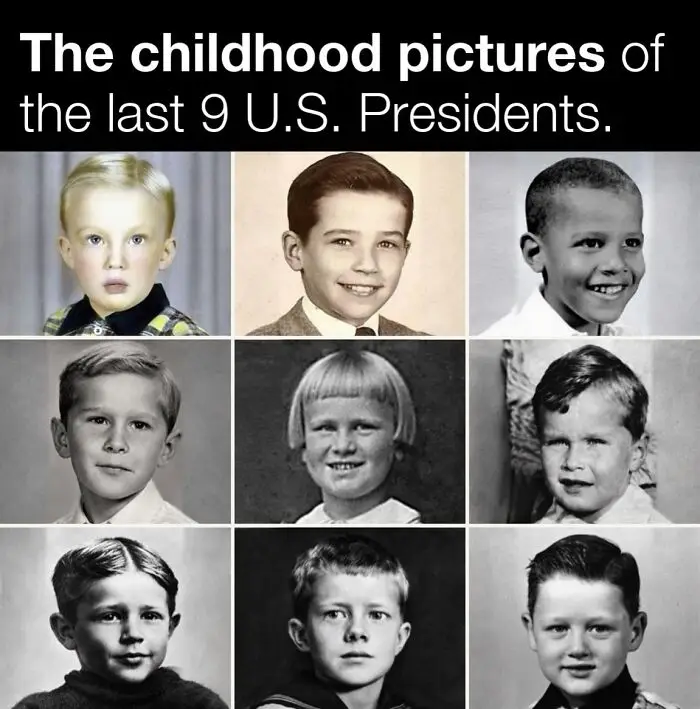
Before becoming some of the most powerful people in the world, the last nine US presidents were ordinary children growing up in very different circumstances. Their childhoods span half a century, from Gerald Ford, born in 1913, to Barack Obama, born in 1961.
Interestingly, Gerald Ford wasn’t even born with that name. His original name was Leslie L***h King Jr., which was later changed following his mother’s remarriage. Jimmy Carter grew up on a Georgia peanut farm without electricity or indoor plumbing, while Ronald Reagan spent his teenage summers working as a lifeguard in Illinois, reportedly saving 77 people from drowning.
Bill Clinton’s father passed away in a car accident three months before he was born. Joe Biden struggled with a childhood stutter and practised speaking in front of a mirror to overcome it. Barack Obama spent several years growing up in Indonesia, while Donald Trump was raised in Queens, New York, before attending a military academy at just 13.
The collection also includes George H. W. Bush and his son George W. Bush, who grew up in Connecticut and Texas respectively. Together, these nine individuals have occupied the White House for more than five decades, with Trump becoming only the second president in American history to serve two non-consecutive terms.
Report
3points
#31
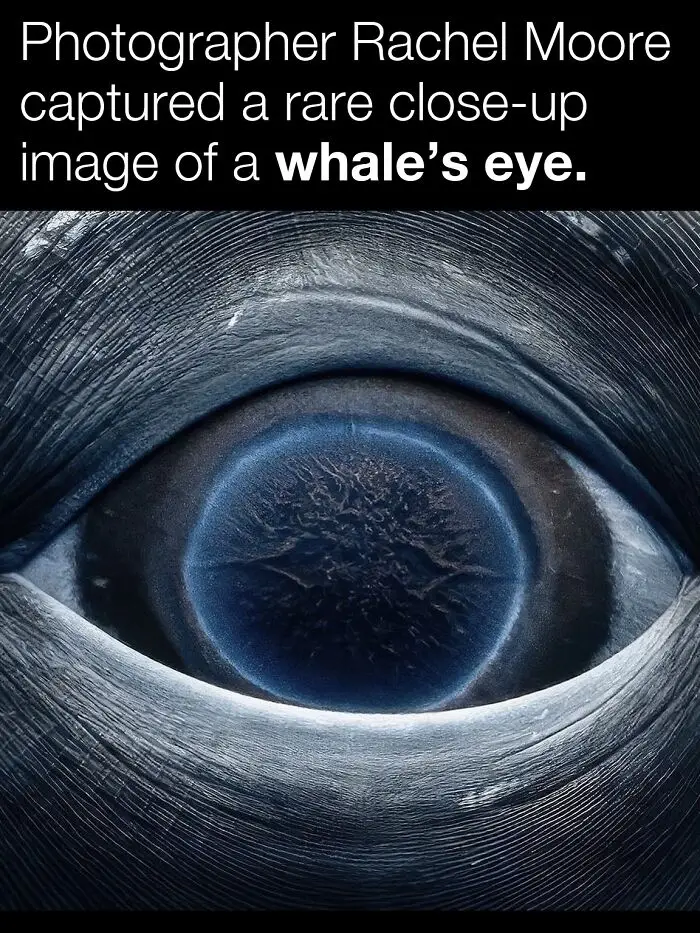
On 6 October 2024, underwater photographer Rachel Moore captured an extraordinary close-up photograph of a humpback whale’s eye while swimming near the island of Mo’orea in French Polynesia.
The whale was a young female, estimated to be three or four years old, whom Moore affectionately named “Sweet Girl”. The two had first encountered each other the previous day, spending around ten minutes face to face in the water. When they met again, the curious whale approached Moore and positioned her enormous eye just inches from the camera.
For approximately five minutes, they maintained eye contact as the whale slowly moved around her. At one point, Sweet Girl rolled upside down, allowing the sunlight to illuminate her eye and reveal its remarkable blue colouring. Moore captured the moment using a Sony Alpha 1 camera, later explaining that the photograph required very little editing.
Sadly, just four days after the photograph was taken, Sweet Girl passed away following a collision with a fast-moving vessel near Tahiti. Moore subsequently used the image to raise awareness about the dangers posed by shipping traffic and to campaign for reduced vessel speeds during whale season
Report
3points
#32

In January 2015, a 68-year-old British man named Stan Beaton was brought to tears after hearing his late wife’s voice for the first time in weeks, thanks to the extraordinary efforts of 11 telecommunications engineers.
Stan’s wife, Ruby, had passed away from cancer in 2003, but he had preserved a recording of her voice on their home telephone’s answering service. Whenever he felt lonely or upset, he would listen to her familiar voice for comfort. He even refused to change telephone providers for over a decade because he feared losing the recording.
However, in December 2014, technical work by Virgin Media accidentally erased the message. Stan was devastated, believing he would never hear Ruby’s voice again. After learning about his situation, the company assembled a team of 11 engineers who spent three days searching through their systems to recover it. One executive described the task as being like searching for a needle in a haystack.
Remarkably, they succeeded. BBC Radio Leeds captured the emotional moment Stan heard the recording again, leaving him wiping away tears. He described it as a wonderful sound he had thought was lost forever. Virgin Media also arranged to provide him with a CD copy, ensuring he could keep the recording safely
Report
3points
#33

In the early 2000s, Saudi Arabia became famous for an underground driving culture known as hajwalah or tafheet. Young drivers would take ordinary cars onto wide highways, build up enormous speed and suddenly swing them from side to side while crowds watched from the roadside. The practice had existed since at least the late 1970s, but became especially visible as home videos, internet forums and later YouTube spread the footage far beyond Saudi Arabia.
Part of what made hajwalah so unusual was that many cars were not specially built drift cars. Drivers often used normal sedans and relied on long, wide roads around cities such as Riyadh to perform the slides. By the 2000s, the scene had developed its own famous drivers, videos and fan culture, turning something illegal into a recognisable youth subculture.
Authorities eventually introduced much tougher penalties and pushed drifting towards controlled tracks instead of public roads. What remains are thousands of photographs and low-quality videos from a period when Saudi Arabia had one of the strangest underground car cultures in the world.
Report
2points
#34

Tigers might look bright orange to humans, but to many of the animals they hunt, their fur appears much closer to green, allowing them to blend surprisingly well into the surrounding forest.
The reason comes down to how different animals see colour. Humans are trichromats, meaning our eyes have three types of colour-sensitive receptors that allow us to distinguish between red, green and blue. Deer and wild boars, two common prey animals for tigers, are dichromats, possessing only two types. This makes it much harder for them to distinguish orange from green.
In 2019, researchers at the University of Bristol investigated this phenomenon and found that a tiger’s orange coat provides remarkably effective camouflage when viewed through a dichromat’s visual system. The black stripes also help break up its outline among trees, grass and shadows, making it even harder to spot.
Interestingly, tigers cannot simply evolve green fur because mammals lack the biological mechanisms needed to produce green pigments in their hair. Fortunately for tigers, their orange colouring works remarkably well against the animals they’re trying to catch.
Report
2points
#35

Japanese immigration to Mexico began in 1897, when a group of settlers arrived in the southern state of Chiapas. Over the following decades, thousands more arrived, building farms, businesses and communities that combined Japanese traditions with Mexican culture.
One of these immigrants was Tsutomu Kasuga, pictured on the right, who arrived from Japan in 1930, aged just 20. He initially worked on a ranch before opening a successful shop with his wife, Mitsuko Osaka. However, during World War II, the Mexican government ordered Japanese families to relocate to Mexico City and Guadalajara. Despite local authorities defending the Kasuga family, they were forced to leave their home and business behind.
After relocating to Mexico City, Tsutomu supported his family by selling fruit and vegetables before rebuilding his business. His son, Carlos Kasuga Osaka, later became one of Mexico’s most successful Japanese-Mexican businessmen, helping establish Yakult Mexico and supporting Japanese cultural and educational institutions. Remarkably, his family’s business even helped manufacture the enormous Olympic rings released during the opening ceremony of the 1968 Mexico City Olympics.
Report
2points
#36

How much of someone’s face can you change before you stop recognising them? Illustrator Connie Kang puts that idea to the test by transforming famous celebrities into completely different animals, yet somehow leaving just enough of each person behind that many are still instantly recognisable.
Kang had already become known for doing the opposite, studying photographs of animals and turning them into human characters. She looks beyond the animal itself, using its expression, posture, colours and personality to inspire everything from clothing to body language. Then a friend suggested she reverse the idea and turn celebrities into animals instead.
That is where these portraits become especially clever. A familiar sideways glance might become the eyes of a cat, someone’s posture can survive in an entirely different body, while hairstyles, outfits and expressions provide tiny clues to who you are looking at. Even after the human face disappears beneath fur, feathers and whiskers, your brain can often recognise the celebrity almost immediately.
Art by Connie Kang @kangyannan
Report
2points
#37
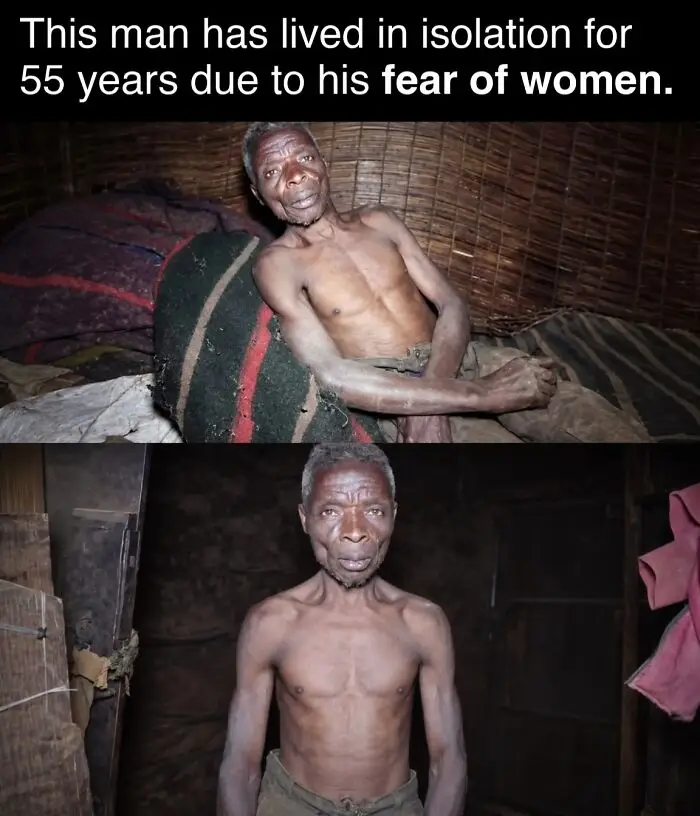
In 2023, the story of Callixte Nzamwita, a 71-year-old man from Rwanda who claimed to have lived in isolation for 55 years because of his extreme fear of women, went viral. According to Nzamwita, he began avoiding women at just 16 years old and eventually built a wooden fence around his home to prevent anyone from approaching him.
Nzamwita lives in a small, one-room house where he spends most of his time alone. In an interview with Afrimax TV, he explained that being around women made him extremely frightened. His reported condition has been compared to gynophobia, an intense fear of women, although there is no publicly confirmed medical diagnosis.
Remarkably, despite his fear, women in his local community have helped him survive for decades. Neighbours explained that they regularly bring him food and other essentials, leaving them inside his fenced property without approaching him directly. His unusual living arrangements attracted international attention after his interview circulated online.
Report
2points
#38

The most iconic cheeks in jazz belonged to Dizzy Gillespie. When he played the trumpet, his cheeks ballooned to an extraordinary size because of his unique technique and decades of powerful playing. Doctors later studied his facial muscles, finding they had stretched so much that they behaved differently from almost any other trumpet player’s. Combined with his famously bent trumpet, his appearance became one of the most recognisable images in music history.
One of the biggest names in jazz, Louis Armstrong, was given his first trumpet while living in a juvenile detention home after being arrested at the age of 11 for firing his stepfather’s pistol into the air on New Year’s Eve. It was there that he joined the home’s band, discovered his talent for music, and began the journey that would eventually make him one of the most influential musicians of the 20th century.
Report
2points
#39
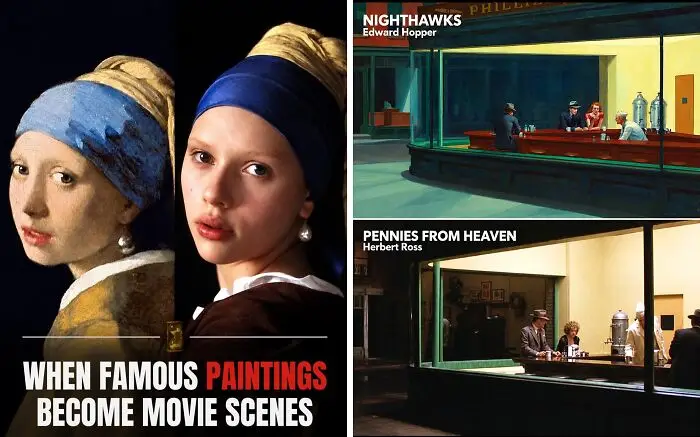
Some of cinema’s most memorable shots were shaped by paintings made decades or even centuries earlier. Sometimes the connection was deliberate, while other examples are striking visual parallels created through the same pose, lighting or composition.
A few are especially direct. Django’s bright blue suit was based on Thomas Gainsborough’s The Blue Boy after costume designer Sharen Davis slipped the painting into Quentin Tarantino’s research book. Shirley: Visions of Reality goes even further, building its story around 13 recreated Edward Hopper paintings. In Akira Kurosawa’s Dreams, the main character actually walks through the landscapes of Vincent van Gogh, with Martin Scorsese appearing as Van Gogh himself.
Report
2points
#40

In 1551, the Ottoman scientist Taqi al-Din described a device that functioned as an early steam turbine, more than two centuries before the Industrial Revolution.
His design used a small boiler to produce steam. The steam was directed through a narrow nozzle onto the blades of a wheel, causing it to spin. That wheel was mechanically connected to a roasting spit, allowing meat to rotate over a fire without anyone having to turn it by hand.
What makes the invention remarkable is its practical use of thermal energy to create rotational mechanical energy. Rather than treating steam as a curiosity or using it only in a simple experiment, Taqi al-Din applied it to an everyday task: automating the preparation of food.
The device was described in his book The Sublime Methods of Spiritual Machines, which also covered water-raising machines, clocks and other mechanical systems.
Taqi al-Din’s steam-powered spit formed part of a broader tradition of Ottoman engineering. He also designed astronomical instruments and mechanical clocks, and later became the Ottoman sultan’s chief astronomer. In 1577, he established an observatory in Istanbul, where he used advanced instruments to improve astronomical observations.
Follow @lostintimehistory for more!
Report
2points