



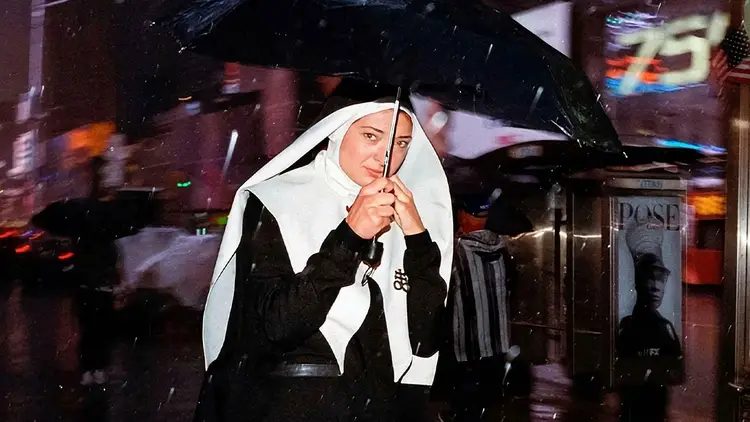


Sometimes, the spectacular moments of history aren’t found in grand events, but in the weird, eerie, or poetic interactions of everyday people at a bus stop or a storefront.
Such a moment can be found in a father and his child pedaling down a French country road in the 1950s with two fresh baguettes strapped to the bike rack, or in two mail carriers trudging through a blinding blizzard just to deliver the morning post.
All of these incredible visual stories are woven together in this collection, which we’ve curated directly from the r/GreatestPhotos community.
Each photo is memorable, helping us understand both the importance and the beautiful weirdness of the past.
Get ready to scroll through a version of history that most of our school textbooks didn’t have enough space for.

#42 Dorothea Lange - Sacramento, California ( 1942 )

Mexican field laborer arriving at station in Sacramento, after 5 day trip from Mexico City, imported by arrangements bet Mexican and US governments to work in sugar beets.
Report
19points
#43 Slim Aarons - Antibes, France ( 1976 )

Guests by the pool at the Hotel du Cap Eden-Roc
Report
17points
#44 Bill Brandt - Halifax, England ( 1937 )
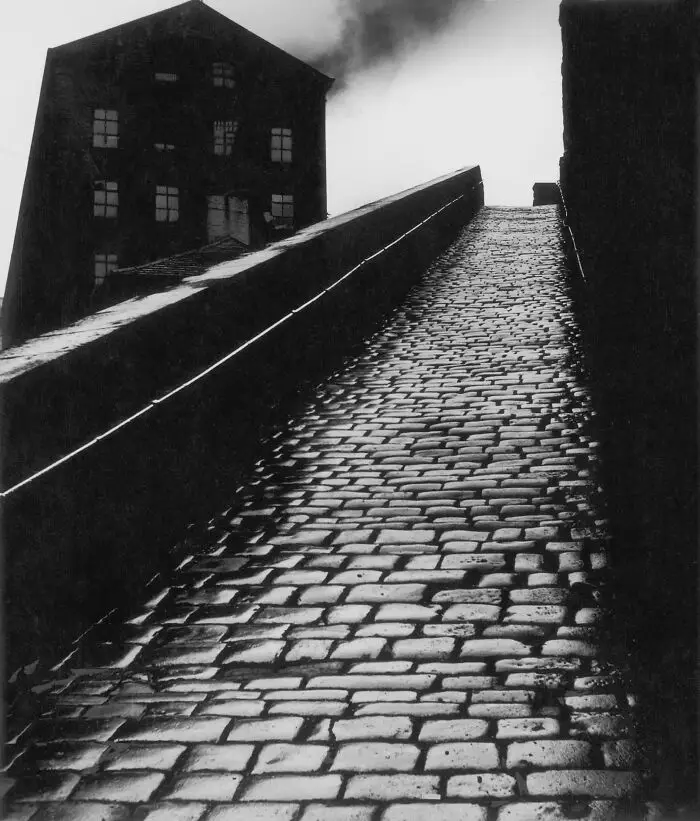
In 1951 Brandt started to print his photographs using a paper that could render very dark and light areas in the same image. In the earlier prints of this photograph, the details of the facade of the building on the left are perfectly visible. In contrast, in the second iteration he completely blackened the house and created a strong contrast with the glint on the ramp’s cobblestones while adding a plume of black smoke in the sky.
Report
17points
#45 Brassaï - Montmartre, Paris ( 1930 )

Brassaï : "The Eye of Paris" ( 1899-1984 )
Report
17points
#46 Martine Franck - Newcastle Upon Tyne, England ( 1977 )

Born in Belgium in 1938, Martine Franck grew up in the United States and in England. She studied art history at the University of Madrid and at the École du Louvre in Paris. After a trip to the Far East with Ariane Mnouchkine in 1963–64, Franck worked at Time-Life in Paris as an assistant to the photographers Eliot Elisofon and Gjon Mili. Her friendship with Mnouchkine also led her to follow the Théâtre du Soleil from its beginnings in 1964 until the end of her life.
After joining the Vu Photo Agency, Franck contributed to the founding of the Viva agency in 1972. She took many portraits of artists and writers, including a noteworthy series of women for Vogue. She undertook more far-reaching work for the French Ministry of Women’s Rights in 1983. That same year, she became a full member of Magnum Photos. From 1985, Franck collaborated with the International Federation of Little Brothers of the Poor, a non-governmental organization which cares for the elderly and outcasts of society. It was in 1993 that Franck first visited the island of Tory, off the northwest coast of Ireland. There, she studied the daily life of a traditional Gaelic-speaking community separated from the mainland.
She next traveled to Asia to meet Buddhist Tibetan children in India and Nepal. With the help of Marilyn Silverstone, a former member of Magnum Photos who became a Buddhist nun, she encountered the Tulkus, the young lamas who are thought to be the reincarnations of ancient great spiritual masters.
In 2002, she created, with Henri Cartier-Bresson and their daughter Mélanie, the Henri Cartier-Bresson Foundation in Paris, where she became President in 2004.
Martine Franck passed away in Paris on August 16, 2012.
Report
17points

#48 Franco Fontana - Los Angeles, USA ( 2001 )
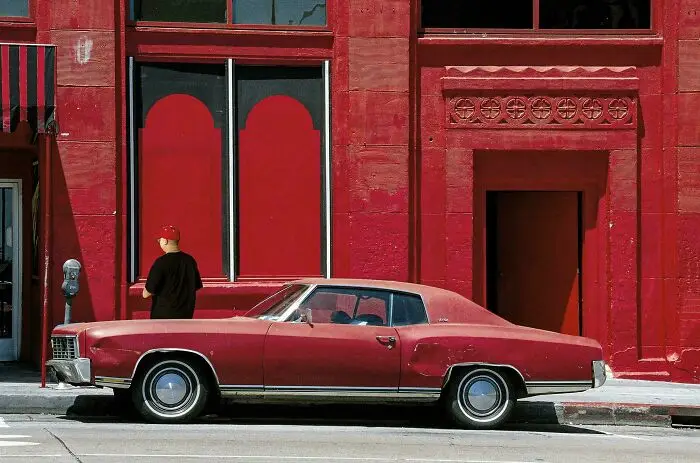
Italian photographer Franco Fontana is a pioneer of color photography, known for his abstract cityscapes, seascapes, and landscapes. Fontana embraced color film as early as the 1960s at a time when few fine art photographers ventured outside the conventions of black-and-white photography. His break with established styles and practices represents a significant shift in Italian postwar photography.
In his images, Fontana often pares landscapes down to their essential elements, producing flat, geometric compositions —reminiscent of the color field paintings of Mark Rothko or Barnett Newman —by underexposing his transparencies. Contrasting blue skies with green or yellow grass and the rigid lines of buildings with the softness of puffy clouds, he makes color and texture his primary subjects.
Report
16points
#49 Louis Stettner - Aubervilliers, France ( 1947 )

"The photographs that remain strong and alive seem to be when your vision and reality are so inexorably wedded together it is impossible to separate them."
~ Louis Stettner
Report
16points
#50 Vivian Maier ( 1926 - 2009 )

Self-Portrait of Pioneer Street Photographer Vivian Maier
Report
16points

#52 Elliott Erwitt - New York, USA ( 1978 )

" It's about time we started to take photography seriously and treat it as a hobby "
~ Elliott Erwitt
~ Elliott Erwitt
Report
15points
#53 Lee Friedlander - Nebraska, USA ( 1999 )

From the Great Book " America by Car " ( 1995-2009 )
Report
14points
#54 Albert Nyfeler - Lötschental, Switzerland ( 1936 )

This photograph by Albert Nyfeler captures the vital process of transporting timber for the construction of Hans Lehner’s chalet in Lauchernalp, nestled in the Swiss Alps. Building in such a mountainous region required ingenuity and careful planning, as materials had to be moved across challenging terrain before modern machinery was widely available.
Timber, sourced locally or brought from nearby forests, was essential not only for structural strength but also for blending the chalet harmoniously with its alpine surroundings. This method of construction reflects the traditional Swiss approach to mountain architecture—durable, practical, and beautifully integrated with nature.
During the 1930s, alpine chalets symbolized comfort and a retreat from urban life, combining rustic charm with functionality. Transporting timber in the Alps often involved sleds, pack animals, and manual labor, highlighting the skill and teamwork of local workers.
Nyfeler’s photograph preserves a moment in this timeless process, emphasizing the relationship between people, craftsmanship, and environment. It offers a window into how communities in the Swiss Alps maintained their cultural heritage through architecture while adapting to the demands of their spectacular but demanding landscape
Report
13points
#55 Dorothea Lange - San Francisco, USA ( 1934 )

" I assigned myself the task of photographing the May Day demonstrations at Civic Center. . . . I will go there, I will photograph this thing, I will come back, and develop it. I will print it, and I will mount it and I will put it on the wall, all in twenty-four hours. I will do this, to see if I can just grab a hunk of lightning."
~ Dorothea Lange
Report
13points
#56 Bruce Davidson - New York City, USA ( 1980 )
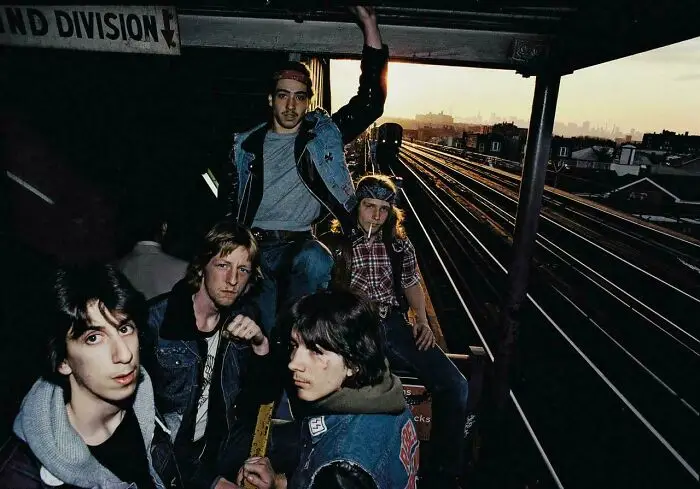
From the Great Book " Subway "
Report
13points
#57 Max Pinckers - Mumbai, India ( 2014 )
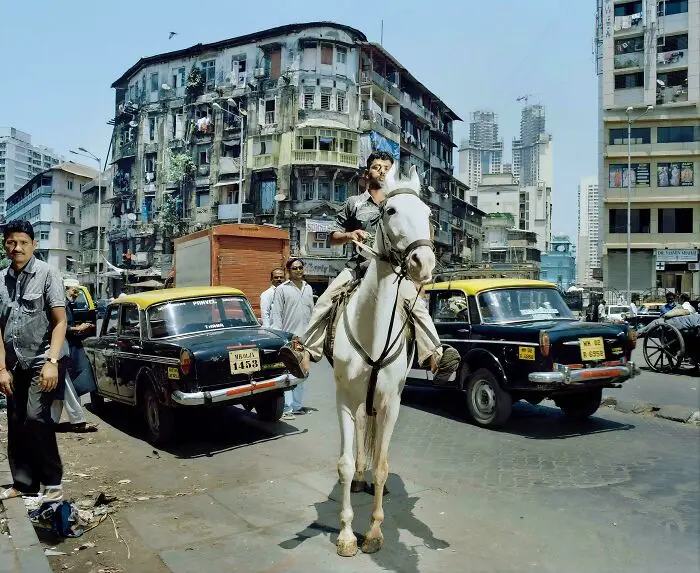
From the Book " Will They Sing Like Raindrops or Leave Me Thirsty "
Report
12points
#58 Harry Gruyaert - Manhattan, New York City ( 1985 )

From the Book " Harry Gruyaert - New York "
Report
12points
#59 Martin Parr - Pisa, Italy ( 1990 )

“ We then take photos of ourselves in front of the visited sight. This proves we have been there and are part of the world as we know it. Visiting sites is a modern form of pilgrimage and the resulting photos the ultimate prize ”
~ Martin Parr
Report
12points
#60 Henri Cartier-Bresson - Paris, France ( 1932 )

" To take a photograph is to align the head, the eye and the heart. It's a way of life "
~ Henri Cartier-Bresson
Report
12points