



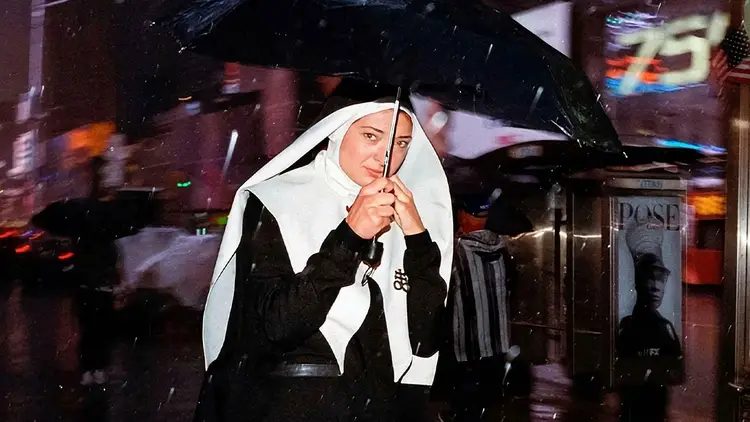


Sometimes, the spectacular moments of history aren’t found in grand events, but in the weird, eerie, or poetic interactions of everyday people at a bus stop or a storefront.
Such a moment can be found in a father and his child pedaling down a French country road in the 1950s with two fresh baguettes strapped to the bike rack, or in two mail carriers trudging through a blinding blizzard just to deliver the morning post.
All of these incredible visual stories are woven together in this collection, which we’ve curated directly from the r/GreatestPhotos community.
Each photo is memorable, helping us understand both the importance and the beautiful weirdness of the past.
Get ready to scroll through a version of history that most of our school textbooks didn’t have enough space for.
#61 Walker Evans - Vicksburg, Mississippi ( 1936 )
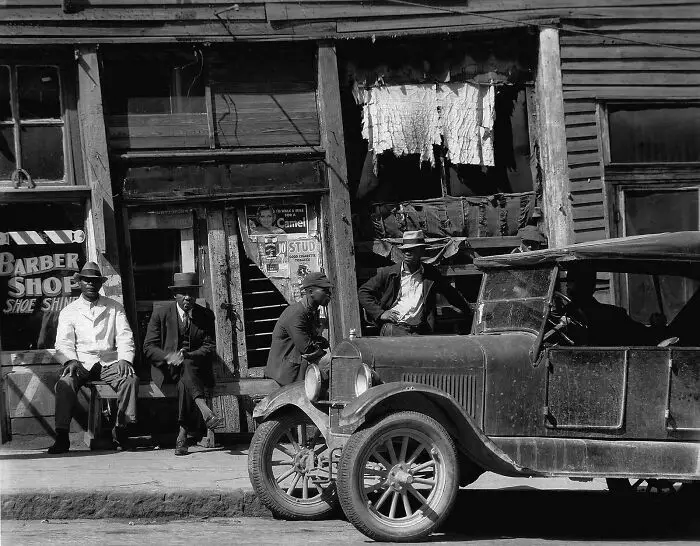
Walker Evans was born in 1903 in St. Louis, Missouri, to an upper-middle-class family, affording him access to a formal education.
He initially aspired to become a writer, an interest he never fully abandoned. He attended Williams College in Massachusetts for a year and briefly studied at the Sorbonne in Paris before moving to New York City in 1926 to focus on photography.
From 1935 to 1937 Evans worked as a photographer for the “Resettlement” , a US government initiative instituted to document the severe conditions of rural America during the Great Depression in order to gain support for relief programs. A significant moment for his artistic growth, the position allowed Evans to refine his photographic eye as he traveled across the country, focusing his camera on churches, advertisements, sharecroppers, and steel mills. Despite the advantages of steady employment, Evans had some personal reservations about working for a government program. Before accepting the position, he declared that under no circumstances would he “ make photographic statements for the government…. No matter how powerful—this is pure record not propaganda…. No politics whatsoever. ”
Throughout his career, Evans continued to resist the characterization of his work as political, remarking, “ I didn’t like the label that I unconsciously earned of being a social protest artist. I never took it upon myself to change the world. ”
Even if Evans’s intentions were driven by aesthetic pursuits rather than a political agenda, viewers of his work are not afforded the same neutrality, especially with challenging photographs such as Minstrel Showbill or Houses and Billboards in Atlanta. Despite being taken nearly 90 years ago, these alarmingly casual depictions of violence in the American vernacular are not records of a distant past; instead, they are sobering reminders of struggles that persist in the US today. In addition to these challenging scenes, Evans on occasion injected humor and absurdity into his work, as seen in images such as Truck and Sign, in which the word “ Damaged ” appears boldly across the photograph. In the summer of 1936 Evans took a leave of absence from the Resettlement Administration to work with his friend, the writer James Agee, on the publication " Let Us Now Praise Famous Men. " Through words and photographs, the book provided an account of life among a group of tenant farmers in Hale County, Alabama.
Evans continued to photograph until his death in 1975, holding positions at Time as well as Fortune magazine, where he worked as an editor and photographer from 1945 to 1965. A 1938 exhibition at The Museum of Modern Art, Walker Evans: American Photographs, surveyed his first decade of photography, and was the first one-person presentation by MoMA’s Department of Photography. ( An exhibition of Evans’s photographs of Victorian houses four years earlier was considered an architecture exhibition ) The exhibition’s accompanying publication, which serves as an exploration of US society through its workers and institutions, is considered one of the most influential photobooks in the history of the medium because of its rhythmic, uninterrupted sequencing. While Evans’s enduring vision was embraced by museums worldwide, the lifelong contrarian pushed back against the acclaim, noting one should “ be careful about being established…. Part of me doesn’t want this to be established...because it tames it. ”
Today, Evans’s impact and “ lyric documentary ” style can be seen in the work of many contemporary artists, including William Christenberry and RaMell Ross, both of whom have also worked in Hale County. Their works probe everyday life to depict an “ epic moment in something incredibly simple. ”
Viewing their photographs, one can sense that behind the veneer of banality, potentially mistaken as commonplace, social commentary and radical thought might be revealed
Report
11points
#62 Weegee - NYC, USA ( 1945 )

" People are so wonderful that a photographer has only to wait for that breathless moment to capture what he wants on film "
Weegee
Report
11points
#63 Henri Cartier-Bresson ( 1908 - 2004 )

" In photography, the smallest thing can become a big subject, an insignificant human detail can become a leitmotiv. We see and we make seen as a witness to the world around us; the event, in its natural activity, generates an organic rhythm of forms "
~ Henri Cartier-Bresson
Report
6points