

Misogyny and male chauvinism do not always sound loud or openly hostile. Sometimes, they hide in passing comments and even holiday gifts.
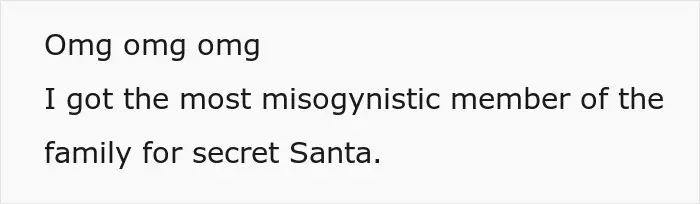
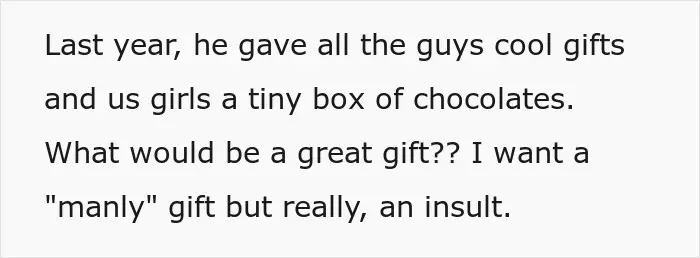
For one woman, that casual disrespect showed up in Christmas gifts. Each year, a misogynistic male relative went out of his way to buy cool gifts for the men in the family, while handing the women a tiny box of chocolates. But this year, she has the perfect opportunity for some sweet payback, and the internet has some wild ideas.
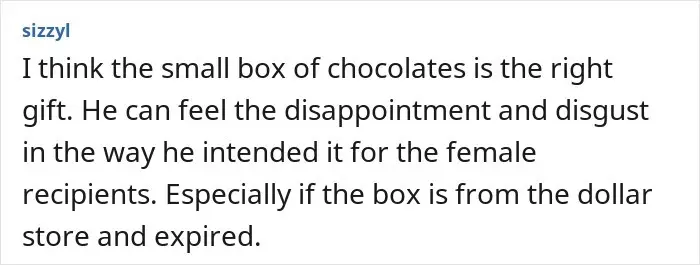
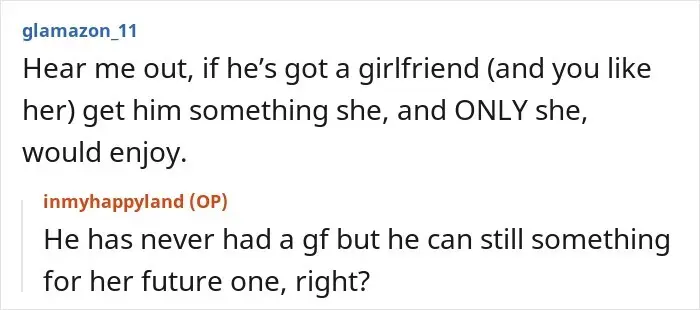
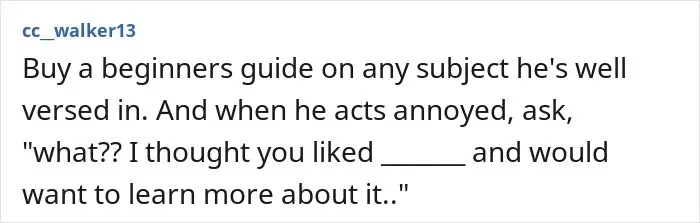
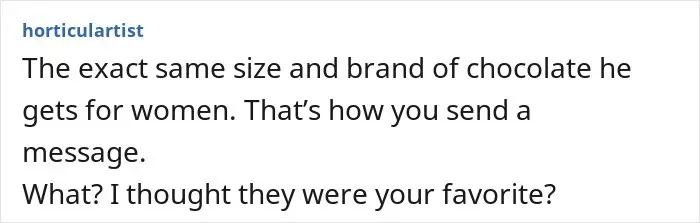
Thousands of people have suggested gifts designed to bruise his fragile male ego — from a nose hair trimmer and a jar-opening tool to anything covered in glitter, or even donating to a women’s shelter in his name.
We rounded up the best reactions from the thread, so take notes before you start shopping for annoying relatives this holiday season.
A woman shared how her misogynistic relative makes his bias obvious every Christmas

But this year, she turned to the internet to get some petty gift ideas as payback
Commenters quickly jumped in with hilariously savage options














Gender bias at home can leave a long-lasting impact
The woman’s Secret Santa dilemma feels so relatable because subtle sexism is part of everyday life. Most people don’t even notice it because it has been normalized for generations.
Home is the very first place where children learn how the world views men and women. Research from the University of Cambridge shows that a child’s understanding of gender is largely shaped by how the people around them treat them. By the time kids are just two years old, they already pick up on the subtle rules of their environment — learning that boys and girls are put into separate boxes with their own colors, their own toys, and eventually, very different kinds of gifts.
According to the American Psychological Association, rigid ideas about gender roles do real harm. Women face higher rates of harassment and fewer opportunities, and men who cling to traditional masculine norms often struggle with higher rates of depression and substance dependency.
Even the basic preference for sons over daughters lingers in subtle ways. Decades of Gallup polling reveal that when asked about having children, American men have consistently preferred a baby boy over a girl by an average of 25 points.
The underlying bias spills over into real life. It shows up in how household chores get divided, whose opinions are heard, and yes, who gets the thoughtful presents on Christmas.
“While individual instances of this unfair treatment might seem so minor as to be harmless, they can be frequent and ubiquitous. Everyday sexism is often present at a constant low-level in the background of our lives, adding an extra layer of stress. Unsurprisingly, these subtle forms of everyday sexism have been linked to poorer mental health,” says Beatrice Alba, a research fellow at La Trobe University.
She believes that subtle forms of sexism may be as harmful as more overt forms of discrimination.
When you look at the bigger picture, the issue is not about a tiny box of chocolates — but about the quiet misogyny that lingers in many homes and gets brushed aside to keep the peace.
How to deal with misogynistic family members this holiday season
The holiday season is right around the corner, and millions of people are preparing to gather under one roof with their extended families. For many, that means bracing for awkward dinner table conversations and toxic relatives.
A recent Hilton survey found that more than half of people who stay with relatives over the holidays make excuses to cut their visits short. Another poll of 2,000 Americans found that, on average, it takes just three hours and 54 minutes of socializing with extended kin before most people start craving peace and quiet.
Sexist jokes, patronizing remarks, and biased behavior are all too common when loud uncles and passive relatives crowd into the same living room. You might walk into the party hoping that one difficult family member will finally act differently this year. Still, deeply rooted habits rarely change overnight — especially during the stress of the holidays.
Instead of waiting for toxic relatives to magically improve, experts say the smartest move is to focus on what you can actually control.
“The phrase ‘blood is thicker than water’ is a cultural anchor for many, often leading people to endure hurtful dynamics out of a misguided sense of obligation or loyalty… Your well-being is paramount. Dealing with toxic family members is not about changing them, but about radically changing your response and relationship with them,” says clinical social worker Eva Cozzi.
Setting clear limits is a great first step, though those rules only work if you are ready to back them up. “Boundaries alone are sometimes insufficient,” she adds. “You must be willing to adjust the frequency and nature of your contact to protect your peace.”
Protecting your peace does not mean you can’t have a little fun along the way. Every once in a while, the universe hands you a golden opportunity to balance the scales — like drawing the name of your most misogynistic relative in the family Secret Santa exchange.
While getting even will not erase years of casual bias, a clever, harmless prank can bring a welcome dose of humor to a toxic environment. At the end of the day, standing up to bullies — even with something as simple as a nose hair trimmer wrapped in pink paper — is a satisfying reminder that you don't have to quietly accept disrespect just because it is the holidays.
The woman was torn between keeping the peace and choosing sweet revenge

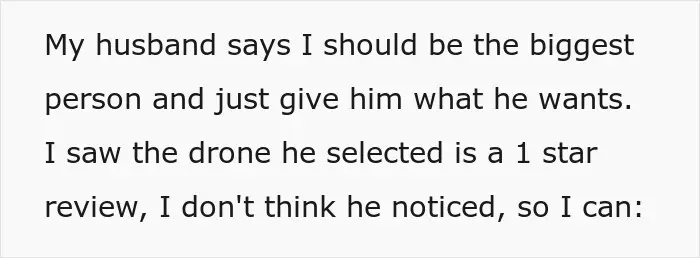



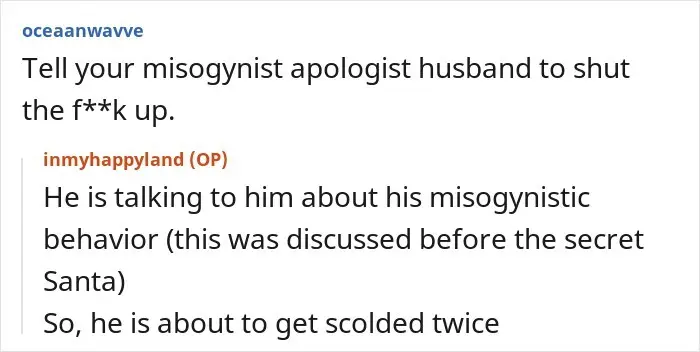
She gave some more info in the comments



People came up with even more creative suggestions
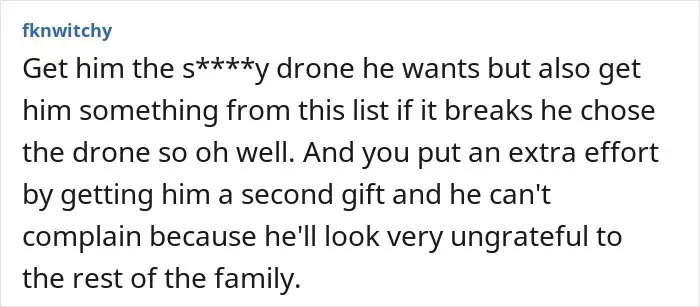

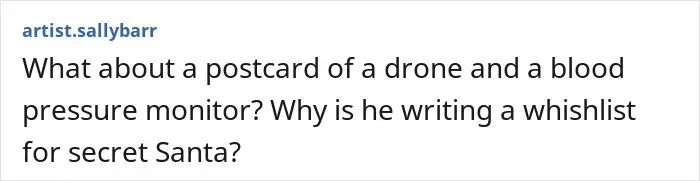



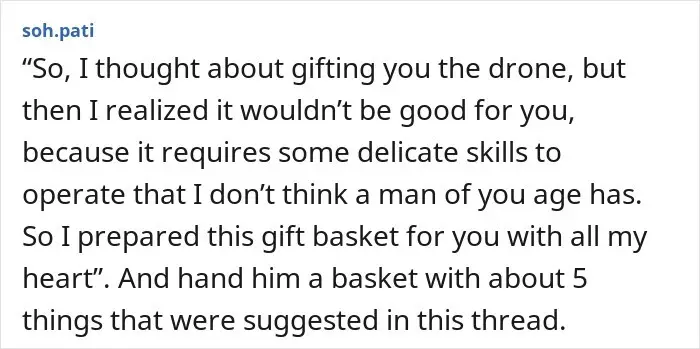
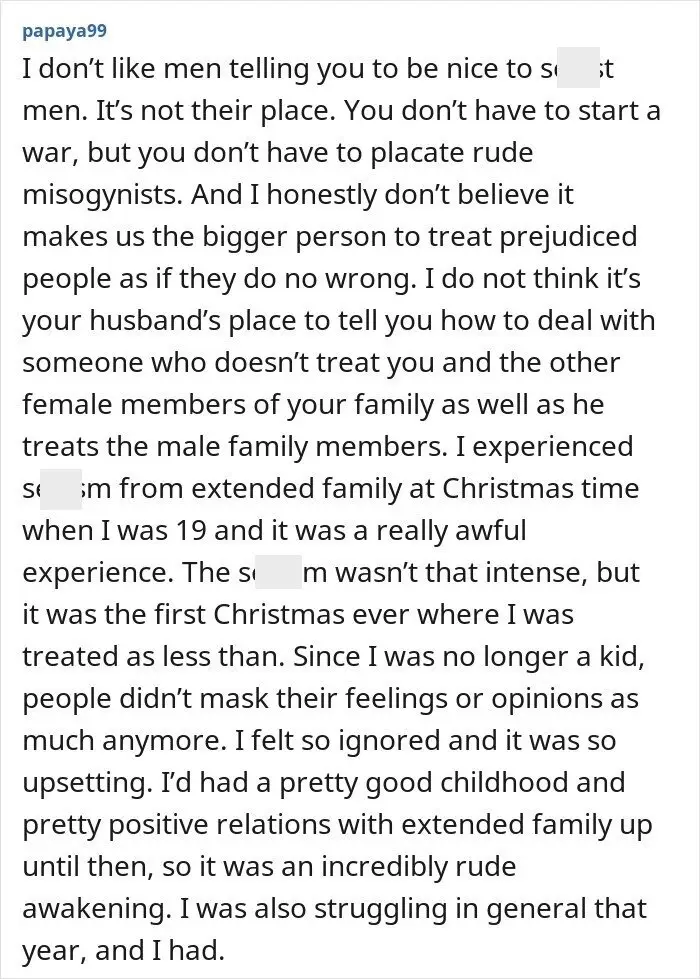
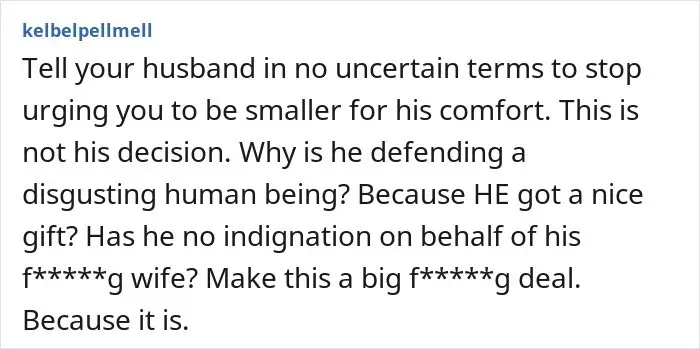

The woman asked the internet to give their worst gift ideas

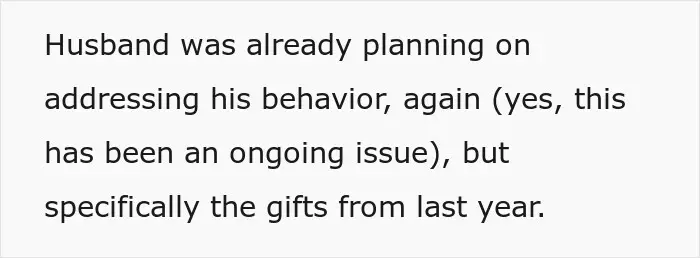
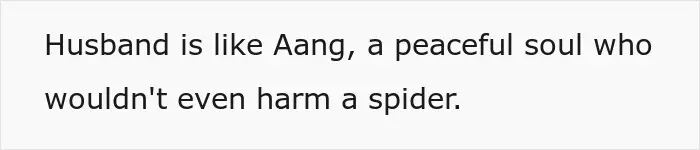
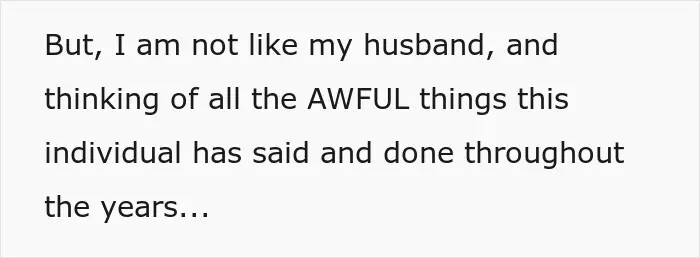

And the people obliged, coming up with some hilarious options