






Like a game of Civilization VI, each day, we invent something new and meaningful that moves us towards a new era. Since the agricultural revolution, we have spent less time on the search for food and more on research and trials to develop things that would someday be deemed the most famous inventions of our history. We became more nerd-like, inventing famous inventions one after the other. However, not all brainchildren get granted the title of a famous invention. Some are forgotten in history and replaced with other, more convenient creations. But what keeps one invention in the history books and others in the garbage cans?
Ever tried to cook some food on a stove instead of making that second cup of ramen? Well, you can thank the ancestors of the past for the accidental invention of fire. We evolved to develop things. At some point in our lives, our DNA tells us to use our creativity to create something that will benefit humanity and make notable inventions. Did you just create an electric toothbrush by using your father's only electric drill? An important invention for you, but not for your now-angry father and humanity overall. Popular inventions change society for good. Significant inventions of today can be total pieces of trash tomorrow. So you can guess where that drill-toothbrush belongs.
There are a lot of significant inventions that you might be using right now. That computer or phone you are using? It’s not voodoo magic or God that makes the letters and funny music appear, so don’t believe your technophobic granny and read up on some knowledge. The list of important inventions we have compiled below might just broaden your understanding of how meaningless your pen-pencil combination is. Upvote the ones that you found the most meaningful for human history, and comment below if you have a better replacement for the invention!
#81 World Wide Web (WWW)

To exclude the World Wide Web from a list of the best concepts ever would be sacrilege. It is a method of getting information. Given that the title belongs to the two individuals who created the Internet protocol suite, Tim Berners-Lee might not be considered the father of the Internet. Berners-Lee, however, is credited with facilitating universal access to the Internet. The first website in the world was hosted on Berners-Lee’s computer.
Report
9points
#82 Paper Currency

Throughout history, money has taken many different forms, including precious metals, coins, foods, produce, livestock, and pretty much anything else that might be traded or bartered for. Paper money was first used in the 11th century in China, and in the late 1600s, Europe followed suit.
Paper money quickly evolved into the most popular bartering instrument to buy goods and services, despite having no intrinsic value and initially being used as legally binding notes issued by banks as a promise of future payments. A new era of trade brought forth by paper money changed the face of economics on a worldwide scale.
Report
8points
#83 Sailboat

Sailboats were initially used as a mode of transportation by the Ubaid culture of prehistoric Mesopotamians, who lived in what is now Iraq, circa 6000 B.C.E. The Tigris and Euphrates rivers, where the civilization originated and developed, were crossed by them while they were on the water.
unknown
Report8points
#84 Copernican Theory
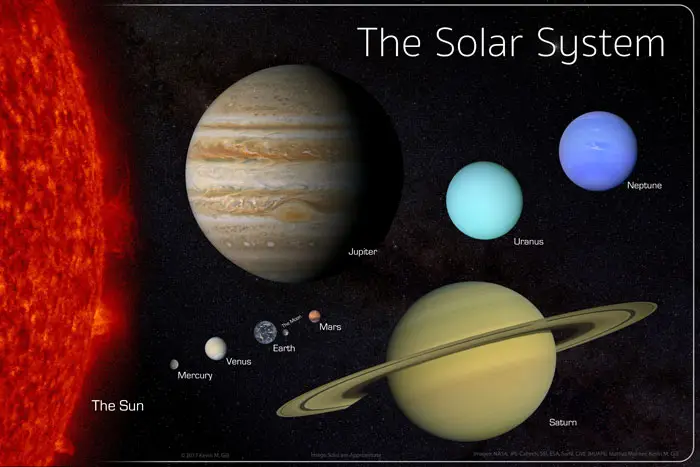
It was essentially both revolutionary and blasphemous at the same time when it was first published in 1543 by Copernicus. Because it went against conventional wisdom, it was revolutionary: Anyone could see (not observe) that the sun traveled from east to west and that it revolved around the earth. Being in opposition to the church, it was blasphemous.
The Copernican idea does influence current astronomical observation, even though it has some flaws. To put up a concept at that time that went against accepted wisdom and established religious doctrines would require someone of extraordinary bravery.
Report
8points
#85 Mirror

Before mirrors were manufactured in large quantities and used extensively, people could only see their reflections on still water or extremely dazzling metallic surfaces. Of course, the surface and illumination were uneven, so what they could see did not accurately represent their true reflections.
That was altered by the mirror, which was created during the Renaissance. One mirror may reveal exactly how you appear to others, which encourages us to acquire etiquette when it comes to eating, grooming, shaving, and acting in public.
Report
8points
#86 Unmanned Aerial Vehicles
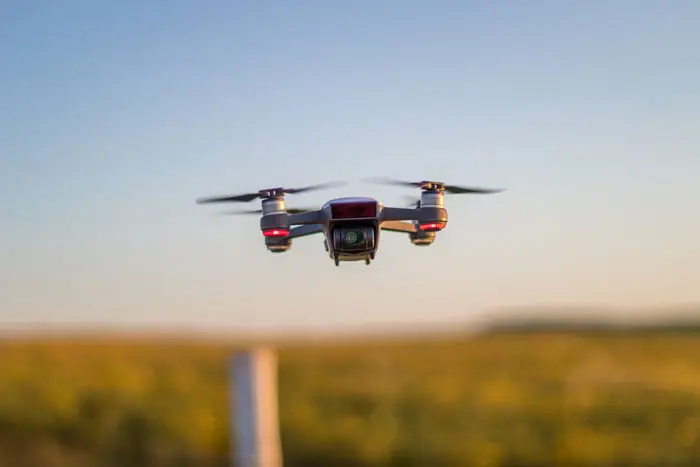
Similar to GPS, Unmanned Aerial Vehicles (UAV), also referred to as drones, were initially developed as a military project, however it is difficult to say exactly when this happened. The Aerial Target, developed by Archibald Low in 1916, was one of the first motorized UAV prototypes. Nikola Tesla went on to describe an army of autonomous airborne combat vehicles a year later.
The vast majority of people would tell you that drones are deadly weapons concealed in the sky, while some claim they are tools for monitoring and some believe they are cutting-edge delivery trucks. Drones serve as an excellent illustration of how an innovation may be either helpful or dangerous, depending on how we choose to use it.
Report
8points
#87 Electronic Ignition System

In 1962, only competition engines like the BRM and Coventry Climax were capable of using early ignition systems. Since electronic ignition was an option on select 1963 models, Pontiac was the first manufacturer to provide it in a road-legal vehicle. The Fiat Dino in 1968 marked the introduction of electronic ignition systems as industry standard.
Soon after, other automakers did the same. Jaguar in 1971 and Chrysler in 1973, as examples. It was made a standard feature in 1975 by Ford and GM. It is safe to conclude that the ignition system was the catalyst for the transition of the automotive industry from mechanical to electronic control. Many of the features found in modern cars are electric-controlled, including traction, steering, brakes, transmissions, and even airbag deployment.
Report
8points
#88 Petrol

Petroleum was not a preferred oil natural by-product in 1859. Petroleum (also known as gas or gasoline in the country) was dumped by Edwin Drake, the man who drilled the first successful oil well in the United States, since he was not aware of its potential use. Drake primarily produced kerosene, a highly sought-after product, by refining the oil. Petroleum was essential to the Industrial Revolution's success.
Report
8points
#89 Rocket

While the Ancient Chinese are credited with the creation of the first rockets, the modern rocket, which transformed military capabilities and permitted human space exploration, was created in the 20th century.
Report
8points
#90 Neolithic Revolution

The Neolithic Revolution marked at least one large-scale transformation in human society, when humans went from a nomadic lifestyle as hunters and gatherers to a more stable one centered on farming. They discovered strategies to cultivate crops in more orderly ways, enabling people to repeatedly gather food from the same spot.
Report
7points
#91 Hay

Hay was not even a concept in Rome or Greece. The ability to maintain horses by grazing was only a capability of civilizations that resided in warmer climates. Without horses to aid in transportation, trade, communication, and the distribution of products during the winter when grass was limited, urban civilization could not advance in any way.
Someone created hay at some point during the period now known as the Dark Ages so that anyone could preserve grass for the challenging winter months. Hay was a major invention that contributed to the growth of many famous cities, including Paris, London, Vienna, New York, and Moscow.
Report
7points
#92 Information As A Commodity

Somewhere in history, it came across people’s minds that information was a commodity — one they could sell or trade for fortunes. The Internet became the biggest marketplace for information. Every advertisement that pops-up on your computer screen was not sent randomly. They were created to reach a certain person at a certain time. One of the biggest problems is that you’re not the one who collects the rewards for giving away that data.
Report
7points
#93 Eraser

The eraser is a wonderful concept or idea. There are many different shapes it can take, including the delete button, white tape, black tape, and the more literal rubber eraser.
You can change identities, make constitutional amendments, fix faulty measurements, adjust a structure, or change an existing order thanks to this straightforward thing. The basis for scientific methodology, better laws, developing societies, and even rewriting history is the capacity to go back and repair prior errors.
Report
7points
#94 Double-Entry Accounting

The fundamental tenet of double-entry accounting is the requirement that the total of all debits and credits must equal one another; this requirement is straightforward in theory but challenging in practice.
This bookkeeping style has been the standard practice all across the world since it was first presented in 1494 by Franciscan friar Luca Pacioli. It is used in all types of accounting systems, including those used in households to figure out income and expenses and in the intricate financial reports of the biggest organizations in the world.
unknown
Report7points
#95 ATM

The first ATM with full functionality was created by John-Shepherd Barron (Automated Teller Machine). On June 27, 1967, Barclays Bank in Enfield Town, London, built the first ATM. The most that could be withdrawn was £10. In any modern community, the machine is always only around the corner.
Report
7points
#96 Digital Music

In 1970, James Russell, a researcher at the Pacific Northwest National Laboratory, created the first digital recording and playback system. With his approach, sounds were represented by a pattern or series of 0s and 1s engraved on a photosensitive platter.
To create music, a laser reads the binary configurations. In order to record audio and play it back, analog-to-digital converters were required. Russell was unsuccessful in getting the music industry to adopt his concept, which is unfortunate. Twenty years later, a deal with James Russell's previous firm, Optical Recording Co., required CD makers, including Time Warner, to pay $30 million for patent infringement.
Report
7points
#97 Push Lawn Mower

In 1830, British engineer Edwin Budding created a new tool for cutting grass that was modeled after a carpet cutter. It had a frame made of wrought iron and was 19 inches broad. A lawn mower powered by an animal would take ten years to build, and the first steam-powered one wouldn't appear on the market for another 60 years.
Turf grass is one of the most widely produced plants in the United States, and it truly consumes a significant amount of land there. The growth of suburbia following World War II led to a huge demand for lawnmowers. Around 140,000 lawnmower units were sold in the U.S. alone before 1946. At the moment, more than five million units are sold annually.
Report
7points
#98 Car Jack
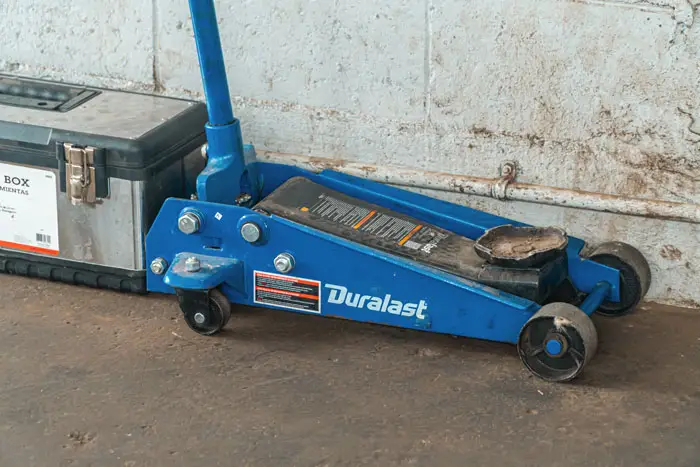
You would think that a hydraulic automobile jack was created by a person named Jack, but that is not the case. The first patent for the portable hydraulic jack, which outperformed the screw jack at the time, was given to Richard Dudgeon in 1851.
When he developed the idea, he was only 32 years old. Back then, hydraulic jacks were mostly employed in shipyards and railroad repair facilities, but today, they are a standard in every auto repair facility on the planet.
Report
7points
#99 Corkscrew

Although no one knows for sure, the heritage of English beer and cider makes it plausible that an Englishman was the inventor of the corkscrew. Having said that, Samuell Henshall received the initial patent for the device in 1795. He fitted a straightforward disk known as the Henshall Button between the worm and the shank to stop the worm from burrowing too far into the cork.
Report
7points
#100 Elevator

Although Elisha Elisha Graves Otis did not create the first elevator, he did create the brake utilized in modern elevators, which allowed for elevators to be built in higher buildings. In 1852, Otis and his company unveiled the first safety elevator, which only hastened the rise of skyscrapers in the USA.
Report
7points