






Like a game of Civilization VI, each day, we invent something new and meaningful that moves us towards a new era. Since the agricultural revolution, we have spent less time on the search for food and more on research and trials to develop things that would someday be deemed the most famous inventions of our history. We became more nerd-like, inventing famous inventions one after the other. However, not all brainchildren get granted the title of a famous invention. Some are forgotten in history and replaced with other, more convenient creations. But what keeps one invention in the history books and others in the garbage cans?
Ever tried to cook some food on a stove instead of making that second cup of ramen? Well, you can thank the ancestors of the past for the accidental invention of fire. We evolved to develop things. At some point in our lives, our DNA tells us to use our creativity to create something that will benefit humanity and make notable inventions. Did you just create an electric toothbrush by using your father's only electric drill? An important invention for you, but not for your now-angry father and humanity overall. Popular inventions change society for good. Significant inventions of today can be total pieces of trash tomorrow. So you can guess where that drill-toothbrush belongs.
There are a lot of significant inventions that you might be using right now. That computer or phone you are using? It’s not voodoo magic or God that makes the letters and funny music appear, so don’t believe your technophobic granny and read up on some knowledge. The list of important inventions we have compiled below might just broaden your understanding of how meaningless your pen-pencil combination is. Upvote the ones that you found the most meaningful for human history, and comment below if you have a better replacement for the invention!
#101 Atomic Bomb
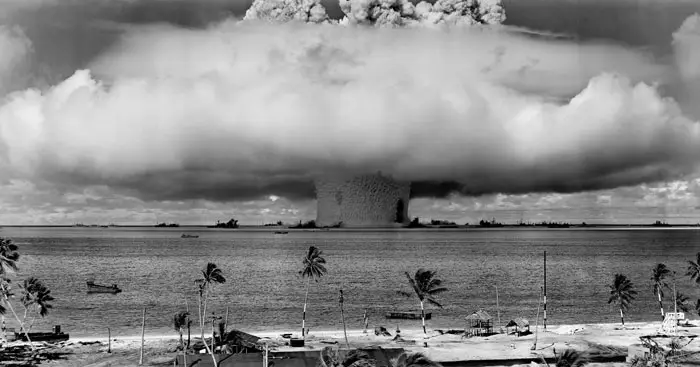
The atomic bomb had the biggest impact on human history of any technological advances and inventions in the previous 2000 years.
Now that superpower nations are armed with far more weapons than they could ever need, it is theoretically possible to destroy the earth. Atomic and nuclear weapons now play a role in keeping the globe secure to a certain extent as nations are forced to consider their actions carefully before starting a war.
Report
6points
#102 Global Positioning System

The TRANSIT system, which served as the GPS's forerunner in the 1960s, was created to direct nuclear submarines. The contemporary version of GPS (formerly Navstar GPS) was developed by the American Department of Defense but was only meant to be used by the military in the United States.
President Clinton authorized the use of GPS for non-military reasons in 2000, and now anyone can use the navigation system for a variety of tasks like locating the ideal fishing location or monitoring the movement of whales. The most precise GPS system is still owned by the U.S. government, hence it has some limitations compared to other GPS systems.
Report
6points
#103 Crescent Wrench
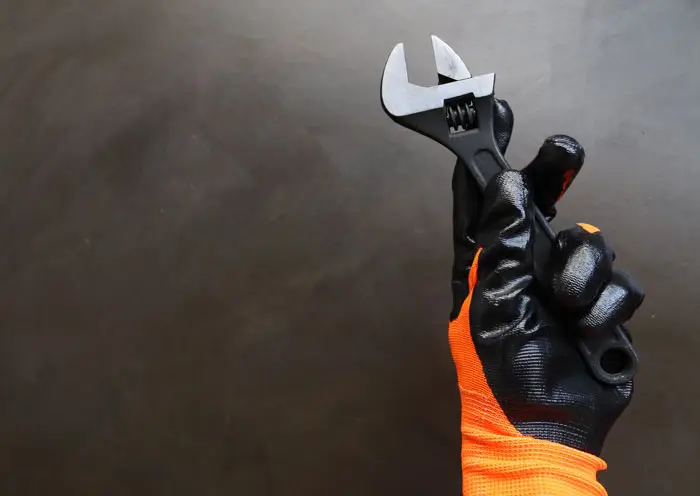
The Crescent Tool Company was established in 1907 in Jamestown, New York, by Karl Peterson. It exclusively produced a certain kind of wrench that could swap out a variety of wrenches of various sizes. Early auto brakes and clutches could both be adjusted using this gadget.
Despite its usefulness, the crescent wrench didn't become widely used until 1927, when Charles Lindbergh, the pilot of the first successful solo transatlantic flight, advised carrying only two hand tools: pliers and a crescent wrench.
unknown
Report6points
#104 Chess
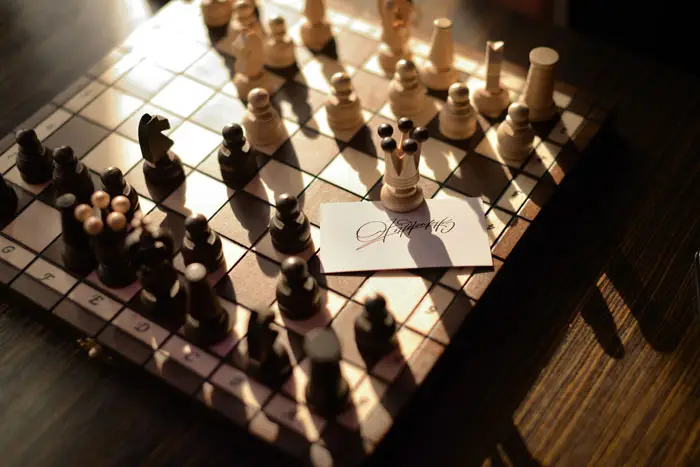
Around the 6th century AD, India developed one of the first variations of chess. A game named Chaturanga served as the inspiration for many contemporary chess elements. The similar game was later established in Persia, from where the King descended. The Persians are also responsible for the terms "checkmate" and "check."
Report
6points
#105 Moving Assembly Line
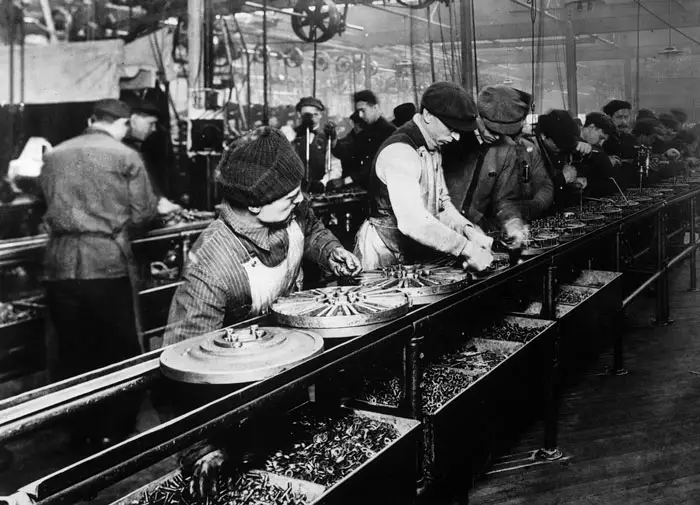
The Ford Model T's demand was high, and Henry Ford's moving assembly line helped him satisfy consumer demand. The ability to incorporate fewer qualified employees without compromising build quality served another crucial purpose. It wouldn't be too difficult to locate workers as each person was merely tasked with carrying out a monotonous chore. Ford's assembly line wasn't the first; it was modeled after Chicago facilities that processed beef. Nowadays, the same manufacturing system is used in nearly all large firms.
Report
5points
#106 Religion

People still disagree on what exactly qualifies as a religion. We do know that it may include worldviews, ethics, organizations, prophecies, afterlife, supernaturalism, spiritual creatures, and cultural norms.
Given that there are more than 4,000 different religions in the world today, members of various faiths worship thousands of gods. Religions have a profound impact on human civilization, affecting everything from marriage laws to national constitutions.
Report
4points
#107 Outboard Motor
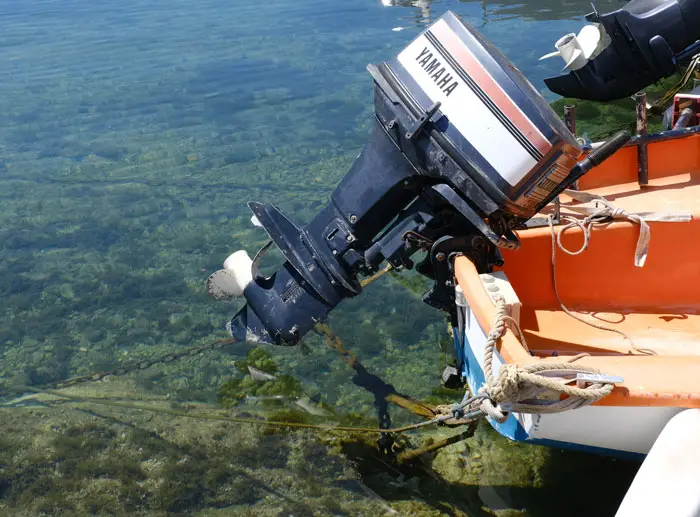
Although the inboard motor has been around since the early 1800s, it wasn't until Ole Evinrude developed his two-stroke boat motor that the concept of mounting it externally to a boat was first proposed. Although his motor wasn't the first "outboard" kind, it was the first to be widely used.
Gustave Trouvé produced an electric version in 1870, then came an oil-powered version by American Motors Co. in 1896, and next a gasoline-powered version by Waterman in 1905. However, the two-stroke layout of the Evinrude design was primarily responsible for its popularity. This made it possible for the motor to have the dependability, economy, and lightness you would expect from an outboard motor.
Ole Evinrude didn't develop a new kind of vehicle, nor did others who created the outboard motor before her. The motor only enabled the fusion of already-existing technology in a straightforward configuration so that anyone may enjoy traveling on water.
Report
4points
#108 Gatling Gun
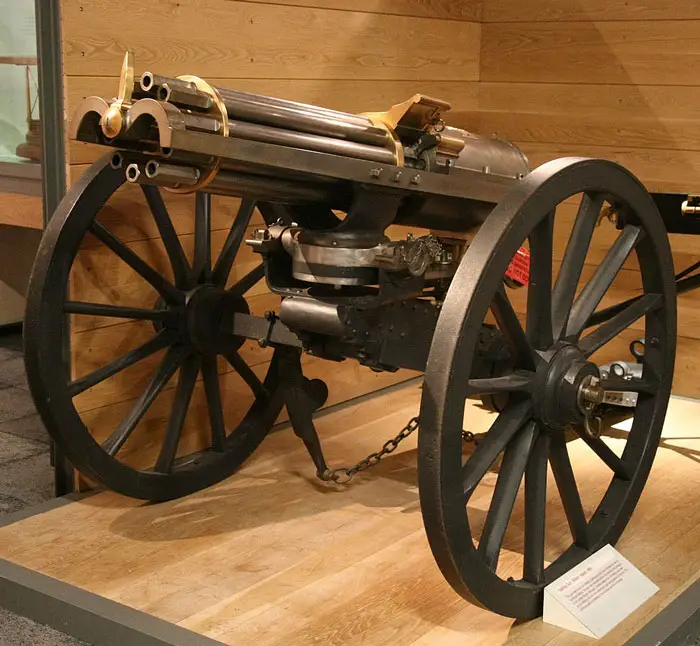
The Gatling Gun was the first weapon of mass devastation, created by Richard Gatling in 1861 based on his seed planter. During the Civil War, the cannon was used by Union soldiers, although the hand-cranked model was soon replaced by an electric motor.
That innovation allowed the gun to fire at an astonishing rate of 3,000 rounds per minute. This is the precursor of a modern automatic rapid-fire assault weapon, which continues to stoke discussion about whether the Second Amendment to the US Constitution needs to be amended.
Report
3points
#109 Deringer
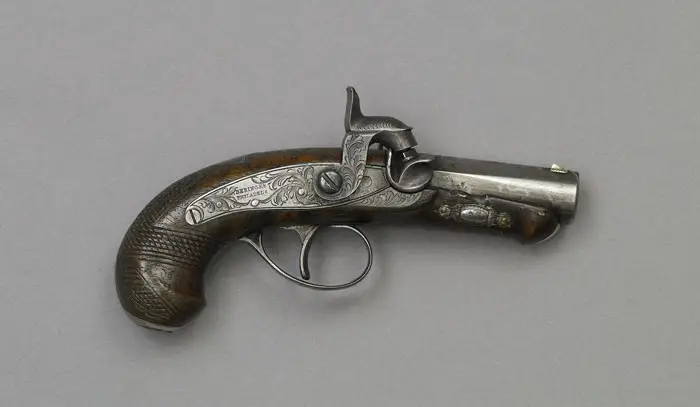
Along with Rolex watches and Gucci purses, copyright piracy is a nightmare for the original Philadelphia Deringer, which Henry Deringer created in 1852. The Deringer, which later gained another name for a pocket handgun, was the forerunner of the stealth weapon.
The popularity of the knockoffs presented a challenge for the inventor. The addition of an extra "R" to the brand, turning Deringer into Derringer, was one of the most popular counterfeiting techniques.
Report
3points
#110 Fiberglass Fishing Rod

There is a long history of the fishing rod. The majority of rods were produced in England utilizing heavy wood up to the mid-1800s. All of this was altered when Samuel Phillippe offered an imported substitute in 1846 and sold the design to a store in New York.
In the 1870s, William Hardy from England and other Americans like Charles Orvis and Hiram Leonard also imitated the same design.
It appears that the same design might be mass-produced in the US to help cut down the cost and increase accessibility. The next important thing was the introduction of all-steel rods by Horton Manufacturing Company in 1913; these were heavy and unattractive.
Report
3points