






We live on a pretty incredible planet, surrounded by beautiful nature everywhere we look. Yet despite seeing it every day, most of us probably know far less about the world around us than we think. There’s always something new to discover, no matter how much you’ve learned already.
So, we’ve rounded up some interesting facts shared by the Instagram page “Explaining The Wild.” From surprising animal habits to fascinating scientific findings, scroll down to read them and upvote your favorites.
#21
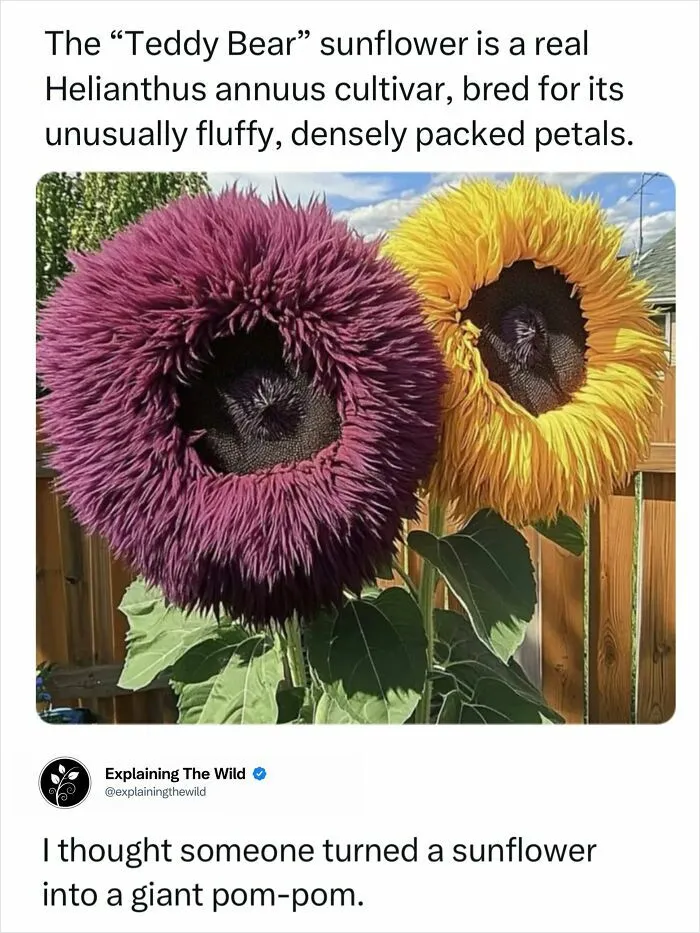
The Teddy Bear sunflower is a cultivated variety of the common sunflower, Helianthus annuus. Instead of the familiar flat ring of petals, its flowers are packed with layers of short, fluffy petals, giving the blooms their unusual teddy-bear-like appearance.
One important detail: the classic Teddy Bear sunflower is naturally yellow. Purple or unusually colored versions circulating online may be digitally altered or represent a different cultivar, so the image should not be taken as a typical Teddy Bear sunflower.
Report
33points
#22
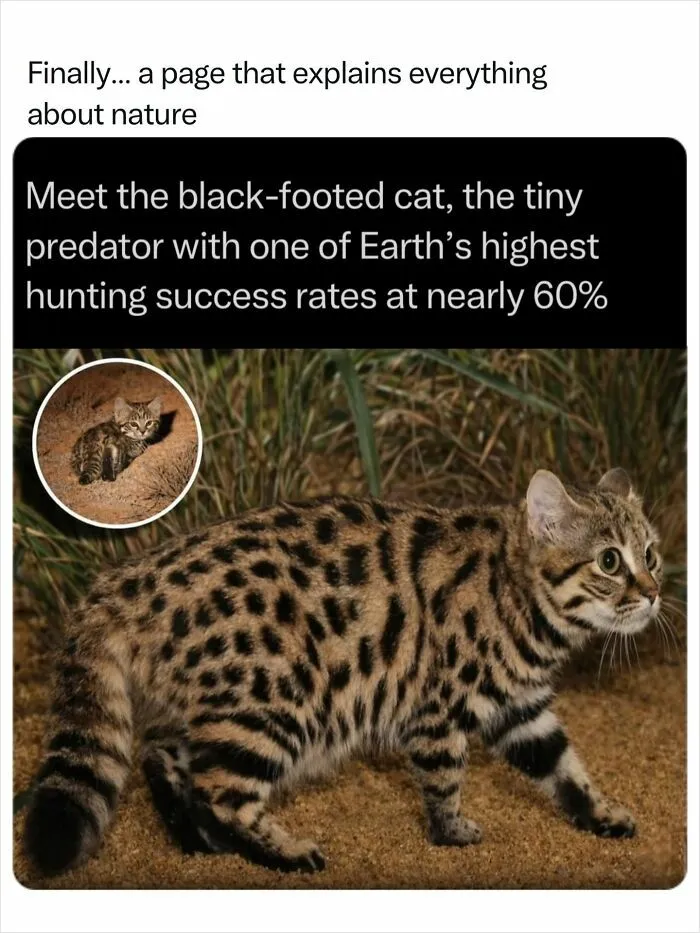
The black-footed cat may look like a small house pet, but it is actually the deadliest feline on the planet. Weighing only about three to five pounds, this tiny hunter achieves a staggering 60% success rate in its hunts. To put that in perspective, a lion only succeeds about 25% of the time. This diminutive predator is an eating machine, often catching up to fourteen small animals in a single night to fuel its incredibly high metabolism.
Living in the arid regions of Southern Africa, these cats rely on their exceptional night vision and hearing to track prey in the dark. They are strictly nocturnal and can travel over twenty miles in a single evening looking for food. Because they are so small, they face many threats from larger predators, leading them to be incredibly secretive and fierce. They prove that in the wild, size has very little to do with being an elite apex predator.
Report
31points
#23
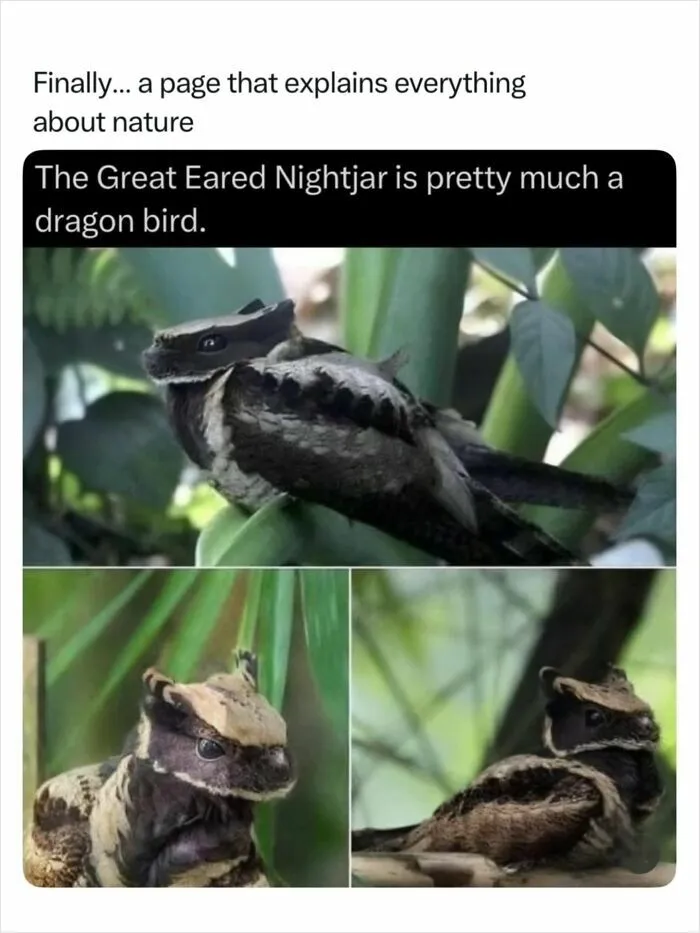
The Great Eared Nightjar is often described as a “dragon bird” due to its incredible prehistoric appearance. These nocturnal birds are masters of camouflage, featuring long, tufted feathers on their heads that resemble ears or horns, further adding to their mythical look. They are primarily found in Southeast Asia, where they blend seamlessly into the forest floor or low branches during the day to avoid predators.
Unlike many other birds, the Great Eared Nightjar does not build a traditional nest; instead, it lays its eggs directly on the leaf litter of the forest floor. Their cryptic plumage allows them to remain nearly invisible while brooding, appearing as nothing more than a pile of dead leaves to the untrained eye. At night, they take to the skies, using their wide mouths to catch insects in mid-air, embodying the true spirit of a miniature, feathered dragon of the forest.
Report
30points
#24
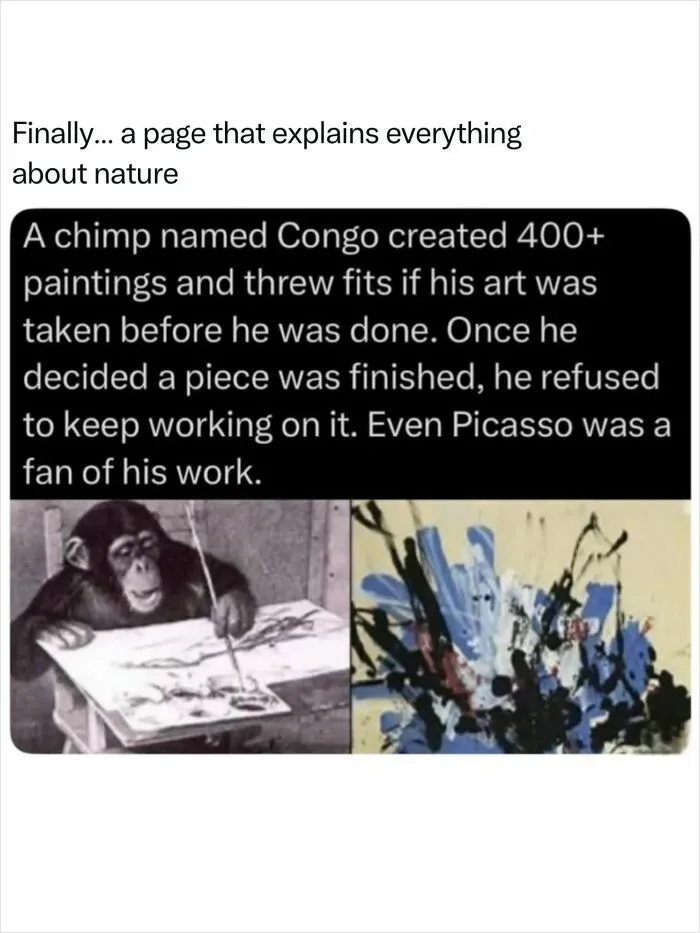
Congo the chimpanzee was far more than just an animal with a paintbrush; he was a true artist with a clear sense of vision and “artistic integrity.” In the 1950s, he produced over 400 paintings and drawings, and his behavior during these sessions stunned researchers. If his paper was pulled away before he felt he was finished, he would scream and throw a tantrum. Conversely, once he decided a piece was complete, no amount of coaxing could get him to add another stroke. He understood the balance of his compositions and refused to “overwork” his art.
The quality of his work was so impressive that it caught the eye of some of the world’s greatest human artists. Pablo Picasso was reportedly a fan and even hung one of Congo’s paintings on his own wall. Congo didn’t just scribble randomly; he showed a deliberate use of symmetry and color, often focusing on a central point and radiating outward. This suggests that the drive to create and the appreciation for visual balance might be a deep-seated trait we share with our closest relatives, proving that the roots of “fine art” are much older than human civilization.
Report
30points
#25
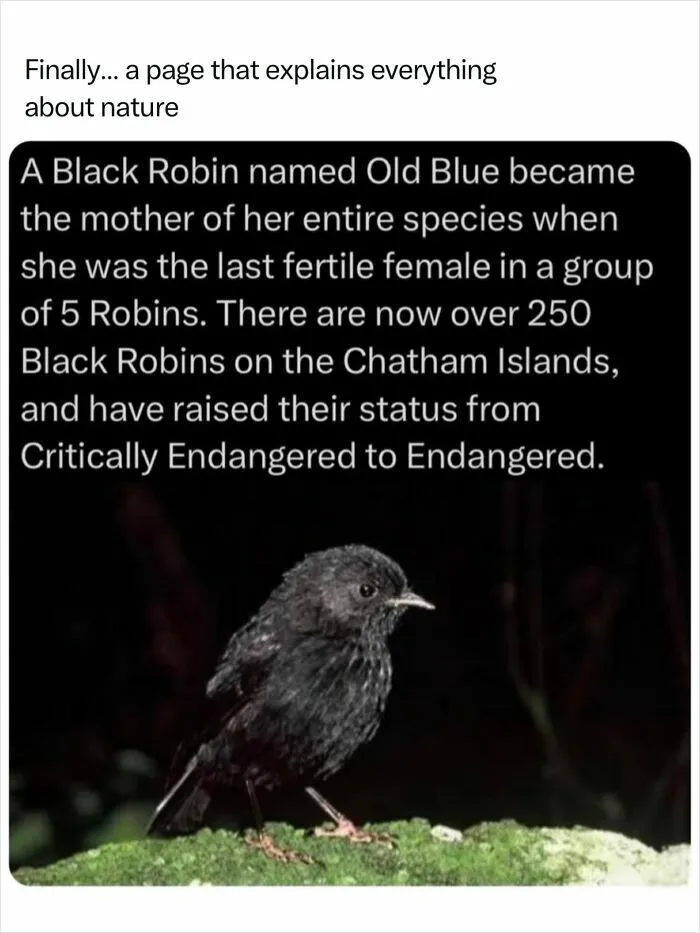
In the 1980s, the Chatham Island Black Robin was the rarest bird in the world, pushed to the absolute brink of extinction with only five individuals remaining. Among them was a single fertile female known as “Old Blue,” who became the unlikely matriarch and savior of her entire species. Through an intensive conservation effort that involved cross-fostering her eggs with other bird species to increase survival rates, Old Blue beat the odds and successfully raised a new generation of wild robins.
Today, the population has soared to over 250 birds, moving their status from Critically Endangered to Endangered—a recovery widely considered a biological miracle. Every Black Robin alive today is a direct descendant of Old Blue, making her one of the most genetically significant individuals in the history of conservation. Her story is a powerful testament to how the resilience of a single animal, combined with dedicated human intervention, can pull a species back from the very edge of vanishing forever.
Report
30points
#26
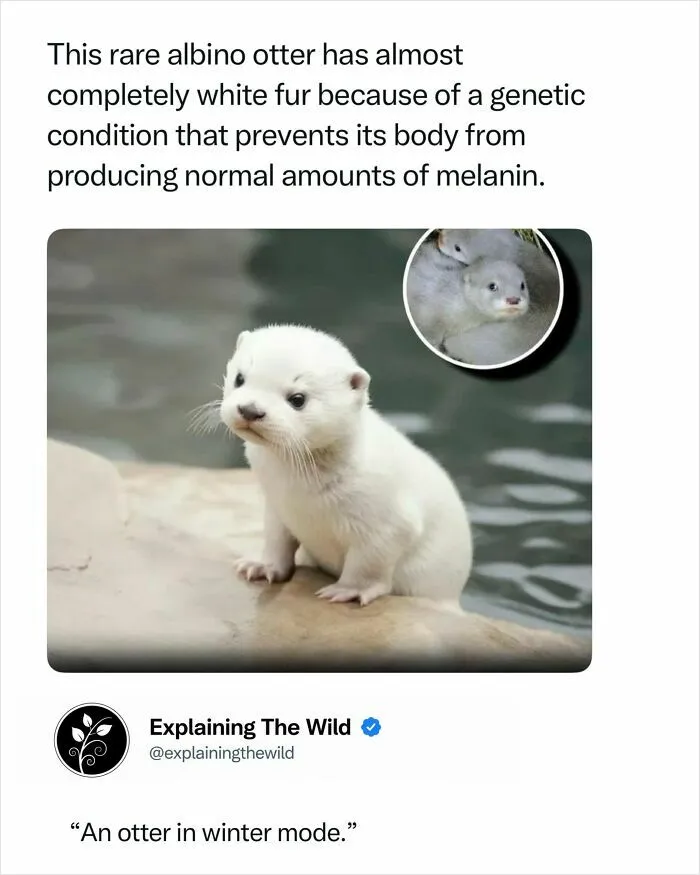
Albinism is an extremely rare genetic condition caused by little or no melanin production. In an albino otter, this can result in striking white or cream-colored fur, along with very pale skin and eyes. It is different from leucism, which can cause white fur while leaving the eyes normally pigmented.
The unusual coloring can make survival harder in the wild because camouflage is important for many animals. Albino individuals may also have light sensitivity and vision problems, making sightings like this exceptionally rare.
Report
29points
#27
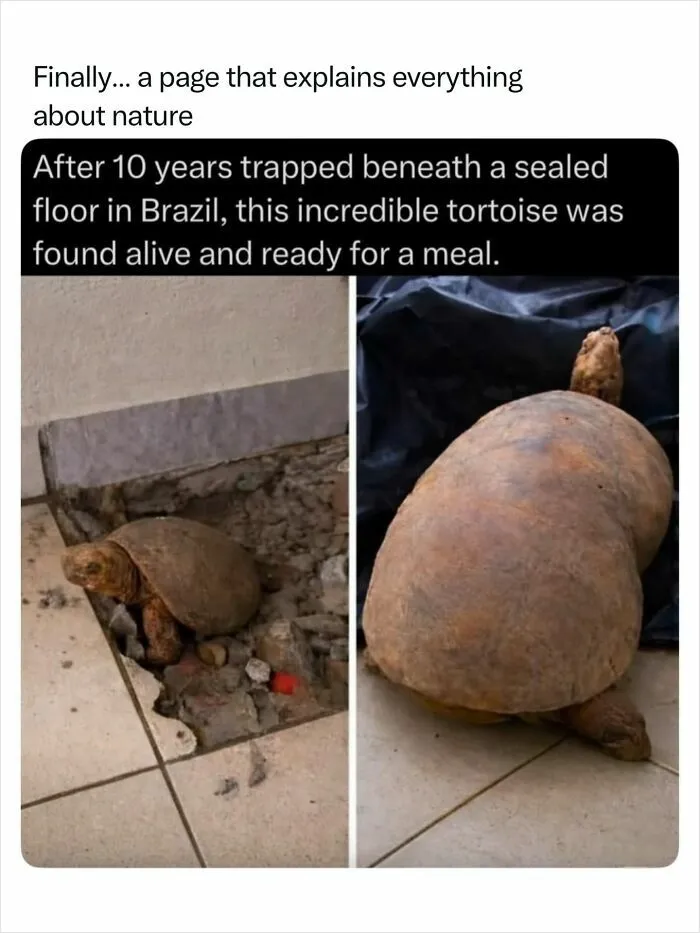
In 2013, a family in Rio de Janeiro made a shocking discovery while cleaning out a storage room. Manuela, a red-footed tortoise who had gone missing in 1982, was found alive inside a box under a pile of old electronics. She had survived for thirty years in a locked, cluttered room that the family assumed was empty. It was a miracle that redefined what experts knew about the resilience of these reptiles.
Tortoises are famously hardy, but thirty years without a steady food source is extreme. Biologists believe Manuela survived by eating termites and licking moisture off the walls or floor. Her slow metabolism allowed her to go long periods without traditional meals, essentially entering a state of semi-hibernation. This incredible story of survival highlights the biological adaptations that allow tortoises to endure even the most impossible conditions.
Report
29points
#28
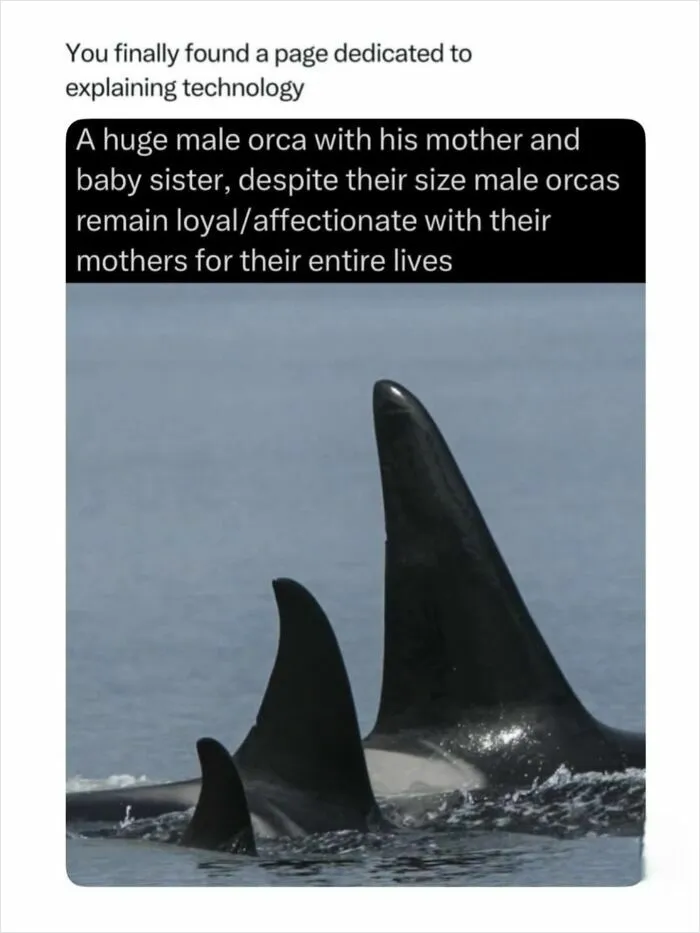
Orcas are famous for being the ocean’s most dominant predators, but behind the scenes, they have some of the most devoted family lives in the animal kingdom. Even when a male orca grows to a massive size—sometimes reaching 20 feet and weighing over six tons—he rarely ever leaves his mother’s side. Unlike many other mammals where males strike out on their own, male orcas stay in their mother’s pod for their entire lives. They are often seen traveling, hunting, and resting right next to her, showing a level of lifelong loyalty that is almost unheard of in the wild.
This bond is actually a vital survival strategy. Mother orcas are the keepers of knowledge; they know the best hunting spots and how to navigate through dangerous waters. Studies show that a mother’s presence significantly increases the survival rate of her adult sons, as she often shares her catch with them and guides them through lean times. Watching a giant male swim gently alongside his mother and baby sister isn’t just a sweet moment; it’s a look at a complex social structure where family connection is the key to ruling the ocean.
Report
28points
#29
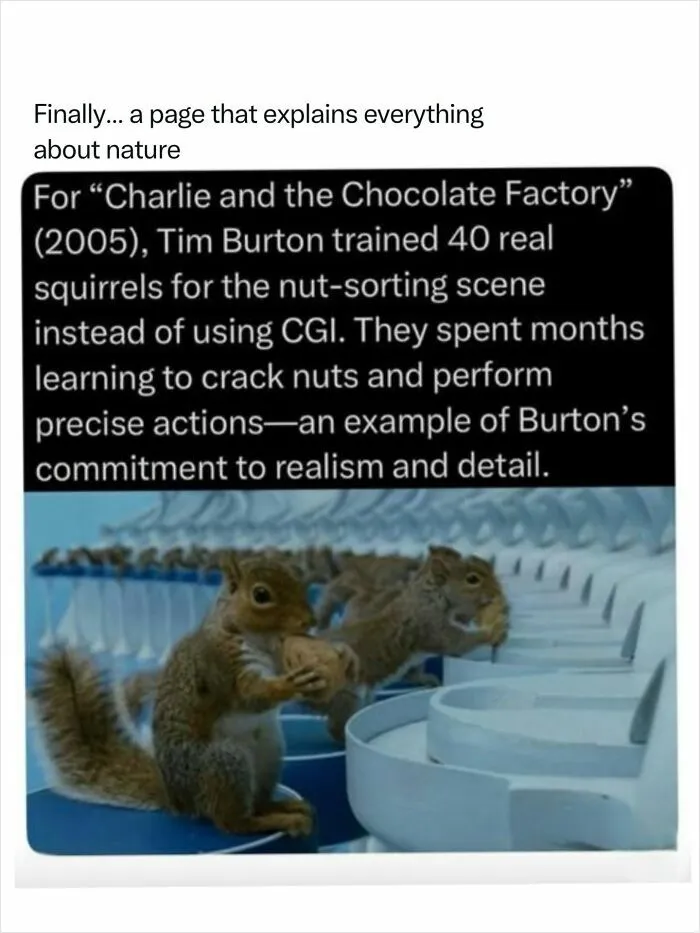
For the 2005 film Charlie and the Chocolate Factory, director Tim Burton chose an incredible path to realism. Instead of relying on digital effects for the nut sorting scene, he decided to use forty actual squirrels.
Professional animal trainers spent nineteen weeks teaching these squirrels how to sit on little stools, tap a nut to see if it was rotten, and then drop the good ones onto a conveyor belt.
The squirrels started their training at just a few months old to ensure they were comfortable with the complex tasks. While CGI could have easily replicated the scene, Burton wanted the unique, unpredictable movements that only real animals provide. The result is a memorable cinematic moment where every nut cracking motion was performed by a living, breathing creature. It remains a legendary example of practical filmmaking and extreme patience on a movie set.
The squirrels started their training at just a few months old to ensure they were comfortable with the complex tasks. While CGI could have easily replicated the scene, Burton wanted the unique, unpredictable movements that only real animals provide. The result is a memorable cinematic moment where every nut cracking motion was performed by a living, breathing creature. It remains a legendary example of practical filmmaking and extreme patience on a movie set.
Report
28points
#30
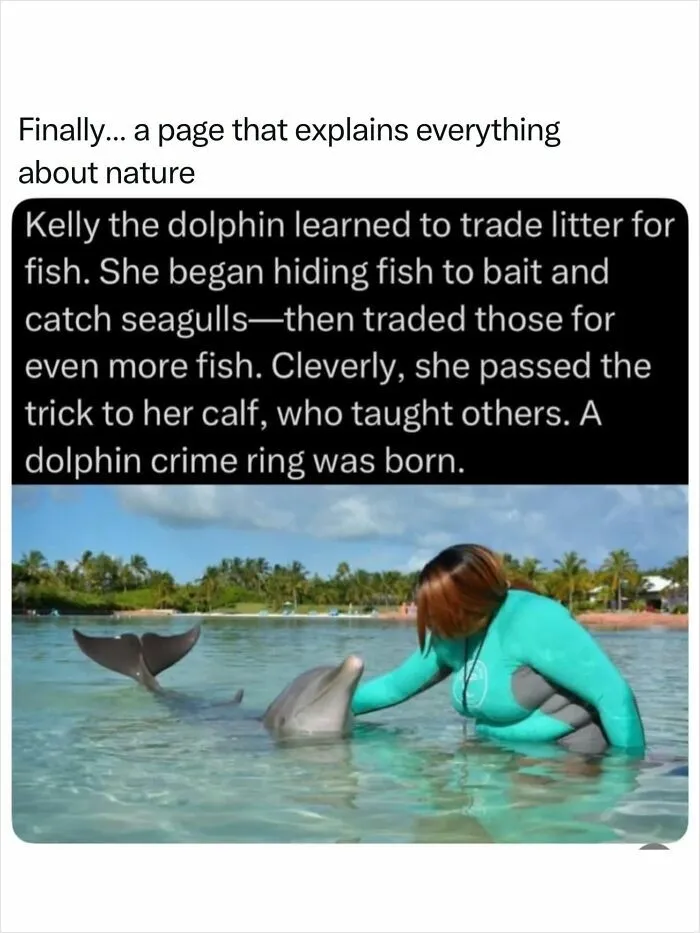
Kelly the dolphin at the Institute for Marine Mammal Studies is the mastermind behind one of the most sophisticated “economies” ever seen in the animal kingdom. It started when her trainers began rewarding her with fish for every piece of litter she cleared from her pool. Kelly quickly figured out a loophole: if she found a large piece of paper, she would hide it under a rock and tear it into tiny scraps, trading each small piece individually for a separate fish. By “investing” her time this way, she maximized her profits far beyond what the trainers intended.
But Kelly didn’t stop there. She eventually realized that a single fish could be used as bait. She would hold onto a fish, wait for a seagull to land on the water to grab it, and then catch the bird. Since her trainers gave her a huge reward of fish for every seagull she caught, she had essentially created a biological “multiplier” for her food supply. Most impressively, she taught these exact tactics to her calf, who then passed them on to the rest of the pod. This deliberate sharing of a complex, multi-step trick is a clear sign of how dolphins use culture and communication to outsmart their environment.
Report
28points
#31
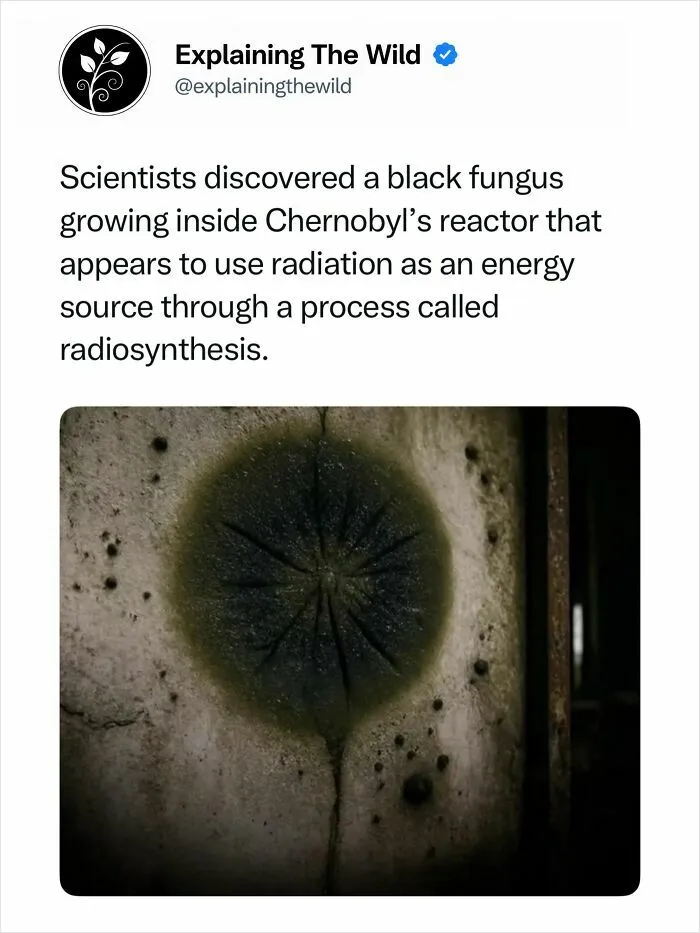
After the 1986 Chernobyl nuclear disaster, scientists found several species of dark, melanin-rich fungi thriving on the reactor’s highly radioactive walls. One of them, Cladosporium sphaerospermum, drew particular attention because experiments suggested its melanin may enable it to use ionizing radiation in a way that’s somewhat analogous to how plants use sunlight, a process researchers call radiosynthesis.
Scientists are still studying exactly how much energy these fungi gain from radiation, and they don’t literally “eat” radiation. Instead, the evidence suggests radiation may alter the fungus’s melanin in ways that enhance its growth under certain conditions. It’s one of the most remarkable examples of life adapting to an environment once thought too hostile to survive.
Report
27points
#32
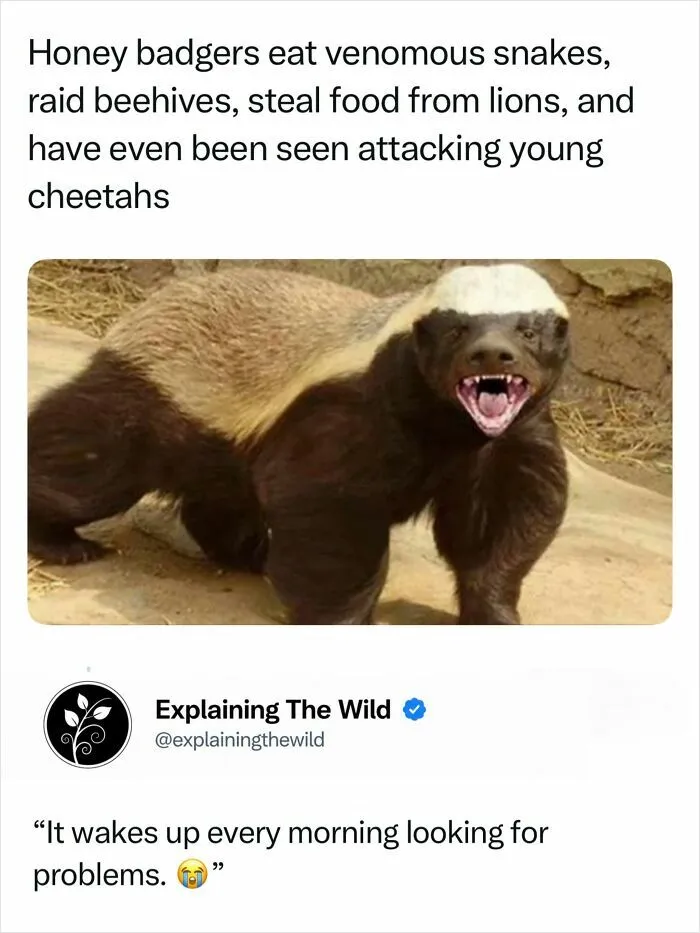
The honey badger has earned a reputation as one of the most fearless mammals on Earth. It feeds on almost anything it can overpower, including venomous snakes, porcupines, rodents, birds, and insects. Thick, loose skin helps protect it during fights, while a remarkable resistance to some snake venoms allows it to survive encounters that would end many other animals. Honey badgers are also notorious scavengers and opportunists. They raid beehives for honey and bee larvae, steal food from larger predators when they get the chance, and have even been documented attacking young cheetahs and other vulnerable animals. Small in size but incredibly bold, they survive by refusing to back down.
Report
27points
#33
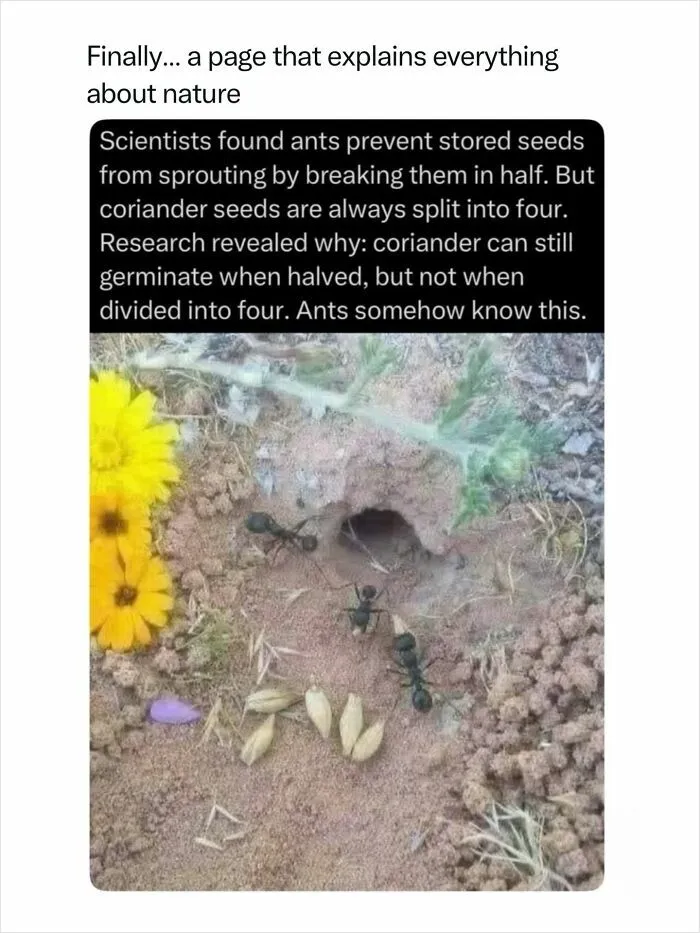
Ants are known for their incredible collective intelligence, but their understanding of botanical physics is truly next level. To ensure their food supply doesn’t literally grow out of their underground granaries, harvester ants systematically break stored seeds in half to prevent them from sprouting. However, scientists noticed a strange exception with coriander seeds: the ants always split them into exactly four pieces instead of two.
It turns out that coriander is uniquely resilient, and a seed split into just two halves can still successfully germinate and ruin the nest. The ants have somehow “learned” that a four-way split is the only way to completely neutralize the seed’s growth potential. This level of biological engineering shows that ants don’t just act on simple instinct; they possess a complex, passed-down knowledge of their environment that allows them to manage their resources with surgical precision.
Report
27points
#34
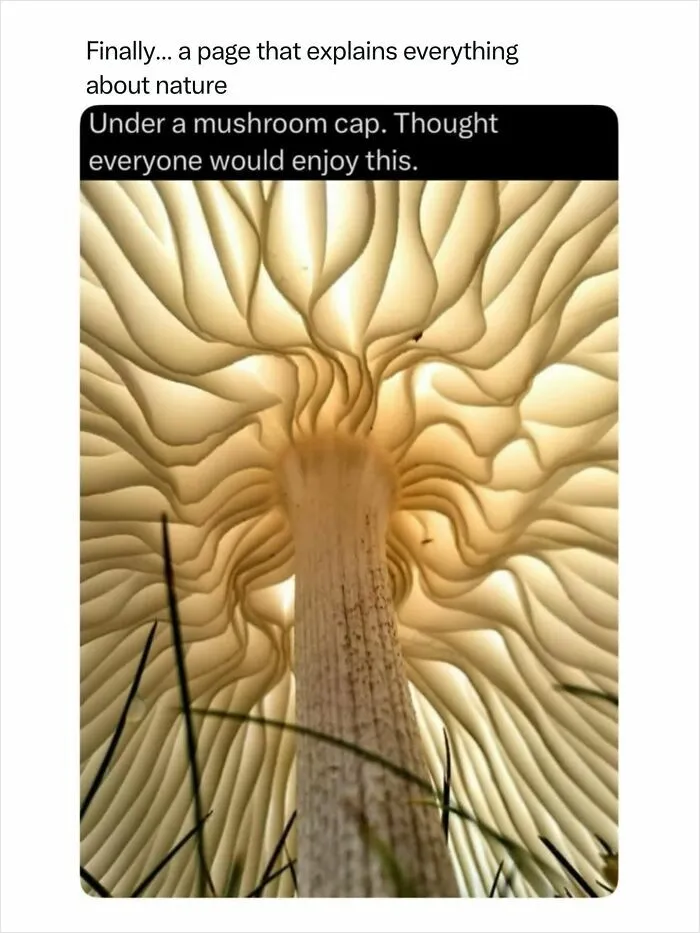
Looking under the cap of a mushroom reveals one of nature’s most efficient designs for reproduction. These thin, paper-like ridges are called gills, and their job is to maximize the surface area for producing millions of microscopic spores. By stacking these gills vertically and closely together, the fungus can pump out a massive amount of “seeds” into the air without needing a giant, bulky structure. It is a brilliant bit of natural engineering that allows a tiny mushroom to populate an entire forest floor from just one small cap.
The reason these gills are tucked underneath is all about protection. Since spores are incredibly light and sensitive, the overhanging cap acts like a natural umbrella, keeping them dry from rain and shielded from direct sunlight until they are ready to be carried away by the wind. Some mushrooms have even evolved to change the color of their gills as they age, signaling when they are at peak fertility. This hidden, geometric world beneath our feet is a perfect example of how even the smallest parts of the ecosystem have a specific, vital role to play in the cycle of life.
Report
27points
#35
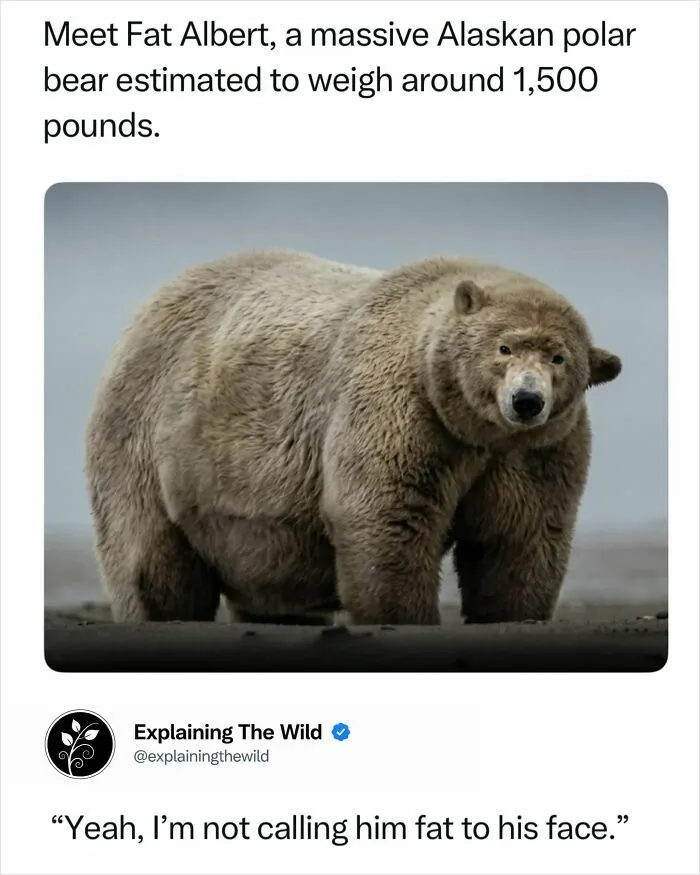
Fat Albert is a huge male polar bear known around Kaktovik, Alaska. His weight is commonly estimated at around 1,400 to 1,500 pounds, although he has never actually been weighed, so the number is an estimate.
Polar bears are already enormous animals, and large males can reach the upper end of the species’ normal size range. Fat Albert just happens to be an especially ridiculous example.
Report
26points
#36
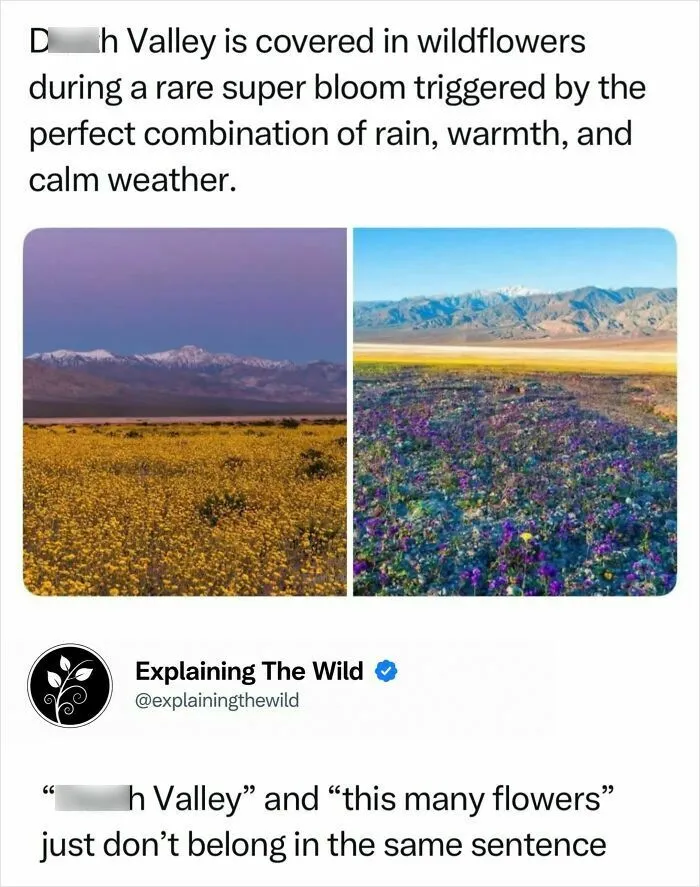
Death Valley is one of the driest places in North America, but every few years, the desert can completely transform. When enough rain reaches the ground at the right time, followed by favorable temperatures and conditions, thousands of wildflowers can suddenly appear.
These spectacular super blooms are rare because the conditions have to line up almost perfectly. For a landscape this harsh, seeing it covered in flowers is honestly wild.
Report
26points
#37
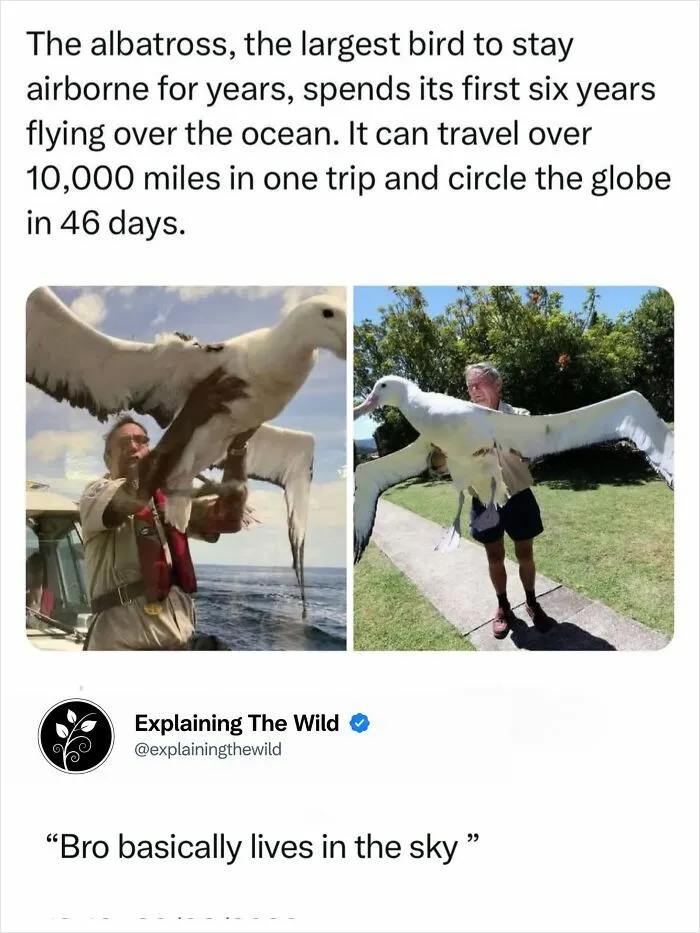
Albatrosses are built for life over the ocean. Their enormous wings let them glide for hours with barely any flapping, using wind and air currents to travel huge distances while searching for food.
Young albatrosses can spend their first several years at sea before returning to land to breed. Some species can travel tens of thousands of miles during a single journey.
Report
26points
#38
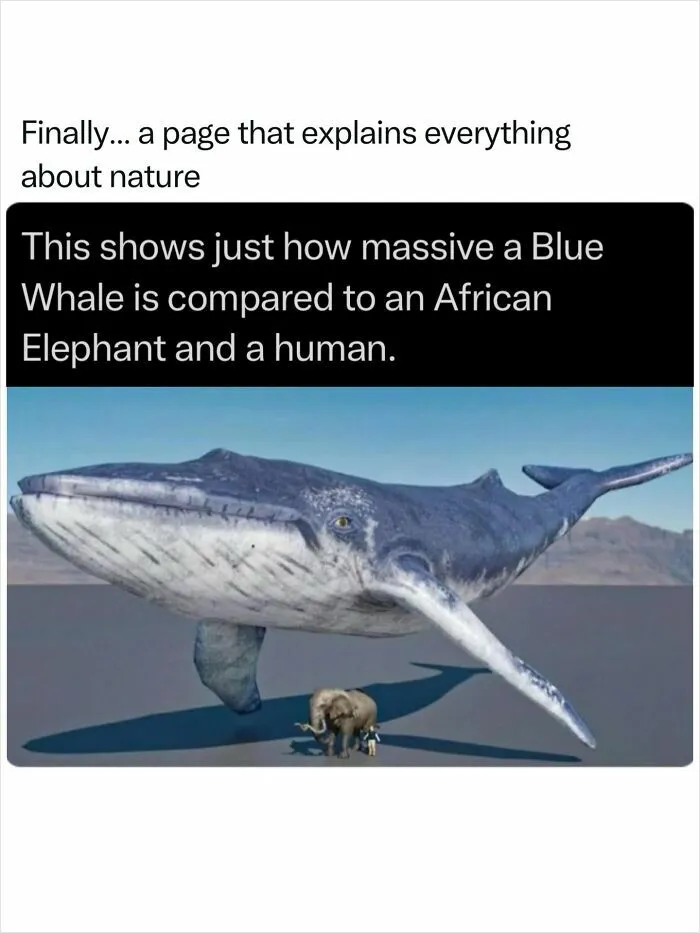
Seeing a Blue Whale alongside an African Elephant—the largest land animal—is the only way to truly grasp the scale of these ocean giants. A Blue Whale can grow to over 100 feet long and weigh up to 200 tons. To put that into perspective, a single Blue Whale is equivalent in weight to about 30 adult elephants. Even their individual organs are record-breaking; a Blue Whale’s heart is roughly the size of a bumper car, and its tongue alone can weigh as much as an entire elephant.
The reason they can reach such massive proportions is thanks to the buoyancy of the water. On land, an animal that size would be crushed under its own weight because gravity would collapse its skeleton and organs. In the ocean, the water supports their massive frame, allowing them to grow far larger than any dinosaur that ever walked the Earth. They are a marvel of biological engineering, fueled entirely by tiny shrimp-like krill, proving that the ocean’s smallest creatures support its greatest living wonders.
Report
26points
#39
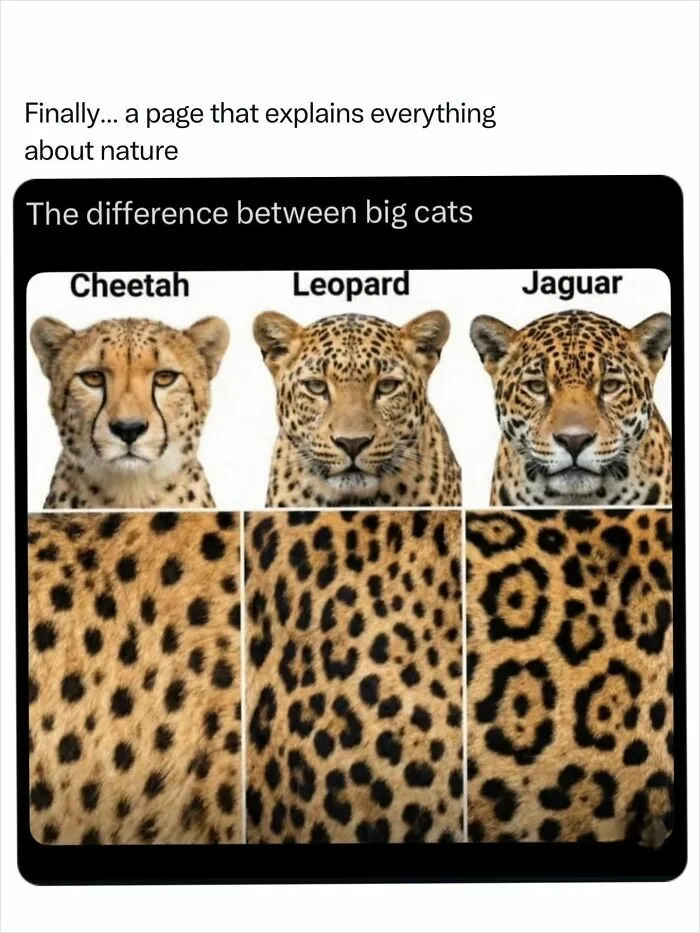
The term “Big Cat” is often used loosely, but biologically, it refers to the genus Panthera, which includes the tiger, lion, jaguar, and leopard. The defining “technology” that separates these elites from all other felines is a specialized, two-piece hyoid bone in the throat. This anatomical structure, combined with a thick ligament, allows these cats to roar—a high-decibel acoustic signal used for territorial defense. In contrast, smaller cats (and the cheetah) have a rigid hyoid that only allows them to purr, proving that even in the wild, your “vocal hardware” determines your social status.
Beyond the roar, each species is engineered for a specific hunting niche. The Tiger is the heavy-duty model, built with massive muscle mass for solo forest ambushes, while the Lion is the social strategist, optimized for group endurance on the open savannah. The Jaguar possesses the most powerful “bite-tech” relative to its size, capable of crushing turtle shells, while the Leopard is the ultimate vertical specialist, with a skeletal structure designed to haul prey twice its weight up into trees. This diverse lineup shows that the feline blueprint can be retooled for power, speed, or stealth depending on the environment.
Report
25points
#40

The Fukang meteorite was discovered near Fukang, China, in 2000 and is estimated to be about 4.5 billion years old. It belongs to a rare class called pallasites, made of iron-nickel metal surrounding translucent olivine crystals, which gives the meteorite its striking honeycomb-like appearance.
Pallasites are thought to have formed inside ancient asteroids, near the boundary between their rocky mantle and metallic core. When those asteroids were shattered by collisions, fragments were scattered through space until some eventually reached Earth. The Fukang meteorite is essentially a preserved piece of the Solar System’s earliest history.
Report
23points
