



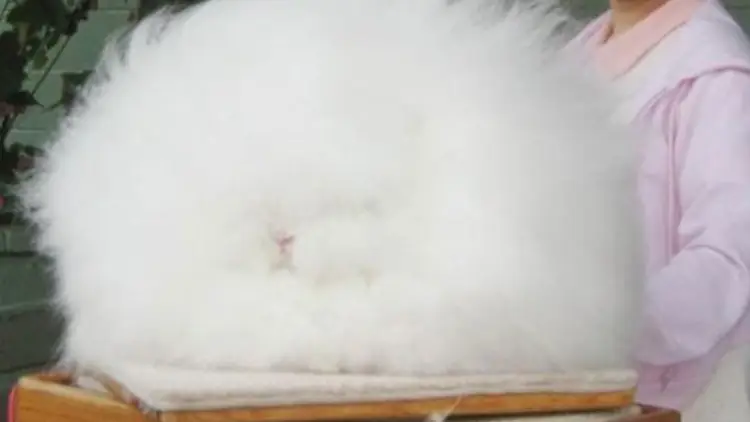


Behind the quiet presence and watchful eyes of the wild lies a world of deep feelings, logic, and rich emotional lives that standard biology textbooks completely missed. Every other day, researchers are dropping new proof that animals possess levels of intelligence and emotion that rival our own.
For instance, did you know there is a butterfly out there that is literally split right down the middle — half male and half female? Or that there is a certain wild animal that fully supports adoption?
The online community @explaining.animals is blowing minds by updating the wildlife playbook, one post at a time. We gathered their most fascinating and viral breakdowns right here.
This list might even help you figure out whether you can take a nap with a cheetah, a leopard or a jaguar. Let’s find out below.
#41
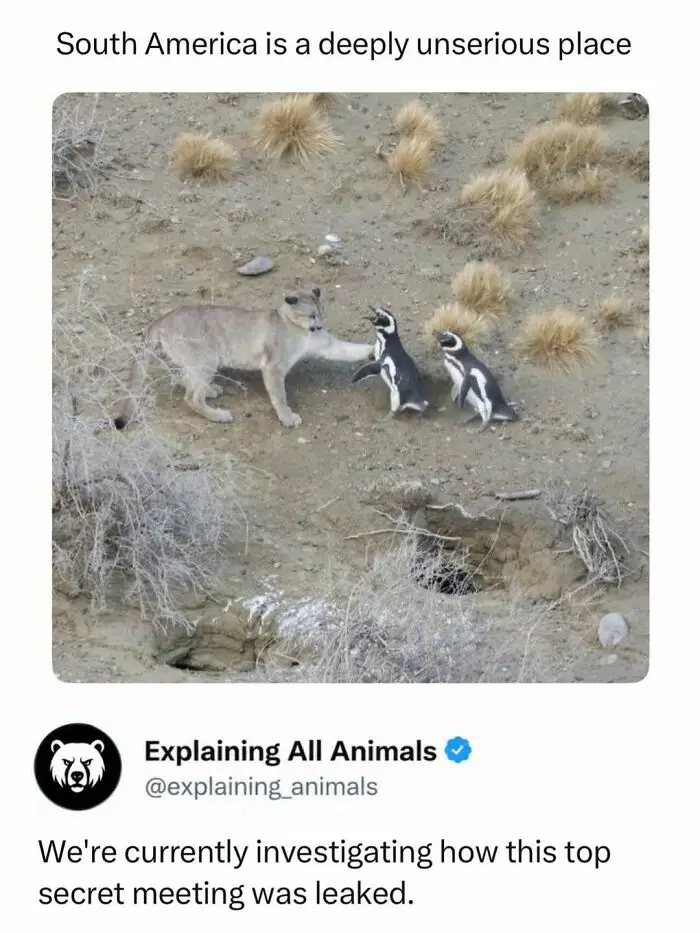
This remarkable wildlife moment comes from southern Patagonia, where Magellanic penguins nest along coastlines that are also home to pumas, one of the region’s top predators. During breeding season, thousands of penguins gather on open ground, creating unusual opportunities for encounters between these very different animals. Rather than immediately fleeing, adult penguins often rely on group behavior, loud calls, and bluff charges to discourage potential threats.
Research in Argentina and Chile shows that pumas do not depend heavily on penguins for food, instead hunting guanacos as their primary prey. Encounters between pumas and penguins demonstrate the unique connections within South America’s ecosystems, where apex predators and flightless seabirds can coexist in the same landscape. These scenes may appear surprising, but they are part of a natural balance that has developed over thousands of years.
Report
21points
#42
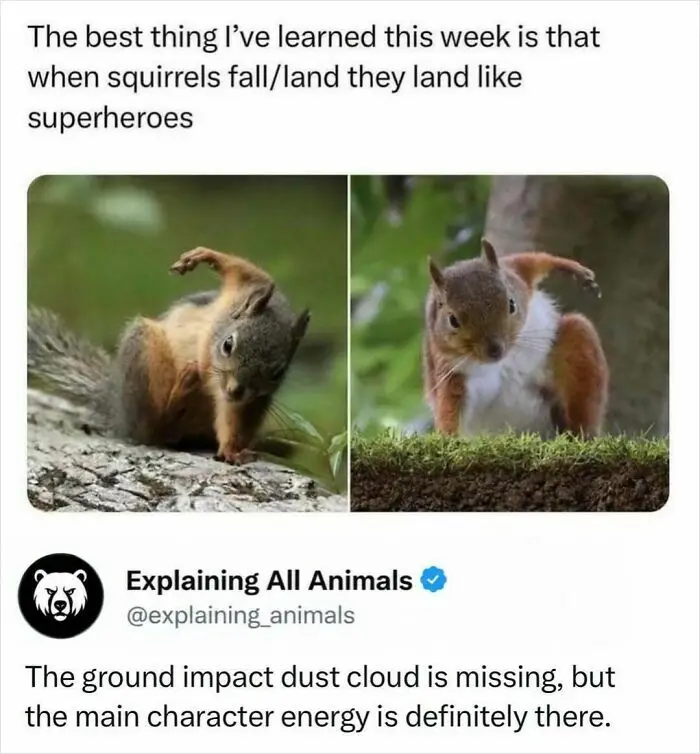
Squirrels are some of nature’s most entertaining acrobats, effortlessly leaping between branches and racing up trees with incredible agility. These bushy-tailed rodents are found on every continent except Australia and Antarctica, and they play an important role in maintaining healthy forests. By burying nuts and seeds for later use, squirrels accidentally plant countless trees when they forget where some of their hidden food is stored.
Not all squirrels live the same way. Some species can glide through the air using flaps of skin stretched between their limbs, while others survive harsh winters by building enormous food caches. Their sharp memories, quick reflexes, and impressive problem-solving abilities help them adapt to many environments, making squirrels one of the most clever and fascinating animals to observe in the wild.
Report
21points
#43
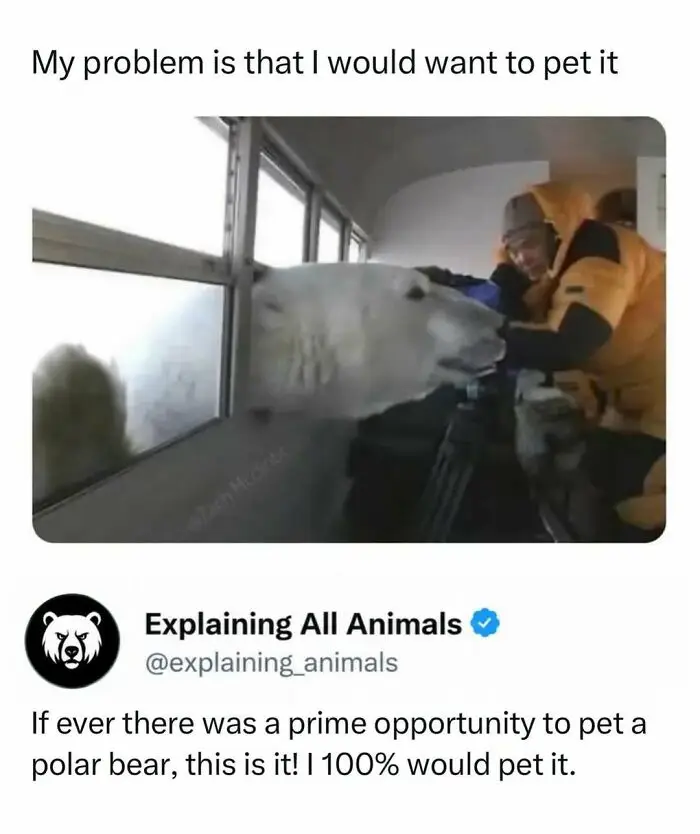
Polar bears are some of the most remarkable animals on Earth. Despite their snowy appearance, their skin is actually black, which helps absorb heat from the sun, and their fur is transparent rather than truly white. They are also excellent swimmers, capable of traveling for many miles across icy Arctic waters in search of food.
As the largest land carnivores in the world, polar bears can weigh more than 1,500 pounds and rely heavily on seals for survival. Their huge paws act like natural snowshoes and paddles, helping them move across ice and swim efficiently. These fascinating adaptations allow polar bears to thrive in one of the harshest environments on the planet.
Report
21points
#44

Dolphins are widely regarded as some of the most intelligent animals on Earth, possessing complex cognitive abilities that rival those of many land mammals. They have large brains relative to their body size, which supports advanced memory, strong social bonds, and sophisticated communication. Living in tight-knit groups, dolphins use a variety of clicks, whistles, and body movements to interact, demonstrating a level of social awareness that is both intricate and highly coordinated.
Beyond communication, dolphins exhibit remarkable problem-solving skills and signs of self-awareness, such as recognizing themselves in mirrors. They are also capable of learning new behaviors and even using simple tools in the wild. Their highly developed echolocation system allows them to navigate murky waters, locate prey, and “see” their surroundings using sound. Although intelligence is difficult to measure across species, these abilities firmly place dolphins among the most intellectually advanced creatures in the animal kingdom.
Report
21points
#45
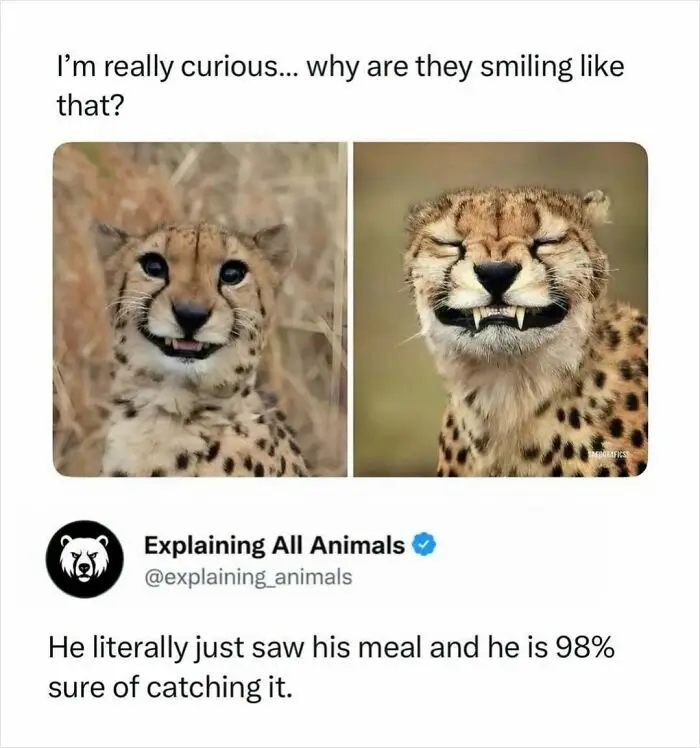
Cheetahs often appear to have surprisingly human facial expressions, which helps explain why their photos spread so quickly online. What looks like a smile is usually just the natural shape of their mouth when relaxed, panting, or slightly pulling back their lips. Combined with their dark tear marks, rounded faces, and forward-facing eyes, these features create expressions that seem unusually animated, almost as if the animals are posing for the camera.
Unlike many other big cats, cheetahs are built for speed rather than power, giving them a lighter frame and softer facial appearance. Their faces often seem more expressive than those of lions or leopards, adding to the playful “grinning” look people notice. Considering they can sprint at speeds of around 60–70 miles per hour in short bursts, it is easy to imagine they are quietly amused by everything moving much slower than they are.
Report
19points
#46
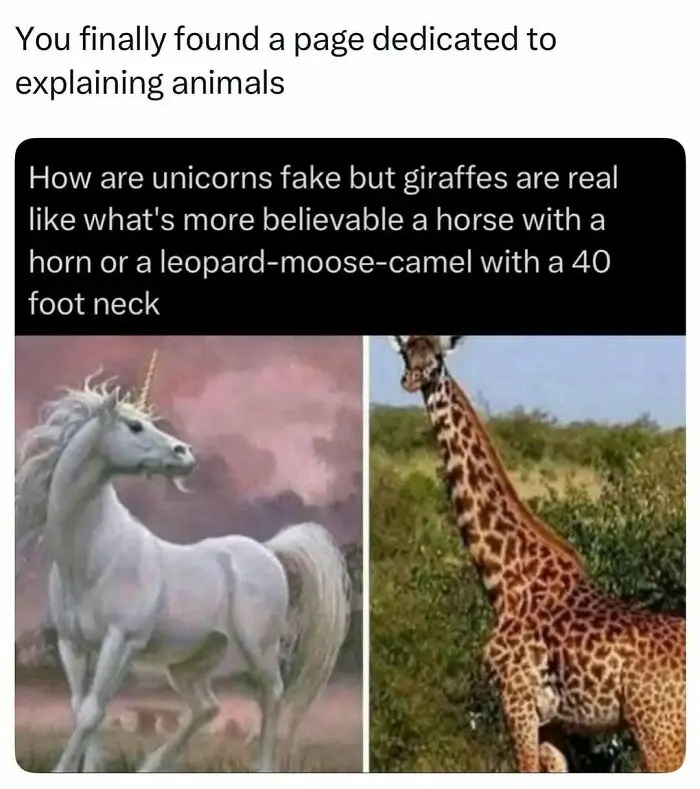
Unicorns are legendary creatures often described as horse-like animals with a single spiraling horn on their foreheads. Stories about them appear in many ancient cultures, including Greek, Chinese, and European traditions. In medieval times, people even believed unicorn horns had magical healing powers. These myths may have been inspired by real animals such as the Indian rhinoceros, the Arabian oryx, or fossil discoveries of the extinct Elasmotherium, which had a large single horn.
Despite these possible inspirations, there is no scientific evidence that true unicorns (horse-like animals with a single horn) ever existed. Biology and the fossil record show no trace of such a species, making it extremely unlikely that unicorns lived alongside humans. However, myths often grow from misunderstandings of real animals, unusual fossils, or symbolic storytelling. Because of this, unicorns remain powerful symbols of magic and imagination, even if their existence in the real world is very improbable.
Report
19points
#47
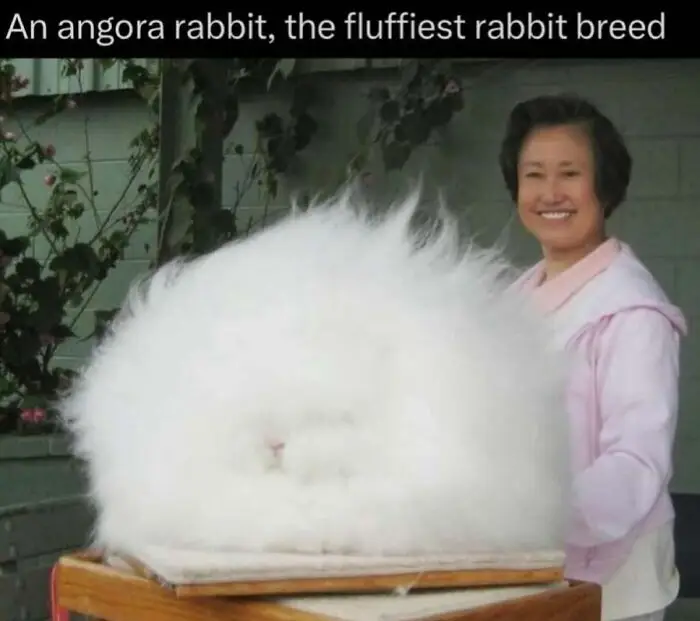
The Angora rabbit is famous for being one of the fluffiest rabbit breeds in the world. Its soft, cloud-like fur grows continuously and is often used to make warm angora wool clothing. Originally bred in Turkey centuries ago, these rabbits are gentle, calm animals that require careful grooming to keep their thick coats clean and healthy.
Beyond their unusual appearance, Angora rabbits are also known for their quiet and friendly personalities. Many people keep them as pets because they are affectionate and enjoy human attention. Their enormous coats make them look almost unreal, like living cotton balls, and they remain one of the most recognizable and unique rabbit breeds today.
Report
19points
#48
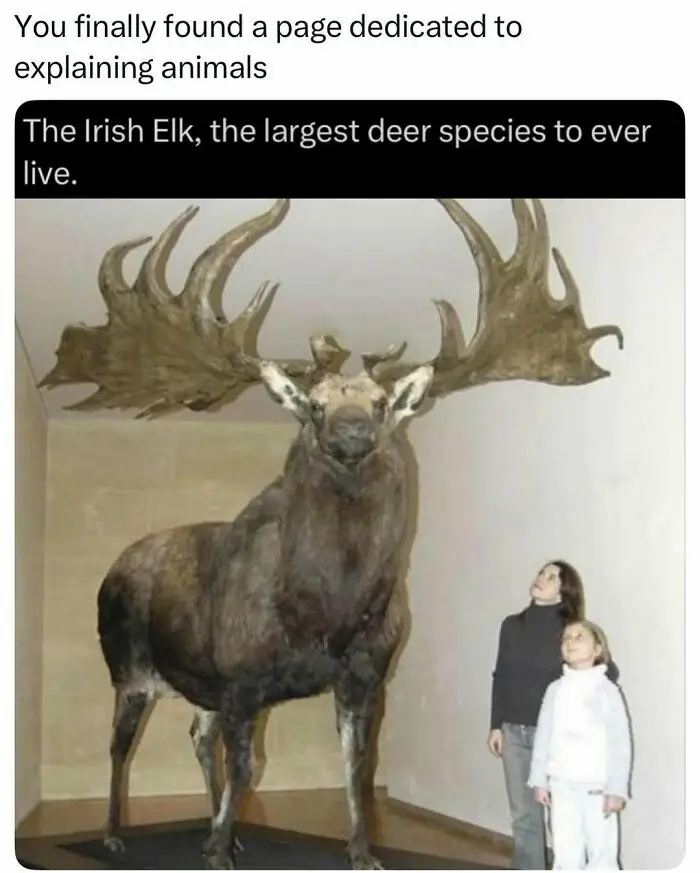
The Irish Elk was the largest species of deer to ever walk the Earth, an awe-inspiring giant of the last Ice Age. Standing over seven feet tall at the shoulder and carrying antlers that could stretch up to twelve feet wide, it roamed vast regions of Europe and northern Asia. Despite its name, it was not limited to Ireland- fossils have been discovered as far east as Siberia. The name “Irish Elk” comes from the remarkable number of well-preserved skeletons found in Irish bogs, where the conditions helped protect their massive remains.
Its enormous antlers were likely used for display and combat during mating season, making them a key advantage in reproduction. However, these same antlers may have also been a burden, requiring large amounts of nutrients and possibly limiting movement in dense environments. As the climate shifted at the end of the Ice Age and human populations expanded, the Irish Elk struggled to adapt. Scientists believe that a combination of environmental changes and human hunting led to its extinction around 7,700 years ago, marking the end of one of nature’s most striking creatures.
Report
19points
#49

Cats are well known for their short attention spans, often losing interest in activities after just five to ten minutes. This natural tendency can make training more challenging compared to other animals, as cats may quickly become distracted or bored. Their curiosity drives them to explore new stimuli, but once that curiosity is satisfied, they tend to move on just as quickly.
To successfully train a cat, it is important to adapt to this behavior by keeping sessions brief, engaging, and positive. Short, frequent training periods combined with rewards like treats or praise help maintain their interest and encourage learning. By working with a cat’s natural instincts rather than against them, owners can create a more effective and enjoyable training experience.
Report
19points
#50
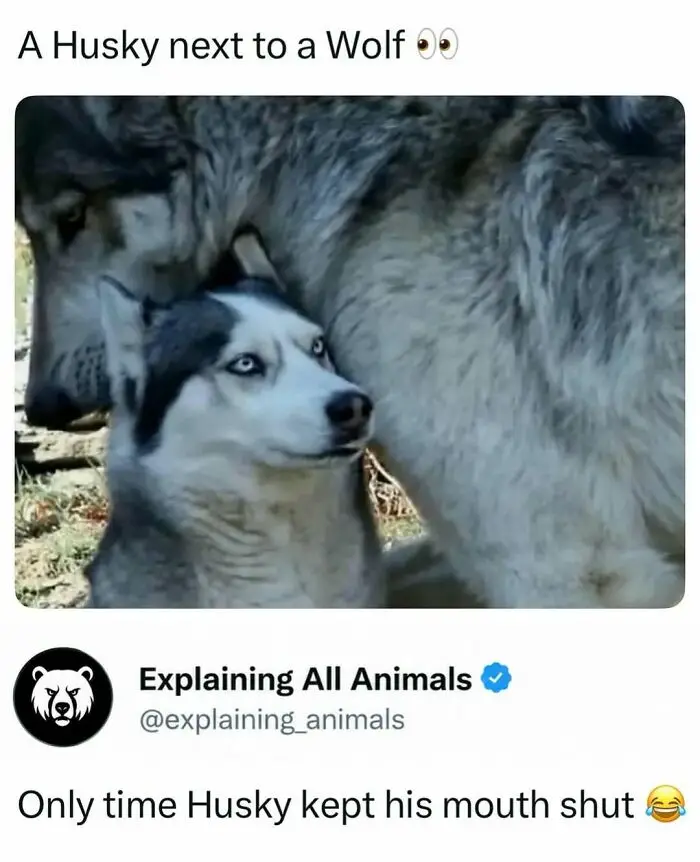
This meme humorously compares a Siberian husky with a gray wolf, using their visual differences to create a relatable joke about toughness and life experience. Although huskies and wolves are closely related, the wolf appears larger, rougher, and more imposing, while the husky looks cleaner, friendlier, and somewhat out of place. The caption, “You ain’t built for these streets son,” imagines the wolf as a hardened veteran giving advice to a sheltered relative who is stepping into a world far beyond its experience.
The joke works because it exaggerates the contrast between domestication and life in the wild. Huskies are actually strong, resilient working dogs, but next to a wolf they can seem like the pampered cousin of the family. By turning the animals into human-like characters, the meme pokes fun at situations where someone believes they are prepared for a difficult challenge, only to discover they are operating on a completely different level from those who truly belong in that environment.
Report
18points
#51
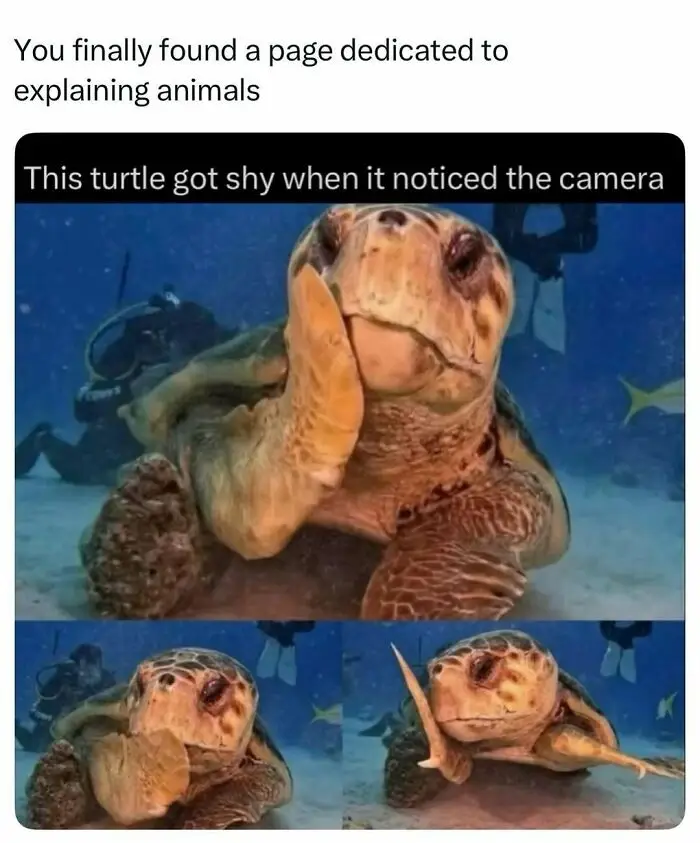
Turtles come in a surprising range of types, from land-dwelling tortoises to freshwater swimmers and fully aquatic ocean species. Among the most familiar are the red-eared slider, painted turtle, and box turtle. Red-eared sliders are especially common as pets, known for their active, curious nature and their tendency to bask together in groups. Painted turtles are generally calmer, often spending long hours quietly sunning themselves, while box turtles, which live mostly on land, are more shy and prefer to stay hidden until they feel safe. Despite their slow reputation, many turtles are quite alert and responsive to their surroundings.
Sea turtles, such as the green sea turtle and loggerhead sea turtle, live entirely different lives in the open ocean, traveling thousands of miles across vast distances. Green sea turtles are known for their calm demeanor and mostly plant-based diet, while loggerheads are more robust, using their powerful jaws to crush hard-shelled prey. Across all species, turtles are remarkably long-lived, often surviving for decades, and rely more on instinct than social bonds. Even so, each type displays its own subtle “personality” through its behavior, activity level, and reactions to the world around it.
Report
18points
#52
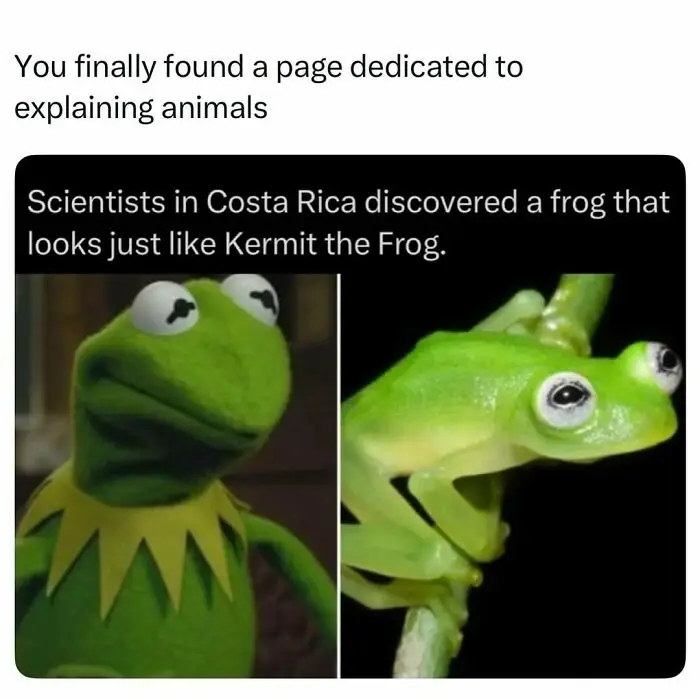
Scientists in Costa Rica recently identified a remarkable new species of glass frog, Hyalinobatrachium dianae, whose bright green color and wide, expressive eyes give it an uncanny resemblance to Kermit the Frog. Like other glass frogs, this tiny amphibian has a translucent underside, allowing its internal organs to be seen through its skin. This unusual feature, combined with its gentle appearance, makes the species both scientifically fascinating and visually striking.
The discovery was made by herpetologist Brian Kubicki and his team, who recognized the frog by its distinct, metallic, whistle-like call while conducting fieldwork in the Caribbean foothills. Named in honor of Kubicki’s mother, the species marks the first glass frog discovered in Costa Rica in over four decades. Its discovery underscores the rich biodiversity of the region and highlights the importance of conserving tropical rainforests, where many unique and still-undiscovered species continue to thrive
Report
18points
#53
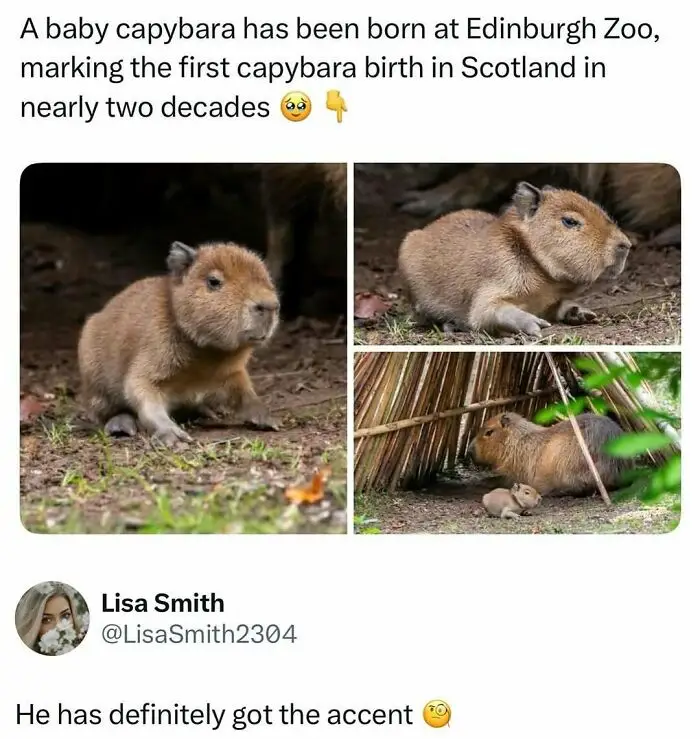
Edinburgh Zoo recently celebrated the birth of an adorable capybara pup, the first capybara born in Scotland in 18 years. The tiny “babybara” was born to first-time parents Luna and Rodney and has already captured attention for its curious personality and fluffy appearance. Zoo keepers say the newborn is beginning to explore its habitat while staying close to its mother, learning important social behaviors from the rest of the herd. Like all capybara pups, the baby was born surprisingly well-developed and can already walk, swim, and communicate using soft chirps and barks.
Capybaras are native to South America and are famous for being the world’s largest rodents, as well as for their calm and friendly nature. Their relaxed attitude around other animals has made them huge internet stars, with countless photos and videos showing them peacefully sharing space with birds, monkeys, and even crocodiles. The new pup’s arrival has become especially exciting because capybara births in Scotland are so rare, and many people consider baby capybaras among the cutest animals found in zoos today. In the coming weeks, zoo staff will perform the pup’s first health check, when its gender and official name will finally be announced.
Report
16points
#54
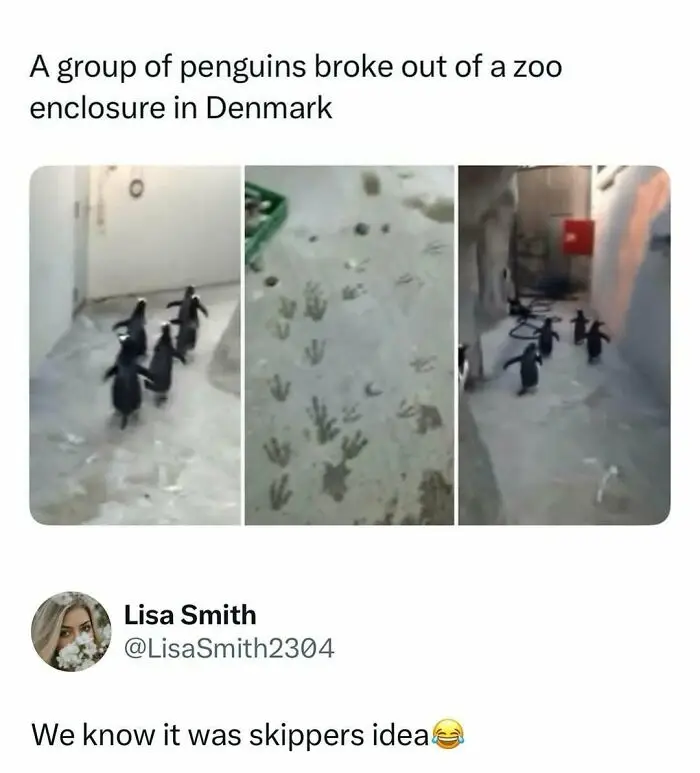
The viral “smile and wave” penguin meme became even funnier once people learned it was inspired by a real escape. In 2015, a group of gentoo penguins at Odense Zoo managed to wander out of their enclosure and shuffle through a staff corridor before zoo workers guided them back. Photos of their tiny wet footprints trailing across the floor quickly spread online, with many people joking that the penguins looked completely calm and professional during their little adventure.
The internet instantly connected the scene to the famous penguins from DreamWorks’ Madagascar series and the spin-off Penguins of Madagascar. Those characters are known for acting like secret agents and repeating the iconic line, “Smile and wave, boys.” Because of that connection, the real-life escape felt like something straight out of the movies, turning a simple zoo incident into one of the internet’s most beloved animal jokes.
Report
16points
#55

Steamboat was a celebrated bucking horse of the American West whose powerful image came to represent untamed strength and independence. Photographs of the horse mid-buck capture more than a single dramatic moment, they preserve a time when horses were essential to ranch life and to a cultural identity rooted in resilience and self-reliance. In these images, the rider appears small against the force of the animal and the openness of the land, while fences and distant cattle anchor the scene in the realities of a working ranch shaped by nature’s rhythms.
Over time, Steamboat’s image evolved from a real animal into a lasting symbol. His silhouette was stylized into an emblem that now appears on Wyoming license plates, often called the most photographed horse in American history. This transformation from living creature to cultural icon shows how communities turn everyday experiences into enduring myths, and how images like these helped define a national vision of the American West at a moment when modern life was beginning to change it forever.
Report
16points
#56
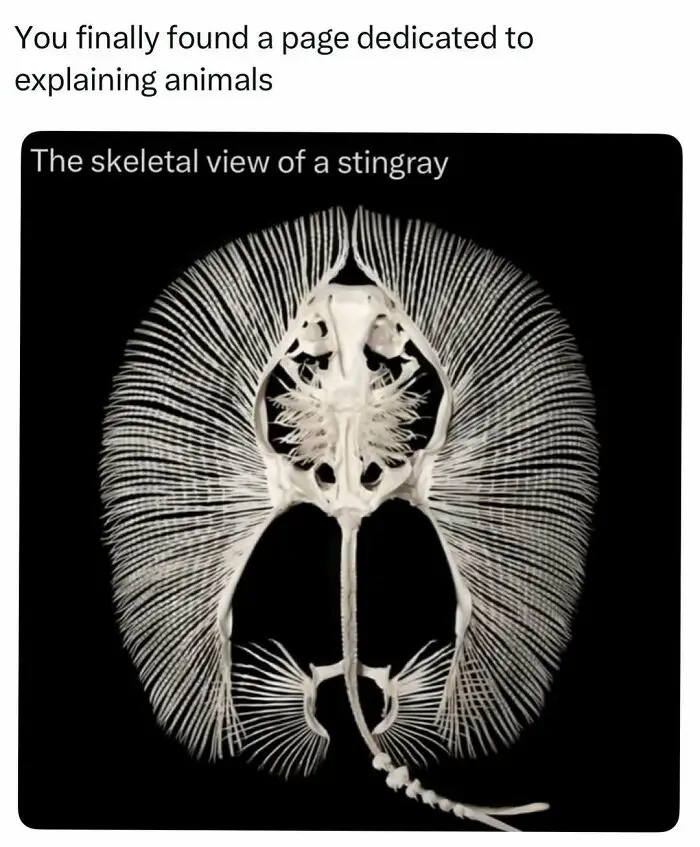
Stingrays differ from most fish because they have a cartilaginous skeleton rather than true bone, similar to sharks. Their broad, wing-like bodies are actually enlarged pectoral fins, supported by flexible cartilage rods that allow them to glide smoothly through the water. This unique structure gives them a graceful, almost ghost-like movement beneath the surface.
Their body design is highly specialized for life along the ocean floor. With the mouth and skull located on the underside and a long tail that may carry a venomous spine, stingrays are well-equipped for both feeding and defense. Altogether, their form enhances stability, camouflage, and efficient movement, making them perfectly adapted to their environment.
Report
16points
#57
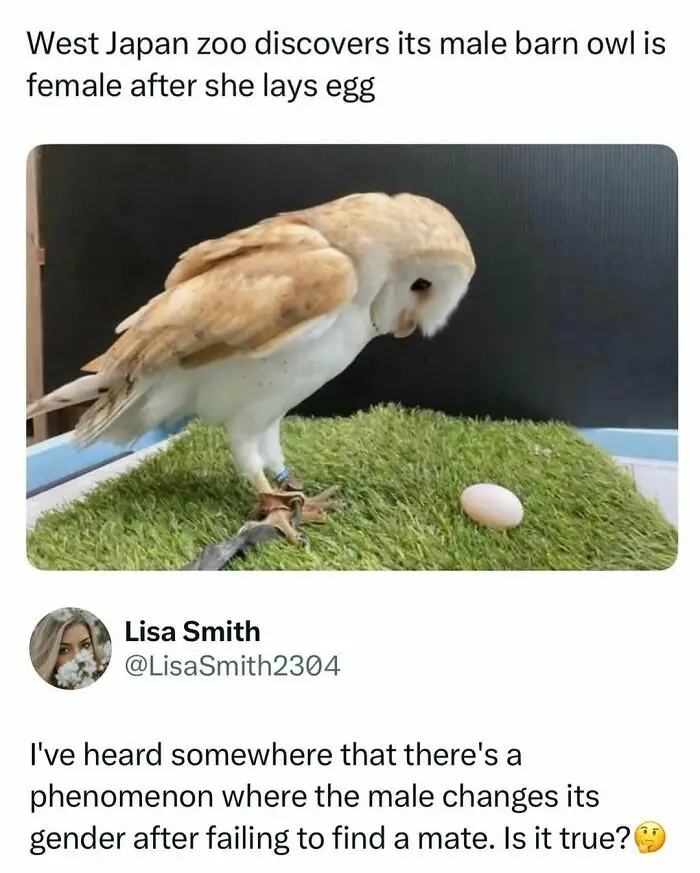
A zoo in Yamaguchi Prefecture surprised animal lovers in 2021 after its barn owl named Ai, long believed to be male, unexpectedly laid an egg. The discovery shocked both staff and visitors because earlier DNA testing had identified the owl as male. After the egg appeared, the zoo explained that the original test result was likely incorrect, turning Ai into an internet sensation almost overnight. The story fascinated many people because it showed how even modern scientific testing can occasionally produce surprising mistakes.
Barn owls are actually very difficult to identify by sex because males and females often look nearly identical, especially when living in captivity. Unlike some bird species with dramatic color differences, barn owls usually require close examination or genetic testing for accurate identification. Another interesting fact is that female barn owls can lay unfertilized eggs without ever having a mate, something that commonly happens during breeding season in many bird species. Ai’s unexpected egg became both a funny and educational reminder that nature still has ways of surprising even experienced animal experts.
Report
14points
#58
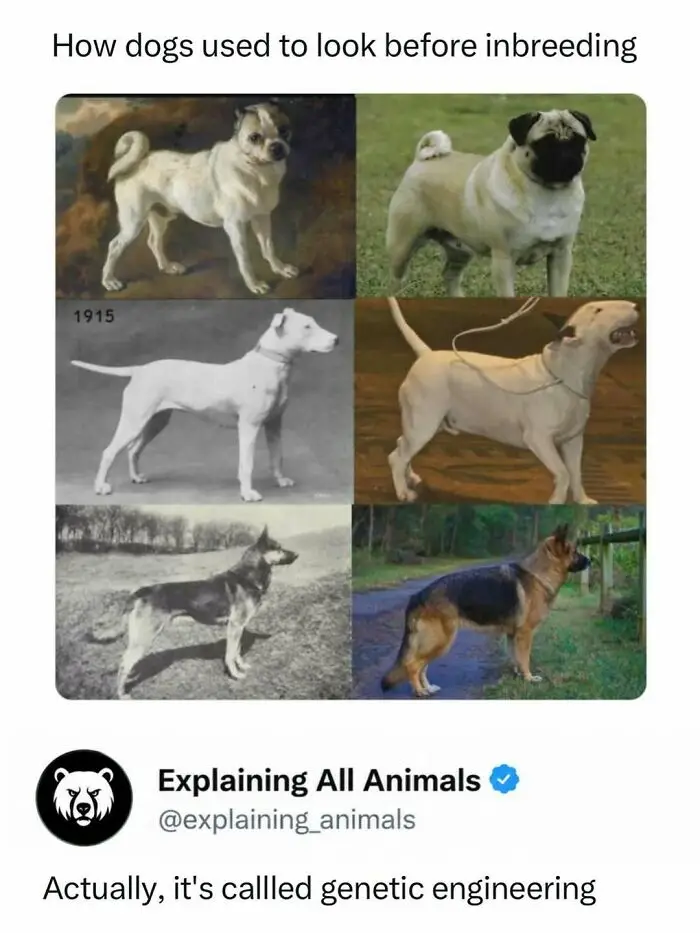
The domestication of dogs is one of the most fascinating events in human history. For many years, scientists believed that wolves remained completely wild until about 12,000 years ago, when humans began taming and breeding them. However, the exact timing and process of this transformation has long been debated.
A major shift in thinking came in 1997, when DNA analysis suggested that the split between wolves and dogs may have occurred as far back as 130,000 years ago. If correct, this would mean that the relationship between humans and dogs began much earlier than previously thought, making dogs not only humanity’s oldest animal companions but also a key part of our shared evolutionary history.
Report
14points
#59
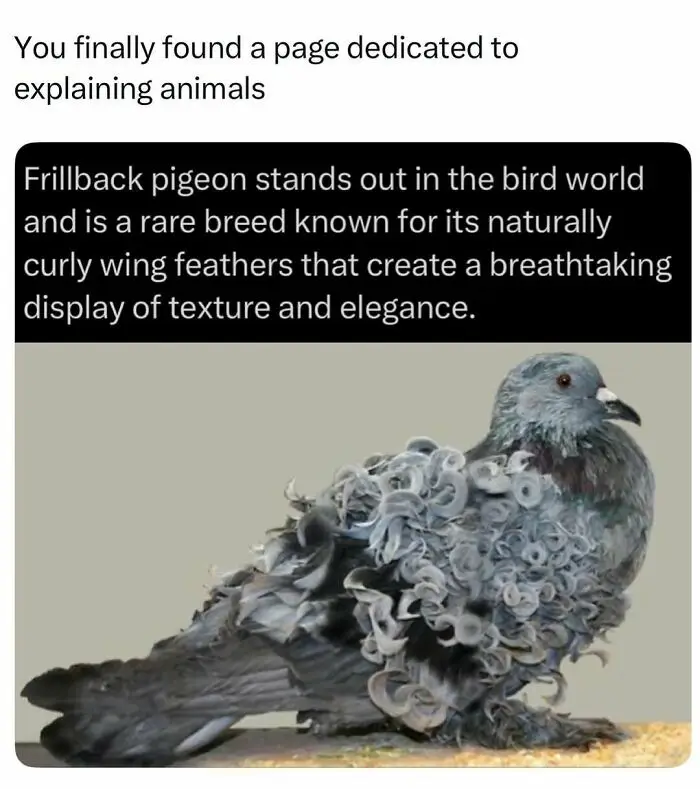
The Frillback pigeon stands out in the bird world for its extraordinary appearance, most notably its naturally curly wing feathers that form tight, elegant spirals. Unlike any other pigeon breed, the curls called ‘frills’ cover the wing shields and create a breathtaking display of texture and refinement. This ornamental breed is admired not for flight performance, but for its striking beauty and graceful posture, making it a favorite among aviculturists and exhibition breeders.
The Frillback pigeon originated in the regions of Southeastern Europe and Asia Minor, with historical roots tracing back several centuries. Over time, selective breeding enhanced the dramatic curl of its feathers, transforming it into one of the most distinctive fancy pigeon varieties in the world. Today, it remains a rare and treasured breed, celebrated for both its uniqueness and its elegant, almost regal presence.
Report
14points
#60
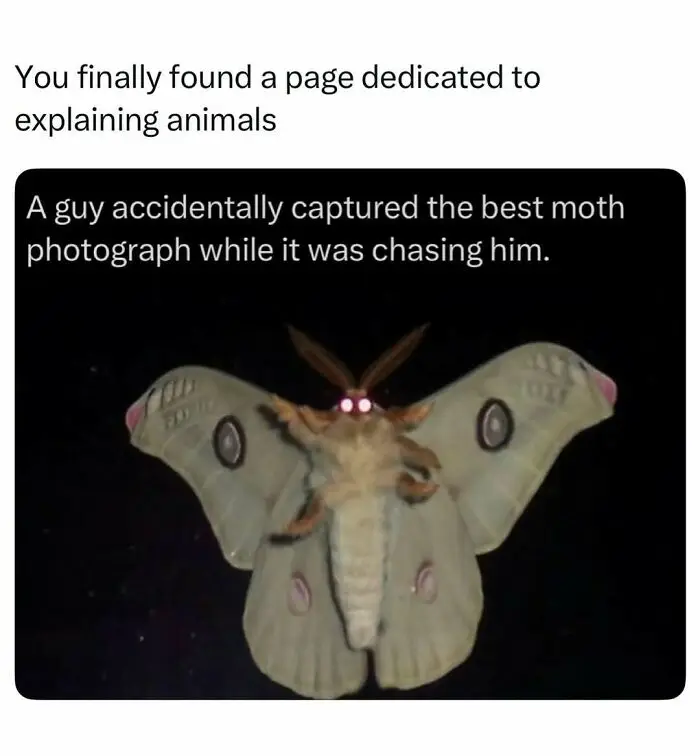
Moths are often seen circling flames and porch lights at night, a behavior that has puzzled people for centuries. Scientists believe this happens because many moth species navigate using the moon as a natural compass. By keeping the moon at a steady angle in the sky, moths can travel in relatively straight lines across long distances in the dark.
Artificial lights confuse this system. When moths mistake a nearby lamp or flame for the moon, their navigation breaks down. Instead of flying straight, they continually adjust their angle to the light, causing them to spiral toward it. This simple navigational error explains why moths gather around lights and sometimes fly dangerously close to flames.
Report
13points
