





Behind the quiet presence and watchful eyes of the wild lies a world of deep feelings, logic, and rich emotional lives that standard biology textbooks completely missed. Every other day, researchers are dropping new proof that animals possess levels of intelligence and emotion that rival our own.
For instance, did you know there is a butterfly out there that is literally split right down the middle — half male and half female? Or that there is a certain wild animal that fully supports adoption?
The online community @explaining.animals is blowing minds by updating the wildlife playbook, one post at a time. We gathered their most fascinating and viral breakdowns right here.
This list might even help you figure out whether you can take a nap with a cheetah, a leopard or a jaguar. Let’s find out below.
#61
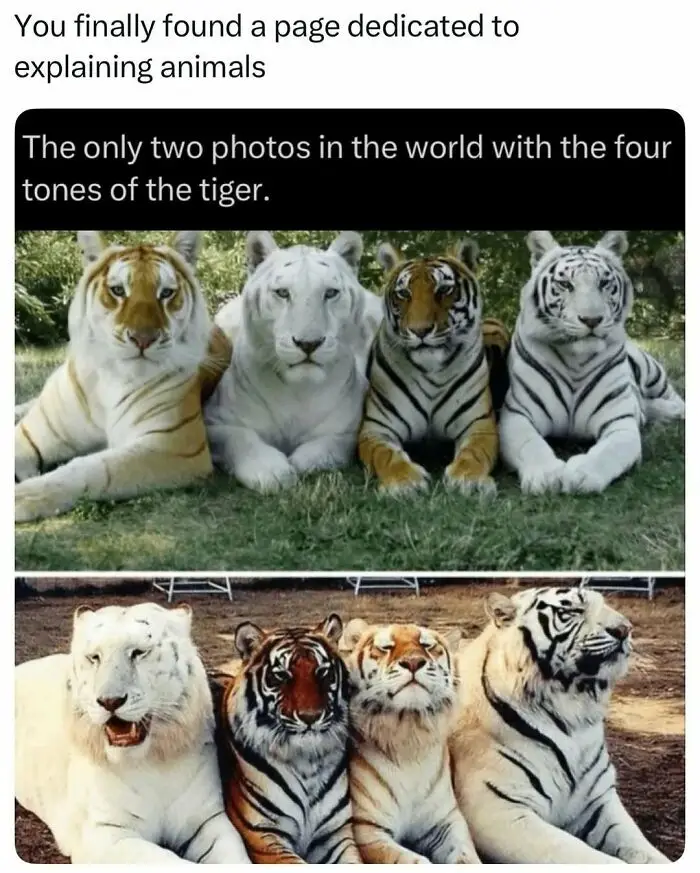
The “four tones of the tiger” refers to four distinct coat types that have been observed mostly in captivity. These include the standard orange tiger, the white tiger, the golden tabby tiger, and the rare stripeless white tiger. The standard orange tiger, commonly seen in the wild, has bright orange fur with bold black stripes and white markings. In contrast, the white tiger has pale white or cream-colored fur with dark stripes, giving it a striking and unusual appearance.
The golden tabby tiger is even rarer and has a soft golden coat with light, faded stripes, making it look almost glowing in color. The most uncommon of the four is the stripeless white tiger, which appears almost completely white with little or no visible stripes. These coat variations are usually the result of genetic traits that appear in captive breeding programs, making them fascinating examples of how tiger appearance can vary.
Report
13points
#62

The story of a kitten surviving more than 50 fractures is a remarkable example of resilience and the power of dedicated care. After suffering devastating injuries, the tiny animal faced months of intensive veterinary treatment, careful rehabilitation, and constant attention from a determined rescuer who refused to give up. Despite the severity of its condition, the kitten gradually recovered, regained strength, and eventually learned to walk again.
Cases like this demonstrate the extraordinary healing potential of young animals when they receive proper medical support and rehabilitation. Veterinarians often emphasize that recovery from severe injuries requires patience, persistence, and long-term commitment. The kitten’s journey serves as an inspiring reminder that even when the odds seem overwhelming, compassion and expert care can lead to outcomes that once appeared impossible.
Report
13points
#63
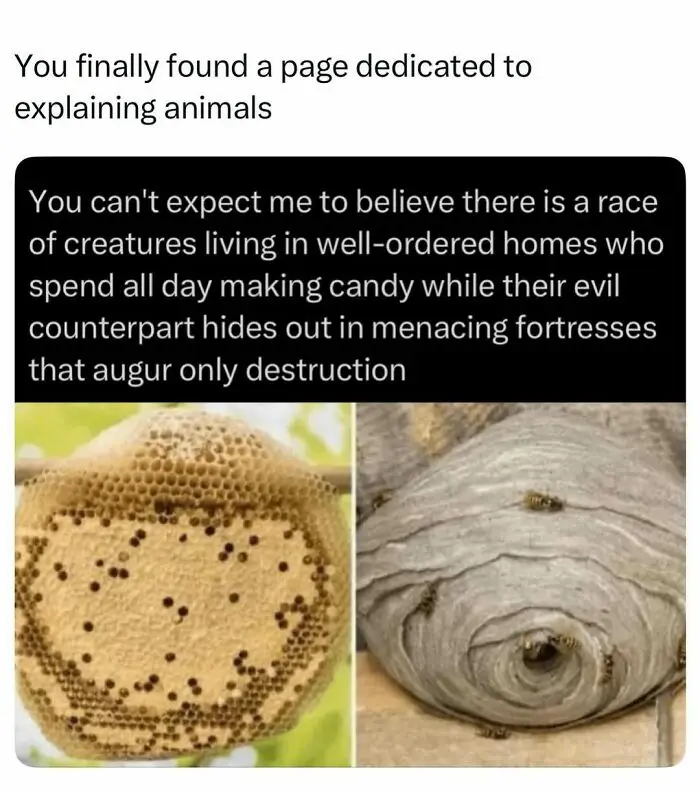
The contrast between bees and wasps often feels like something out of a storybook: one group living in neat, cooperative hives, producing honey and symbolizing harmony, while the other seems harsher, more solitary, and quick to defend itself. Bees, especially species like the Western honey bee, are widely associated with productivity and sweetness, shaping their reputation as nature’s gentle workers. Wasps, on the other hand, tend to build paper-like nests, hunt other insects, and react more aggressively when threatened, which has earned them an undeserved “villain” label in popular imagination.
If you were to give wasps a fitting villain theme, it would lean into their precision and intensity rather than simple evil. Their “aesthetic” might resemble something like the Sith from Star Wars- cold, efficient, and formidable rather than chaotic. A wasp colony’s theme could center on sharp angles, dark gold and black tones, and an atmosphere of calculated power, reflecting their role as hunters and defenders in the ecosystem. In reality, though, wasps are not villains at all, they are essential for controlling pests and maintaining ecological balance, even if their style feels a bit more intimidating.
Report
13points
#64
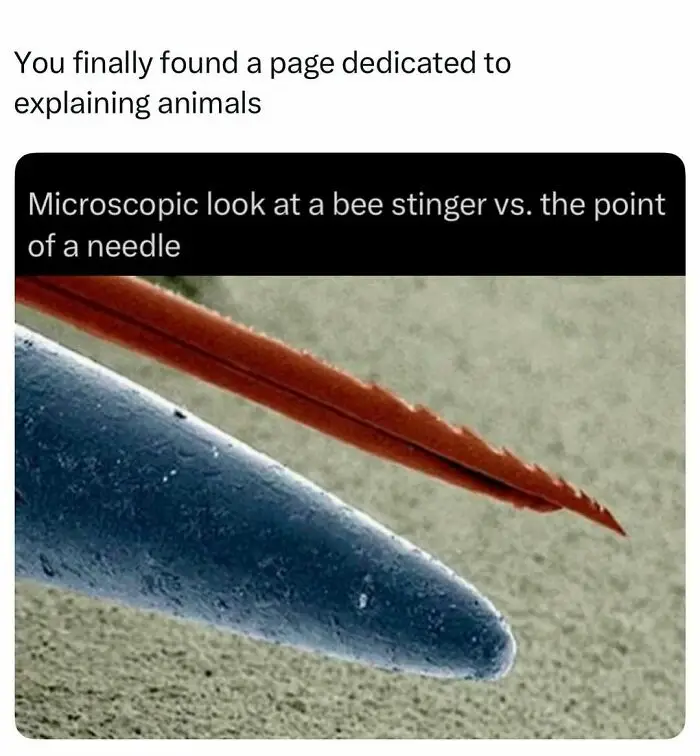
A honey bee’s sting is uniquely designed with a barbed, saw-like structure that serves a precise defensive purpose. When the bee stings a mammal, these barbs anchor the stinger firmly into the skin, ensuring that venom is effectively delivered. This mechanism helps protect the hive by deterring predators, making the sting an effective, if extreme, survival tool. Unlike smoother stingers found in some other insects, the honey bee’s barbed design prevents easy withdrawal once it penetrates soft skin.
However, this adaptation comes at a great cost to the bee itself. As it attempts to fly away, the embedded stinger is ripped from its body, tearing away part of its abdomen along with vital organs. This results in the bee’s death, making the act of stinging a one-time, sacrificial defense. In this way, the honey bee demonstrates a remarkable example of biological self-sacrifice, prioritizing the safety of the colony over individual survival.
Report
12points
#65
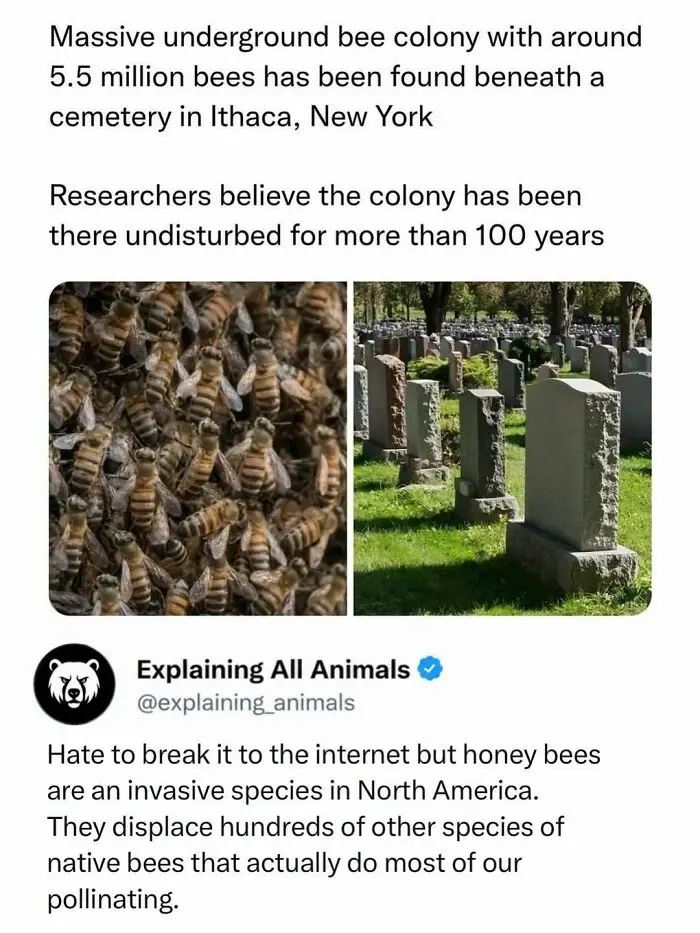
The discovery of an enormous underground honey bee colony beneath a cemetery in Ithaca, New York, captured people’s imaginations because of its sheer scale. Researchers estimated that roughly 5.5 million bees may have occupied the site over more than a century, creating what sounds almost like a hidden city beneath the ground. The idea of millions of bees quietly thriving beneath a peaceful cemetery for generations struck many people as both fascinating and slightly absurd, prompting jokes about nature’s boldness and independence.
Much of the public reaction centered on the belief that the colony should simply be left alone. After all, if a bee population has managed to flourish undisturbed for decades, many argue there is little reason to interfere. The story highlights a broader appreciation for wild ecosystems that exist beyond human attention, reminding us that some of nature’s most remarkable achievements can unfold quietly in the background, requiring neither publicity nor intervention to succeed.
Report
11points
#66
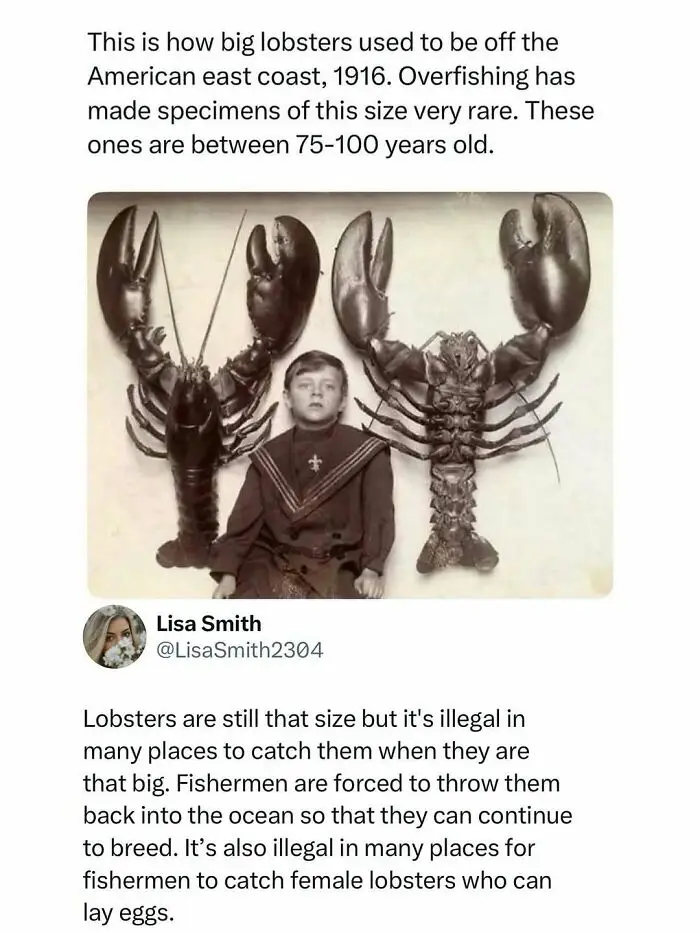
American lobsters are some of the longest-living crustaceans in the ocean, and they never truly stop growing. Scientists believe that if a lobster avoids predators, disease, and fishing nets, it can survive for many decades and possibly close to a century. Because lobsters molt by shedding their hard shells and growing new ones, they can slowly become enormous over time. Historical photographs from the early 1900s showing giant lobsters caught off the US East Coast are genuine, with some specimens weighing more than 40 pounds. According to National Oceanic and Atmospheric Administration, lobsters continue growing throughout their lives because of this unusual molting process.
Huge lobsters are much rarer today, not because they stopped existing, but because few survive long enough to reach such incredible sizes. Commercial fishing often removes older lobsters before they can become giants, which has changed the average size seen in modern waters. To help protect lobster populations, many fisheries now safeguard egg-bearing females and limit the capture of very small or extremely large lobsters. Despite old sea stories, giant lobsters were never dragging sailors underwater, but these massive creatures still reveal how dramatically ocean ecosystems and fishing pressures have changed over the last century.
Report
11points
#67
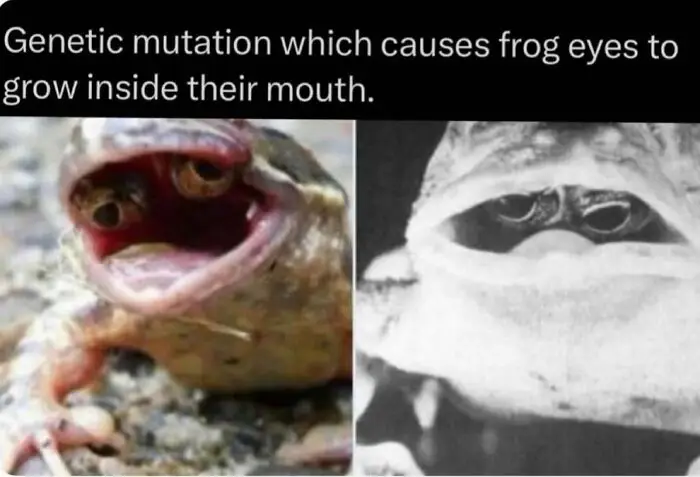
A rare genetic mutation in some frog species can lead to a remarkable and tragic developmental abnormality in which the eyes grow inside the mouth rather than on the head. This condition is often connected to disruptions in important developmental genes such as Pax6 gene, which help guide the formation and placement of organs during embryonic growth. When these genetic instructions fail, eye tissue may migrate incorrectly, causing the frog’s eyes to develop within the oral cavity instead of in their normal position.
This unusual mutation leaves the frog effectively blind, although some individuals may still detect faint light. Without proper vision, hunting insects and avoiding predators becomes extremely difficult, greatly reducing the animal’s chances of survival in the wild. Scientists study rare cases like these to better understand how genes control body development and how even small genetic changes can produce dramatic physical abnormalities in living organisms.
Report
11points
#68
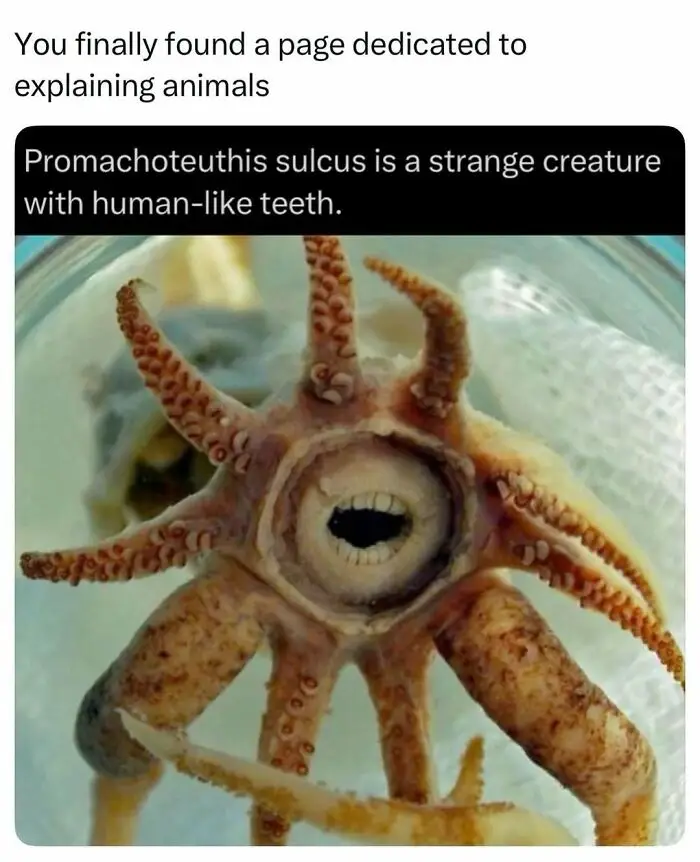
Promachoteuthis sulcus, a unique deep-sea squid, has captured attention due to its striking “human-like” teeth. However, these so-called teeth are not true teeth but rather part of the squid’s radula, a chitinous band of tooth-like structures used to grasp and shred its prey. This adaptation allows the squid to feed effectively in the dark, extreme depths of the ocean.
Discovered in the deep ocean, Promachoteuthis sulcus is part of a rare group of squid and remains largely understudied due to its elusive nature and scarcity. Its peculiar features highlight the incredible and often bizarre adaptations of deep-sea organisms, which have evolved to thrive in some of the planet’s most hostile environments, where survival demands specialized traits and behaviors.
Report
10points
#69
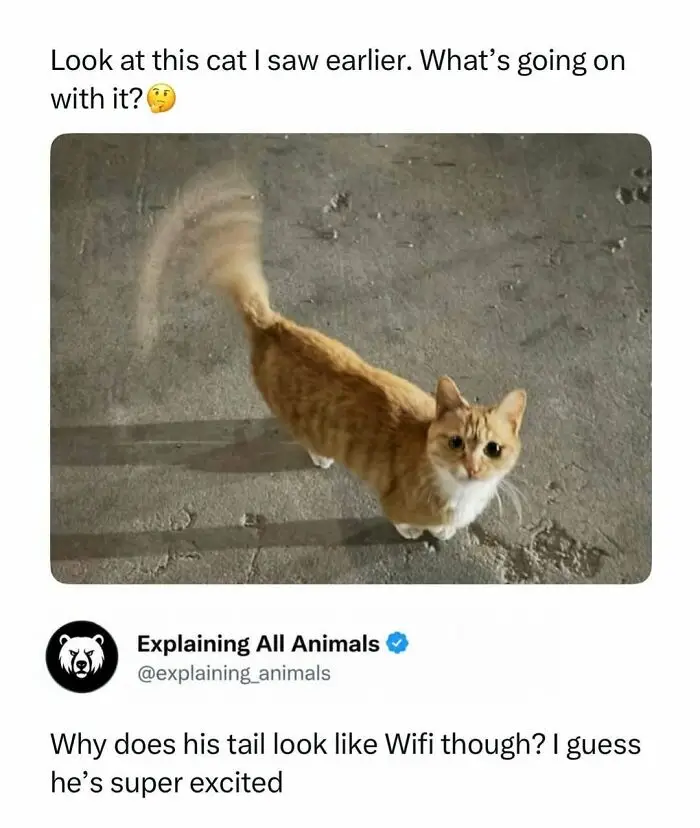
A cat’s tail is one of its most important tools for communication, helping express emotions and intentions in subtle but clear ways. A raised tail often signals confidence or friendliness, while a puffed-up tail can indicate fear or surprise. Even small movements, such as flicking or twitching, may reveal irritation, focus, or excitement, making the tail a valuable indicator of a cat’s mood.
Beyond communication, the tail plays a crucial role in balance and coordination. It helps cats maintain stability while climbing, jumping, and making sharp turns, especially in narrow or elevated spaces. The smooth and graceful movement of a cat’s tail contributes to the agility that felines are known for, making it both a practical tool and one of their most recognizable features
Report
9points
#70
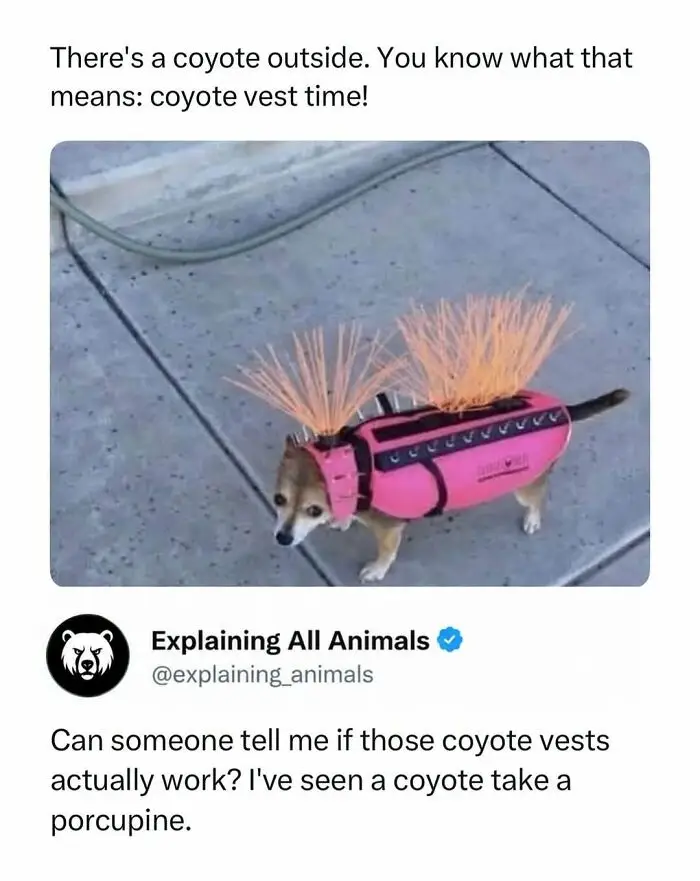
Coyote vests are protective garments designed to help keep small dogs safer from attacks by predators such as coyotes. These vests are typically made from tough, puncture-resistant materials and often feature brightly colored spikes or whisker-like attachments that make a dog appear larger and more difficult to grab. While they do not guarantee protection, they can discourage an attack by making a predator think twice before approaching.
The vests have become increasingly popular in areas where wildlife and pets frequently share space. Many dog owners use them during walks, hikes, or outdoor playtime, especially for smaller breeds that may be more vulnerable to predators. Coyote vests are best viewed as one layer of protection alongside supervision, leashes, secure fencing, and awareness of local wildlife activity.
Report
9points
#71
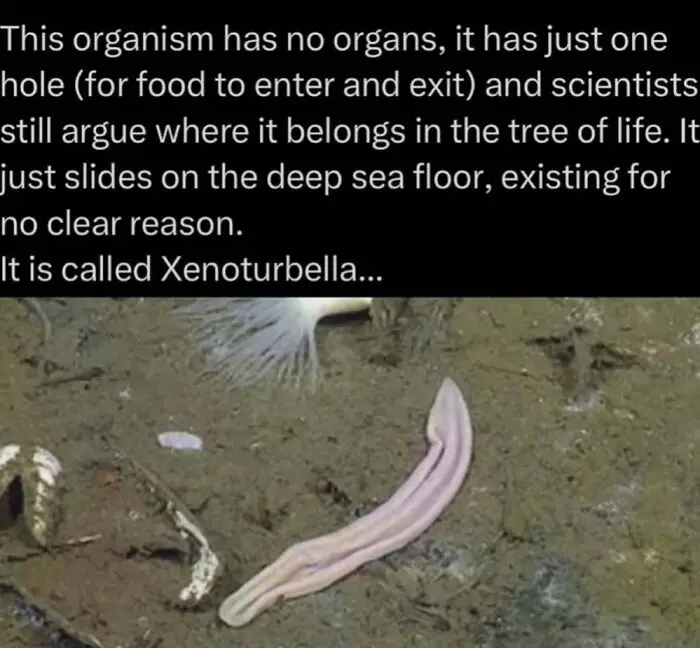
Xenoturbella was first described in 1949 after scientists discovered a strange, soft-bodied creature in deep-sea samples from the North Atlantic Ocean. Its appearance puzzled researchers because it looked extremely simple, lacking many of the organs normally found in animals. Some scientists even wondered if it was not a real species at all, but instead a damaged larva from another organism. For many years, the true identity of Xenoturbella remained one of zoology’s biggest mysteries.
Early studies mistakenly linked Xenoturbella to mollusks after traces of mollusk DNA were found inside it, but scientists later realized this DNA came from prey the animal had eaten. More advanced genetic research eventually showed that Xenoturbella belongs to a very ancient branch of bilaterian animals, making it important for understanding early animal evolution. Even today, researchers continue debating exactly where it fits on the evolutionary tree, adding to its reputation as one of the ocean’s most mysterious creatures.
Report
9points
#72
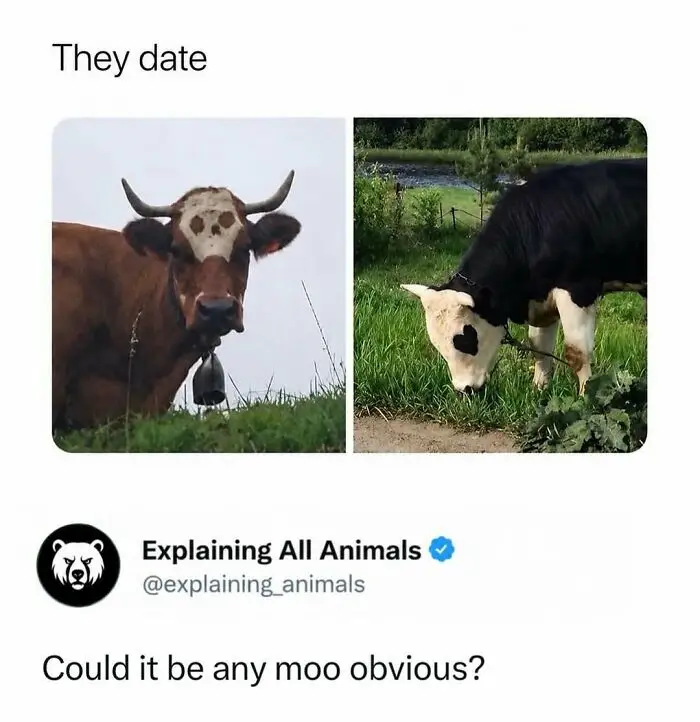
Some cattle develop remarkably unusual coat patterns, including shapes that resemble stars, hearts, masks, or even skulls. These markings occur naturally because of variations in pigmentation and hair growth during development, making every animal’s appearance unique. Farmers and breeders have long relied on distinctive facial markings to help identify individual cattle within large herds.
These rare patterns often attract attention online because people are naturally inclined to recognize familiar images in random designs. This tendency, known as pareidolia, causes the brain to see meaningful shapes where none were intentionally created. As a result, a cow with a heart-shaped patch or a skull-like marking can appear almost designed by nature, even though it is simply an uncommon result of genetics and pigmentation.
Report
7points
#73
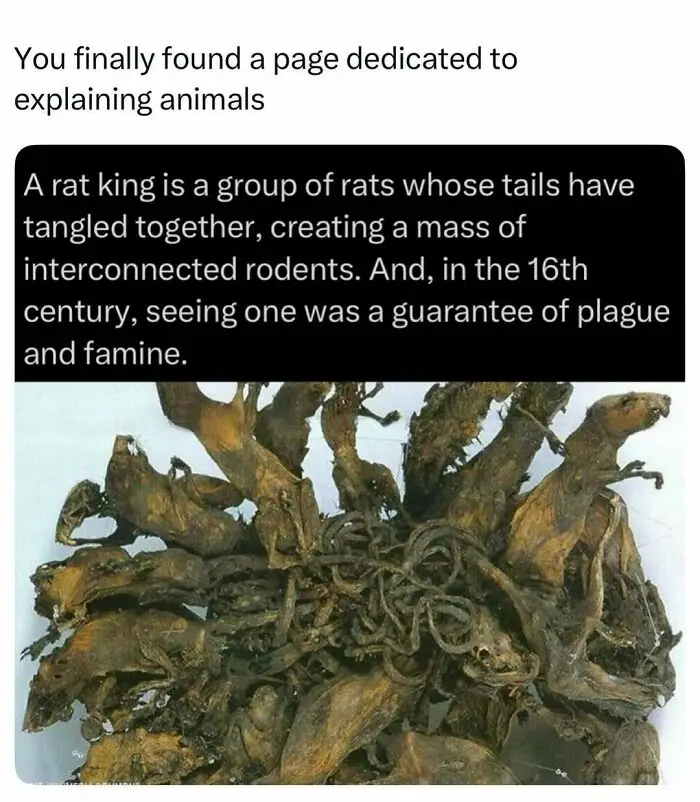
A rat king is a strange and unsettling phenomenon in which multiple rats become bound together by their tails, forming a writhing knot of interconnected bodies. This can happen when tails become tangled and stuck with substances like dirt, blood, or ice, eventually hardening and trapping the animals together. Though rare and still debated by scientists, preserved specimens and historical accounts suggest that such occurrences did exist, capturing human imagination for centuries.
In the 16th century, when fear of disease shaped everyday life, the sight of a rat king carried ominous meaning. Rats were already closely associated with the spread of the plague, so a cluster of them fused into one grotesque mass seemed like a supernatural warning. People believed it foretold disaster- plague, famine, or societal collapse, turning the rat king into a powerful symbol of dread in early European folklore.
Report
3points
