






It's impossible to know every single thing that happened in the past. We think of history books as the primary source for that information, but written history is only about 5,000-5,500 years old. What about the things that happened before that? And how can we be sure that important things don't get left out or forgotten from history?
Bored Panda is bringing you some stories from the dark side of history you might not have read in history books. They come to you from the Instagram page "Dark History by Sush," a place for "the dark, disturbing truths history tried to bury."
More info: Instagram
#41

She spent 12 years lying on the same couch, her body slowly melting each day... while she was still alive.
When police and emergency responders entered the house in Louisiana in January 2022, they didn’t just find a death they found evidence of years of abandonment. Lacey Ellen Fletcher was 36 years old. Her parents told authorities she had autism and severe anxiety, but what shocked everyone was that no medical help had been called for years. There were no regular checkups, no social services involved, no outside support. The house looked normal from the outside. That’s what disturbed people the most this wasn’t hidden in a basement or abandoned building. It was a quiet home in a regular neighborhood.
Once the details became public, the reaction was immediate and intense. People weren’t just angry they were confused. How does someone suffer like this without anyone intervening? No school follow-ups. No welfare checks. No neighbors asking questions. The case forced a hard conversation about how easily disabled adults can disappear when families isolate them from the world. Lacey didn’t “fall through the cracks.” She was left there.
In 2023, Lacey’s parents, Clay and Sheila Fletcher, were charged with second-degree m*rder, a charge that later became mansl**ghter. They accepted a plea deal and were each sentenced to 40 years in prison, with 20 years suspended, followed by probation. The court also barred them from ever being caregivers again.
The sentence didn’t bring closure for many people because no punishment can give someone back the life they never got to live.
Lacey Ellen Fletcher’s story isn’t just about neglect. It’s about silence being mistaken for safety, and “private family matters” being used as an excuse to look away. Her case is now often mentioned as a warning: if we don’t check on the quiet ones, if we assume someone else is responsible, this kind of suffering can exist right next door unnoticed, untreated, and unspoken.
Report
14points
#42

You're scrolling through her glamorous pictures...
not knowing she ended up in a soup pot.
Abby Choi was a 28-year-old model and influencer from Hong Kong. She was known for her beauty, success, and kindness. Even after divorcing her first husband, Alex Kwong, she stayed on good terms with his family. She supported them financially, helped them with a place to live, and even took care of them. From the outside, everything looked perfect she had a new partner, two children, and a thriving career. But behind all that, there was quiet resentment and greed growing within her ex-husband’s family.
In February 2023, Abby suddenly went missing. At first, it looked like a disappearance case until the police made a horrific discovery. Her dismembered body was found in a house in Lung Mei Village, Tai Po. Some of her remains were hidden in a refrigerator, and parts of her body were cooked in a soup pot. The investigation revealed something even darker the ones responsible were her ex-husband, Alex Kwong, his brother Anthony Kwong, their father, and their mother. The motive was money and property they were angry over financial issues and her plan to sell a luxury apartment registered under the brother’s name.
All four family members were arrested. Alex Kwong and his father were charged with m*rder, while his mother and brother faced charges for helping cover it up. The case shocked Hong Kong not just for its brutality, but for the betrayal behind it. Abby had cared for these people, trusted them, and in return, they ended her life in the most horrifying way possible. It was a story that left an entire city shaken a reminder that sometimes, danger doesn’t come from strangers. It comes from the ones sitting at your table.
Report
14points
#43
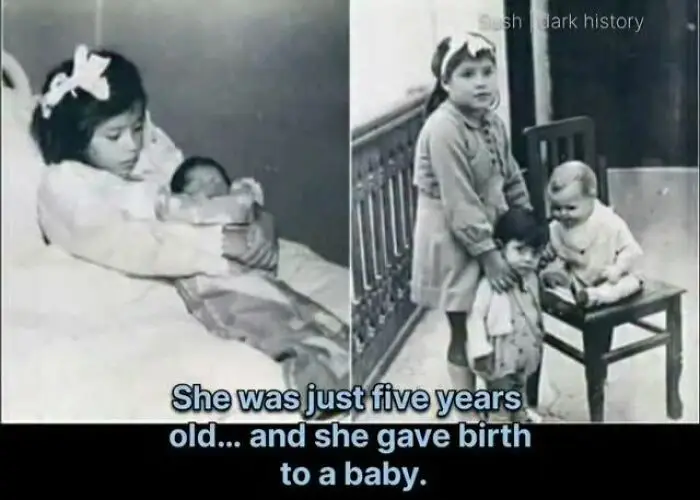
A girl from a small village in Peru was only five years old when her parents noticed her belly was growing. At first, they thought it was a tumor, so they took her to the doctor. To everyone’s shock, the doctor discovered she was actually seven months pregnant.
Her body had started puberty extremely early a rare condition called precocious puberty which meant she was physically capable of carrying a child at an age when most kids are just starting school. She had no understanding of what was happening to her, and her childhood was effectively taken away before it even began.
She gave birth through a Cesarean section to a healthy baby boy. The father was never publicly identified, and her family’s life was forever changed. The boy, who grew up thinking she was his sister, lived until he was 40 years old.
This case is considered one of the most shocking and heartbreaking in medical history. It highlights how fragile childhood innocence can be and how some real-life stories are far stranger and more tragic than fiction.
Report
14points
#44
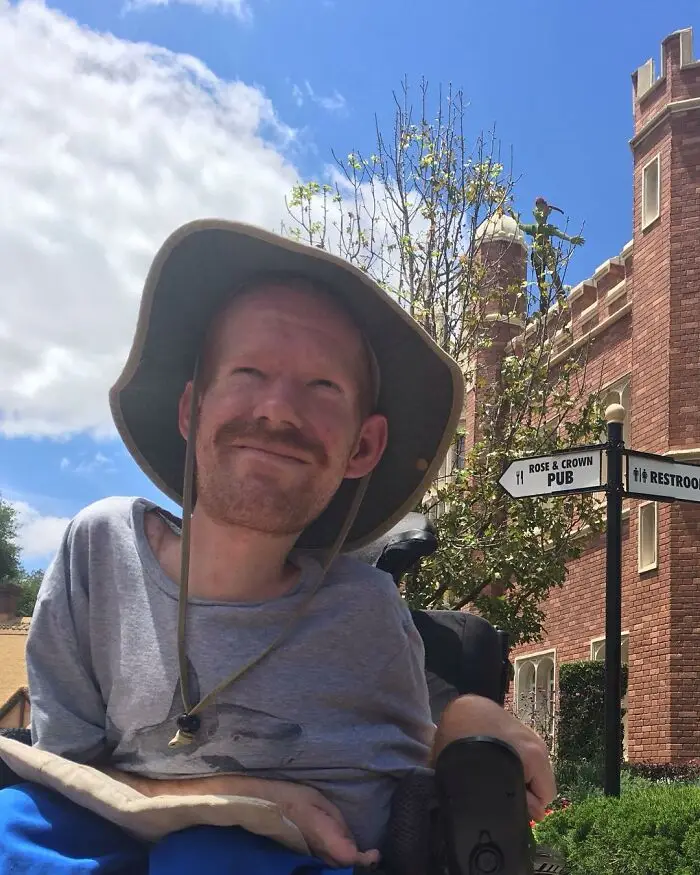
"How could I ever travel? How could I ever feel the sky or see the places I dreamed of... if I couldn't even stand?"
Kevan Chandler was born with spinal muscular atrophy, which made it impossible for him to walk. For most people, traveling the world is exciting but for Kevan, it felt like a dream he could never touch. He loved the idea of exploring new places, seeing the sky from above, feeling the wind of different countries but his condition made it seem impossible. But here’s where the story gets truly amazing. Kevan had three really close friends who refused to let him be left behind. They didn’t see his disability as a limit they saw his dreams as something worth fighting for. So they came up with a plan: a special harness, and they took turns holding him during flights so he could travel safely. Every mile, every flight, Kevan was literally carried by love and friendship. Thanks to them, Kevan finally got to see the world, experience new countries, and feel the freedom he had always imagined. For him, it wasn’t just about visiting places it was about belonging, being included, and proving that nothing should stop you from chasing your dreams, no matter what obstacles life throws at you. Kevan’s story is a powerful reminder that strength isn’t just in your body it’s in the people who lift you, and in your heart that refuses to give up. His journey inspires anyone who feels limited to remember: dreams can happen, with persistence, love, and support.
Kevan Chandler was born with spinal muscular atrophy, which made it impossible for him to walk. For most people, traveling the world is exciting but for Kevan, it felt like a dream he could never touch. He loved the idea of exploring new places, seeing the sky from above, feeling the wind of different countries but his condition made it seem impossible. But here’s where the story gets truly amazing. Kevan had three really close friends who refused to let him be left behind. They didn’t see his disability as a limit they saw his dreams as something worth fighting for. So they came up with a plan: a special harness, and they took turns holding him during flights so he could travel safely. Every mile, every flight, Kevan was literally carried by love and friendship. Thanks to them, Kevan finally got to see the world, experience new countries, and feel the freedom he had always imagined. For him, it wasn’t just about visiting places it was about belonging, being included, and proving that nothing should stop you from chasing your dreams, no matter what obstacles life throws at you. Kevan’s story is a powerful reminder that strength isn’t just in your body it’s in the people who lift you, and in your heart that refuses to give up. His journey inspires anyone who feels limited to remember: dreams can happen, with persistence, love, and support.
Report
14points
#45

The Blue Babe bison is one of the most fascinating Ice Age discoveries ever. It was found in 1979 in Alaska, and what made it so special is that it wasn’t just bones like most fossils. This bison was incredibly well preserved because it had been frozen in permafrost for around 36,000 years. It still had skin, fur, and even some flesh intact, which is extremely rare. The name “Blue Babe” came from the slightly bluish color its skin turned after being exposed to air during excavation.
When scientists studied the body, they noticed something really interesting. The bison had deep claw and bite marks, which showed that it had been attacked by an ancient predator called the American lion (now extinct). It likely died during that attack, and then its body froze quickly in the cold environment, which is why it didn’t decay like normal animals. This basically gave scientists a snapshot of a real Ice Age event, almost like freezing a moment in time.
Now here’s the part that surprises most people. During research, one of the scientists, Dale Guthrie, decided to test how well the flesh had been preserved. He took a small piece of the bison’s meat, cooked it (often described like a stew or soup), and actually ate it. According to him, it tasted like beef, but a bit tougher. It sounds strange, but it helped confirm that the tissue was still organic after thousands of years.
Today, Blue Babe is kept at the University of Alaska Museum, where it’s displayed with recreated details of the lion attack. It’s considered one of the best-preserved Ice Age animals ever found, and it helped scientists understand not just the animal itself, but also predators, climate, and survival during that time.
Report
13points
#46

They handed him their children, never knowing what he was really doing behind the camera.
Anatoly Slivko was a Soviet engineer and youth club leader who lived in the Stavropol region of Russia. To the outside world, he appeared respectable and trustworthy. He worked with children, ran a local youth club focused on discipline and outdoor activities, and was even awarded honors for his work with young people. Parents trusted him, and authorities saw him as a model citizen. This public image allowed him long-term access to children without suspicion. Behind this image, Slivko was secretly recording disturbing acts involving boys from his club. He used manipulation rather than force, convincing children that they were participating in “training,” “experiments,” or character-building activities. He filmed these acts and kept detailed journals documenting his behavior, thoughts, and routines. Over many years, his actions escalated, and several children lost their lives as a result of these activities. For a long time, the crimes went unnoticed because of his respected status and careful planning. The case finally came to light in the mid-1980s when a surviving victim spoke up, and investigators searched Slivko’s home. What they found was extensive evidence: video recordings, photographs, and written records that clearly documented his crimes over decades. The investigation revealed that warnings had been missed earlier, and complaints were either ignored or not properly investigated, allowing him to continue for years. In 1986, Anatoly Slivko was arrested, put on trial, and convicted. The court recognized the scale and severity of his crimes, as well as the calculated way he had hidden behind social respectability. He was sentenced to death and executed in 1989. His case later became one of the most studied criminal cases in the former Soviet Union. Today, the Slivko case is often discussed as a tragic example of how authority, trust, and social reputation can be misused, and how important it is to listen to children and take early warning signs seriously. It remains a painful reminder of the need for accountability and protection for the most vulnerable.
Anatoly Slivko was a Soviet engineer and youth club leader who lived in the Stavropol region of Russia. To the outside world, he appeared respectable and trustworthy. He worked with children, ran a local youth club focused on discipline and outdoor activities, and was even awarded honors for his work with young people. Parents trusted him, and authorities saw him as a model citizen. This public image allowed him long-term access to children without suspicion. Behind this image, Slivko was secretly recording disturbing acts involving boys from his club. He used manipulation rather than force, convincing children that they were participating in “training,” “experiments,” or character-building activities. He filmed these acts and kept detailed journals documenting his behavior, thoughts, and routines. Over many years, his actions escalated, and several children lost their lives as a result of these activities. For a long time, the crimes went unnoticed because of his respected status and careful planning. The case finally came to light in the mid-1980s when a surviving victim spoke up, and investigators searched Slivko’s home. What they found was extensive evidence: video recordings, photographs, and written records that clearly documented his crimes over decades. The investigation revealed that warnings had been missed earlier, and complaints were either ignored or not properly investigated, allowing him to continue for years. In 1986, Anatoly Slivko was arrested, put on trial, and convicted. The court recognized the scale and severity of his crimes, as well as the calculated way he had hidden behind social respectability. He was sentenced to death and executed in 1989. His case later became one of the most studied criminal cases in the former Soviet Union. Today, the Slivko case is often discussed as a tragic example of how authority, trust, and social reputation can be misused, and how important it is to listen to children and take early warning signs seriously. It remains a painful reminder of the need for accountability and protection for the most vulnerable.
Report
13points
#47
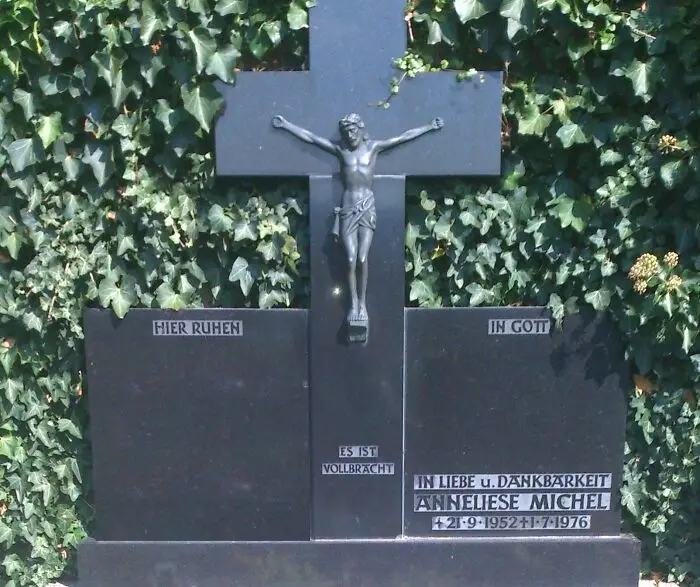
She went through 67 exorcisms... and still died weighing just 30 kilos.
Anneliese Michel was born in 1952 in Germany and grew up in a deeply religious Catholic family. Her life was normal until she was about 16, when she started having seizures and blackouts. Doctors diagnosed her with temporal lobe epilepsy and later depression. She was put on heavy medication, but instead of improving, Anneliese said things got worse. She claimed she saw demonic faces, heard voices, and felt an intense hatred toward religious objects like she couldn’t even walk past a church or look at a crucifix without panic. As her condition worsened, her family began to believe this wasn’t just a medical issue. After years of asking the Church for help, two Catholic priests Arnold Renz and Ernst Alt were finally allowed to perform an exorcism in 1975. According to the priests, Anneliese was possessed by six demons: Lucifer, Judas Iscariot, Nero, Cain, Adolf Hitler, and a fallen priest named Fleischmann. During the exorcisms, Anneliese reportedly spoke in different voices, growled, identified priests by name without knowing them, and said the demons hated her because she prayed for others. The priests later said that during the rituals, the demons claimed Anneliese was chosen to suffer as a warning to humanity. One of the most disturbing things recorded was the demons saying she must refuse food and endure pain as part of her “mission.” Over time, Anneliese stopped eating almost completely. She performed repeated kneeling prayers so much that her knees became injured and infected. Audio recordings from the exorcisms exist, and they capture her screaming, crying, and speaking in harsh, unrecognizable tones, which still disturb people today. Over 10 months, Anneliese went through 67 exorcism sessions. During this time, her medical treatment was basically stopped. By 1976, she was extremely weak, dehydrated, and malnourished. She died at just 23 years old, weighing only 30 kilograms. The official cause of death was starvation and dehydration, and doctors later said she could have survived if proper medical care had continued.
Anneliese Michel was born in 1952 in Germany and grew up in a deeply religious Catholic family. Her life was normal until she was about 16, when she started having seizures and blackouts. Doctors diagnosed her with temporal lobe epilepsy and later depression. She was put on heavy medication, but instead of improving, Anneliese said things got worse. She claimed she saw demonic faces, heard voices, and felt an intense hatred toward religious objects like she couldn’t even walk past a church or look at a crucifix without panic. As her condition worsened, her family began to believe this wasn’t just a medical issue. After years of asking the Church for help, two Catholic priests Arnold Renz and Ernst Alt were finally allowed to perform an exorcism in 1975. According to the priests, Anneliese was possessed by six demons: Lucifer, Judas Iscariot, Nero, Cain, Adolf Hitler, and a fallen priest named Fleischmann. During the exorcisms, Anneliese reportedly spoke in different voices, growled, identified priests by name without knowing them, and said the demons hated her because she prayed for others. The priests later said that during the rituals, the demons claimed Anneliese was chosen to suffer as a warning to humanity. One of the most disturbing things recorded was the demons saying she must refuse food and endure pain as part of her “mission.” Over time, Anneliese stopped eating almost completely. She performed repeated kneeling prayers so much that her knees became injured and infected. Audio recordings from the exorcisms exist, and they capture her screaming, crying, and speaking in harsh, unrecognizable tones, which still disturb people today. Over 10 months, Anneliese went through 67 exorcism sessions. During this time, her medical treatment was basically stopped. By 1976, she was extremely weak, dehydrated, and malnourished. She died at just 23 years old, weighing only 30 kilograms. The official cause of death was starvation and dehydration, and doctors later said she could have survived if proper medical care had continued.
13points
#48

Most people only know that the Bamiyan Buddhas were blown up in 2001, but the story is bigger than that. Back in the 6th century, Bamiyan was a huge Buddhist center along the Silk Road. Monks carved these Buddhas directly into the sandstone cliffs, and inside the mountains they made caves filled with paintings, sculptures, and even living quarters. It wasn’t just two statues it was a whole spiritual complex.
What’s even more fascinating is that these Buddhas weren’t plain stone like they look in old photos. They were once covered in colorful paint, decorated with clay details, and even finished with gold. Imagine standing in front of a 55-meter golden Buddha in the middle of Afghanistan it must have been breathtaking.
Even though the statues are gone, archaeologists found fragments of the original paint, caves with Buddhist murals, and even discovered that the statues were built with a mix of Indian, Persian, and Greek influences. So, in a way, the Bamiyan Buddhas weren’t just religious icons they were proof of how cultures met and blended on the Silk Road.
Report
13points
#49

Cats have quietly been part of wars for centuries, even though no one really talks about them. On ships and in military camps, they were actually needed not just for comfort, but for survival. Cats were used to control rats and mice that would destroy food supplies, chew through important equipment, and spread deadly diseases. In both World Wars, you could find cats living on naval ships, in trenches, and even inside tanks or bunkers. Soldiers would often “adopt” them, giving them names, sharing their rations, and keeping them close like little companions in a place that felt completely inhuman.
But beyond their practical use, cats became something much deeper for soldiers. Imagine being surrounded by constant fear, loss, and destruction… and then there’s this small, calm creature sitting beside you, asking for nothing but warmth. Many soldiers wrote in letters and journals about how these cats helped them cope mentally they reminded them of home, of normal life, of something soft in a world that had become brutal. Some cats even became mascots for entire units, traveling with them through different battle zones and becoming a symbol of comfort and luck.
There are also real recorded stories of specific war cats. For example, a cat named “Unsinkable Sam” supposedly survived multiple ship sinkings during World War II, moving from one vessel to another and living through it all. While some parts of his story are debated, he became a powerful symbol of survival. Stories like his and the photos you’re using show something people don’t expect from war: even in the harshest, darkest moments, humans still held onto kindness. And sometimes, that kindness was given to the smallest, most innocent lives.
Report
13points
#50
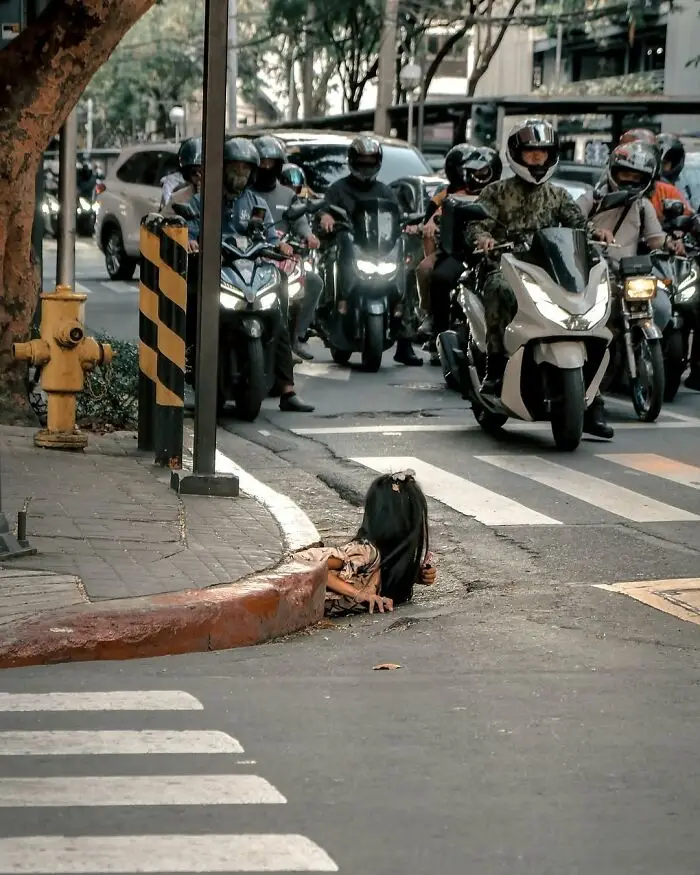
In May 2025, a woman came out of a drain on camera. That's when people found out a small group was living underground.
After videos and photos went viral showing people emerging from drainage tunnels in Metro Manila, local authorities were alerted. Agencies like the MMDA (Metro Manila Development Authority) and DSWD (Department of Social Welfare and Development) conducted inspections and clearing operations in several areas. They confirmed that small groups of people were living inside drainage systems and flood tunnels, using them as temporary shelter. These operations were mainly done because the tunnels are part of the city’s flood-control system and become extremely dangerous during heavy rain. The people found living underground were offered temporary shelters, food, medical checks, and relocation assistance. Some were moved to evacuation centers or housing programs. However, many later returned to the tunnels or nearby streets. The main reason wasn’t refusal of help, but survival relocation sites were often far from their jobs, daily income sources, schools, and hospitals. Without steady work or transport money, staying relocated became impossible for some. Because of this, the situation remains unresolved. Clearing operations continue before the rainy season to prevent deaths during floods, but long-term solutions are still limited. The issue is not just about homelessness it’s about urban poverty, displacement, and lack of accessible housing. The viral incident didn’t create the problem; it simply made a hidden reality visible for a moment.
After videos and photos went viral showing people emerging from drainage tunnels in Metro Manila, local authorities were alerted. Agencies like the MMDA (Metro Manila Development Authority) and DSWD (Department of Social Welfare and Development) conducted inspections and clearing operations in several areas. They confirmed that small groups of people were living inside drainage systems and flood tunnels, using them as temporary shelter. These operations were mainly done because the tunnels are part of the city’s flood-control system and become extremely dangerous during heavy rain. The people found living underground were offered temporary shelters, food, medical checks, and relocation assistance. Some were moved to evacuation centers or housing programs. However, many later returned to the tunnels or nearby streets. The main reason wasn’t refusal of help, but survival relocation sites were often far from their jobs, daily income sources, schools, and hospitals. Without steady work or transport money, staying relocated became impossible for some. Because of this, the situation remains unresolved. Clearing operations continue before the rainy season to prevent deaths during floods, but long-term solutions are still limited. The issue is not just about homelessness it’s about urban poverty, displacement, and lack of accessible housing. The viral incident didn’t create the problem; it simply made a hidden reality visible for a moment.
Report
12points
#51
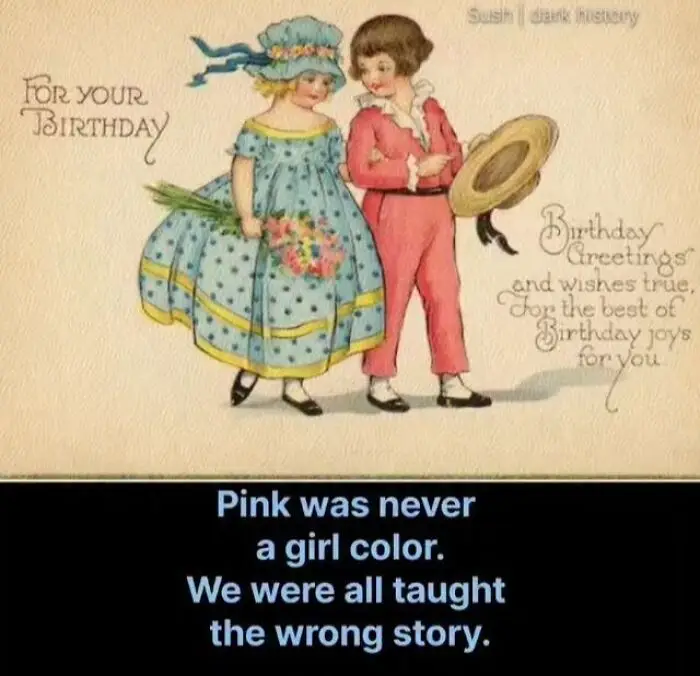
For most of history, colors didn’t have any gender. People actually dressed babies in white boys and girls because it was easy to bleach. The whole pink–blue rule came much later. In the 1700s and 1800s, people saw pink as a lighter version of red, and red was linked to soldiers, strength, and power. So pink automatically became this “mini-masculine” color for boys. And blue was the softer, calmer color connected to the Virgin Mary in paintings, so it felt more “feminine” for girls. It was the exact opposite of what we think today.
By the early 1900s, things got even more confusing because stores didn’t agree. One magazine said “pink for boys,” another said “pink for girls.” It was all random. There was no tradition, no rule, nothing cultural behind it. It was basically chaos, and everyone followed whatever their local store sold.
Then came the big switch. Around the 1940s, clothing companies realised pink dresses sold better for girls, and they pushed it aggressively in ads. After WWII, marketing got even stronger, and by the 1950s, society accepted pink = girls and blue = boys as if it was always a thing. But honestly, it was just a business decision that stuck.
So yeah… the color rules we grew up with aren’t ancient or natural. They’re completely new only about 80 years old. History actually tells the opposite story.
Report
12points
#52

Junko Furuta was a bright 17-year-old highschool student in Japan, known for her kindness, good grades, and strong sense of responsibility. On November 25, 1988, while returning home from school, she went missing. Her sudden disappearance alarmed her family and community, but what followed was something no one could have imagined.
Junko had been kidnapped by a group of teenage boys and held against her will for 44 days in a residential home. During her captivity, Junko endured unimaginable cruelty. She was mentally and physically ab*sed ra**d, tor***ed, and mu***red. Her ab**e was mainly perpetrated by four male teenagers—Hiroshi Miyano (18), Jō Ogura (17), Shinji Minato (16), and Yasushi Watanabe (17)—and took place 44 days period starting on 25 November 1988. In Japan, the case is known as the "concrete-encased h**h school girl m*rder case". Despite being in a neighborhood surrounded by people, her suffering went unnoticed. The details of her time in captivity were heartbreaking, and the way the people around her turned a blind eye made the incident even more tragic.
Eventually, her life was taken, and her body was hidden in a drum filled with concrete.
What shocked the nation even more was the outcome of the case. The young boys involved received surprisingly lenient sentences, leading to public outrage across Japan. Junko’s case became a symbol of how the justice system can fail victims, especially in crimes involving minors. To this day, her story remains one of Japan’s most haunting and unforgettable tragedies — a reminder of the urgent need for justice and humanity.
Report
12points
#53
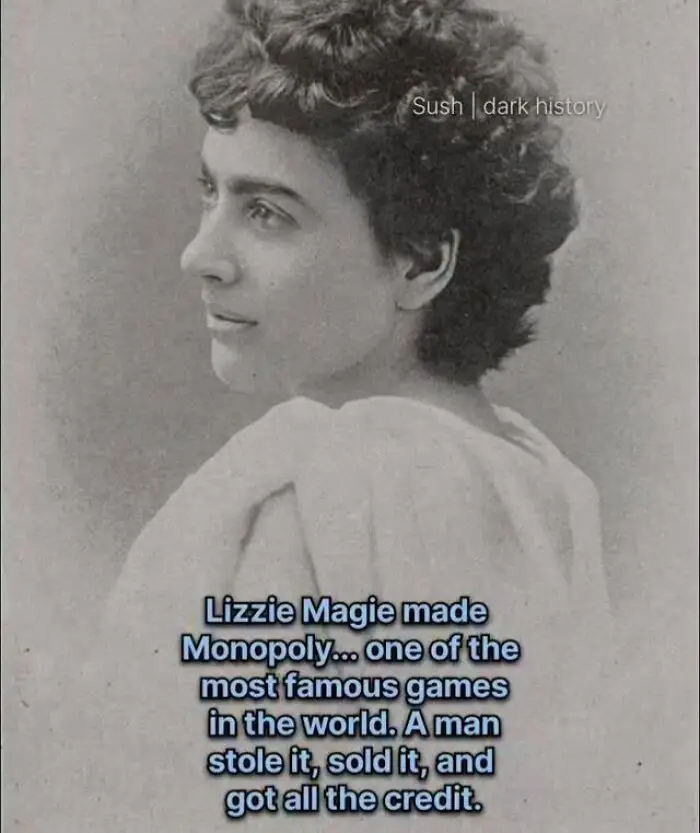
Lizzie Magie was more than just a game creator she was a writer, activist, and a woman ahead of her time. Born in 1866 in Illinois, she had strong political views, especially influenced by Henry George, a thinker who criticized how wealth and land often stayed in the hands of a few while everyone else struggled. She wanted to show people how monopolies and unfair wealth worked, and she came up with a creative way to teach it: a board game.
In 1903, she invented The Landlord’s Game, which was the blueprint for what we now know as Monopoly. But unlike Monopoly, her version had two sets of rules: one showed how wealth could hurt society if one player dominated, and the other showed a more cooperative style where everyone could benefit. So her game wasn’t just entertainment it was basically a lesson about economics and fairness, cleverly disguised as fun.
Magie tried to share her game widely. She even got a patent in 1904, and the game circulated in small circles for decades. But because the game spread informally, people added their own rules and shared it from person to person. Eventually, Charles Darrow saw a version, made minor changes, and sold it as Monopoly in the 1930s. Parker Brothers bought it from him, and Lizzie got a tiny $500 payment for her patent. She didn’t get fame or royalties, even though her idea became one of the most popular games in the world.
Despite that, Lizzie continued to create games and write, staying true to her mission of educating people about fairness and society. She died in 1948, largely forgotten, while Monopoly went on to become a household name. Her story is a reminder that sometimes the people behind the ideas that shape history never get the credit they deserve especially women in a world that often overlooked them.
Report
12points
#54

Amedeo Modigliani wasn’t always the famous artist we talk about today. Back then, he was that struggling painter in Paris broke, sick, and ad**cted. He came from Italy to make it big in the art world, but life hit him hard. He had tuberculosis, which was deadly at that time, and instead of resting, he drowned his pain in alcohol and dr*gs. He was charming, passionate, but also self-destructive the kind of person who’d light up a room and burn it down in the same moment.
Then came Jeanne Hébuterne. She was only nineteen, quiet, and deeply devoted to art. Her family was religious and strict, but she fell for him instantly. He was older, mysterious, and full of chaos everything she wasn’t. She left her family to live with him, even though they hated him. But their life together wasn’t romantic like people imagine from his paintings. They lived in poverty, moving from one small apartment to another, surrounded by unfinished canvases, sickness, and emotional storms.
Modigliani kept painting Jeanne her calm, soft eyes became the face of his art. But behind those portraits, they were falling apart. His health got worse, and Jeanne, pregnant and emotionally exhausted, took care of him till the very end. In January 1920, he died from meningitis at just 35. Jeanne was nine months pregnant and completely heartbroken. The next morning, she jumped from a window. She was only 21. Their baby daughter was left orphaned, and Jeanne’s family never forgave Modigliani for what happened.
It’s tragic because their story is always told like a romantic legend the artist and his muse. But really, it was two fragile souls trying to survive in a world that never showed them mercy. Their love was real, but it came with pain, poverty, and heartbreak that art alone couldn’t fix.
Report
11points
#55
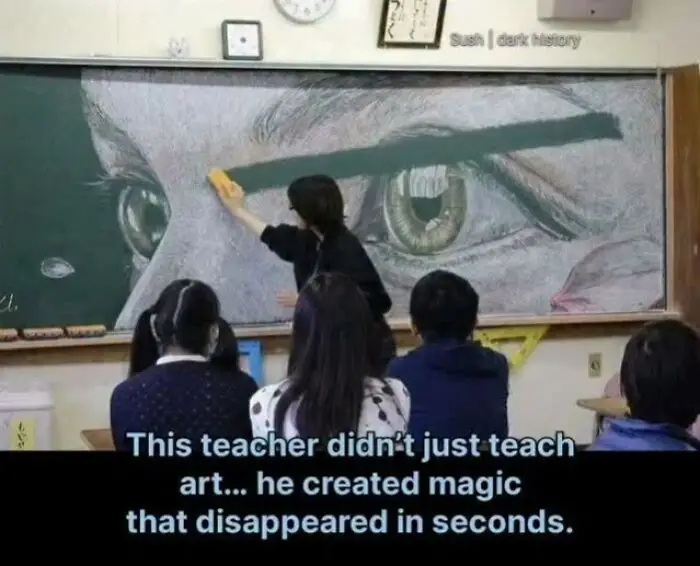
Hirotaka Hamasaki was a highschool art teacher in Japan who became quietly legendary among his students for one simple, magical reason: the way he transformed a black chalkboard into a canvas of astonishingly realistic drawings. Every day, he would draw landscapes, portraits, animals, and objects with such precision that they seemed almost alive, capturing the attention and awe of everyone in the classroom. Yet, as soon as the class ended, he would wipe his masterpieces clean, leaving nothing behind but the memory of their beauty. For Hamasaki, it wasn’t about fame, recognition, or preserving his work it was about the process, the joy of creation, and inspiring his students to see beauty, practice their craft, and embrace the fleeting nature of art. Though little is known about his personal life, early years, or how he became a teacher, the stories that survive paint a picture of a humble, dedicated artist whose passion and ephemeral creations left a lasting mark on those lucky enough to witness them.
Report
11points
#56
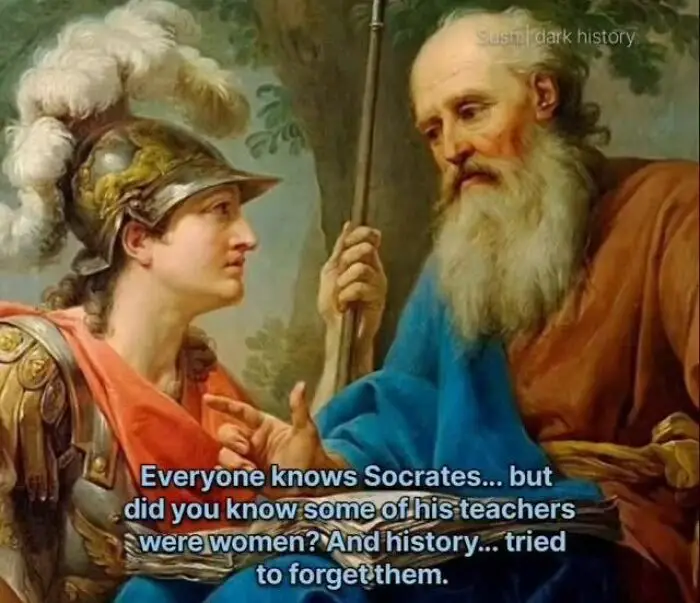
In ancient Athens, women were generally excluded from formal education and public intellectual life, and their contributions were often downplayed or erased. So even if Aspasia or Diotima genuinely influenced Socrates, male historians and philosophers might have minimized or ignored their role because acknowledging a woman as a teacher or intellectual authority would have challenged social norms.
Aspasia was famous in her time for her intelligence and rhetorical skill, but most surviving accounts focus on her relationship with Pericles rather than her own ideas.
Diotima appears in Plato’s Symposium, but scholars debate whether she was a real person or a narrative device this could have been a way to include a woman’s perspective without fully crediting her historically.
Diotima appears in Plato’s Symposium, but scholars debate whether she was a real person or a narrative device this could have been a way to include a woman’s perspective without fully crediting her historically.
Report
11points
#57
"Too many humans, not enough humanity."
We see people everywhere on streets, on screens, in our daily lives. Conversations are constant, notifications never stop, and yet… something feels missing. It’s like we’ve learned how to exist side by side, but forgotten how to truly feel for each other. A small act of kindness, a moment of understanding, a genuine “are you okay?” these things are becoming rare, even though they matter the most.
Being human is easy, we’re born that way. But having humanity? That takes effort. It’s in how we treat strangers, how we respond when no one’s watching, how we choose empathy over ego. Maybe the world doesn’t need more people… maybe it just needs more heart.
10points
#58

After r****g her... he tried to rip out her eyes with his fingernails so she wouldn't be able to identify him.
What makes this case unsettling is how little official information is available. The story only reached wider attention after a reporter insisted on bringing it forward and conducting an interview. Without that, this could have easily remained something people never spoke about. There is footage of her speaking, yet the details of the case remain surprisingly limited. Even more disturbing are the discussions surrounding the accused’s reported reaction after the incident including claims that he attempted to escape consequences by offering marriage after she survived and spoke out. Regardless of interpretation, the situation highlights how complicated and uncomfortable justice can become in the real world. There are no widely recognized donation links, no clear public updates, and very few reliable sources documenting the full case. And that silence itself leaves a lasting impression.
What makes this case unsettling is how little official information is available. The story only reached wider attention after a reporter insisted on bringing it forward and conducting an interview. Without that, this could have easily remained something people never spoke about. There is footage of her speaking, yet the details of the case remain surprisingly limited. Even more disturbing are the discussions surrounding the accused’s reported reaction after the incident including claims that he attempted to escape consequences by offering marriage after she survived and spoke out. Regardless of interpretation, the situation highlights how complicated and uncomfortable justice can become in the real world. There are no widely recognized donation links, no clear public updates, and very few reliable sources documenting the full case. And that silence itself leaves a lasting impression.
Report
9points
#59

Anaïs Nin was one of the most distinctive literary voices of the 20th century, best known for turning the private diary into a serious literary form. She began writing journals as a child and continued for decades, eventually publishing edited versions that attracted wide attention for their psychological depth and unusual honesty. At a time when women’s inner lives were rarely discussed so openly, Nin wrote directly about emotions, identity, creativity, relationships, and desire. Her work didn’t fit neatly into traditional categories it blended autobiography, fiction, and introspection which is exactly why it stood out.
Beyond her diaries, Nin also wrote fiction that explored the subconscious and human psychology. Books like House of Incest, Winter of Artifice, and her later short stories focused less on plot and more on inner experience, mood, and perception. She was closely connected to influential cultural figures, including Henry Miller and psychoanalyst Otto Rank, and those intellectual circles shaped her thinking and writing. Over time, Nin built a dedicated readership, and her unexpurgated diaries published after her death further cemented her reputation as a writer who challenged conventions around self-expression and female subjectivity.
Anaïs Nin died in 1977 in Los Angeles after a battle with cancer. In the decades since, her influence has only grown, especially among readers and writers interested in personal narrative, psychology, and confessional literature. Today, she is widely regarded as a pioneer of introspective writing, someone who expanded what personal storytelling could look like in modern literature.
Report
9points
#60

Before World War I, society expected women to have long hair because it symbolized femininity, purity, and elegance. Long, almost ankle-length hair was considered “proper,” and it showed status too rich women had the time and help to maintain it. Around 90–95% of women had very long hair, and since most women stayed at home, life was also slower, so long hair wasn’t inconvenient or dangerous. It was simply tradition, passed down from mothers and grandmothers.
But World War I changed everything. When millions of men went to war, women stepped into factories, hospitals, and tough physical jobs. Long hair suddenly became heavy, time-consuming, and even unsafe around machines. Women tied it up, cut it shorter, and realized that shorter hair made their new, active lives easier. After the war, they didn’t want to return to old restrictions. The bob cut of the 1920s became a symbol of freedom, independence, and confidence. millions of young women cut their hair short. In big cities like London, Paris, and New York, about 50–70% of young women, It wasn’t just fashion it was women saying, “We’re not going back.”
That’s why hair changed so dramatically. As women’s roles, work, and identity transformed, their hairstyle followed. The shift from ankle-length hair to bob cuts wasn’t random it reflected a cultural revolution happening inside society and inside women themselves.
Report
9points


