





It's impossible to know every single thing that happened in the past. We think of history books as the primary source for that information, but written history is only about 5,000-5,500 years old. What about the things that happened before that? And how can we be sure that important things don't get left out or forgotten from history?
Bored Panda is bringing you some stories from the dark side of history you might not have read in history books. They come to you from the Instagram page "Dark History by Sush," a place for "the dark, disturbing truths history tried to bury."
More info: Instagram
#61

Victor Lundy was a very young American soldier during World War II, and what makes his story fascinating is that he didn’t just carry weapons he carried pens and small sketchbooks. While moving through Europe with the U.S. Army, he constantly drew the world around him. But instead of dramatic battle scenes, his drawings captured the quiet, ordinary moments of military life. You see soldiers resting, sitting, smoking, waiting, sleeping all those very human pauses that rarely make it into history books.
What’s really amazing is how quickly these sketches were made. Lundy often drew in tough conditions, sometimes in the middle of movement or uncertainty, using ink and whatever paper he had. His lines are loose, fast, and incredibly expressive. With just a few strokes, he could show exhaustion, tension, boredom, or calm. These weren’t polished artworks meant for galleries they were more like visual diary entries, created in real time, straight from lived experience.
Another important detail is that many of these sketches survived and are now preserved by the Library of Congress. That’s a big deal, because they offer a rare, personal window into how war actually felt for ordinary soldiers. Instead of heroic propaganda or staged imagery, Lundy’s drawings feel honest and intimate. They remind us that war is not just about battles it’s also about waiting, fatigue, routine, and small moments of humanity.
Today, artists and historians love studying his work because it sits somewhere between documentary and art. His sketches show how powerful simple observation can be. No grand drama, no exaggeration just real people, real emotions, captured with ink in the middle of history.
Report
9points
#62
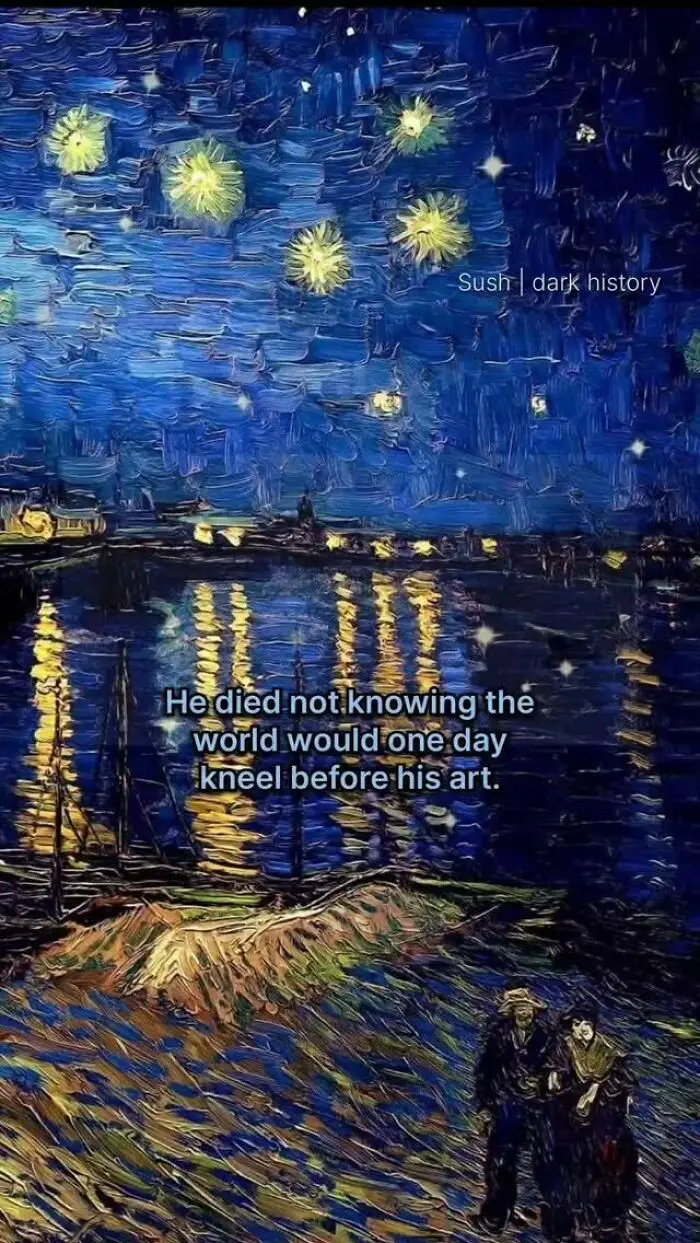
Vincent van Gogh spent most of his life feeling like a failure. He painted obsessively, not for fame or money, but because something inside him had to come out. He sold almost nothing, depended on his brother Theo to survive, and constantly doubted whether his work had any value at all. To him, the world felt cold, unresponsive, and cruelly silent.
He died believing his art meant nothing. He never saw museums filled with his paintings, never knew that his pain would turn into beauty for millions, never heard the love his work would one day receive. Van Gogh didn’t live long enough to be understood but somehow, he painted exactly what the world would need after he was gone.
Report
8points
#63
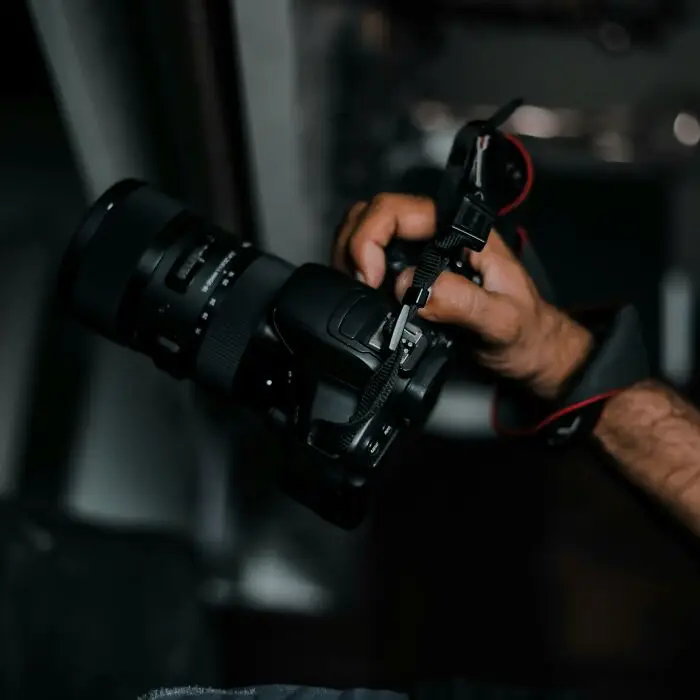
Every photo looked like love... until you notice she was slowly falling out of it.
Masahisa Fukase was one of Japan’s most emotional photographers and his wife, Yōko, was the center of his world for years. He photographed her constantly, everywhere they went. At first, their photos looked full of love and playfulness, but slowly, something changed. You can actually see it in the pictures her expressions started to feel distant, tired, almost like she was fading away from him little by little. People who knew them said Fukase wasn’t really in love with her he was in love with how she made him feel through his photos. He used his camera to express his emotions, but it also became a wall between them. Yōko once said she felt more like an “object” in front of his lens than a person. That says a lot about how trapped she must’ve felt being seen but not really seen. Eventually, Yōko left him in 1976. And that broke him. After she was gone, he started taking photos of ravens dark, lonely, chaotic which became his most famous series, The Solitude of Ravens. Many people believe those photos weren’t really about the birds; they were about him, about the emptiness and loneliness left after Yōko walked away. It’s sad but also strangely human how sometimes our love for something, or someone, can turn into obsession without us realizing it.
Masahisa Fukase was one of Japan’s most emotional photographers and his wife, Yōko, was the center of his world for years. He photographed her constantly, everywhere they went. At first, their photos looked full of love and playfulness, but slowly, something changed. You can actually see it in the pictures her expressions started to feel distant, tired, almost like she was fading away from him little by little. People who knew them said Fukase wasn’t really in love with her he was in love with how she made him feel through his photos. He used his camera to express his emotions, but it also became a wall between them. Yōko once said she felt more like an “object” in front of his lens than a person. That says a lot about how trapped she must’ve felt being seen but not really seen. Eventually, Yōko left him in 1976. And that broke him. After she was gone, he started taking photos of ravens dark, lonely, chaotic which became his most famous series, The Solitude of Ravens. Many people believe those photos weren’t really about the birds; they were about him, about the emptiness and loneliness left after Yōko walked away. It’s sad but also strangely human how sometimes our love for something, or someone, can turn into obsession without us realizing it.
Report
7points
#64
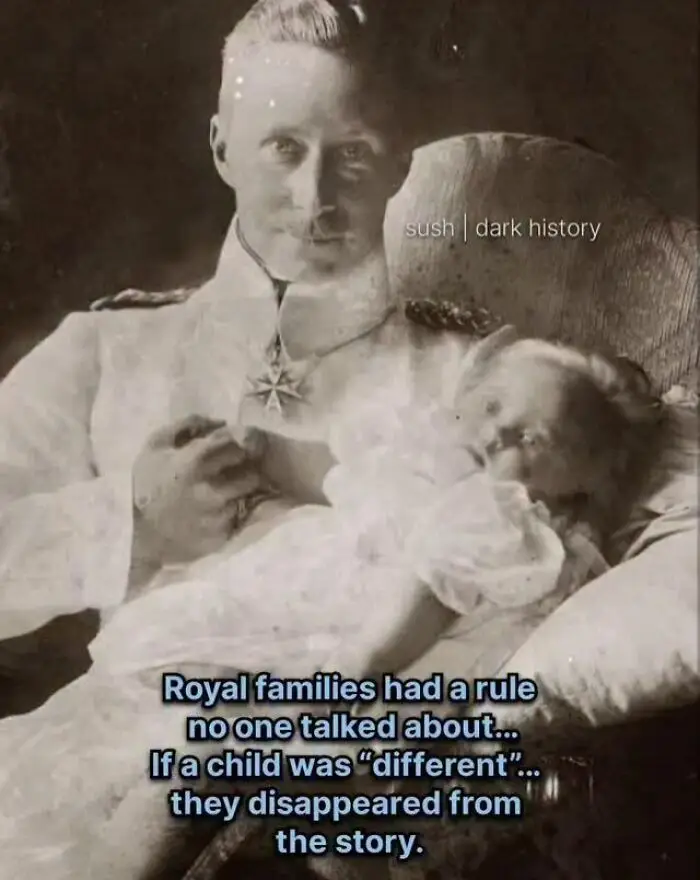
Princess Alexandrine of Prussia was born in 1915 into a powerful royal family she was the daughter of Crown Prince Wilhelm of Germany and Crown Princess Cecilie, making her part of the last generation of German royalty before the monarchy ended. From a very young age, it was clear that her life would be a bit different. She needed extra care and support, and she grew up in a more protected and structured environment compared to her siblings.
What stands out about Alexandrine is how her family treated her. During that time, many royal families across Europe kept children with developmental conditions out of public view, sometimes even sending them away. But Alexandrine wasn’t completely hidden. You can actually see her in family photographs, standing with her parents and siblings, which was not very common back then. It shows that, in their own way, her family still included her as part of their public life.
She was mainly cared for by her nurse, Selma Boese, who played a very important role in her life. As she grew older, Alexandrine also attended a special school (Trüpersche Sonderschule), which focused on children who needed extra support in learning. This tells us that her family didn’t just keep her at home they made sure she received the kind of care and education that was available at the time.
Later in life, she lived a quieter and more private life, especially during and after World War II. She spent time in places like Bavaria, away from the political chaos surrounding her family. Alexandrine lived until 1980, and while her life wasn’t as publicly documented as other royals, her story still stands out. Not because of power or fame but because, in a time when many were hidden, she was still acknowledged and included, even if quietly.
Report
7points
#65

Was it really a miracle… or a silent tragedy the world chose to glorify?
They called her story “extraordinary,” but there was nothing beautiful about it.
Her husband didn’t see her as a person just a body, a machine made to give birth again and again.
No rest between pregnancies. No care. No love. Just the expectation to keep producing more.
They called her story “extraordinary,” but there was nothing beautiful about it.
Her husband didn’t see her as a person just a body, a machine made to give birth again and again.
No rest between pregnancies. No care. No love. Just the expectation to keep producing more.
The world turned her pain into a record.
Her suffering became a fact to marvel at, not a life to mourn.
No one asked if she was tired. No one asked if she wanted this.
Because in that world, a woman’s body didn’t belong to her it belonged to her husband, to society, to history.
Her suffering became a fact to marvel at, not a life to mourn.
No one asked if she was tired. No one asked if she wanted this.
Because in that world, a woman’s body didn’t belong to her it belonged to her husband, to society, to history.
She wasn’t remembered for her strength or her spirit… only for what her body endured.
A woman erased by the very miracle she was forced to create.
A woman erased by the very miracle she was forced to create.
Report
7points
#66
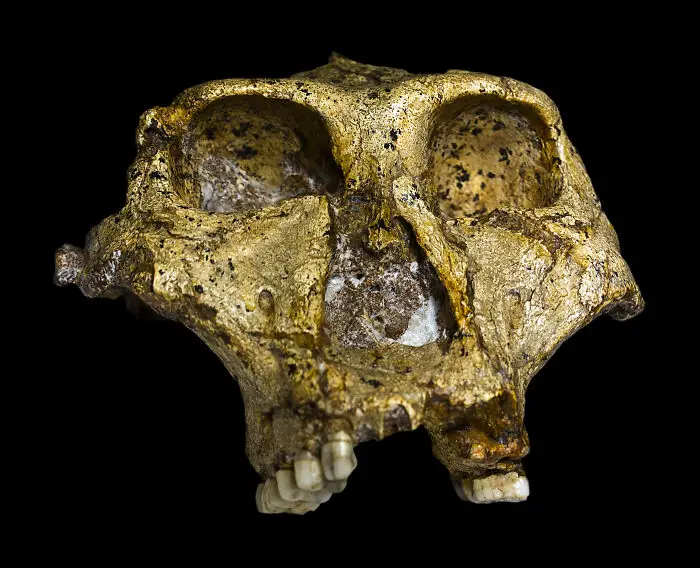
Two small holes... right through the eyes. And they reveal one of the most brutal and painful deaths in human history.
The fossil known as SK 54 was discovered in the Swartkrans cave in South Africa. It belonged to Paranthropus robustus, one of our distant cousins who lived around two million years ago. What makes this skull famous are the two small puncture marks just above the eyes. For a long time, scientists debated what caused them were they wounds from tools, or even signs of early human violence? The breakthrough came when researchers compared the holes with the spacing of a leopard’s canine teeth. They matched perfectly. This was a game-changer because it showed that big cats weren’t just around our ancestors they were predators that actively hunted us. In fact, leopards are known even today to drag monkeys and baboons into caves, and SK 54 seems to have been treated the same way. So the story of SK 54 is more than just a fossil with holes in it it’s hard evidence that two million years ago, humans were not sitting on top of the food chain. We were small, vulnerable, and very much a part of nature’s menu.
The fossil known as SK 54 was discovered in the Swartkrans cave in South Africa. It belonged to Paranthropus robustus, one of our distant cousins who lived around two million years ago. What makes this skull famous are the two small puncture marks just above the eyes. For a long time, scientists debated what caused them were they wounds from tools, or even signs of early human violence? The breakthrough came when researchers compared the holes with the spacing of a leopard’s canine teeth. They matched perfectly. This was a game-changer because it showed that big cats weren’t just around our ancestors they were predators that actively hunted us. In fact, leopards are known even today to drag monkeys and baboons into caves, and SK 54 seems to have been treated the same way. So the story of SK 54 is more than just a fossil with holes in it it’s hard evidence that two million years ago, humans were not sitting on top of the food chain. We were small, vulnerable, and very much a part of nature’s menu.
Report
7points
#67
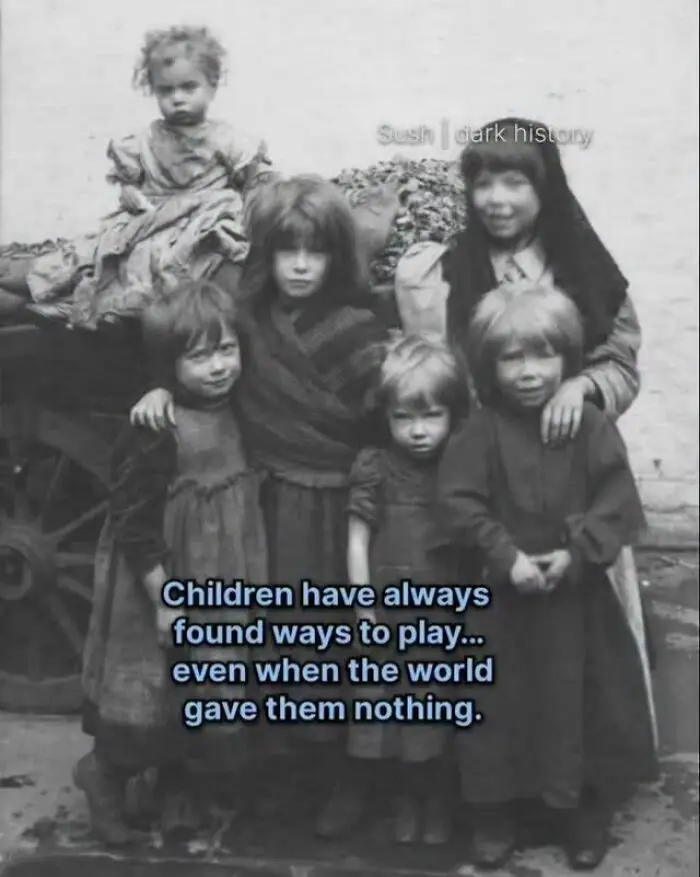
This little “shoe doll” dates to around 1900–1905 and was found in an Edwardian London slum. It wasn’t bought from a toy shop. It was handmade from whatever was available. The head is actually the heel of a man’s leather shoe. The body is made from a black sock, and the dress and apron are stitched together from scraps of household fabric. Small pieces of metal and nails were added to suggest facial features. It’s simple, rough, and a little haunting but it tells you everything about the world it came from.
At that time, London had extreme poverty, especially in overcrowded East End neighborhoods. Many families lived in one or two small rooms, with unstable jobs and very little money. Factory-made dolls especially porcelain ones were expensive and considered luxuries. Working-class children often made their own toys from discarded objects: wood, cloth, bones, paper, or in this case, a worn-out shoe. This doll wasn’t unusual for poor communities but very few survived, because they were fragile and heavily used.
What makes this doll powerful is that it shows childhood doesn’t disappear just because life is hard. Someone took the time to shape this. Someone played with it. It was probably carried around, slept with, maybe even repaired more than once. It wasn’t made to be displayed. It was made to be loved.
Today, the doll is part of the Museum of Childhood in Edinburgh, Scotland (under National Museums Scotland). Even though it was found in London, it became part of a broader collection representing childhood across Britain. It’s preserved not because it’s beautiful, but because it represents something real resilience, creativity, and the everyday lives of children history often forgets.
Report
6points
#68

POV: You ate a slug on a dare... and the next thing you know, you're in a wheelchair.
Sam Ballard was a teenager from Sydney, Australia, whose case became widely known after a 2010 incident in which he consumed a slug during a social gathering. The slug was later understood to have carried Angiostrongylus cantonensis, commonly known as rat lungworm. After the incident, Sam developed a severe infection that led to eosinophilic meningoencephalitis, a rare but medically recognized condition in which the parasite affects the brain and central nervous system. He became critically ill, fell into a coma, and survived with significant neurological damage. Following the infection, Sam lived with profound disabilities, including loss of mobility and the need for continuous medical care. His condition required long-term support from his family, who became his primary caregivers. Over the years, his case drew international media attention and was frequently cited in discussions about rat lungworm disease, food safety, and rare parasitic infections. Health authorities have long noted that slugs and snails can act as carriers of the parasite, though severe cases remain uncommon. Sam Ballard passed away in 2018, approximately eight years after the infection, due to complications related to his condition. His story is often referenced as a real-world example of how rare biological risks can have life-altering consequences, and it has contributed to broader public awareness about the transmission pathways and potential severity of rat lungworm disease.
Sam Ballard was a teenager from Sydney, Australia, whose case became widely known after a 2010 incident in which he consumed a slug during a social gathering. The slug was later understood to have carried Angiostrongylus cantonensis, commonly known as rat lungworm. After the incident, Sam developed a severe infection that led to eosinophilic meningoencephalitis, a rare but medically recognized condition in which the parasite affects the brain and central nervous system. He became critically ill, fell into a coma, and survived with significant neurological damage. Following the infection, Sam lived with profound disabilities, including loss of mobility and the need for continuous medical care. His condition required long-term support from his family, who became his primary caregivers. Over the years, his case drew international media attention and was frequently cited in discussions about rat lungworm disease, food safety, and rare parasitic infections. Health authorities have long noted that slugs and snails can act as carriers of the parasite, though severe cases remain uncommon. Sam Ballard passed away in 2018, approximately eight years after the infection, due to complications related to his condition. His story is often referenced as a real-world example of how rare biological risks can have life-altering consequences, and it has contributed to broader public awareness about the transmission pathways and potential severity of rat lungworm disease.
6points
#69
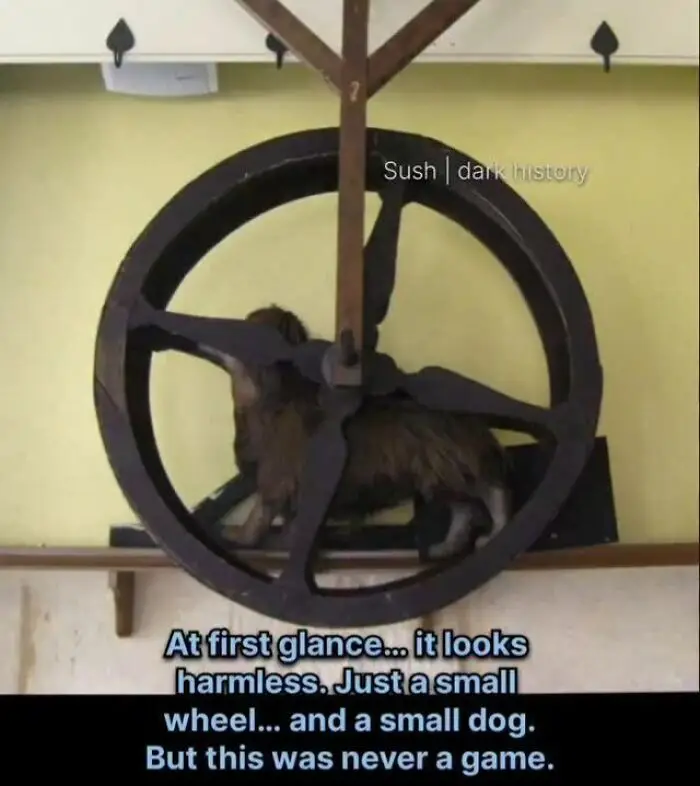
Turnspit dog wheels were actually a very real part of old kitchens, especially in Europe between the 1500s and early 1800s. Before electricity, roasting meat evenly over a fire was not easy you had to keep turning the spit constantly. So instead of a machine, people used a small dog running inside a wooden wheel, kind of like a hamster wheel. As the dog ran, it turned the spit over the fire. It sounds strange now, but back then, this was considered normal kitchen work.
These dogs were even specially bred for this job and were called Turnspit dogs. They had short legs, long bodies, and a lot of stamina basically built for running in that wheel for hours. They lived most of their lives in kitchens, close to heat and smoke. In bigger households, they often kept two dogs so they could switch when one got too tired. There are even stories that on Sundays, when the dogs weren’t working, they would rest in churches and people joked that if a sermon was too long, the dogs would start getting restless, like they were used to running.
What’s a bit sad is that these dogs weren’t really seen as pets. They were more like tools just another part of the cooking process. If they slowed down or refused to run, they could be punished or replaced. Over time, as technology improved and mechanical devices replaced them, these dogs slowly disappeared. By the 19th century, the breed basically became extinct.
Today, you can still see some of these wheels preserved in museums, and they remind us how different life used to be not just for humans, but for animals too. It’s one of those forgotten histories that makes you pause and think about how far we’ve come.
Report
6points
#70
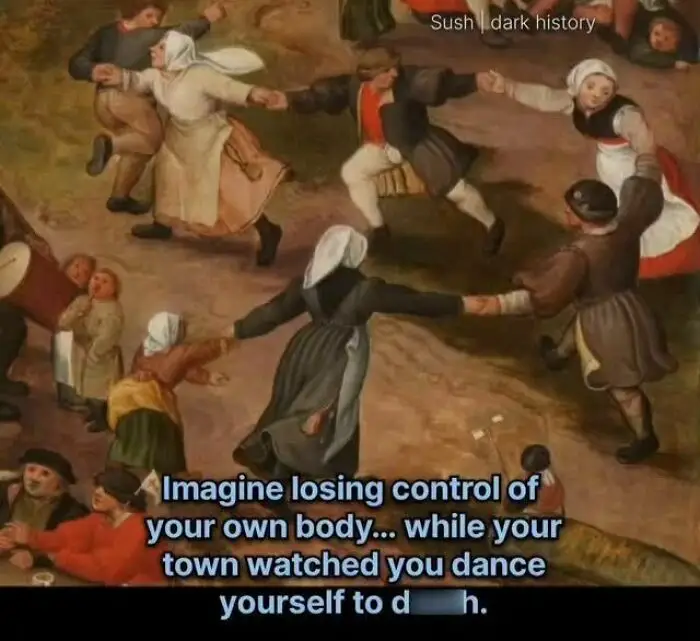
In July 1518, in the city of Strasbourg (then part of the Holy Roman Empire), a woman named Frau Troffea suddenly began dancing in the street. There was no music, no celebration just uncontrolled movement. She kept dancing for hours, then days. Instead of stopping, more people began joining her, as if pulled into the same strange force. Within weeks, dozens and possibly hundreds were dancing uncontrollably, unable to rest even when their feet blistered and their bodies collapsed.
The situation became deadly. Many dancers reportedly suffered from extreme exhaustion, dehydration, strokes, and heart failure. Some are believed to have died. Terrified and confused, city authorities turned to local doctors for answers. The medical belief at the time was that the dancers suffered from “hot blood,” and the so-called treatment was shocking they encouraged more dancing. Platforms were built, musicians were hired, and people were pushed back into the streets, which only made the outbreak worse.
Eventually, officials realized the approach was failing. The dancers were taken to shrines and places of prayer, particularly dedicated to Saint Vitus, whom people believed had the power to curse or cure uncontrollable movement. Gradually, the dancing faded. No clear records explain exactly how or why it stopped only that it did.
Even today, the true cause remains uncertain. Some historians believe it was mass psychogenic illness caused by extreme stress, famine, disease, and religious fear. Others suggest ergot poisoning, a hallucinogenic mold found in bread. Whatever the cause, the Dancing Plague of 1518 remains one of the most disturbing examples of how the human mind and body can completely lose control under pressure.
Report
6points
#71
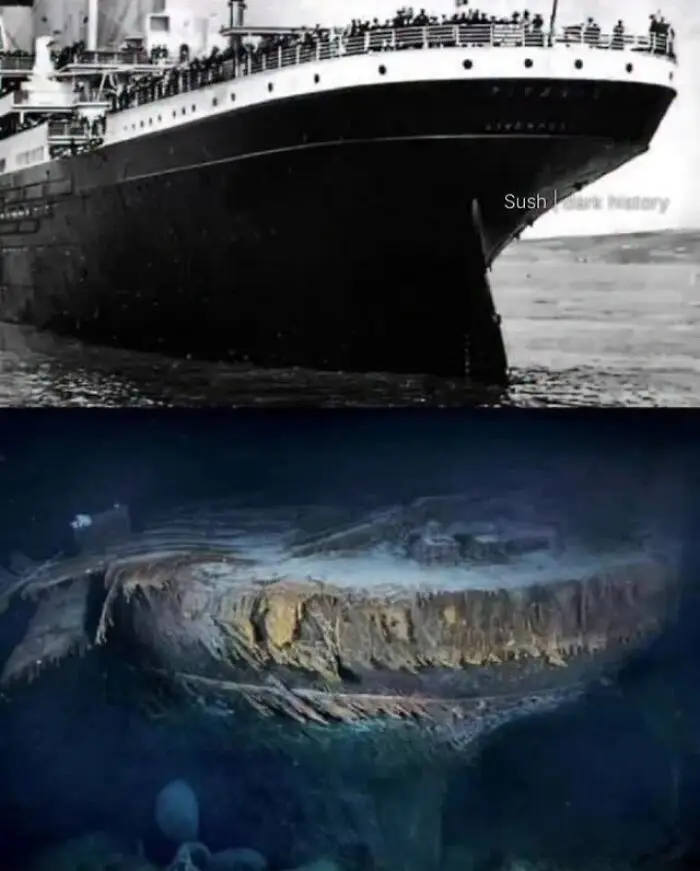
There was a time when Titanic wasn’t a tragedy, just a massive new ship people were proud of. Workers stood beside it, amazed by what they built. People walked its decks without knowing how famous it would someday become. Back then, it was loud, busy, full of life a ship meant to carry stories forward, not become one itself.
Now it sits at the bottom of the ocean, rusting away quietly. No voices, no light, just cold water and time slowly eating it. Looking at the old photos and the wreck today feels strange like seeing two different worlds. It reminds us how fast things change, how something so strong and celebrated can end up forgotten in darkness. Titanic isn’t just history, it’s a reminder of how life moves on, even when something feels too big to ever disappear.
Report
4points
#72

After her 23-year-old son died during a mental health crisis, the mother was never notified. Years later, she discovered his body displayed in a public anatomy exhibit.
Christopher Eric Todd was 23 years old when he died in Arizona in 2012 after experiencing a severe mental health crisis. After his death, a critical failure occurred in the system: Christopher was mistakenly classified as an “unclaimed body.” Because of this error, authorities never contacted his mother, Kim Smith, even though she was alive and actively looking for her son. She was not informed of his death, did not identify his body, and never gave consent for donation or use of his remains. Because he was listed as unclaimed, Christopher’s body was transferred through legal channels into the anatomical donation system. His remains were later plastinated and prepared for public display. Eventually, his body became part of the “Real Bodies” exhibition, where it was presented as an educational specimen. The organizers stated they relied on documentation that showed the body had been legally obtained, but later investigations confirmed that family consent was never given. Years later, Kim Smith discovered what had happened by accident. While watching television, she recognized her son’s face in footage from the exhibit. This led her to confirm that one of the displayed bodies was Christopher. She filed lawsuits against multiple parties, including exhibition organizers and agencies involved in handling his remains. Her legal fight focused on lack of notification, lack of consent, and the ethical handling of unclaimed bodies. As a result of the legal action, Christopher’s remains were removed from public display, and the case was settled. His mother was ultimately able to reclaim her son’s remains and arrange a proper burial. The case drew widespread attention and led to renewed scrutiny of how unclaimed bodies are classified, how consent is verified, and how commercial anatomy exhibits operate. Christopher’s case is now frequently cited in discussions about ethics, accountability, and the treatment of vulnerable individuals after death.
Christopher Eric Todd was 23 years old when he died in Arizona in 2012 after experiencing a severe mental health crisis. After his death, a critical failure occurred in the system: Christopher was mistakenly classified as an “unclaimed body.” Because of this error, authorities never contacted his mother, Kim Smith, even though she was alive and actively looking for her son. She was not informed of his death, did not identify his body, and never gave consent for donation or use of his remains. Because he was listed as unclaimed, Christopher’s body was transferred through legal channels into the anatomical donation system. His remains were later plastinated and prepared for public display. Eventually, his body became part of the “Real Bodies” exhibition, where it was presented as an educational specimen. The organizers stated they relied on documentation that showed the body had been legally obtained, but later investigations confirmed that family consent was never given. Years later, Kim Smith discovered what had happened by accident. While watching television, she recognized her son’s face in footage from the exhibit. This led her to confirm that one of the displayed bodies was Christopher. She filed lawsuits against multiple parties, including exhibition organizers and agencies involved in handling his remains. Her legal fight focused on lack of notification, lack of consent, and the ethical handling of unclaimed bodies. As a result of the legal action, Christopher’s remains were removed from public display, and the case was settled. His mother was ultimately able to reclaim her son’s remains and arrange a proper burial. The case drew widespread attention and led to renewed scrutiny of how unclaimed bodies are classified, how consent is verified, and how commercial anatomy exhibits operate. Christopher’s case is now frequently cited in discussions about ethics, accountability, and the treatment of vulnerable individuals after death.
Report
-5points


