



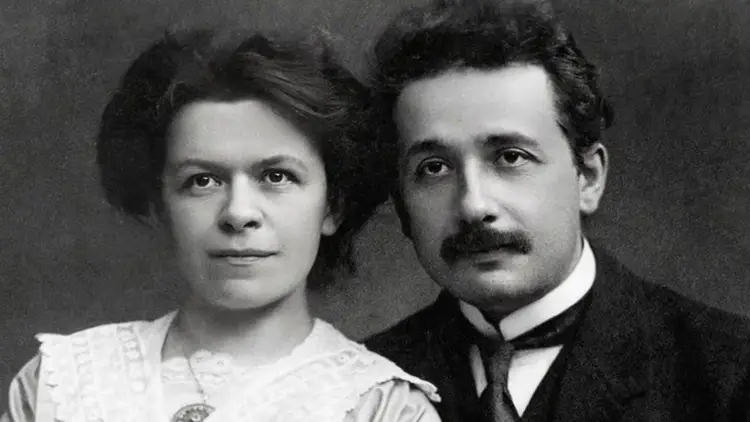


It's impossible to know every single thing that happened in the past. We think of history books as the primary source for that information, but written history is only about 5,000-5,500 years old. What about the things that happened before that? And how can we be sure that important things don't get left out or forgotten from history?
Bored Panda is bringing you some stories from the dark side of history you might not have read in history books. They come to you from the Instagram page "Dark History by Sush," a place for "the dark, disturbing truths history tried to bury."
More info: Instagram
#21
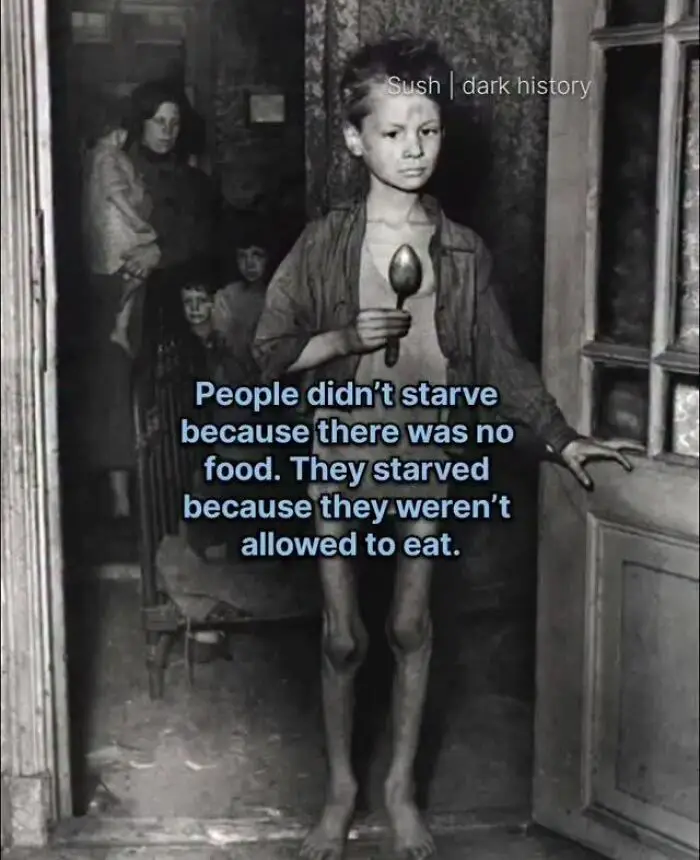
The Dutch Hunger Winter happened in the last months of World War II, from late 1944 to early 1945. By that time, the war was almost over, but western Netherlands was still under German control. After the Dutch resistance supported a railway strike to help the Allied forces, the occupying authorities blocked food and fuel transport to cities like Amsterdam, Rotterdam, and The Hague. Then winter hit one of the coldest in years. Canals froze, transport collapsed, and food simply stopped reaching millions of people.
People were surviving on 400–800 calories a day. That’s not even one proper meal. Bread was stretched with whatever could be found. Families ate tulip bulbs, sugar beets, and potato peels. People walked for hours, sometimes days, into the countryside to trade jewelry, clothes, or furniture for food and often came back with nothing. With no fuel, people burned chairs, books, and floorboards just to stay warm. Hunger wasn’t dramatic. It was slow, quiet, and everywhere.
By the time Allied planes finally dropped food supplies in spring 1945, around 20,000 people had already died, mostly from starvation and illnesses made worse by it. Many more survived but were permanently affected. What’s haunting is that this wasn’t a natural disaster there was food in the world. It just wasn’t allowed to reach these people. Hunger was used as pressure, and civilians paid the price.
One of the most unsettling facts came much later. Babies who were still in the womb during the Hunger Winter grew up with higher risks of heart disease, diabetes, obesity, and mental health disorders. Their bodies remembered the famine decades later. The Hunger Winter proved that starvation doesn’t end when food returns it leaves marks that last a lifetime, sometimes longer.
Report
26points
#22
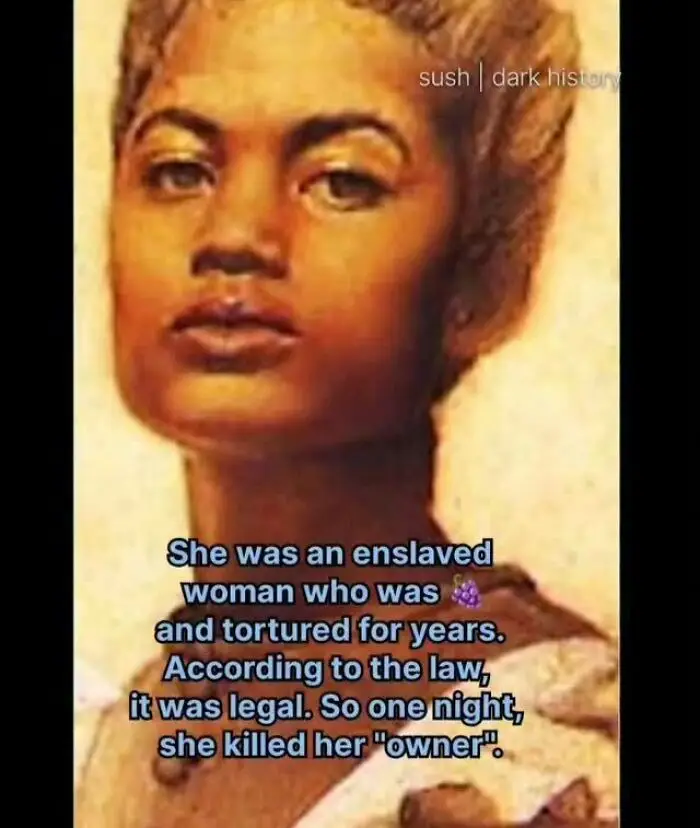
Celia’s story shows how cruel and unfair the system of slavery really was, especially for women. Celia was a teenage enslaved girl living in Missouri in the early 1850s. She was owned by a man named Robert Newsom, who repeatedly forced himself on her over several years. Celia clearly resisted. She said no, she begged him to stop, and she tried to find ways to protect herself. But under slavery, none of that mattered the law did not recognize an enslaved woman’s right to her own body.
In 1855, Newsom came to Celia again despite her refusal. This time, Celia acted to defend herself. Newsom later died from what happened. Celia didn’t try to create a false story; she told the truth about why she acted. Still, the focus of the case was never her suffering. The only thing the authorities cared about was that an enslaved person had caused the death of her owner, which was seen as a serious crime no matter the reason.
During Celia’s trial, her lawyers argued that she should be protected under self-defense, just like any other woman facing repeated harm. The judge rejected this argument completely. The court ruled that enslaved women had no legal right to defend themselves against their enslavers, because they were considered property, not full human beings under the law. That decision revealed how deeply broken and biased the legal system was.
Celia was e**cuted later in 1855, and her case became an important historical example of how slavery stripped women of basic rights. Today, historians remember Celia not as a criminal, but as a young woman who tried to protect herself in a system designed to silence her. Her story forces us to confront a hard truth: justice was never meant for people like her.
Report
26points
#23

Under the lights, she was perfect. Off-camera, she was fighting to survive..
Karen Mulder was one of the biggest supermodels of the 90s like everywhere. She walked for Chanel, Dior, Valentino… you name it. People called her one of the most beautiful women in the world. But behind all that fame and money, her life wasn’t as perfect as it looked.
Years later, Karen spoke out and said that during her modeling years, she was ab*sed and manipulated by powerful men people who had huge control in the fashion industry. She said it started when she was very young, and for a long time, she didn’t even understand what was happening or how wrong it was. When she finally found the courage to talk about it, no one wanted to listen.
In 2001, she went on a French TV show and shared everything everything she’d gone through. But right before it could be aired, the entire episode got pulled off TV. Like it never even existed. After that, she was treated like she was the problem. The media started calling her unstable, saying she needed help. The same people who once called her “perfect” completely abandoned her.
Over time, her mental health got worse, and she disappeared from the public eye. But years later, when more women started speaking out during the #MeToo movement, people began to realize… maybe Karen was never “crazy.” Maybe she was just one of the first to tell the truth long before the world was ready to hear it.
25points
#24

La Mulâtresse Solitude was a real woman from Guadeloupe, born in the late 1700s. She was the daughter of an enslaved African woman and a French sailor, which made her “mulâtresse” meaning mixed-race. But even though her father was white, she still lived as a s***e. People say she grew up with a calm spirit but strong fire inside her, because she had seen enough cruelty on the plantations.
In 1794, something huge happened slavery was abolished in the French colonies. People finally felt hope again. But a few years later, Napoleon decided to bring slavery back. Can you imagine? People who were just freed were told to return to chains again. Solitude refused. She joined the rebellion with other freedom fighters, and here’s the powerful part she was pregnant at that time. Despite knowing the danger, she still chose to fight for freedom.
The rebellion didn’t succeed, and Solitude was captured. But the French didn’t execute her immediately. They waited for her to give birth, because k**ling a pregnant woman was illegal. So she carried her child knowing exactly what awaited her. The day after she gave birth, she was e**cuted but her child lived. Even though her life was short, her bravery became a symbol of resistance, especially for Black women fighting for dignity and freedom.
Today, she is remembered as a hero in Guadeloupe. A statue of her stands there as a reminder that courage doesn’t always come with survival sometimes it’s in fighting even when you know you might not win.
Report
25points
#25

In January 2015, Brock Turner was a student at Stanford University when he s*xually as***lted an unconscious woman behind a dumpster after a fraternity party. She had been drinking heavily and could not stand, speak clearly, or consent. Two Swedish graduate students cycling nearby saw Turner on top of her and intervened, chasing him down and holding him until police arrived. The woman woke up hours later in a hospital, confused, injured, and with no memory of what had happened to her body.
Medical examinations, eyewitness testimony, and physical evidence all confirmed the as**ult. Turner was convicted on three felony counts. Still, during sentencing, the focus shifted. The judge spoke about Turner’s age, his swimming career, his family, and the potential harm that prison could cause him. He was sentenced to six months in county jail and served only three. The victim later wrote a statement describing how the as**ult fractured her sense of safety, her sleep, her relationships how she would carry it forever. The sentence did not reflect that weight.
Now look at Cyntoia Brown. She was 16 years old, homeless, a**sed, and being trafficked by an older man. She was living in constant fear and survival mode, moving between motels, strangers, and threats. In 2004, she sh*t and k**led a man who had paid to have s*x with her. Brown later said she believed he was reaching for a weapon and that she was going to die. There was no safe adult in her life. No protection system. No exit.
Cyntoia Brown was tried as an adult and convicted of first-degree m*rder. The court did not center her age, her trauma, or the reality of trafficking in the way it centered Brock Turner’s future. She was sentenced to life in prison, with the possibility of parole only after 51 years. A child acting out of fear was treated as irredeemable. Survival was interpreted as intent. Context was stripped away.
Report
24points
#26

These are the clothes they wore.
Not short dresses. Not revealing outfits.
Just normal clothes jeans, school uniforms, oversized hoodies, even children's nightwear.
And today, all of those pieces hang in a museum… not as fashion, but as evidence of how society blames the wrong thing.
Not short dresses. Not revealing outfits.
Just normal clothes jeans, school uniforms, oversized hoodies, even children's nightwear.
And today, all of those pieces hang in a museum… not as fashion, but as evidence of how society blames the wrong thing.
People walk through that museum and realise something powerful
victims weren’t “inviting it.”
They weren’t “dressed wrong.”
It wasn’t their outfit that caused the a*****t.
It was the mindset of the person who did it.
victims weren’t “inviting it.”
They weren’t “dressed wrong.”
It wasn’t their outfit that caused the a*****t.
It was the mindset of the person who did it.
Yet, every time something happens, the question still comes
“What were you wearing?”
As if a piece of cloth decides consent.
As if a girl’s dignity fits inside a dress, or jeans, or a dupatta.
“What were you wearing?”
As if a piece of cloth decides consent.
As if a girl’s dignity fits inside a dress, or jeans, or a dupatta.
These clothes scream a message louder than any speech ever could
It’s never about the clothes. It’s about accountability. Stop teaching girls to change how they dress.
Teach boys to understand boundaries, respect, and consent.
It’s never about the clothes. It’s about accountability. Stop teaching girls to change how they dress.
Teach boys to understand boundaries, respect, and consent.
Report
24points
#27
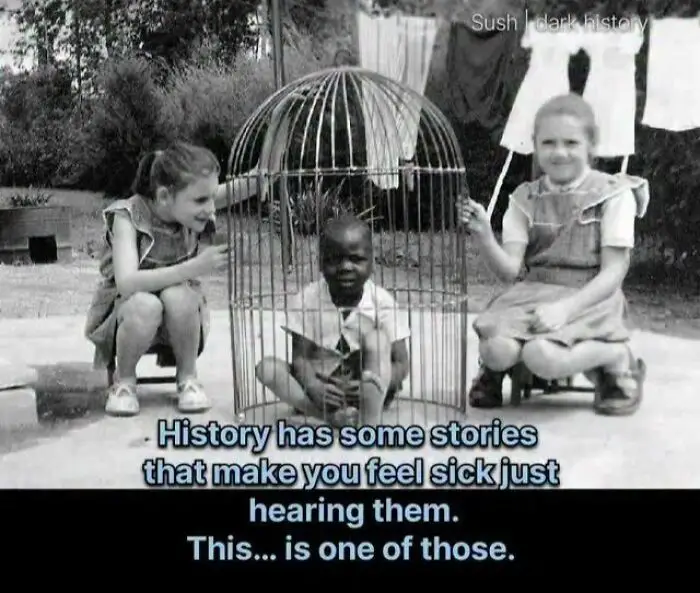
There was a time when real people were put on display like animals. During the late 19th and early 20th centuries, something called the Human Zoo became popular across Europe and America. People from Africa, Asia, the Pacific Islands, and even Indigenous groups from the Americas were taken from their homes and exhibited in fairs, world expositions, and zoos. These exhibitions were presented as “educational” or “scientific,” but in reality, they were deeply racist. They were designed to show colonized people as “primitive,” and Europeans as “civilized.”
In these so-called zoos, men, women, and even children were forced to live in fake “villages,” wear traditional clothes, and perform daily tasks while crowds stared, laughed, and pointed. Millions of visitors came to watch them believing they were seeing “real-life tribes.” One of the most heartbreaking examples was Ota Benga, a man from Congo who was displayed in the Bronx Zoo in 1906, inside a monkey enclosure. There were many others too like Filipinos shown in U.S. exhibitions, and Indigenous Australians displayed in Europe.
Over time, people started to question the cruelty of it. By the 1930s and 1940s, as awareness about racism and human rights began to grow, these “human zoos” slowly came to an end. The last known exhibitions happened around the mid-20th century, though some similar displays continued in disguised forms until as late as the 1950s. Today, most countries recognize this chapter of history as shameful a reminder of how colonialism and racism dehumanized people in the name of science and entertainment.
24points
#28
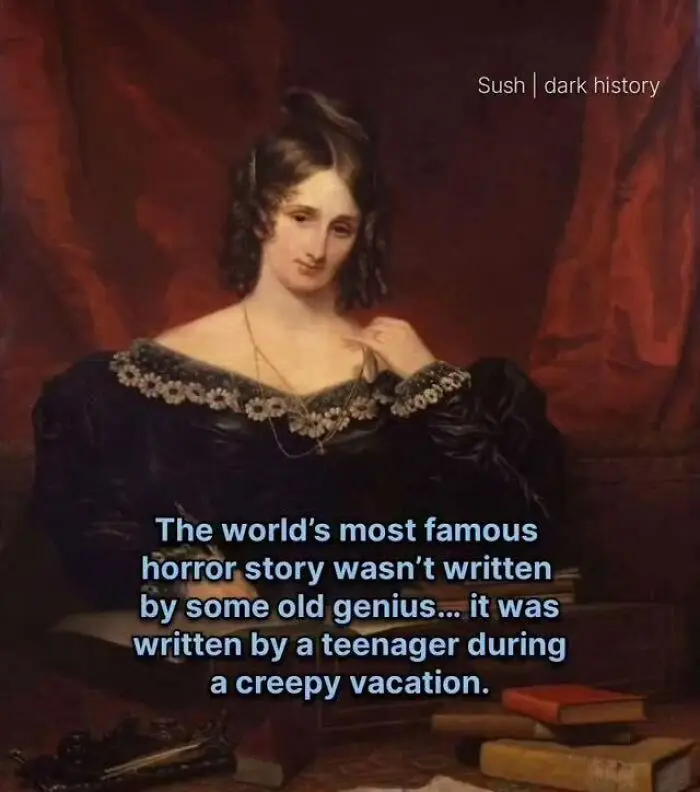
Mary Shelley’s life was honestly as dramatic as the stories she wrote. She grew up around brilliant but chaotic people her dad was a philosopher, her mom was a famous feminist writer who died right after giving birth to her. So Mary grew up reading, thinking, and basically living inside stories. By the time she was a teenager, she already had this deep, almost heavy imagination that came from her strange, intense childhood.
When she was just 16, she fell in love with the poet Percy Shelley and ran away with him. Their life wasn’t glamorous they were broke, traveling from place to place, and dealing with constant drama. But something changed when they went to Switzerland in 1816. It was the “Year Without a Summer,” when a giant volcano explosion messed up the weather worldwide. Dark skies, cold winds, thunderstorms in June… it was like living in a horror movie. And then Lord Byron suggested: “Let’s write a ghost story.” Mary didn’t know what to write until she had that terrifying nightmare of a scientist giving life to a stitched body.
That nightmare became Frankenstein, a book she started at 18 and finished at 20. She had no idea the world would still be talking about it 200 years later. But what makes it more emotional is that Mary wrote that story while dealing with grief, loneliness, and feeling like an outsider. Frankenstein’s creature wasn’t just a monster it was a reflection of how Mary often felt: created by circumstances, misunderstood, and abandoned by the world.
Even after the book got famous, Mary’s life stayed difficult she lost her husband, several children, and faced heartbreak over and over. But she kept writing, kept creating, and became one of the strongest literary voices of her time. Her story isn’t just about inventing a monster; it’s about surviving the chaos around her and turning her pain into something unforgettable.
Report
23points
#29
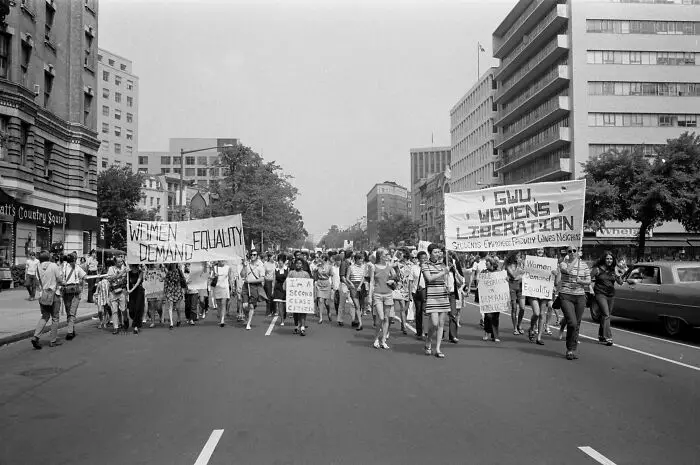
Back in the late 1960s, abortion was illegal in most of America. Women with unwanted pregnancies had nowhere safe to turn some even died from unsafe procedures. But in Chicago, a young student named Heather Booth decided to help a friend in need. That one act of kindness turned into a secret network called The Jane Collective.
They used a code system women in trouble would call and ask for “Jane.” Behind that name were ordinary women: students, mothers, teachers. They offered counseling, comfort, and safe abortions when no one else would. Over time, they learned to perform the procedures themselves to keep women from being hurt by untrained or greedy people.
Between 1969 and 1973, the Janes helped more than 11,000 women in secret apartments around Chicago. They risked prison every day, but they believed saving women’s lives mattered more than the law. In 1972, the police raided one of their safe houses and arrested seven members but just a year later, abortion became legal in America, and the charges were dropped.
The Jane Abortion Service didn’t just break the law they rewrote history. They proved how powerful women can be when they stand together, even when the world turns its back on them.
23points
#30
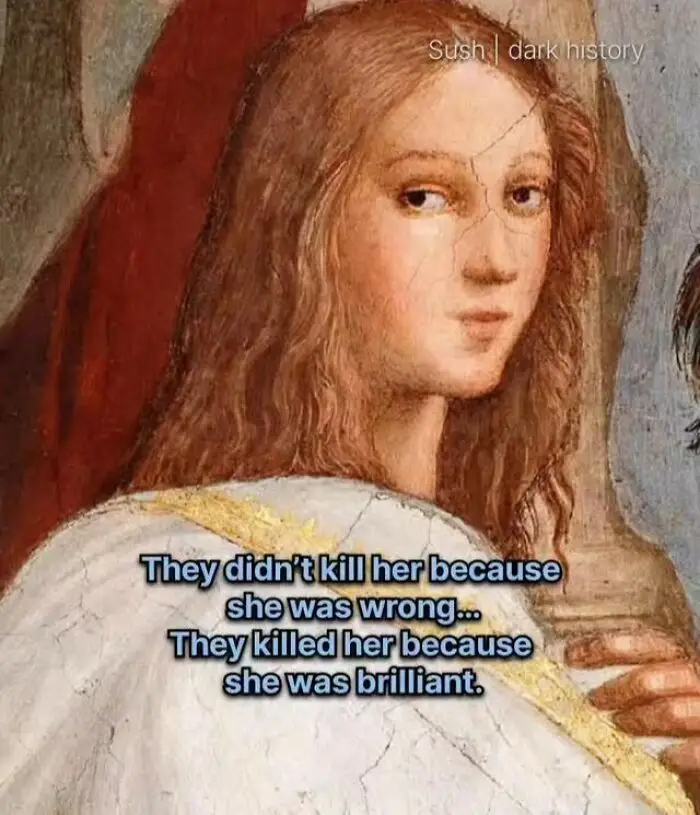
Hypatia of Alexandria was one of the smartest people of her time. Born around 360–370 AD, she was the daughter of the mathematician Theon, who taught her math and science from a young age. Unlike most women of that era, she didn’t just stay in the background she became a teacher, philosopher, and astronomer, running her own school where both men and women came to learn. She was known for her intelligence, wisdom, and her ability to explain really complex ideas in simple ways.
Alexandria at the time was politically and religiously tense. The city had a mix of pagans, Christians, and Jews, and power struggles were everywhere. Hypatia tried to stay out of politics, but her friendship with Orestes, the governor of Alexandria, dragged her into the chaos. Many Christian leaders saw her influence as a threat, especially because she was a strong, independent woman who didn’t bow to anyone’s authority blindly.
In 415 AD, that tension exploded. A mob of radical Christians attacked her, dragged her from her carriage, and brutally k**led her on the streets. They tore her apart, and her body was destroyed. It was horrifying and violent, but it wasn’t because she did anything wrong it was because she represented knowledge, logic, and freedom of thought, things some people were too afraid to accept.
Even though she was m**dered, Hypatia’s legacy lived on. She became a symbol of intellectual courage and resistance to ignorance. People remember her as someone who refused to let fear, religion, or societal rules stop her from thinking and teaching. Today, she’s celebrated as one of the first great women scientists and philosophers in history a reminder that knowledge can be dangerous to the ignorant, but powerful for humanity.
Report
22points
#31
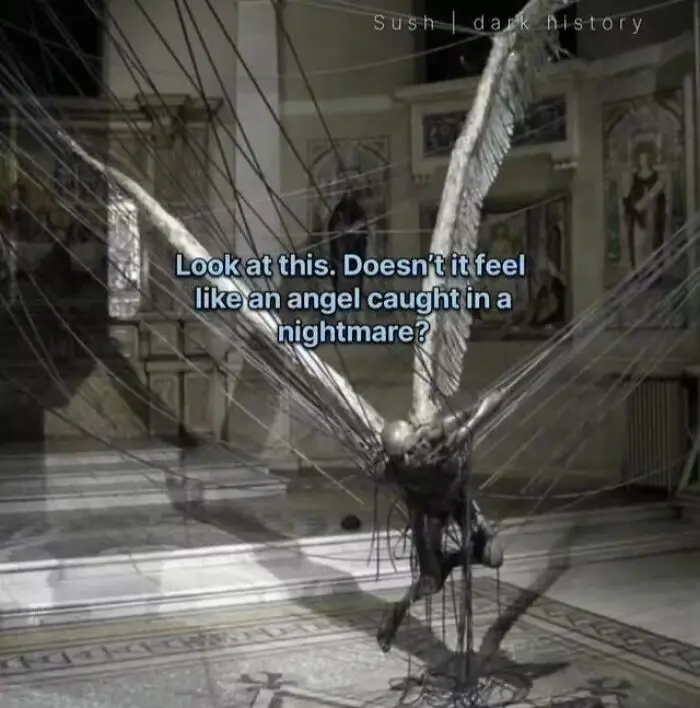
The piece is called The Morning Star, Paul Fryer’s installation that represents Lucifer, a British artist known for using everyday objects like matchsticks, magazines, and even coat hangers in huge installations. He often creates works that feel larger than life, and this angel is no exception. Instead of showing Lucifer with beauty and glory, Mach shows him trapped in wires, almost like a broken puppet.
The location makes it even more powerful it’s installed inside a church. Seeing this “fallen” figure right in a holy space hits differently. It’s not just about Lucifer’s pride, it’s about the constant tension between faith, ambition, and downfall. The wires can be seen as society’s control, punishment, or even the weight of our own choices.
Mach’s works usually provoke strong reactions some people see it as dark and disturbing, others find it deeply symbolic. But one thing is clear: this isn’t just a sculpture, it’s a reminder. Pride, ambition, and rebellion… they can lift us up, or completely destroy us.
Report
21points
#32
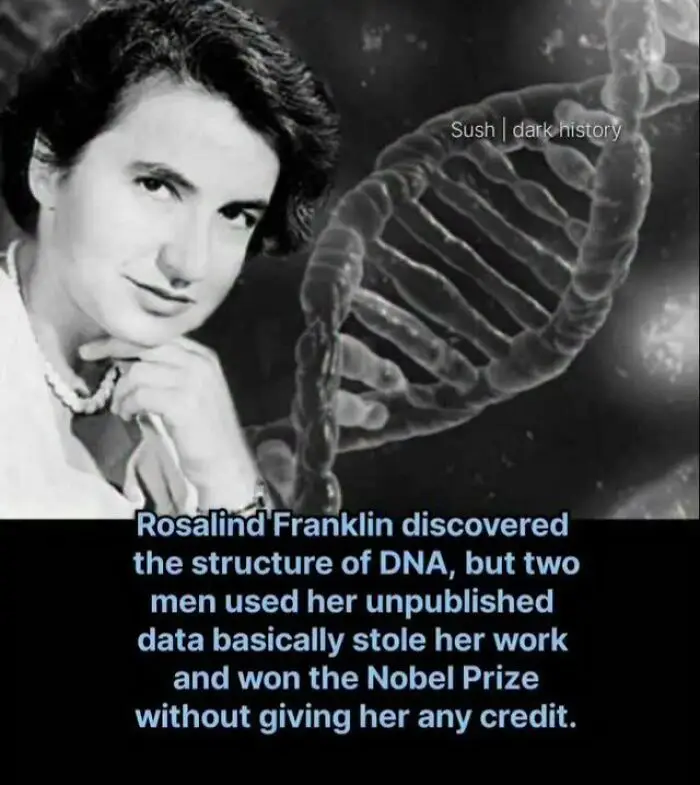
Rosalind Franklin was a brilliant scientist and X-ray crystallographer at King’s College London in the early 1950s. She produced Photo 51, the clearest image showing that DNA has a double-helix structure. Her work was critical: without her measurements and photographs, James Watson and Francis Crick would not have been able to build the correct DNA model. But she did not know that Maurice Wilkins, her colleague, showed her data to Watson, who then used it essentially stealing her work to construct their model.
In 1953, Watson and Crick published the DNA structure first, gained fame, and eventually won the Nobel Prize in 1962, alongside Maurice Wilkins. Rosalind Franklin, who had died in 1958 at just 37, was never credited properly for her role in this historic discovery. Her story highlights how women in science were sidelined, even when doing foundational work, and how recognition and opportunity were often taken by men who had access to their work.
Today, we know Rosalind Franklin’s work was the foundation of the DNA model. Yet she didn’t get the credit. Watson, Crick, and Wilkins built their fame on her stolen data and won the Nobel Prize, while she was erased from the story. Her case shows how brilliant women were often ignored, sidelined, or denied recognition in science, simply because of their gender. It’s a stark reminder that talent alone wasn’t enough when society systematically favored men and dismissed women.
Report
20points
#33
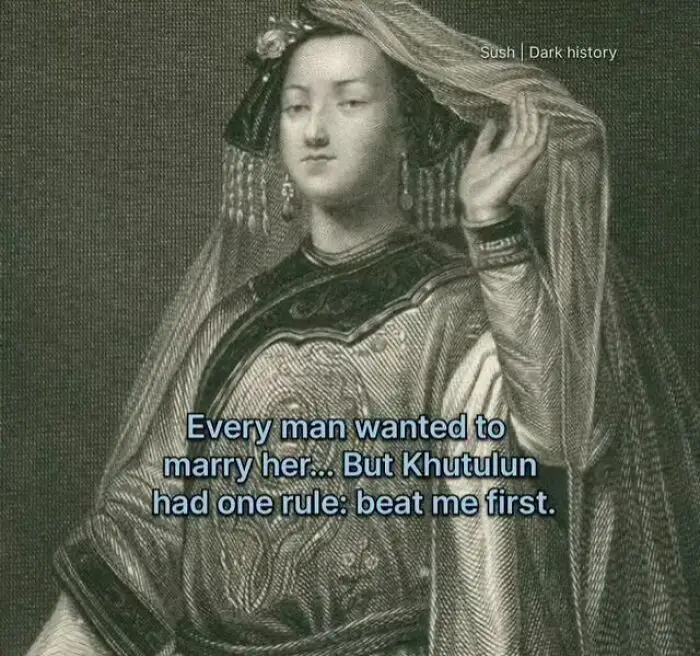
Khutulun wasn’t just a wrestler collecting horses she was also a real warrior who rode beside her father, Kaidu, in battles across Central Asia. Unlike most Mongol princesses, she didn’t sit in a palace she was out on the battlefield, charging with arrows, leading soldiers, and striking fear in enemies. Some historians even say her father wanted her to be his successor, because she was stronger and more capable than her brothers. But Mongol nobles weren’t ready to accept a woman as ruler, so that chance slipped away.
Another interesting bit? Later stories about her life got twisted. In Persian legends and eventually in European plays and operas, her character turned into “Turandot,” a princess who tested suitors with impossible challenges. Of course, the wrestling and horses got swapped for riddles and executions, but the core idea a powerful princess no man could win was inspired by Khutulun. So her legacy lived on far beyond Mongolia, reshaped into legend.
Report
19points
#34
They stabbed her
30+ times... slit her throat again and again... and left her there to d**.
She didn't.
Alison Botha’s story is one of those real-life cases that honestly feels impossible to believe. In 1994, she was a young woman living in South Africa. One night, as she parked her car outside her home, two men forced their way in and kidnapped her. At first, she thought maybe they just wanted her car… but it quickly turned into something far more terrifying. They drove her to a remote area, as**ulted her, and then brutally attacked her st***bing her multiple times and slitting her throat so deeply that she was nearly de**pitated.
What’s truly unbelievable is what happened next. They left her there, thinking she was dead. But Alison didn’t die. She regained consciousness in complete darkness, severely injured, barely able to move. Her neck wound was so deep that she had to literally hold her head in place with her hands. And still… she didn’t give up. Somehow, with all that pain and blood loss, she managed to get up and walk to a nearby road, where she was eventually found and rushed to the hospital. Doctors later said her survival was nothing short of a miracle.
But her strength didn’t stop at just surviving. Alison went on to testify in court against the two men who did this to her, helping to ensure they were convicted and sentenced to life in prison. Facing them again after everything she went through takes a level of courage most people can’t even imagine. Over time, she chose not to live in fear or anger. Instead, she rebuilt her life and even became a motivational speaker, sharing her story to inspire others.
What really makes her story powerful isn’t just the brutality she survived it’s the mindset she chose afterward. Alison Botha didn’t let that one night define her entire life. She turned something unimaginably dark into a story of strength, survival, and resilience. It’s one of those rare cases where you see just how strong a human being can actually be when everything is taken away from them.
18points
#35

In 1967, women weren't allowed in the Boston Marathon. Not because they couldn't run but because people seriously believed women would d** if they ran 42 kilometers.
Report
18points
#36
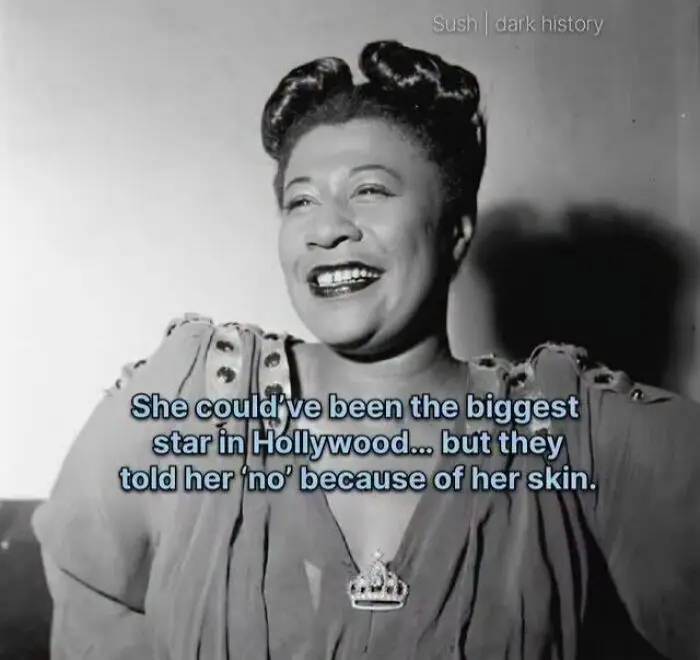
In the early 1950s, Ella Fitzgerald was already dazzling the world with her voice, but Hollywood wasn’t ready to fully embrace her. The Mocambo, one of the hottest nightclubs in Los Angeles, refused to book her. The reason? She was Black. Talent didn’t matter racial prejudice did.
Enter Marilyn Monroe. By then, she was Hollywood royalty, adored by millions. When she heard that Ella had been turned away, she didn’t just shrug or feel sorry she acted. Marilyn called the Mocambo herself and told them something bold: “If Ella Fitzgerald isn’t booked, I’ll sit in the front row every night.” That was enough. The club owner couldn’t resist the star power of Marilyn Monroe, and Ella got her chance.
Ella Fitzgerald’s first night at the Mocambo was historic. The club was packed, the crowd mesmerized, and Ella proved why she was one of the greatest voices of her generation. That one act of support from Marilyn didn’t just give Ella a gig it helped break a small part of Hollywood’s color barrier, and it cemented a legendary friendship between two icons.
This story isn’t just about fame or jazz it’s about courage, allyship, and the difference one person can make when they decide to use their influence for good.
Report
17points
#37
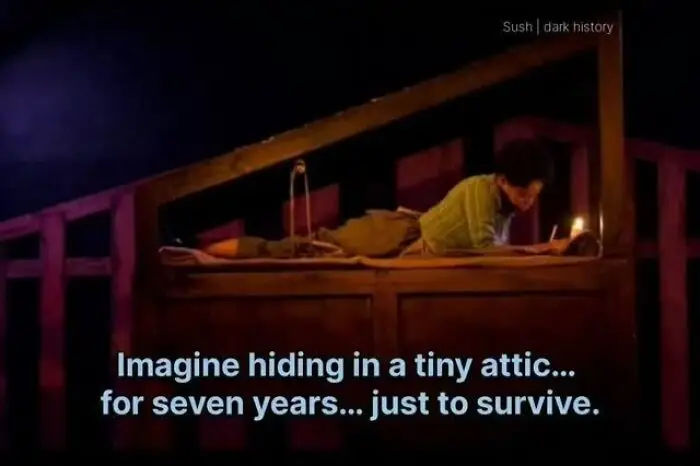
Harriet Jacobs was born into slavery in 1813 in North Carolina. From a young age, she faced cruelty, but it got much worse when her owner, Dr. James Norcom, started s**ually harassing her. To protect herself and later her two children, she made one of the hardest decisions a person could make she went into hiding.
Harriet hid in a tiny attic above her grandmother’s house for seven years. The space was so cramped she could barely sit or lie down, with almost no ventilation. She couldn’t see her children freely and lived in total isolation. Every day was fear, every moment a fight for survival not just for her, but for her family.
Eventually, Harriet escaped to the North, gained her freedom, and became an abolitionist. She worked to help other escaped slaves and spoke openly about the horrors of slavery. Her autobiography, Incidents in the Life of a S***e Girl, was first published under the pseudonym “Linda Brent” for safety, but it became a powerful voice for enslaved women, exposing s**ual ab*se, oppression, and the struggle for freedom.
Harriet’s story isn’t just about slavery it’s about resilience, courage, and the lengths a person will go to protect themselves and their loved ones. Even in the darkest conditions, she never gave up hope, and her legacy continues to inspire people today.
Report
17points
#38

For years, Ochanya was r***d by both her uncle and her cousin, it started the age of 8, and the ab*sers are still walking freely.
She was just 13 years old, a young girl whose life should have been filled with school, friends, and ordinary teenage dreams. For a long time, her suffering remained hidden from the public eye. But when the details of her case surfaced in 2018, the news spread rapidly. Media platforms, social networks, and news outlets carried the story, and the reaction was immediate shock, anger, grief.
Her name quickly became more than just a news story. People spoke about her across the country. There were public expressions of outrage, emotional tributes, and widespread conversations about child ab*se and protection. For many, Ochanya came to represent a painful reality that often goes unnoticed until it ends in tragedy.
Despite the intensity of public reaction, the case also became a symbol of frustration and lingering unease. Discussions around justice, legal processes, and accountability continued to circulate, with many people feeling that outcomes in cases like this rarely bring the closure society hopes for. The sense of injustice attached to her story never truly disappeared.
Ochanya’s story is remembered not only for its tragedy, but for the emotions it stirred and the uncomfortable truths it forced into the open.
17points
#39
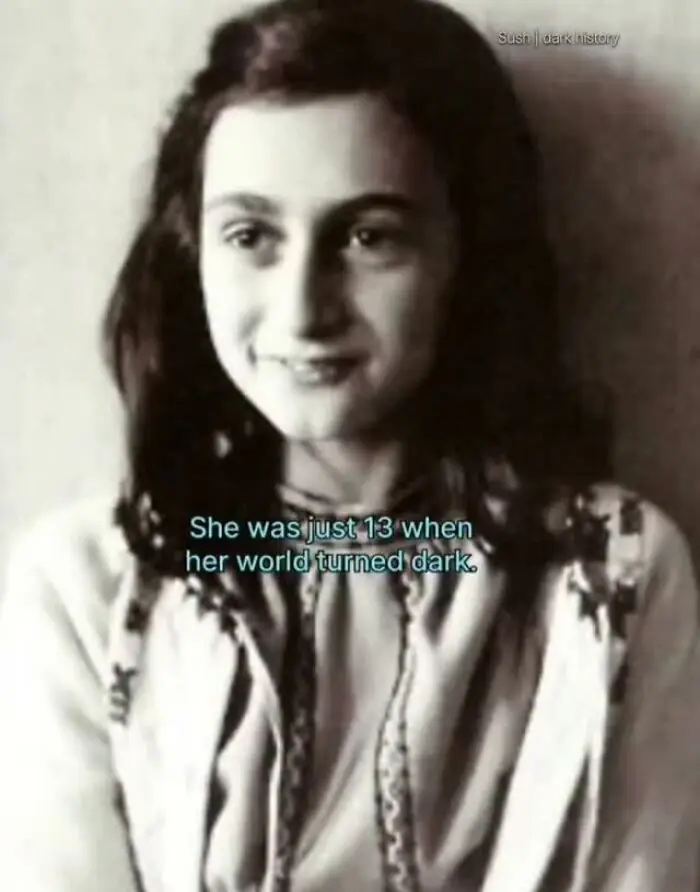
Anne’s diary originally began as a private journal but she later edited it after hearing a radio broadcast that people would want stories of the war after it ended so she hoped to publish it. She dreamed of becoming a writer or journalist.
Otto Frank published it under the title Het Achterhuis (“The Secret Annex”) in 1947, which later became The Diary of a Young Girl in English.
Otto Frank published it under the title Het Achterhuis (“The Secret Annex”) in 1947, which later became The Diary of a Young Girl in English.
The diary became a symbol of hope and resilience, showing a young girl’s humanity in the middle of terrible persecution.
Anne Frank was a Jewish girl born in 1929 in Germany. When Adolf Hitler and the Nazis came to power, Jewish families faced discrimination and danger. Anne’s parents moved the family to Amsterdam in the Netherlands hoping for safety. But in 1940 the Nazis invaded the Netherlands, and life for Jewish people became even more restricted and threatening.
Anne Frank was a Jewish girl born in 1929 in Germany. When Adolf Hitler and the Nazis came to power, Jewish families faced discrimination and danger. Anne’s parents moved the family to Amsterdam in the Netherlands hoping for safety. But in 1940 the Nazis invaded the Netherlands, and life for Jewish people became even more restricted and threatening.
In July 1942, when Anne was just 13 years old, her family went into hiding in a secret part of her father’s office building called the “Secret Annex.” They lived there quietly with another family for two years, unable to go outside, always fearing discovery. During this time Anne wrote in her diary almost every day, sharing her thoughts, fears, and dreams of a free life after the war. She even began rewriting parts of her diary after hearing a radio broadcast that people would one day want stories about the war. Anne dreamed of becoming a writer or journalist.
In August 1944 their hiding place was betrayed. The Nazis arrested everyone and sent them to concentration camps. Anne and her sister Margot were eventually sent to Bergen-Belsen camp, where they died of illness in early 1945 only weeks before the camp was liberated. Anne was just 15 years old. Anne’s father, Otto Frank, was the only member of the family to survive. After the war he found Anne’s diary and published it in 1947 under the title Het Achterhuis (“The Secret Annex”), which later became known in English as The Diary of a Young Girl. Today it is one of the most famous books in the world, giving millions of people a deeply personal glimpse into the H*******t and the human cost of hatred and war, while also preserving Anne’s wish to be remembe
Report
15points
#40
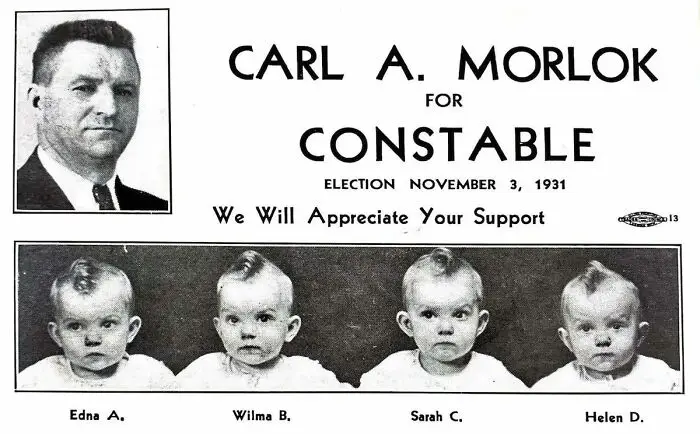
Four identical sisters... the world watched them... but no one saw what was really happening at home.
The Morlok quadruplets Edna, Wilma, Helen, and Sarah were born in 1930 in Lansing, Michigan, and were identical, a rare phenomenon that immediately drew public fascination and scientific curiosity. Their early childhood, however, was far from easy. They reportedly endured ab*se from their father, Carl Morlok, and grew up in a strict, harsh household. On top of this, the girls were subjected to intense attention from researchers studying identical multiples, often in ways that were invasive and ethically questionable, adding further pressure to their young lives. Some of the sisters also experienced mental health challenges, reflecting both the trauma of their upbringing and the long-term effects of constant scrutiny. Despite these hardships, the sisters survived into adulthood and lived long, meaningful lives.
Wilma Morlok passed away in 2002 at age 72, followed by Helen Morlok on October 31, 2003, at 73, Edna Morlok on April 10, 2015, at 84, and finally Sarah Morlok Cotton, the last surviving sister, on July 7, 2025, at 95, who carried the memories of her family and witnessed nearly a century of change. Their story, often sensationalized in the media, is ultimately one of resilience, courage, and survival, a reminder that behind every headline there are real people enduring pain, scrutiny, and struggle, yet still finding a way to persevere and live full lives.
Report
14points


